Skip to content
Booking projects for next month. Free website audit with every quote.Claim yours →

Home services and tradesBooking projects for November

Roofing Website Development Company for More Booked Roof Inspections

A ceiling stain after a storm, a hail warning and a 22-year-old shingle roof each start a different search. Our website design for roofing contractors gives each one its own page, a call button that dials on the first tap and an inspection request that captures the address and photos. Your license numbers show on every page, storm and insurance copy stays within your state's rules, and every call is tracked to the page that produced it.

  • Built for roofing contractors
  • Fixed quote in 1 business day
  • You own everything
yourroofing.com/hail-damageStorm roofinspections inTulsaBook inspectionTap to callNew call: leak after hailstormFrom /hail-damage · 2 min agoTracked as a leadSource: GoogleAI ASSISTANTWho's a good roofer in Tulsa for haildamage?Your Company: local crew, licensed, photoreports for your adjuster.Source: your website
Illustration: a visit becomes a tracked lead

The short answer

What does a roofing website development company do?

A roofing website development company builds websites for roofing contractors that turn local searches for roof repair, roof replacement, leak repair and hail or wind damage inspections into answered calls, booked inspections and estimate requests. The site has to reach a homeowner with water coming through the ceiling, prove you are licensed, insured and local rather than a storm chaser, describe insurance work in words your state allows, and record which page and channel produced each signed job.

For a residential roofer that means one page per job (a leak repair is not the same search as a full tear-off), pages only for the materials you install, a storm page you can switch on after hail, a financing page for replacements, a warranty page and real town pages with job photos. For a commercial roofer it means TPO, EPDM, PVC and coating pages, a preventative maintenance program page, a 24/7 leak response line and a roof assessment request built for property managers and facility teams.

Billion Web Studio is a roofing website development company that builds all of this as one fixed-scope project: design, service, material and area pages, RoofingContractor schema, call and form tracking in GA4, and inspection requests that post into AccuLynx, JobNimbus, Roofr or the CRM you already run. You own the site, the domain and every account from day one, with no per-lead fees and no lock-in.

The market

What the numbers say about roofing contractors online

Roofing demand arrives in bursts. A hail line crosses a county, hundreds of homeowners look up at their roofs the same evening, and the roofers who answer first and look legitimate book the inspections. The numbers below show how often that happens, how many homeowners are calling roofers right now, and how quickly a homeowner gives up on a roofer who does not answer or has thin reviews.

How they choose

How customers find and choose a roofing company

A homeowner rarely shops for a roof for fun. Something forces the search: a drip in the attic, a hailstorm, an insurance letter or a home inspection report. Here is how they find and pick a roofer, and what your site has to do at each step.

  1. 1

    Something happens to the roof

    A leak after heavy rain, shingles in the yard after wind, dents on the gutters after hail, or an insurer or home buyer flagging the roof's age. The site needs a page for each of those triggers, not one general Services page, so the search lands on the answer to the actual problem.

  2. 2

    They search on a phone, often from the driveway

    BrightLocal found 73% of consumers' most recent local search was on a phone, and 23% used an AI tool during the search. They type "roof leak repair near me" or ask an assistant who a good roofer in town is. Your site has to load fast on a phone, put tap-to-call on screen, and give Google and AI tools a clear page for each service and each town you really work in.

  3. 3

    They shortlist on reviews, license and local proof

    72% of consumers look at three or fewer businesses before choosing (BrightLocal, Jun 2026), and for trades the star rating and review count weigh more than in any other industry (BrightLocal, Jul 2026). After a storm, homeowners are also screening out storm chasers. The site must show review count, license numbers by state, a local address or service base, the owner's face and real job photos tagged by town.

  4. 4

    They call, text or request an inspection

    Whoever answers first usually gets the inspection. The site needs a sticky call button, a text option, a callback request for when the crew is on a roof, and a guided inspection request that captures address, issue, roof type and photos so your estimator can pull a measurement report before driving out.

  5. 5

    They compare written estimates and decide

    Now the homeowner reads about materials, warranties, financing and timelines, often with two estimates on the kitchen table. Material pages, a plain-language warranty page, a financing page with compliant wording and project galleries from their neighborhood help your estimate win.

The problem

Why most roofing websites lose booked jobs

What we find again and again when we audit sites in this trade. None of it is about how the site looks.

Leak 01

The site exists but does not show up for roofing searches

One Services page lumps replacement, repair, leaks, gutters and storm work together, and the footer lists ten towns with no pages behind them. Google has nothing specific to rank for "roof leak repair" in each town, so the site sits on page three while the Maps pack and lead sites take the calls.

Leak 02

Storm surges go to whoever answers first

After hail the phone rings for three days and then stops. Your crew is on roofs, the site only offers "email us", and by evening the homeowner has signed with the roofer who picked up. No text option, no callback request and no storm intake form means paying for the surge with lost jobs.

Leak 03

Storm and insurance copy that sounds like a storm chaser

Lines like "we'll cover your deductible" break the law in Florida, Texas, Colorado and Minnesota, and "we work with your insurance to get you a free roof" implies the same promise and scares careful homeowners. Florida also requires three specific disclosures on any ad that encourages a roof claim. None of the roofing web design pages we reviewed explain these rules.

Leak 04

A bare "request a quote" form

Homeowners do not know whether they need a repair, a replacement or a storm inspection, so they skip a form that asks them to describe the job. You also get no address, no roof type and no photos, so your estimator cannot order an aerial measurement or tell a two-hour leak repair from a full tear-off before the visit.

Leak 05

No proof a homeowner can check

Stock photos of roofs that are not yours, no review count on the site even with hundreds of Google reviews, a license banner that claims more states than the license list shows, and no owner name. To a homeowner who has been warned about storm chasers, that reads as a company that might not be around to honor the warranty.

Leak 06

A rented site and reports with no booked inspections

Many roofers pay monthly for a site the vendor owns, with a tracking number and Google profile the vendor controls. The reports show traffic and rankings, not which calls became inspections and signed contracts. If you leave, the site, the content and sometimes the phone number stay behind.

Generic vs built for you

Why a generic website fails roofing contractors

A template is built to fit every business, so it fits yours badly. Here is what changes when the site is planned around how customers actually buy.

Generic website compared with a website built for roofing contractors
What you needGeneric template siteBuilt for roofing contractors
Service structureA single Services page with a paragraph each on repair, replacement and guttersA page per job (replacement, repair, leak repair, emergency tarping, storm and hail damage, gutters, ventilation) and per material you install, each with its own photos, FAQs and inspection request
Storm seasonThe same home page in May as in January, with no way to react to a hail eventA storm mode you switch on from the CMS after hail or wind: a banner, a storm landing page with a short intake form, text and callback options, and a plain statement of what the inspection includes
Insurance claim wordingCopy borrowed from other roofers, sometimes promising a free roof or deductible helpPages that say you document damage with photos for the adjuster, the insurer decides coverage and the homeowner pays the deductible, plus the Florida 489.147 disclosures in the required type size where they apply
Inspection requestsName, email, phone and a message boxA two-step guided request: address and issue first (leak, missing shingles, hail or wind concern, replacement estimate), then roof type, photos and a preferred time, posted straight into AccuLynx, JobNimbus or your CRM
Service area pagesThe same paragraph cloned for 40 towns with the city name swapped, the pattern Google's spam policy calls doorway abusePages only for towns you serve, each with real jobs, photos, reviews and local conditions such as hail exposure, coastal wind zones, snow load, HOA rules and the permit office
Commercial roofingOne "Commercial" paragraph inside a residential site, or nothing at allA commercial hub with TPO, EPDM, PVC, coating and metal pages, preventative maintenance programs, industries served, a 24/7 leak line and a roof assessment request for property managers
TrackingPageviews and a monthly rankings PDFEvery call, text, form and estimator submit recorded as a GA4 lead event, with tracking numbers per channel, so you can match leads to booked inspections in your CRM
Speed on a phoneFull-size job photos and sliders that take seconds to load on mobile dataCore Web Vitals targets in the written scope (LCP 2.5 s, INP 200 ms, CLS 0.1) and compressed, lazy-loaded galleries

Free self-check · 2 minutes

What your current roofing website is missing

Tick everything your site does today. Each box you cannot tick is a place where a ready-to-buy visitor leaves.

What you need

What every roofing website needs

The features that turn a roofing website from a brochure into the best salesperson you have. We build all of them.

  1. Must-have · 01

    Sticky tap-to-call, text and callback, with an emergency line

    A call button that stays on screen on mobile, a separate after-hours number if you run 24/7 leak response or emergency tarping, and a text link and "call me back at" form for when your crew is on a roof. Text and callback carry SMS consent wording and are tracked as leads.

  2. Must-have · 02

    A site that loads fast on a phone in the driveway

    We write Core Web Vitals targets into the scope: LCP 2.5 seconds or less, INP 200 ms or less and CLS 0.1 or less on mobile (Google's "good" thresholds). Project photos are compressed and lazy-loaded, so a 60-photo gallery does not slow the inspection request.

  3. Must-have · 03

    Guided inspection request with photo upload

    Address, issue type, roof type, photos and a preferred time, split into two short steps. Your estimator sees the job before the visit and can pull an EagleView, Hover or Roofr report first.

  4. Must-have · 04

    Storm and hail damage page with a storm mode

    A permanent page on wind and hail damage, signs to look for and what your inspection covers, plus a banner and intake form you can switch on after an event without calling a developer.

  5. Must-have · 05

    Insurance claim help page written within state law

    How you photograph and document damage, what the homeowner does, what you do not do (adjust claims, interpret policies, waive deductibles), and the disclosures your state requires.

  6. Must-have · 06

    Material pages for what you actually install

    Architectural asphalt shingles, standing seam and exposed fastener metal, clay and concrete tile, slate, cedar shake, TPO, modified bitumen and EPDM. Each with lifespan in your climate, typical uses and real project photos.

  7. Must-have · 07

    License numbers by state, everywhere they are required

    One entry per state in the footer of every page and on About and Contact, matching the banner exactly. Florida requires the number in every advertisement; California requires the CSLB number on websites.

  8. Must-have · 08

    Financing page with compliant payment wording

    Your lender's pre-qualification link and how financing works for a replacement. Any "from $X a month" line carries the APR, term and down payment that Regulation Z requires.

  9. Must-have · 09

    Warranty page in plain terms

    Your workmanship warranty by job type, the manufacturer system warranties you are certified to offer, what voids them, and a warranty claim form for past customers.

  10. Must-have · 10

    Project gallery tagged by town and material

    Before-and-after photos from your own jobs, filterable by city, roof type and job type, so a homeowner in one subdivision can see the roof you put on two streets over.

  11. Must-have · 11

    Reviews and manufacturer certifications

    Your Google rating and review count with recent reviews, links to your profiles, and only the shingle, metal or single-ply manufacturer programs you actually hold.

  12. Must-have · 12

    Owner, crew and insurance proof

    The owner's name and photo near the top of the home page, crew photos on real jobs, years in business, and general liability and workers' comp certificates offered on request. A homeowner warned about storm chasers wants to see who will be on the roof and who will honor the warranty.

What we build

The roofing website we would build for you

This is the roofing company website design we would start from for a roofer that does residential replacement and repair, storm work and some commercial jobs. We trim it to the jobs, materials and towns you really serve, because pages for work you do not do attract calls you cannot take.

yourcompany.comHome · every section links here

Residential services

  • Roof replacement
  • Roof repair
  • Roof leak repair
  • Emergency tarping
  • Roof inspections
  • Gutters and downspouts
  • Attic ventilation and skylights
  • Roof maintenance plan

Storm and insurance

  • Hail damage
  • Wind damage
  • Insurance claim help: how we document damage
  • How to spot a storm chaser
  • Florida wind mitigation and My Safe Florida Home (Florida only)

Materials

  • Asphalt shingles
  • Standing seam metal
  • Clay and concrete tile
  • Slate and cedar shake
  • Flat roofs: TPO, modified bitumen, EPDM
  • Roof coatings

Commercial roofing

  • Commercial roofing hub
  • TPO and PVC single-ply
  • EPDM
  • Roof coatings and restoration
  • Preventative maintenance programs
  • 24/7 commercial leak response
  • Industries served
  • Request a roof assessment

Service areas

  • Service area hub with map
  • A page per town or county you really serve
  • Projects completed in each town

Trust and offers

  • Financing
  • Warranty and warranty claims
  • Projects and before-and-after
  • Reviews
  • About: owner, crew, licenses, insurance
  • FAQ and roof guides
  • Careers
  • Secure online payment

Calls, bookings, leads

How we turn visitors into booked jobs

A roofing lead is only worth something when it becomes a booked inspection and then a signed contract. We build every path a homeowner or property manager might take, send each one into the system your office already works from, and track it so you can see which pages and channels produce jobs, not just clicks.

  • 01Inspection booking into your estimator's calendarAfter the guided request, the homeowner can pick an open inspection slot from your estimator's calendar, or ask for a callback if nothing fits. Leaks and active water get flagged first.
  • 02Hand-off to your CRM and estimatorRequests post into AccuLynx, JobNimbus, Roofr, RoofLink or ServiceTitan with the address and photos attached, so the estimator can order an aerial measurement report before the visit. Where a CRM has no direct connection we route through its form or email intake.
  • 03Instant estimate where it fits your sales processIf you use an instant estimator, we place it on the replacement and material pages with your good, better and best options and financing beside it. If you prefer to quote in person, we leave it out and make the inspection request the main action.
  • 04Calls, texts and callbacks when the crew is on a roofA sticky call button, a separate emergency line where you run one, a text link and a callback request that asks for the best time to reach the homeowner. Your office or answering service sees the callback list instead of a pile of missed calls.
  • 05Instant alerts so the first callback goes out in minutesEvery form, storm request and callback request texts and emails the office and the on-call estimator with the address and issue in the message. After hail, each storm lead is tagged to the event so you can see how many became inspections.
  • 06Tracking every lead to its sourceCall tracking numbers per channel (organic, Google Business Profile, Local Services Ads, paid search, yard signs and mailers) and every form, text and estimator submit recorded as a GA4 lead event, so you can match leads to booked inspections in your CRM.
  • 07Review requests after every jobA simple review link and request flow you send to every customer at closeout, with no filtering of unhappy customers, so your review count keeps growing within the FTC rule.

AI search

Homeowners now ask ChatGPT, Google AI Mode and Perplexity who to call about a roof. BrightLocal's 2026 survey found 45% of consumers have used ChatGPT or other AI tools for local recommendations, up from 6%. In AI answers about local service businesses, Google Business Profile made up 45% of citations, Yelp 12.3%, Facebook 4.4% and BBB 1.6% (BrightLocal, Aug 2026). Roofers on r/Roofing report customers who say they found them by asking an AI. These assistants recommend roofers they can verify across several sources, so the site and your listings need to agree and say the same specific things.

Questions your customers ask AI assistants

  • Who's a good roofer in Tulsa for hail damage?
  • Should I repair or replace a 20-year-old shingle roof?
  • Does homeowners insurance cover a roof damaged by wind?
  • Best metal roofing contractor near Asheville with good reviews
  • How do I tell if a roofer knocking on my door is a storm chaser?
  • Which roofers in Naples do My Safe Florida Home roof upgrades?
  • Listings that match the site

    Your business name, phone, service area, hours and categories match across the site, Google Business Profile, BBB, Yelp and Facebook, sources AI answers cite for local service businesses. Inconsistent details give an assistant a reason to pick someone else.

  • A steady flow of recent reviews

    Reviews are among the strongest signals an assistant can check. BrightLocal found 74% of consumers only consider reviews from the last three months, so the site's review request flow matters more than a big count from years ago.

  • One clear page per service, material and real town

    An assistant answering "metal roofing contractor near Asheville" needs a page that says you install standing seam metal and work in Asheville, with jobs there to prove it. Vague all-in-one pages give it nothing to quote.

  • FAQ answers written as direct answers

    Repair or replace, lifespan by material in your climate, how long a tear-off takes, who pays the deductible, what your warranty covers. Each answer opens with a plain sentence an AI can lift, followed by your local detail.

  • RoofingContractor schema and facts in plain text

    schema.org has a RoofingContractor type. We mark up service area, services, hours and certifications, and we also state license numbers, manufacturer certifications and warranty terms in visible text, where both search engines and assistants read them.

  • Project pages with town and material

    Real job write-ups (a hail-damaged architectural shingle roof in one suburb, a TPO tear-off on a warehouse in another) give assistants verifiable local evidence that you do the work you claim.

Compliance and trust

The rules a roofing website has to get right

Roofing has more advertising rules than most trades, because storm and insurance work has drawn so much fraud. We build pages, forms and disclosures that support these rules. We do not give legal advice or certify compliance; confirm the details with your state licensing board or attorney before launch.

Storm and insurance claim advertising

Florida Statute 489.147 treats any ad that encourages a homeowner to make a roof damage claim as prohibited unless it states, in at least 12-point type and at least half the size of the largest font, that the consumer pays the deductible and that waiving deductibles or filing false claims is insurance fraud punishable as a third-degree felony. Texas (Insurance Code 4102.163, Business and Commerce Code 27.02), Colorado (C.R.S. 6-22-105) and Minnesota (Statute 325E.66) ban deductible waivers and contractors acting as adjusters. Colorado also gives homeowners 72 hours to cancel after a claim denial, and the FTC Cooling-Off Rule gives three business days to cancel most door-to-door sales. Our storm pages say you document damage for the adjuster, never that you handle the claim.

License numbers in advertising

Florida Statute 489.119 requires the license number in every advertisement. California's CSLB requires the license number on websites, and roofing work there falls under the C-39 Roofing Contractor classification. Texas has no state roofing license; if you hold the voluntary RCAT credential, we present it as an industry credential, not a state license. We print one entry per state you work in, in the footer and on About and Contact.

Financing ads

Under Regulation Z (12 CFR 1026.24), a line such as "new roof from $X a month" triggers full disclosure of the down payment, repayment terms and APR, and whether the rate can rise. We place financing claims with the lender's required wording or link to the lender's own terms.

Texting consent and privacy

Under the TCPA rules (47 CFR 64.1200), marketing calls and texts to cell phones sent with an autodialer or a prerecorded voice need prior express written consent that is not a condition of purchase, and opt-outs must be honored. Inspection and storm forms carry plain consent wording and a STOP path, and the site has a privacy policy and SMS terms. We do not build tools that identify anonymous visitors or text scraped numbers.

Reviews and testimonials

The FTC Consumer Reviews and Testimonials Rule (effective October 2024) bans fake reviews, incentives tied to positive sentiment and undisclosed reviews from employees or relatives. Asking only happy customers can also violate the FTC Act. Our review flow asks every customer. Google does not show review stars in search for reviews a business displays about itself on its own site, even through a widget, so we do not add review markup to chase stars.

Accessibility

The Department of Justice says the ADA applies to the websites of businesses open to the public and points to WCAG as technical guidance. We build to WCAG: alt text on project photos, readable contrast on storm banners, labeled form fields with clear errors, and controls that work with a keyboard.

We build with tools and patterns that support these rules and document what we set up. For legal advice on your own obligations, talk to your attorney.

From the forums

What roofing contractors ask about websites, answered

We read where roofing owners talk shop about leads, websites and marketing vendors. These are questions asked in those communities by owners and the people who advise them, paraphrased, with our straight answers.

Where owners talkr/Roofingr/RoofingSalesr/stormtroofersr/RoofingOperationsr/SmallBusiness_USr/squarespaceContractorTalkLocal Search Forum

Asked on r/stormtroofers

“My site exists but does not show up on Google. Has anyone closed full replacements from a website instead of door knocking after hail or buying leads?”

Our answer: Yes, but not from a site that only exists. In an r/Roofing thread on lead sources, an insurance-focused roofer ranked his own Google search and Local Services presence above bought leads and Meta ads. Other owners said their site brought them nothing for years. The difference is a page per job and per real town, reviews on the page, and a call button and inspection request that work on a phone.

Asked on r/squarespace

“I tried to build my roofing site myself on a website builder and got lost. What does a simple roofing site actually need?”

Our answer: Home, separate service pages for repair and replacement, About with your license and insurance, reviews, FAQ and a contact path with tap-to-call. Then speed and on-page SEO, because a good-looking site nobody finds does little. Add storm, material and town pages as you grow.

Asked on r/Roofing

“I'm burned out on SEO companies: monthly retainers, reports, no more calls. Has SEO turned into real roofing jobs for anyone?”

Our answer: It can, but judge it by booked inspections, not rankings reports. Ask any vendor for call tracking by channel, the exact searches they target and their definition of a qualified lead. We build the site and tracking on a fixed scope, so you can see which calls and forms came from it without a retainer.

Asked on ContractorTalk

“A vendor offered to build my site and run my Google profile with no monthly fee, but charges per lead, calls included. Is that a fair deal?”

Our answer: Read who owns the site, the tracking number and the profile access. In most per-lead and rented-site deals the vendor keeps them when you leave, and you pay for calls from customers who would have found you anyway. If you want a site you keep, own the domain, hosting and profile in your own name from day one.

Asked on r/RoofingSales

“Shared leads from the big lead marketplaces go to four other roofers before I can call. Are they worth it?”

Our answer: They can fill a calendar while you are new, but you are racing other roofers to the same homeowner, so you have to call within minutes. In an r/Roofing thread on lead sources, an owner ranked his own Google search and Local Services presence above bought leads. Treat bought leads as a bridge, put steady spend into a site and Google profile you own, and compare cost per booked inspection for each source in your CRM.

Asked on r/SmallBusiness_US

“After a storm the phone rings nonstop for three days and we miss half of it while we're on roofs. How do we catch those calls?”

Our answer: Give homeowners ways to reach you that do not depend on picking up: a text link, a callback request with a preferred time and a short storm intake form you switch on after the event. Route all of them to one list your office or answering service works through, and track them so you know how much each storm produced.

Asked on r/RoofingSales

“Hail is patchy and insurance policies keep changing. How do we move from storm claims to retail replacement jobs?”

Our answer: Retail buyers shop on trust, price and monthly payment, not on a storm. Give them a replacement page per material with an instant estimate or price range, a financing page with monthly examples worded to Regulation Z, a plain warranty page and project photos from their neighborhood. One company in that thread skips door knocking and books inspections from inbound leads and referrals. The site is what makes that possible.

Asked on r/RoofingSales

“What are creative ways to get more Google reviews from roofing customers?”

Our answer: Ask every customer at closeout and make it one tap with a link or a tap card. A crew bonus for reviews that name the crew is the risky one: never tie it to a five-star rating, which the FTC rule bans, and never let crew or relatives post reviews without disclosing the tie. Asking only happy customers can also violate the FTC Act. Then show your count and recent reviews on the site, so the effort pays off twice.

Asked on r/Roofing

“Customers tell me they found us by asking ChatGPT who a good roofer in town is. How does that work, and how do we show up more?”

Our answer: AI assistants pull from sources they can verify: your Google Business Profile, reviews, BBB, Yelp, local news and your own site. Keep those listings consistent, keep reviews coming, and give each service and town a clear page with direct answers and real projects. Nobody can guarantee a mention, but those signals make you easier to recommend.

Asked on Local Search Forum

“Can a roofing company with no storefront rank from a home address as a service-area business?”

Our answer: Yes. You hide the address on your Google Business Profile, and practitioners on that forum say Google still uses the verified address for local ranking; the service areas you draw change what is displayed, not where you rank. That is why real town pages with jobs from each town matter for the areas further from your base.

Questions are paraphrased from public threads. We never quote members by name.

Others vs us

Billion Web Studio vs the usual options for roofing website design

The three ways roofing contractors usually get a website, side by side.

Billion Web Studio vs the usual options for roofing website design
Billion Web StudioWebsite builder templateTypical industry agency
Who owns the site, domain and contentYou, from day one, in your own accountsYou own the content, but the site only runs on the builder's platformOften the agency, on a rented platform with a buyout clause
Storm and insurance pagesWritten within your state's rules, with a storm mode you switch on after hailWhatever you write yourselfUsually a generic storm damage page reused across clients
Inspection requestTwo-step guided form with address, issue and photos, posted to your CRMBasic contact formStandard quote form, sometimes routed through the agency's own system
Service area pagesOnly towns you serve, with real local jobs and conditionsUp to you to write and maintainOften cloned town pages with the city name swapped
Commercial roofing pathSeparate hub, system pages and roof assessment requestNot includedSometimes, often an afterthought on a residential template
Call and form trackingEvery call, text, form and estimator submit as a GA4 lead event with numbers per channelRarely set upIncluded, but the tracking numbers often stay with the agency
Pricing and contractFixed quote in 1 business day, no lock-inLow monthly fee, your time to buildMonthly retainer, often on a 12-month contract
Timeline4 to 8 weeks, 8 to 12 for large area builds, on a dated weekly planDepends on your eveningsCommonly quoted at 6 to 10 weeks, and 4 to 6 months at custom design agencies
After launch30 days free support, then optional care plan; editable CMS with trainingSelf-serve help centerChanges go through the account manager

Why Billion Web Studio

What we do better, and why it matters to you

  • We plan the site around how you sell: insurance, retail or commercial

    An insurance-heavy storm roofer, a retail replacement company selling on financing and a commercial roofer with maintenance contracts need different home pages, calls to action and page sets. We start from your job mix and your CRM, then build the pages that match, not one roofing template.

  • We know what roofing ads may and may not say

    We write storm, insurance, license and financing copy against the actual state and federal rules, and flag anything you should confirm with your attorney or licensing board.

  • You keep the site, the numbers and the profile

    The domain, hosting, code, content, Google Business Profile access and the tracking numbers printed on your yard signs, truck wraps and mailers sit in your accounts from day one. If you leave, nothing goes dark. No per-lead fees, no buyout clause, no lock-in.

  • Fixed quote in 1 business day, with a free audit

    We review your current site, Google profile and tracking, then send a written scope and fixed quote based on pages, features, integrations and content. No hourly billing.

  • Dated plan and weekly written updates

    You get a week-by-week plan and a written update every week. If we slip a date because of us, the next month of support is free.

  • Tracking that ends at booked inspections

    Calls, texts, forms and estimator submits are tracked by source and handed to your CRM, so you judge the site by inspections and signed contracts, not traffic.

In writing, before we start

  • Fixed quote in 1 business day

    Scope, deliverables and price agreed in writing, with a free audit of your current site. No hourly billing.

  • Launch date in writing

    A dated week-by-week plan and a written update every week. If we slip because of us, the next month of support is free.

  • You own everything

    Code, design, content, domain and accounts are yours from day one. No 12-month contract, no rented site.

  • 30 days of support included

    We watch rankings, forms and call tracking after launch and fix anything that needs it.

Proof, not promises

Results from websites we have built

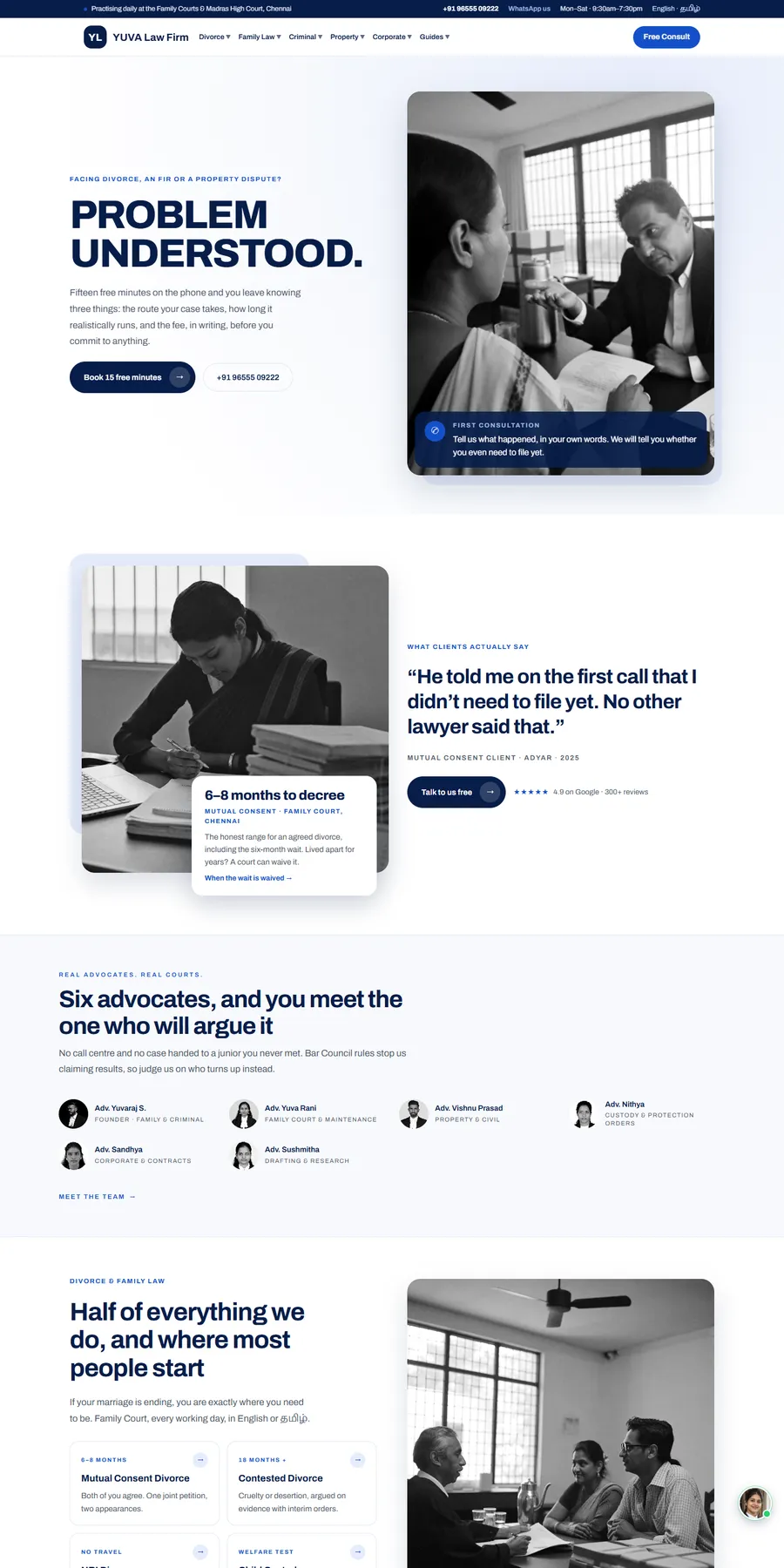
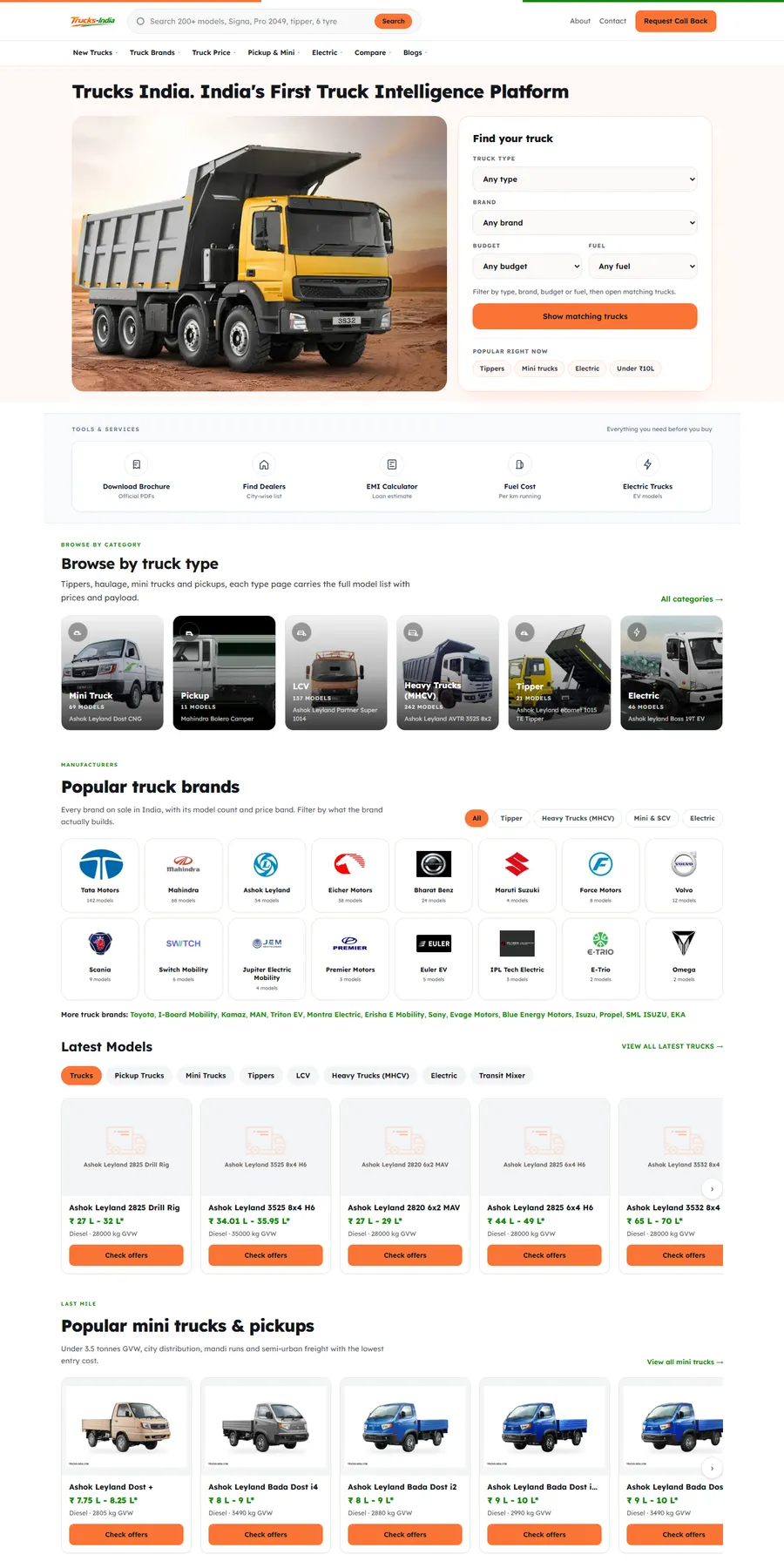
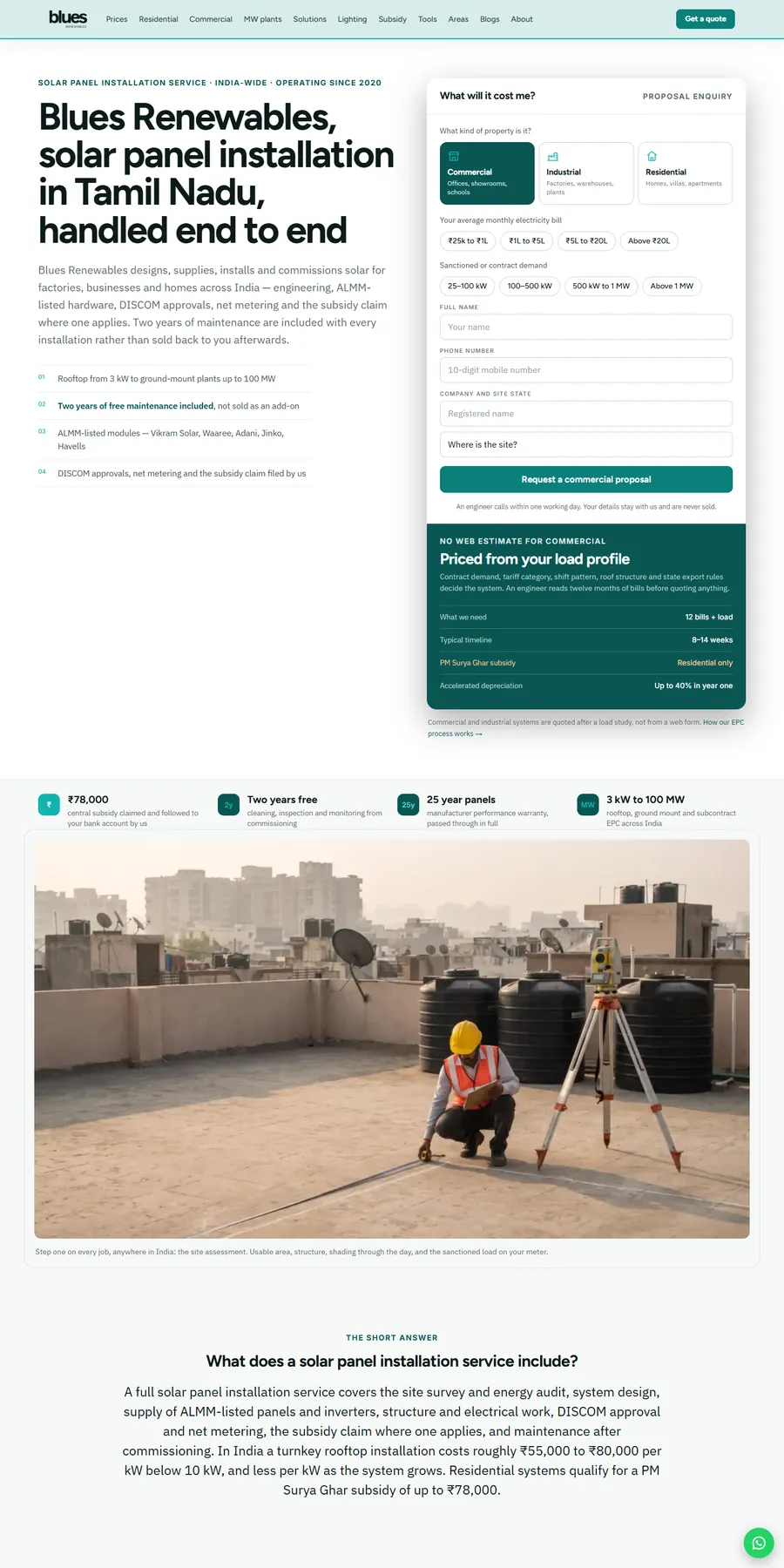
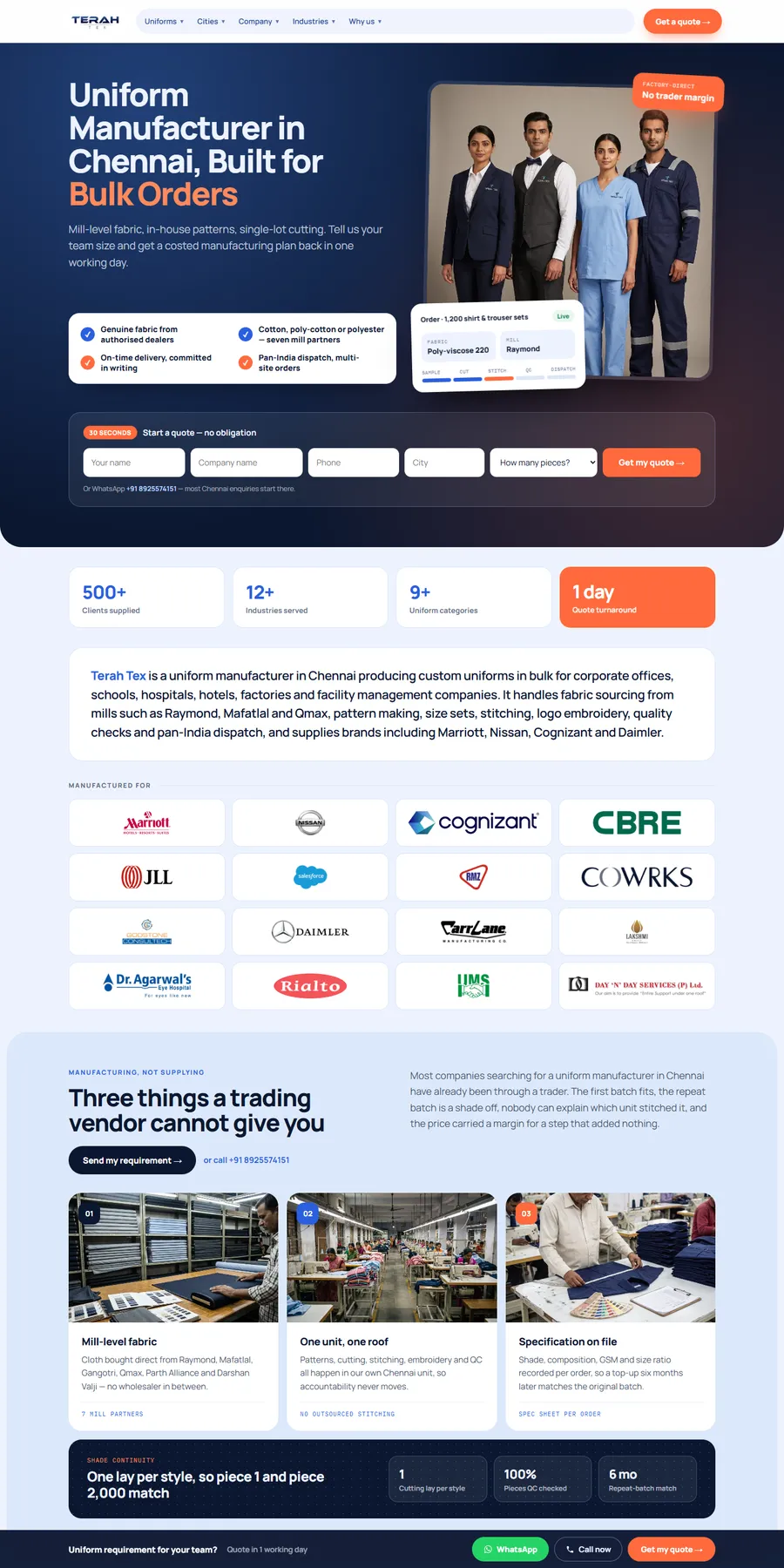
We have not built a website for a roofing contractor yet, and we will not pretend otherwise. The closest proof is Blues Renewables, a rooftop solar installer: the same homeowner deciding on a large, often financed job on their roof, and the same local lead system a roofer needs. Service pages, price pages for every system size, calculators, 129 local area guides and every form and call tracked as a lead event in GA4 took it from no tracked leads to 7 to 10 enquiries a week, and Google clicks from 14 to 560 a fortnight in two months. For a roofer, the price pages become replacement and material pages and the area guides become real town pages with job photos. Terah Tex shows the two-step quote form that we would use for guided roof inspection requests. Trucks India shows we can publish a large page set cleanly: 1,299 variant pages with 351 broken links fixed, the same discipline a roofer needs for a page per material and per real town without cloned doorway pages. Blues Renewables scores in the mid 80s to mid 90s on mobile Lighthouse.

More websites we have designed and built

Process

How your roofing website project runs

Typical timeline: 4 to 8 weeks for most roofing sites; 8 to 12 weeks with many service area and material pages. You see progress every week.

  1. Step 01 · Week 1

    Discovery and audit

    We audit your current site, competitors, and how you show up on Google and in AI answers, then agree on goals and a fixed quote.

  2. Step 02 · Weeks 2 to 3

    Strategy and design

    Sitemap, wireframes and full designs for your review. You approve everything before we build.

  3. Step 03 · Weeks 3 to 6

    Build and test

    Development, SEO setup, speed tuning, and testing across devices and browsers.

  4. Step 04 · Launch and beyond

    Launch and grow

    We launch, monitor, and improve based on real data. 30 days of free support included.

What shapes your quote

Scope, not hourly billing

Every project gets a fixed quote within 1 business day, agreed before work starts.

Get my fixed quote →
  • Number of service, material and storm pages, and whether you need a separate commercial roofing section
  • How many service area pages, and how many real local jobs and photos we have for each town
  • CRM and estimator integrations: AccuLynx, JobNimbus, Roofr, RoofLink or ServiceTitan, plus calendar booking
  • Instant estimator, financing pre-qualification and storm mode features
  • Content: whether we write the pages, how many states need license and insurance claim disclosures, and how much copy exists
  • Redesign of an existing site with redirects and ranking protection, or a new build

Roofing website questions, answered

Straight answers to what owners ask us, and what they ask Google and AI assistants. Ask us anything else.

How much does a roofing website cost?

We give a fixed quote, agreed before work starts, based on the number of pages, features, integrations and content. You get it within 1 business day of a short call and a free audit of your current site. There is no hourly billing.

How long does it take to build a roofing company website?

Most roofing sites take 4 to 8 weeks. Larger builds with many service area and material pages take 8 to 12 weeks. You get a dated week-by-week plan at the start and written updates every week.

What pages should a roofing website have?

Separate pages for roof replacement, roof repair, leak repair, storm and hail damage and inspections, a page for each material you install, an insurance claim help page, financing, warranty, projects, reviews, About with license numbers, and real pages for the towns you serve. Commercial roofers also need system pages and a maintenance program page.

Can we write about insurance claims and storm damage on our site?

Yes, carefully. Say you inspect and photograph damage for the adjuster, that the insurer decides coverage and that the homeowner pays the deductible. Never promise a free roof or deductible help. Florida also requires specific disclosures on ads that encourage a roof claim, and Texas, Colorado and Minnesota have their own rules, so confirm the final wording with your attorney.

Will my roofing website rank in my service areas without a storefront?

It can. Local search practitioners report that Google still uses your verified, hidden address for Maps ranking, and real town pages help your site rank for searches in the areas you serve. We build pages only for towns where you work, with local jobs and photos, because cloned city pages can fall under Google's doorway abuse policy. We do not guarantee rankings.

Our Google Business Profile was suspended. Can the website help?

It can support the appeal, but nobody can guarantee reinstatement. Google wants a real business name with no added keywords, a local number you control, a real address (hidden if you work at customers' homes) and a website that represents that business. We make the site match: the same name, phone and service area, license numbers, owner and crew photos, and real job photos by town. Virtual offices and mailboxes are not eligible, so do not use one.

How do I get my roofing company recommended by ChatGPT and Google AI answers?

Keep your Google Business Profile, BBB, Yelp and Facebook details consistent with your site, keep recent reviews coming, and give every service and town a clear page with direct answers and real projects. We add RoofingContractor schema and state license and certification facts in plain text. No one can guarantee an AI mention.

Will the website connect to AccuLynx, JobNimbus or Roofr?

Yes. Inspection requests can post into AccuLynx, JobNimbus, Roofr, RoofLink or ServiceTitan with the address, issue and photos attached. Where there is no direct connection, we use the CRM's form or email intake so nothing is typed in twice.

What should I ask a roofing web design company before I sign?

Four things, in writing: who owns the domain, site, content and tracking numbers if you leave; whether storm and insurance pages are written to your state's rules; whether inspection requests post into your CRM; and whether every call and form is tracked as a lead you can match to booked inspections. If a roofing website design agency cannot answer all four, you are buying a template with a monthly fee.

Who owns the website if I stop working with you?

You do, from day one. The domain, hosting, code, design, content, analytics and tracking numbers are in your accounts. There is no lock-in and no buyout clause.

I rent my roofing website from a marketing vendor. Can you move me to a site I own?

Yes. We audit what the vendor controls (domain, hosting, phone numbers, Google profile access, content), plan the move so your phone number and listings stay intact where possible, rebuild the pages and set up redirects from the old URLs. Check your contract for notice periods and content ownership first.

Can you redesign our roofing site without losing our Google rankings?

We map every existing URL to its new page, keep the pages that already rank, carry over titles and content that work, and set up redirects before launch. We then watch Search Console after launch and fix crawl errors during the 30-day support period.

Should commercial roofing be on the same website as residential?

For most roofers that do both, yes, with a separate commercial section: its own hub, system pages such as TPO and EPDM, maintenance programs and a roof assessment request. Property managers and homeowners search differently and need different calls to action, but one domain keeps your reviews and authority together.

Which platform do you build roofing websites on?

We pick the platform for your needs, usually a fast site with an editable CMS so your office can add projects, photos, reviews and storm banners without a developer. We train your team on it before launch and you keep full access. After launch you get 30 days of free support, then an optional care plan.
Get a free roofing site audit and fixed quote

Four quick questions. You'll get a fixed quote and a free audit of your current site within 1 business day.

  • ✓ No obligation, no sales pressure
  • ✓ Fixed price, never hourly
  • ✓ Your details stay private

Prefer email? info@billionwebstudio.com

Step 1 of 4~60 seconds
What do you need?