Skip to content
Booking projects for next month. Free website audit with every quote.Claim yours →

Transport and logisticsBooking projects for November

Trucking Website Development Company for Freight Quotes and CDL Drivers

We build websites for carriers, freight brokers and 3PLs that show your DOT and MC numbers, lanes and equipment in plain text, take a freight quote in five fields, and give CDL drivers the pay, home time and freight details they look for before they call a recruiter.

  • Built for trucking carriers, freight brokers, 3PLs and logistics companies
  • Fixed quote in 1 business day
  • You own everything
yourfleet.com/reefer-freightReefer freight outof Dallas, TXRequest a quoteTap to callNew quote: reefer, 42,000 lbsFrom /reefer-freight · 3 min agoTracked as a leadSource: GoogleAI ASSISTANTWhich carriers run reefer lanes out ofDallas?Your Company runs Dallas reefer to theSoutheast, USDOT and MC listedSource: your website
Illustration: a visit becomes a tracked lead

The short answer

What does a trucking website development company do?

A trucking website development company builds websites for motor carriers, freight brokers, 3PLs and warehouse operators that do three jobs: pass the vetting check a shipper, broker or driver runs before they call, turn a freight inquiry into a quote dispatch can price, and turn a CDL driver's visit into an application.

That means a site split by audience from the first screen: shippers get mode, equipment, lane and industry pages, an authority block with your USDOT and MC numbers linked to the FMCSA SAFER record, and a quote form that asks for origin, destination, commodity, weight and equipment. Drivers get job pages by type and hiring area that state pay, home time, freight and equipment, with a short quick-apply that hands off to the full DOT application in your applicant system. Brokers add a carrier setup path and a page that shows how to verify a load is really yours.

It also has to be easy for Google and AI assistants to read. Lanes, equipment, safety credentials and driver pay belong in server-rendered text and schema markup, not inside a truck photo or a PDF. Every call, quote request and application start is tracked in GA4, so you can see which page brought a load or a driver.

The market

What the numbers say about trucking carriers, freight brokers, 3PLs and logistics companies online

Trucking is a market of small companies competing for the same shippers and the same drivers. With 91.5% of carriers running 10 or fewer trucks, few have a recruiting department or a marketing team, and shippers and drivers both check you online before they pick up the phone.

How they choose

How shippers and drivers find and choose a trucking or logistics company

Freight and drivers rarely come from a cold Google search alone. Shippers, brokers and drivers hear about you through a call, a load board, a referral or a job post, then they look you up. The site decides what happens next.

  1. 1

    They hear your name

    A shipper's transport manager takes your cold call, a broker sees your truck on a load board, a driver sees your Indeed post. The site must load fast on a phone and say in one screen whether you haul freight, broker it, or store it, and for whom.

  2. 2

    They check you against FMCSA

    Brokers and shippers compare your phone, email and address with your SAFER record and look at your safety rating and insurance. The site must show USDOT and MC numbers in text, link straight to the SAFER Company Snapshot, use a domain email that matches it, and let a shipper request your packet in one step.

  3. 3

    They look for their freight

    A food shipper wants reefer capacity on a specific lane; a contractor needs a flatbed with tarps or an oversize permit. The site needs a page per mode, equipment type and main lane, with trailer counts, temperature range, states served and industries hauled written out.

  4. 4

    Drivers compare the job

    A CDL-A driver reads the posting, then checks your site and reviews before calling a recruiter. Each job page must state pay structure and range, loaded and empty miles policy, home time, typical lanes, equipment age, benefits, detention pay and pet or rider policy.

  5. 5

    They make contact

    The shipper requests a quote, the driver taps quick-apply, the carrier clicks setup. Each path needs its own short form and a click-to-call to the right desk (sales, recruiting or carrier relations), routed to the person who answers and tracked as a conversion.

The problem

Why most trucking websites lose shipper leads and driver applications

What we find again and again when we audit sites in this trade. None of it is about how the site looks.

Leak 01

Contact details that do not match SAFER

The phone on the site is an old cell, the email is Gmail, and neither matches the FMCSA record. Brokers say that triggers extra vetting or a pass when the lane has plenty of trucks, and FMCSA tells brokers to call the SAFER number when the numbers do not match.

Leak 02

A contact form instead of a freight quote

A shipper types "need a truck" into a name and message box, and dispatch has to email back for the origin, destination, commodity, weight and equipment before it can price the load. By then the shipper has booked another carrier.

Leak 03

Careers pages that hide the pay

Vague postings with no pay figures are what drivers on r/Truckers call scammy. Without CPM or a weekly range, home time, freight type and equipment, the best drivers skip you and recruiters waste calls on poor fits.

Leak 04

"We haul everything" on one page

Reefer, flatbed, heavy haul, hazmat and drayage sit in one bullet list, and lanes appear as a map image. Google and AI assistants cannot match you to a search for flatbed carriers in Texas or reefer out of the Rio Grande Valley.

Leak 05

A broker site that reads like a carrier

Photos of trucks you do not own and "our fleet" copy on a non-asset brokerage confuse carriers and shippers, and federal rules require broker advertising to show broker status.

Leak 06

No idea what produced a load or a driver

Calls go to one number and forms land in a shared inbox, so you cannot tell if the reefer page, the hazmat job page or the Google Business Profile brought this week's quote requests and applications. Ad and job-board spend stays a guess.

Generic vs built for you

Why a generic website fails trucking carriers, freight brokers, 3PLs and logistics companies

A template is built to fit every business, so it fits yours badly. Here is what changes when the site is planned around how shippers and drivers actually buy.

Generic website compared with a website built for trucking carriers, freight brokers, 3PLs and logistics companies
What you needGeneric template siteBuilt for trucking carriers, freight brokers, 3PLs and logistics companies
Authority and credentialsDOT number in the footer, if at all, often inside a logo imageUSDOT, MC, safety rating, insurance limits and SmartWay status in text on every shipper page, linked to your SAFER Company Snapshot
Freight quoteName, email and message boxOrigin, destination, commodity, weight and equipment, plus pickup date, temperature or hazmat needs and one-time or recurring lane, routed to dispatch by email and text
Three audiencesOne homepage message for everyoneShip with us, drive for us and haul for us paths from the first screen, each with its own phone line, form and imagery
Driver recruitingOne "Careers" page with "now hiring" and an email linkJob pages by type and hiring area with pay, home time, lanes and equipment, Google Jobs markup, and quick-apply that hands off to your applicant system
Equipment and lanesStock truck photos and a bullet list of servicesA page per mode and equipment type with real fleet photos, trailer counts, model years and states served, written as indexable text
Fraud and identityNothing, so scammers can pose as you with a look-alike emailAn official contacts and verify-us page, domain email aligned with SAFER, and a news page ready for a fraud alert to customers
Carrier onboarding (brokers)"Carriers call us"A carrier setup page linking to your MyCarrierPackets or Highway profile, with quick pay terms, factoring partner and a verify-a-load check
TrackingForm emails with no sourceEvery call, quote request, application start and carrier setup click tracked in GA4 by page and channel

Free self-check · 2 minutes

What your current trucking website is missing

Tick everything your site does today. Each box you cannot tick is a place where a ready-to-buy visitor leaves.

What you need

What every trucking website needs

The features that turn a trucking website from a brochure into the best salesperson you have. We build all of them.

  1. Must-have · 01

    Audience router on the homepage

    Three clear doors near the top: shippers request a quote, drivers see jobs, carriers set up with you (for brokers). Separate phone numbers for sales, recruiting and carrier relations.

  2. Must-have · 02

    Safety and credentials block

    USDOT and MC numbers (or broker MC and BMC-84 bond status), safety rating, insurance limits, hazmat registration and SmartWay partnership in text, with a link to the SAFER Company Snapshot.

  3. Must-have · 03

    Five-field freight quote form

    Origin, destination, commodity, weight and equipment type first, then pickup date, temperature range, hazmat or oversize flags and lane frequency. Sent to dispatch by email and text and logged in your CRM or TMS.

  4. Must-have · 04

    Mode, equipment, lane and fleet pages

    Dry van, reefer, flatbed and step deck, heavy haul and permitted loads, hazmat, LTL, dedicated, drayage and cross-border as separate pages, plus pages for your main lanes and terminal areas, and a fleet page with tractor and trailer counts, average model year, ELD and telematics, reefer units and safety systems.

  5. Must-have · 05

    Job pages by type and hiring area

    OTR, regional, local, dedicated, team, lease purchase, owner-operator and new CDL roles. Each states W-2 or 1099, pay structure and range, loaded and empty miles policy, home time, the yard or terminal the job runs from, freight and equipment age, benefits, sign-on and referral bonuses, detention pay, pet and rider policy and driver-facing camera policy. Owner-operator pages add the percentage or per-mile split, fuel surcharge handling, deductions and average weekly gross.

  6. Must-have · 06

    Quick-apply with ATS hand-off

    Name, phone, CDL class, years of experience, endorsements and zip on a phone-friendly form, then a hand-off to the full DOT application in Tenstreet IntelliApp or the system you use, so SSNs never sit in a website inbox.

  7. Must-have · 07

    Google Jobs markup

    JobPosting schema on each job page with baseSalary, employmentType (CONTRACTOR for owner-operator roles) and validThrough, and expired jobs removed so Google does not flag them.

  8. Must-have · 08

    Verify us and fraud alert page

    Official phone numbers, email domain and dispatch contacts, a SAFER link, a way to request your certificate of insurance, and a ready place to post a notice if someone impersonates your company.

  9. Must-have · 09

    Shipper packet on request

    A one-step request form for your COI, W-9, authority letter and capability statement. The packet goes to the requester's business email, or the request routes to your MyCarrierPackets or Highway profile, so a shipper's compliance team can onboard you without three emails and scammers cannot download your W-9 and EIN.

  10. Must-have · 10

    Real drivers, real trucks

    Driver stories and short videos, recruiter names, photos and direct lines, and named shipper testimonials or carrier-of-the-year awards, all used with permission and real under the FTC's review rule. Photos of your own tractors, trailers and yard, never stock trucks.

  11. Must-have · 11

    Tracking and portal links

    Shipment tracking, customer portal, driver pay portal and carrier load board logins in the header where each audience expects them.

  12. Must-have · 12

    3PL capability pages (if you warehouse)

    Fulfillment, storage, cross-dock, kitting and returns pages, warehouse locations with square footage, dock doors and temperature zones, an integration list (Shopify, Amazon, EDI), a 'you are probably a fit if' checklist, and a quote form that asks monthly order volume, SKU count, channels and average order size and weight.

What we build

The trucking website we would build for you

Here is the sitemap we start from when we do website design for trucking companies, using a regional carrier that also brokers some freight as the example. A pure brokerage drops the driver section and expands carrier setup. A 3PL adds warehouse and integration pages.

yourcompany.comHome · every section links here

Shipping services

  • Dry van truckload
  • Refrigerated freight
  • Flatbed and step deck
  • Heavy haul and permitted loads
  • Hazmat freight
  • Dedicated fleet
  • Drayage and port freight
  • Request a freight quote

Lanes and coverage

  • States we serve
  • Main lane pages (for example Dallas to Atlanta)
  • Terminal and yard locations
  • Backhaul and capacity updates
  • Cross-border Mexico and Canada

Industries

  • Food and beverage
  • Building materials
  • Chemicals
  • Retail and ecommerce
  • Manufacturing

Drive for us

  • Company and team driver jobs (OTR, regional, local)
  • Owner-operator and lease purchase
  • New CDL graduates
  • Jobs by state
  • Pay, benefits and recruiters
  • Dispatch, diesel tech and office jobs
  • Refer a driver
  • Quick apply

Carriers and partners

  • Carrier setup
  • Quick pay and factoring
  • Posted lanes and load board
  • Verify a load
  • Carrier FAQ

Trust and company

  • Safety and credentials
  • Equipment and fleet
  • Verify us and official contacts
  • Request our shipper packet
  • Shipper awards and testimonials
  • Driver stories
  • News and alerts

Calls, bookings, leads

How we turn visitors into shipper leads and driver applications

Every visitor to a trucking site is a shipper, a driver or a carrier. We give each one a short path to the right desk, and track every step so you know which pages and channels bring loads and drivers.

  • 01Freight quotes routed to dispatchThe five-field quote form sends a text and email to dispatch with the lane, commodity, weight and equipment in the subject line, and logs it in your CRM or TMS. Reefer and hazmat requests can route to the planner who covers them.
  • 02Click-to-call by deskSeparate tracked numbers for sales, recruiting and carrier relations, shown in the header for each audience. Drivers calling at 9 pm reach the recruiting line or its voicemail, not the shipper desk.
  • 03Quick-apply that keeps driversA short phone form with CDL class, experience, endorsements and zip, an unchecked text consent box, and an instant hand-off to your full application in Tenstreet IntelliApp or your ATS, so recruiters can call within the hour.
  • 04Driver interest list year roundA future-openings form on the careers page builds a list of local drivers before produce season, peak retail season or a new dedicated contract, so you are not starting from a paid job board each time.
  • 05Carrier setup in one click (brokers)A carrier setup button sends carriers straight to your MyCarrierPackets or Highway profile, with quick pay terms and posted lanes on the same page, and counts each click as a conversion.
  • 06Packet requests become sales leadsEvery packet request is logged with the company name and email, so sales knows which prospects your cold calls sent to the site and can follow up while they are still vetting you.
  • 07One report for loads and driversGA4 tracks calls, quote requests, application starts and carrier setups by page and channel, and we tag the links in your Indeed and job-board posts, so you can see what each source costs per application next to the drivers your own job pages bring in.

AI search

Shippers and drivers now ask ChatGPT, Google AI Mode and Perplexity the same questions they used to type into Google. In the 6sense 2025 B2B Buyer Experience Report, 94% of B2B buyers said they use LLMs in their buying process. One independent broker on r/FreightBrokers reports closing customers from Google Maps and ChatGPT, and 3PL owners on r/3PL name answer-engine content as a working lead source. AI assistants can only recommend you if your lanes, equipment, credentials and driver pay are written somewhere they can read.

Questions your shippers and drivers ask AI assistants

  • Which trucking companies run reefer freight out of Dallas to the Southeast?
  • Flatbed carriers that handle oversize loads in Texas
  • How do I check if a trucking company's DOT and MC numbers are legitimate?
  • Best regional trucking companies in Ohio with home time every weekend
  • Does this carrier pay detention and allow pets in the truck?
  • Which 3PL warehouses integrate with Shopify and Amazon near Los Angeles?
  • Facts in text, not in images

    Lanes, states served, trailer types, temperature ranges, pay ranges and home time go in server-rendered HTML that crawlers and AI assistants read. Google says AI Overviews and AI Mode need nothing special beyond indexable, text-based content.

  • One page per question

    A page for each mode, equipment type, main lane and job type, with question-shaped headings and a direct answer at the top, so an assistant can quote you for "reefer out of Dallas" or "home weekends in Ohio".

  • Schema that matches the page

    Organization schema with your USDOT and MC numbers in identifiers, LocalBusiness for terminals and warehouses, JobPosting with baseSalary for driver jobs, and FAQ content that matches what visitors see.

  • Same facts everywhere

    Name, phone, email domain and address kept identical across the site, SAFER, Google Business Profile, LinkedIn and association directories such as TIA or SmartWay partner listings, so AI systems see one consistent company.

  • Google Business Profile done right

    One profile for each staffed terminal, yard or warehouse, with its own location page on the site. Home-based carriers and movers run as a service-area business with the address hidden, because Google does not allow P.O. boxes or unstaffed virtual offices. Name, phone and service areas match the site and SAFER, and real shipper and driver reviews link back to the right page.

  • Measured, not promised

    No one can guarantee a mention in ChatGPT or AI Overviews. We set up the conditions, track AI-referred visits and Search Console data, and our sister company Billion Game, an SEO and AEO agency, can run ongoing work if you want it.

Compliance and trust

The rules a trucking website has to get right

Trucking sites carry federal rules most web agencies have never read. We build the site so these are easy to follow and keep current. We do not give legal advice or certify compliance, so confirm the details with your safety manager or counsel.

FMCSA identity and contact data

FMCSA tells companies to keep the phone numbers in SAFER visible and correct, and warns that top search results can be fake profiles made by scammers. We match your site's contacts to SAFER, add a verify-us page and give you a place to post a fraud notice, which FMCSA lists as a response step.

Broker advertising status (49 CFR 371.7)

A broker must advertise only in its registered name, must not present itself as a carrier, and its advertising must show broker status. Broker sites get clear brokerage wording and no "our trucks" copy. Your $75,000 BMC-84 bond or BMC-85 trust under 49 CFR 387.307 can be shown as a trust signal.

Driver applications (49 CFR 391.21, 390.32, 382.701, 382.703)

The DOT application collects SSN, date of birth and 3 years of addresses and employers, so it belongs in your applicant system, not a website form. FMCSA allows electronic documents and signatures with consent records, and before a pre-employment full query of the Drug and Alcohol Clearinghouse the driver must give consent electronically in the Clearinghouse itself (49 CFR 382.701 and 382.703).

Background checks and pay transparency

The Fair Credit Reporting Act, as the FTC's employer guidance explains, requires a stand-alone disclosure and written authorization before a background check, separate from the application. Some states require pay ranges in job ads, for example New York Labor Law 194-B, so check the states you hire in. Drivers ask for the range anyway.

Texting consent (TCPA)

Quote and quick-apply forms that lead to automated texts carry an unchecked consent box with plain disclosure, store the consent record, and honor replies like STOP, in line with 47 CFR 64.1200.

Movers, reviews and accessibility

Interstate household goods movers must show "U.S. DOT No." in that exact form in every ad (49 CFR 375.207), must display a prominent link to FMCSA's "Ready to Move?" (or a true copy) on their website, and can meet the "Your Rights and Responsibilities When You Move" requirement with a link to FMCSA's page (49 CFR 375.213). Driver and shipper testimonials must be real under the FTC's 16 CFR Part 465. We build to WCAG 2.2 AA as a practice.

We build with tools and patterns that support these rules and document what we set up. For legal advice on your own obligations, talk to your attorney.

From the forums

What trucking carriers, freight brokers, 3PLs and logistics companies ask about websites, answered

We read what carrier owners, brokers, dispatchers and 3PL operators ask each other about websites, marketing and hiring. Many are skeptical that a website wins freight, and they have a point. Here are their questions, paraphrased, with our straight answers.

Where owners talkr/FreightBrokersr/OwnerOperatorsr/Truckersr/3PLr/smallbusinessr/GoogleMyBusinessr/localseoTheTruckersReport forum

Asked on r/OwnerOperators

“Does a website actually bring money into a trucking company, or is it just a cost?”

Our answer: Its first job is to get you past vetting. A former shipper turned broker in that thread said they would not use a carrier with no basic site and no email on its own domain. Once that is covered, lane, equipment and job pages bring in the direct shippers and drivers who search, and tracking shows you which ones did.

Asked on r/OwnerOperators

“I run 3 trucks and want to grow. Do brokers care about a website, and should I build it myself or pay someone?”

Our answer: Replies said start with a simple page showing what you haul and contact details that match your FMCSA record, with real photos of your own trucks. You can build that yourself. Pay for help when you want direct shippers or drivers, because that needs equipment, lane and job pages plus tracking.

Asked on r/FreightBrokers

“As a new freight broker, is a website worth it, and is a setup fee plus a monthly fee fair for an "SEO optimized" site?”

Our answer: One small brokerage in the thread keeps a three-page web presence and puts corporate email first, and that is a sensible start. A monthly fee is fair when it pays for hosting, updates and work you can see each month. It is not fair if cancelling means you lose the site or the domain. Pay for a larger site once you have niche lanes, equipment or commodities to rank for, and get a written scope either way.

Asked on r/FreightBrokers

“Would brokers give more freight to a carrier with a clean website, a tracking portal and a capability statement?”

Our answer: Honestly, a little. Brokers said onboarding tools like MyCarrierPackets do most of the vetting, but a capability statement with equipment, lanes and safety helps. The site does not replace your carrier packet. It makes the packet easy to request and makes direct shippers take you seriously.

Asked on r/localseo

“We sell LTL and FTL in the US. Should we try to rank in one state like Texas first, or go national?”

Our answer: Start narrow. Build pages for the state and the lanes you actually run, with service-area detail and reviews, then add states as you win freight in them. National pages for "LTL shipping" compete with marketplaces and large 3PLs.

Asked on r/3PL

“3PL owners, how are you actually landing new brands right now?”

Our answer: Owners in the thread ranked partner referrals and niche conferences first, then SEO and answer-engine content built over years. A site helps the last one most: integration pages, warehouse specs and direct answers to the questions brands ask before trusting you with inventory.

Asked on r/smallbusiness

“We are a niche B2B freight company and three agencies spent our budget learning the industry. Has anyone made an agency work?”

Our answer: That is the generic-agency problem in one sentence. Ask any agency to show you trucking-specific detail before you sign: authority blocks, RFQ fields, job markup, broker status rules. We put a written scope and a dated week-by-week plan in front of you before work starts.

Asked on r/Truckers

“We haul fuel and need hazmat CDL drivers in four states. Indeed is costly and not working. Where do drivers look?”

Our answer: Replies said how you advertise matters more than where: real pay, average hours, schedules, benefits and exactly where the yard is. Put that on a job page for each state with Google Jobs markup, link your Indeed posts to those pages, and let the apply button hand off to your applicant system.

Asked on r/GoogleMyBusiness

“Our moving truck is parked at a partner's garage and our address is a mailbox store. Can we still verify a Google Business Profile?”

Our answer: Google does not allow mailbox addresses or unstaffed virtual offices. Set up as a service-area business with the address hidden, and keep the name, phone and service areas on your site identical to the profile. If you move household goods across state lines, the site also needs "U.S. DOT No." in that form and a link to FMCSA's "Ready to Move?" publication.

Asked on TheTruckersReport forum

“We have our own authority and a new reefer. How do we find shippers directly and stop paying brokers?”

Our answer: The replies pointed to small and mid-size shippers, association directories and calling nearby warehouses. Those shippers look you up after the call, so your site needs reefer lane pages, a temperature range, a COI on request and a quote form ready for them.

Questions are paraphrased from public threads. We never quote members by name.

Others vs us

Billion Web Studio vs a website builder template vs a typical trucking web design company

The three ways trucking carriers, freight brokers, 3PLs and logistics companies usually get a website, side by side.

Billion Web Studio vs a website builder template vs a typical trucking web design company
Billion Web StudioWebsite builder templateTypical industry agency
Who writes the contentWe write it from interviews with dispatch, sales and recruiting, plus a shot list for your own trucksYou write itOften generic industry copy reused across clients
Trucking detail in the scope before you signWritten scope naming every page, quote field, job page and integrationNoneOften a page count and a package name
Driver recruitingJob pages, Google Jobs markup and applicant system hand-off in the same buildOne careers pageOften a recruiting add-on or a separate vendor
Applicant system hand-offQuick-apply into Tenstreet IntelliApp or your ATSNot includedScoped separately
Broker and mover rulesBroker status wording, U.S. DOT No. format, FMCSA mover linksNot coveredRarely covered on templated industry pages
Support after launch30 days free, then an optional care plan you can cancelHelp docs and forumsBundled into a monthly retainer
Who owns the site and domainYou own code, design, content, domain and accounts from day oneYou own the account but the site is locked to the builderOften hosted or controlled by the agency
Pricing and contractFixed quote in 1 business day, no hourly billing, no lock-inMonthly subscriptionMonthly retainer, often a 12-month contract
Delivery planDated week-by-week plan and weekly written updatesDo it yourselfVaries

Why Billion Web Studio

What we do better, and why it matters to you

  • We have built a large truck data platform

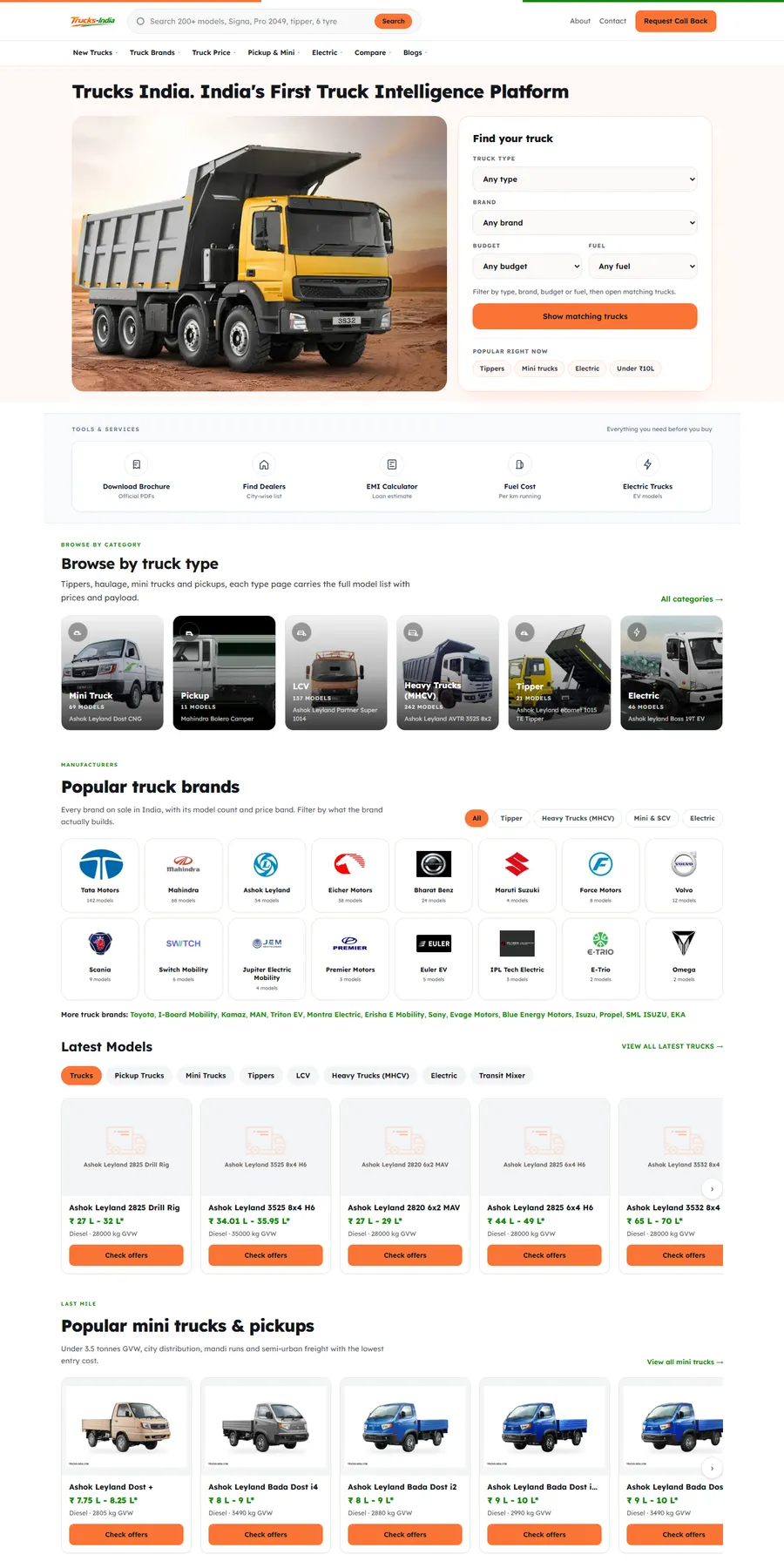
    Trucks India, a commercial vehicle research platform, runs well over a thousand structured pages built from truck spec data. A fleet's equipment, lane, state and job pages are the same kind of build: many indexable pages from structured facts, each kept accurate as the data changes.

  • Three audiences, planned from day one

    Shippers, drivers and carriers get their own paths, phone lines, forms and tracking, instead of a homepage that tries to speak to everyone at once.

  • We read the rules your site touches

    Broker status under 371.7, mover advertising under 375.207, DOT application handling, FCRA disclosures, TCPA consent and Google Jobs markup are part of the build plan, not an afterthought.

  • Fixed quote, dated plan

    A free audit and fixed quote in 1 business day, a written scope, a dated week-by-week plan and weekly written updates. If we slip a date because of us, the next month of support is free.

  • You own everything

    Your code, design, content, domain and accounts are yours from day one. No lock-in, an editable CMS with training so dispatch or recruiting can update pay and lanes, and 30 days of free support after launch.

  • Driver recruiting treated as half the site

    Most web agencies build for the shipper and add a careers page at the end. We plan job pages by type and hiring area, Google Jobs markup, quick-apply and the hand-off to your applicant system with the same care as the freight quote, because for most fleets drivers are the harder hire.

In writing, before we start

  • Fixed quote in 1 business day

    Scope, deliverables and price agreed in writing, with a free audit of your current site. No hourly billing.

  • Launch date in writing

    A dated week-by-week plan and a written update every week. If we slip because of us, the next month of support is free.

  • You own everything

    Code, design, content, domain and accounts are yours from day one. No 12-month contract, no rented site.

  • 30 days of support included

    We watch rankings, forms and call tracking after launch and fix anything that needs it.

Proof, not promises

Results from websites we have built

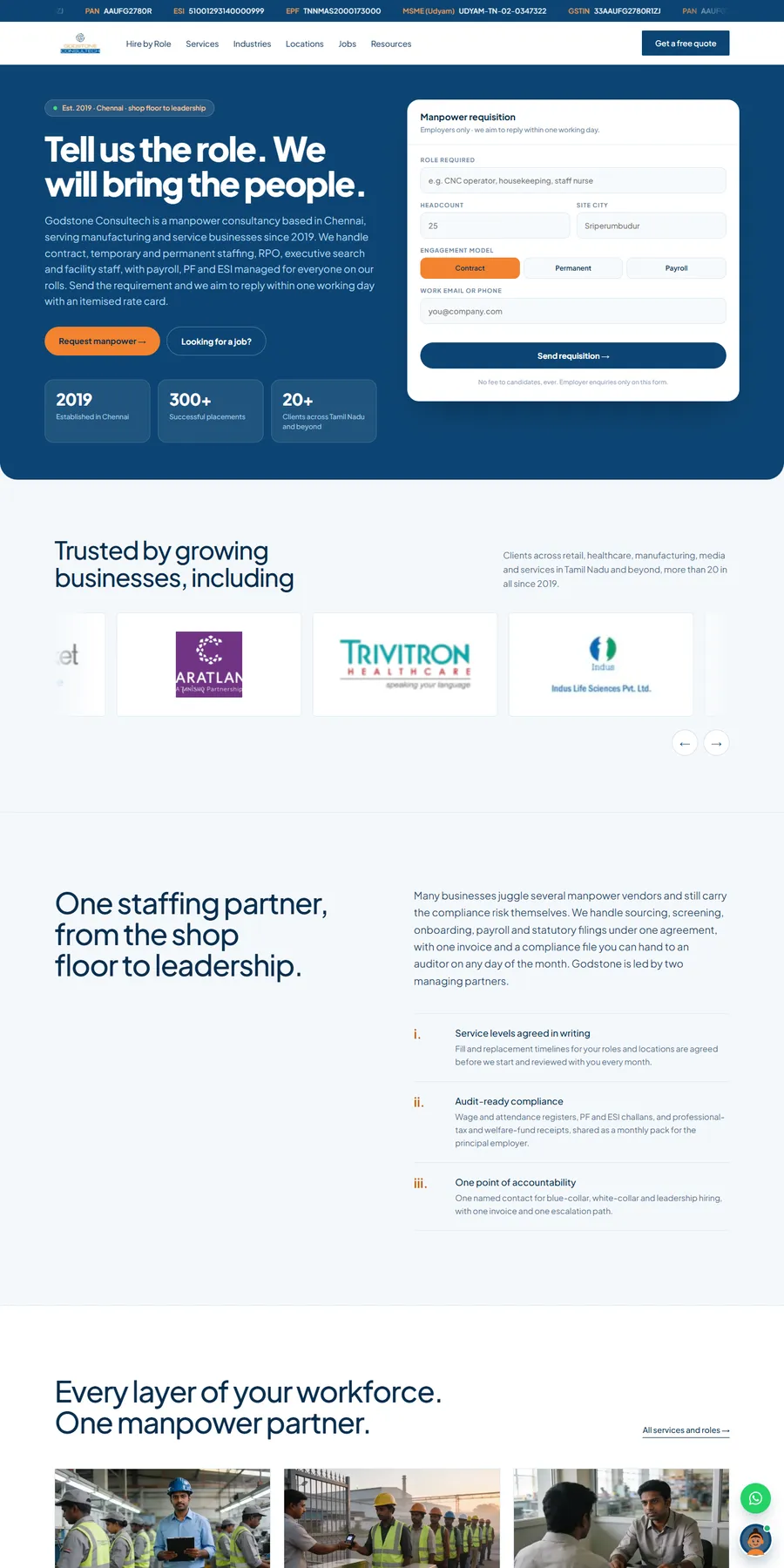
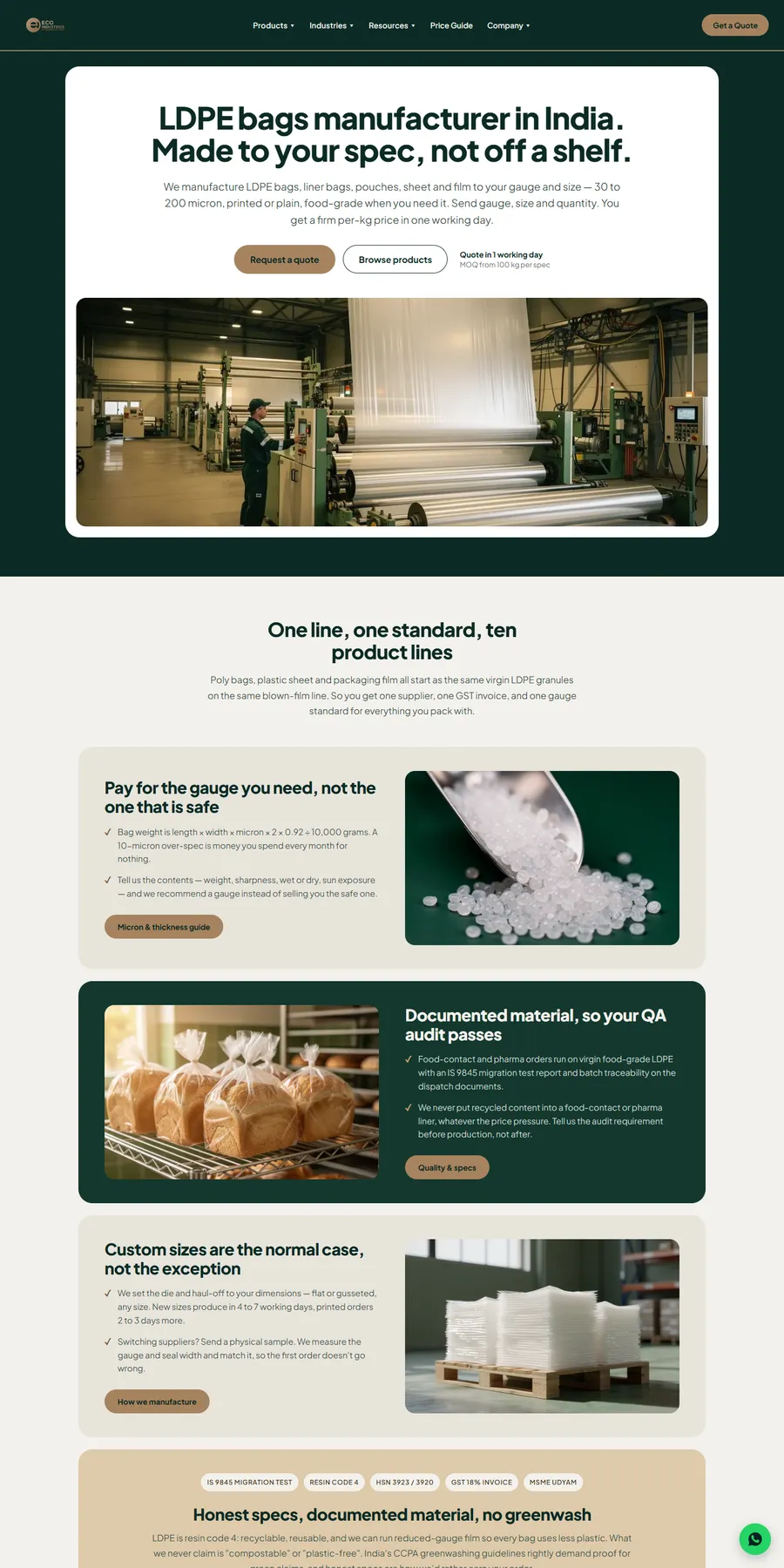
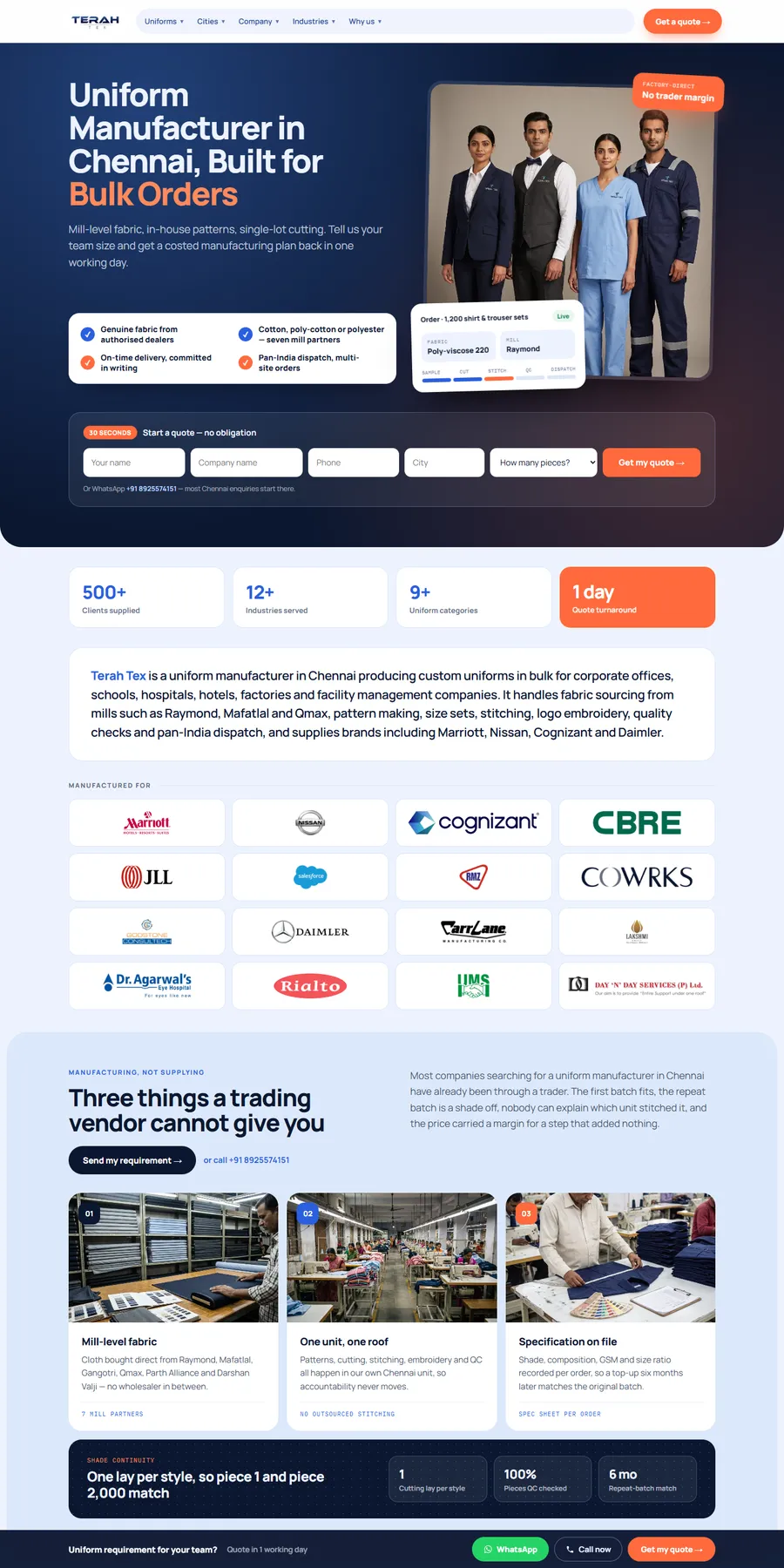
Here is what we can show, and what we cannot. We have not yet built a site for a US carrier, freight broker or 3PL, and none of our clients are US businesses. Trucks India, a commercial vehicle research platform, is our closest work: weekly Google clicks went from 12 to 292 in five weeks on a site with 497 truck models and 1,299 variant pages. Terah Tex shows a B2B quote funnel like a freight RFQ, going from no website enquiries to about 5 bulk-order leads a week with a two-step quote form. Godstone Consultech, a staffing site, is our nearest work to driver recruiting. To make up for a short track record, you get a free audit, a written scope with a fixed quote, and a dated plan. If we slip a date because of us, the next month of support is free.

More websites we have designed and built

Process

How your trucking website project runs

Typical timeline: 4 to 8 weeks for most carrier, broker or 3PL sites; 8 to 12 weeks with many lane, state or job pages. You see progress every week.

  1. Step 01 · Week 1

    Discovery and audit

    We audit your current site, competitors, and how you show up on Google and in AI answers, then agree on goals and a fixed quote.

  2. Step 02 · Weeks 2 to 3

    Strategy and design

    Sitemap, wireframes and full designs for your review. You approve everything before we build.

  3. Step 03 · Weeks 3 to 6

    Build and test

    Development, SEO setup, speed tuning, and testing across devices and browsers.

  4. Step 04 · Launch and beyond

    Launch and grow

    We launch, monitor, and improve based on real data. 30 days of free support included.

What shapes your quote

Scope, not hourly billing

Every project gets a fixed quote within 1 business day, agreed before work starts.

Get my fixed quote →
  • How many audiences the site serves: shippers only, or shippers, drivers and carriers
  • Number of mode, equipment, lane, state and job pages
  • Integrations: applicant system hand-off, carrier onboarding links, TMS tracking portal, CRM
  • Content: whether we write from interviews with dispatch and recruiting, and whether you need a fleet photo shoot plan
  • 3PL extras: warehouse location pages, integration lists, quote calculators
  • Migration from an old site, including redirects for existing job and service URLs

Trucking website questions, answered

Straight answers to what owners ask us, and what they ask Google and AI assistants. Ask us anything else.

What does a trucking website development company do?

It builds a site that passes the vetting check shippers, brokers and drivers run, takes freight quotes with the details dispatch needs, recruits CDL drivers with clear job pages, and tracks every call, quote and application. For brokers it adds carrier setup and broker status wording, and for 3PLs warehouse and integration pages.

How much does a trucking website cost?

We give a fixed quote, agreed before work starts, based on pages, features, integrations and content. You get it within 1 business day with a free audit of your current site. No hourly billing.

How long does it take to build?

Most carrier, broker or 3PL sites take 4 to 8 weeks. Sites with many lane, state or job pages take 8 to 12 weeks. You get a dated week-by-week plan, and if we slip a date because of us, the next month of support is free.

Do I have to write the content and supply photos?

No. We write the pages from short interviews with you, dispatch and recruiting, and send a shot list so someone in the yard can photograph your own tractors, trailers and drivers on a phone. You approve every page before launch, and recruiting can update pay and home time in the CMS afterwards.

Can a website stop scammers from using my company name?

No website can stop fraud. It can make the real you easy to verify: a domain email, a phone, email and address that match SAFER exactly, a verify-us page with your official contacts, and a news page where you can post a warning fast, which FMCSA lists as a response step after identity theft.

Will a website get me direct shippers?

Not on its own. It converts the shippers your sales team calls, and it can win searches for niche lanes, specialized equipment and warehousing. We do not promise lead numbers. We track every quote request so you can judge it.

Should my site show my DOT and MC numbers, safety rating and insurance?

Yes, in text with a link to your SAFER Company Snapshot. Brokers can add BMC-84 bond status. Keep the COI and W-9 behind a short request form instead of a public download, so vetting is fast for real shippers and harder for impersonators.

Can the website take driver applications?

Yes, as a short quick-apply on the site that hands off to the full DOT application in Tenstreet IntelliApp or your applicant system. The SSN, employment history and stand-alone FCRA disclosure stay in that secure flow, not in a website form, and the driver gives Clearinghouse consent in FMCSA's Clearinghouse.

What should freight broker website design include?

Your registered name, clear broker status and MC number, the modes and industries you cover, a shipper quote form, a carrier setup page with payment terms, and a verify-a-load page. Federal rules bar a broker from presenting itself as a carrier, so no "our trucks" copy.

Will my site show up in ChatGPT or Google AI answers?

No one can guarantee that. We build the conditions AI systems use: lanes, equipment, credentials and pay in text, one page per question, matching schema and consistent facts across your site, SAFER and Google Business Profile. Then we measure AI-referred visits.

Is a template good enough for trucking website design?

A template gets you a page. It will not give you an authority block, a five-field freight quote, job pages with Google Jobs markup, an applicant system hand-off or call tracking without a lot of work you then maintain.

Who owns the website when it is done?

You do. Code, design, content, domain and accounts are yours from day one, with no lock-in. You get an editable CMS and training so recruiting can update pay and dispatch can update lanes.

We are on a site an agency hosts for us. Can we switch?

Yes. We audit what you have, move your content, set up redirects for old service and job URLs so you keep search history, and put the domain and hosting in your name. Check your current contract for notice terms first.

What should a logistics website design company build for a 3PL?

Fulfillment, storage, cross-dock and returns pages, warehouse locations with square footage, an integrations page (Shopify, Amazon, EDI), a fit checklist, and a quote form that asks order volume, SKU count and channels.
Get your free trucking website audit and fixed quote

Four quick questions. You'll get a fixed quote and a free audit of your current site within 1 business day.

  • ✓ No obligation, no sales pressure
  • ✓ Fixed price, never hourly
  • ✓ Your details stay private

Prefer email? info@billionwebstudio.com

Step 1 of 4~60 seconds
What do you need?