Skip to content
Booking projects for next month. Free website audit with every quote.Claim yours →

Home services and tradesBooking projects for November

Solar Website Development Company for More Booked Site Visits

Your homeowner lost the 30% tax credit on January 1, now asks ChatGPT whether a lease or a battery makes sense, and checks your license number before calling. We build solar installer websites that answer those questions honestly, qualify the lead by address and bill, and send every estimate request into Aurora, OpenSolar or your CRM.

  • Built for solar installers
  • Fixed quote in 1 business day
  • You own everything
yoursolar.com/battery-backupHome solar andbatteries in TucsonGet my estimateTap to callNew request: battery add-onFrom /battery-backup · 4 min agoTracked as a leadSource: GoogleAI ASSISTANTCan I add a battery to my existingsolar?Your Company: NABCEP-certified, listsbattery add-on steps and costs.Source: your website
Illustration: a visit becomes a tracked lead

The short answer

What does a solar website development company do?

A solar website development company builds websites for solar installers that turn homeowners and business owners researching solar, batteries and EV chargers into booked site visits, virtual consultations and commercial proposals. The site has to explain 2026 costs and financing honestly, qualify each lead by address, roof and electric bill before your designer spends time on it, prove you are licensed and will still be around to service the system, and record which page, call or form produced each signed contract.

For a residential installer that means separate pages for solar, battery backup, adding a battery to an existing system, EV chargers, panel upgrades and service for systems another company installed, plus a cost guide by system size and a lease vs buy page that reflects the end of the Section 25D credit. For a commercial or agricultural installer, solar contractor website design means a consultation path built around annual kWh, demand charges, roof or land area and grant help, not the same instant-quote form a homeowner sees.

Billion Web Studio is a solar website development company that delivers this as one fixed-scope project: design, service and city pages backed by real installs, calculators that state their assumptions, schema markup, call and form tracking in GA4, and connections to Aurora Solar, OpenSolar or your CRM. You own the site, the domain and every account from day one. We built a 325-page site for a rooftop solar installer outside the US that went from no tracked leads to 7 to 10 inquiries a week.

The market

What the numbers say about solar installers online

2026 is the first year residential solar is sold without the homeowner tax credit. Wood Mackenzie expects fewer residential installs, more buyers are asking about leases and PPAs, more want a battery, and every one of them compares several installers before booking a site visit. Your website now decides which installer gets compared at all.

How they choose

How customers find and choose a solar installer

Solar is not an impulse purchase. A homeowner usually decides they want it after a high summer bill, a rate change or an outage, then spends weeks reading, asking AI tools and collecting quotes. Here is how that decision happens and what your site has to do at each step.

  1. 1

    The trigger: a summer bill spike, a time-of-use rate change or a blackout

    The first searches are research, not "near me": "is solar worth it in 2026", "do I need a battery", "lease or buy solar". Your site needs plain, dated answers to those questions, written for your utility territory, so you are in the reading list before the buyer has a shortlist.

  2. 2

    The reality check: cost, payback and the lost tax credit

    Buyers look for price per watt, cost by system size and what changed when Section 25D ended. A cost guide with real ranges, a payback calculator that states its rate and production assumptions, and an honest lease vs buy page keep them on your site instead of a marketplace.

  3. 3

    The trust check: license, NABCEP, reviews and who services it later

    After years of door-knocking pitches and installers going out of business, buyers check your license record, look for NABCEP-certified staff, read recent reviews and ask who honors the warranty. Your license number, classifications, installer names, real local project photos and a warranty page must be one tap away.

  4. 4

    The shortlist: two or three installers, often suggested by AI

    Buyers ask Google, Maps and ChatGPT for installers who do exactly their job: battery add-ons for an existing system, a ground mount, a Level 2 charger with a panel upgrade. One page per service and per real service area is what lets those tools match you to the request.

  5. 5

    The booking: address, bill and a site visit time

    The buyer enters an address, uploads a bill and picks a virtual or in-home slot. Every submission and call is tagged with its source page and lands in your CRM or design tool.

The problem

Why most solar websites lose booked jobs

What we find again and again when we audit sites in this trade. None of it is about how the site looks.

Leak 01

Your site still promises "30% back from the government"

The residential clean energy credit is not available for systems placed in service after December 31, 2025. A homepage banner, calculator or 2024 blog post that still promises it tells an informed buyer your site is stale, and old pages keep feeding wrong answers to AI tools.

Leak 02

Homeowners and business owners hit the same instant-quote form

A farm owner with a 200 kW ground-mount project and a demand-charge problem gets asked for a monthly bill and a roof photo, then hears nothing for days. Commercial and agricultural buyers need a consultation path, case studies and a named contact, not a residential funnel.

Leak 03

No pages for batteries, EV chargers or adding storage to existing solar

Battery interest is now the main reason many homeowners call, and plenty already have panels. If battery backup, add-a-battery, Level 2 chargers and main panel upgrades live as bullet points on one Services page, those searches go to the installer who gave each one its own page.

Leak 04

The calculator is a contact form in disguise

A "savings calculator" that only asks for a name and phone number before showing anything, or shows a number with no rate, production or escalation assumptions, reads as a sales trap. It also creates a savings claim you may have to substantiate under the FTC Act and new state solar sales laws.

Leak 05

Nothing tells the buyer you will be here in ten years

Buyers have watched installers close and leave customers with orphaned systems. A site with no license numbers, no physical address, no named crews, no service page and no statement of who honors panel, inverter, battery and roof penetration warranties loses to the one that shows all of it.

Leak 06

You cannot tell which page produced a signed contract

Solar leads take weeks or months to close. Without call tracking, GA4 lead events and form source fields passed into your CRM, you cannot tell whether the battery page, a Local Services Ad or a home show mailer produced last quarter's installs, so marketing spend gets cut in the wrong place.

Generic vs built for you

Why a generic website fails solar installers

A template is built to fit every business, so it fits yours badly. Here is what changes when the site is planned around how customers actually buy.

Generic website compared with a website built for solar installers
What you needGeneric template siteBuilt for solar installers
Incentive and financing copyA template section headed "Federal Tax Credit" that promises homeowners 30% back, written once and never datedA dated incentives page that explains the end of 25D, how leases and PPAs fit in, state and utility rebates for your territory, and tells buyers to talk to a tax professional
Estimate flowName, email, phone and a message box, sent to an inboxAddress first with out-of-area handling and a few qualifying questions, posted to your CRM, Aurora or OpenSolar with the source page
Residential vs commercial buyersOne contact form for everyoneSeparate paths: instant estimate for homes, consultation form for businesses, farms and nonprofits that asks for annual kWh, demand charges, roof or land area and timeline
CalculatorsA plugin that outputs a savings figure with no visible assumptions, or no calculator at allPayback, battery sizing and EV charging cost tools that show the utility rate, production estimate and assumptions they use, or your design tool's estimator embedded above the fold
Service and existing customersNothing for people who already have panelsService and repair, monitoring help, inverter replacement, remove-and-reinstall for reroofs, battery add-ons and service for systems another company installed, each with its own request form
City pagesFifty copies of one page with the city name swappedFewer, real area pages built from your local installs, the utility and its net metering or net billing rules, permit and HOA notes, and photos from that area
Trust proofStock photos of panels and a generic "licensed and insured" lineLicense numbers and classifications, NABCEP-certified staff by name, manufacturer certifications you actually hold, real install photos by city and system size, and a plain warranty page
OwnershipA rented site on a monthly plan where the agency keeps the domain, design or content if you leaveYou own the code, design, content, domain and every account from day one, with no lock-in

Free self-check · 2 minutes

What your current solar website is missing

Tick everything your site does today. Each box you cannot tick is a place where a ready-to-buy visitor leaves.

What you need

What every solar website needs

The features that turn a solar website from a brochure into the best salesperson you have. We build all of them.

  1. Must-have · 01

    Address-first estimate flow

    Zip or address check, out-of-area message, then roof age, shading, ownership, average bill or bill upload, battery and EV interest, lease or purchase interest and a virtual or in-home visit slot. Short steps on a phone, with the contact step last.

  2. Must-have · 02

    Two paths on the homepage

    "Get my estimate" for buyers ready to talk, and "See costs and options" for researchers, leading to the cost guide, lease vs buy page and an optional email follow-up. Most solar buyers are still researching on the first visit.

  3. Must-have · 03

    Cost guide by system size

    Price per watt ranges for your market, prices for common sizes (6 kW, 8 kW, 10 kW and up), and what moves the price: roof work, main panel upgrade, battery, ground mount. Buyers want a price range before they call, and a site that hides it sends them to one that shows it.

  4. Must-have · 04

    2026-accurate financing and incentives page

    Cash, loan, lease and PPA explained side by side, the end of 25D for owned systems, how third-party ownership works now, state and utility rebates, net metering or net billing for each utility you serve, a "last reviewed" date and a talk-to-your-tax-professional line.

  5. Must-have · 05

    Battery, EV charger and panel upgrade pages

    Standalone backup, solar plus storage, adding a battery to existing solar, which circuits stay on in an outage, Level 2 charger installs and main panel upgrades. Brand pages only for batteries you are certified to install.

  6. Must-have · 06

    Commercial, agricultural and nonprofit pages

    Rooftop, carport and ground mount, case studies with system size and output, financial analysis and depreciation questions routed to the buyer's advisor, USDA REAP grant help where you offer it, and a consultation form.

  7. Must-have · 07

    Process, timeline and a plain "how we work" policy

    Site visit, design, proposal, permits, HOA, utility interconnection, install day, inspection and permission to operate, each with a realistic time range for your area. Then the policy: who does the install (your crews or subcontractors), your quote turnaround, whether you install customer-supplied equipment or work under owner-pulled permits and on what terms, and what you never do: no door-knocking, no "free solar", no claims of utility or government ties. It filters bad-fit leads before the phone rings and separates you from the door-to-door model.

  8. Must-have · 08

    Warranty and roof page

    Panel, inverter, battery, workmanship and roof penetration warranties in plain words, who honors each one if a manufacturer closes, and how you coordinate with roofers on reroofs and leak claims.

  9. Must-have · 09

    Service and orphaned-system pages

    Repair, monitoring troubleshooting, inverter replacement, panel cleaning, remove-and-reinstall and service for systems installed by companies that closed, with a service request form and a separate service phone number.

  10. Must-have · 10

    License and credentials block on every page

    License numbers and classifications (for example C-46 or C-10 in California), the licensed entity's legal name, Texas solar retailer registration where it applies, NABCEP certifications by staff name, and manufacturer certifications you actually hold.

  11. Must-have · 11

    Real project gallery by city and size

    Install photos tagged with city, system size, battery and roof type, plus short project write-ups. These feed your city pages and give AI tools and buyers local evidence.

  12. Must-have · 12

    Recent reviews and a Google profile that match the site

    A review request sent at permission to operate and after the first monitoring check, a live Google review feed with source and date, and a Business Profile whose name, license, services and areas match your pages exactly. Buyers read recent reviews before they call, and the map pack and Local Services Ads send calls to whoever looks most current.

What we build

The solar website we would build for you

This is the sitemap our solar installer website design starts from for a residential and commercial installer that also sells batteries and EV chargers. We cut or add pages based on what you actually install and where.

yourcompany.comHome · every section links here

Residential

  • Home solar
  • Battery backup and solar plus storage
  • Add a battery to existing solar
  • Level 2 EV charger installation
  • Main panel upgrades
  • Ground-mount systems
  • Solar for new homes

Commercial and agricultural

  • Commercial rooftop solar
  • Solar carports
  • Farm and agricultural solar
  • Nonprofit and public sector solar
  • Commercial battery storage
  • Commercial case studies
  • Request a consultation

Costs and financing

  • Solar cost guide by system size
  • Cash, loan, lease or PPA
  • 2026 incentives and rebates
  • Savings and payback calculator
  • Battery sizing calculator

Learning center

  • Net metering, net billing and time-of-use explained for your utilities
  • Is my roof ready for solar? Reroof first or not
  • Solar and your roof warranty: who covers penetrations
  • HOA rules for solar in your state
  • How to spot a solar scam or a "free solar" pitch
  • Leased solar and selling your home
  • Solar, batteries and EV charging together
  • How to compare solar quotes

Service and existing customers

  • Solar repair and service
  • Service for systems another company installed
  • Remove and reinstall for reroofs
  • Inverter replacement
  • Service plans
  • Monitoring login and help
  • Warranty claims
  • Referral program

Service areas and trust

  • Service area hub
  • City pages built from local installs, with permit and HOA notes
  • Utility pages for each utility you serve
  • Licenses, certifications and NABCEP-certified team
  • Warranties
  • Our process and timeline
  • Project gallery
  • Reviews

Calls, bookings, leads

How we turn visitors into booked jobs

A solar lead is worth a lot and takes a long time to close, so the site has to collect enough to qualify the job, book the visit and remember where the lead came from until the contract is signed.

  • 01Instant estimate above the foldYour design tool's estimator (Aurora Lead Capture AI or OpenSolar AI Lead Gen) or our own address-and-bill flow sits in the hero with copy like "Get an instant savings estimate", so the most motivated buyers start before they scroll.
  • 02Site visit and virtual consult bookingAfter the estimate, the buyer picks an in-home or video appointment slot and uploads a recent bill. Your sales team gets a booked appointment with roof, usage and battery interest already filled in.
  • 03A research path that still captures the leadThe cost guide, lease vs buy page and "how to compare solar quotes" guide end with an offer to email a personalized estimate or a quote checklist, so buyers who are six weeks out still become a contact.
  • 04Separate commercial consultation formBusiness type, roof or land area, annual kWh or demand charges, ownership goals and timeline, routed to the person who runs commercial proposals, not to the residential call queue.
  • 05Click-to-call and texting on every pageTap-to-call in the header and a sticky mobile bar, with tracked numbers for your site, Google Business Profile, Local Services Ads, truck wraps, mailers and home shows, so offline marketing is measured too.
  • 06Existing-customer paths that create new jobsService requests, battery add-on interest, remove-and-reinstall for reroofs and referral forms each post to the right inbox and are tagged, because your installed base is your cheapest source of new contracts.
  • 07Every lead tracked to the signed contractCalls, forms, texts and chats are GA4 lead events with source page and campaign, passed into your CRM, so you can compare which pages and channels produce site visits and signed installs, not just clicks.

AI search

More consumers now ask ChatGPT and other AI tools for local recommendations, and when Google shows an AI summary, fewer people click through to a regular result. Solar buyers ask AI tools the hard questions about credits, batteries and leases, and electricians already report customers arguing with them because a chatbot gave a wrong rebate or code answer. If your site does not publish clear, local, dated answers, the AI cites someone else's.

Questions your customers ask AI assistants

  • Is solar still worth it in 2026 now that the tax credit ended?
  • Should I buy, lease or sign a PPA for solar panels?
  • Can I add a battery to my existing solar system?
  • Who services my solar panels if my installer went out of business?
  • Best NABCEP-certified solar installers near me for a home battery
  • How long does solar take from contract to permission to operate?
  • One page per service and per real service area

    Local SEO experts in Whitespark's 2026 survey rank a dedicated page for each service as a top AI visibility factor. Battery add-ons, EV chargers, ground mounts and orphaned-system service each get a page an AI tool can cite.

  • Question-and-answer blocks written for your utility

    Cost, payback, batteries, lease vs buy, net metering, permits and timelines answered in plain sentences that name your utilities and local rules, with FAQ and Service schema where it fits.

  • Dated incentive pages, old ones retired

    Every incentive and financing page carries a "last reviewed" date. Old 2023 and 2024 posts that promise the 30% homeowner credit are updated or redirected so they stop feeding wrong answers into AI summaries.

  • Consistent business facts everywhere

    The same legal name, address, phone, license numbers and service areas on your site, Google Business Profile, NABCEP directory listing, state board record and solar directories, marked up with LocalBusiness schema.

  • Proof AI tools can quote

    Project pages with system size, battery, city and photos, awards and directory listings you actually hold, and recent reviews with source and date, so an AI answer has a concrete reason to name you.

  • Crawl access and an llms.txt file

    We check that AI crawlers can reach your key pages and can add an llms.txt file that points them to your services, areas, credentials and cost guide. We test answers in ChatGPT, Google AI Mode and Perplexity, knowing results vary between runs.

Compliance and trust

The rules a solar website has to get right

Solar is one of the most regulated home-improvement sales in the US, and much of that regulation now reaches your website copy and forms. We build the pages, forms and consent capture so you and your counsel can meet these rules. We do not certify compliance.

Licensing display and state solar sales laws

License numbers, classifications and the licensed entity on every location page. In California, CSLB's Solar Energy System Disclosure Document must be printed on the front or cover page of every residential solar contract, so your sales pages and calculators should not contradict its total-cost and financing terms. Under SB 1036, Texas requires solar retailers and salespeople to register with TDLR from September 1, 2026 (check current TDLR rules); we display registration numbers where required.

Savings and affiliation claims

The FTC has acted against solar telemarketers that claimed utility or government ties and overstated savings. Site copy avoids "free solar" and "government program" language, savings figures show their assumptions, and pages state that credits generally go to the system owner, so lease and PPA customers know what they will and will not receive.

Federal incentive language

Section 25D ended for systems placed in service after December 31, 2025. Third-party-owned systems (leases and PPAs) can still use the 48E business credit if construction began by July 4, 2026 or the system is placed in service by December 31, 2027. Pages explain this without giving tax advice and tell buyers to talk to a tax professional.

TCPA consent on estimate forms

If you make telemarketing calls or texts to leads with an autodialer, prerecorded message or AI voice, the form captures prior express written consent that names your company and states consent is not a condition of purchase, with an unchecked box and a stored record. Your counsel approves the wording.

Reviews and testimonials under the FTC rule

Real reviews shown with source and date, no review gating, staff and family reviews disclosed, no AI-written testimonials and no "independent" best-installer site you control. The FTC's Consumer Reviews and Testimonials Rule has applied since October 21, 2024.

Accessibility and certification claims

Multi-step estimate forms and calculators that work by keyboard with labeled fields and clear errors, text alternatives for roof diagrams, captions on install videos, using WCAG, which DOJ guidance names as helpful technical guidance. NABCEP and manufacturer badges appear only where you hold them, since buyers can check NABCEP's public directory.

We build with tools and patterns that support these rules and document what we set up. For legal advice on your own obligations, talk to your attorney.

From the forums

What solar installers ask about websites, answered

Solar owners and the electricians, roofers and local SEO people around them talk about leads, trust and websites on a handful of trade forums, and meet through state associations, NABCEP and the big trade shows. These are real questions from forum threads, paraphrased, with our straight answers.

Where owners talkElectricianTalk (Solar, Wind and Alternative Energy; Business, Marketing, and Sales; General Electrical Discussions)DIY Solar Power Forum (Solar Installer Finder board)Solar Panel Talk (Solar Panel Installation board)ContractorTalk (Roofing Contractor forum)Local Search Forum

Asked on Local Search Forum

“We are opening an appointment-only second office in the next city. Does it need its own phone number and Google Business Profile?”

Our answer: A separate tracked number is not strictly required, but it lets you measure that office and lowers the risk of Google merging the two listings. Give the office its own location page that matches the profile exactly: address, hours someone answers the phone, license and the installs you have done there.

Asked on ElectricianTalk

“We run the website, SEO and ads for a solar installer. What else actually brings in solar customers?”

Our answer: Electricians in that thread named branded trucks, direct mail, home shows, radio, TV and charity events. Those create the demand; the website has to catch it. Give each campaign its own tracked number and landing page so you can see which truck wrap or mailer produced site visits.

Asked on ElectricianTalk

“Customers keep arguing with us about rebates and code because ChatGPT told them something different. What do we do?”

Our answer: AI tools fill gaps with whatever they can find, and they often miss local utility rules. Publish clear, dated answers on your site about your utilities, current incentives, permits and timelines, so there is a correct local source to cite and a page you can send the customer to.

Asked on ElectricianTalk

“A customer got a telemarketed solar quote far below equipment cost and promising huge savings. How do we win against that?”

Our answer: One member's rule of thumb: if the salesperson contacts you, be suspicious; if you contact the company, it is usually legitimate. Make your site the place they find: state what you do not do (no door-knocking, no "free solar"), explain lease vs purchase, and show real price ranges by system size.

Asked on DIY Solar Power Forum

“Do cold calling and door-knocking still work for installers, or do buyers find installers on their own now?”

Our answer: An experienced solar professional in the thread said people now decide they want solar first and then go looking for someone. That makes search, reviews and AI answers the place buyers start. Your site has to be there with answers when they look, not a sales pitch.

Asked on DIY Solar Power Forum

“A homeowner who bought his own inverter, battery and panels asked why electricians quote so high for install-only labor. Why do contractors price these jobs that way?”

Our answer: Contractors in the thread explained why those jobs price high: incomplete plans, mid-project changes, unfamiliar equipment and permit liability that stays with the contractor. Say on your site whether you take customer-supplied equipment and owner-pulled permits, and on what terms, so the lead is filtered before the phone rings.

Asked on ElectricianTalk

“Installers that sold hundreds of systems and then vanished have scared buyers. How do we show we are different?”

Our answer: Show a real address, license numbers, whether your own crews or subcontractors do the install, and how service works after the system is on. A service page for systems other companies installed shows you plan to be around.

Asked on Solar Panel Talk

“Someone is selling pre-screened ZIP code lead lists for canvassing. Worth it?”

Our answer: A member tested the sample and every ZIP returned the same homes, and moderators removed the account as spam. Bought lists come and go; a site you own, with tracked inbound leads from your own pages, is the asset that keeps working.

Asked on Local Search Forum

“We are an electrical contractor adding solar, EV chargers and service upgrades. New brand and site, or a section of our current one?”

Our answer: Replies split, and the answer depends on how much qualified traffic your current site already gets. In most cases we keep one domain with a clear solar and storage section, linked from your electrical pages. If you do launch a separate brand, redirect and cross-link properly so you do not throw away what already ranks.

Asked on ContractorTalk

“We partner with a roofer. If panels go on after a new roof, who covers leaks, and does it void the shingle warranty?”

Our answer: Roofers in the thread said to ask the shingle manufacturer directly, keep the roofing and solar contracts separate, and put in writing who warrants each roof penetration. One described a leak dispute after a solar install that took years and a lawsuit to settle. Put that answer on your site: a roof and warranty page that names who covers penetrations, how you coordinate reroofs, and a remove-and-reinstall service page. Homeowners look for it before they sign.

Questions are paraphrased from public threads. We never quote members by name.

Others vs us

Billion Web Studio vs a website builder template vs a typical solar marketing agency

The three ways solar installers usually get a website, side by side.

Billion Web Studio vs a website builder template vs a typical solar marketing agency
Billion Web StudioWebsite builder templateTypical industry agency
Who owns the site, domain and contentYou, from day one, with no lock-inYou own the content, the platform owns the hosting and the template licenseOften the agency, on a 12-month or longer contract
Price and contractFixed quote in 1 business day, agreed before work starts, no hourly billingMonthly subscription plus your own timeMonthly retainer, sometimes with a setup fee and a revenue minimum
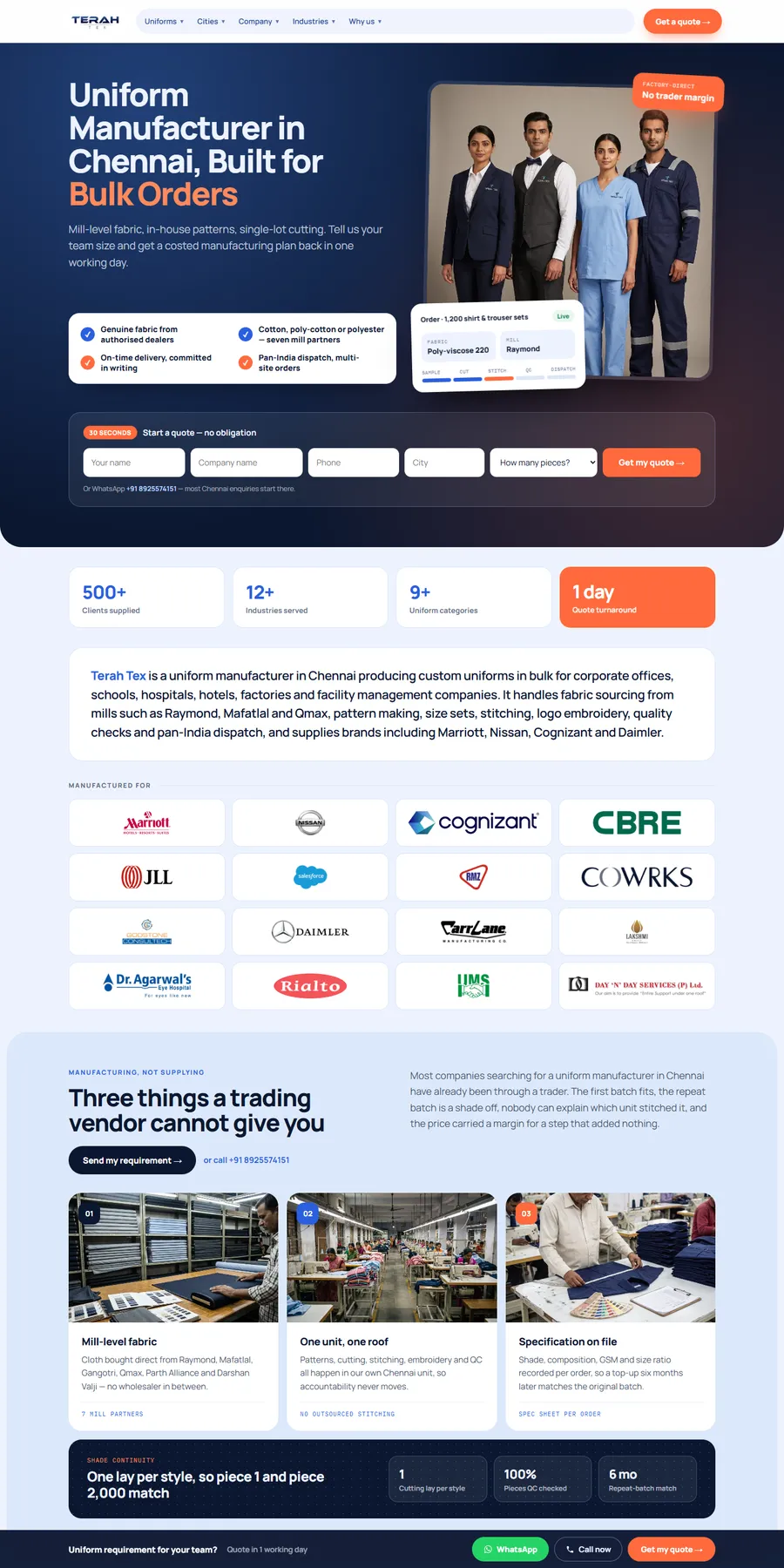
Solar-specific proofA rooftop solar installer site we built (outside the US): 325 pages, price pages by system size, calculators, every lead trackedNoneOften case studies from HVAC, plumbing or other trades
2026 incentive accuracyDated incentives page reflecting the end of 25D, leases, PPAs and 48EOften a template tax credit section that still promises a 30% homeowner creditDepends on who writes the content and when
Estimate flow and buyer pathsAddress-first flow, or Aurora or OpenSolar embedded, posting to your CRM, plus a separate commercial consultation pathOne basic contact form for everyoneUsually available, sometimes tied to the agency's own tools
Compliance-related featuresTCPA consent capture, license display, review display that follows FTC rules, keyboard-accessible WCAG forms; your counsel signs offUp to youVaries, often not covered
Call and form trackingEvery call, form and text as a GA4 lead event with sourceBasic form notificationsUsually included, reports in the agency's dashboard
Timeline and accountability4 to 8 weeks (8 to 12 with many city pages) on a dated week-by-week plan with weekly written updates; if we slip a date because of us, the next month of support is freeAs long as your own evenings takeVaries by agency, often without written dates
Editing your own siteEditable CMS with trainingYes, drag and dropOften through a support ticket

Why Billion Web Studio

What we do better, and why it matters to you

  • We have built a solar installer site already

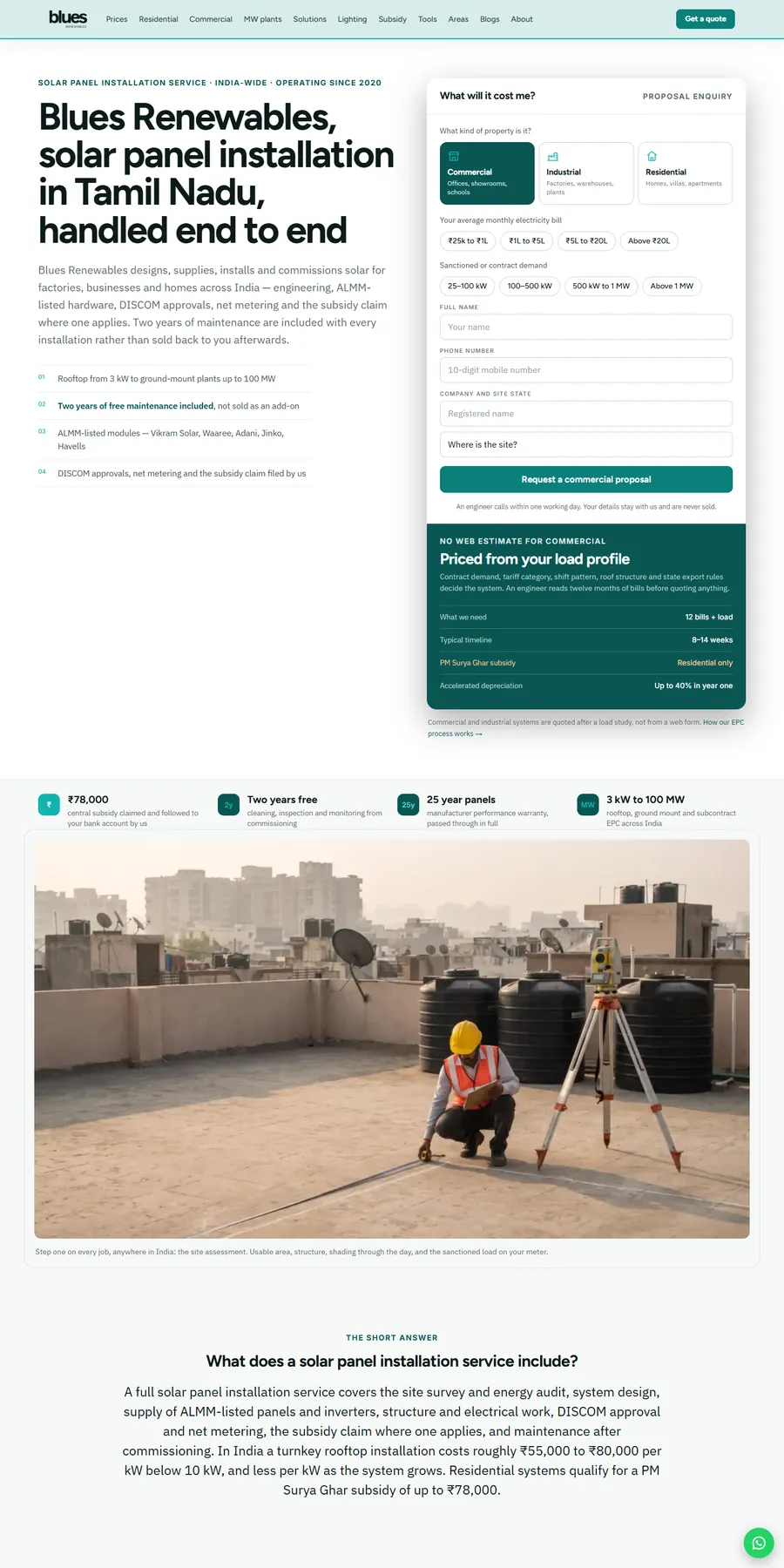
    Blues Renewables, a rooftop solar installer, went from no tracked leads to 7 to 10 inquiries a week, and from 14 to 560 Google clicks a fortnight in two months, on a 325-page site we built: price pages for every system size, solar and ROI calculators and 129 local area guides. It is not a US installer, so we rebuild the incentive, utility and licensing content for your state. The lead system transfers.

  • No revenue minimum

    Some solar marketing agencies only take contractors above a revenue threshold. We offer website design for solar installers of every size and quote small, mid-size and multi-trade installers the same way: a free audit of your current site and a fixed quote within 1 business day.

  • Copy and calculators written for 2026

    We build around the end of 25D, the shift to leases, PPAs and batteries, and the state solar sales rules, so your site does not promise what the law no longer offers.

  • You own everything

    Code, design, content, domain, analytics and every account are yours from day one. If you leave, the site goes with you, with no rented-site clause.

  • SEO, speed and AI structure built in at launch

    Technical SEO, schema markup and Core Web Vitals targets are part of every build, and Aurora or OpenSolar estimator widgets are set up to load without dragging down your mobile pages. The Blues Renewables site scores mid 80s to mid 90s on mobile Lighthouse. Our sister company, Billion Game, is an SEO and AEO agency, so service, cost and area pages are structured for Google and AI answers from day one.

  • Dated plan, weekly updates, a date guarantee

    You get a week-by-week plan with dates and a written update every week. If we slip a date because of us, the next month of support is free.

In writing, before we start

  • Fixed quote in 1 business day

    Scope, deliverables and price agreed in writing, with a free audit of your current site. No hourly billing.

  • Launch date in writing

    A dated week-by-week plan and a written update every week. If we slip because of us, the next month of support is free.

  • You own everything

    Code, design, content, domain and accounts are yours from day one. No 12-month contract, no rented site.

  • 30 days of support included

    We watch rankings, forms and call tracking after launch and fix anything that needs it.

Proof, not promises

Results from websites we have built

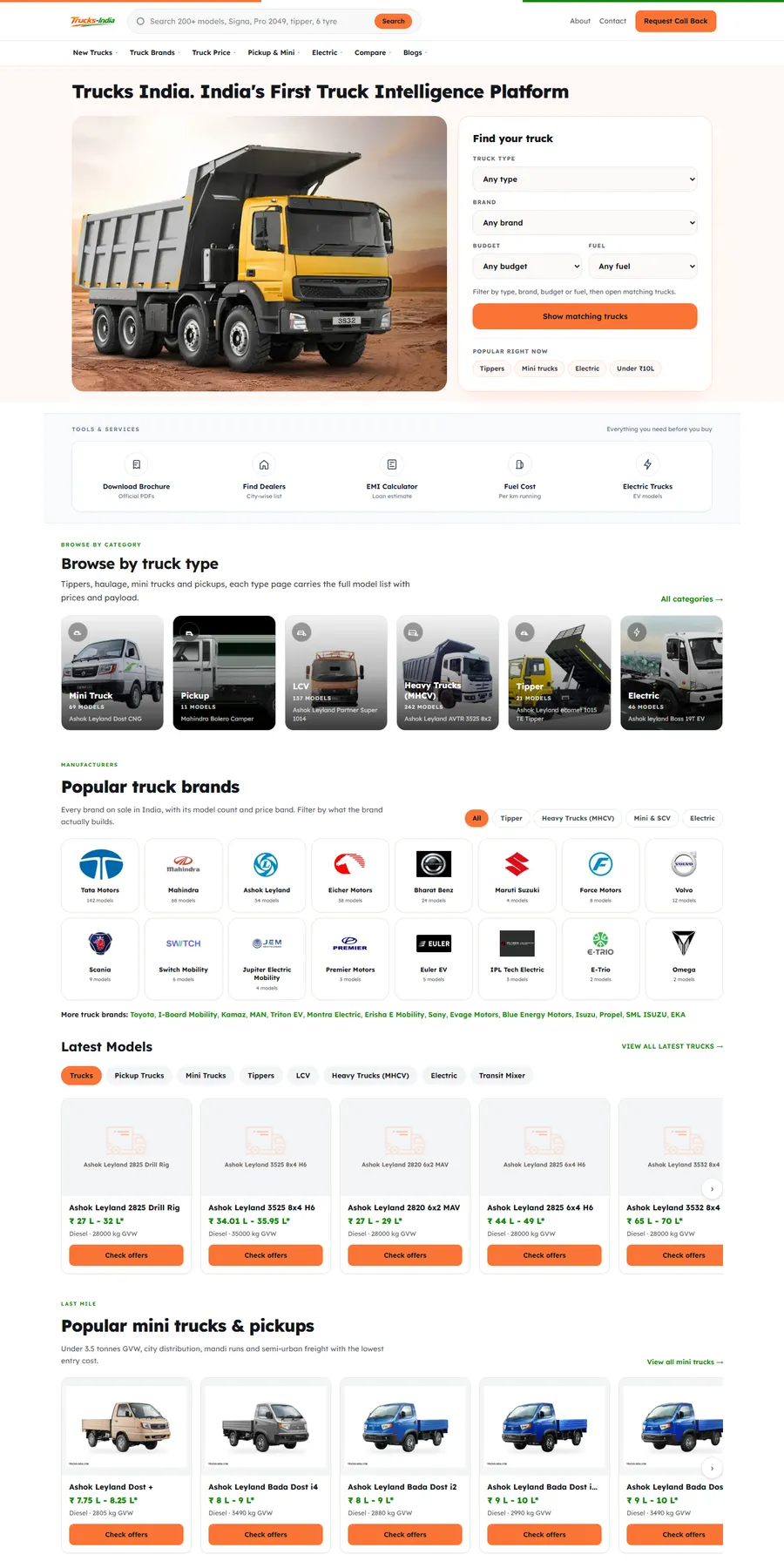
Blues Renewables is direct proof: a rooftop solar installer whose site went from no tracked leads to 7 to 10 inquiries a week (quote forms, calls and WhatsApp), with Google clicks rising from 14 to 560 a fortnight and impressions from 860 to 35,466 a fortnight in two months, per Google Search Console. It is not a US business, so its subsidies and utility rules differ from yours; what transfers is the system: price pages by system size, calculators, incentive guides, real local area pages and every lead tracked in GA4. Trucks India shows we can run calculators and over a thousand data-driven pages at scale. We have not built for a US solar installer yet, and we will not pretend otherwise.

More websites we have designed and built

Process

How your solar website project runs

Typical timeline: 4 to 8 weeks for most solar installer sites; 8 to 12 weeks with many city pages, calculators and a learning center. You see progress every week.

  1. Step 01 · Week 1

    Discovery and audit

    We audit your current site, competitors, and how you show up on Google and in AI answers, then agree on goals and a fixed quote.

  2. Step 02 · Weeks 2 to 3

    Strategy and design

    Sitemap, wireframes and full designs for your review. You approve everything before we build.

  3. Step 03 · Weeks 3 to 6

    Build and test

    Development, SEO setup, speed tuning, and testing across devices and browsers.

  4. Step 04 · Launch and beyond

    Launch and grow

    We launch, monitor, and improve based on real data. 30 days of free support included.

What shapes your quote

Scope, not hourly billing

Every project gets a fixed quote within 1 business day, agreed before work starts.

Get my fixed quote →
  • Number of service and city pages, and how much local install content you can supply
  • Calculators: custom payback, battery and EV tools, or an embedded Aurora or OpenSolar estimator
  • Integrations with your CRM, design tool, scheduling and call tracking
  • Separate residential, commercial and agricultural paths
  • Content writing for cost guides, incentive pages and a learning center
  • Migration from a rented or older site, including redirects for pages that already rank

Solar website questions, answered

Straight answers to what owners ask us, and what they ask Google and AI assistants. Ask us anything else.

How much does solar company website design cost?

We give a fixed quote, agreed before work starts, based on pages, features, integrations and content. You get it within 1 business day of a free audit of your current site. There is no hourly billing.

How long does a solar installer website take to build?

Most solar marketing sites take 4 to 8 weeks. Sites with many city pages, custom calculators and a learning center take 8 to 12 weeks. You get a dated week-by-week plan before we start.

What does a solar web design company include that a general web designer would not?

Separate pages for solar, batteries, EV chargers, commercial and service; a cost guide by system size; financing copy that reflects the end of 25D; an address-first estimate flow tied to your design tool or CRM; license and NABCEP display; and TCPA consent on forms. A general designer usually delivers a contact form and a services list.

Can you add a solar savings calculator, and will it be accurate?

Yes. We either build payback, battery and EV charging calculators that show the utility rate, production and other assumptions they use, or embed your design tool's estimator such as Aurora Lead Capture AI or OpenSolar AI Lead Gen. No calculator can promise a homeowner's savings, so the page says so.

Our site still says "30% federal tax credit". What should it say now?

The IRS says the residential clean energy credit is not available for property placed in service after December 31, 2025. Third-party owners of leased and PPA systems can still claim the 48E business credit if the project began construction by July 4, 2026 or is placed in service by December 31, 2027. We rewrite the page to explain cash, loan, lease and PPA options, date it, and tell buyers to talk to a tax professional.

Can the site connect to Aurora, OpenSolar, our CRM and call tracking?

Yes. Estimate forms post to your CRM or design tool with the source page and campaign attached, and every call and form is recorded as a GA4 lead event. We confirm each integration in the written scope before the quote.

How do we get more recent reviews and show them without breaking FTC rules?

Ask every customer at permission to operate and again after the first monitoring check, with a short link to your Google profile. Show reviews on the site with source and date through a live feed. Never gate, buy or write them, and disclose any from staff or family. The FTC's reviews and testimonials rule has applied since October 21, 2024.

Can we run Google Local Services Ads and get those calls to the right page?

Yes. Google lists Solar energy contractor as a Local Services Ads category in the US. LSA calls are tracked in Google's own dashboard, so we make sure your Business Profile, license data and service pages match what the ad promises, give your profile and site their own tracked numbers, and record every site call and form as a GA4 lead event so you can compare LSA against organic and mailers.

How does a solar installer show up in ChatGPT, Google AI Overviews and AI Mode?

With one page per service and real service area, plain answers to cost, battery and lease questions written for your utilities, dated incentive pages, schema markup and consistent business and license data across your profiles. We cannot guarantee an AI mention, and results vary between runs.

Can you guarantee rankings or a number of leads?

No, and anyone who does is guessing. We guarantee the dated plan: if we slip a date because of us, the next month of support is free.

Do we own the website, domain and content?

Yes. You own the code, design, content, domain and every account from day one, with no lock-in. If you move to another provider, everything goes with you.

We rent our site from a solar marketing company on a contract. Can we move without losing rankings?

Usually, if it is done carefully. We map every page that gets traffic, keep URLs where possible, set 301 redirects for the rest, move content, schema and tracking, and check Search Console after launch. Check your contract for who owns the domain and content first.

What consent language do our estimate forms need if we call or text leads?

If you use an autodialer, prerecorded messages or AI voice for marketing calls or texts to cell phones, the TCPA requires prior express written consent that names your company and says consent is not a condition of purchase. We build the consent capture and record; your counsel approves the wording.

What happens after the solar website launches?

You get 30 days of free support, CMS training so your team can update incentives, projects and offers, and then optional care plans if you want us to keep maintaining it.
Get your free solar website audit and fixed quote

Four quick questions. You'll get a fixed quote and a free audit of your current site within 1 business day.

  • ✓ No obligation, no sales pressure
  • ✓ Fixed price, never hourly
  • ✓ Your details stay private

Prefer email? info@billionwebstudio.com

Step 1 of 4~60 seconds
What do you need?