Skip to content
Booking projects for next month. Free website audit with every quote.Claim yours →

Professional servicesBooking projects for November

Accounting Firm Website Development Company for More Right-Fit Consults

A dentist who needs an S corp election, a landlord with an IRS notice and a client who just wants to upload a W-2 all land on your site, often right after a referral gave them your name. We build accounting firm websites that book the right consults, send clients to the portal in one tap and keep tax details out of forms and ad pixels, for a fixed quote you own outright.

  • Built for accounting and CPA firms
  • Fixed quote in 1 business day
  • You own everything
yourfirm.com/s-corp-tax-plann…Small business CPAsin AustinBook a consultTap to callNew consult: S corp electionFrom /s-corp-tax-planning · 8:42 pmTracked as a leadSource: GoogleAI ASSISTANTWhich CPA near me handles S corp taxes?Your Firm: Texas-licensed CPAs, S corptax and payroll, book online.Source: your website
Illustration: a visit becomes a tracked lead

The short answer

What does an accounting firm website development company do?

An accounting firm website development company builds websites for CPA, enrolled agent and bookkeeping firms that turn referrals and searches for tax preparation, tax planning, bookkeeping, payroll, IRS representation and advisory work into booked consultations with clients who fit. The site has to confirm a referral in under a minute, show which credentials your people hold and in which states, tell a price shopper what you do not do, and give existing clients a fast path to the portal, the upload page and the payment link.

For a small or regional firm that means one page per service (a C corp return is a different search from an IRS payment plan), pages for the niches you actually serve, a client center, a tax season page with deadlines and your new client status, a short intake that never asks for a Social Security number, and a careers page, because hiring experienced staff is the No. 1 current issue for firms of 11 to 30 professionals in the AICPA's 2026 Top Issues Survey, and staff retention ranks in the five-year top five for every firm size except solo practitioners.

Billion Web Studio is an accounting firm website development company that delivers this as one fixed-scope project: design, service and niche pages, AccountingService and Person schema, consult and call tracking in GA4, and links into TaxDome, SafeSend, QuickBooks Online, Xero or whatever your firm already runs. You own the site, the domain and every account from day one, with no monthly site rental and no lock-in.

The market

What the numbers say about accounting and CPA firms online

NASBA counted 650,667 actively licensed CPAs in 53 of the 55 US licensing jurisdictions in August 2026 (excluding Hawaii and New Mexico), and they share local searches with hundreds of thousands of uncredentialed preparers. Your clients are told to check who they hire, more of them ask AI assistants for names, and hiring and keeping staff rank among the top issues for multi-person firms, so a website that sends poor-fit enquiries costs real hours. The figures below show the field you compete in.

How they choose

How clients find and choose an accounting firm

Most accounting clients arrive with a name already in hand: a referral from a loan officer, a financial advisor, an attorney or another business owner. Others start with a problem and a search. Either way they check your website before they book. Here is how a US individual or small business owner picks an accountant and what your site has to do at each step.

  1. 1

    The trigger: a letter, a new entity or messy books

    An IRS notice, a first year as an LLC, a question about electing S corp status, two years of uncategorized transactions in QuickBooks, or a preparer who retired or sold the practice. The search is plain: "CPA for small business near me", "IRS letter help", "bookkeeper for contractors". Your site needs a page for each of those problems.

  2. 2

    The referral check: is this firm real and right for me?

    A referred prospect opens your site to confirm the name they were given. In under a minute they need to see who you serve, a named CPA or EA with a photo and license states, what working with you looks like and how to book. A home page that reads like every other firm's gives them a reason to keep looking.

  3. 3

    The shortlist: map pack, AI answer, two or three sites

    Prospects without a referral compare a few firms on Google, and many now ask an AI assistant. Your site, Google Business Profile and directory listings must state the same name, address, hours, services and credentials.

  4. 4

    The fit check: credentials, niche, fees, response time

    The IRS tells taxpayers to check a preparer's credentials. Prospects also want to know whether you know their industry, whether you work virtually across states, how you price (flat fee, monthly package or quote) and how fast you reply in March. A site that answers these filters out the price shopper before your staff spends a call on them.

  5. 5

    The booking: consult, engagement letter, portal

    The right prospect books a 15 or 30 minute consult or fills a short intake with no SSN and no documents. After the engagement letter is signed, onboarding moves into your encrypted portal. The website hands off cleanly at each step and records which page and source produced the consult.

The problem

Why most accounting firm websites lose new clients

What we find again and again when we audit sites in this trade. None of it is about how the site looks.

Leak 01

One services page, so nothing ranks

Home, About, Services, Contact, often opening with the same rented paragraph as a hundred other firms. When a business owner searches "S corp election CPA", "IRS notice help" or "bookkeeper for contractors", a one-line bullet on a services page gives Google and AI assistants nothing to match. Your site can only show up for your firm's name, which means it only ever serves people who already have a referral.

Leak 02

No niche, so price shoppers call in March

A site that lists every service for everyone attracts the client who wants the cheapest 1040 the week before the deadline. A page for dental practices or real estate investors, plus a plain statement of what you do not take on (no prior-year cleanups in March, no returns under your minimum), does the filtering before the phone rings.

Leak 03

Clients email W-2s because the portal is hard to find

A plain contact form sits next to a tiny portal link in the footer, with no instruction about sensitive documents. Clients send ID photos, wage statements and notices by email or type an SSN into the form. The IRS says tax and accounting professionals must keep a written information security plan, and your website forms are part of that picture.

Leak 04

Ad pixels run on pages where tax details are typed

In July 2023 a report from a group of US senators found national online tax prep companies sent taxpayer data to Meta and Google through tracking pixels. IRC 7216 limits how tax return information is used or disclosed without written consent. A small firm that installs a retargeting pixel sitewide may run it on intake and organizer pages without knowing.

Leak 05

Credentials are vague, missing or worded wrong

"Experienced tax professionals" with no named CPA, no license state and no lookup link. A solo CPA on r/taxpros was told peers could not see "CPA" anywhere in the brand. And wording slips are easy: an EA described as "certified", or a bookkeeping firm with a CPA-like title, runs into Circular 230 or state title rules in Texas and California.

Leak 06

The site only speaks during tax season

A "now accepting new clients" banner from two seasons ago, last year's deadlines, and nothing about the monthly bookkeeping, payroll and advisory work that pays the bills from May to December. Prospects who find you in August see a firm that looks closed, and your year-round CAS offer never gets a page that can rank.

Generic vs built for you

Why a generic website fails accounting and CPA firms

A template is built to fit every business, so it fits yours badly. Here is what changes when the site is planned around how clients actually buy.

Generic website compared with a website built for accounting and CPA firms
What you needGeneric template siteBuilt for accounting and CPA firms
Who the firm serves"A broad range of services for individuals and businesses"Niche pages for the clients you want (dental practices, real estate investors, contractors, nonprofits) and a clear line on who you do not serve
New client intakeA contact form with a free text message boxA short intake asking entity type, services, state and timing, with no SSN or documents, that hands off to consult booking
Existing clientsA portal login link in the footerA client center with portal, upload, e-sign, pay your invoice and book a meeting, plus a plain "do not email sensitive documents" notice
Tracking codeAd pixels and session recording on every pageNo ad pixels or session recording on intake, organizer or portal pages; analytics set up so tax details never leave the form
Credentials"Experienced professionals" in a stock badgeNamed CPAs and EAs with license states, CPAverify and IRS directory links, and EA wording that follows Circular 230
Tax seasonThe same home page in February and AugustA tax season page with deadlines, new client status, extension policy and a document checklist, beside year-round CAS and advisory pages
Fees"Call for pricing" or nothing at allA how-we-price page: flat fee, monthly packages, minimums or the factors that affect your quote, in the version you choose
RecruitingNo careers pageA careers page with roles, remote and hybrid options, CPA exam support and busy season expectations stated honestly

Free self-check · 2 minutes

What your current accounting firm website is missing

Tick everything your site does today. Each box you cannot tick is a place where a ready-to-buy visitor leaves.

What you need

What every accounting firm website needs

The features that turn an accounting firm website from a brochure into the best salesperson you have. We build all of them.

  1. Must-have · 01

    A home page that says who you serve and asks for one action

    Your niche and core services in the first screen, one primary action (book a consult), and a separate row for existing clients: portal, upload, pay, book. A referred prospect and a current client both find their path without scrolling.

  2. Must-have · 02

    One page per service

    Individual tax preparation, business returns by entity (S corp, C corp, partnership, LLC), tax planning, monthly bookkeeping and CAS, payroll, fractional CFO work, IRS notices and payment plans, sales tax, and, where you offer them, expat returns with FBAR, estate and trust returns, nonprofit Form 990 and attest work. On IRS notice and audit pages, say plainly that your CPAs and EAs have unlimited representation rights before the IRS, which most paid preparers do not, and link the IRS credentials page.

  3. Must-have · 03

    Niche pages for the clients you want more of

    A page for each industry you serve well, written with its own terms: per diems and 1099 contractors for one, inventory and cost of goods sold for another, depreciation and cost segregation questions for real estate investors. A niche page gives a referral partner one line to repeat, and shows a prospect in that industry that you already know their numbers.

  4. Must-have · 04

    A client center

    One page that routes every existing client: TaxDome or your portal login, secure upload, e-sign, invoice payment through CPACharge or your processor, QuickBooks Online or Xero logins, the organizer and a booking link. It cuts calls and emails to the front desk in March.

  5. Must-have · 05

    A how-we-work page

    The steps from first call to first deliverable: consult, scope and engagement letter, portal invite and e-sign, document checklist, then your first return or monthly close, with reply times at each step. Prospects who know the process book faster, and new clients stop asking what happens next.

  6. Must-have · 06

    A proof row a referral can scan

    Google rating and review count, years in practice, clients or returns per year, states served, your stated reply time in tax season (same day, or 2 to 3 business days), and QuickBooks ProAdvisor or Gusto partner status where your people hold it. Only numbers you can back up.

  7. Must-have · 07

    A tax season page and a year-round offer

    Filing deadlines, whether you are taking new clients this season, your extension policy, a document checklist and the organizer link, with a last-updated date. Next to it, bookkeeping, payroll and advisory pages that make sense to read in July.

  8. Must-have · 08

    A how-we-price page

    Flat fees, monthly packages, minimum fees or the factors that drive your quote, such as entity count, states, K-1s and the state of the books. Owners on r/taxpros are split on publishing prices, so we build the version you choose.

  9. Must-have · 09

    Team pages with credentials you can check

    Each CPA and EA by name with photo, license states, a CPAverify or IRS directory link, and memberships such as AICPA only where the person is a member. EAs described as enrolled to practice before the IRS, never as certified.

  10. Must-have · 10

    Office and state pages

    A page per real office with address, map and tax season and off-season hours. For virtual firms, a page that explains how remote service works and lists the states where your CPAs are licensed or practice under mobility.

  11. Must-have · 11

    A careers page that recruits

    Open roles, remote and hybrid options, CPA exam support, training, busy season hours stated honestly, and real team photos. Hiring and keeping staff rank among the top issues for multi-person firms in the AICPA's 2026 Top Issues Survey, so the site has to hire as well as sell.

  12. Must-have · 12

    AccountingService schema and fast pages

    schema.org AccountingService markup with address, hours, services and area served, Person markup for each CPA and EA with credentials, FAQ content on service pages, and Core Web Vitals targets of LCP 2.5 seconds or less, INP 200 ms or less and CLS 0.1 or less.

What we build

The accounting firm website we would build for you

Every CPA website design project we quote starts from this sitemap for a small to mid-size firm. We cut or add pages to match the services you sell, the niches you want, the states you are licensed in and the offices you actually run.

yourcompany.comHome · every section links here

Tax

  • Individual tax preparation
  • Business tax returns (S corp, C corp, partnership, LLC)
  • Tax planning and S corp elections
  • IRS notices, audits and payment plans
  • Multi-state and prior-year returns
  • Expat returns, FBAR and FATCA
  • Estate, trust and gift tax
  • Nonprofit Form 990

Accounting and advisory

  • Monthly bookkeeping and CAS packages
  • QuickBooks and Xero cleanup
  • Payroll
  • Sales tax
  • Fractional CFO and advisory
  • Audit, review and compilation (CPA firms only)

Who we serve

  • Dentists and medical practices
  • Real estate investors
  • Contractors and construction
  • Restaurants
  • E-commerce sellers
  • Nonprofits
  • Startups and new LLCs

Clients and tax season

  • Client center
  • Upload documents securely
  • Pay your invoice
  • Book a meeting
  • How we work: consult to first return
  • Tax season, deadlines and new client status
  • Document checklist and organizer
  • Extension policy

Firm and trust

  • About and team with credentials
  • How we price
  • Reviews
  • Office and state pages
  • Security, privacy policy and accessibility
  • Refer a client (for advisors, lenders and attorneys)
  • Careers
  • Contact

Resources

  • Tax deadline calendar
  • LLC vs S corp comparison tool
  • Guides that answer client questions
  • Newsletter sign-up
  • CPA, EA, bookkeeper or tax preparer: which do you need?

Calls, bookings, leads

How we turn visitors into new clients

Good website design for accounting firms is measured in booked consults with clients who fit, and in fewer calls from existing clients who cannot find the portal. This is how we build that path and track every enquiry.

  • 01Consult booking on every pageA header button and an end-of-page prompt open your scheduler (Calendly or the scheduler in TaxDome or your portal), with consult length and fee terms shown. Each booking fires a GA4 conversion event tagged with the page, so you know whether the S corp page or the bookkeeping page fills the calendar.
  • 02A short intake that pre-qualifiesIndividual or business, entity type, services needed, state, rough size, timing and "who referred you". No SSN and no uploads. Answers outside your niche or minimums get a polite message and, if you want, a referral list, so staff spend consults on clients you want.
  • 03Pages built for referral partnersLoan officers, financial advisors and attorneys refer to firms they can explain in one sentence. A refer-a-client page tells them who you take on, your minimums, what happens after they refer, and gives each partner a short tracked link, so you can see which partner sends consults that sign.
  • 04A busy-season switch you controlOne CMS setting changes your new client status sitewide (taking new clients, extension work only, or closed until May), updates the intake reply and the booking page, and sends late-season prospects to an off-season consult list. No price shopper books a March slot you cannot give.
  • 05Tracked calls that keep your real numberTap-to-call in the header on mobile, counted as a conversion, so a prospect who would rather talk through an IRS letter than fill a form still shows up in your numbers. Dynamic number insertion runs only for ad visitors, so the main number on your engagement letters, invoices, schema and Google Business Profile never changes.
  • 06Free resources that build a list, with consentA deadline calendar, a year-end checklist or an entity comparison guide in exchange for an email address, with clear opt-in wording. Each one answers a question your clients already ask your staff, so it saves time as well as building a list. No client tax details ever feed these lists.
  • 07A monthly lead report you can readConsults, calls, intake forms and resource sign-ups by source and page, in plain numbers. You see which niches and channels bring clients worth keeping, and what a consult costs you.

AI search

Prospects now ask ChatGPT, Google AI Mode and Perplexity who to hire for their taxes and books. BrightLocal found 45% of US consumers used generative AI for local recommendations in 2026, up from 6% a year earlier, and Pew found 44% of US adults say they have used ChatGPT (survey of Feb 2026). The survey covers local businesses in general, not accountants alone. AI assistants lean on your website, your Google profile and your reviews, so the site has to state plainly who you serve, what you do, where you are licensed and how a client can check.

Questions your clients ask AI assistants

  • Who is a good CPA near me for S corp taxes and payroll?
  • What is the difference between a CPA, an enrolled agent and a tax preparer?
  • Which accounting firms in Austin work with dental practices?
  • Can a CPA in another state do my taxes virtually?
  • Which local CPA firms are taking new clients this tax season?
  • How do I check that an accountant is licensed?
  • Credentials and states as plain text

    Each person's credential (CPA, EA), license states, the services you offer and the niches you serve, written as text on the page. An assistant cannot quote a license state that only appears inside a badge image.

  • Pages that answer the questions clients ask

    CPA vs EA vs preparer, when to elect S corp status, how virtual service works, what to bring to a first meeting, how an IRS notice is handled. Each answered in the first lines of the page, in the words a client uses.

  • AccountingService and Person schema

    Structured data for the firm (address, hours, services, area served) and for each CPA and EA with their credentials, so search engines and AI systems read the same facts the visitor sees.

  • One identity across site, profile and directories

    The same firm name, address, phone, hours and services on your site, Google Business Profile and listings. Firm name rules differ by state, so we match the name your license actually shows.

  • Reviews collected the same way from every client

    A review link in your post-engagement email, sent to every client alike, with no screening of happy clients first. Owners reply to each review, and BrightLocal found 89% of consumers expect that. Neither your review requests nor your replies mention a client's tax details or confirm that the reviewer is a client: a reply thanks the reviewer without discussing anyone's return or account.

  • Niche pages AI can match to a question

    When someone asks for a CPA who works with restaurants or real estate investors, an assistant needs a page that says so in specific terms. A general "tax services" page gives it nothing to match.

Compliance and trust

The rules an accounting firm website has to get right

An accounting firm site makes claims that state boards of accountancy, the IRS and the FTC all have rules about: titles, credentials, fees, testimonials, client data and accessibility. We build pages, forms and tracking that support these rules. We are not lawyers and we do not certify compliance; your license holders remain responsible for your advertising, and you confirm the rules with each state board where you are licensed.

CPA titles, firm names and advertising standards by state

State rules based on the AICPA Code bar false, misleading or deceptive advertising. Texas Occupations Code 901 limits "CPA" and "CPAs" to licensed people and firms, bars titles likely to be confused with CPA, and restricts trade names that describe the grade of service. California Business and Professions Code 5058 bars titles such as "certified accountant" and "licensed accountant", while allowing "E.A." for enrolled agents. We match names, domains, page titles and schema to your licenses.

Circular 230 for anyone practicing before the IRS

Section 10.30 bars false or misleading statements. Enrolled agents may not use the term "certified" or imply employment by the IRS; "enrolled to practice before the Internal Revenue Service" is the accepted wording. Published fees must be honored for at least 30 calendar days, and copies of e-commerce communications are kept for at least 36 months.

Tax return information and tracking code (IRC 7216)

Preparers may not use or disclose tax return information beyond preparing the return without the taxpayer's signed, specific written consent. We keep ad pixels and session recording off intake, organizer and portal pages, and keep client tax details out of retargeting audiences and email lists.

Written information security plan and the FTC Safeguards Rule

The IRS reminded tax and accounting professionals in August 2026 that federal law requires a written information security plan, and that certain security events affecting 500 or more people must be reported to the FTC, generally within 30 days. We set up intake with no SSNs, uploads only through your encrypted portal, MFA on site logins and patched plugins, and give you a list of site tools for your plan. You own the plan.

Reviews and client testimonials

The FTC Consumer Reviews and Testimonials Rule, in effect since October 2024, bans fake reviews, rewards tied to positive reviews and undisclosed insider reviews; FTC staff say review gating can still break the law. A testimonial that identifies a tax client needs that client's signed written consent, because IRC 7216 rules treat even a client's name as tax return information, and none should reveal tax details.

Accessibility for forms, organizers and PDFs

The Justice Department says businesses open to the public must make web content accessible and points to WCAG. We build intake forms with labels and clear errors, keyboard navigation, sufficient contrast and alt text, and make checklists and organizers usable with a screen reader.

We build with tools and patterns that support these rules and document what we set up. For legal advice on your own obligations, talk to your attorney.

From the forums

What accounting and CPA firms ask about websites, answered

We read what accounting and bookkeeping firm owners ask each other on r/taxpros, r/Accounting and r/Bookkeeping, and how small business owners on r/smallbusiness say they choose a CPA. The same themes repeat: referrals bring the best clients, cheap website projects drag on for months, template sites look dated, and owners want to know where consults actually come from. These are owner questions, paraphrased, with our straight answers.

Where owners talkr/taxprosr/Accountingr/Bookkeepingr/smallbusiness

Asked on r/taxpros

“How much did you pay to have your practice website built, and was it worth it?”

Our answer: One owner paid a designer from a practice-building group for a single page: it took months, parts broke and it brought about ten poor leads in a year. A single page with no niche, no service pages and no plan to bring visitors will not produce good leads, and a project with no dated plan drifts. Before you pay anyone, get a written scope, a week-by-week schedule and a list of what you will own. We quote a fixed price in 1 business day, give you a dated plan, and tie every consult to a page and source so you can judge the site on results.

Asked on r/taxpros

“Does my solo CPA website come across as trustworthy and professional?”

Our answer: Peers in the thread pointed at the name first: a brand with "AI" in it suggested a machine does the work, and "CPA" was missing even though it supports higher fees. Show the credential, your full name and photo, license states with a lookup link, who you serve and how a client starts. Trendy names are fine only if your state board allows them.

Asked on r/taxpros

“Should I use an accountant website template service or build it myself on a site builder?”

Our answer: One owner found a well-known accountant template service dated for the price and built their own on a general builder, which took a lot of time but lets them edit anytime. Both routes work for a basic site. The trade-offs are shared boilerplate copy on templates and your own billable hours on DIY. We build a site you edit yourself in a CMS, with copy written for your firm, and you own it outright.

Asked on r/taxpros

“I opened my firm this month and I hate my website. When did you feel yours was ready?”

Our answer: Replies said stop chasing perfect: clean and professional is enough at the start, and 100 hours of a CPA's time on a website is an expensive trade. We agree. Launch a small, solid site with your services, credentials, booking and client center, then add niche pages as you learn who you want more of. Time it so the build is not competing with busy season.

Asked on r/taxpros

“I posted minimum fees for tax prep and bookkeeping on my new site to screen out price shoppers. Is that wise?”

Our answer: Owners were split: some like the screening, others say returns vary too much and prefer to screen by phone. A middle path is a how-we-price page with minimums or the factors that drive your quote, so price-first callers can screen themselves out before they book.

Asked on r/taxpros

“My Google Business Profile sends about 50 site visits a month, but I get two calls and one consult. Do I need more reviews or ads?”

Our answer: Replies asked whether the firm is niched and whether the site looks like everyone else's; another CPA said the conversion was fine and traffic was the real gap, which their blog and free resources solved. Both can be true. Make the site specific (niche pages, credentials, a clear consult offer), then add content that answers client questions so more people find you.

Asked on r/taxpros

“As a new firm, how do I attract clients beyond friends and family?”

Our answer: The most upvoted advice was to pick a niche, go where that niche gathers and ask established local firms for overflow. Another owner said clients from social ads were the ones they later let go. A website supports all of this: niche pages give referral partners something to share, and a pre-qualifying intake keeps poor-fit enquiries off your calendar.

Asked on r/Accounting

“We are a six-person firm with a live website and social accounts, but visitors do not turn into leads. What specifically should we change?”

Our answer: Having a site is not the same as having a lead path. Check that every page has one clear next step (book a consult), that service and niche pages exist for the work you want, that existing clients have their own path to the portal, and that bookings and calls are tracked by source. Then you can see which pages convert and fix the ones that do not.

Asked on r/Accounting

“Referrals keep me busy but they are unpredictable. Should I build a measurable pipeline myself, hire an agency or hire a person?”

Our answer: Whichever you choose, the measurement has to live in accounts you own: GA4 conversion events for consults and calls, a "who referred you" field, and source data on every booking. We set that up as part of the build, in your name, so any agency or hire after us works from the same numbers.

Asked on r/Accounting

“I am going solo with consulting and bookkeeping. How do I get a low-cost, professional site I can edit myself?”

Our answer: Fast, professional and easy to contact is the right bar. For a solo bookkeeping and consulting practice that means five pages: a home page naming who you serve, a services page with your monthly packages, an about page with your credentials, a client links page (QuickBooks Online or Xero, portal, pay) and a contact page with a scheduler. Builders cover that but charge per feature; a CMS you control is cheaper to grow into. Whoever builds it, get the domain and logins in your name.

Questions are paraphrased from public threads. We never quote members by name.

Others vs us

Accounting firm website design options: Billion Web Studio vs a website builder or accountant template vs a typical accounting marketing agency

The three ways accounting and CPA firms usually get a website, side by side.

Accounting firm website design options: Billion Web Studio vs a website builder or accountant template vs a typical accounting marketing agency
Billion Web StudioWebsite builder templateTypical industry agency
Who owns the site, domain and contentYou do, from day one, in your firm's accountsYou own your text; the site lives on the builder's or template vendor's platformOften the agency, on a rented site you lose if you leave
Contract and pricingFixed quote in 1 business day, agreed before work starts, no lock-inMonthly subscription; you or the vendor fill in the templateMonthly retainer, often on a 12-month or longer contract
Copy written for your firmWritten from your niches, services, people and processTemplate boilerplate shared with other firms unless you rewrite itVaries; often a standard accountant package
Intake kept separate from the client portalShort intake with no SSN, portal only after engagement, "do not email" noticeA contact form next to a portal linkA general contact form; none of the agency pages we reviewed address what intake should not collect
Ad pixels and session recording on sensitive pagesKept off intake, organizer and portal pagesWhatever scripts you or the platform addOften sitewide for retargeting
CPA and EA wording, license lookupsChecked against your licenses and Circular 230, with CPAverify and IRS directory linksUp to youNot covered on the agency pages we reviewed; wording is left to you
Niche and service pagesOne page per service and per niche you wantA few generic service pagesUsually present; often templated across clients
Client center (portal, upload, pay, book)One page linking TaxDome, SafeSend, CPACharge, QuickBooks or your stackBuilt in if you use the vendor's portal, harder to change laterUsually a portal link
Consult and call tracking by sourceGA4 events plus call tracking, report in plain numbersBasic form countsTheir dashboard, which may stay with them if you leave

Why Billion Web Studio

What we do better, and why it matters to you

  • A fixed quote in 1 business day, with a free audit

    We review your current firm site, intake, client center, credentials wording and tracking, then send a written scope and a fixed price based on pages, features, integrations and content. No hourly billing and no surprises.

  • You own everything from day one

    Code, design, content, domain, hosting and analytics in your firm's name. Your portal, payment and booking tools stay your own subscriptions. No monthly site rental and no lock-in.

  • Built around how a CPA firm actually works

    A lot of CPA web design starts from a general template with "accountant" swapped in. Ours starts from your year: tax season surges, year-round CAS and advisory, referral checks, the client center and recruiting are in the plan from the first week.

  • Client data handled with care

    Intake with no SSNs, uploads only through your encrypted portal, no ad pixels on sensitive pages, MFA on site logins and a tool list you can add to your written information security plan.

  • Every consult traced to its source

    GA4 conversion events, call tracking and a referral field, so you can see which niche pages, partners and channels bring clients worth keeping.

  • A dated plan, timed around busy season

    A week-by-week plan, weekly written updates and 30 days of free support after launch. We schedule the build so it does not land on your team in March. If we slip a date because of us, the next month of support is free.

In writing, before we start

  • Fixed quote in 1 business day

    Scope, deliverables and price agreed in writing, with a free audit of your current site. No hourly billing.

  • Launch date in writing

    A dated week-by-week plan and a written update every week. If we slip because of us, the next month of support is free.

  • You own everything

    Code, design, content, domain and accounts are yours from day one. No 12-month contract, no rented site.

  • 30 days of support included

    We watch rankings, forms and call tracking after launch and fix anything that needs it.

Proof, not promises

Results from websites we have built

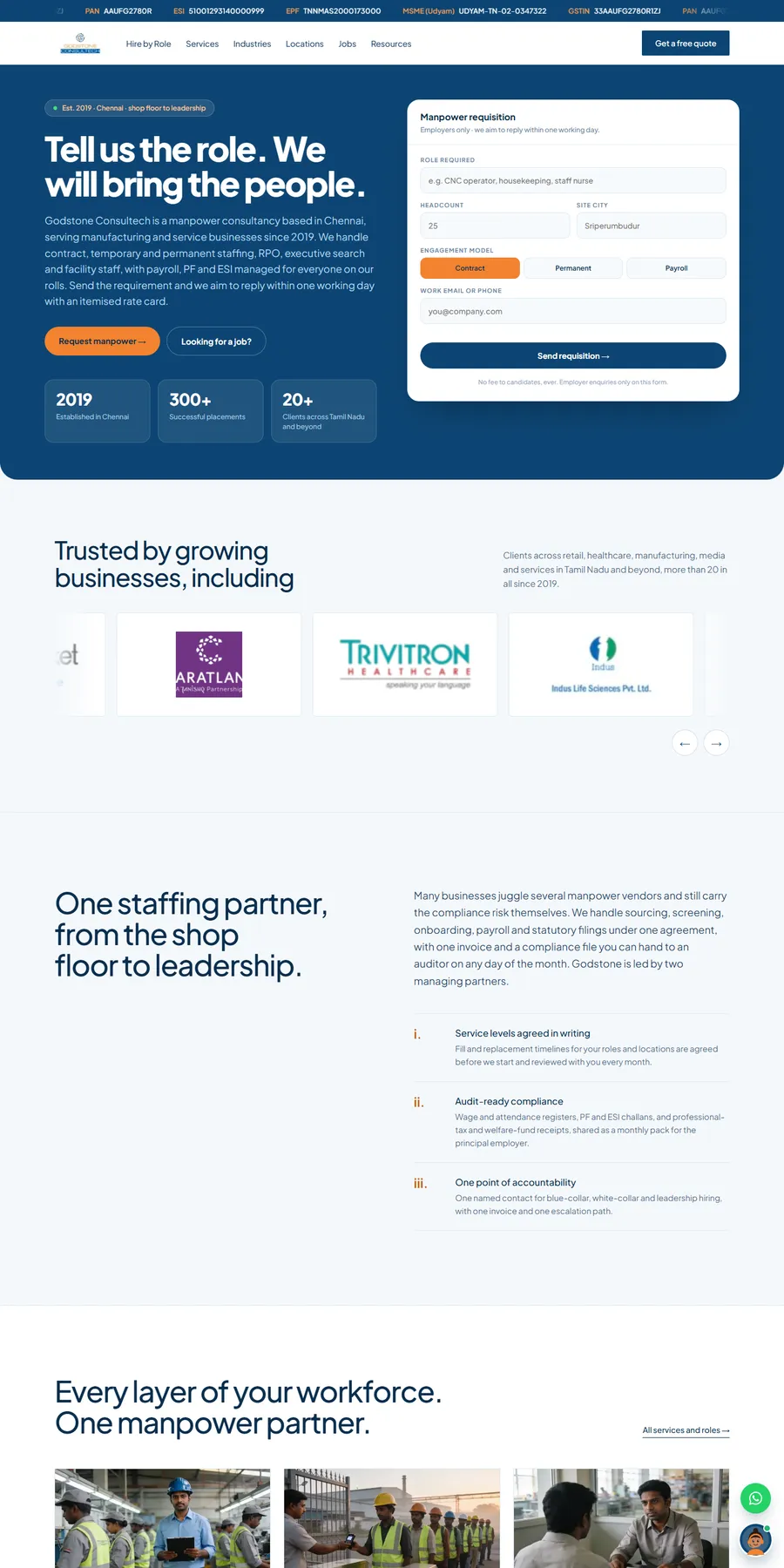
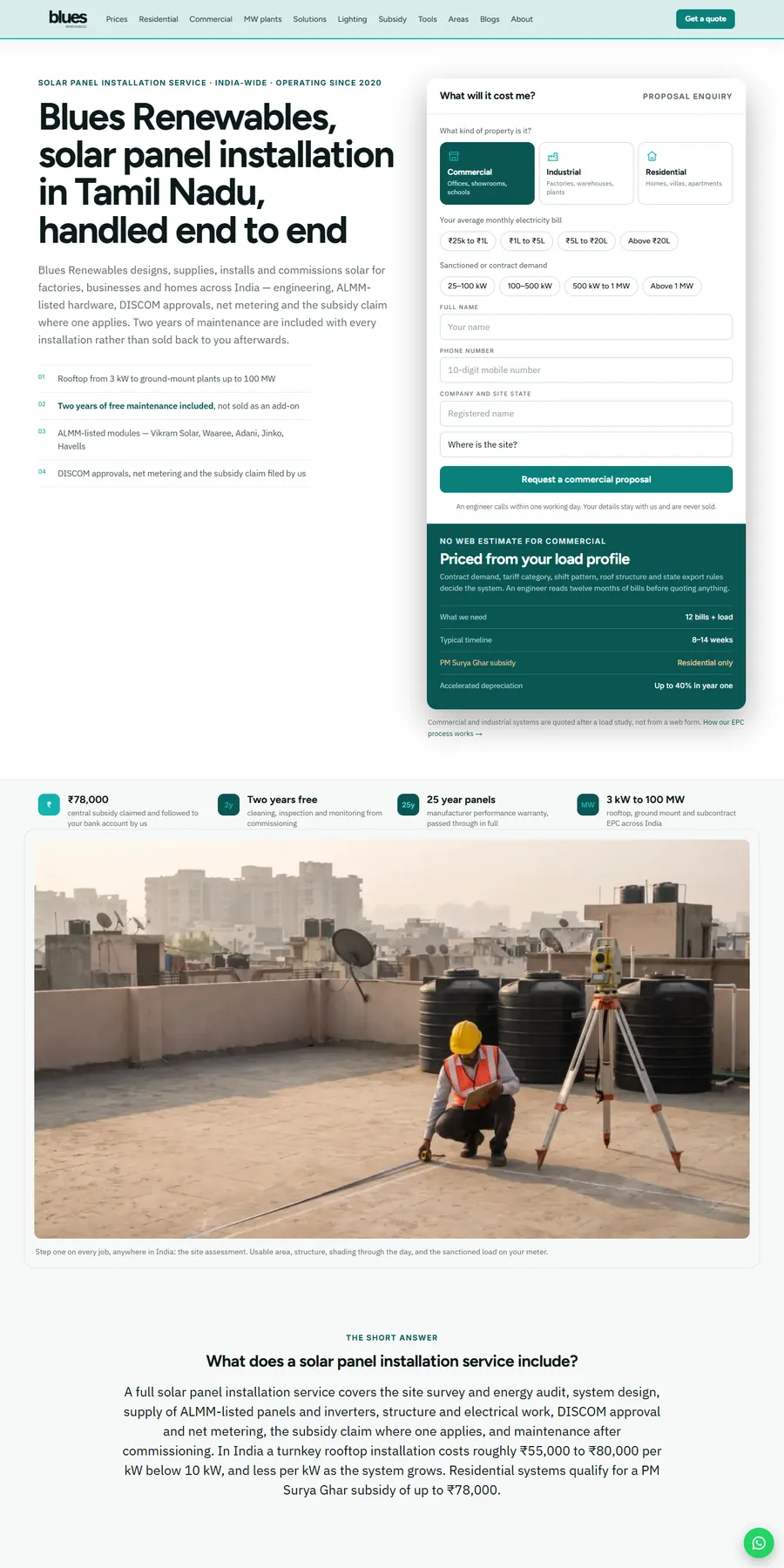
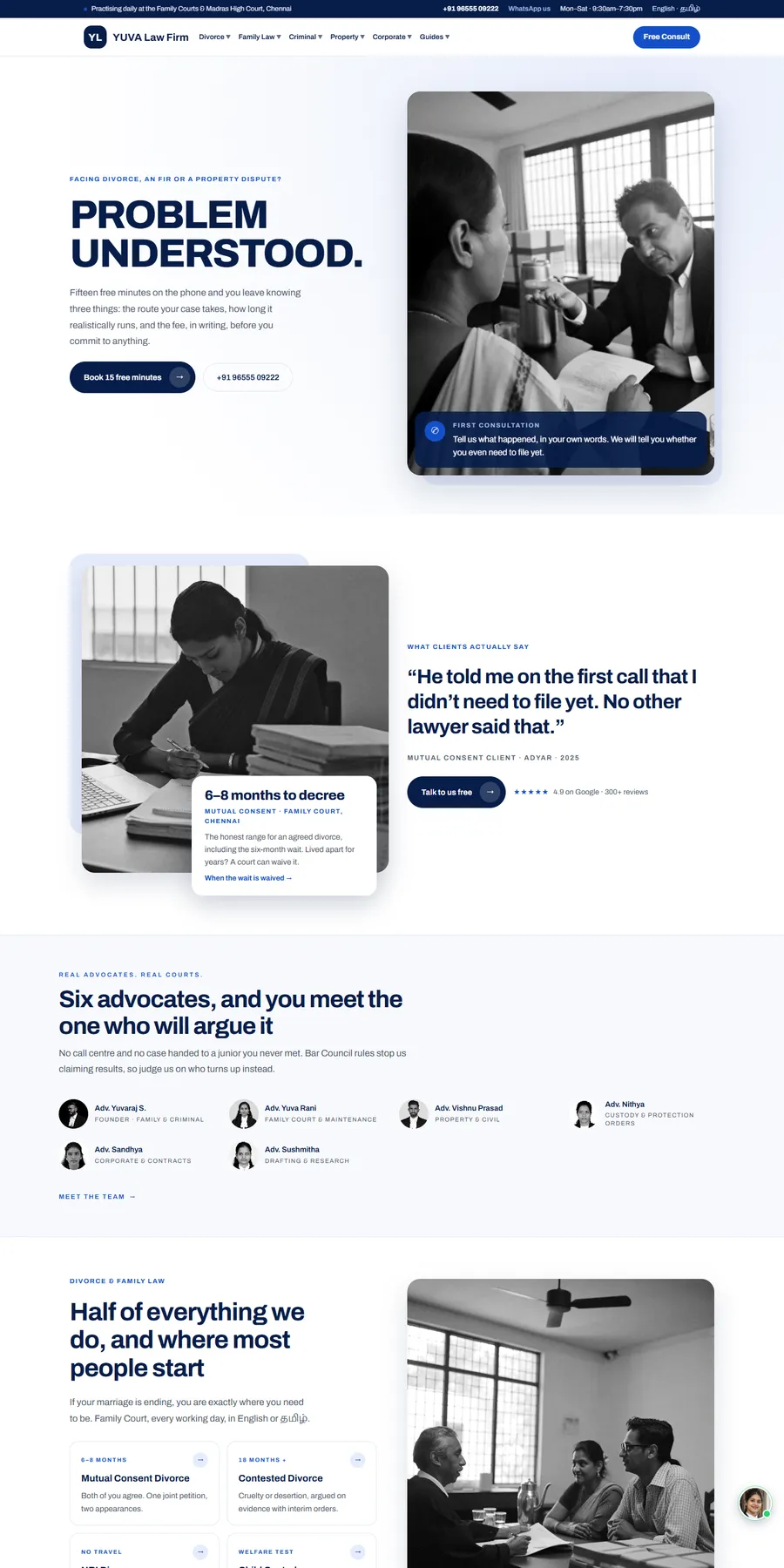
We have not built a website for a US accounting or CPA firm, and we will not pretend otherwise. Our closest proof is the lead system behind Blues Renewables, a rooftop solar installer: service and price pages, calculators, 129 local area pages and every form and call tracked in GA4. It went from no tracked leads to 7 to 10 enquiries a week, and Google clicks rose from 14 to 560 a fortnight in two months (Google Search Console). For your firm, the price pages become a how-we-price page, the calculators become a deadline calendar or an LLC vs S corp tool, and the area pages become office and niche pages. We also built YUVA Law Firm's consult-led site for a family law practice (not US, no published numbers). Godstone Consultech, a staffing company site we built for contract, temporary and permanent hiring, shows how we write for recruiting, which matters to a firm that needs to hire.

More websites we have designed and built

Process

How your accounting firm website project runs

Typical timeline: 4 to 8 weeks for most firm sites; 8 to 12 weeks for multi-office firms with many niche, location and service pages. You see progress every week.

  1. Step 01 · Week 1

    Discovery and audit

    We audit your current site, competitors, and how you show up on Google and in AI answers, then agree on goals and a fixed quote.

  2. Step 02 · Weeks 2 to 3

    Strategy and design

    Sitemap, wireframes and full designs for your review. You approve everything before we build.

  3. Step 03 · Weeks 3 to 6

    Build and test

    Development, SEO setup, speed tuning, and testing across devices and browsers.

  4. Step 04 · Launch and beyond

    Launch and grow

    We launch, monitor, and improve based on real data. 30 days of free support included.

What shapes your quote

Scope, not hourly billing

Every project gets a fixed quote within 1 business day, agreed before work starts.

Get my fixed quote →
  • How many service, niche and office or state pages you need
  • Which portal, payment, booking and e-sign tools we link or embed
  • Intake and pre-qualification rules, and how consults route to partners or staff
  • Whether we write the content, including niche pages, tax season pages and team bios
  • Moving from a template vendor or agency site: redirects, keeping pages that rank and recovering your own assets
  • Multi-office or multi-line firms, such as tax plus wealth management or payroll services

Accounting firm website questions, answered

Straight answers to what owners ask us, and what they ask Google and AI assistants. Ask us anything else.

How much does an accounting firm website cost?

We quote one fixed price, agreed before work starts, based on the number of pages, features, integrations and content. You get it within 1 business day of a free audit of your current site. There is no hourly billing and no monthly site rental.

How long does CPA website development take?

Most firm sites take 4 to 8 weeks. Multi-office firms with many niche, location and service pages take 8 to 12 weeks. You get a dated week-by-week plan built around your calendar. Start in October or November and you are live before tax season opens. Otherwise build between May and August, after the April deadline and before the September and October extension rush.

Will the site work with TaxDome, SafeSend or our client portal?

Yes. The website links to and embeds your portal, upload, e-sign, payment and booking tools; it does not replace them. Your firm keeps its own subscriptions, so changing website developers never touches client data in the portal.

Can our intake form collect SSNs or tax documents?

We advise against it and do not build it that way. The public intake asks only what you need to qualify a prospect and book a consult. Sensitive data goes into your encrypted portal after the engagement letter is signed, and the form tells people not to email documents.

We rent our site from an accountant template vendor. Can we move without losing rankings or our portal?

Usually, yes. We list what you own and what the vendor holds, recover your logo and content, keep the URLs that rank and redirect the rest, and relink your portal and payment tools. If your portal is part of the vendor's package, we plan that change separately with you.

Should we publish our fees on the website?

It is your choice, and owners are split. A how-we-price page with flat fees, minimums or the factors that drive your quote filters price shoppers. If you publish fees, Circular 230 requires you to honor them for at least 30 calendar days after you last publish them.

Can our website say we specialize in a niche, or call us the best CPA firm in town?

Describing the industries you serve is normal and helpful. Some states, Texas among them, restrict trade names and descriptive words that suggest a grade of service, such as "best", and every claim must not be misleading. We draft the wording, and your license holders check it against your state board rules.

Do we need a website if most clients come from referrals?

Yes, because referrals check you before they call. Owners on r/taxpros say the site's job is often to show the firm is real and credible. A site that confirms the referral, books the consult and serves existing clients earns its keep even if it never ranks for anything.

Will a new website bring us more clients?

We do not guarantee rankings or lead numbers. What a new site changes is how many visitors book and how many fit: niche pages, credentials you can check, a clear consult offer, a client center and tracking by source. On a rooftop solar installer's site (not an accounting firm), the same lead system took tracked enquiries from none to 7 to 10 a week.

How does our firm show up in ChatGPT and Google AI answers?

AI assistants lean on your website, Google profile and reviews. We write services, niches, credentials and license states as plain text, add AccountingService and Person schema, and match the site to your profile. No one can guarantee an AI mention, but a specific, consistent site gives assistants accurate facts to cite.

Can we update deadlines, banners and team bios ourselves?

Yes. You get an editable CMS and training. Tax season content, new client status and team pages are built as simple fields, so a staff member can update them in minutes without a developer.

Do you build for enrolled agent and bookkeeping firms too?

Yes. The structure is the same, and the wording changes: EAs are described as enrolled to practice before the IRS and never as certified, and bookkeeping firms avoid titles that could be confused with CPA under state law.

Can we put client testimonials on the site?

Yes, with care. A testimonial that names a tax client needs that client's signed written consent under IRC 7216 and should never reveal tax details, and the FTC rule bans fake reviews and rewards tied to positive ones. We show your live Google rating and review count with a link to the reviews, and we never mark up your own reviews as star schema. Your replies to reviews should never confirm that someone is a client.

What makes you different from another accounting firm web design company?

You will mostly weigh two kinds of vendor. Many accountant template services rent you a site, often bundled with their newsletter and portal, so leaving means rebuilding. Many general marketing agencies swap "accountant" into a standard package and sell a retainer. We build one site you own outright, write it from your niches and your people, keep tracking off intake and portal pages, check CPA and EA wording against your licenses, and time the build around busy season.
Get a free site audit and a fixed quote in 1 business day

Four quick questions. You'll get a fixed quote and a free audit of your current site within 1 business day.

  • ✓ No obligation, no sales pressure
  • ✓ Fixed price, never hourly
  • ✓ Your details stay private

Prefer email? info@billionwebstudio.com

Step 1 of 4~60 seconds
What do you need?