Skip to content
Booking projects for next month. Free website audit with every quote.Claim yours →

Health and wellnessBooking projects for November

Dermatology Website Development Company for Skin Checks, Mohs and Cosmetics

A patient with a mole that changed, a parent with a child's eczema flare and a client asking about laser for brown spots need three different paths, not one services page. Our dermatology website design routes each of them to the right appointment, takes intake online on forms backed by a BAA, states every provider's credentials exactly and shows which page booked each visit.

  • Built for dermatology practices
  • Fixed quote in 1 business day
  • You own everything
yourderm.com/changing-moleWorried about achanging mole?Book a skin checkTap to callNew booking: spot checkFrom /changing-mole · 10:12 pmTracked as a leadSource: GoogleAI ASSISTANTWhich dermatologist near me does Mohssurgery?Your Practice: fellowship-trained Mohssurgeon, booking new patients.Source: your website
Illustration: a visit becomes a tracked lead

The short answer

What does a dermatology website development company do?

A dermatology website development company builds websites for dermatology practices that turn searches for skin checks, acne and eczema care, skin cancer treatment, Mohs surgery and cosmetic treatments into booked visits, completed intake and consultation requests. The site has to give a worried patient a fast next step, tell an insured patient whether you take their plan and are seeing new patients, give a cosmetic client a consultation path with pricing handled by the rules, and show which page produced each booking.

For a practice that runs insurance-based medical visits, skin cancer and Mohs surgery, and cash-pay cosmetics under one roof, that means three separate paths from the homepage, one page per condition and procedure, provider pages with the exact certifying board and fellowship, a referring physician page, online intake on forms backed by a business associate agreement (BAA), a consented before-and-after gallery and a good faith estimate notice for self-pay patients.

Billion Web Studio is a dermatology website development company that delivers this as one fixed-scope project: design, condition, procedure, provider and location pages, MedicalClinic and Physician schema, call, booking and form tracking in GA4 with no ad pixels on intake pages, and booking and intake connected to ModMed EMA, Nextech or the tool you already use where the vendor allows it. You own the site, the domain and every account from day one, with no lock-in.

The market

What the numbers say about dermatology practices online

Dermatology does not lack demand. One in five Americans will develop skin cancer in their lifetime, and new dermatology patients in large metros wait an average of 36.5 days for an appointment. The pressure falls on access, trust and routing: who gets seen fast, who books a cosmetic consultation, and who gives up and calls another office. Good dermatology web design starts from those three problems, not from a homepage layout. The figures below show the size of the need, the wait, and how patients choose a provider now.

How they choose

How patients find and choose a dermatology practice

Dermatology patients arrive by three routes: a worry (a mole that changed, a sore that will not heal), a chronic condition (acne, eczema, psoriasis, hair loss) or a cosmetic wish (fine lines, brown spots, acne scars). Many also arrive with a referral from a primary care doctor. Here is how a US patient picks a dermatology practice and what your site has to do at each step.

  1. 1

    The trigger: a spot, a flare or a mirror

    The search is in plain words: "mole changed color", "dermatologist for adult acne", "eczema doctor for kids near me", "laser for brown spots". Your site needs a page for each, written the way patients say it, with the booking button and phone number above the fold on a phone.

  2. 2

    The access check: who can see me, and do they take my plan

    With month-long waits for a new dermatology visit, the first filter is availability and insurance. Your site has to say in text whether you accept new patients, which plans you take, including Medicare, and how a worrisome spot gets seen sooner.

  3. 3

    The trust check: credentials, reviews, photos

    Patients compare the certifying board, Mohs fellowship status, review count and, for cosmetic work, before-and-after photos. Provider pages need exact credentials, PAs and NPs labeled clearly, and a link to your reviews.

  4. 4

    The booking: online, by phone or by intake at night

    Many patients search after work. The site gives a booking path from your EHR or booking tool where it allows online scheduling, a phone number that dials on one tap, and BAA-backed intake forms that arrive before the visit, so the front desk is not typing a paper history into the chart.

  5. 5

    The follow-through: biopsy, Mohs day, the cosmetic plan

    After the first visit the patient comes back to the site to read what a biopsy result means, what Mohs day looks like or what a laser series involves. Referring doctors check how to send a patient. These pages keep patients with you and keep referrals coming.

The problem

Why most dermatology websites lose new patients

What we find again and again when we audit sites in this trade. None of it is about how the site looks.

Leak 01

A worried patient has no fast path

A patient with a bleeding or changing spot lands on a homepage with a generic contact form and a month-long wait. Penn Medicine's dermatology clinics cut new patient lead times 76.8% by sorting calls into acute, subacute and routine (Healio, Sep 2026). Your site can do the first step of that sorting: a changing spot page with clear signs, a fast-lane phone line or booking type, and what to send.

Leak 02

Your front desk is the website

Phone-only scheduling, PDF intake forms to print and fax, and refill requests by voicemail. One dermatologist on r/smallbusiness who grew from 12 to 28 patients a day described a single front desk person handling phones, intake, referrals and prior authorizations, with calls going to voicemail. Online booking where your EHR allows it and online intake take that load off.

Leak 03

Medical and cosmetic mixed on one page

An insured patient with psoriasis needs plans accepted and a new patient visit. A cosmetic client needs a consultation, an idea of cost and a gallery. When both sit on one services page, each sees the wrong information and leaves. Cash-pay visits also bring a good faith estimate notice that most derm sites do not show.

Leak 04

Credentials that are vague or misleading

"Board certified" with no board named, "Mohs certified" with no fellowship or subspecialty stated, and PAs shown in a way patients read as physicians. Florida law bars MDs from holding out as board-certified specialists unless recognized by an ABMS member board or another board-approved agency, and other states have their own rules.

Leak 05

One Botox page blocks your ads

Google restricts prescription drug terms in ads, landing pages and keywords. A dermatology and aesthetic clinic owner on r/PPC reported that a single Botox page led Google Ads to refuse every campaign on the domain. Which pages name brand neuromodulators, and where your ads land, is a site architecture decision.

Leak 06

No lead count, and a site you do not own

A practice owner on r/PrivatePracticeDocs described SEO reports full of pie charts and keyword tables but no count of calls, bookings and new patients. An eye practice weighing a healthcare website platform noted the vendor owns the site it builds, so leaving means starting over. Ad pixels firing on intake pages add privacy risk on top.

Generic vs built for you

Why a generic website fails dermatology practices

A template is built to fit every business, so it fits yours badly. Here is what changes when the site is planned around how patients actually buy.

Generic website compared with a website built for dermatology practices
What you needGeneric template siteBuilt for dermatology practices
Three service linesOne services page listing acne, Botox and skin cancer togetherSeparate medical, skin cancer and Mohs, and cosmetic paths from the homepage, each with its own booking path and next step
A changing or bleeding spotA contact form and the general phone numberA changing spot page with warning signs written for patients, a fast-lane booking type or phone line, and what to bring
New patient intakePDF forms to print, fill in and bringMulti-step online intake on a form provider that signs a BAA, with history, medications, insurance, consent and policies, plus printable versions
Provider credentials"Board certified" badges and staff photosOne page per provider with the certifying board named, Mohs fellowship or subspecialty status, PA-C and NP labels, locations, languages and direct booking
Before-and-after photosA slider of the best results with no contextA gallery built around signed authorizations, procedure and session labels, no retouching and a typical-results statement next to the images
Self-pay and cosmetic pricing"Call for pricing" or a price list with no noticeYour chosen price approach plus a good faith estimate notice page linked from cosmetic pages, the insurance page and the footer
Referrals from other doctorsNothing for referring physiciansA referring physician page with a referral form, fax and e-referral details, what records to send and an urgent skin cancer and Mohs path
TrackingAd pixels on every page, including intakeGA4 events for calls, booking clicks and forms by service line, with no ad pixels on intake, booking or portal pages and no health details in events

Free self-check · 2 minutes

What your current dermatology website is missing

Tick everything your site does today. Each box you cannot tick is a place where a ready-to-buy visitor leaves.

What you need

What every dermatology website needs

The features that turn a dermatology website from a brochure into the best salesperson you have. We build all of them.

  1. Must-have · 01

    Three paths from the homepage

    Medical dermatology, skin cancer and Mohs surgery, and cosmetic dermatology, each with its own entry point, plus Book, New Patients, Pay Bill, Patient Portal and the phone number in the header.

  2. Must-have · 02

    A changing spot page with a fast lane

    Warning signs in plain words, why early detection matters (AAD puts five-year melanoma survival at 99% when caught before it reaches the lymph nodes), and a fast way to be seen: a dedicated booking type or a phone line that reaches staff who triage.

  3. Must-have · 03

    One page per condition

    Acne, eczema, psoriasis, rosacea, hair loss, warts, moles, hyperhidrosis, rashes, nail conditions and pediatric dermatology. Each answers what it is, how you treat it, whether insurance usually covers the visit and how to book.

  4. Must-have · 04

    Skin cancer and Mohs surgery pages

    Annual skin exams, basal cell and squamous cell carcinoma, melanoma, actinic keratosis, biopsy (what to expect and how results reach the patient), excision and Mohs: who is a candidate, the day of surgery, reconstruction and the surgeon's exact credentials.

  5. Must-have · 05

    Cosmetic pages with a consultation path and gallery

    Neuromodulators, fillers, lasers by concern (redness, brown spots, scars, hair removal), peels, microneedling and skincare. Each with a consultation request, your pricing approach and a link to the good faith estimate notice. A before-and-after gallery with a signed authorization on file for every image, procedure and session labels, consistent pose and lighting, no retouching and a typical-results statement beside it. Brand drug names placed with your ad plan in mind.

  6. Must-have · 06

    Quizzes, packages and a skincare shop

    A Fitzpatrick skin type quiz and a skin cancer risk quiz as soft entry points that end in a skin check or consultation booking. Cosmetic packages, memberships and gift cards shown on the site and connected to Nextech or your tool where it supports them. A skincare product page that sells online or takes pickup orders.

  7. Must-have · 07

    Provider pages with exact credentials

    One page per dermatologist, PA and NP: the certifying board (American Board of Dermatology or American Osteopathic Board of Dermatology), fellowships, PA-C or NP label, what each provider sees, locations, languages and a direct booking link.

  8. Must-have · 08

    A new patient center with online intake

    What to expect at the first visit, intake forms on a provider that signs a BAA, insurance plans accepted, financial, minors and no-show policies, records release, and printable versions for patients who prefer paper.

  9. Must-have · 09

    Insurance, billing and the good faith estimate notice

    Plans accepted for medical visits, including Medicare and Medicare Advantage plans, stated as text, not only in a PDF. Add a self-pay and cosmetic pricing approach, online bill pay, and a good faith estimate notice page that search engines can find. 45 CFR 149.610 requires that notice on the website of providers who see uninsured or self-pay patients.

  10. Must-have · 10

    A referring physician page

    Referral form, fax and e-referral details, which records to send, an urgent path for suspected skin cancer and a Mohs referral route. A dermatologist on r/whitecoatinvestor says relationships with primary care doctors, not ads, fill the schedule.

  11. Must-have · 11

    Location pages that match your Google profiles

    One page per office with address, hours, parking, phone, the providers who see patients there and MedicalClinic schema, with name, address and phone matching the Google Business Profile for that office.

  12. Must-have · 12

    Fast mobile pages and a clean privacy setup

    Core Web Vitals targets of LCP 2.5 seconds or less, INP 200 ms or less and CLS 0.1 or less, WCAG 2.1 AA as the working target, a Notice of Privacy Practices, and no ad pixels on intake, booking or portal pages.
What we build

The dermatology website we would build for you

Here is the sitemap we would start from for an independent dermatology practice with medical, surgical and cosmetic services. We cut or add pages to match the conditions you treat, the procedures you offer and the offices you run.

yourcompany.comHome · every section links here

Medical dermatology

  • Acne
  • Eczema (atopic dermatitis)
  • Psoriasis
  • Rosacea
  • Hair loss
  • Warts, moles and skin growths
  • Hyperhidrosis
  • Pediatric dermatology

Skin cancer and Mohs

  • Annual skin exams
  • Worried about a changing spot
  • Basal cell and squamous cell carcinoma
  • Melanoma
  • Actinic keratosis
  • Biopsy and excision: what to expect
  • Mohs surgery and reconstruction
  • Mohs referrals: how to send a patient

Cosmetic dermatology

  • Neuromodulators for lines and wrinkles
  • Dermal fillers
  • Laser treatments by concern
  • Chemical peels and microneedling
  • Skin type and skin cancer risk quizzes
  • Memberships, packages and gift cards
  • Skincare shop
  • Before-and-after gallery

Patients

  • New patient center and online intake
  • Insurance accepted
  • Self-pay pricing and good faith estimate notice
  • Pay your bill
  • Patient portal and refills
  • Virtual visits (states covered)
  • Patient education articles

Providers and locations

  • Our providers
  • One page per dermatologist, PA and NP
  • Location page for each office
  • Referring physicians
  • Careers for PAs, MAs and aestheticians

Trust and policies

  • Reviews
  • About the practice
  • Notice of Privacy Practices
  • Accessibility statement
  • Privacy policy
  • FAQ
  • Contact

Calls, bookings, leads

How we turn visitors into new patients

Good website design for dermatologists is judged in booked visits: a search becomes a skin check, a new patient appointment, a Mohs referral or a cosmetic consultation, and you can see where each came from. This is how we build that path and track every lead without putting patient health details into ad platforms.

  • 01Booking paths by visit typeSeparate buttons for new patient medical visits, skin checks, a changing spot and cosmetic consultations, each linked to the matching visit type in your EHR or booking tool where it supports online scheduling, with a phone fallback. Each click is a GA4 event tagged with the page.
  • 02Tap to call with a fast-lane optionThe main number in the header on every page, plus a clearly labeled line or menu option for a worrisome spot if your office runs one. Call tracking records which page rang the phone, while your main number stays in the schema and on your Google profile.
  • 03Online intake that arrives before the visitMulti-step intake on a form provider that signs a BAA: demographics, insurance, medications, skin and family history, consent and policies. Staff stop retyping paper histories. We count completions from the form tool's own BAA-covered reports, or from a thank-you page that carries no form data. GA4 never runs on the form itself.
  • 04A cosmetic consultation request that qualifiesConcern first (lines, volume, redness, brown spots, scars, hair removal), then preferred provider, location and time, then contact details. Your aesthetic team calls back knowing what the client wants, and texting consent sits in its own unchecked box.
  • 05A referral form for physiciansReferring offices send patient details, reason for referral and urgency through a secure form or your fax and e-referral details. Each referral is counted, so you can see which practices send Mohs and skin cancer cases.
  • 06A lead dashboard you can readCalls, booking clicks, intake completions, consultation requests and referrals by service line, page and source, in a GA4 dashboard in your own account. It answers the question practice owners keep asking vendors: did new patients go up? A monthly written report is available on a care plan.

AI search

Patients now ask ChatGPT, Google AI Mode and Perplexity which dermatologist to see. BrightLocal found 45% of consumers used AI tools for local recommendations in 2026, up from 6% a year earlier, and Pew found people clicked a regular search result on 8% of visits when Google showed an AI summary, against 15% without one. A dentist on r/Dentists with hundreds of strong reviews learned a new patient almost went elsewhere because ChatGPT named another practice. The same shift reaches dermatology, so your site has to state plainly who your providers are, what you treat, where and for whom. On Google itself, the local results for "dermatologist near me" depend on each office's Business Profile matching a location page with the same name, address, phone, hours and providers, plus fast mobile pages and one page per condition that answers the search.

Questions your patients ask AI assistants

  • Which dermatologist near me is accepting new patients and takes my insurance?
  • Who does Mohs surgery for basal cell carcinoma near me, and is the surgeon fellowship-trained?
  • Should I see a dermatologist about a mole that changed shape?
  • Which dermatology practice in my area offers laser treatment for brown spots?
  • Is there a pediatric dermatologist near me for my child's eczema?
  • Can I book a virtual dermatology visit in my state?
  • Facts in text, not in PDFs and badges

    New patient status, insurance plans, conditions treated, procedures, office hours and each provider's board and fellowship written as text on the page. An AI assistant cannot quote a plan list that only lives in a PDF or a credential that only appears in a logo.

  • Providers as clear entities

    Each dermatologist, PA and NP has a page with name, credentials, specialties, locations and languages, linked to the practice and marked up with Physician schema, so assistants can answer "which dermatologist near me does Mohs" with a name.

  • Condition and procedure pages that answer first

    One page per condition and procedure, with a direct answer in the first lines: what it is, who treats it, what the visit involves, whether insurance usually covers it. That is the text AI answers lift and cite.

  • One identity across site and profiles

    The same practice name, phone, addresses and hours on the site, each office's Google Business Profile and your listings. Google's guidelines say a solo practitioner in a branded practice shares one profile named with the brand and the practitioner, while in a group each public-facing provider may have a profile. We match the site's location and provider pages to whichever setup you have.

  • MedicalClinic, Physician and FAQ schema

    Structured data with medicalSpecialty Dermatology, each office's details, each provider and the procedures you offer, so search engines and assistants read the same facts the patient sees.

  • Real, recent reviews

    A review request sent the same way to every patient, linked from the site, and replies that never confirm someone is a patient. Assistants lean on review volume and recency, and so do patients.

Compliance and trust

The rules a dermatology website has to get right

A dermatology site touches health privacy, state medical board advertising rules, FTC rules on health claims and reviews, and the No Surprises Act. We build pages and forms that support these rules. We do not certify compliance; your counsel and privacy officer confirm what applies to your practice and approve the wording.

Board certification and specialty claims

Florida Statutes 458.3312 bars an MD licensed in Florida from holding out as a board-certified specialist unless recognized by an American Board of Medical Specialties member board or another agency the board approves, and other states have their own rules. Mohs credentials come in two forms. The American College of Mohs Surgery says its members completed a one to two year fellowship with at least 500 supervised cases, and the American Board of Dermatology offers a Micrographic Dermatologic Surgery subspecialty certification. We state exactly which one each surgeon holds, name each provider's certifying board, label PAs and NPs, and avoid loose terms like "Mohs certified".

Before-and-after photos and testimonials

Full-face photographs are HIPAA identifiers (45 CFR 164.514), and a covered entity needs written authorization to use patient information for marketing (45 CFR 164.508). The FTC's health products guidance says before-and-after images can convey a claim and "results not typical" does not cure a misleading one. We build the gallery around signed authorizations, procedure labels and typical-results context next to the images.

Reviews and review replies

The FTC rule announced in August 2024 bans fake and AI-generated reviews, rewards tied to a particular sentiment, positive or negative, undisclosed staff reviews and review suppression. HHS OCR fined a dental practice $50,000 in 2022 for disclosing a patient's treatment details in a reply to a Google review. Our review request goes to every patient the same way, and we give your team reply templates that never confirm a patient relationship.

Good faith estimate notice for self-pay patients

Under 45 CFR 149.610, providers must tell uninsured and self-pay patients that a good faith estimate is available, and the notice must be prominently displayed and easily searchable from a public search engine on the provider's website, as well as in the office. We add a notice page and link it from cosmetic pages, the insurance page and the footer.

Health privacy, tracking and BAAs

Most practices that bill insurance electronically are HIPAA covered entities. HHS guidance on online tracking, partly vacated by a federal court in 2024 for public pages, still treats tracking vendors that receive protected health information, for example through intake or portal pages, as business associates. We put intake on form providers that sign a BAA, keep ad pixels off intake, booking and portal pages, and keep health details out of analytics events. Washington's My Health My Data Act adds a consumer health data policy for regulated entities.

Accessibility and texting consent

The Justice Department says the ADA applies to the websites of businesses open to the public, and HHS has set WCAG 2.1 AA deadlines under Section 504 for recipients of HHS funding, now extended to May 2027 and May 2028. We build to WCAG 2.1 AA. Marketing texts need prior express written consent under the TCPA, so our forms use separate, unchecked SMS consent boxes.

We build with tools and patterns that support these rules and document what we set up. For legal advice on your own obligations, talk to your attorney.

From the forums

What dermatology practices ask about websites, answered

We read what dermatologists and other private practice physicians ask each other on r/PrivatePracticeDocs, r/smallbusiness, r/PPC, r/whitecoatinvestor, r/hipaa, r/SEO and r/GoogleMyBusiness, plus an eye practice thread on r/Ophthalmology. The same worries come up: a front desk that cannot keep up, marketplace fees, ads blocked by drug terms, vendor reports with no patient counts and sites the vendor owns. These are their questions, paraphrased, with our straight answers.

Where owners talkr/PrivatePracticeDocsr/smallbusinessr/PPCr/whitecoatinvestorr/hipaar/SEOr/GoogleMyBusinessr/Ophthalmology

Asked on r/smallbusiness

“My new dermatology practice went from 12 to 28 patients a day and one front desk person is drowning in calls, intake and referrals. Should I hire remote help?”

Our answer: Replies said automate first: online scheduling on the website and intake forms sent automatically after booking. That is website work. We connect booking to your EHR where it allows online scheduling, move intake onto a form provider that signs a BAA, and add a referral form, so the phone carries fewer routine tasks before you add staff.

Asked on r/PrivatePracticeDocs

“Is a booking marketplace still worth its fees for new patients?”

Our answer: A private dermatology group in the thread said that once fees are counted a one-time marketplace patient is seen almost for free, and they keep it only to fill a new doctor's schedule. Others said marketplace patients often find the practice website and book there anyway. Your own site and Google profile are the booking channel you control, and tracking shows what each source sends.

Asked on r/PPC

“One Botox page got my whole domain flagged and Google Ads refuses every campaign. New domain, micro-site or rewrite?”

Our answer: Replies suggested a separate ads page or subdomain with no drug names that sends the booking click to the main site, and one marketer said healthcare certification came through after months of paperwork. Google restricts prescription drug terms in ads and landing pages. We map which pages name brand drugs and plan ad landing pages around the policy. Approval is Google's decision, so we never promise it.

Asked on r/whitecoatinvestor

“How much do you spend on marketing?”

Our answer: A dermatologist in the thread said nothing: relationships with primary care doctors and referral networks fill the schedule. That is a reason to build a referring physician page with a referral form, fax and e-referral details and an urgent skin cancer path, not a reason to skip the website. Referred patients still look you up before they call.

Asked on r/PrivatePracticeDocs

“What should my SEO company actually report? I get pie charts and keyword tables, and now they say AI Overviews make attribution hard.”

Our answer: Replies said ask for leads: calls, form fills and bookings, plus how your Google profile ranks for the terms you care about. We set up every call, booking click, intake completion and consultation request as a GA4 lead event by service line, in a dashboard you own and can read without us.

Asked on r/PrivatePracticeDocs

“I rebuilt my practice website myself with ChatGPT after two years of paying for site management. Do I still need anyone?”

Our answer: A reply from someone who takes over such sites said the design is not what you pay for: analytics, Search Console, booking, reputation and showing up in AI assistants are the work, and collecting health data on a home-made site is a real risk. If your site books patients and you can measure it, keep it. If intake runs on a form tool with no BAA, fix that first.

Asked on r/hipaa

“Can a doctor's office respond to Google reviews at all?”

Our answer: Replies said yes, but only in general terms, and never confirm that the reviewer is a patient. HHS OCR fined a dental practice $50,000 for a review reply that disclosed treatment details. We give your team reply templates that stay generic and a review request that goes to every patient the same way. This is process advice, not legal advice.

Asked on r/Ophthalmology

“A healthcare website and reputation platform integrates with our EMR, but the vendor owns the site. Is that a problem?”

Our answer: The eye practice in the thread saw the catch: leaving means rebuilding from scratch. With us you own the code, design, content, domain and accounts from day one, and we connect to your EHR's booking or intake where the vendor allows it, so you get the integration without renting the site.

Asked on r/SEO

“My medical website company's maintenance is sloppy and another wants to charge for a rebuild. Can I switch without losing my local ranking?”

Our answer: Replies said judge any vendor by tracked conversions, check your contract because you may already own the site, and do not make big changes to a ranking site without a migration plan. We map every old URL to a new one with redirects, keep the pages that rank, and compare Search Console data before and after launch.

Asked on r/PrivatePracticeDocs

“New practice: Google Ads did nothing, the booking marketplace works, and SEO quotes feel outrageous. Are AI SEO tools enough?”

Our answer: Replies said start with your listings and reviews, avoid annual contracts, and build one simple, strong site first. One physician stopped paying for agency SEO and bookings went up. A clear site with one page per condition and provider is what both Google and AI answers read. We quote it once, fixed, with no retainer, and you own it.

Questions are paraphrased from public threads. We never quote members by name.

Others vs us

Dermatology web design company options: Billion Web Studio vs a website builder template vs a typical dermatology marketing agency

The three ways dermatology practices usually get a website, side by side.

Dermatology web design company options: Billion Web Studio vs a website builder template vs a typical dermatology marketing agency
Billion Web StudioWebsite builder templateTypical industry agency
Who owns the site, domain and contentYou do, from day one, in your own accountsYou own the content; the site lives on the builder's platformOften the vendor, on a rented site you rebuild if you leave
Contract and pricingFixed quote in 1 business day, agreed before work starts, no lock-inMonthly subscription, you build it yourselfSetup fee plus monthly retainer, often on a 12-month contract
Medical, skin cancer and cosmetic structureThree paths, one page per condition, procedure and provider, a fast-lane spot page and a referring physician pageGeneric pages you writeA template condition library shared across clients, rarely a referral page
Online intake and privacyBAA-backed intake forms, no ad pixels on intake or booking pagesBuilder forms, pixels wherever you add themVaries; "HIPAA-compliant" claims without detail
Credentials, photo consent and good faith estimate noticeExact board and fellowship wording, consent-based gallery, notice pageUp to youVaries by vendor
EHR booking connectionModMed EMA, Nextech or your tool where the vendor allows it, tested before launchEmbed code if the builder allows itOften their own booking or reputation add-on
Lead trackingCalls, bookings, intake and consults as GA4 events by service lineBasic form countsKeyword and traffic reports in their dashboard
Google and AI searchProvider, condition and location pages written as direct answers, with MedicalClinic, Physician and FAQ schemaBasic SEO settings you fill inA one-line mention of AI
TimelineDated week-by-week plan, next month of support free if we slipYour own timeOften "varies"

Why Billion Web Studio

What we do better, and why it matters to you

  • A fixed quote in 1 business day, with a free audit

    We review your current dermatology site, booking and intake setup, provider pages, tracking and Google profiles, then send a written scope and a fixed price based on pages, features, integrations and content. No hourly billing.

  • You own everything from day one

    Code, design, content, domain, hosting and analytics accounts in your practice's name. No lock-in, and no site that disappears when a marketing contract ends.

  • Built around how a dermatology practice runs

    A generic medical template gives you a services page and a contact form. We start from your three service lines, your wait times, your referral sources and your EHR, so triage paths, intake, provider credentials and cosmetic consults are in the plan from week one. That is dermatology website design built around how your practice runs.

  • Privacy and advertising rules planned in, not patched later

    BAA-backed forms, no ad pixels on intake pages, a consent-based gallery, a good faith estimate notice and a page plan for prescription drug terms. Your counsel approves the wording; we build to it.

  • Every booking traced to its source

    GA4 events for calls, booking clicks, intake completions, consultation requests and referrals by service line and source, so you can see which pages bring new patients and which vendors earn their fee.

  • A dated plan and a guarantee on it

    A week-by-week plan, weekly written updates and 30 days of free support after launch. If we slip a date because of us, the next month of support is free.

In writing, before we start

  • Fixed quote in 1 business day

    Scope, deliverables and price agreed in writing, with a free audit of your current site. No hourly billing.

  • Launch date in writing

    A dated week-by-week plan and a written update every week. If we slip because of us, the next month of support is free.

  • You own everything

    Code, design, content, domain and accounts are yours from day one. No 12-month contract, no rented site.

  • 30 days of support included

    We watch rankings, forms and call tracking after launch and fix anything that needs it.

Proof, not promises

Results from websites we have built

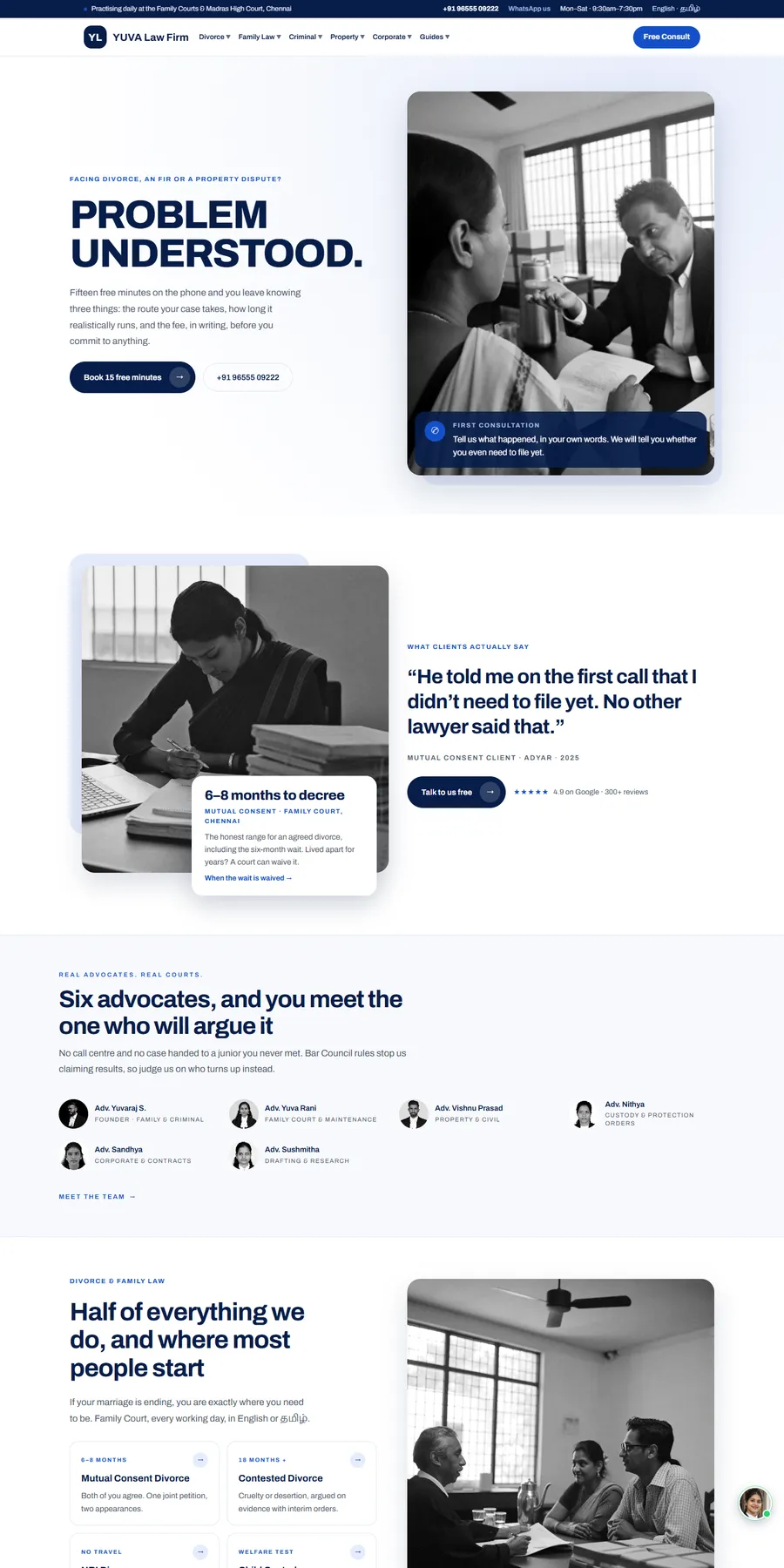
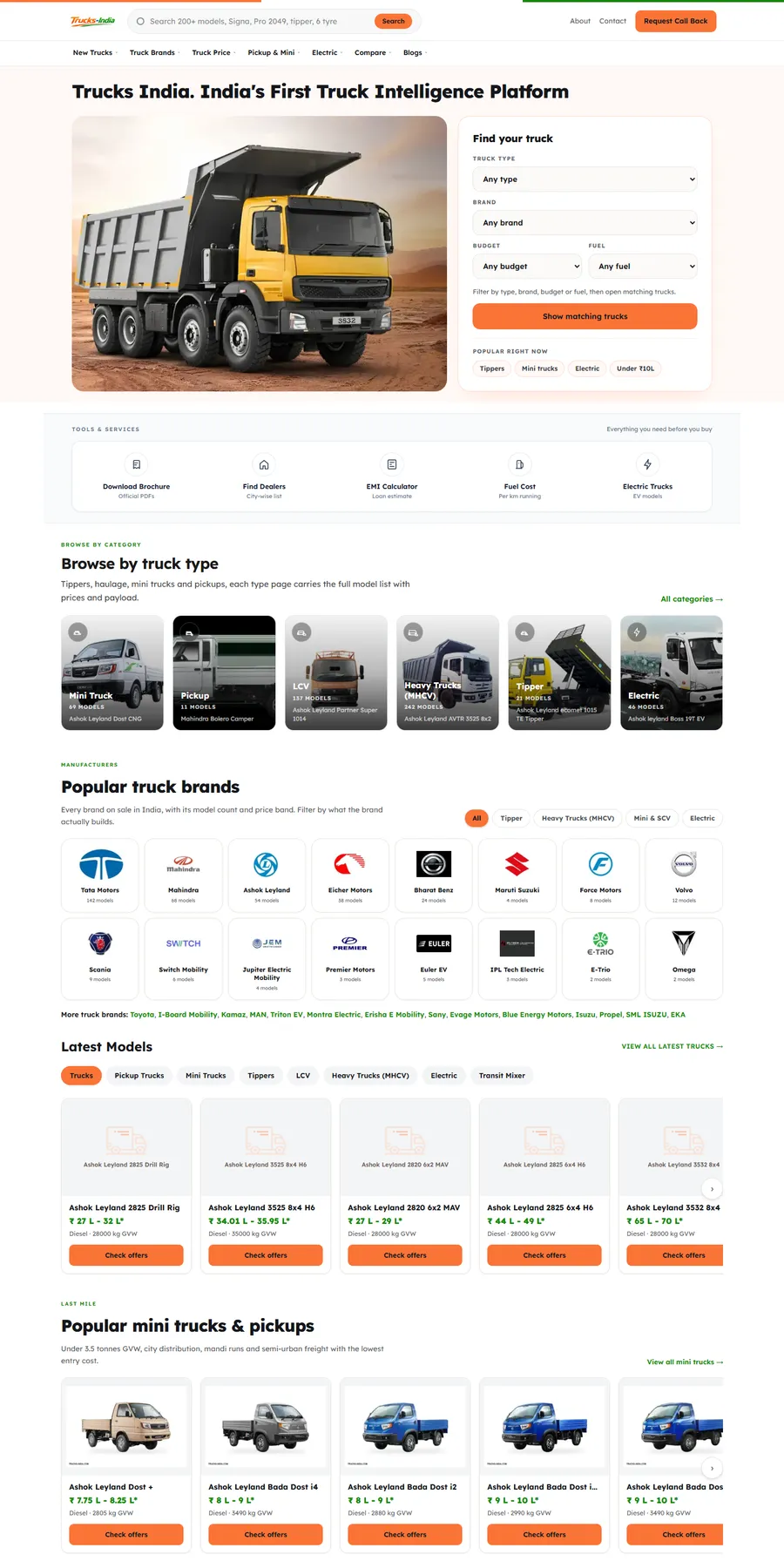
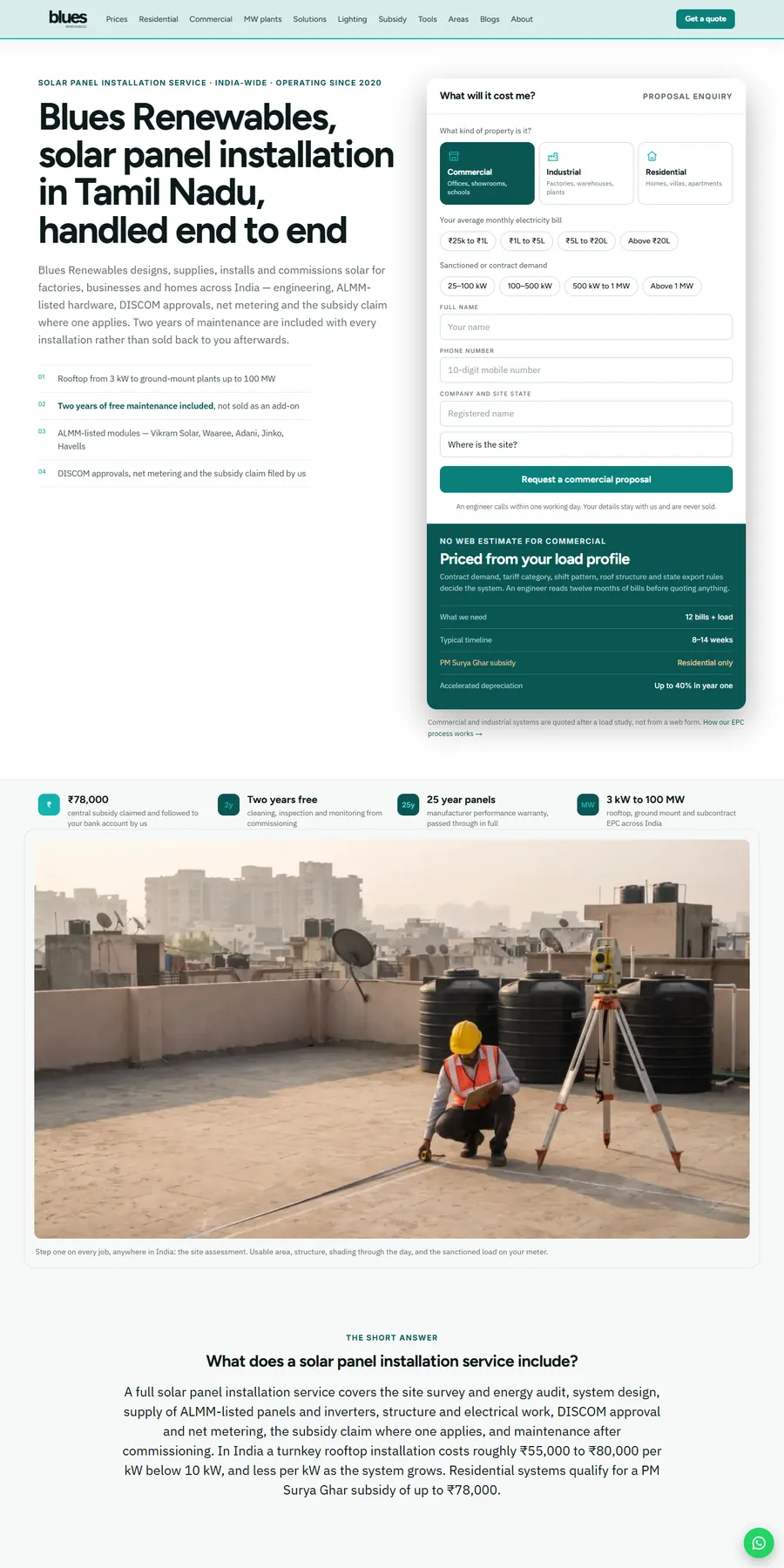
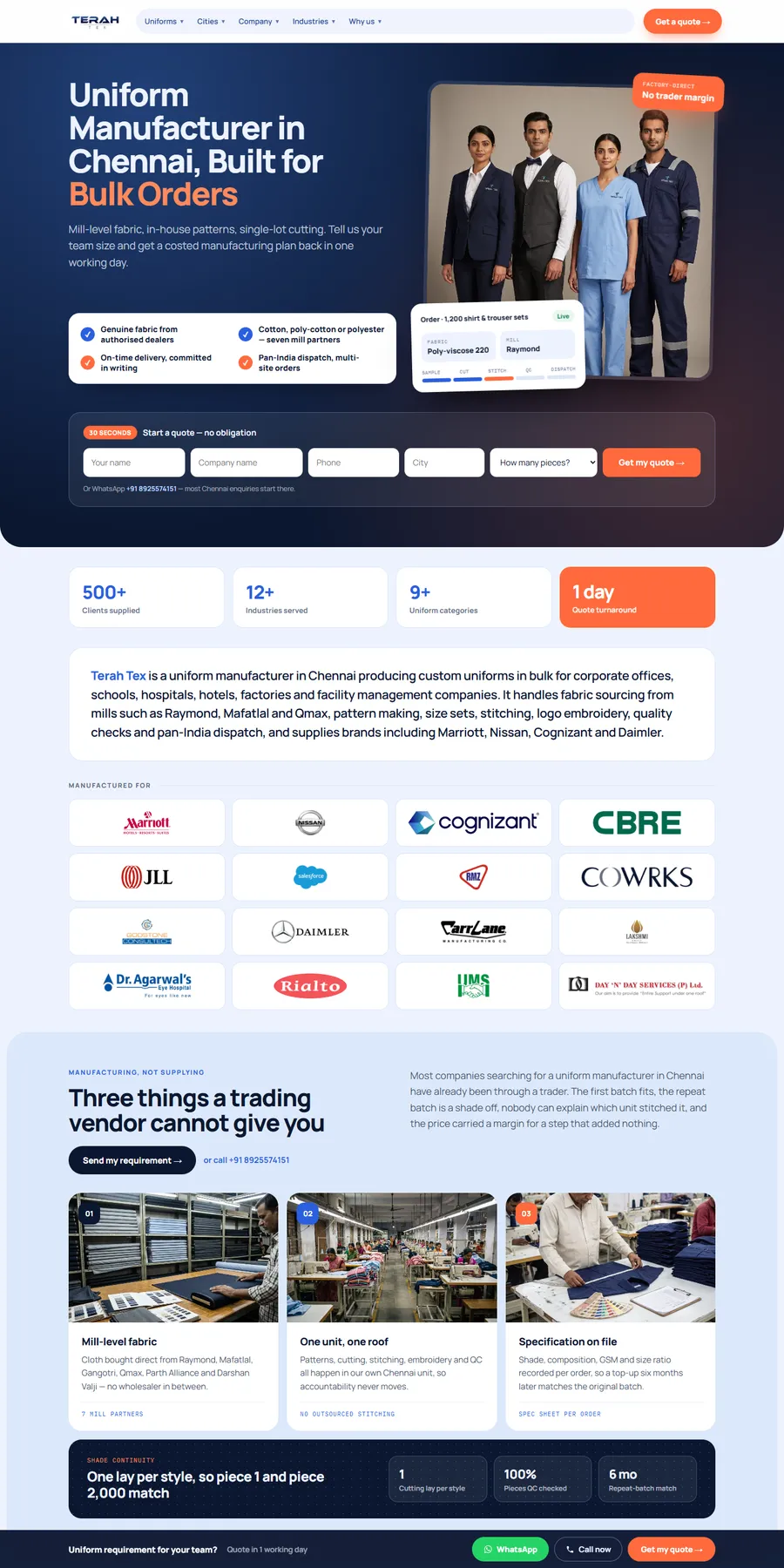
We have not built a dermatology website, or any US medical practice website, and we will not pretend otherwise. Here is the closest proof. Blues Renewables, a rooftop solar installer, went from no tracked leads to 7 to 10 enquiries a week, and its Google clicks rose from 14 to 560 a fortnight in two months (Google Search Console). That site has 325 pages: price pages for every system size, calculators, subsidy guides and 129 local area guides, with every call and form tracked as a GA4 lead event and mobile Lighthouse scores in the mid 80s to mid 90s. On a dermatology site, those price and guide pages become condition, procedure, provider and location pages, and the lead events become skin check bookings, intake completions, Mohs referrals and cosmetic consultation requests. Terah Tex shows the two-step quote form we would adapt for cosmetic consultations: it went from no website enquiries to about 5 bulk-order leads a week. Trucks India shows we can build a large library of structured pages (1,299 variant pages) of the kind a full condition and procedure library needs. YUVA Law Firm, in our portfolio, is a consultation-form site for another regulated, trust-based profession.

More websites we have designed and built

Process

How your dermatology website project runs

Typical timeline: 4 to 8 weeks for most dermatology sites; 8 to 12 weeks for multi-location practices with many condition, provider and location pages. You see progress every week.

  1. Step 01 · Week 1

    Discovery and audit

    We audit your current site, competitors, and how you show up on Google and in AI answers, then agree on goals and a fixed quote.

  2. Step 02 · Weeks 2 to 3

    Strategy and design

    Sitemap, wireframes and full designs for your review. You approve everything before we build.

  3. Step 03 · Weeks 3 to 6

    Build and test

    Development, SEO setup, speed tuning, and testing across devices and browsers.

  4. Step 04 · Launch and beyond

    Launch and grow

    We launch, monitor, and improve based on real data. 30 days of free support included.

What shapes your quote

Scope, not hourly billing

Every project gets a fixed quote within 1 business day, agreed before work starts.

Get my fixed quote →
  • How many condition, procedure, provider and location pages you need
  • Which EHR or booking tool we connect for scheduling and intake, and what it allows
  • Cosmetic consultation, referral and changing spot flows
  • Whether we write the medical content for physician review and organize consented before-and-after photos
  • Moving from your current site: redirects, keeping pages that rank and setting up tracking first
  • Multi-location setups with separate Google profiles and provider schedules

Dermatology website questions, answered

Straight answers to what owners ask us, and what they ask Google and AI assistants. Ask us anything else.

How much does a dermatology website cost?

We quote one fixed price, agreed before work starts, based on the number of pages, features, integrations and content. You get it within 1 business day, with a free audit of your current site. There is no hourly billing.

How long does dermatologist website design and build take?

Most dermatology sites take 4 to 8 weeks. Multi-location practices with many condition, provider and location pages take 8 to 12 weeks. You get a dated week-by-week plan before we start.

Can you connect online booking and intake to ModMed EMA or Nextech?

Where the vendor allows it, yes. We connect the booking or intake tool you already use and confirm during the audit what your EHR supports. If it does not offer online scheduling, we build a request path that your staff confirm by phone.

Is the website HIPAA compliant?

We build intake and request forms on providers that sign a BAA, keep ad pixels off intake, booking and portal pages, keep health details out of analytics, and document the data flows. We do not certify compliance; your counsel and privacy officer make that call.

Can we show before-and-after photos?

Yes, with a signed patient authorization on file for each image, labels for the procedure and number of sessions, consistent pose and lighting, no retouching and a typical-results statement next to the gallery, not behind a link.

Do we need a good faith estimate notice on our website?

If you see uninsured or self-pay patients, including cosmetic clients, the federal rule at 45 CFR 149.610 says the notice must be prominently displayed and searchable on your website. We add a notice page and link it from cosmetic and pricing pages; your team confirms the wording.

How should our providers' credentials appear on the site?

Name the certifying board for each physician, state Mohs fellowship or subspecialty certification exactly, and label PAs and NPs. State medical boards regulate specialty claims, so your counsel approves the final wording.

Will our Google rankings drop if we redesign?

We map every old URL to a new one with redirects, keep the content that ranks, check that each office still matches its Google profile, and compare Search Console data before and after launch.

Do we need a referring physician page?

If referrals from primary care fill your schedule, yes. It holds a referral form, your fax and e-referral details, which records to send, an urgent skin cancer path and a Mohs referral route. Each referral is counted, so you can see which practices send you patients.

Who owns the website?

You do, from day one: code, design, content, domain and accounts in your practice's name. There is no lock-in, so you can move to another developer at any time.

Will the site show up in ChatGPT and Google AI answers?

We build the condition, provider and location pages, schema and consistent business details these systems read. No one can guarantee inclusion in an AI answer, but a clear, specific site gives assistants accurate facts to cite.

Do you write the medical content?

Yes, from your input and published sources such as the American Academy of Dermatology and the American College of Mohs Surgery. A physician at your practice reviews every medical page before launch.

What happens after launch?

30 days of free support, then optional care plans. If we slip a launch date because of us, the next month of support is free.

What makes you different from another dermatology web design company?

We put the terms in writing first: a fixed quote in 1 business day, a dated plan, your ownership of everything and no lock-in. The build covers three service paths, triage and referral pages, BAA-backed intake, credential and consent rules, and lead tracking by service line.

Get your free dermatology website proposal

Four quick questions. You'll get a fixed quote and a free audit of your current site within 1 business day.

  • ✓ No obligation, no sales pressure
  • ✓ Fixed price, never hourly
  • ✓ Your details stay private

Prefer email? info@billionwebstudio.com

Step 1 of 4~60 seconds
What do you need?