Skip to content
Booking projects for next month. Free website audit with every quote.Claim yours →

Health and wellnessBooking projects for November

Orthodontic Website Development Company for More Booked Free Consults

A parent booking an age 7 check-up and an adult weighing clear aligners need different pages, a free consult they can book from a phone and a straight answer on cost, insurance and monthly payments. We build orthodontic sites that split those two paths, state your training in the wording the rules expect and show which source booked each consult.

  • Built for orthodontic practices
  • Fixed quote in 1 business day
  • You own everything
yourortho.com/free-consultFree consults forkids and adultsBook free consultTap to callNew consult: age 8, crossbiteFrom /early-treatment · 7:42 pmTracked as a leadSource: GoogleAI ASSISTANTBoard certified orthodontist near me forkids?Your Practice: ABO-Board Certified, freeconsults, Saturday hours.Source: your website
Illustration: a visit becomes a tracked lead

The short answer

What does an orthodontic website development company do?

An orthodontic website development company builds websites for orthodontic practices that turn local searches for braces, Invisalign, early treatment and adult clear aligners into booked free consults, calls and virtual smile assessments. The site has to reach a parent whose dentist mentioned a crossbite and an adult who has wanted straighter teeth for years, explain what treatment costs and how insurance and payment plans work, state the orthodontist's training accurately, and record which page and channel produced each consult.

For a single-office or small multi-office practice that means a page per treatment (metal, ceramic and lingual braces, Invisalign and Invisalign Teen, Phase 1 treatment, retainers), separate parent and adult paths, a free consult page that explains the first visit, a cost and insurance page, doctor pages with ABO status in the ABO's own wording, a consented before-and-after gallery and a location page per office with after-school and Saturday hours.

Billion Web Studio delivers this orthodontic website design as one fixed-scope project: design, treatment and location pages, Dentist and Person schema, call and consult tracking in GA4 with no patient data sent to analytics, and booking through your practice software's online scheduler or a HIPAA-ready form provider that signs a business associate agreement. You own the site, the domain and every account from day one, with no lock-in.

The market

What the numbers say about orthodontic practices online

Orthodontics is a small specialty with long, high-value treatments: the Bureau of Labor Statistics counts 7,100 orthodontist jobs in 2025 against 141,900 general dentist jobs, and every new start runs for many months. An independent office competes with DSO groups, with general dentists who offer clear aligners and with national brands. The figures below show who you compete with, who your patients are, how they now choose and what sets a doctor apart.

How they choose

How patients find and choose an orthodontic practice

An orthodontic case starts with one of two people: a parent acting on a dentist's note or a school-age milestone, or an adult who has decided to fix their own smile. Both compare two or three offices, sit through a free consult and then go home to weigh the fee and the monthly payment. Here is how a US family or adult picks an orthodontist and what your site has to do at each step.

  1. 1

    The trigger: a dentist's note, a seventh birthday or a wedding date

    The AAO recommends a first orthodontic check-up by age 7, and general dentists often flag crowding or a crossbite. Adults start with a photo they dislike, teeth that shifted after old braces or an event on the calendar. Your site needs a parent page and an adult page, each written in the words that person uses.

  2. 2

    The search: map pack, AI answer and two or three sites

    Searches read like "orthodontist near me", "Invisalign cost" or "braces for 8 year old", and more of them go to an AI assistant first. Your site and Google Business Profile, including each orthodontist's practitioner profile, must match on name, phone, hours and address so every source tells the same story.

  3. 3

    The check: board status, reviews, cost and hours

    Patients on r/orthodontics weigh reviews, price and whether the doctor is board certified. The site has to show training and ABO status in the ABO's wording, recent reviews with platform and date, how cost and insurance work, and whether you see patients after school and on Saturdays.

  4. 4

    The consult: free, booked from a phone

    Most orthodontists offer free consultations and early evaluations, so the consult is the conversion. The site explains what happens at the first visit, how long it takes and what it costs, then offers three paths: tap to call, book online into your scheduler, or send smile photos for a virtual opinion first.

  5. 5

    The decision: fee, insurance and the monthly payment

    After the consult, families compare quotes at home and go back to your site. A cost page that lists what the fee includes (records, visits, retainers, broken bracket visits), how orthodontic insurance benefits apply, HSA and FSA use and a payment plan with honest terms is what turns a consult into a start.

The problem

Why most orthodontic websites lose new patients

What we find again and again when we audit sites in this trade. None of it is about how the site looks.

Leak 01

Cost and payment plans are missing

Of the independent orthodontic sites we reviewed, one said "flexible payment options" with no detail and the other said nothing about cost, insurance or financing. Patients on r/braces and r/orthodontics ask why two offices quoted different fees and whether they can ask for a price match. A site that is silent on fees sends that question to the office that answers it.

Leak 02

Parents and adults land on the same page

A parent wants early treatment, school-friendly hours and "no referral needed". An adult wants discreet options, work-friendly hours and the monthly payment. One combined services page serves neither, and the adult who has waited years to fix their smile leaves for the office whose page speaks to them.

Leak 03

Consults you cannot trace to a source

If calls, booked consults and smile photo requests are not tracked by page and channel, you cannot tell which searches start cases and which only spend money. That matters more now that DSO groups bid on the same Invisalign and braces searches you do.

Leak 04

Credentials stated loosely

"Highest level of certification" with no board named, or "top-rated" with no source, is common on ortho sites. The ADA Code bars ads that create unjustified expectations about results or claim superior quality that cannot be backed up, and it says websites meet the same standard. The ABO endorses one wording, "ABO-Board Certified", for doctors who currently hold it.

Leak 05

A gallery with no consent trail

Before-and-after photos are the proof patients look for, and the riskiest content on the site. Full-face photos are a HIPAA identifier, marketing use needs written authorization, most patients are minors so a parent signs, and the FTC says "results not typical" does not cure an implied promise.

Leak 06

A site you rent, not own

One orthodontic vendor states that the practice owns its site only after a 12-month hosting agreement, and others bundle the site into a monthly platform fee. On r/Dentistry, a dentist who bought a practice found the marketing company hosted the site and controlled the Google Ads account, so leaving meant starting over.

Generic vs built for you

Why a generic website fails orthodontic practices

A template is built to fit every business, so it fits yours badly. Here is what changes when the site is planned around how patients actually buy.

Generic website compared with a website built for orthodontic practices
What you needGeneric template siteBuilt for orthodontic practices
Two buyersOne services page for everyoneA parent path (age 7 check-up, Phase 1, teens) and an adult path (clear aligners, discreet braces, payments), each with its own consult button
Free consult bookingA contact form that lands in a shared inboxYour practice software's online scheduler or a HIPAA-ready form under a BAA, with a first visit page and a real test booking before launch
Cost and insurance"Affordable care, ask about financing"A cost page with fee factors, what the fee includes, orthodontic insurance benefits, HSA and FSA use and payment options, with ranges only if you want them
Monthly payment offers"$0 down, low monthly payments" in a bannerPayment wording that carries the down payment, repayment terms and APR where Regulation Z is triggered, or plain wording if you prefer not to state terms
Doctor credentials"Board certified, top-rated, highest level of training"Dental school, residency, ABO status in the ABO's wording, AAO membership and faculty roles, stated exactly and kept current
Before-and-after casesStock smiles and unlabeled photosYour own cases labeled by treatment and length, a consent record per case kept by the practice, no names in file names
ReviewsPasted quotes with no platform or dateYour Google rating linked to the profile, recent reviews with platform and date, and one neutral review request sent to every patient
Offices and hoursOne contact page with a mapA page per office with after-school and Saturday hours, parking, accessibility notes and the towns it serves

Free self-check · 2 minutes

What your current orthodontic website is missing

Tick everything your site does today. Each box you cannot tick is a place where a ready-to-buy visitor leaves.

What you need

What every orthodontic website needs

The features that turn an orthodontic website from a brochure into the best salesperson you have. We build all of them.

  1. Must-have · 01

    A free consult page that explains the first visit

    What happens (exam, scans or x-rays, options, a fee and payment talk), how long it takes, what to bring, that it is free if it is, and whether a referral is needed. The booking button sits at the top and the bottom.

  2. Must-have · 02

    Separate parent and adult paths

    Kids and teens pages cover the age 7 check-up, Phase 1, Invisalign Teen, sports and band instruments and school-hour appointments. Adult pages cover clear aligners, ceramic and lingual braces, work schedules and monthly payments. Each path has its own consult button and tracked event.

  3. Must-have · 03

    One page per treatment

    Metal braces, ceramic braces, lingual braces, Invisalign, other clear aligners, Phase 1 and palatal expanders, retainers, and surgical orthodontics, TMJ or airway work if you offer them. Each answers who it suits, how long it takes, visit frequency and what it changes in daily life.

  4. Must-have · 04

    A cost, insurance and payment page

    The factors that change the fee, what the fee includes, how orthodontic benefits and lifetime maximums usually work, whether you file claims, HSA and FSA use, in-house plans, financing partners and any lifetime retainer program, with what it covers and for how long. Any monthly figure carries the terms your lender or counsel requires.

  5. Must-have · 05

    Online booking into your scheduler

    Ortho2 Edge Cloud's online exam scheduling, NexHealth, LocalMed or your current tool embedded on the site, or a short request through a form provider that signs a BAA. Preferred office and preferred time are part of the request.

  6. Must-have · 06

    A virtual consult or smile photo option

    An adult deciding between offices can upload smile photos for a preliminary opinion before driving in. The upload runs through the same BAA-covered provider, never a plain email form.

  7. Must-have · 07

    Doctor pages with exact credential wording

    Dental school, accredited orthodontic residency, ABO status as "ABO-Board Certified" only where current, AAO membership, years in practice, faculty or cleft team roles, and any clear aligner provider tier stated as a provider level, not as proof of quality. If a general dentist also works in the office, the page avoids implying they are a specialist.

  8. Must-have · 08

    A consented before-and-after gallery

    Cases labeled by treatment type and length, a signed authorization on file for each (from a parent or guardian for minors), honest context instead of promises, and no stock images passed off as patients.

  9. Must-have · 09

    Reviews with platform and date

    Your Google rating and review count near the top with a link to the profile, recent reviews shown with source and date, and a review request link sent to every patient the same way. BrightLocal found 74% look at reviews from the last three months.

  10. Must-have · 10

    A page per office with real hours

    Address, parking, map, after-school and Saturday hours, accessibility notes and the towns each office serves, matched exactly to its Google Business Profile.

  11. Must-have · 11

    Patient life and emergency pages

    What to eat with braces, soreness, a poking wire or loose bracket and what to do before calling, a lost aligner or retainer, retainer replacement, the patient portal or app and online payments. These cut routine calls and answer what parents search at night.

  12. Must-have · 12

    Dentist and Person schema, fast mobile pages

    schema.org Dentist markup for each office with medicalSpecialty set to orthodontics, and Person markup for each orthodontist, plus Core Web Vitals targets of LCP 2.5 seconds or less, INP 200 ms or less and CLS 0.1 or less. Pew counts 91% of US adults as smartphone owners, so the consult button, the scheduler and the cost page are built and tested on a phone first.

What we build

The orthodontic website we would build for you

Here is the sitemap an orthodontic website development company should start from for an independent practice, and the one we use. We cut or add pages to match the treatments you actually offer, the patients you want more of and the offices you run.

yourcompany.comHome · every section links here

Treatments

  • Metal braces
  • Ceramic (clear) braces
  • Lingual braces
  • Invisalign
  • Other clear aligners
  • Accelerated treatment (if offered)
  • Retainers and retention
  • Surgical orthodontics, TMJ and airway care (if offered)

Kids and teens

  • First check-up by age 7
  • Phase 1 early treatment and palatal expanders
  • Braces for teens
  • Invisalign Teen
  • Invisalign First (if offered)
  • Sports, mouthguards and band instruments
  • After-school and Saturday appointments

Adults

  • Adult orthodontics
  • Discreet options compared
  • Orthodontist or dentist for clear aligners
  • Teeth that shifted after old braces
  • After a mail-order aligner company

First visit and cost

  • Free consultation
  • Virtual consult and smile photos
  • Cost of braces and Invisalign
  • Insurance, HSA and FSA
  • Payment plans and financing
  • No referral needed
  • Transfer patients: moving mid-treatment
  • Referring dentists

Current patients

  • Life with braces
  • Orthodontic emergencies
  • Lost aligner or retainer
  • Retainer replacement
  • Patient portal and app
  • Online payments

Practice and offices

  • Meet the orthodontists
  • Team
  • Before-and-after cases
  • Reviews
  • Office location pages
  • FAQ
  • Privacy, Notice of Privacy Practices and accessibility
  • Contact

Calls, bookings, leads

How we turn visitors into new patients

Good website design for orthodontists is judged in consults booked and cases started. A visitor becomes a call, a booked consult, a smile photo request or a referral from a dentist, and you can see where each one came from, without any patient details reaching analytics. This is how we build that path and track every lead.

  • 01Sticky call and book bar on mobileCall and Book Free Consult buttons stay at the bottom of the screen on every page. Each tap is a GA4 conversion event tagged with the page and the path (parent or adult), so you know whether the Invisalign page or the early treatment page fills the schedule.
  • 02A two-step consult requestStep one asks who the patient is (my child, my teen, myself), the treatment they are curious about and the preferred office. Step two asks for contact details and best times. Your treatment coordinator calls back already knowing which conversation to have.
  • 03Booking from your practice softwareWe embed Ortho2 Edge Cloud's online exam scheduling, NexHealth, LocalMed or your current scheduler, add a plain link fallback and make a real test booking before launch. Each completed booking fires its own GA4 event with the page and path. Where your scheduler accepts source tags, we pass them through, and we confirm that in the audit.
  • 04Smile photo upload for a virtual consultAdults comparing offices can send photos and a short question through a HIPAA-ready provider under a BAA. The request is tracked as its own lead type, and the reply invites them in for the free exam.
  • 05A referring dentist pageGeneral dentists send a referral form, see what happens next and get case updates. Many orthodontic practices still rely on general dentist referrals, so this path is tracked separately from patient bookings.
  • 06Call tracking that keeps your real number intactDynamic number insertion swaps the shown number for ad and campaign visitors only. Your main number stays in the schema, the footer and every Google profile, so your practice details stay consistent everywhere.
  • 07A monthly consult report you can readCalls, booked consults, photo requests and dentist referrals by source, page and path, in plain numbers. Each analytics event records only the page, the path (parent or adult) and the lead type, never names, ages, symptoms or anything typed into a form.

AI search

Parents and adults now ask ChatGPT, Google AI Mode and Perplexity which orthodontist to see. BrightLocal found 45% of consumers used AI tools for local recommendations, and Pew found people click a regular result far less often when Google shows an AI summary. AI answers draw on your Google profiles, your reviews and your own site, so the site has to state plainly what you treat, for whom, where, at what hours and with what training.

Questions your patients ask AI assistants

  • Best orthodontist near me for adult Invisalign with free consultations and payment plans
  • Which orthodontist in Frisco takes my dental insurance and has Saturday hours?
  • Is an orthodontist better than a dentist for clear aligners?
  • Board certified orthodontist for my 8 year old near me
  • How much do braces cost, and do orthodontists offer monthly payment plans?
  • My aligner company shut down. Who can take over my treatment near me?
  • A page for each treatment and each patient type

    Braces, Invisalign, early treatment, teens and adults each get their own page, with the answer in the first lines. An assistant asked about an 8 year old's crossbite can cite your early treatment page instead of a generic blog.

  • Cost, insurance and hours as plain text

    Fee factors, plans accepted, HSA and FSA, payment options, office hours and Saturday availability written on the page, not in images or PDFs. An assistant cannot repeat what it cannot read.

  • Credentials an assistant can verify

    Each orthodontist's dental school, residency and ABO status in the ABO's wording, on a doctor page with Person schema that links to the practice. Specific, checkable facts are what an AI answer can safely repeat.

  • One identity across site and profiles

    Google treats orthodontists as individual practitioners who may have their own profile, and the business name must match the real-world name. We align the practice name, doctor names, phones, hours and addresses across the site and every profile before launch.

  • FAQ blocks written as real patient questions

    "Am I too old for braces?", "Do I need a referral?", "What if I lose my retainer?", answered briefly on the relevant treatment page with FAQ markup and a book-a-consult next step.

  • Recent reviews on a steady flow

    BrightLocal found 74% of consumers look at reviews from the last three months. A neutral request sent to every patient after key visits keeps the profile current, which is what both patients and AI answers read.

Compliance and trust

The rules an orthodontic website has to get right

An orthodontic site makes claims that dental boards, HHS, the FTC and lenders all have rules about: specialist wording, patient photos, reviews, payment plans, health information on forms and accessibility. We build pages and forms that support these rules. We do not certify compliance; your practice and its counsel confirm state board rules, HIPAA obligations and financing terms.

Specialist and credential wording

ADA Code 5.H lets a dentist announce as a specialist in orthodontics only with the required training (an accredited program of two or more years, or diplomate status), using "specialist in", and "practice limited to" only if the practice is exclusively orthodontic. It also says specialists must avoid implying that general dentists in the same office are specialists. Texas rule 22 TAC 108.54 says a dentist shall not imply specialist status without it. The ABO endorses "ABO-Board Certified" for current diplomates. We write doctor pages to that wording and you confirm your state board's rules.

Before-and-after photos and testimonials

Full-face photos are on HIPAA's identifier list (45 CFR 164.514), and marketing use of patient information needs written authorization (45 CFR 164.508), from a parent or guardian for minors. The FTC Endorsement Guides (16 CFR 255.2) treat a testimonial as typical and say "results not typical" does not fix that. Galleries are labeled by treatment, backed by your consent records and free of promises.

Reviews and review replies

The FTC rule on consumer reviews (16 CFR Part 465) bans fake reviews, rewards for positive sentiment, undisclosed staff reviews and review suppression. HHS OCR fined a dental practice $50,000 after its reply to a Google review disclosed a patient's treatment details. Our review requests go to every patient the same way, and reply templates never confirm that someone is a patient.

Payment plans and monthly payment ads

Under Regulation Z (12 CFR 1026.24(d)), stating a down payment, number of payments or payment amount in an ad requires the down payment, full repayment terms and APR. A practice that regularly offers plans over more than four installments can count as a creditor (12 CFR 1026.2(a)(17)). We build pages that can carry the disclosure, or use plain wording, and financing copy comes from your lender.

Health information on forms and in tracking

Consult, intake and photo forms go to a provider that signs a BAA or straight into your practice software. Analytics and ad tags never receive form contents or health details, in line with HHS OCR's guidance on tracking technologies. We post your Notice of Privacy Practices, and can place a good faith estimate notice for self-pay patients if you and your counsel decide it applies.

Accessibility and text message consent

The Justice Department says the ADA covers the websites of businesses open to the public and points to WCAG. We target WCAG 2.1 AA with real alt text, captioned videos, labeled forms and keyboard navigation, not an overlay widget. Under the TCPA, appointment reminders from a covered entity have a narrow exemption, but marketing texts need prior express written consent, and payment-plan reminders do not fit the health care exemption. Forms carry a separate, unchecked consent line, and your texting platform settings are worth reviewing with counsel.

We build with tools and patterns that support these rules and document what we set up. For legal advice on your own obligations, talk to your attorney.

From the forums

What orthodontic practices ask about websites, answered

We read what orthodontists, dentists and their patients ask each other on r/orthodontics, r/Dentistry, r/Dentists, r/Invisalign and Student Doctor Network. Orthodontic owner boards are mostly behind a login, so we also used threads from general dentists who own practices, labeled as such, because the website, vendor and review questions are the same. These are their questions, paraphrased, with our straight answers.

Where owners talkr/orthodonticsr/Dentistryr/Dentistsr/InvisalignStudent Doctor Network forums

Asked on r/orthodontics

“Someone running marketing for an independent practice says referrals used to be enough, but DSO chains now outbid them on Google Ads for Invisalign and the ad cost per case eats the margin. Is pay-on-rank SEO safe, or are ads just the cost of business?”

Our answer: Nobody can promise rankings, so be wary of any deal built on them. What you can control is a site with a strong page per treatment and an adult clear aligner path that can earn organic visits on its own, and tracking that shows cost per consult by channel. Then you can decide how much to spend on ads with real numbers instead of a retainer report.

Asked on r/Dentistry

“Someone helping a dentist owner asks how to tell agencies apart: do they report new leads and the return per campaign? Much of the work looks copy-pasted between clinics.”

Our answer: This was a dental owner thread, and orthodontic practices face the same pitch. Ask any vendor for last month's consults by source (organic, each Google profile, ads), split by new patient and by treatment, not traffic or rankings. If they cannot show that, the fee is a guess. We set up GA4 conversion events and call tracking before launch, so the monthly report counts calls, booked consults and smile photo requests by page and channel.

Asked on r/orthodontics

“A patient is choosing between a pricier orthodontist with many strong reviews and one 25% cheaper with none. How much do reviews matter?”

Our answer: In that thread the first reply asked whether either doctor was board certified, and another said communication matters most. Your site should answer all three: ABO status in the ABO's wording, recent reviews with platform and date, and a first visit page that shows how you explain treatment and fees.

Asked on r/Dentistry

“I am finishing my orthodontic residency and thinking about opening my own office. What should I expect in the first months?”

Our answer: Replies warned there are no patients on day one and suggested part-time work while the office grows. A new practice needs consults from its first month, so the site, Google profiles, treatment pages and consult tracking belong in the startup plan alongside the build-out, and should be live before the doors open.

Asked on Student Doctor Network forums

“Can an orthodontist also advertise cosmetic work such as veneers and crowns?”

Our answer: Replies in that 2020 thread said announcing as a specialist limits what else you can advertise, and that dropping the specialist label costs you the orthodontic draw and dentist referrals. Today the ADA Code asks specialists to use "specialist in" and keep a sufficient part of their practice in the specialty, and some states, such as Texas, require the practice to be limited to it. We state your training in the wording your state board allows, list any added services so no one reads them as a second specialty, and you confirm the wording with your board.

Asked on r/Dentistry

“A dentist who bought a practice says the marketing company built and hosts the website and has not delivered what the contract lists. Leaving means starting over. Who should build and host it instead?”

Our answer: This was a general dental owner, but orthodontic practices sign the same contracts. Before you sign with any orthodontic web design vendor, get the domain, hosting, site files and accounts in your own name. We build that way from day one, with no lock-in, so changing vendors later never means starting over.

Asked on r/Dentistry

“The same dentist was told they cannot have admin access to their own Google Ads account because the agency created it. Is that normal?”

Our answer: It happens, and it is the reason to create every account in the practice's name first and give vendors user access. When we build, the Google Business Profiles, Search Console, GA4 and any ad accounts we touch belong to you, and you keep them if we part ways.

Asked on r/Dentists

“A dentist with about 400 Google reviews at 4.9 stars says a new patient nearly went elsewhere because ChatGPT named a practice with half the reviews as the best in town. How do you fix that?”

Our answer: Reviews alone are not enough for AI answers. Assistants also read your site, so treatment and audience pages, cost and hours in plain text, credentials stated exactly, schema, and the same details on the site and every Google profile all count. Nobody can guarantee an AI mention, but a specific, consistent site gives assistants something accurate to cite.

Asked on r/Dentistry

“How do you answer a one-star review without breaking HIPAA?”

Our answer: The top reply in a dental owner thread used a short, generic response: privacy rules prevent comment on any case, here is our number, and a line about the practice's standards. HHS OCR fined a dental practice $50,000 for a reply that disclosed treatment details. We write reply templates that never confirm someone is a patient.

Asked on r/Invisalign

“Should I get Invisalign from my general dentist or from an orthodontist?”

Our answer: Patients ask this in thread after thread. A factual page on what an orthodontist's extra training covers, which cases need in-person monitoring and what your consult includes answers it, without criticizing general dentists, which the ADA Code's rule on misleading claims also points toward.

Questions are paraphrased from public threads. We never quote members by name.

Others vs us

Orthodontic website design options: Billion Web Studio vs a website builder template vs a typical orthodontic marketing agency

The three ways orthodontic practices usually get a website, side by side.

Orthodontic website design options: Billion Web Studio vs a website builder template vs a typical orthodontic marketing agency
Billion Web StudioWebsite builder templateTypical industry agency
Who owns the site, domain and accountsYou do, from day one, in your own accountsYou own the content; the site lives on the builder's platformOften the vendor, or yours only after a 12-month hosting term
Contract and pricingFixed quote in 1 business day, agreed before work starts, no lock-inMonthly subscription, and you build it yourselfSetup plus a monthly platform or retainer fee, often on a 12-month contract
Parent and adult pathsSeparate kids, teens and adult pages, each with its own consult buttonWhatever pages you writeSometimes a shared template used across many practices
Free consult and virtual consult bookingYour practice scheduler or a BAA-covered form, photo upload, tested before launchA generic form that emails youUsually a form; sometimes their own booking tool
Cost, insurance and payment plan pagesFee factors, inclusions, insurance, HSA and FSA, terms with Regulation Z disclosures where triggeredUp to youOften "financing available"; disclosures vary
Credentials, gallery consent and review rulesABO wording, ADA Code specialist wording, consent-backed gallery, neutral review requestsUp to you"HIPAA-compliant" badge; wording varies
Consult tracking by sourceGA4 events plus call tracking, split by parent and adult, no patient data sentBasic form countsTraffic and ranking reports, often in their own dashboard
AccessibilityWCAG 2.1 AA target, tested and fixed, no overlay widgetDepends on the themeSometimes an overlay toolbar
Timeline and updatesDated week-by-week plan, 4 to 8 weeks typical, weekly written updatesYour evenings and weekendsVaries by vendor

Why Billion Web Studio

What we do better, and why it matters to you

  • A fixed quote in 1 business day, with a free audit

    We review your current orthodontic site, consult paths, cost pages, Google profiles and tracking, then send a written scope and a fixed price based on pages, features, integrations and content. No hourly billing.

  • You own everything from day one

    Code, design, content, domain, hosting, analytics and Google accounts in your name. No hosting term to sit out before the site is yours, and no site that disappears if you stop paying a vendor.

  • Built around how an orthodontic practice wins cases

    Many orthodontic sites are built from a shared template. Ours starts from the free consult: two patient paths, a cost and payment page, doctor pages with exact credential wording and a consented gallery are in the plan from week one.

  • Health information handled with care

    Forms run through your practice software or a provider that signs a BAA, analytics carry no patient details and accessibility is tested against WCAG 2.1 AA. We say plainly that we build to these rules and do not certify compliance.

  • Every consult traced to its source

    GA4 conversion events and call tracking by page, channel and patient path, so you can see whether your Invisalign ads, Google profiles or treatment pages are starting cases.

  • A dated plan and a guarantee on it

    A week-by-week plan, weekly written updates and 30 days of free support after launch. If we slip a date because of us, the next month of support is free.

In writing, before we start

  • Fixed quote in 1 business day

    Scope, deliverables and price agreed in writing, with a free audit of your current site. No hourly billing.

  • Launch date in writing

    A dated week-by-week plan and a written update every week. If we slip because of us, the next month of support is free.

  • You own everything

    Code, design, content, domain and accounts are yours from day one. No 12-month contract, no rented site.

  • 30 days of support included

    We watch rankings, forms and call tracking after launch and fix anything that needs it.

Proof, not promises

Results from websites we have built

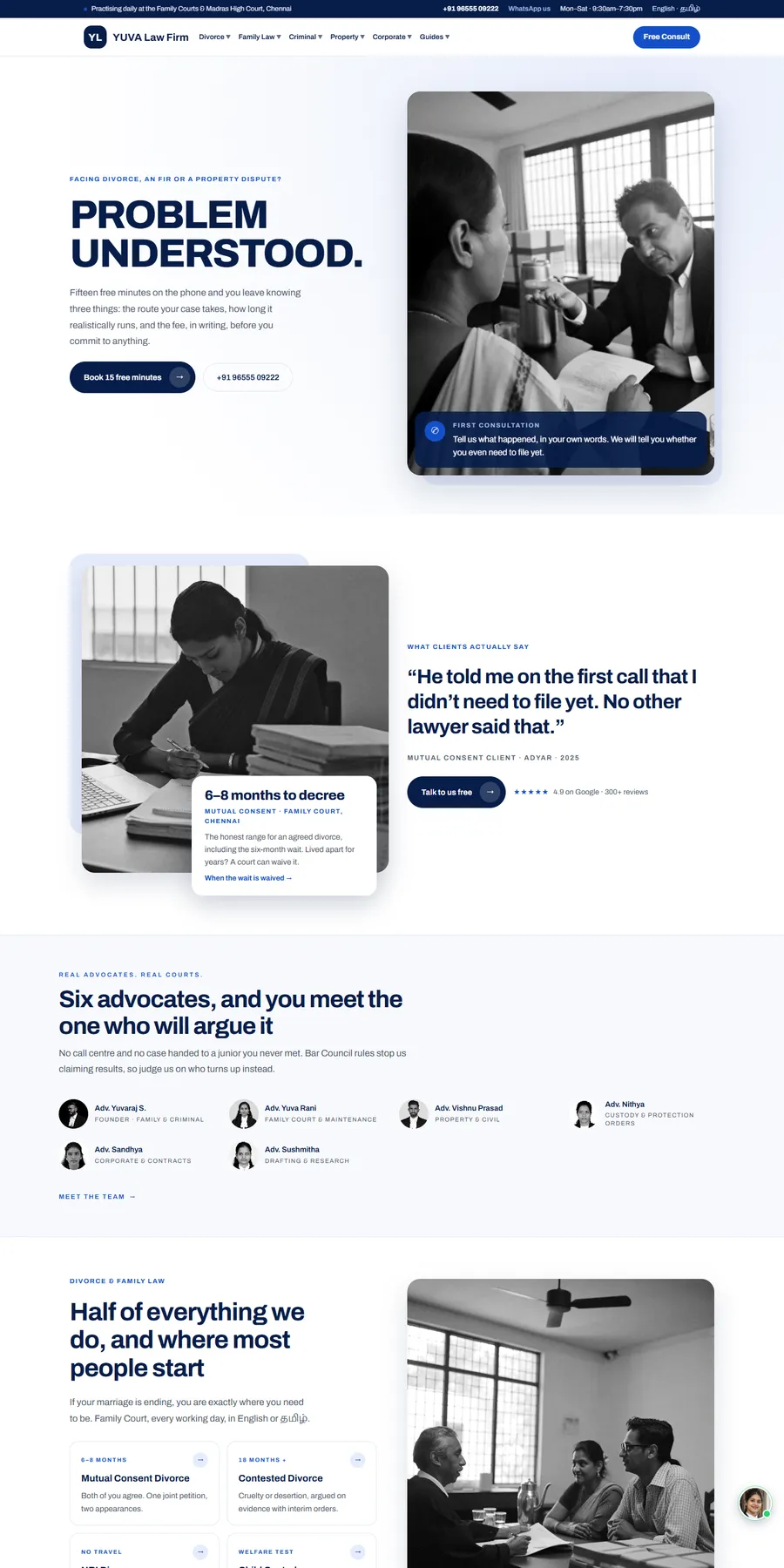
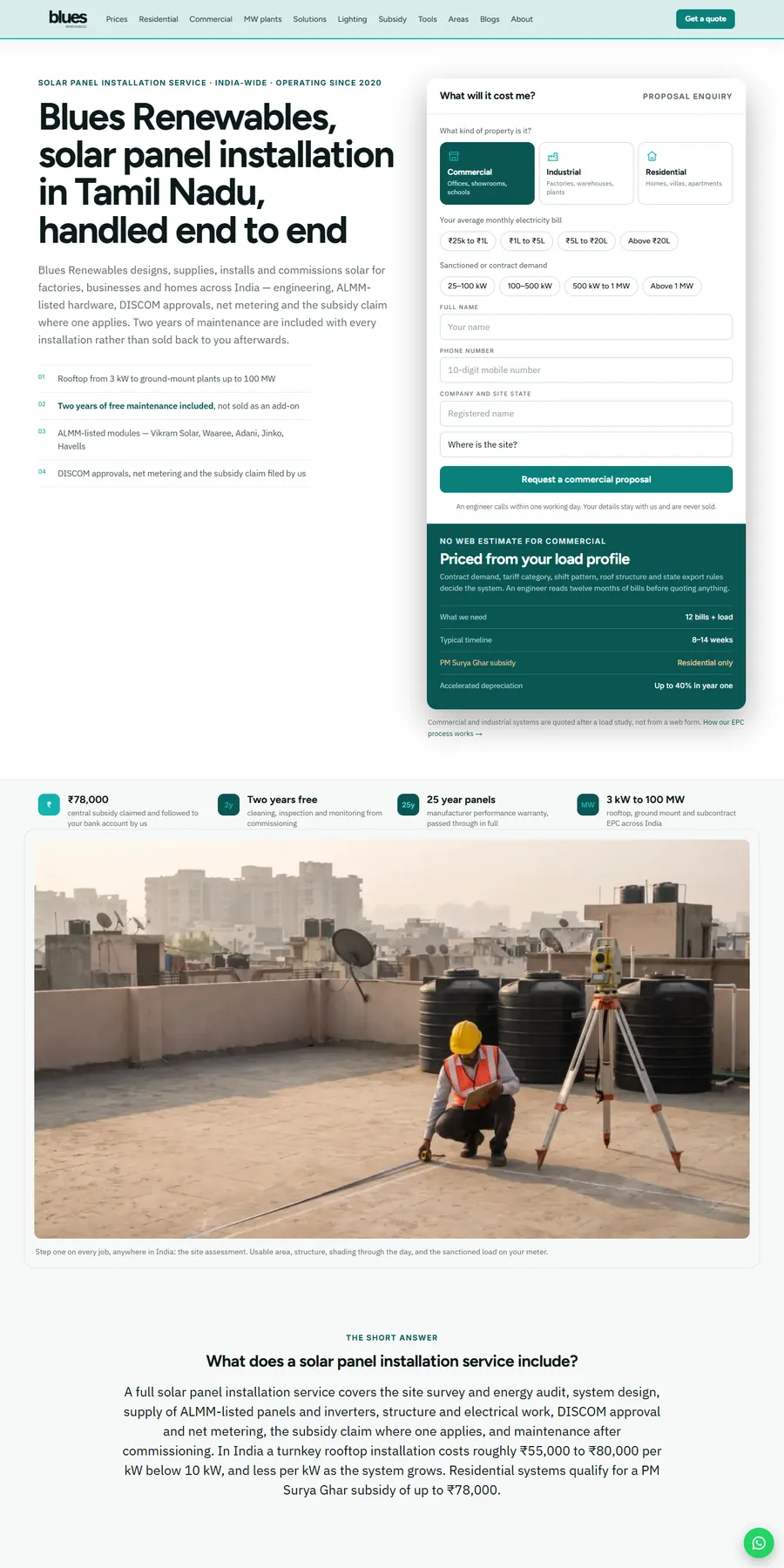
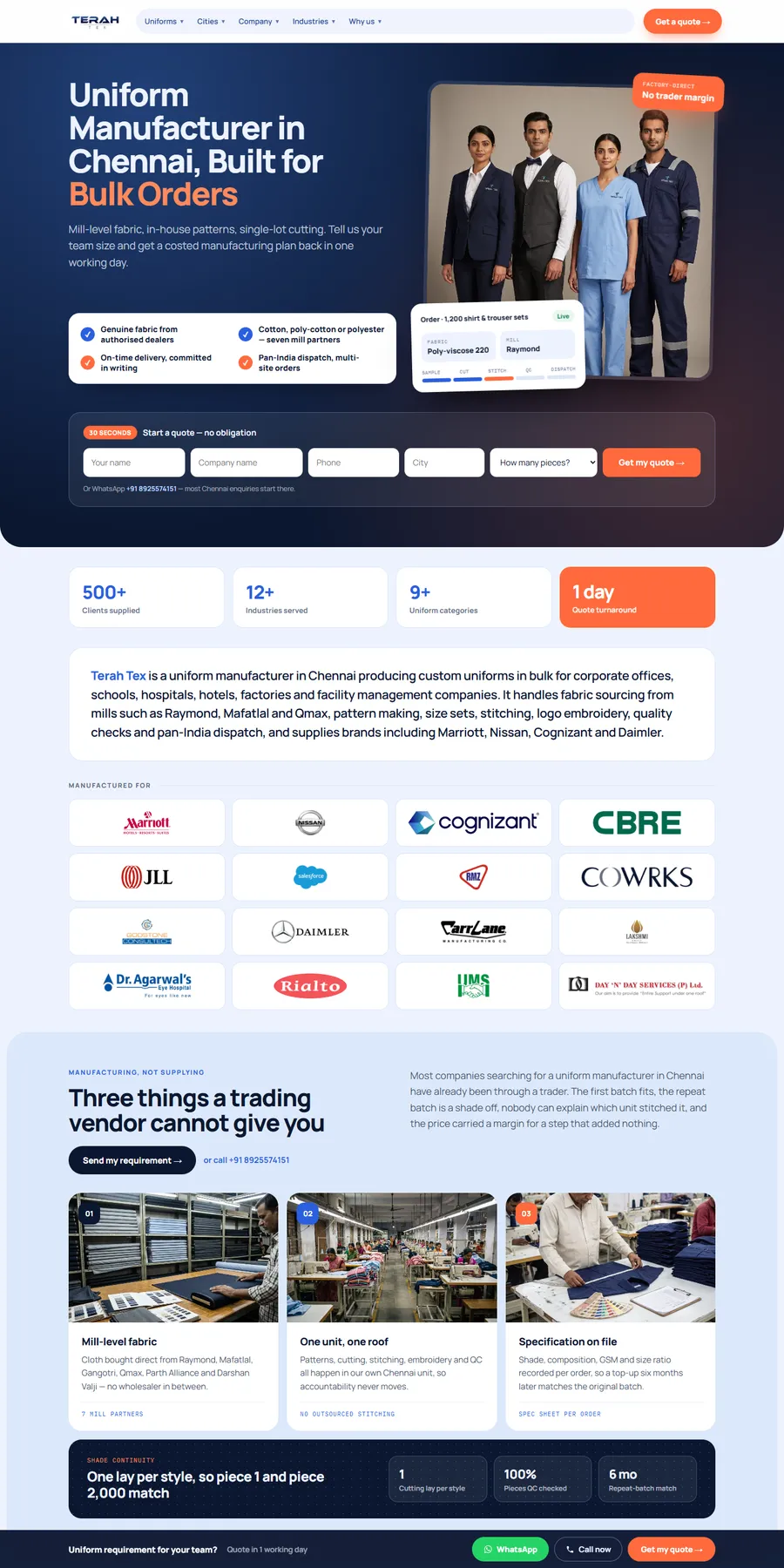
We have not built a website for an orthodontist, a dentist or any US practice yet, and we will not pretend otherwise. The closest proof is Blues Renewables, a rooftop solar installer that sells a high-ticket, subsidy-driven decision through price pages, calculators, guides and local area pages. Its site went from no tracked leads to 7 to 10 enquiries a week, and Google clicks rose from 14 to 560 a fortnight in two months, with every call and form tracked as a GA4 lead event and mobile Lighthouse scores in the mid 80s to mid 90s. For an orthodontic practice, its price pages become a cost, insurance and payment page, its guides become treatment and audience pages, and its area guides become office pages. Terah Tex shows the two-step form we would use for consult requests: it went from no website enquiries to about 5 bulk-order leads a week. YUVA Law Firm, in our portfolio, is a professional practice site built around free consultation forms; it has no published numbers.

More websites we have designed and built

Process

How your orthodontic website project runs

Typical timeline: 4 to 8 weeks for most orthodontic sites; 8 to 12 weeks for multi-office practices with many location and treatment pages. You see progress every week.

  1. Step 01 · Week 1

    Discovery and audit

    We audit your current site, competitors, and how you show up on Google and in AI answers, then agree on goals and a fixed quote.

  2. Step 02 · Weeks 2 to 3

    Strategy and design

    Sitemap, wireframes and full designs for your review. You approve everything before we build.

  3. Step 03 · Weeks 3 to 6

    Build and test

    Development, SEO setup, speed tuning, and testing across devices and browsers.

  4. Step 04 · Launch and beyond

    Launch and grow

    We launch, monitor, and improve based on real data. 30 days of free support included.

What shapes your quote

Scope, not hourly billing

Every project gets a fixed quote within 1 business day, agreed before work starts.

Get my fixed quote →
  • How many treatment, audience and office pages you need
  • Which practice software or online scheduler we connect, and whether you want a virtual consult with photo upload
  • Cost, insurance and payment plan pages, including any financing partner integration
  • Whether we write the content, and how many consented before-and-after cases and office photos you have
  • Moving from your current site or vendor: redirects, keeping pages that rank and moving accounts into your name
  • Multi-office setups, Spanish-language pages or a new practice launching from scratch

Orthodontic website questions, answered

Straight answers to what owners ask us, and what they ask Google and AI assistants. Ask us anything else.

How much does an orthodontic website cost?

We quote one fixed price, agreed before work starts, based on the number of pages, features, integrations and content. You get it within 1 business day of a free audit of your current site. There is no hourly billing.

How long does orthodontic website development take?

Most orthodontic sites take 4 to 8 weeks. Multi-office practices with many location and treatment pages take 8 to 12 weeks. You get a dated week-by-week plan before we start and a written update every week.

Have you built websites for orthodontists before?

No, and we say so. We are a website development company, not an orthodontic-only vendor. What carries over is the lead system we built for a rooftop solar installer: a page per service and area, cost explanations, click-to-call and every call and form tracked, which took it from no tracked leads to 7 to 10 enquiries a week.

Do I own the website, domain and accounts?

Yes, from day one: code, design, content, domain, hosting, Google Business Profiles, analytics and Search Console in your name. There is no lock-in, so you can take the site to another developer at any time.

We are on a monthly platform with our current ortho marketing vendor. How do we switch without losing what we have?

In the free audit we list what you own and what the vendor holds: domain, hosting, site files, Google Business Profiles, GA4, Search Console, ad accounts and tracking numbers. We help you move each into your name, rebuild the pages, redirect every old URL that ranks or has links, keep your main phone number and Google profiles unchanged, and set the launch so the old site stays up until the new one is live. Reviews stay on your Google profile, which you keep.

Can patients book a free consult online?

Yes. We embed your practice software's online scheduler, such as Ortho2 Edge Cloud's exam scheduling, or a booking tool like NexHealth or LocalMed. If you prefer a request form, it runs through a provider that signs a business associate agreement, with optional smile photo upload.

Is the website HIPAA compliant?

A website is not certified as HIPAA compliant. We route health information only to providers that sign a BAA or into your practice software, keep form contents out of analytics and ad platforms and post your privacy notices. Your practice and its counsel own compliance; we build to it.

Should we publish our prices?

That is your choice. The cost page works either way: it explains what changes the fee, what the fee includes, how insurance and HSA or FSA work and your payment options. Any zero-down offer or monthly amount carries the disclosures your lender or counsel requires.

How do you handle board certification and specialist wording?

We state each doctor's training exactly: dental school, orthodontic residency and "ABO-Board Certified" only where it is current. We follow the ADA Code's specialist wording and make sure no general dentist in the office appears to be a specialist. You confirm your state board's rules.

We have two or three offices. One site or several?

Usually one site with a page per office, each with its own hours, map, towns served and booking option, matched to that office's Google Business Profile. It keeps reviews, content and authority in one place.

We bought a practice or are opening a new one. Can the site be ready in time?

Yes, if we start early. We plan the launch against your opening date, keep the old phone number and Google profile where you are taking over a practice, redirect old pages that rank and set up consult tracking before the first patient calls.

Will a new website get us more consults?

We do not guarantee rankings or consult numbers. What a new site changes is how many visitors book: a consult button that works on a phone, separate parent and adult paths, a clear cost page and tracking that shows which source produced each consult.

How does our practice show up in ChatGPT and Google AI answers?

AI assistants lean on your Google profiles, your reviews and your own site. We write treatments, audiences, cost, hours and credentials as plain text, add Dentist and Person schema and make the site match every profile. No one can guarantee an AI mention, but a consistent, specific site gives assistants something accurate to cite.

What happens after launch?

You get 30 days of free support, then an optional care plan. We train your team to update hours, offers, team and cases in the CMS. If we slip a date because of us, the next month of support is free.
Get your free orthodontic website audit and fixed quote

Four quick questions. You'll get a fixed quote and a free audit of your current site within 1 business day.

  • ✓ No obligation, no sales pressure
  • ✓ Fixed price, never hourly
  • ✓ Your details stay private

Prefer email? info@billionwebstudio.com

Step 1 of 4~60 seconds
What do you need?