Skip to content
Booking projects for next month. Free website audit with every quote.Claim yours →

Hospitality, auto and localBooking projects for November

Hotel Website Development Company for More Direct Bookings

A guest who found you on an OTA opens your site to compare, and in about a minute wants the total price, the cancellation terms, parking and a reason to book with you. We build hotel sites around the booking engine you already run, with room pages that open the right rate, accessible rooms described the way the ADA asks, and tracking that shows which page and source produced each booking.

  • Built for independent and boutique hotels, inns and small resorts
  • Fixed quote in 1 business day
  • You own everything
yourinn.com/rooms/king-suiteBook direct:breakfast includedCheck availabilityTap to callNew booking: 2 nights, kingFrom /rooms/king-suite · 9:42 pmTracked as a leadSource: GoogleAI ASSISTANTPet-friendly inn near Stowe with freeparking?Your Hotel: dogs welcome, freeself-parking, book direct online.Source: your website
Illustration: a visit becomes a tracked lead

The short answer

What does a hotel website development company do?

A hotel website development company builds the website an independent hotel, inn or small resort sells rooms from: room pages with real rates, a booking bar on every page that hands off to your booking engine, offers and packages that land on the right rate, and pages that answer what guests ask before they commit. Its main job is to win the direct booking from the guest who found you on an OTA or Google Maps and then searched your name.

For a boutique hotel or inn that means one page per room type with bed size, occupancy, view and a Book button that pre-selects that room in your engine. It means an accessible rooms page written to the ADA reservation rule, and prices that include any resort or amenity fee, as the FTC fee rule has required since 12 May 2025. Add a book-direct benefits page, weddings, meetings and group pages with an RFP form, and parking, pet, check-in and cancellation policies in plain text.

Billion Web Studio is a hotel website development company that delivers this as one fixed-scope project around the booking engine and PMS you already run, such as Cloudbeds, Sabre SynXis, Stayntouch, Mews or ResNexus. Hotel schema, GA4 cross-domain tracking from the site into the engine, call and RFP tracking, and pages ready for Google free booking links are part of every build. You own the domain, design, content and analytics from day one, and you can change engines later without rebuilding the site.

The market

What the numbers say about independent and boutique hotels, inns and small resorts online

An independent hotel sells the same night on its own site and on several OTAs at once, and every OTA booking pays a commission, set by each contract and often a double-digit percentage, out of a margin that has not fully recovered. The figures below show how much independent hotel business runs through intermediaries, how thin the margin is and how guests now look for a place to stay.

How they choose

How travelers find and choose a hotel

A hotel stay starts with a reason to travel: a wedding, a ski weekend, a college visit, a fall foliage drive, a meeting in town. Cloudbeds put the average independent hotel booking window at 40 days in 2025, so guests compare for weeks before they commit. Here is how a US guest picks an independent hotel and where your site wins or loses the direct booking.

  1. 1

    The reason to travel

    The first search names the place and the reason: boutique hotel near the wedding venue, pet-friendly inn near the trailhead, hotel close to the ski shuttle. Your site needs pages that match those reasons, such as weddings, getting here and local guides, written in plain text that search engines and AI assistants can read.

  2. 2

    The shortlist: OTA, Google and AI answers

    Most guests see you first on an OTA, in Google Maps or in Google's hotel results, and more of them now ask ChatGPT. Your Google profile, your OTA listings and your own site have to tell the same story, with the same photos, policies and amenities, or the guest trusts the OTA version.

  3. 3

    The name search: checking your own site

    Many guests open your site after finding you elsewhere, with the OTA tab still open. In that minute they look for the total price, the cancellation policy, parking, pet rules and a reason to book with you. A slow or vague site sends them back to finish the booking on the OTA.

  4. 4

    The booking: dates, room, total, pay

    The guest picks dates in the booking bar, lands on the room type they chose with the right rate already selected, sees the total with any mandatory fees and pays inside your engine. Each step is tracked from the site into the engine, so you know which page and source produced the booking.

  5. 5

    After the stay: the next one is direct

    A guest who booked through an OTA stays the OTA's customer until you collect an email at check-in. A book-direct page, a newsletter with consent and a review link sent to every guest turn this stay into a direct booking next season.

The problem

Why most hotel websites lose direct bookings

What we find again and again when we audit sites in this trade. None of it is about how the site looks.

Leak 01

A pretty brochure with a booking engine nobody uses

Room pages without rates, a Book button that drops guests on a blank engine search and no booking bar on mobile. The guest who came over from the OTA to compare has to pick dates and find the room again, gives up and books on the OTA, and you pay commission on a guest who already wanted you. A 28-room hotel owner on r/askhotels called their own site a pretty brochure with a booking engine nobody uses.

Leak 02

Invisible for 'hotel near the venue' searches

Most hotel sites are a homepage, a rooms gallery and a contact page. Guests search for the reason they travel: hotel near the wedding venue, inn near the ski shuttle, walking distance to the hospital or campus. With no page that answers those, Google and AI assistants send the search to OTAs and travel directories, and you only win guests who already know your name.

Leak 03

The rate on your site is not the price they pay

A nightly 'from' rate on the room page, and the amenity fee shows up only in the FAQ or at the last step of the engine. Guests feel caught out and go back to the OTA. Since May 2025 the FTC fee rule has required the total with mandatory fees to be shown more prominently than other pricing, and California's Honest Pricing Law has covered hotels since July 2024.

Leak 04

Accessible rooms you can only book by phone

The ADA reservation rule (28 CFR 36.302(e)) says guests with disabilities must be able to reserve accessible rooms the same way as everyone else, and your site must describe accessible features such as a roll-in shower and visual alarms. Two of the five independent hotel sites we reviewed showed no accessible room details from the homepage.

Leak 05

No reason to book direct

Travelers on r/hotels say they book direct only when there is a clear advantage, and they trust OTAs for refundable rates because canceling there takes one click. Same rate, same terms and a harder cancellation means the OTA wins. Perks such as breakfast, upgrade priority or flexible terms have to be stated, and you should check your OTA contracts before you advertise a lower rate.

Leak 06

The site belongs to your software vendor

An owner on r/bedandbreakfast said their PMS vendor now builds the site for an onboarding fee plus a monthly charge, and a seasonal motel owner on r/askhotels balked at a hotel web vendor's subscription. If your domain, content and analytics sit in a vendor's account, switching PMS or engine can mean starting the website over.

Generic vs built for you

Why a generic website fails independent and boutique hotels, inns and small resorts

A template is built to fit every business, so it fits yours badly. Here is what changes when the site is planned around how travelers actually buy.

Generic website compared with a website built for independent and boutique hotels, inns and small resorts
What you needGeneric template siteBuilt for independent and boutique hotels, inns and small resorts
BookingA Book Now link to the engine's empty search screenA booking bar on every page and Book buttons that pre-select the room type, rate or promo code in your engine
Room pagesOne gallery page with every room on itOne page per room type with bed size, max occupancy, view, in-room amenities, the accessible version and a starting total
Total priceA nightly rate, with the resort fee in the small printPrices that include mandatory resort or amenity fees, with what the fee covers shown next to the price
Accessible roomsAn 'ADA friendly' badge in the footerEach accessible room type described with bathing type and communication features, bookable online like any other room
Reason to book direct'Best rate guaranteed' with no detailA book-direct page with the real perks, plus cancellation and change terms in plain words next to the price
Weddings and groupsA general contact formCapacity chart, floor plans, room block terms and an RFP form routed to your sales contact
TrackingPageviews and a count of contact formsGA4 cross-domain into the engine, bookings and revenue by source where the engine supports it, calls and RFPs tracked
OwnershipA site on the builder's or PMS vendor's platformYour domain, code, content and analytics, working with any engine you choose now or later

Free self-check · 2 minutes

What your current hotel website is missing

Tick everything your site does today. Each box you cannot tick is a place where a ready-to-buy visitor leaves.

What you need

What every hotel website needs

The features that turn a hotel website from a brochure into the best salesperson you have. We build all of them.

  1. Must-have · 01

    A booking bar on every page

    Dates and guests on the first screen of every page, sticky on mobile, handing off to your engine with the dates already filled in. Pew Research Center reports 91% of US adults own a smartphone, and that is where most guests compare you with the OTA.

  2. Must-have · 02

    One page per room type

    Size, bed type, max occupancy, view, in-room amenities, photos of that actual room, the starting total and a Book button that opens that room type in your engine instead of a blank search.

  3. Must-have · 03

    An accessible rooms page and accessible variants

    Each accessible room type with bed size and count, roll-in shower or tub with grab bars, and communication features such as visual alarms, plus accessible parking, entrance and common areas. Older properties also note what does not meet the standards and give a contact for details.

  4. Must-have · 04

    Total prices with mandatory fees

    Any rate shown on room, offer or package pages includes resort, amenity or destination fees, shown more prominently than other price details, with what the fee covers right beside it. Taxes can be disclosed before payment. Your engine settings have to match.

  5. Must-have · 05

    A book-direct benefits page

    What a guest gets only by booking on your site: breakfast, upgrade priority, late checkout, a flexible cancellation window or direct contact with the front desk. Linked from the booking bar and every room page.

  6. Must-have · 06

    Offers and packages that land on the right rate

    Each offer with dates, inclusions and terms, and a deep link into the engine carrying the rate or promo code: a two-night stay with dinner, a ski package, a book-ahead offer, a midweek rate.

  7. Must-have · 07

    Policies and FAQ in plain text

    Check-in and check-out times, early check-in and bag storage, cancellation, deposit and card hold, pets and pet fees, children, cribs and rollaways, smoking, parking and what any amenity fee covers. Guests, search engines and AI assistants all look for these.

  8. Must-have · 08

    Getting here, parking and local guides

    Airport and highway distances, parking type and cost, EV charging and shuttles, then guides to the venues, trails, campuses, hospitals and seasonal events that bring your guests to town.

  9. Must-have · 09

    Weddings, meetings and group pages

    Capacity chart, floor plans, catering, AV, room block terms and a two-step RFP form that asks for the event type, date, headcount and rooms needed before contact details, sent to your sales contact.

  10. Must-have · 10

    Reviews, awards and real photos

    Real review excerpts with their source, awards with year and issuer, press, your history and the people who run the place. BrightLocal found 97% of consumers read reviews for local businesses (all industries, 2026).

  11. Must-have · 11

    Fast room and offer pages on mobile

    Core Web Vitals targets of LCP 2.5 seconds or less, INP 200 ms or less and CLS 0.1 or less on the pages guests compare against the OTA, with room photos sized for phones so the gallery never holds up the booking bar.

  12. Must-have · 12

    Ready for Google free booking links

    Google shows free booking links and the Official site badge through Hotel Center and a connected booking engine or partner, and ranks them partly on landing page experience and price accuracy. We make sure the landing pages, rates and policies are consistent before you switch them on.

What we build

The hotel website we would build for you

Here is the hotel website design we would start from for an independent hotel or inn, section by section. We cut or add pages to match your room types, the amenities that are real reasons to stay and the events that fill your calendar.

yourcompany.comHome · every section links here

Stay

  • Rooms and suites hub
  • One page per room type
  • Accessible rooms
  • Compare room types
  • Book direct benefits
  • Offers and packages
  • Gift cards

Dine and amenities

  • Restaurant and bar
  • Breakfast
  • Spa and wellness
  • Pool, hot tub and fitness
  • Pet-friendly stays
  • Parking and EV charging

Celebrate and meet

  • Weddings
  • Meetings and retreats
  • Group room blocks
  • Capacity charts and floor plans
  • Request for proposal

Explore

  • Getting here
  • Things to do
  • Seasonal events calendar
  • Guides to nearby venues, campuses and trailheads
  • Day trips and itineraries

Plan your stay

  • Policies
  • FAQ
  • Cancellations and changes
  • Accessibility statement
  • Contact the front desk

About

  • Our story
  • Gallery
  • Reviews
  • Press and awards
  • Careers
  • Privacy policy

Calls, bookings, leads

How we turn visitors into direct bookings

Good website design for hotels is judged in booked room nights, group inquiries and reservation calls, and in how many of them you can trace to a source. This is how we build the path from first visit to confirmed booking and track every step.

  • 01Booking bar and deep links into your engineDates and guests carried into the engine, room and rate codes on every room and offer page, and its own promo or rate code on each package, so you can see which offers produce bookings. We test each link against your engine before launch, including the accessible room types.
  • 02Cross-domain booking trackingGA4 cross-domain measurement between your site and the engine, so a booking keeps its original source. Where your engine sends booking events and revenue to GA4, we connect them, so you can see booked revenue by page and channel.
  • 03Tap to call for reservationsThe reservations number as text in the header and a call button in the mobile bar. Each tap is a GA4 event tagged with the page, and call tracking for ads keeps your main number intact on the site, the schema and your Google profile.
  • 04A two-step RFP for weddings, meetings and groupsEvent type, dates, headcount and rooms needed first, contact details second, routed to the person who sells events. It is the same two-step pattern that brought a manufacturer we built for about 5 bulk-order leads a week.
  • 05Dining and spa reservations counted tooIf your restaurant books through OpenTable, Resy or Tock, or your spa through its own system, those are separate checkouts. We track every reservation click by page and source, and completed bookings where the platform reports them to GA4, so table and treatment bookings show up next to room bookings.
  • 06Guest email capture with consentA newsletter sign-up with clear consent text on the site, and a prompt to collect guest emails at check-in, so OTA guests become guests you can invite back directly. Opt-outs are honored as CAN-SPAM requires.
  • 07A monthly booking report you can readBookings, calls, RFPs and newsletter sign-ups by source and landing page, in plain numbers. You see what the site produces next to what the OTAs send, and decide where to spend.

AI search

Guests find a hotel three ways before they book: Google Maps and the hotel results when they search your name, searches for the reason they travel ('hotel near the wedding venue'), and now AI assistants. BrightLocal's 2026 survey found 45% of consumers use AI tools for local recommendations (all local businesses), and an assistant tends to name only a few hotels per question. Google and assistants both quote what they can read, so your site has to state your facts in plain text, match your Google Business Profile and let search crawlers in: OpenAI says sites that opt out of OAI-SearchBot are not shown in ChatGPT search answers.

Questions your travelers ask AI assistants

  • Pet-friendly boutique hotel in Asheville with free parking?
  • Which inn near the wedding venue can hold a block of 20 rooms?
  • Hotel near the ski shuttle with a roll-in shower room?
  • Is it cheaper to book this hotel direct or on Booking.com?
  • Does this hotel charge a resort fee, and what does it cover?
  • Quiet small hotel walking distance to downtown Burlington?
  • Facts written as text, not hidden in images

    Check-in and check-out times, parking type and cost, pet rules and fees, what the amenity fee covers, breakfast, accessible room types and distances to the places guests come for. An assistant cannot quote a pet policy that only appears inside a photo.

  • Hotel schema

    schema.org Hotel markup with checkinTime, checkoutTime, petsAllowed, amenityFeature and numberOfRooms, so search engines and AI systems read the same facts the guest sees.

  • Pages for the reasons people travel

    Guides to the venues, campuses, hospitals, trailheads and seasonal events near you, each answering the 'where should I stay for this' question with distance, parking and the rooms that suit it.

  • One set of facts everywhere

    The same name, address, phone, policies and amenities on your site, Google Business Profile, OTA listings and Tripadvisor. A reply on r/hotels advises consistent mentions across Tripadvisor, your Google profile and local travel blogs, so we fix the gaps on your own pages before launch.

  • AI search crawlers let in

    We check robots.txt and your firewall settings so OAI-SearchBot and other search crawlers can read your pages, while the booking engine and private areas stay out of the index.

  • Recent reviews and awards with sources

    Review excerpts linked to Google or Tripadvisor, awards with issuer and year, and press coverage. Specific, checkable proof is what an assistant can repeat about you.

Compliance and trust

The rules a hotel website has to get right

A hotel website takes reservations, shows prices and collects guest details, and rules apply to each of those: the ADA reservation rule, the FTC rules on fees and reviews, CAN-SPAM for email, and the card industry's PCI DSS standard for payments. We build pages and forms that support these rules. We do not certify legal compliance; please confirm the details with your counsel and your booking engine provider.

ADA reservation rule for hotels

Under 28 CFR 36.302(e), reservations made through your website and third parties must let guests with disabilities book accessible rooms the same way as others, describe accessible features in enough detail to judge fit, hold accessible rooms until other rooms of that type are gone, and guarantee the specific accessible room booked. DOJ guidance names room type, number and size of beds, bathing type and communication features. Hotels have been targeted by lawsuits over booking sites, so we describe every accessible room type and test that it can be booked online.

Website accessibility

The Justice Department says the ADA applies to the web services of businesses open to the public and points to WCAG as helpful guidance. We design and test our pages against WCAG 2.2 AA targets: contrast, alt text, keyboard navigation, labeled forms and captions. The booking engine is your vendor's product, so we test it and tell you what we find.

FTC fee rule and state all-in pricing

The FTC Rule on Unfair or Deceptive Fees (16 CFR Part 464), in force since 12 May 2025, requires hotels and short-term lodging to show the total price with all mandatory fees, such as resort and amenity fees, more prominently than other pricing. Taxes may be left out but must be disclosed before payment. California's Honest Pricing Law (SB 478) has applied to hotels since 1 July 2024, and other states have their own rules, so check yours.

Honest reviews

The FTC Consumer Reviews and Testimonials Rule, in effect since 21 October 2024, bans fake reviews, rewards tied to positive reviews, suppressing negative ones through threats and undisclosed reviews from staff. We show real reviews with their source and build a request link that goes to every guest the same way.

Card data stays in the booking engine

Your booking engine takes the card, so our pages never carry card fields. PCI DSS still applies through your provider: confirm it is PCI DSS compliant and keep its status on file. Merchants that fully outsource card handling usually validate with an SAQ A. HTTPS runs on every page.

Email and text consent

Newsletter forms carry clear consent text, and offer emails follow CAN-SPAM: accurate subject lines, a valid postal address and an opt-out honored within 10 business days. Texting guests for marketing or review requests needs separate consent under the TCPA, so we do not add SMS opt-ins without it.

We build with tools and patterns that support these rules and document what we set up. For legal advice on your own obligations, talk to your attorney.

From the forums

What independent and boutique hotels, inns and small resorts ask about websites, answered

We read what independent hotel, inn and B&B owners ask each other on r/hotels, r/askhotels, r/bedandbreakfast, r/IndieHospitality, r/hotel_management, r/googleads, r/localseo and the Innspiring host forum. The same worries come up: OTA commission, booking engines that do not fit the site, vendors that bundle a site for a monthly fee, rates missing from Google and being left out of AI answers. These are their questions, paraphrased, with our straight answers.

Where owners talkr/hotelsr/askhotelsr/bedandbreakfastr/IndieHospitalityr/hotel_managementr/googleadsr/localseoInnspiring

Asked on r/hotels

“I am taking over a small-town hotel that runs on paper. Every website builder I find is made for selling products, not rooms. What should I use with Cloudbeds?”

Our answer: Replies in the thread said to hire a professional, because a site without a sound technical base will not show up properly in search. A hotel site is built around rooms, not products: one page per room type with what it includes, a booking bar that hands off to your Cloudbeds engine with the dates filled in, and policies in plain text. We build that around the engine you pick, and you own it.

Asked on r/hotels

“We have 20 rooms. Is Booking.com enough, or is our own site with booking worth it?”

Our answer: Keep the OTAs for reach; they bring most early bookings. Your own site is where repeat guests and guests who search your name book direct, and where you keep the guest relationship. Start with a clean site, a smooth mobile booking flow and a clear reason to book with you.

Asked on r/askhotels

“We are leaving a franchise to go independent. Which PMS works with a custom website, and does the site connect to the PMS?”

Our answer: As a reply in the thread explained, the site does not connect to the PMS directly: the Book button links to your booking engine or CRS, which reads availability from the PMS. We build around the engine you choose, pass room and rate codes in the links and test every one. You can change PMS later without rebuilding the site.

Asked on r/askhotels

“A hotel website vendor quoted us a monthly subscription that feels too high for a 76-room seasonal motel. Should I build it myself?”

Our answer: You can if you have the time, and a thread reply suggested a clean landing site that hands off to the booking engine. Whoever builds it, check who owns the domain and content, whether the booking handoff is tracked, and whether rates include any mandatory fees. Our work is a fixed quote agreed before we start, and the site is yours with no subscription required.

Asked on r/bedandbreakfast

“Our B&B needs a new website and one quote felt far too high when most providers seem to use templates. Who builds well for B&Bs, and is our PMS vendor's site for a monthly fee an option?”

Our answer: One owner in the thread said their PMS vendor now builds the site for an onboarding fee plus a monthly charge. That can work. Ask who owns the domain, the design and the content, whether there is a buyout or transfer fee, whether you can edit pages yourself and what happens to the site if you switch PMS. With us you own all of it from day one, and the site works with any engine.

Asked on r/localseo

“Do small hotels actually need local SEO, and where do we start?”

Our answer: Yes. Replies put the Google Business Profile first: complete, with real photos and reviews. Google shows OTA prices right on your hotel profile, so your own site has to give guests a reason to click through to you, and it needs pages for the 'hotel near [landmark]' searches a profile alone does not win, with schema markup. We build those landmark and getting here pages, add Hotel schema and keep the site's facts matching your profile.

Asked on Innspiring

“A theme update switched our page builder, so every change means rebuilding pages. What should a B&B homepage actually show?”

Our answer: Owners in the thread said guests come for information, not entertainment: where you are, what you have and what it costs. On a phone that means a booking bar on the first screen, rooms with prices, location and parking in one line, and policies a tap away. Build on a CMS your staff can edit without a developer, so a theme update never forces a rebuild.

Asked on r/googleads

“We take bookings on our own site with a card processor, and our rates stopped showing on Google. Why?”

Our answer: Google shows hotel prices and free booking links through Hotel Center and a connected booking engine or partner, so a homemade checkout cannot feed it. Pick an engine that connects, and keep the landing pages, rates and policies consistent, since Google ranks free booking links partly on landing page experience and price accuracy.

Asked on r/bedandbreakfast

“Can we offer guests a discount or a credit for leaving a review?”

Our answer: No. Replies pointed out that Google prohibits incentivized reviews and Tripadvisor has similar rules, and the FTC reviews rule bans rewards tied to positive sentiment. Ask every guest at the right moment instead, with a one-tap link at checkout. Texting that link needs the guest's consent.

Asked on r/hotels

“How do we use AI to get our hotel more visibility?”

Our answer: The best reply noted that ChatGPT and Perplexity name only a few hotels per question. Check that robots.txt does not block AI search crawlers, keep your facts consistent across your site, Google profile and review sites, and ask an assistant about your area to see where you stand. We write your policies, amenities and local guides as plain text with Hotel schema. No one can guarantee an AI mention.

Questions are paraphrased from public threads. We never quote members by name.

Others vs us

Hotel website design options: Billion Web Studio vs a website builder template vs a site rented from your PMS vendor or a hotel agency

The three ways independent and boutique hotels, inns and small resorts usually get a website, side by side.

Hotel website design options: Billion Web Studio vs a website builder template vs a site rented from your PMS vendor or a hotel agency
Billion Web StudioWebsite builder templateTypical industry agency
Who owns the site, domain and contentYou do, from day one, in your own accountsYou own the content; the site lives on the builder's platformOften the agency or software vendor, on a rented site you lose if you leave
Contract and pricingFixed quote in 1 business day, agreed before work starts, no lock-inMonthly subscription, you build it yourselfMonthly fee or retainer, sometimes bundled with their booking engine
Booking engine handoffYour current engine, with room, rate and promo codes in every Book linkA link or widget if the builder allows itOften their own engine, or a link to its home screen
Changing PMS or engine laterSwap the links and tracking; the site staysPossible, you rewire it yourselfMay mean a new site if the site came with the engine
Total price with mandatory feesBuilt into room, offer and package pages, checked against engine settingsUp to youVaries by agency
Accessible room details and bookingEach accessible room type described and tested for online bookingUp to youOften an 'ADA friendly' claim without room details
Weddings, meetings and group RFPsCapacity charts, floor plans and a two-step RFP routed to salesA contact formUsually present; routing and tracking vary
Tracking bookings by sourceGA4 cross-domain into the engine, calls and RFPs, plain monthly reportBasic form countsTheir dashboard, which may stay with them if you leave
Local guides and AI-readable factsGuides to the venues and events you serve, policies as text, Hotel schemaWhatever you writeOften templated attraction pages shared across clients

Why Billion Web Studio

What we do better, and why it matters to you

  • A fixed quote in 1 business day, with a free audit

    We review your current hotel site, booking handoff, fee display, accessible room details and tracking, then send a written scope and a fixed price based on pages, features, integrations and content. No hourly billing.

  • You own everything from day one

    Code, design, content, domain, hosting and analytics in your name. No lock-in, no buyout fee and no site that disappears if you change PMS or stop a subscription.

  • Built around the engine you already run

    We do not sell a booking engine. The site works with Cloudbeds, SynXis, Stayntouch, Mews, ResNexus or whatever you choose, and when you change engines, we change links and tracking rather than the whole site.

  • Hotel rules handled in the build

    Most hotel web design starts from a template with a gallery and a Book button. Ours plans for the ADA reservation rule, total prices under the FTC fee rule, honest review requests and consent on every form from the first week.

  • Built to be found, not just to look good

    Technical SEO, Hotel schema, pages for the venues, campuses and trailheads that bring guests to town, and policies written as text that Google and AI assistants can quote, in every build. If you want ongoing search work after launch, our sister agency Billion Game does SEO and AEO; you are never required to use it.

  • A dated plan and a guarantee on it

    A week-by-week plan timed to launch before your peak season, weekly written updates and 30 days of free support after launch. If we slip a date because of us, the next month of support is free.

In writing, before we start

  • Fixed quote in 1 business day

    Scope, deliverables and price agreed in writing, with a free audit of your current site. No hourly billing.

  • Launch date in writing

    A dated week-by-week plan and a written update every week. If we slip because of us, the next month of support is free.

  • You own everything

    Code, design, content, domain and accounts are yours from day one. No 12-month contract, no rented site.

  • 30 days of support included

    We watch rankings, forms and call tracking after launch and fix anything that needs it.

Proof, not promises

Results from websites we have built

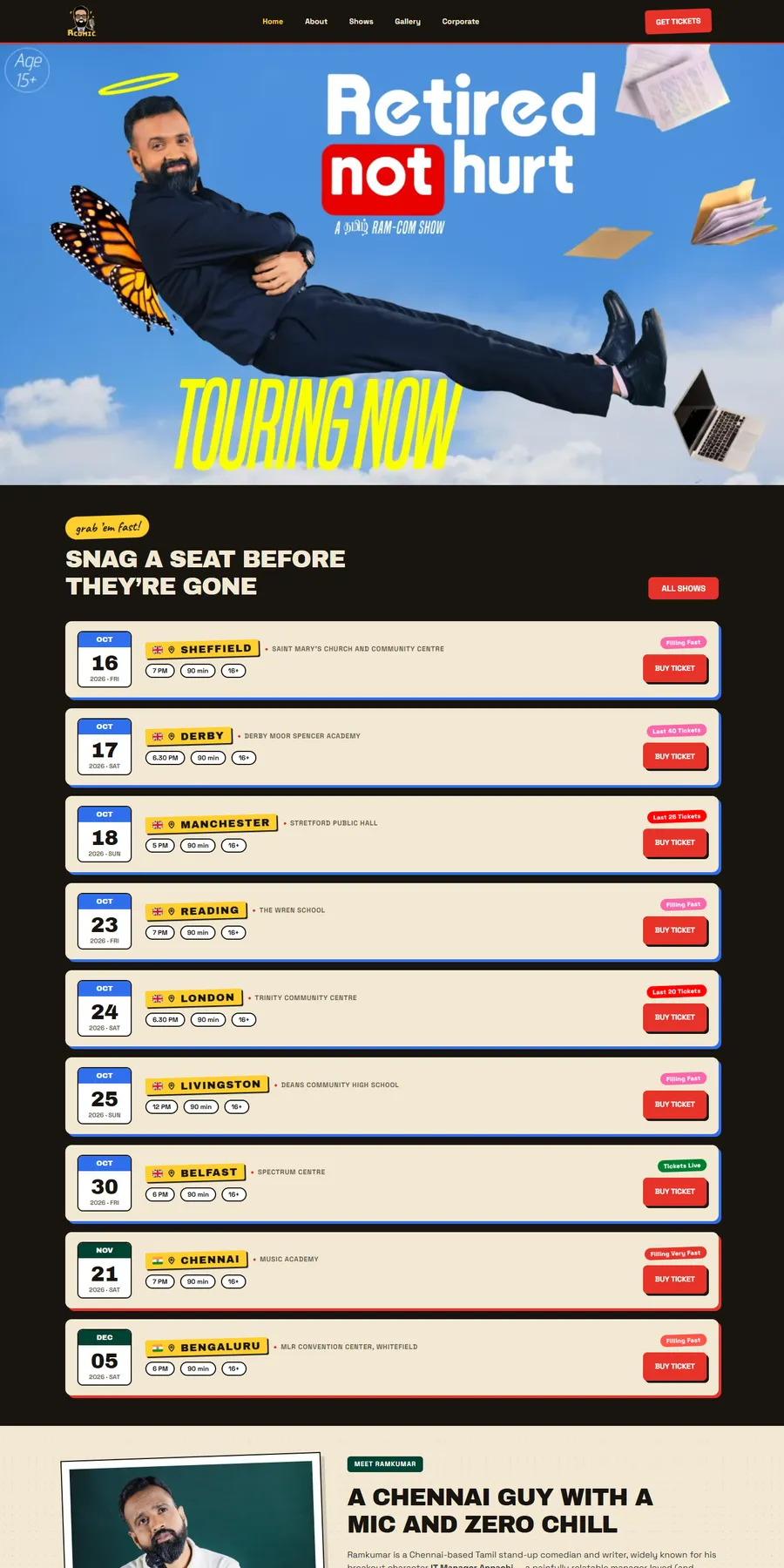
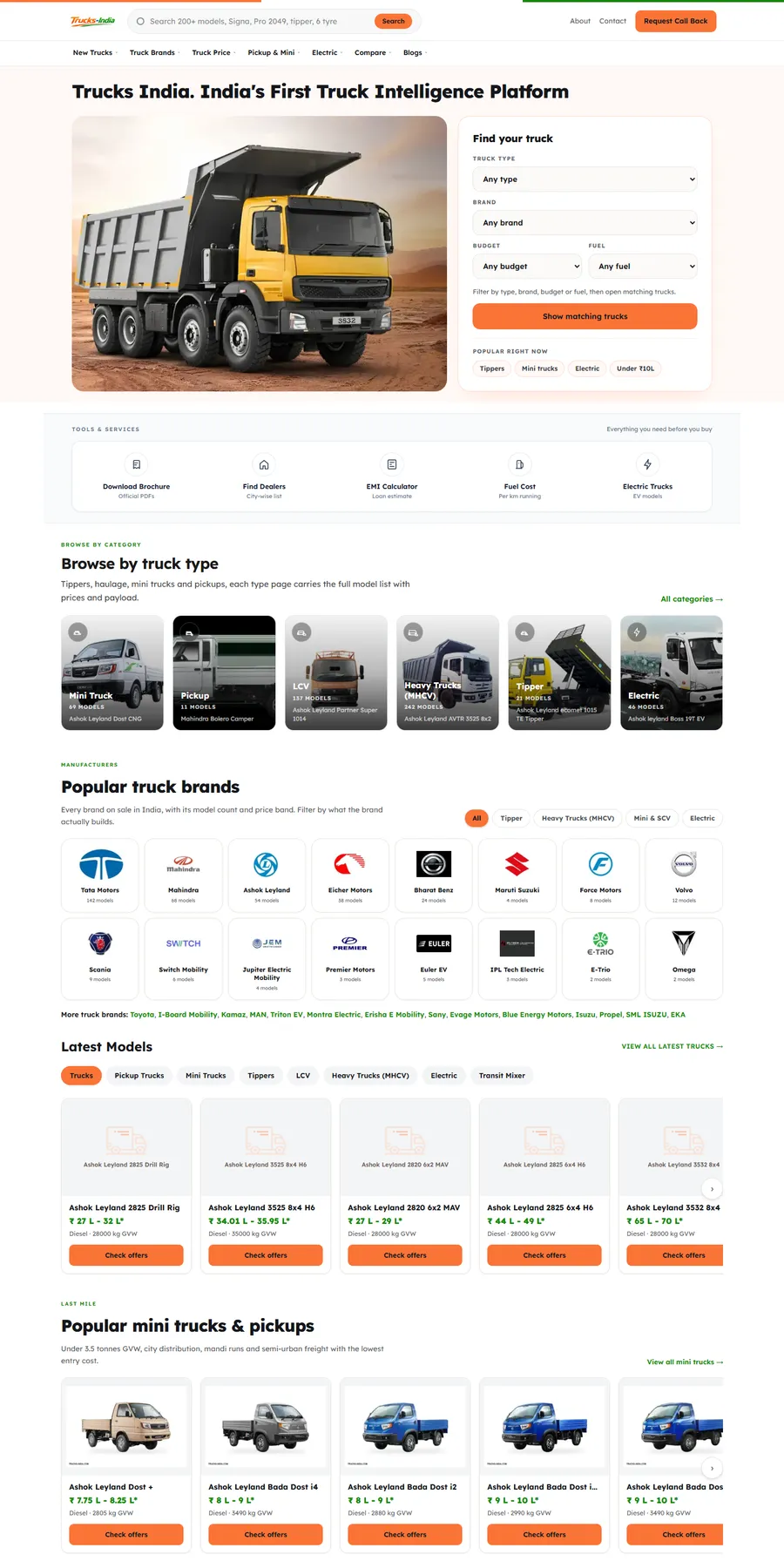
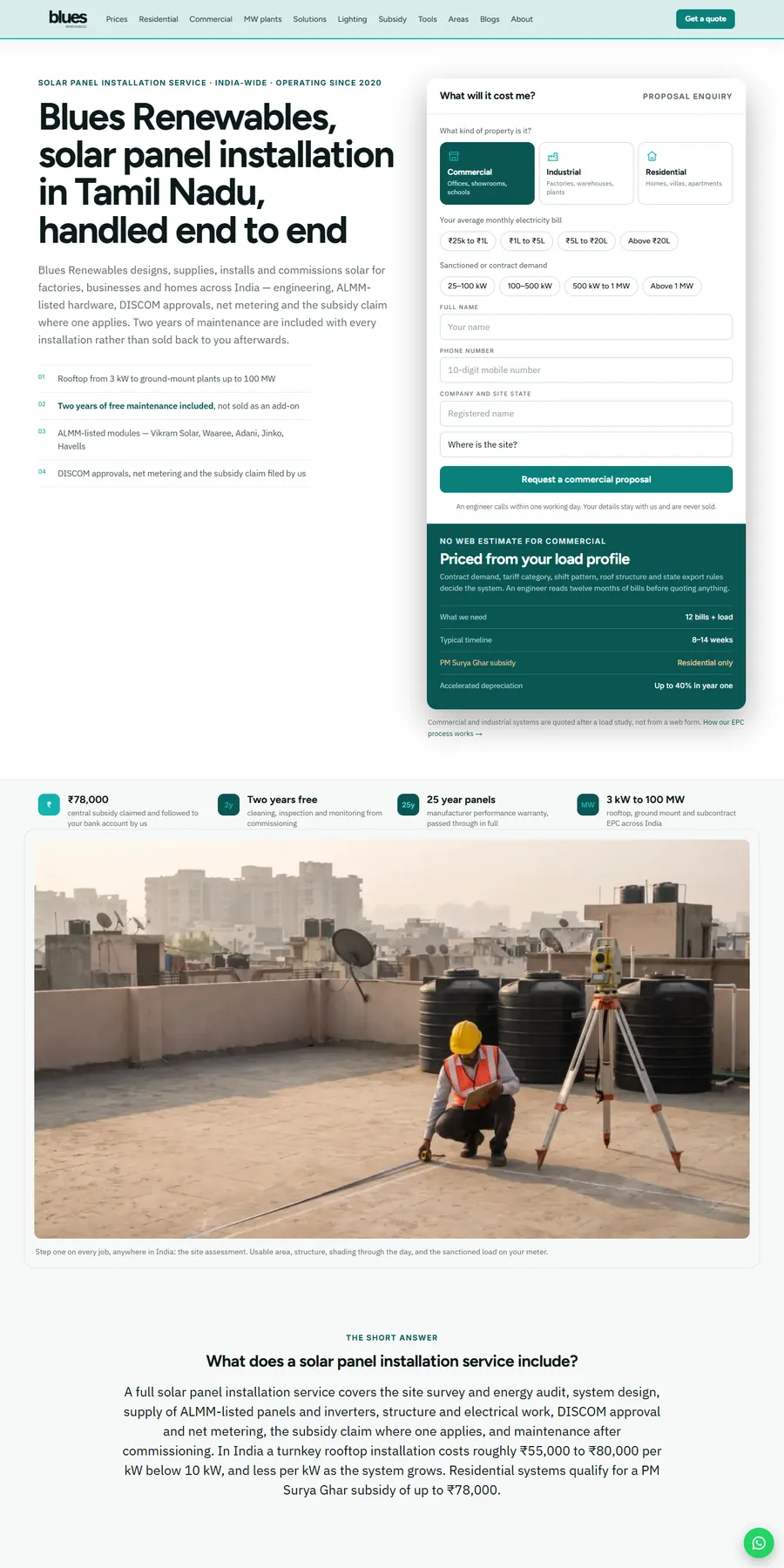
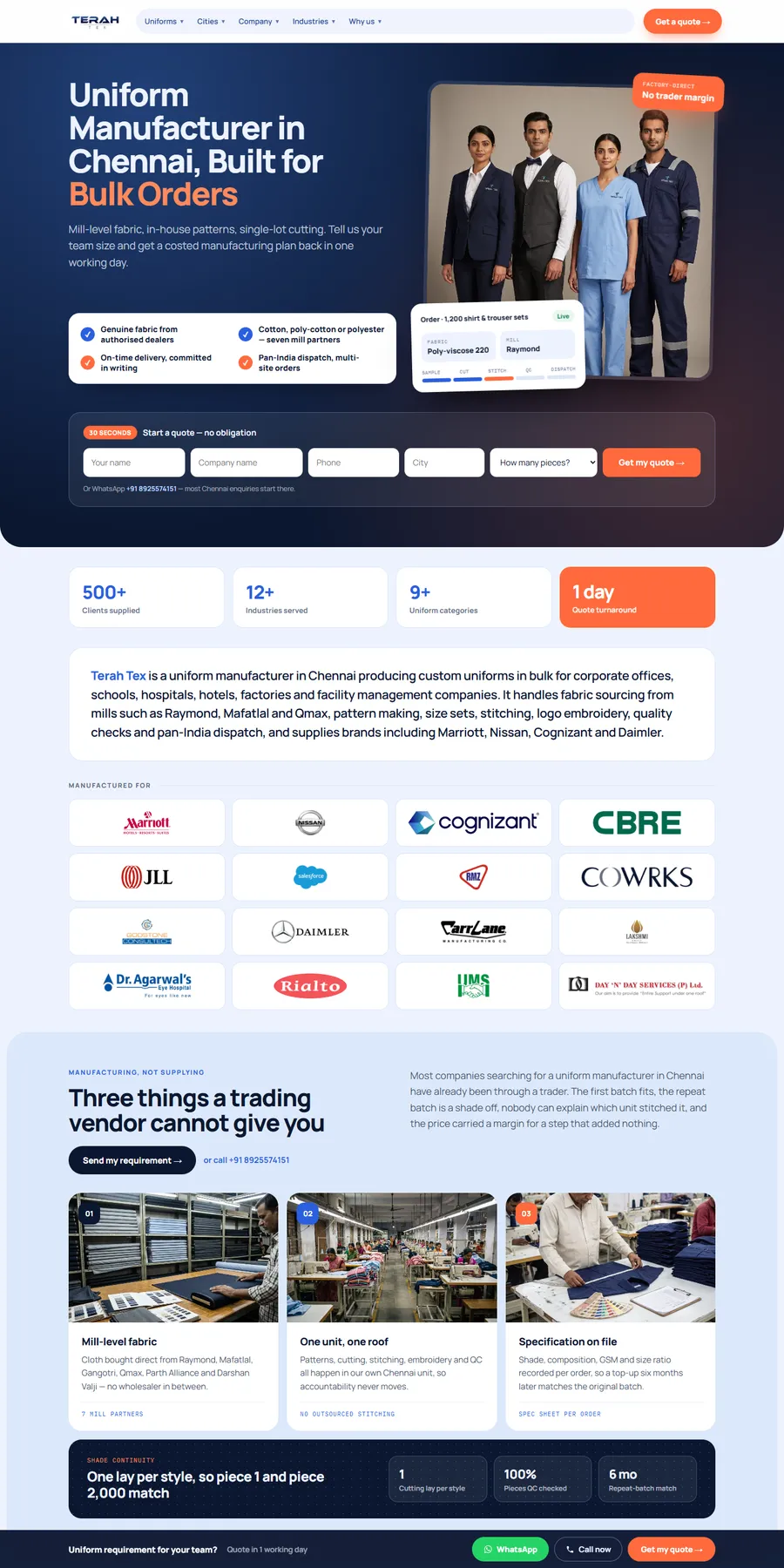
We have not built a hotel website yet, and we will not pretend otherwise. What transfers is the system. Blues Renewables, a rooftop solar installer, went from no tracked leads to 7 to 10 inquiries a week, and its Google clicks rose from 14 to 560 a fortnight in two months. It has 325 pages, including 129 local area guides, every form and call is tracked in GA4, and mobile Lighthouse scores sit in the mid 80s to mid 90s. For a hotel, those area guides become your getting here and things to do pages, and the same tracking follows each guest into your booking engine. Terah Tex's two-step quote form took a manufacturer from no website inquiries to about 5 bulk-order leads a week; it is the pattern for your wedding and group RFP. Trucks India's 1,299 variant pages show we can build large, consistent page sets from data, the way room types and multiple properties need. Our rcomic site, a performer's site with tour dates, ticket links and corporate show booking inquiries, is the nearest example of a dated event and inquiry flow we have built. It is not a room reservation engine, which is why we build around yours.

More websites we have designed and built

Process

How your hotel website project runs

Typical timeline: 4 to 8 weeks for most hotel and inn sites; 8 to 12 weeks for groups with several properties or many local guide pages. You see progress every week.

  1. Step 01 · Week 1

    Discovery and audit

    We audit your current site, competitors, and how you show up on Google and in AI answers, then agree on goals and a fixed quote.

  2. Step 02 · Weeks 2 to 3

    Strategy and design

    Sitemap, wireframes and full designs for your review. You approve everything before we build.

  3. Step 03 · Weeks 3 to 6

    Build and test

    Development, SEO setup, speed tuning, and testing across devices and browsers.

  4. Step 04 · Launch and beyond

    Launch and grow

    We launch, monitor, and improve based on real data. 30 days of free support included.

What shapes your quote

Scope, not hourly billing

Every project gets a fixed quote within 1 business day, agreed before work starts.

Get my fixed quote →
  • How many room types, offers, amenity pages and local guide pages you need
  • Which booking engine, PMS and dining reservation tools we connect, and whether your engine sends booking data to GA4
  • Weddings, meetings and group pages with an RFP flow
  • Whether we write the content and organize photos of your actual rooms, spaces and staff
  • Moving from your current site: redirects, keeping pages that rank and setting up tracking first
  • Multi-property setups, with one hub and a page set and engine link per property

Hotel website questions, answered

Straight answers to what owners ask us, and what they ask Google and AI assistants. Ask us anything else.

How much does a hotel website cost?

We quote one fixed price, agreed before work starts, based on the number of pages, features, integrations and content. You get it within 1 business day of a free audit of your current site. There is no hourly billing and no monthly subscription required to keep your site.

How long does it take to build a hotel website?

Most hotel and inn sites take 4 to 8 weeks. Groups with several properties or many local guide pages take 8 to 12 weeks. The slowest part is usually gathering room photos, room details and policies, so you get a dated week-by-week plan and we aim to launch before your peak season, not in the middle of it.

Will the site work with my booking engine and PMS?

Yes. We build around the engine you already use, such as Cloudbeds, SynXis, Stayntouch, Mews, SiteMinder, WebRezPro or ResNexus. The site links to the booking engine or CRS, which reads availability from your PMS. Where your engine offers an embeddable widget or a booking page on your own subdomain, we use it and style the handoff to match your site.

Do I own the website, domain and content?

Yes, from day one. Code, design, content, domain, hosting and analytics are in your name. There is no lock-in and no buyout fee, so you can take the site to another developer or change booking engines at any time.

Should we advertise a lower rate on our site than on the OTAs?

Check your OTA contracts first: some restrict a lower public rate on your own site. Many independent hotels offer perks instead, such as breakfast, upgrade priority, late checkout or a more flexible cancellation window, and state them on a book-direct page and next to the booking bar. We build those pages and give each perk or package its own rate code, so you can see which ones get booked.

Will a new website get me more direct bookings?

We do not guarantee rankings or booking numbers. What a new site changes is how many of the guests who already find you finish the booking with you: a booking bar on every page, room links that open the right rate, a clear reason to book direct and policies stated plainly. On a rooftop solar installer's site (not a hotel), the same approach took tracked inquiries from none to 7 to 10 a week.

Do I have to include my resort or amenity fee in the price on my website?

Yes, in most cases. The FTC fee rule, in force since 12 May 2025, requires hotels to show the total price including mandatory fees more prominently than other pricing; taxes can be disclosed before payment. We set up room, offer and package pages to show totals and check them against your engine. Please confirm details with your counsel.

What does the ADA require on a hotel website?

The reservation rule (28 CFR 36.302(e)) requires guests with disabilities to be able to book accessible rooms the same way as other guests, with accessible features described in enough detail to judge fit. Separately, the site itself should be usable by people with disabilities. We describe each accessible room type, test online booking for it and design to WCAG 2.2 AA targets. We do not certify compliance.

We have a restaurant or a wedding barn as well. One site or several?

Usually one site, with a section for each outlet and separate paths routed to the right person: rooms to your booking engine, tables to OpenTable, Resy or Tock, events to your sales contact. Each path is tracked as its own conversion, so you see what each part of the business brings in. An outlet with its own name and audience can justify its own site; we will tell you in the free audit.

How do I know which bookings came from the website?

We set up GA4 cross-domain measurement between the site and your engine, connect booking events where the engine supports them, and track calls, RFPs and newsletter sign-ups. Everything is tested before launch, and you get a plain monthly report by source and page.

Can my staff update offers, photos and policies themselves?

Yes. You get an editable CMS and training. Rates and availability come from your booking engine, so they never need manual updates on the site; your team changes offers, photos, events and policies.

How does my hotel show up in ChatGPT and Google AI answers?

We write your policies, amenities, accessible rooms, parking and local guides as plain text, add Hotel schema, make sure AI search crawlers are not blocked and match your site to your Google profile and listings. No one can guarantee an AI mention, but a specific, consistent site gives assistants something accurate to cite.

Have you built a hotel website before?

No, and we say so plainly. We have built a local lead system with 129 area guides and every call and form tracked, a two-step quote funnel, and a performer's site with tour dates and booking inquiries. We have not built a room reservation engine, and you do not need us to: we build around the engine your property already runs and the ADA and FTC rules it already has to meet.

What makes you different from another hotel web design company?

We put the terms in writing first: a fixed quote in 1 business day, a dated plan, your ownership of everything and no lock-in. The build covers room and rate deep links, total prices with fees, accessible room details, group RFPs and booking tracking by source, around whatever engine you choose.
Get your free hotel website proposal

Four quick questions. You'll get a fixed quote and a free audit of your current site within 1 business day.

  • ✓ No obligation, no sales pressure
  • ✓ Fixed price, never hourly
  • ✓ Your details stay private

Prefer email? info@billionwebstudio.com

Step 1 of 4~60 seconds
What do you need?