Skip to content
Booking projects for next month. Free website audit with every quote.Claim yours →

Construction and manufacturingBooking projects for November

Manufacturing Website Development Company That Turns Buyers into RFQs

An engineer looking for a 5-axis shop or a buyer sourcing custom poly bags decides who gets the RFQ before anyone picks up a phone. We build manufacturer sites that show your processes, equipment, tolerances and certifications in plain text, take drawings through a secure quote form and show which page and channel produced each RFQ.

  • Built for manufacturers and industrial suppliers
  • Fixed quote in 1 business day
  • You own everything
yourshop.com/cnc-machining5-axis CNCmachining,ClevelandRequest a quoteTap to callNew RFQ: 500 aluminum housingsSTEP file · from /cnc-machiningTracked as a leadSource: GoogleAI ASSISTANTWhich AS9100 shops in Cleveland do5-axis work?Your Company: AS9100D, 5-axis CNC, quotesSTEP files within 24 hours.Source: your website
Illustration: a visit becomes a tracked lead

The short answer

What does a manufacturing website development company do?

A manufacturing website development company builds websites for job shops, contract manufacturers, OEM parts makers and packaging manufacturers that turn an engineer's or buyer's search into a request for quote (RFQ) with a drawing attached. The site has to show on the first screen what you make, the processes, materials, tolerances and quantities you handle, the certifications you hold and the industries you serve, because buyers build their shortlist before they ever call.

For a CNC or sheet metal job shop that means one page per process with the equipment list, part size limits and standard tolerances, a parts gallery shown with customer permission, and an RFQ form that accepts STEP, IGES, DXF, SolidWorks and PDF files. For packaging and OEM parts it means a catalog with spec tables in HTML instead of locked PDFs, stock items with a separate custom-run quote path, and industry pages for food, medical or automotive buyers. Most plants also need a careers section, because hiring operators is now the second job of the website.

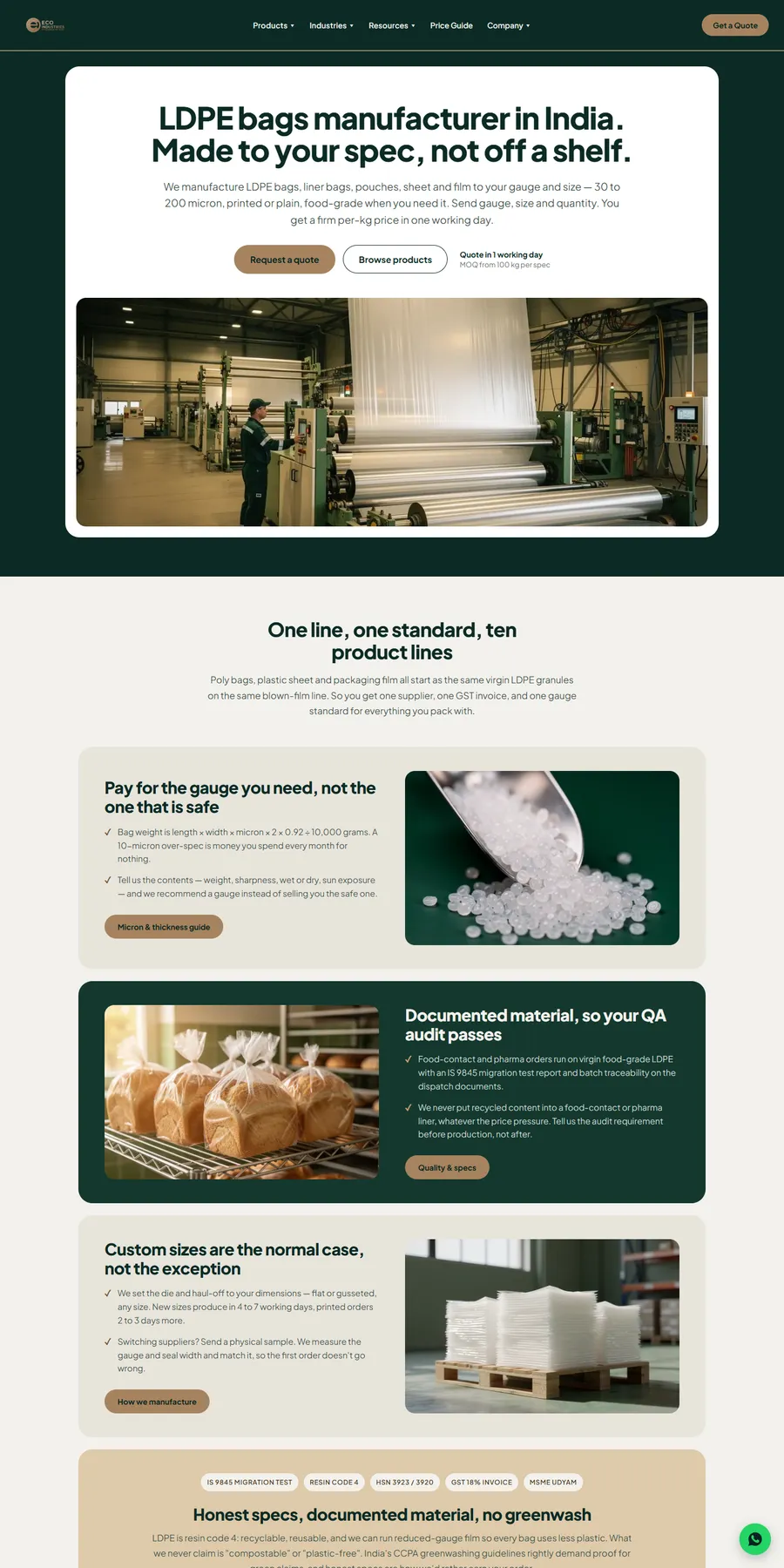
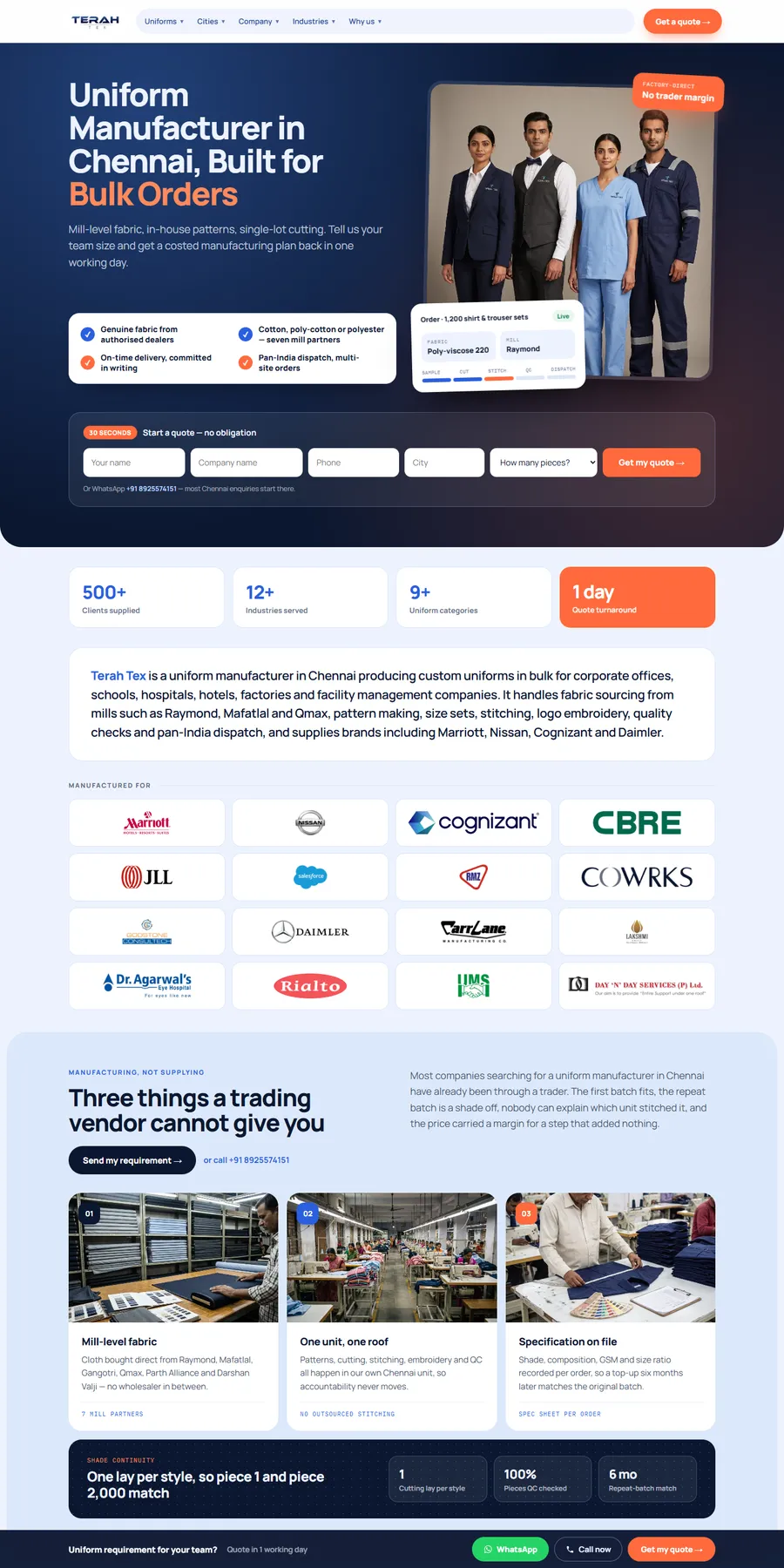
Billion Web Studio is a manufacturing website development company that delivers this as one fixed-scope project: capability, product, industry and careers pages, a secure RFQ flow routed to your estimators and CRM, Organization and Product schema, and every RFQ and call tracked as a GA4 lead event. We built the sites for two manufacturers outside the US: Eco Industries, an LDPE packaging maker, went from no inquiries to about 10 leads a week, and Terah Tex, a bulk uniform maker, to about 5 bulk-order leads a week. You own the site, domain and accounts from day one, with no lock-in.

The market

What the numbers say about manufacturers and industrial suppliers online

Most US manufacturers are small shops selling to large, careful buyers. A 15-person shop is judged against a 500-person one on the same screen, and the buyer has usually decided before calling either.

How they choose

How industrial buyers find and choose a manufacturer

Industrial buying is slow, technical and shared. Forrester's 2026 buyer study found purchases involve on average 13 internal stakeholders and that procurement is a decision-maker in 53% of buying cycles. An engineer qualifies the shop, purchasing compares quotes and quality checks the certificates. Here is how a US buyer picks a manufacturer and what your site has to do at each step.

  1. 1

    The need: a part, a run or a second source

    A new product needs 2,000 machined brackets, a current supplier keeps missing ship dates, or a buyer is moving a part back from overseas. The search is long and specific: "5-axis CNC titanium medical parts", "custom printed LDPE bags food grade", "sheet metal fabricator ISO 9001 Ohio". You need a page for each process and product line written in those words, not one services page.

  2. 2

    The shortlist: Google, AI assistants, directories, referrals

    Buyers search, ask ChatGPT or Google AI Mode for a list of candidates, check supplier directories and ask colleagues. Every route ends on your website. If it does not say plainly what you make, which materials and tolerances you hold and which industries you serve, you are off the list before anyone calls.

  3. 3

    The vetting: equipment, tolerances, certifications

    The engineer looks for the equipment list, part size limits, standard tolerances, secondary operations and real part photos. Quality looks for ISO 9001:2015, AS9100D, ISO 13485 or IATF 16949 with registrar and scope, plus ITAR registration and a CAGE code for defense work. These belong in HTML text, not only in a PDF.

  4. 4

    The RFQ: drawing, quantity, due date

    The buyer wants to upload a STEP or DXF file with quantities, material, finish and due date, and to know when the quote will come back. A bare contact form, or a form that rejects a 40 MB assembly file, sends the RFQ to the next shop.

  5. 5

    The decision: quote, sample, first article

    Purchasing compares quotes, quality asks about first article inspection, PPAP and material certs, and the team goes back to your site to check you again. Quality, case study and FAQ pages carry you through that review, and a careers page shows you can staff the work you are quoting.

The problem

Why most manufacturing websites lose qualified RFQs

What we find again and again when we audit sites in this trade. None of it is about how the site looks.

Leak 01

Buyers cannot tell what you actually make

Buyers on r/manufacturing say it is frustrating when a supplier's site does not tell you what the company actually makes. An r/CNC reply adds that most established shops have bad websites, and buyers looking for vendors cannot find them. A slogan about quality and precision over stock factory photos tells an engineer nothing about your machines, materials or part sizes, so they open the next tab.

Leak 02

The quote button leads to a bare contact form

Several manufacturer sites we opened have a Get a Quote button that goes to name, email and message, or to a team page. There is no file upload, no quantity, no material, no due date and no reply time. In a busy r/Machinists thread a buyer who called more than 75 businesses for quotes got no return calls. A clear RFQ path and a stated response time win work on their own.

Leak 03

Specs and the catalog are locked in PDFs

Spec sheets, tolerance charts and the product catalog sit in scanned PDFs or images. Engineers on a phone or a shop-floor tablet give up, Google indexes little of it, and AI assistants cannot quote a bag gauge or a bend radius they cannot read. The competitor with the same spec in an HTML table gets found and compared instead.

Leak 04

Hobby inquiries and job seekers fill the inbox

A 2026 r/Machinists thread asks whether Google Ads ever brought real production contracts or only people wanting a one-off car part. When pages do not state industries, typical quantities, minimums and certifications, the form fills with one-off requests and résumés while the production buyer leaves.

Leak 05

Certifications that are missing, misworded or expired

An "ISO certified" badge built from a copied ISO logo, an AS9100 certificate that expired two years ago, "ITAR certified" (no such thing exists) or a flag and Made in USA badge on a product with imported components. Quality managers check these, and the FTC has rules on origin claims.

Leak 06

RFQs go missing and nobody knows their source

Form emails land in a shared inbox, a spam folder or the wrong estimator. In one contract manufacturer's redesign, written up in MarTech in 2025 by the agency that did the work, early leads went to an inbox the company's own mail servers blocked as spam, the old site had no Search Console account, and the previous agency sent monthly summaries without the source data. Directory listings, reps and trade show booths all send buyers to the site; without tested routing and source tracking you cannot see which of them produced quotes.

Generic vs built for you

Why a generic website fails manufacturers and industrial suppliers

A template is built to fit every business, so it fits yours badly. Here is what changes when the site is planned around how industrial buyers actually buy.

Generic website compared with a website built for manufacturers and industrial suppliers
What you needGeneric template siteBuilt for manufacturers and industrial suppliers
CapabilitiesA homepage slogan and a bullet list of servicesOne page per process with equipment, part size limits, standard tolerances, materials, secondary operations and real part photos
Request for quoteA contact form with name, email and messageA two-step RFQ with STEP, IGES, DXF, SolidWorks and PDF upload, quantities, material, finish, due date and a stated reply time
Specs and catalogA PDF catalog downloadCategory and product pages with HTML spec tables, part-number search and downloadable spec sheets and SDS beside them
CertificationsBadge images, some copied from the standards bodyStandard, revision, registrar, scope and certificate PDF as text, plus ITAR registration and CAGE code where true
Industries servedA row of industry iconsA page per end market (aerospace, medical, automotive, food, defense) with relevant certifications and example parts
Customer parts and drawingsAny photo the owner had on handA parts gallery chosen with your quality lead and shown only with customer permission, with no customer drawings or controlled technical data on public pages
Hiring"We're hiring" with an email addressA careers section with real roles, shifts, pay ranges where you choose, training, shop-floor photos and a short apply form kept apart from RFQs
Lead tracking and ownershipForm emails to one inbox, site rented on a platformEvery RFQ and call tracked by page and source in GA4 and your CRM, routing tested end to end, with site, domain, analytics and Search Console in your name

Free self-check · 2 minutes

What your current manufacturing website is missing

Tick everything your site does today. Each box you cannot tick is a place where a ready-to-buy visitor leaves.

What you need

What every manufacturing website needs

The features that turn a manufacturing website from a brochure into the best salesperson you have. We build all of them.

  1. Must-have · 01

    A capability snapshot on the homepage

    What you make, for which industries, processes, materials, typical quantities from prototype to production, largest part size and your key certifications, all on the first screen. Add years in business, plant size and location, and family or veteran ownership where true. This is the four-second test every buyer runs.

  2. Must-have · 02

    One page per process

    CNC milling, turning, Swiss, laser cutting, forming, welding, powder coating, injection molding, extrusion, printing or bag making, as you run them. Each lists the machines, size and tolerance limits, materials, secondary operations, lead times and an RFQ button.

  3. Must-have · 03

    An equipment list

    Machine make, model, travels or bed size, axes and quantity, plus inspection equipment such as CMMs and vision systems. Forum buyers ask for this by name, and it is the fastest way for an engineer to judge fit.

  4. Must-have · 04

    An RFQ form built for drawings, linked from every page

    Request a Quote in the header of every page, with the plant phone as text. A short first step (process or product, quantity, contact) then the details: file upload for STEP, IGES, DXF, SLDPRT and PDF, material, finish, due date, NDA request and a stated reply time. Files go to encrypted storage you control, not an email attachment.

  5. Must-have · 05

    A catalog with spec tables in HTML

    For OEM parts and packaging, category and product pages with dimensions, gauges, materials and options as real tables, part-number search, and spec sheets and SDS as downloads beside the text. Stock items get an order or quote path; custom runs get the RFQ flow.

  6. Must-have · 06

    Industries served pages

    Aerospace, medical, automotive, food and beverage, defense, energy or agriculture, as you actually serve them, each with the certifications that market expects, example parts and the problems you solve for those buyers.

  7. Must-have · 07

    A reshoring and second-source page

    A page for buyers moving a part back from overseas or adding a second supplier: what you need from them (current drawing, annual volume, target price and lead time), how first article and PPAP work for a transferred part, and your typical quote turnaround. Reshoring and foreign direct investment announcements topped 244,000 US manufacturing jobs in 2024 (Reshoring Initiative, 2024 Annual Report), and those buyers search for exactly this.

  8. Must-have · 08

    A quality page with exact certifications

    ISO 9001:2015, AS9100D, ISO 13485 or IATF 16949 with registrar, scope, certificate number and expiry or a linked PDF; inspection equipment; first article inspection, PPAP, material certs and traceability; ITAR registration and CAGE code where true.

  9. Must-have · 09

    Engineer resources

    Design for manufacturability tips, tolerance and bend charts, material selection guides and an FAQ on lead times, minimums and file formats. These are the pages Google and AI assistants quote, and the ones engineers bookmark.

  10. Must-have · 10

    Case studies and a parts gallery that pass inspection

    Real parts and projects described by industry, problem, material, quantity and the tolerance held, shown with customer approval. Engineers read every photo as evidence of quality, so we pick and shoot parts with your quality lead and leave out anything that would not pass inspection. Quotes are attributed by title and industry when a customer cannot be named.

  11. Must-have · 11

    A careers section that recruits

    Open roles by shift, pay ranges where you choose to share them, apprenticeships and training, real photos of the floor and a short apply form. The U.S. Bureau of Labor Statistics shows 530,000 manufacturing job openings in August 2026 (preliminary).

  12. Must-have · 12

    Schema, speed and a clean move

    Organization and Product schema matching the visible text, Core Web Vitals targets of LCP 2.5 seconds or less, INP 200 ms or less and CLS 0.1 or less, and a 301 redirect map that keeps every URL that already earns traffic.
What we build

The manufacturing website we would build for you

Here is the sitemap we would start from for a job shop or contract manufacturer. Good manufacturing web design starts from this list of pages, not from a homepage layout. A packaging or OEM parts maker gets a larger catalog section and fewer process pages. We cut or add pages to match the work you want more of.

yourcompany.comHome · every section links here

Capabilities

  • CNC milling and 5-axis machining
  • CNC turning and Swiss turning
  • Sheet metal laser cutting and forming
  • Welding and fabrication
  • Finishing: anodizing, plating and powder coating
  • Assembly and kitting
  • Prototype to production
  • Equipment list

Products and catalog

  • Product category pages
  • Product pages with HTML spec tables
  • Part-number search
  • Stock items and custom runs
  • Materials and finishes
  • Spec sheets and SDS library
  • CAD and 3D model downloads (STEP) for catalog parts
  • Find a distributor or rep

Industries served

  • Aerospace and defense
  • Medical devices
  • Automotive
  • Food and beverage
  • Energy and industrial equipment
  • Agriculture and construction equipment
  • Reshoring: moving a part from an overseas supplier

Quality and compliance

  • Quality and certifications
  • Inspection and first article (FAI and PPAP)
  • ITAR registration and export notice
  • Made in USA and country of origin
  • Customer documents: terms, W-9 request, line card
  • RoHS, REACH and conflict minerals declarations by product line
  • Capability statement for government buyers: CAGE code, UEI, NAICS codes, small business status

Engineer resources

  • Request a quote
  • Design for manufacturability guide
  • Tolerance and bend charts
  • Material selection guide
  • Case studies and parts gallery
  • FAQ: lead times, minimums, file formats, NDAs

Company and careers

  • About: history, ownership and plant
  • Facility tour with photos and video
  • Careers and open roles by shift
  • Apprenticeships and training
  • News and trade show schedule
  • Contact with plant address and map

Calls, bookings, leads

How we turn visitors into qualified RFQs

Good website design for manufacturers is judged in qualified RFQs: a buyer with a real part, a real quantity and a drawing attached, routed to the right estimator, with a record of where they came from. This is how we build that path and track every lead.

  • 01A two-step RFQ that buyers finishStep one asks for process or product, quantity and contact details, so even a partial RFQ reaches you. Step two takes files, material, finish, tolerances, due date and an NDA request. We used a two-step quote form for Terah Tex, a bulk uniform manufacturer that went from no website inquiries to about 5 bulk-order leads a week.
  • 02Secure file upload sized for real CADSTEP, IGES, DXF, SLDPRT and PDF uploads with a size limit set for real assemblies, stored encrypted in storage you control. The notification email carries a link, not a 40 MB attachment your mail server bounces. ITAR handling is set out under compliance below.
  • 03Routing to the right estimator and your CRMRFQs route by process, product line or territory to the right estimator and land in HubSpot, Salesforce or Dynamics 365 with page and campaign source attached. We send test RFQs end to end before and after launch. Where your quoting tool or ERP has an API, we scope passing the RFQ straight in.
  • 04A confirmation that states your reply timeThe buyer gets an instant confirmation with a reference number, what happens next and when to expect a quote, plus a line offering a DFM review if you do one, so they know an engineer will check the part before pricing it. Your team gets a reminder if an RFQ sits unanswered.
  • 05Separate paths for stock, custom and jobsStock catalog items get an order or quick quote path, custom runs get the full RFQ, and job applicants get the careers form. Production RFQs stop getting buried under résumés and one-off requests.
  • 06Landing pages for trade shows, outreach and adsA page for each show, rep territory, outreach campaign or specific search phrase, with a matching RFQ link, so you can see which booth conversation, cold email or ad turned into a quote request. Ads for "Swiss turning medical" land on that page, not the homepage.
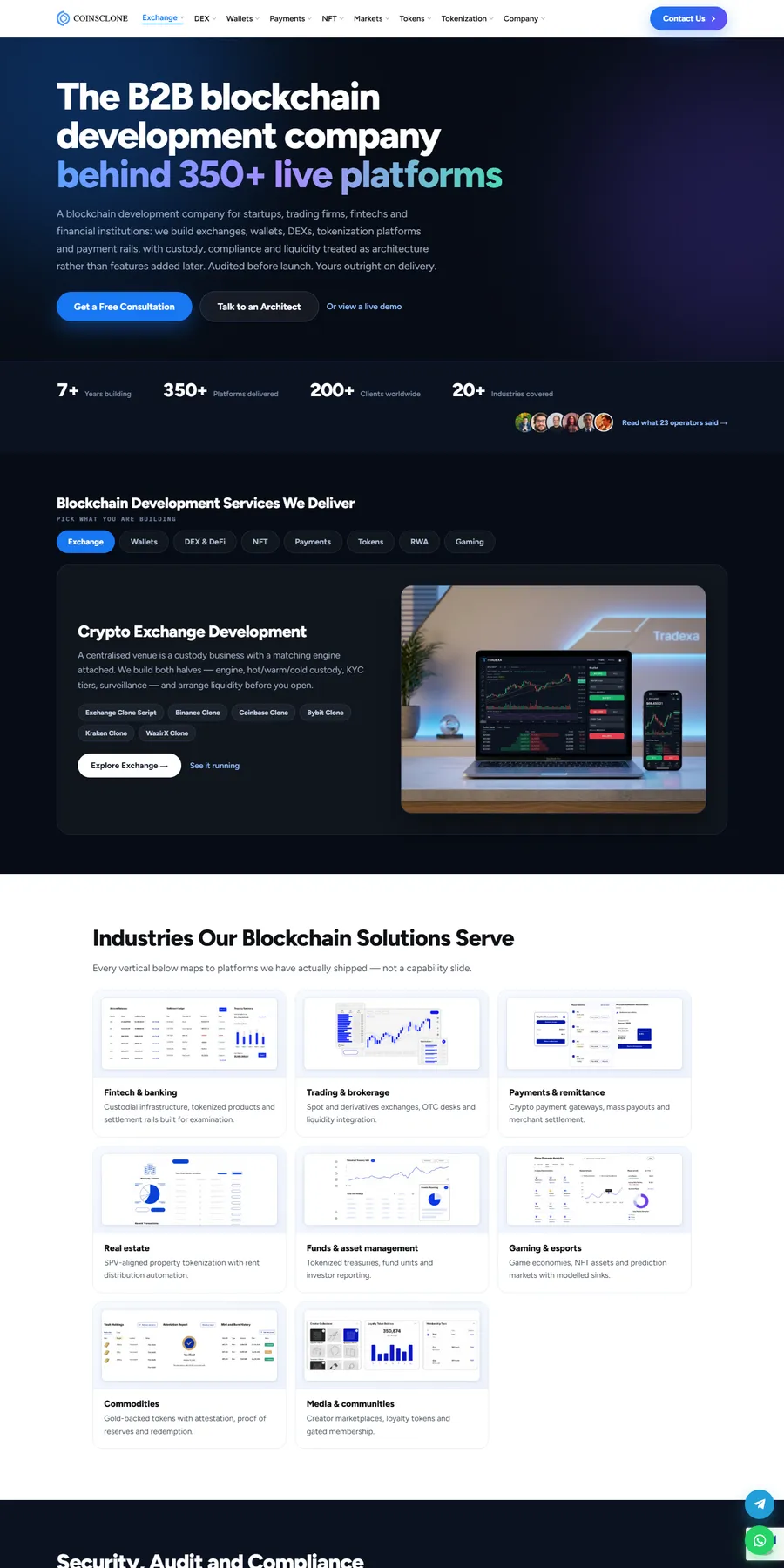
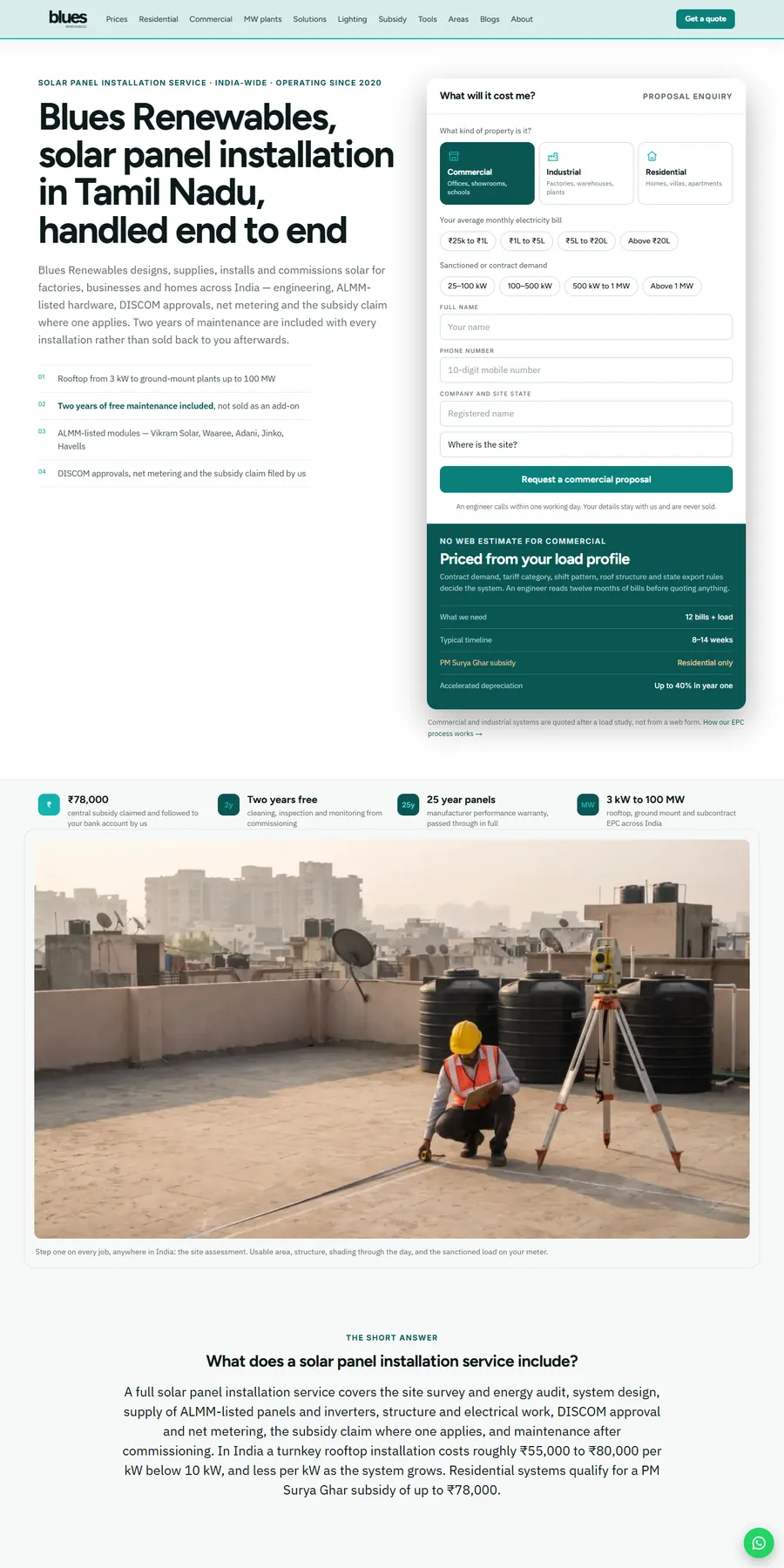
  • 07A monthly RFQ report in plain numbersRFQs, calls, catalog downloads and job applications by source and page. Every RFQ and call is a GA4 lead event, the same setup that tracks every form and call on the Blues Renewables site we built.

AI search

Engineers and buyers now shortlist suppliers with AI. Forrester's 2026 study found 94% of business buyers use AI during their buying process. On r/PrivateLabelSellers a buyer described asking ChatGPT for a spreadsheet of candidate contract manufacturers, with contact details and a first email for each. Google says its AI Overviews and AI Mode need nothing extra beyond being indexed and eligible for a snippet, with important content in text. For a manufacturer, that means capabilities, specs and certifications written where machines can read them.

Questions your industrial buyers ask AI assistants

  • Which CNC machine shops near Cleveland do 5-axis aluminum parts and are AS9100 certified?
  • List US contract manufacturers with ISO 13485 for small medical device assemblies.
  • Which sheet metal fabricators in the Midwest are ITAR registered and do prototypes in under a week?
  • Who makes custom printed LDPE bags in the USA for food packaging, and what are their minimums?
  • Can a US supplier make this part instead of my overseas vendor?
  • What tolerance can a laser cutting shop hold on 10 gauge steel?
  • Specs and capabilities as text, not PDFs

    Materials, tolerances, part size limits, quantities, lead times and equipment written as HTML text and tables. An assistant cannot repeat a tolerance that only exists inside a scanned PDF or a photo of a machine.

  • One page per process, product and industry

    AI answers are built from pages that match a specific question. A page about Swiss turning for medical parts can be cited for that question; a single "Services" page usually cannot.

  • Certifications an assistant can verify

    Buyers ask assistants to filter by certification. Name the standard, registrar and scope the same way on every page so the assistant can match you.

  • Answers to the questions engineers ask

    File formats you accept, NDAs, minimum order quantities, prototype and production lead times, secondary operations and design for manufacturability tips, each answered in the first lines of the page.

  • Organization and Product schema

    Structured data for your company, plant address, products and contact points that matches the visible page, so search engines and AI systems read the same facts the buyer sees.

  • One identity everywhere

    The same company name, plant address and phone on your site, Google Business Profile, directory listings and LinkedIn. A plant that receives customers during stated hours can have a Google profile, and r/Machinists replies say local buyers find shops through Google Maps.

Compliance and trust

The rules a manufacturing website has to get right

A manufacturer's website makes claims about quality systems, origin, export control and defense cybersecurity, and each has rules. We build pages and forms that support those rules and flag items for your quality, export or legal lead. We do not certify compliance.

ISO and AS9100 claims worded the way ISO allows

ISO says it does not certify companies or issue certificates, and its logo must not be used to show certification. Its trademark guidance says not to claim you are certified by ISO and to name standards in full, such as ISO 9001:2015. We show the standard, revision, registrar, scope and certificate number or PDF, use a registrar's mark only with its permission, and treat AS9100D, ISO 13485 and IATF 16949 the same way.

Made in USA claims that meet the FTC standard

The FTC says an unqualified Made in USA claim means the product is all or virtually all made in the US, that the policy covers websites, and that US flags or maps can imply origin. Qualified claims such as "Made in USA of U.S. and imported parts" must be true and substantiated. The Made in USA Labeling Rule (16 CFR 323.3) also covers online materials that carry a Made in USA mark. We place origin badges only where your team confirms they apply.

ITAR registration, CAD uploads and public pages

22 CFR 122.1 requires US manufacturers of defense articles to register with the Directorate of Defense Trade Controls even if they do not export. There is no ITAR certification, so the site says "ITAR registered". Under 22 CFR 120.54(a)(5), unclassified technical data sent or stored with end-to-end encryption meeting the stated FIPS 140-2 or AES-128 standard, and not sent to, stored in or sent from a proscribed country, is not an export. We route uploads to encrypted storage you control, add a notice not to send controlled data through the general form, and keep customer drawings off public pages. Your export compliance lead signs off.

Defense suppliers: DFARS and CMMC status

DFARS 252.204-7012 requires safeguarding covered defense information and reporting cyber incidents. The CMMC DFARS rule took effect 10 November 2025. The DoD CIO CMMC page says that on 13 July 2026 the Department suspended the Phase II requirements that were due 10 November 2026, while Phase 1 self-assessment requirements remain, and 252.204-7012 obligations apply either way. We state your CMMC status only as you confirm it and never collect CUI through a public web form.

Testimonials, client logos and case studies

The FTC rule on consumer reviews and testimonials (16 CFR 465.2) bans writing, buying or knowingly spreading fake or misrepresented reviews and testimonials, and bars a business from getting its officers, employees or their relatives to post misrepresented reviews on third-party sites. We use real quotes with permission, attributed by title and industry when the customer cannot be named, client logos only with permission, and part photos only with customer approval.

Accessibility

The Justice Department says the ADA applies to the web content of businesses open to the public. A manufacturer selling online to the public is more exposed than a pure B2B shop. We build to WCAG 2.1 AA as standard practice: alt text, color contrast, labeled forms and keyboard navigation.

We build with tools and patterns that support these rules and document what we set up. For legal advice on your own obligations, talk to your attorney.

From the forums

What manufacturers and industrial suppliers ask about websites, answered

We read what manufacturers and machine shop owners ask each other on r/manufacturing, r/Machinists, r/CNC, r/smallbusiness, r/CommercialPrinting, r/hubspot and the Practical Machinist forum. The same doubts come up: work comes from referrals and trade shows anyway, paid directories disappoint, SEO agencies and platforms sell noise, and buyers want quotes faster than small shops can give them. These are their questions, paraphrased, with our straight answers.

Where owners talkr/manufacturingr/Machinistsr/CNCr/smallbusinessr/CommercialPrintingr/hubspotPractical Machinist forum

Asked on r/manufacturing

“We are a small engineering and manufacturing firm. What does a good manufacturing website actually look like?”

Our answer: The most upvoted answer in the thread was practical: a full equipment and capabilities list, standard tolerances and photos of parts you have made, so a buyer can tell what you make. Add a page per process and industry, certifications with registrar and scope, and an RFQ form that takes drawings. Design matters less than being clear.

Asked on r/manufacturing

“How do we use digital channels to win B2B manufacturing sales without wasting the budget?”

Our answer: The best reply said first decide who you are reaching: a purchasing manager hunting for a replacement vendor or an engineer researching a specific capability. Broad search terms sent to a homepage waste clicks; long, specific phrases sent to a matching page bring fewer visits and far better results. We build that page for each process and industry, each with its own RFQ button, so later ads or SEO have somewhere precise to land.

Asked on Practical Machinist forum

“Is a paid supplier directory membership worth it, or should we put that money into our own site?”

Our answer: Owners report mixed results: some get a few calls from buyers who are actively looking, others said the listing fee would have paid for a good website. One shop owner said buyers pass over a listing that has no link to a real website. A listing is rented and points to your site; the site is the asset you own. If you list, list under your specialty and make sure the click lands on a page that matches it.

Asked on r/Machinists

“Is there a directory where buyers search for machine shops near them?”

Our answer: The top replies all said the same thing: for local work, buyers use Google and the map results. That makes your plant's Google Business Profile, and the website it links to, the directory that matters. We make the name, address and phone match on the site, the profile and your listings, and give a local engineer a page that shows what you machine and how to send a drawing.

Asked on r/Machinists

“Did Google Ads ever bring a CNC job shop real production contracts, or just people wanting a one-off car part?”

Our answer: Owners said one-off requests come with sticker shock and some shops only do them for existing customers. The fix starts on the site: pages that name your industries, typical quantities, minimums and certifications, and an RFQ form that asks for quantity and drawings. That filters out hobby requests before they reach your estimator, whether the visitor came from an ad or a search.

Asked on Practical Machinist forum

“Can I put instant quoting on my shop's website, where a buyer uploads a CAD file and gets a price?”

Our answer: The owner who asked wants it, and most small shops cannot price complex machined parts automatically. A realistic version is a file-upload RFQ with a stated reply time, routed straight to your estimator or into quoting software such as Paperless Parts. In a related r/Machinists thread, a shop that quotes common parts in minutes said customers love the speed.

Asked on Practical Machinist forum

“I just bought a machine shop. How do I handle marketing in 2026, AI search and an SEO agency I am not sure about?”

Our answer: The owner said there is so much noise it is confusing. Start with what you control: a site that states capabilities, equipment, tolerances and certifications in plain text, one page per process and industry, and tracking that shows which RFQs came from where. Another owner in the thread launched a new site and emailed past contacts to look at it, a cheap first step. Judge any agency by RFQs you can see, not reports.

Asked on Practical Machinist forum

“Our prototype and short-run CNC shop has a new website. How do we turn it into customers?”

Our answer: Replies said the site is needed because everyone interested will check it, but the legwork still follows: calls and visits to purchasing, maintenance and engineering. One owner looked through the gallery and video and pointed out chatter on threads and a walking drill. Machinists judge a shop by its photos, so one bad part in a gallery can cost the RFQ. Have your quality lead approve each part and machine photo before it goes live.

Asked on r/hubspot

“We already run order processing and accounting software. Should our website and CRM move onto an all-in-one marketing platform?”

Our answer: The owner asked how hard it is to implement and how well it scales. In a related thread, a long-time practitioner said build the site on such a platform only if you need very deep CRM integration; a standard CMS usually means lower upkeep and less lock-in. We keep the site in a CMS you own and connect the RFQ form to the CRM you choose, so leads, file links and source data still arrive there.

Asked on r/CommercialPrinting

“Are buyers using AI search to find vendors like us?”

Our answer: A reply said AI is good for broad research but specialist needs still go to specialists. That is the point: the assistant builds the first list, then the buyer checks the shops on it. Write your specialties, specs and certifications as text so you make the list, and make the site strong enough to pass the check that follows.

Questions are paraphrased from public threads. We never quote members by name.

Others vs us

Manufacturing website design options: Billion Web Studio vs a website builder template vs a typical industrial marketing agency

The three ways manufacturers and industrial suppliers usually get a website, side by side.

Manufacturing website design options: Billion Web Studio vs a website builder template vs a typical industrial marketing agency
Billion Web StudioWebsite builder templateTypical industry agency
Who owns the site, domain and contentYou do, from day one, in your own accountsYou own the content; the site lives on the builder's platformOften the agency or a directory's platform, on a contract
Contract and pricingFixed quote in 1 business day, agreed before work starts, no lock-inMonthly subscription, you build it yourselfMonthly retainer, often on a 12-month or longer contract
Timeline and plan4 to 8 weeks for a capabilities site, 8 to 12 for large catalogs, a dated week-by-week plan, and the next month of support free if we slip a dateAs fast as you can write and build it yourselfVaries; ask for a dated plan in writing
Capability and process pagesOne page per process with equipment, tolerances, materials and part photosWhatever you write into a generic layoutUsually present, often written from a template
RFQ with CAD uploadTwo-step RFQ, STEP, DXF, SolidWorks and PDF upload, encrypted storage, stated reply timeA contact form; file upload limited by the planVaries; often a form that emails attachments
Catalog and spec tablesHTML spec tables, part-number search, spec sheets and SDS beside the textProduct pages built for retail, or PDF linksVaries; large catalogs often quoted as a separate project
Certification, ITAR and Made in USA wordingExact standards, registrar and scope; ITAR registered wording; origin claims checked with youUp to youVaries by agency
RFQ and call tracking by sourceGA4 lead events and CRM source fields, routing tested end to end, report in plain numbersBasic form countsTheir dashboard, which may stay with them if you leave
Proof in manufacturingTwo manufacturer case studies with lead numbers, stated honestly as non-USNot applicable: results depend on what you build yourselfVaries; ask for case studies with numbers

Why Billion Web Studio

What we do better, and why it matters to you

  • We have built for manufacturers, with numbers

    Eco Industries (LDPE packaging) and Terah Tex (bulk uniforms) are both manufacturers that went from no website inquiries to steady weekly leads. The numbers are in the case studies below. Neither is a US company and neither is a machine shop, and we say so. What carries over is the catalog structure, the end-market pages and the two-step quote funnel. For a job shop we add process, equipment and drawing-upload pages on top.

  • A fixed quote in 1 business day, with a free audit

    We review your current site, RFQ path, catalog, certifications and tracking, then send a written scope and a fixed price based on pages, features, integrations and content. No hourly billing.

  • Written for engineers and buyers

    Most manufacturing website design starts from a corporate template. Ours starts from interviews with your estimator, quality manager and sales lead, so the pages carry the equipment, tolerances, materials and certifications buyers check.

  • Built with export control and claims in mind

    Uploads, ITAR notices, and ISO, Made in USA and CMMC wording are set up with your quality and export leads before launch.

  • You own everything from day one

    Code, design, content, domain, hosting, analytics, Search Console and CRM connections in your name, with an editable CMS and training. No lock-in, and no site that disappears if a contract ends.

  • A dated plan and a guarantee on it

    A week-by-week plan, weekly written updates and 30 days of free support after launch. If we slip a date because of us, the next month of support is free.

In writing, before we start

  • Fixed quote in 1 business day

    Scope, deliverables and price agreed in writing, with a free audit of your current site. No hourly billing.

  • Launch date in writing

    A dated week-by-week plan and a written update every week. If we slip because of us, the next month of support is free.

  • You own everything

    Code, design, content, domain and accounts are yours from day one. No 12-month contract, no rented site.

  • 30 days of support included

    We watch rankings, forms and call tracking after launch and fix anything that needs it.

Proof, not promises

Results from websites we have built

Manufacturing is where our proof is most direct, with one honest caveat: neither client is a US company. Eco Industries, an LDPE packaging manufacturer, went from no inquiries to about 10 leads a week after we built a 44-page catalog, industry and delivery pages and technical buyer guides, and fixed 370 broken canonical references left by the old site. Terah Tex, a bulk uniform manufacturer, went from no website inquiries to about 5 bulk-order leads a week with 16 category pages, category and city pages across six metros and a two-step quote form. We have not yet built for a CNC or fabrication job shop. For a US job shop or contract manufacturer, the catalog becomes process, equipment and materials pages, the industry pages become your end markets, and the quote form becomes an RFQ with drawing upload.

More websites we have designed and built

Process

How your manufacturing website project runs

Typical timeline: 4 to 8 weeks for a capabilities site; 8 to 12 weeks for large catalogs or many industry, product and location pages. You see progress every week.

  1. Step 01 · Week 1

    Discovery and audit

    We audit your current site, competitors, and how you show up on Google and in AI answers, then agree on goals and a fixed quote.

  2. Step 02 · Weeks 2 to 3

    Strategy and design

    Sitemap, wireframes and full designs for your review. You approve everything before we build.

  3. Step 03 · Weeks 3 to 6

    Build and test

    Development, SEO setup, speed tuning, and testing across devices and browsers.

  4. Step 04 · Launch and beyond

    Launch and grow

    We launch, monitor, and improve based on real data. 30 days of free support included.

What shapes your quote

Scope, not hourly billing

Every project gets a fixed quote within 1 business day, agreed before work starts.

Get my fixed quote →
  • How many process, product, industry and location pages you need
  • Catalog size and whether product data comes from a spreadsheet, ERP or PIM
  • The RFQ flow: file upload, routing rules, ITAR handling and CRM or quoting software connection
  • Whether we write the technical content and organize part, machine and facility photos
  • Moving from your current site: redirects, keeping pages that rank and setting up tracking first
  • Careers section, multiple plants or a stock item store alongside custom quoting

Manufacturing website questions, answered

Straight answers to what owners ask us, and what they ask Google and AI assistants. Ask us anything else.

How much does a manufacturing website cost?

We quote one fixed price, agreed before work starts, based on the number of pages, features, integrations and content. You get it within 1 business day of a free audit of your current site. There is no hourly billing and no per-lead fee.

How long does it take to build a manufacturing website?

A capabilities site for a job shop or contract manufacturer takes 4 to 8 weeks. A large catalog or many industry, product and location pages takes 8 to 12 weeks. You get a dated week-by-week plan before we start, and we can time launch around a trade show.

Do manufacturers even need a website if our work comes from referrals, reps and trade shows?

Yes, because every one of those buyers checks your site before sending a drawing. 6sense found buyers first contact a seller about 61% of the way through their journey. The site does not replace sales; it decides whether the referral turns into an RFQ.

Can the RFQ form accept CAD files, and is it safe for ITAR work?

Yes. We build uploads for STEP, IGES, DXF, SLDPRT and PDF into encrypted storage you control. For ITAR-registered shops we use US-hosted storage or a handoff to your secure portal, and add a notice telling buyers not to send export-controlled data through the general form. Your export compliance lead signs off on the setup.

Can the website connect to our ERP or quoting software?

RFQs go to email and your CRM (HubSpot, Salesforce or Dynamics 365) with source data as standard. Passing them into Paperless Parts, Epicor, E2 Shop, JobBOSS, ProShop or another system depends on that system's API, so we check it during the audit and scope it in the fixed quote rather than promise it up front.

Can we show customer parts and projects?

Only with customer permission, and never customer drawings or controlled technical data on public pages. Many case studies describe the industry and the problem without naming the customer, which still tells a buyer what you can do. Choose photos with your quality lead, because engineers will judge every part they can see.

How should we show ISO 9001, AS9100 and Made in USA on the site?

Name the exact standard and revision, the registrar and the scope, with a certificate PDF or number. Made in USA claims must meet the FTC's "all or virtually all" standard, which covers websites. We check the wording with your team before launch.

Who writes the technical content?

We do, from interviews with your estimator, quality manager and sales lead, plus your equipment list, spec sheets and part photos. You review every page. Specs and tolerances come from you, never from guesses.

Our site is ten years old. Will a rebuild lose our Google rankings?

Not if the move is planned. We keep the URLs that earn traffic, 301 redirect the rest, carry over titles and content that work, and fix technical errors. On Eco Industries we fixed 370 broken canonical references left by the old site.

How do we show up in Google and in ChatGPT when engineers search for our capabilities?

Google says its AI features need nothing extra beyond being indexed and eligible for a snippet, with important content in text. We write capabilities, specs, certifications and FAQs as text, add one page per process and industry, and add Organization and Product schema. No one can guarantee an AI mention, but a specific site gives assistants accurate facts to cite.

Can the website help us hire machinists and operators?

Yes. A careers section with real roles by shift, pay ranges where you choose, training and apprenticeships, shop-floor photos and a short apply form helps. It also keeps applications out of your RFQ inbox.

What should we ask a manufacturing web design company before hiring one?

Ask to see a manufacturer's site they built and the RFQ numbers it produced. Ask where uploaded CAD files are stored, who owns the domain, hosting, analytics and Search Console, whether the price is fixed, and who writes the tolerance and equipment pages. If the answers are vague, the site will be too.

Which platform will the site run on, and who updates it after launch?

We pick the CMS during the audit based on catalog size and who will edit it, and you get training so your team can add jobs, news, parts and spec sheets without us. The site does not have to live inside your marketing or CRM platform to feed it RFQs. Code, hosting and logins are in your name. After 30 days of free support you can choose an optional care plan or run it yourselves.

Will a new website get us more RFQs?

We do not guarantee rankings or lead numbers. What a new site changes is how many qualified visitors send an RFQ: clear capabilities, a form that takes drawings and tracking that shows where each RFQ came from. For two manufacturers we built for, Eco Industries and Terah Tex, the sites went from no inquiries to about 10 and about 5 leads a week.

Get your free manufacturing website proposal

Four quick questions. You'll get a fixed quote and a free audit of your current site within 1 business day.

  • ✓ No obligation, no sales pressure
  • ✓ Fixed price, never hourly
  • ✓ Your details stay private

Prefer email? info@billionwebstudio.com

Step 1 of 4~60 seconds
What do you need?