Skip to content
Booking projects for next month. Free website audit with every quote.Claim yours →

Health and wellnessBooking projects for November

Therapist Website Development Company for More Booked Consultations

Someone searching "therapist for panic attacks" at 11 p.m. needs to see who you help, whether you take their insurance and how to book a free 15-minute call, without an ad pixel watching the form. We build therapy practice sites with specialty and clinician pages, private intake and booking through your EHR.

  • Built for therapists and counseling practices
  • Fixed quote in 1 business day
  • You own everything
yourpractice.com/anxietyTherapy for anxietyin ColumbusBook free consultTap to callNew consult request: anxietyFrom /anxiety · 11:06 pmTracked as a leadSource: GoogleAI ASSISTANTWho treats panic attacks online in Ohio?Your Practice: CBT for panic, telehealthacross Ohio, free consult.Source: your website
Illustration: a visit becomes a tracked lead

The short answer

What does a therapist website development company do?

A therapist website development company builds websites for counselors, psychotherapists, marriage and family therapists, clinical social workers, psychologists and group mental health practices that turn searches like "EMDR therapist near me" or "couples counseling that takes Aetna" into free consultation requests and booked first sessions. The site has to show who you help, how you work, who on the team is licensed in which state, what a session costs with or without insurance, and how to reach you, while keeping what people type out of advertising tools.

For a solo private-pay practice that means specialty pages written in the client's words, a clear fee and superbill page, a Good Faith Estimate notice and one clear path to a free consult. For a group practice it adds one page per clinician with license title, number and supervisor, booking per clinician or through an intake team, insurance per clinician, telehealth pages by state, and a careers page for the associates you need to hire, plus clinician pages that fill their hours once they join.

Billion Web Studio is a therapist website development company that delivers this as one fixed-scope project: therapist website design, writing, schema, consult forms through a provider that signs a BAA, booking through SimplePractice, TherapyNotes or your scheduler, and conversion counts in GA4 without form contents. You own the site, domain and every account from day one, with no lock-in.

The market

What the numbers say about therapists and counseling practices online

More clinicians are opening practices, and the people looking for help are many. Help is spread unevenly: some clinicians keep waitlists, while new private-pay practices and group owners with new associates struggle to fill hours. The figures below show the competition, the need, how full established clinicians are and how fast the field is growing.

How they choose

How patients find and choose a therapist

Nobody shops for therapy for fun. It starts when something stops working: panic attacks before work, a marriage stuck in the same fight, a teen who stopped talking, grief that has not lifted. The person searching is often anxious, often private about it and often doing it late at night on a phone. Here is how they find a therapist and what your site has to do at each step.

  1. 1

    The trigger: naming the problem

    Searches start in plain words: "therapist for panic attacks", "EMDR therapist near me", "couples counseling that takes Cigna". Many now ask an AI tool what kind of therapist or therapy they need. Your site needs a page for each concern and method you treat, written the way clients describe it, before any clinical terms.

  2. 2

    The shortlist: map pack, directories, AI answers

    Google shows a map pack, then directory listings, then practice sites. Sitting on page 15 of a directory is the same as not being listed. A complete Google Business Profile that matches your site, and specialty pages that can rank and be cited, put you on the shortlist.

  3. 3

    The check: fit, credentials and cost

    Even a client referred by a doctor reads your site for experience, approach and a photo, as one long-time owner on r/therapists put it. Each clinician page shows license title, states, specialties, approach in plain words, insurance accepted and the self-pay fee. A fees page explains superbills, sliding scale and the Good Faith Estimate.

  4. 4

    The contact: a free 15-minute consult

    Most people want to talk before they commit. The site offers one calm next step: request a free consult or book one from your EHR, with a line on who reads the request, when you reply, what happens next, and a note that the form is not for emergencies, with 988 and 911.

  5. 5

    The start: intake and the first session

    Once booked, the client needs your what-to-expect page, cancellation policy, the client portal link for forms and, if they are self-pay, the Good Faith Estimate. Clear answers here cut no-shows and the same five questions on every intake call.

The problem

Why most therapist websites lose new patients

What we find again and again when we audit sites in this trade. None of it is about how the site looks.

Leak 01

Your directory profile went quiet

Directories now sit under Google's map pack, and a profile ranked on someone else's rules can drop overnight, with nothing changed on your side. If your website is a single page that points back to the directory, there is nothing left to catch the people who search for what you treat. Your own specialty pages and a complete Google Business Profile are the parts you control.

Leak 02

One page that lists every issue for everyone

"Anxiety, depression, relationships, life transitions" on a single Services page ranks for nothing and draws people you are not the right fit for, so your consult calls go to screening people out. Owners on r/therapists who fill their caseloads advise picking a niche and a recognized modality and featuring them across the site. Specialty pages that speak to one kind of client do that.

Leak 03

Ad pixels on your intake form

Marketing plugins often load a Meta pixel or session replay on every page, including the contact form. The FTC made BetterHelp pay $7.8 million in 2023 for sharing mental health questionnaire data with advertisers, and HHS warns that sending health information to tracking vendors for marketing without authorization is an impermissible disclosure.

Leak 04

Fees and insurance hidden behind a phone call

Cost and coverage are the first things people want to know, and many practice sites say "contact us about fees". Nervous visitors rarely call just to ask. The ones who do take up your intake time with the same questions about plans, superbills and sliding scale. Strong group sites put named plans, self-pay rates and out-of-network steps on a page anyone can read before they reach out.

Leak 05

A telehealth practice with no spot on the map

Google does not accept a virtual office address, and therapists working from home or fully online report denials and verification loops on r/therapists and r/localseo in 2026. If the map is closed to you, your site has to carry the load: telehealth pages, state pages and specialty pages that can rank and be cited.

Leak 06

New clinicians with empty caseloads

A solo owner who became a group owner told r/therapists in September 2026 that marketing a whole team is much harder than marketing one clinician. A team page of photos and first names, with one booking button for everyone, does not tell a client which associate treats teens or takes their plan, so new hires wait for referrals.

Generic vs built for you

Why a generic website fails therapists and counseling practices

A template is built to fit every business, so it fits yours badly. Here is what changes when the site is planned around how patients actually buy.

Generic website compared with a website built for therapists and counseling practices
What you needGeneric template siteBuilt for therapists and counseling practices
SpecialtiesOne Services page with a bulleted list of a dozen issuesOne page per concern (panic, OCD, trauma, perinatal, couples), in the client's words first, then the approach and who on the team treats it
Clinician biosA team grid of photos and first namesOne page per clinician with license title and number, states licensed, supervisor for associates, specialties, insurance, fee and a booking link
Free consult requestsA contact form that sends what people type to a plain email inboxYour EHR's appointment request widget or a form tool that signs a BAA, with reply time, what happens next and a crisis line
Privacy on intake pagesAd pixels, session replay and a chat widget on every pageNo ad pixels, session replay or third-party chat on contact, booking and portal pages; analytics count requests, never form contents
Fees and insurance"Contact us about fees"Named plans, out-of-network and superbill steps, self-pay rates, sliding scale and a Good Faith Estimate notice search engines can read
TrustA client testimonial carousel and a "leave us a review" buttonReal clinician photos, license titles, named training (EMDRIA approval, a Gottman level) where true, affirming statements you stand behind, plain fees and a what-to-expect page. No review requests aimed at clients and no client quotes.
TelehealthA line saying "online sessions available"A telehealth page and state pages naming where each clinician can see clients online, the platform used and what you need
Group hiringNothing, or "email us your resume"A careers page with open roles, W2 or 1099, supervision offered toward licensure, pay structure and an application form

Free self-check · 2 minutes

What your current therapist website is missing

Tick everything your site does today. Each box you cannot tick is a place where a ready-to-buy visitor leaves.

What you need

What every therapist website needs

The features that turn a therapist website from a brochure into the best salesperson you have. We build all of them.

  1. Must-have · 01

    Specialty pages in the client's words

    Anxiety and panic, depression, trauma and PTSD, OCD, grief, perinatal, ADHD, eating disorders, couples, teens: one page each where you have the training. Start with what the client feels ("my mind will not switch off at night"), then how you treat it, then who on the team does.

  2. Must-have · 02

    Modality pages where you have trained clinicians

    EMDR, IFS, DBT, ERP for OCD, CBT, Gottman and EFT are searched by name. Each page explains the method in plain terms, who it suits and which clinicians hold the training or credential, such as EMDRIA approval or a Gottman level, only where true.

  3. Must-have · 03

    One page per clinician

    Photo, full name, license title and number, states licensed, supervisor for associates, specialties, approach in plain words, populations, availability, insurance accepted, self-pay fee and a link to book a consult with that person. The CMS makes the license fields required.

  4. Must-have · 04

    A free 15-minute consult path

    One button on every page, worded gently ("Request a free consult"), plus the phone number as text. The form says who reads it, when you reply ("within one business day"), what happens next in numbered steps, and that it is not monitored for emergencies.

  5. Must-have · 05

    Per-clinician booking for groups

    Each clinician card carries its own booking link, and a "not sure who to see" path goes to your intake coordinator. SimplePractice documents clinician-specific links for group practices; we set them up and test each one.

  6. Must-have · 06

    An insurance and fees page

    Named in-network plans (by clinician if they differ), out-of-network benefits and superbills, self-pay rates for individual, couples and group sessions, sliding scale, cancellation fee, and the Good Faith Estimate notice as crawlable text, linked from the footer.

  7. Must-have · 07

    Telehealth and state pages

    Which states each clinician is licensed in, the platform you use, what the client needs and how privacy works. A clinician must generally be authorized where the client is located, so the site never implies you can see anyone, anywhere.

  8. Must-have · 08

    Office, population and referral pages

    One page per office with the neighborhood, parking or transit and the clinicians who see clients there. Population pages (teens, men, college students, LGBTQ+ clients, first responders) only where you have the training. A "for referring providers" page for physicians, schools and EAPs with a referral form through a BAA-signing tool. If your intake team checks benefits, a free insurance check offered on the fees page.

  9. Must-have · 09

    Private forms and clean tracking

    Consult and contact forms through your EHR's widgets or a HIPAA form tool that signs a BAA. No ad pixels, session replay or third-party chat on intake, booking and portal pages. GA4 counts requests and call taps without receiving what anyone typed.

  10. Must-have · 10

    Crisis, privacy and board information

    A short line on contact and booking pages: this form is not for emergencies, call or text 988 or call 911. A privacy policy, your Notice of Privacy Practices, an accessibility statement and links to the licensing boards of each clinician.

  11. Must-have · 11

    A careers page for group practices

    Open roles, license levels you hire (including associates), W2 or 1099, clinical supervision offered, caseload expectations, pay structure, CE support and an application form. Your next hire reads your site before applying, the same way clients do.

  12. Must-have · 12

    Schema, speed and accessibility

    MedicalBusiness (or a closely fitting type) markup for the practice with address or service area, hours and phone, Person markup for each clinician, FAQPage on answer pages, and Core Web Vitals targets of LCP 2.5 seconds or less, INP 200 ms or less and CLS 0.1 or less. Built to WCAG 2.1 AA, with labeled fields and readable contrast.

What we build

The therapist website we would build for you

Here is the sitemap we would start from for a group practice. A solo practice keeps the same shape with fewer pages: your two or three specialties, one clinician page, fees, telehealth and the consult path.

yourcompany.comHome · every section links here

What we help with

  • Anxiety and panic attacks
  • Depression
  • Trauma and PTSD
  • OCD
  • Grief and loss
  • Perinatal and postpartum
  • ADHD
  • Eating disorders

How we work

  • Individual therapy
  • Couples therapy
  • Family and teen therapy
  • EMDR
  • IFS
  • DBT skills groups
  • ERP for OCD
  • Group therapy

Who we see

  • Teens
  • College students
  • Men
  • LGBTQ+ clients
  • First responders
  • Couples and partners

Our clinicians

  • Team page with filters for specialty, insurance and availability
  • One page per clinician
  • Associates and clinical supervision explained
  • Not sure who to see: intake team

Fees, insurance and telehealth

  • Insurance plans we accept
  • Out-of-network benefits and superbills
  • Self-pay rates and sliding scale
  • Good Faith Estimate notice
  • Telehealth and the states we serve
  • Office location pages

Getting started and practice

  • Free 15-minute consultation
  • What to expect in the first session
  • Forms, client portal and cancellation policy
  • FAQ and articles
  • For referring providers
  • Careers
  • Crisis resources
  • Privacy and accessibility

Calls, bookings, leads

How we turn visitors into new patients

Good website design for therapists is judged in booked first sessions: a visitor becomes a consult request, a booked call or a scheduled intake, and you can see which page and source brought each one. Every form and call tap is counted without sending what people type to ad platforms. This is how we build that path.

  • 01One calm next step on every pageA "Request a free consult" button and the phone number as text in the header, with a sticky consult bar on phones. No pop-ups, no countdowns, no pressure. Each tap is counted as a GA4 event by page, with no personal details attached.
  • 02Booking from your EHRWe embed the SimplePractice appointment request widget (available on its Plus plan), clinician-specific links, or TherapyNotes, Acuity or Calendly booking, with a plain link fallback. Existing clients are pointed to the client portal so new requests stay clean.
  • 03A request form that asks only what intake needsName, contact, the concern in a few words, in person or online, state, insurance or self-pay and preferred times. No diagnosis fields and no long questionnaires on a public page. Requests go through a provider that signs a BAA.
  • 04A clear "what happens next"On the thank-you page: we reply within one business day, we check your insurance if you use it, we suggest a clinician, you pick a time. Plus the crisis line. Fewer people drop off between the request and the first call.
  • 05A matching path for group practicesFilters for specialty, insurance, in-person or online and evening availability on the team page, and an "intake team, help me choose" option for people who do not know where to start. New associates show up in the results the day they join.
  • 06Tracking that stays out of the intakeGA4 counts consult requests, booking clicks and call taps by page and source. No form contents, no ad pixels or session replay on intake, booking and portal pages, and call tracking only with a vendor that will sign a BAA, if you want it at all.
  • 07Numbers you can read yourselfA GA4 report in your own account showing consult requests and bookings by specialty page, clinician page and source, in plain numbers. You see which pages fill which clinician's caseload and whether paid ads bring clients or only inquiries.

AI search

Person Centered Tech reported in February 2026 that prospective clients now ask AI tools what kind of therapist or therapy they need, giving them details about themselves. BrightLocal found 45% of consumers used ChatGPT or other AI tools for local business recommendations in 2026, up from 6% in 2025, and Pew found people click a regular search result on 8% of visits when Google shows an AI summary, against 15% without one. To be named in those answers, your specialties, methods, clinicians, states, insurance and fees have to be written plainly on pages a machine can read.

Questions your patients ask AI assistants

  • What kind of therapist should I see for panic attacks?
  • Who does EMDR for trauma near me and takes Aetna?
  • Which therapists offer online couples therapy in Ohio?
  • What is the difference between an LPC and an LCSW?
  • Find a therapist for my teenager's anxiety with evening sessions.
  • How much does therapy cost without insurance in Denver?
  • Specialties and methods as plain text

    Each concern, method and population you treat on its own page, answered in the first lines. An AI tool cannot recommend you for ERP for OCD if that phrase only appears in a PDF or an image.

  • Clinician pages a machine can quote

    License title, states licensed, specialties, approach, insurance and availability as text on each clinician page, with Person markup. That is what lets an assistant say who on your team fits a request.

  • Fees and insurance stated, not hidden

    Named plans, self-pay rates, sliding scale and superbill steps in text. Cost and coverage are among the first things people ask, and a page that answers them can be cited.

  • One identity across site, profile and directories

    The same practice name, phone, address or service area and clinician names on your site, Google Business Profile, Psychology Today and insurance directories. Conflicting details give assistants a reason to skip you.

  • Answer pages for the questions clients ask

    LPC vs LCSW vs LMFT, what happens in a free consult, whether online therapy works, how superbills work, whether a diagnosis goes to insurance. Short, accurate pages with FAQPage markup and a reviewed-by clinician line.

Compliance and trust

The rules a therapist website has to get right

A therapy practice site touches health privacy, professional ethics codes, federal billing rules and state board advertising rules. We build pages and forms that support these rules and check them before launch. We do not certify compliance: confirm your obligations with your licensing board, your attorney and your EHR vendor.

Health privacy and tracking

HHS says regulated entities may not use tracking technologies in a way that discloses protected health information to vendors, and that disclosures for marketing without HIPAA authorization are impermissible; a June 2024 court ruling vacated one narrow part about unauthenticated public pages. The FTC's 2023 BetterHelp order shows the risk outside HIPAA too. We keep ad pixels, session replay and third-party chat off intake, booking and portal pages, and route forms through providers that sign a BAA.

Testimonials and reviews

APA Ethics Code 5.05, ACA Code (2014) C.3.b (which also covers former clients) and NASW Code 4.07(b) all bar soliciting testimonials from current clients or others vulnerable to undue influence, and most professional codes take a similar line. The FTC's 2024 rule bans fake reviews and undisclosed reviews from staff. We build no review requests aimed at clients and no testimonial sections from client quotes.

Good Faith Estimate notice

Under 45 CFR 149.610, information that a Good Faith Estimate is available to uninsured or self-pay clients must be prominently displayed and easily searchable from a public search engine on your website, as well as in the office. We put it on the fees page as text, not only in a PDF, and link it from the footer.

License display and board links

State boards set advertising rules. California's 16 CCR 1811 requires the full name, license title and license or registration number, and associates must use the full Registered Associate title and name their employer. ACA Code (2014) H.5.b asks counselors with a website to link to their licensure boards. Clinician pages carry these fields; you confirm the rules for each state you serve.

Telehealth across state lines and crisis information

A clinician generally must be authorized in the state where the client is located. For licensed professional counselors, the Counseling Compact is live in eleven states as of October 19, 2026 (Arizona, Arkansas, Georgia, Indiana, Louisiana, Minnesota, Missouri, Ohio, Oklahoma, Tennessee and Wyoming), with 29 more states and DC working toward it. It does not cover LMFTs, LCSWs or psychologists, who follow their own boards' rules, so state pages name only the states where each clinician can see clients. Medicare does not require an in-person visit for mental health telehealth through December 31, 2027. Contact pages point to the 988 Lifeline and 911.

Accessibility

ACA Code (2014) H.5.d asks counselors' websites to be accessible to people with disabilities. If your practice receives HHS funding, such as Medicaid, ask your counsel whether the HHS Section 504 rule covers you: it adopts WCAG 2.1 AA, with compliance by May 11, 2027 for recipients with 15 or more employees and May 10, 2028 for smaller ones. We build to WCAG 2.1 AA either way.

We build with tools and patterns that support these rules and document what we set up. For legal advice on your own obligations, talk to your attorney.

From the forums

What therapists and counseling practices ask about websites, answered

We read what therapists and practice owners ask each other on r/therapists, r/Psychologists, r/SimplePractice, r/Psychiatry and r/localseo. The same worries repeat: directory profiles going quiet, rented sites that do not rank, Google refusing telehealth practices, reviews and ethics, filling associates' hours and booking per clinician. These are their questions, paraphrased, with our straight answers.

Where owners talkr/therapistsr/Psychologistsr/SimplePracticer/Psychiatryr/localseo

Asked on r/therapists

“I have been in private practice for over 20 years and new calls have suddenly stopped. What changed?”

Our answer: The top reply named the shift: Google now shows a map pack first, then directories, then practice sites, and directories favor recently updated or premium profiles. Check that your Google Business Profile is complete and matches your site, then give your site pages for the specific concerns and methods you treat. A site that says "individual therapy" on one page competes with every practice in town.

Asked on r/therapists

“Is a well-known monthly therapist website platform worth it?”

Our answer: A therapist who also runs a design firm answered: fine for fast and cheap, but you do not own what you paid for, the templates look alike, and leaving means starting from scratch. We build on a fixed quote and you own the code, design, content and domain from day one, so moving later costs you nothing but time.

Asked on r/Psychologists

“Therapists in private practice: what is your biggest struggle with being found by new clients?”

Our answer: An insurance-based clinician in the thread keeps a website because it gives more information about the practice than a profile can. If your caseload is full from directories, a small, clear site is enough. If you want a specialty, private-pay clients or room for associates, your own pages are the part you control.

Asked on r/therapists

“I am starting a private-pay group and the SEO website quotes shocked me. Is it worth it?”

Our answer: One owner paid for a good-looking SEO site and gets none of their referrals from Google search, and said solo therapists should not bother while groups competing for page one need to invest. We agree the answer depends on your market. For a group, the value is in specialty and clinician pages that fill new hires' hours. We quote a fixed price for the build and do not promise rankings.

Asked on r/therapists

“My Google Ads bring inquiries, but I have converted one client in ten weeks. Should I hire an SEO firm?”

Our answer: The thread kept coming back to the landing page: inquiries are not clients. Send couples therapy ads to a couples therapy page that shows your approach, fee, superbill steps and a free consult, not to the homepage. Then track which pages produce booked consults, not just form fills, before you pay anyone for more traffic.

Asked on r/therapists

“My practice is online only and Google denied my business listing. I do not want my home address on the map. What now?”

Our answer: Google does not accept virtual office addresses, and several owners described repeated denials. Some used service-area settings or verified a real office with signage. Either way, for a telehealth practice the website does most of the work: a telehealth page, a page per state you are licensed in and specialty pages, with the same name and phone everywhere.

Asked on r/therapists

“I am opening a solo practice and someone built theirs with an AI site builder in one prompt. Should I just do that?”

Our answer: Owners in the thread said less is more: say who you help, make it easy to contact you. For a new solo practice a simple self-built site can be enough, as long as the contact form goes through a tool that signs a BAA, the Good Faith Estimate notice is on a public page and the contact page carries 988 and 911. Hire help when you add specialties, private-pay positioning or associates whose hours you need to fill.

Asked on r/therapists

“How can a private practice ethically get reviews?”

Our answer: The most upvoted answer pointed to the ACA code's bar on soliciting reviews from clients, and suggested peer reviews from colleagues instead. If a client asks how to leave one, explain that it may reveal they were in treatment and leave it fully up to them. Our sites build trust through bios, credentials, approach and fees, not review requests.

Asked on r/therapists

“We are a new private-pay group with associates. How do we market so each clinician fills up, not just me?”

Our answer: The top reply: a well-written, personal website that says what makes the group and each therapist different, because every caller mentions something they read on it. Pick a niche audience and a recognized modality and feature them throughout. In practice that means one page per clinician with their specialties, fee and booking link, and specialty pages that name who on the team treats each concern.

Asked on r/SimplePractice

“How do I set up a booking widget for each clinician instead of one for the whole group?”

Our answer: At the time of the thread, owners said the widget could not do it for new clients. SimplePractice support now documents clinician-specific links for group practices. We put a booking link on each clinician's page, keep an intake team option for people unsure who to see, and test every link before launch.

Questions are paraphrased from public threads. We never quote members by name.

Others vs us

Therapist web design company options: Billion Web Studio vs a website builder template vs a typical therapist website platform or marketing agency

The three ways therapists and counseling practices usually get a website, side by side.

Therapist web design company options: Billion Web Studio vs a website builder template vs a typical therapist website platform or marketing agency
Billion Web StudioWebsite builder templateTypical industry agency
Who owns the site, design and domainYou do, from day one, in your own accountsYou own the content; the site lives on the builder's platformOften the platform; the design stays behind if you leave
Contract and pricingFixed quote in 1 business day, agreed before work starts, no lock-inMonthly subscription, you build and write it yourselfMonthly plan or retainer, HIPAA forms and SEO often extra or on higher tiers
Specialty, method and clinician pagesWritten for your specialties, with license, states and supervisor on each clinician pageWhatever you writeOften the same pre-written text other practices get
Privacy on intake and booking pagesNo ad pixels or session replay there, forms through a provider that signs a BAAUp to you; default forms email what people typeVaries; HIPAA often one line on the sales page
EHR booking per clinicianSimplePractice or your scheduler embedded, a link per clinician, each one testedEmbed code if the builder allows itSometimes, often one widget for the whole practice
Fees, insurance and Good Faith Estimate noticeNamed plans, superbills, sliding scale and the notice as textUp to youVaries; the notice is often missing
Reviews and testimonialsBuilt around your ethics code: no client review requests or quotesUp to youSome sell review generation add-ons
Telehealth and Google profileState pages and site details matched to your profileManual editsProfile management sold as an extra
Tracking consult requests by sourceGA4 counts by page and source, no form contentsBasic form countsTheir dashboard, which may stay with them if you leave

Why Billion Web Studio

What we do better, and why it matters to you

  • A fixed quote in 1 business day, with a free audit

    We review your current site, intake forms, trackers on intake pages, clinician pages and Google profile, then send a written scope and a fixed price based on pages, features, integrations and content. No hourly billing and no platform rent for the site itself.

  • You own everything from day one

    Code, design, content, domain, hosting and analytics in your name. No lock-in, and no site that comes down because you stopped paying a platform.

  • Built around how therapy practices work

    Most therapist website design starts from a stock template with a contact form. Ours starts from your specialties, your clinicians' licenses and states, your insurance mix, your EHR and your ethics code, so clinician pages, fees, telehealth and consult paths are planned from week one.

  • Privacy decided before design

    We decide which pages may carry analytics and which carry none, choose form tools that sign a BAA, and check what loads on your intake pages before launch. Tracking counts requests, never what people type.

  • Group practices handled properly

    Per-clinician booking, associate and supervisor details, insurance per clinician, a matching path and a careers page, with a CMS your office manager can update when someone joins or leaves.

  • A dated plan and a guarantee on it

    A week-by-week plan, weekly written updates and 30 days of free support after launch. If we slip a date because of us, the next month of support is free.

In writing, before we start

  • Fixed quote in 1 business day

    Scope, deliverables and price agreed in writing, with a free audit of your current site. No hourly billing.

  • Launch date in writing

    A dated week-by-week plan and a written update every week. If we slip because of us, the next month of support is free.

  • You own everything

    Code, design, content, domain and accounts are yours from day one. No 12-month contract, no rented site.

  • 30 days of support included

    We watch rankings, forms and call tracking after launch and fix anything that needs it.

Proof, not promises

Results from websites we have built

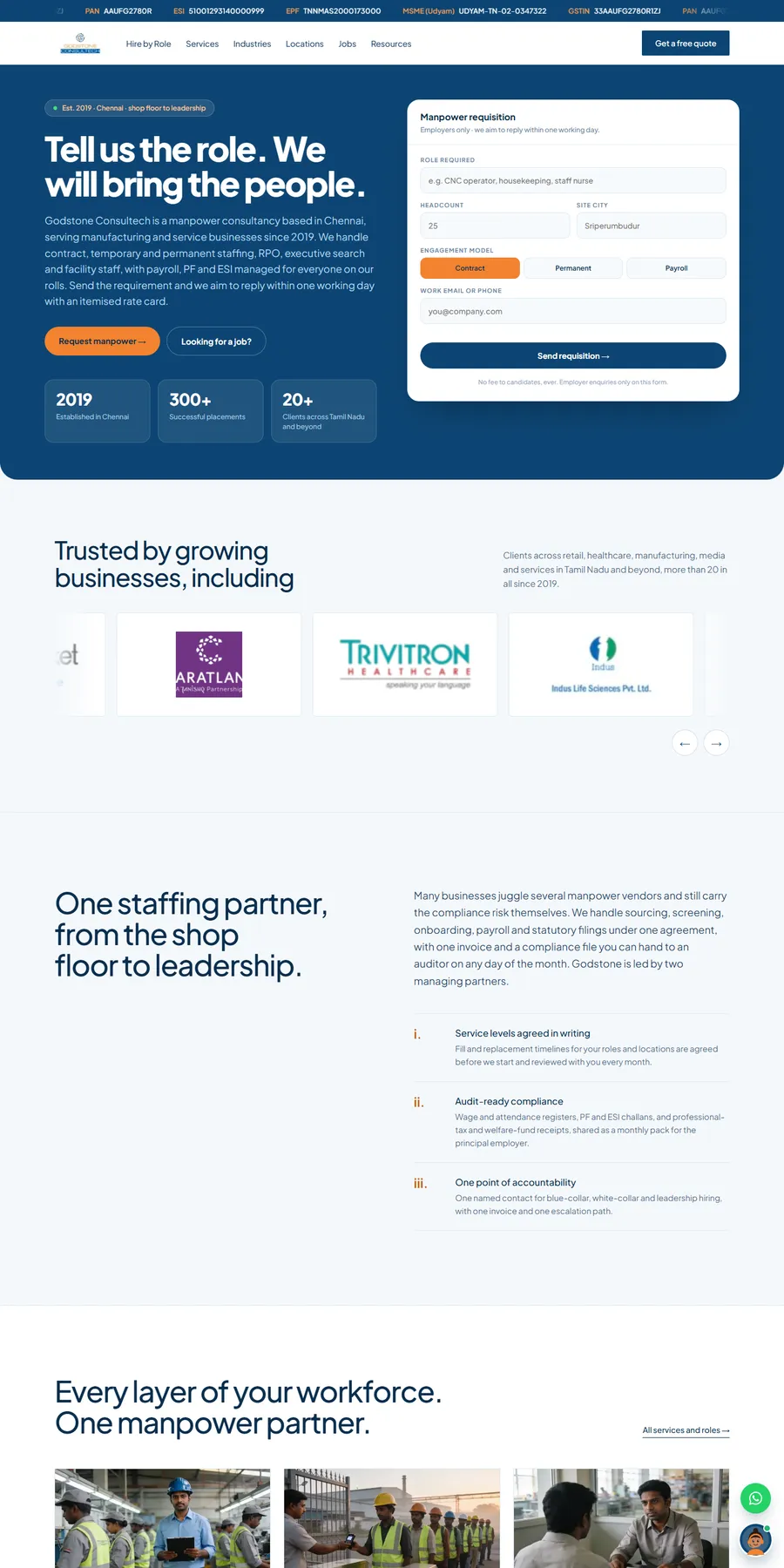
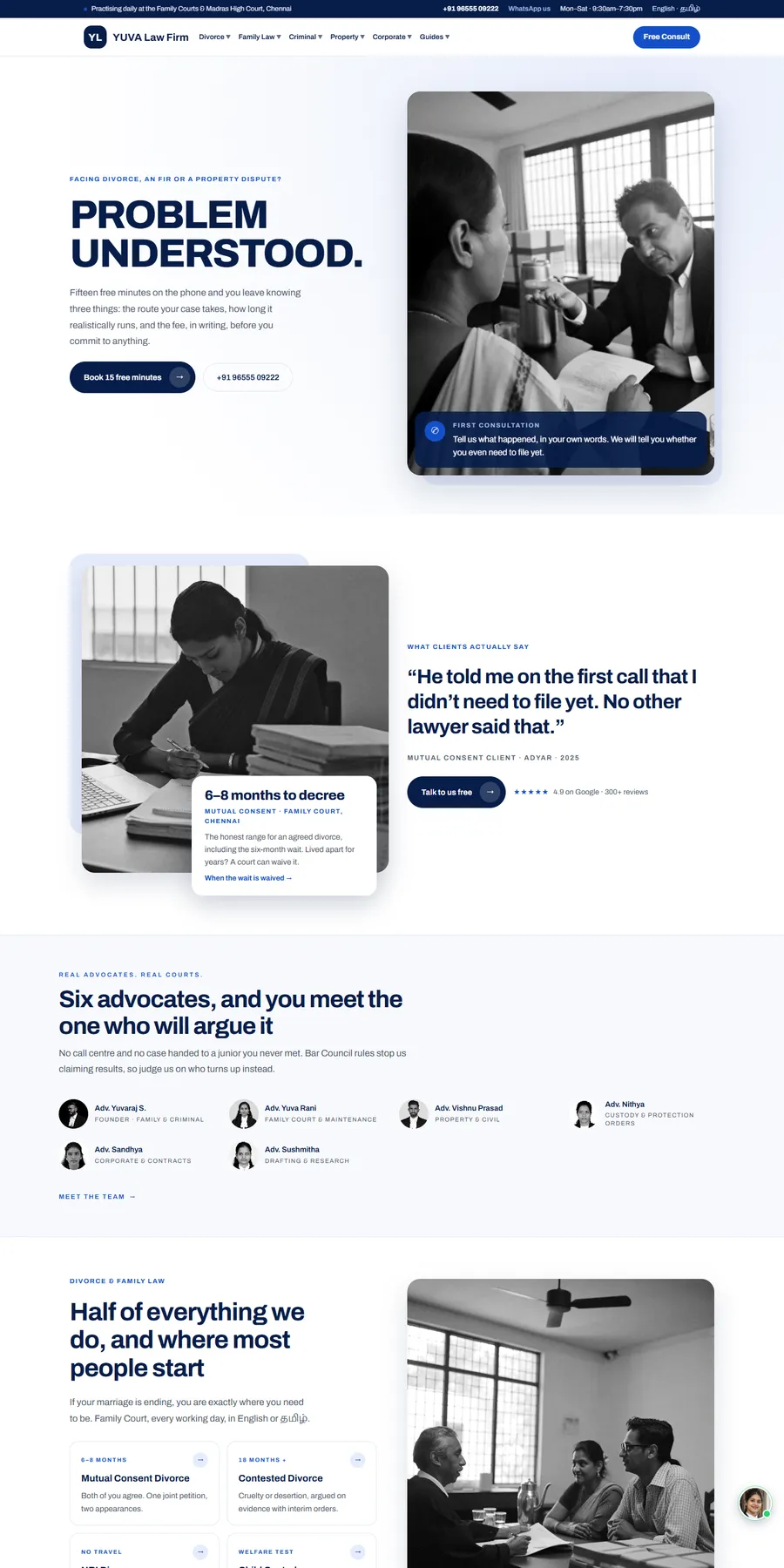
We have not built a website for a therapist, counseling practice or any US health practice, and we will not pretend otherwise. The closest proof is Blues Renewables, a rooftop solar installer whose site runs the same local lead system we would build for a practice: one page per service, 129 local area guides, and every call and form counted as a GA4 lead event. It went from no tracked leads to 7 to 10 enquiries a week, and Google clicks rose from 14 to 560 a fortnight in two months, with mobile Lighthouse scores in the mid 80s to mid 90s. For a therapy practice, its service pages become specialty and method pages, its area guides become office and telehealth state pages, and its lead events become consult requests counted without sending what people type to ad platforms. YUVA Law Firm, in our portfolio, is a family law site built around free consultation forms for another confidential, sensitive service. It has no published numbers. Godstone Consultech, a staffing firm in our portfolio, shows the hiring side: role pages and application forms of the kind a group practice needs to recruit associates.

More websites we have designed and built

Process

How your therapist website project runs

Typical timeline: 4 to 8 weeks for most solo and small group practice sites; 8 to 12 weeks for groups with many clinician, specialty and location pages. You see progress every week.

  1. Step 01 · Week 1

    Discovery and audit

    We audit your current site, competitors, and how you show up on Google and in AI answers, then agree on goals and a fixed quote.

  2. Step 02 · Weeks 2 to 3

    Strategy and design

    Sitemap, wireframes and full designs for your review. You approve everything before we build.

  3. Step 03 · Weeks 3 to 6

    Build and test

    Development, SEO setup, speed tuning, and testing across devices and browsers.

  4. Step 04 · Launch and beyond

    Launch and grow

    We launch, monitor, and improve based on real data. 30 days of free support included.

What shapes your quote

Scope, not hourly billing

Every project gets a fixed quote within 1 business day, agreed before work starts.

Get my fixed quote →
  • How many specialty, method, population and clinician pages you need
  • Which EHR or scheduler we connect, and whether booking is per clinician
  • The form and secure email tools that sign a BAA with you
  • Whether we write the content from interviews with you and your clinicians
  • Telehealth state pages and office location pages
  • Moving from your current platform: redirects, keeping pages that rank and removing trackers from intake pages

Therapist website questions, answered

Straight answers to what owners ask us, and what they ask Google and AI assistants. Ask us anything else.

How much does a therapist website cost?

We quote one fixed price, agreed before work starts, based on the number of pages, features, integrations and content. You get it within 1 business day of a free audit of your current site. There is no hourly billing and no platform rent to keep the site you paid for.

How long does it take to build a therapy practice website?

Most solo and small group sites take 4 to 8 weeks. Group practices with many clinician, specialty and location pages take 8 to 12 weeks. You get a dated week-by-week plan before we start.

Can my associates and pre-licensed clinicians be listed on the site?

Yes, and they should be: they are the hours you most need to fill. Each associate page shows the full associate title your state requires, the supervisor, specialties, a lower fee or sliding scale if you offer one and a booking link. California, for example, requires the full Registered Associate title and the employer's name. We build those fields into the CMS so nobody forgets them.

Will the site work with SimplePractice or TherapyNotes?

Yes. We embed SimplePractice's appointment request or contact form widget (the appointment widget needs its Plus plan), clinician-specific links for groups, or the booking and forms from TherapyNotes, Acuity or Calendly. Existing clients are pointed to the client portal, and we test every booking path before launch.

Is my website contact form HIPAA compliant?

A default website form usually is not set up for it. We route consult and contact forms through your EHR's widgets or a form tool that signs a BAA with your practice, keep ad pixels and session replay off those pages, and ask only for what intake needs. We build for HIPAA; we do not certify it.

Can I use client testimonials or ask clients for Google reviews?

The APA, ACA and NASW codes all bar soliciting testimonials from current clients, and the ACA code covers former clients too. We do not build review requests aimed at clients or testimonial sections. Trust comes from clear bios, credentials, approach, fees and what to expect. Check your own board's rules.

Do I have to show my license number on my website?

Often, yes. California's Board of Behavioral Sciences requires the license title and number in advertising, and associates must use the full Registered Associate title and name their employer. Other states have their own rules. We give every clinician page license, state and supervisor fields.

Do I need a Good Faith Estimate notice on my site?

If you see uninsured or self-pay clients, the No Surprises Act rule says information about the Good Faith Estimate must be prominently displayed and easily searchable on your website. We put it on the fees page as text and link it from the footer.

My practice is telehealth only. How do I show up in local search?

Google does not accept virtual office addresses and is strict with home offices, so the map may be closed to you. The site does the work: a telehealth page, a page per state where you are licensed, specialty pages and consistent practice details. We never list a home or virtual address as an office.

I am on a monthly therapist website platform. Can you move my site?

Yes. We check what you own and what stays with the platform, rebuild the site in your own accounts, keep the URLs that rank and redirect the rest, and remove trackers from intake pages on the way. After launch you own the code, design, content and domain.

Will a new website fill my caseload?

We do not guarantee rankings or client numbers. What a new site changes is how many visitors request a consult: specialty pages that match what people search, clinician pages that answer fit and cost, one booking path and tracking that shows which pages bring booked consults. On a rooftop solar installer's site (not a therapy practice), the same system took tracked enquiries from none to 7 to 10 a week.

How do I show up when people ask ChatGPT for a therapist?

AI tools read your site, your Google profile and directories. We write your specialties, methods, clinicians, states, insurance and fees as plain text with schema, and keep details consistent everywhere. No one can guarantee an AI mention, but specific, consistent pages give assistants something accurate to cite.

Will the content sound generic or AI-written?

No. We write from interviews with you and your clinicians, in the words your clients use, and each clinician reviews their own page and any clinical claims before launch. Every practice's specialties, methods and fees are different, so no two of our sites share text.

What makes you different from another therapist web design company?

We put the terms in writing first: a fixed quote in 1 business day, a dated plan, ownership of everything and no lock-in. The build covers specialty and clinician pages with license details, BAA-backed forms with no ad pixels on intake, per-clinician booking, a Good Faith Estimate notice and an ethics-safe approach to reviews.

Get your free therapy practice website proposal

Four quick questions. You'll get a fixed quote and a free audit of your current site within 1 business day.

  • ✓ No obligation, no sales pressure
  • ✓ Fixed price, never hourly
  • ✓ Your details stay private

Prefer email? info@billionwebstudio.com

Step 1 of 4~60 seconds
What do you need?