Skip to content
Booking projects for next month. Free website audit with every quote.Claim yours →

Professional servicesBooking projects for November

Real Estate Website Development Company for Agents, Teams and Brokerages

Your brokerage page is not yours to keep, the national portals own "homes for sale" in your city, and your IDX listings count for the vendor's domain, not yours. We build agent, team and brokerage sites with listings on your own domain, pages for the ZIP codes and neighborhoods you actually sell, and every tour and valuation request in your CRM within seconds.

  • Built for real estate agents, teams and brokerages
  • Fixed quote in 1 business day
  • You own everything
yourteam.com/78704-pool-homesPool homes for salein 78704Schedule a tourTap to callTour request: 4 bed with poolFrom /78704-pool-homes · 8:42 pmTracked as a leadSource: GoogleAI ASSISTANTWhich agent knows South Austin best?Your Firm: Texas licensed, 78704 salesand market reports, reviews.Source: your website
Illustration: a visit becomes a tracked lead

The short answer

What does a real estate website development company do?

A real estate website development company builds websites for agents, teams and brokerages that turn home searches, seller questions and referral look-ups into tour requests, home valuation requests and listing consultations. The site has to show MLS listings on your own domain, answer the narrower searches the national portals do not own (a ZIP code, a neighborhood, a pool home under a budget), prove you are licensed and active in that market, and put every lead in front of you fast, because 47% of buyers and 59% of sellers hired the first agent they spoke with (Zillow, 2025).

For a solo agent, good website design for realtors means a site you own instead of a brokerage roster page: buyer and seller paths, IDX search with saved searches and new listing alerts, area pages written from local knowledge, a valuation flow that starts your CMA, and a page that explains the written buyer agreement and fees. A team adds lead routing by area or round robin and a page per agent. A brokerage adds an agent roster, office pages and a recruiting page for agents thinking about joining.

Billion Web Studio is a real estate website development company that delivers this as one fixed-scope project: design, IDX set up with the provider that serves your MLS, area and search entry pages, RealEstateAgent schema, call, text and form tracking in GA4, and leads sent to Follow Up Boss or the CRM you already run. You own the site, the domain and every account from day one, so nothing stays behind when you change brokerages.

The market

What the numbers say about real estate agents, teams and brokerages online

Real estate is a referral business run by independent operators. BLS counts 530,600 broker and sales agent jobs, with 55% of brokers and 54% of sales agents self-employed, and NAR says 87% of REALTORS are independent contractors. Many of them market a business on a website their brokerage or a platform vendor controls. The figures below show where clients now find an agent, how few agents get leads from their own site, and how rarely AI assistants name one.

How they choose

How clients find and choose a real estate agent

Most real estate business still starts with a referral: 43% of buyers found their agent that way and 66% of sellers used a referral or an agent they had used before (NAR 2025 Profile, summarized by Virginia REALTORS). But the referred client checks you online before they call, and Zillow found 36% of sellers now find their agent online. Here is how a buyer or seller picks an agent and what your site has to do at each step.

  1. 1

    The trigger: a new job, a lease ending, an empty nest

    Buyers start with inventory searches like "4 bedroom homes with a pool in Round Rock under 600k" and sellers with "what is my home worth". Your site needs pages for those exact searches, by ZIP, neighborhood, price band and property type, with current listings and a way to save the search.

  2. 2

    The look-up: a name from a friend

    A referral types your name into Google or asks an AI assistant about you. They should land on your own site with your license, brokerage, recent sales, market reports and reviews, not on a brokerage roster page that lists the main office phone.

  3. 3

    The check: are you active in my area?

    Zillow found 33% of buyers say online research played a key role in choosing an agent. They look for local proof: sold listings in their neighborhood, a dated market report for their ZIP, reviews that describe a move like theirs, and the photos and tours you use to market a home.

  4. 4

    The contact: a text, a tour, a valuation

    Zillow found 50% of buyers prefer texting or messaging apps and 33% prefer calls. The site offers tap to text, tap to call, a tour request on every listing and a valuation request for sellers, and each one reaches your phone and CRM in seconds.

  5. 5

    The agreement: terms and fees in writing

    Since Aug. 17, 2024, buyers working with an MLS participant sign a written agreement before touring. A page that explains the agreement, what you do for the fee and that fees are fully negotiable and not set by law answers the question before the first showing, not in the driveway.

The problem

Why most real estate websites lose buyer and seller leads

What we find again and again when we audit sites in this trade. None of it is about how the site looks.

Leak 01

Your website belongs to your brokerage or a vendor

On r/realtors, an agent of 17 years used the brokerage's email, site and CRM, left after four years and had to start over without contacts or email. On Local Search Forum, an agent lost her Google profile when her brokerage email was shut off. A rented site, domain or inbox stays with whoever owns the account.

Leak 02

Thousands of listings that count for someone else

Many agent sites show IDX inside an iframe or on the vendor's subdomain. A reply on r/SEO puts it plainly: iframe content does not rank the agent's page. An IDX vendor on ActiveRain says listing pages belong on the agent's own domain, with current data, or the site gives a searcher no reason to land there.

Leak 03

A site about the agent, not the homes buyers search for

A Texas broker-owner on ActiveRain describes the common pattern: a big video hero, headshots and branding, and no pages for searches like a 4 bedroom pool home in a given city. His rule is inventory first, value second, agent third. The heavy video also slows the page on the phones and tablets 70% of buyers used in their search (NAR).

Leak 04

Listings that are wrong, and leads that wait

A brokerage on r/realtors found new listings missing from its platform site and pending homes still shown as active, which makes listing alerts pointless. When a lead does arrive, it often sits in an inbox until morning instead of reaching the CRM and the agent's phone.

Leak 05

Google will not verify you, and your site does not help

Agents on Local Search Forum and r/GoogleMyBusiness describe practitioner profiles filtered at a shared office, suspensions after a brokerage change and verification that asks for license and address documents. Replies say the name, office and license details must match across the website, profiles and directories. A site with a different phone and the corporate address gives Google nothing consistent to check.

Leak 06

Missing disclosures and stale market claims

No firm name, no license number where California requires it on websites, no state-required brokerage notice link on the homepage, no MLS attribution or update time, and a market report from last spring. The REALTOR Code of Ethics says website information must be kept current, and old numbers tell a seller nobody is watching their market.

Generic vs built for you

Why a generic website fails real estate agents, teams and brokerages

A template is built to fit every business, so it fits yours badly. Here is what changes when the site is planned around how clients actually buy.

Generic website compared with a website built for Real estate agents, teams and brokerages
What you needGeneric template siteBuilt for real estate agents, teams and brokerages
Home searchAn IDX widget in an iframe or on the vendor's subdomainIDX on your own domain from a provider that serves your MLS, with map search, filters, saved searches and new listing alerts
Search entry pagesOne "Search homes" page, or dozens of city pages with swapped namesPages by ZIP, neighborhood, price band and property type (condos, acreage, waterfront, pool homes), each with a few paragraphs of local knowledge above current listings
Buyer registrationA sign-up wall before the first photoContact details asked when a buyer saves a search, sets an alert or requests a tour, never before they see a home
Seller leadsAn instant estimate widget that shows a number and stopsA valuation request that collects address, timing and condition and starts your CMA, with your listing marketing plan on the next screen
Lead handlingForm emails to one shared inboxEvery lead into Follow Up Boss or your CRM in seconds, tagged with page, listing and source, routed to the right agent by area or round robin
Neighborhood pages"Safe, family-friendly area with top schools"One factual template for every area: commute, parks, HOA and property tax notes, links to official school and crime data, no opinion about who belongs there
License and MLS disclosuresAn equal housing icon in the footer, if anyone rememberedFirm name, license numbers by state, state-required links, MLS attribution and update time, built into every template
Teams and brokeragesOne About page with a group photoA page per agent with license, listings and reviews, office pages, and a join our team page for recruiting

Free self-check · 2 minutes

What your current real estate website is missing

Tick everything your site does today. Each box you cannot tick is a place where a ready-to-buy visitor leaves.

What you need

What every real estate website needs

The features that turn a real estate website from a brochure into the best salesperson you have. We build all of them.

  1. Must-have · 01

    Separate buyer and seller paths from the first screen

    "I am buying" and "I am selling" at the top of the homepage, each leading to its own guide, form and next step, with your phone number and a text button in the header on every page.

  2. Must-have · 02

    IDX search on your own domain

    Map search, filters, property detail pages and saved searches from the IDX provider that serves your MLS, with listing pages on yourdomain.com, your brokerage name visible and data refreshed at least every 12 hours, as NAR's IDX policy requires.

  3. Must-have · 03

    Search entry and area pages the portals do not own

    ZIP, neighborhood, price band and property type pages (new construction, condos, acreage, waterfront, pool homes), with local copy above the live listings. Area and relocation guides use one template for every neighborhood: commute, parks, HOA and property tax notes, with links to official school and crime data rather than your opinion of them. Fewer, deeper pages beat hundreds of thin ones.

  4. Must-have · 04

    A home valuation flow that starts a CMA

    A valuation request, not an instant estimate: it collects what you need for a CMA and is tracked as its own conversion, because each one can become a listing.

  5. Must-have · 05

    A listing marketing plan page

    How you sell a home: photography, video, 3D tours, floor plans, pricing and launch plan. Zillow found 78% of sellers are more likely to hire an agent who offers high-resolution photography and 75% for virtual tours and interactive floor plans.

  6. Must-have · 06

    A buyer agreement and fees page

    What the written buyer agreement covers, why it comes before the first tour since August 2024, what you do for the fee, and the statement that fees are fully negotiable and not set by law. Your broker reviews it before launch.

  7. Must-have · 07

    Sold listings and dated market reports

    Recent sales by area with dates, and a monthly market report per area with a last-updated line. They are the proof a referred client looks for, and dated pages help you keep website information current as the Code of Ethics asks.

  8. Must-have · 08

    Agent pages with license and brokerage

    Each agent's photo, bio, license number, states of licensure, designations they actually hold, listings and reviews. Brokerages add an agent roster, office pages and a recruiting page.

  9. Must-have · 09

    Reviews from real platforms, with no gating

    Your Google rating linked to the profile and reviews from the real estate review sites you use, with every closed client asked the same way. Reviews that describe the neighborhood or kind of move in the client's own words carry more weight with the next reader.

  10. Must-have · 10

    A disclosure footer set per agent and per state

    Firm name, license numbers, equal housing statement or logo, MLS attribution and disclaimer, state-required links, privacy policy, SMS terms and an accessibility statement.

  11. Must-have · 11

    A CMS you update yourself, with training

    Add a sold listing, post the monthly market report for a ZIP, change an agent's license block or publish a local guide without calling a developer. We train you or your assistant on a recorded call before launch, and every market report template has a last-updated date that changes when you publish.

  12. Must-have · 12

    RealEstateAgent schema and fast photo-heavy pages

    schema.org RealEstateAgent markup for the agent, team or brokerage, plus Core Web Vitals targets of LCP 2.5 seconds or less, INP 200 ms or less and CLS 0.1 or less on listing and area pages full of photos.

What we build

The real estate website we would build for you

Here is the real estate web design sitemap we would start from for a team. A solo agent needs fewer area pages; a brokerage adds offices, the full agent roster and recruiting. We cut or add pages to match the areas you actually sell and the clients you want more of.

yourcompany.comHome · every section links here

Search homes

  • Map and filter search (IDX)
  • Property detail pages
  • Saved searches and new listing alerts
  • New construction
  • Condos and townhomes
  • Acreage, waterfront and luxury
  • Open houses this weekend

Areas

  • Area hub
  • City and county pages
  • ZIP code pages
  • Neighborhood guides
  • Price band and property type pages
  • Relocation guide

Buyers

  • Buy with us
  • Buyer agreement and fees explained
  • First-time buyer guide
  • Mortgage calculator and lender pre-approval
  • Schedule a private tour
  • Buyer consultation

Sellers

  • What is my home worth
  • Listing marketing plan
  • Pricing and prep guide
  • Our recent sales
  • Listing consultation

Market and proof

  • Monthly market reports by area
  • Sold listings
  • Reviews
  • Local guides and blog
  • Press and media

Team and brokerage

  • About the team
  • Agent pages
  • Office pages
  • Join our team
  • Licenses and disclosures
  • Contact

Calls, bookings, leads

How we turn visitors into buyer and seller leads

Good real estate website design is judged by tour requests, valuation requests and consultations booked, and by knowing which page and channel produced each one. This is how we build the path from search to signed buyer agreement or listing agreement, and track every step.

  • 01Tap to text and tap to call on every pageHalf of buyers prefer texting (Zillow), so a Text button sits next to Call in a sticky bar on mobile. Each tap is a GA4 conversion event tagged with the page, so you know whether the 78704 page or the condo page starts the conversation.
  • 02Tour requests on every listingA short form on each property page with preferred times, whether they already work with an agent and whether they are pre-approved. The listing address and MLS number travel with the lead, so you know which home they want before you call.
  • 03Saved searches and alerts as the sign-upBuyers give their email when they save a search or set an alert, not before. New matching listings pull them back to your site instead of a portal, and each return visit shows in your CRM.
  • 04A valuation flow for seller leadsAddress first, then timing, condition and recent updates, then contact details. It is tracked as its own conversion and routed to your listing agent with a reminder to send the CMA.
  • 05A market report sign-up for homeowners in your farmHomeowners subscribe to the monthly report for their ZIP or neighborhood, which keeps future sellers on your list until they are ready. If you send postcards, each mailer's QR code goes to that area's valuation page with a campaign tag, so you can see which mailing produced which seller lead.
  • 06Leads into your CRM with routing, reported monthlyEvery form reaches Follow Up Boss or your CRM in seconds with source, page and campaign. Teams route by area, price range or round robin, so the right agent texts back while the buyer is still looking at the home. A monthly report shows calls, texts, tours, valuations and consultations by source, so you see which channel brings the clients who sign.
  • 07Text consent that stands up laterAn unchecked consent box next to the phone field that names your team and links to your SMS terms, stored with the lead. Your follow-up texts start from documented consent.

AI search

Clients now ask ChatGPT, Gemini and Google AI Mode who the good agents are. BrightLocal found 45% of consumers use AI tools for local recommendations. In a study reported by HousingWire, about 1.3% of licensed real estate professionals in 10 markets were named across three assistants, and OperStack found that 109 of the 233 businesses ChatGPT named for "best real estate agent" questions had no link to their own website. Getting named starts with one consistent identity and a site an assistant can cite.

Questions your clients ask AI assistants

  • Who is a good realtor in South Austin for a first-time buyer?
  • Which agent in Naperville knows the market for older homes needing work?
  • Find me an agent who sells waterfront homes on Lake Norman
  • Is now a good time to sell my house in Scottsdale?
  • Which team in Tampa helps people relocating from out of state?
  • Is this agent licensed in Florida, and what brokerage are they with?
  • One name, everywhere

    Your personal name, team name and brokerage written the same way on the site, Google profile, portal profiles and social accounts. An agent replying on ActiveRain said consistency of name matters most, and a nickname on some profiles confuses AI tools.

  • Answers in plain text, not hidden in accordions

    Area facts, buyer agreement and fee questions, how you market a listing and how long homes take to sell locally, written in the first lines of each page so an assistant can quote them.

  • Local proof an assistant can repeat

    Sold listings by area with dates, monthly market reports, reviews that mention the neighborhood and type of move, and local guides that cover more than homes for sale.

  • RealEstateAgent schema and a clean sitemap

    Structured data for the agent, team or brokerage with areas served, license and contact details, and an XML sitemap that lists your area and listing pages, so search engines and AI systems read the same facts the visitor sees.

  • Mentions beyond your own site

    A 15-year top producer on r/AskRealEstateAgents never appears in ChatGPT, while a newer agent who shows up in local groups and a first-time buyer blog gets clients from it. We make your site the clear source those mentions point back to, and list the places worth being cited.

Compliance and trust

The rules a real estate website has to get right

An agent website is advertising, so fair housing law, your state's license rules, your MLS rules and, for REALTORS, the Code of Ethics all apply to it. We build these into the templates and flag state specifics for your broker to confirm. We do not certify compliance; your broker and your state commission have the final word.

Fair housing in words and pictures

The Fair Housing Act regulation (24 CFR 100.75) bans ads that indicate a preference or limitation based on a protected class, including through words, photos and symbols. We describe the property, not the ideal buyer, add an equal housing statement or logo and keep neighborhood pages on one factual template with links to official school and crime data. HUD withdrew its 2024 digital advertising guidance in 2025, but the law still applies.

Firm name and license display

Code of Ethics Article 12 asks for the firm name on advertising and the firm name and states of licensure on agent websites. California Regulation 2773 requires the eight-digit license number and responsible broker's name on websites. Texas requires a TREC Information About Brokerage Services link on the homepage of each business website. Rules differ by state, so the CMS sets them per agent and per state.

MLS, IDX and settlement rules

NAR's IDX policy requires the display to be under your control with your brokerage name visible, seller opt-outs excluded and data refreshed at least every 12 hours; your MLS adds its own attribution and disclaimers. Since August 2024, offers of compensation are off the MLS, and a listing broker may show them only for its own listings on its own site.

Honest claims and reviews

The Code of Ethics bars misleading domain names, deceptive metatags and designations you do not hold, and only the listing or cooperating broker may say it sold a home. The FTC Consumer Reviews and Testimonials Rule bans fake reviews, sentiment-based rewards and undisclosed insider reviews. Review requests go to every closed client the same way.

Texting consent and lender partners

TCPA prior express written consent still applies to autodialed or prerecorded marketing texts and calls; the FCC's one-to-one consent rule was vacated in January 2025. RESPA Section 8 limits referral payments between agents, lenders and title companies, so a preferred lender page or affiliated business disclosure goes to your broker before it goes live.

Accessibility and privacy

The Justice Department says the ADA applies to the websites of businesses open to the public. We build to WCAG 2.2 AA as a target: keyboard-usable search and forms, alt text where the IDX provider allows it, captions on video tours. If lead details may be shared with lenders or partners, the Code of Ethics asks you to say so, and the privacy policy does.

We build with tools and patterns that support these rules and document what we set up. For legal advice on your own obligations, talk to your attorney.

From the forums

What real estate agents, teams and brokerages ask about websites, answered

We read what agents and broker-owners ask each other on r/realtors, r/AskRealEstateAgents, r/RealEstateTechnology, r/SEO, r/WebsiteSEO, r/GoogleMyBusiness, Local Search Forum and ActiveRain. The same worries come up: brokerage sites they cannot keep, monthly platforms with broken listings, IDX that does not rank, Google profiles that will not verify and AI assistants that name someone else. These are their questions, paraphrased, with our straight answers.

Where owners talkr/realtorsr/AskRealEstateAgentsr/RealEstateTechnologyr/SEOr/WebsiteSEOr/GoogleMyBusinessLocal Search ForumActiveRain

Asked on r/realtors

“Should I pay a monthly premium platform or have a developer build a site once?”

Our answer: Agents in the thread were split, and both sides had a point. The platform is quick to start, but you pay every month, the design is close to everyone else's, and listing sync or support problems are yours to live with. A one-time build costs more up front, and you own what you paid for. Compare what you hold after three years: on a platform, a login that stops when the payments stop. On an owned site, the domain, the pages that rank, your lead history and the code. We quote the build as one fixed price, MLS and IDX fees go to those providers, and care plans are optional.

Asked on r/realtors

“I want an IDX site outside my brokerage's system in case I leave. What should I set up so I keep it?”

Our answer: Own your email on your own domain first, then the site, analytics and CRM account. We set every account up in your name from day one, and the firm name and license block are fields you update when you move, not a rebuild.

Asked on r/realtors

“Is a monthly IDX fee worth paying, or should I just send people to my brokerage's site?”

Our answer: One agent in the thread saw only three people search their site in a year, and buyers do start on the big portals. IDX with no traffic is an expense. It earns its fee when listings live on your domain, feed ZIP and property type pages people search for, and send alerts that bring buyers back. If you will not build those pages or send traffic to them, a lighter site makes more sense, and we will say so.

Asked on r/realtors

“Our platform site misses new listings and shows pending homes as active. Is that normal?”

Our answer: It should not be. Under NAR's IDX policy your provider refreshes data at least every 12 hours, and status changes should follow. We pick the IDX provider for your MLS, check status handling before launch and test alerts with real searches.

Asked on r/SEO

“Do my own listings on the site help SEO more than the iframe IDX most agents use?”

Our answer: Yes. Replies note that iframe content does not rank the agent's page. We set up listing and search pages on your own domain where your MLS and IDX provider allow it, with your brokerage name and the MLS attribution shown.

Asked on r/WebsiteSEO

“What is the smartest SEO approach for an agent who will never be a national portal?”

Our answer: The reply we agree with: thin city pages fail because portals own the broad searches. Build fewer, deeper pages that answer real buyer questions with local numbers, run your Google Business Profile well and follow up fast. That is the page plan we start from.

Asked on ActiveRain

“What separates an agent site that only looks good from one that brings leads?”

Our answer: The answer in the thread, from an IDX vendor: listing pages on your own domain, current data, saved searches and alerts, contact details asked at save or showing request, leads straight into the CRM and fast mobile pages. Agents who get leads also link every social post to their own site.

Asked on Local Search Forum

“My site is on a mainstream website builder with Search Console and reviews, but agents with fewer reviews beat me on the map. Why?”

Our answer: Replies found technical gaps on the site (missing alt text, no canonical tags, content not in the page source) and a name and phone that did not match across listings. We fix both: clean pages search engines can read, and one name, office and phone everywhere.

Asked on r/GoogleMyBusiness

“I changed brokerages and updated my Google profile, and it was suspended for deceptive content. What helps the appeal?”

Our answer: The reply: include your license and the agreement with the new firm. We cannot reinstate a profile, but we update the site on the same day you move so its firm name, office, license and phone match what you send Google.

Asked on r/AskRealEstateAgents

“I have closed big deals for 15 years and ChatGPT never names me, but a newer agent gets clients from it. What am I missing?”

Our answer: AI answers lean on mentions outside your site: local groups, community guides, review platforms. Your site still has to be the clear source, with one name everywhere, schema, plain-text answers and dated sales. Nobody can guarantee an AI mention.

Questions are paraphrased from public threads. We never quote members by name.

Others vs us

Real estate web design company options: Billion Web Studio vs a website builder vs a monthly real estate website platform or agency

The three ways real estate agents, teams and brokerages usually get a website, side by side.

Real estate web design company options: Billion Web Studio vs a website builder vs a monthly real estate website platform or agency
Billion Web StudioWebsite builder templateTypical industry agency
Who owns the site, domain and contentYou do, from day one, in your own accountsYou own the content; the site lives on the builder's platformOften the agency or platform, on a subscription you lose if you leave
Contract and pricingFixed quote in 1 business day, agreed before work starts, no lock-inMonthly subscription, you build it yourselfMonthly platform fee or retainer, often on a 12-month contract
IDX listingsOn your own domain, from a provider that serves your MLSAn embedded widget or iframe if the builder allows itUsually included; often on the platform's domain or subdomain
ZIP, neighborhood and property type pagesWritten from your local knowledge, with current listingsWhatever pages you writeOften templated area pages shared across many clients
Lead capture and CRMSign-up at save or tour request, leads routed into your CRMA contact form to emailOften a forced sign-up and the platform's own CRM
Seller valuation flowA valuation request that starts your CMA, tracked on its ownNot includedUsually an automated estimate widget
Firm name, license, fair housing and MLS disclosuresBuilt into templates per agent and state, flagged for your brokerUp to youVaries; often one generic footer
Lead tracking by sourceGA4 events plus call tracking, report in plain numbersBasic form countsTheir dashboard, which may stay with them if you leave
If you change brokeragesYour site, domain and data move with youYour site stays with you while you payDepends on the contract; sometimes the site and leads stay behind

Why Billion Web Studio

What we do better, and why it matters to you

  • A fixed quote in 1 business day, with a free audit

    We review your current site or brokerage page, IDX setup, Google profile match, disclosures and lead flow, then send a written scope and a fixed price based on pages, features, integrations and content. No hourly billing.

  • You own everything from day one

    Code, design, content, domain, hosting, analytics and tracking accounts in your name. When you change brokerages or stop working with us, the site and its history go with you.

  • Built around how agents actually win business

    Inventory first, then local proof, then you: search entry pages for the areas you sell, buyer and seller paths, a valuation flow, a buyer agreement page and lead routing are in the plan from week one, not bolted on later.

  • Disclosures built in, not remembered

    Firm name, license numbers, equal housing statement, MLS attribution and state-required links live in the templates, set per agent and per state, and we flag each one for your broker to confirm.

  • Every lead traced to its source

    GA4 conversion events, call tracking and source tags in your CRM, so you can see whether your site, your Google profile or your social posts bring the clients who sign.

  • A dated plan and a guarantee on it

    A week-by-week plan, weekly written updates and 30 days of free support after launch. If we slip a date because of us, the next month of support is free.

In writing, before we start

  • Fixed quote in 1 business day

    Scope, deliverables and price agreed in writing, with a free audit of your current site. No hourly billing.

  • Launch date in writing

    A dated week-by-week plan and a written update every week. If we slip because of us, the next month of support is free.

  • You own everything

    Code, design, content, domain and accounts are yours from day one. No 12-month contract, no rented site.

  • 30 days of support included

    We watch rankings, forms and call tracking after launch and fix anything that needs it.

Proof, not promises

Results from websites we have built

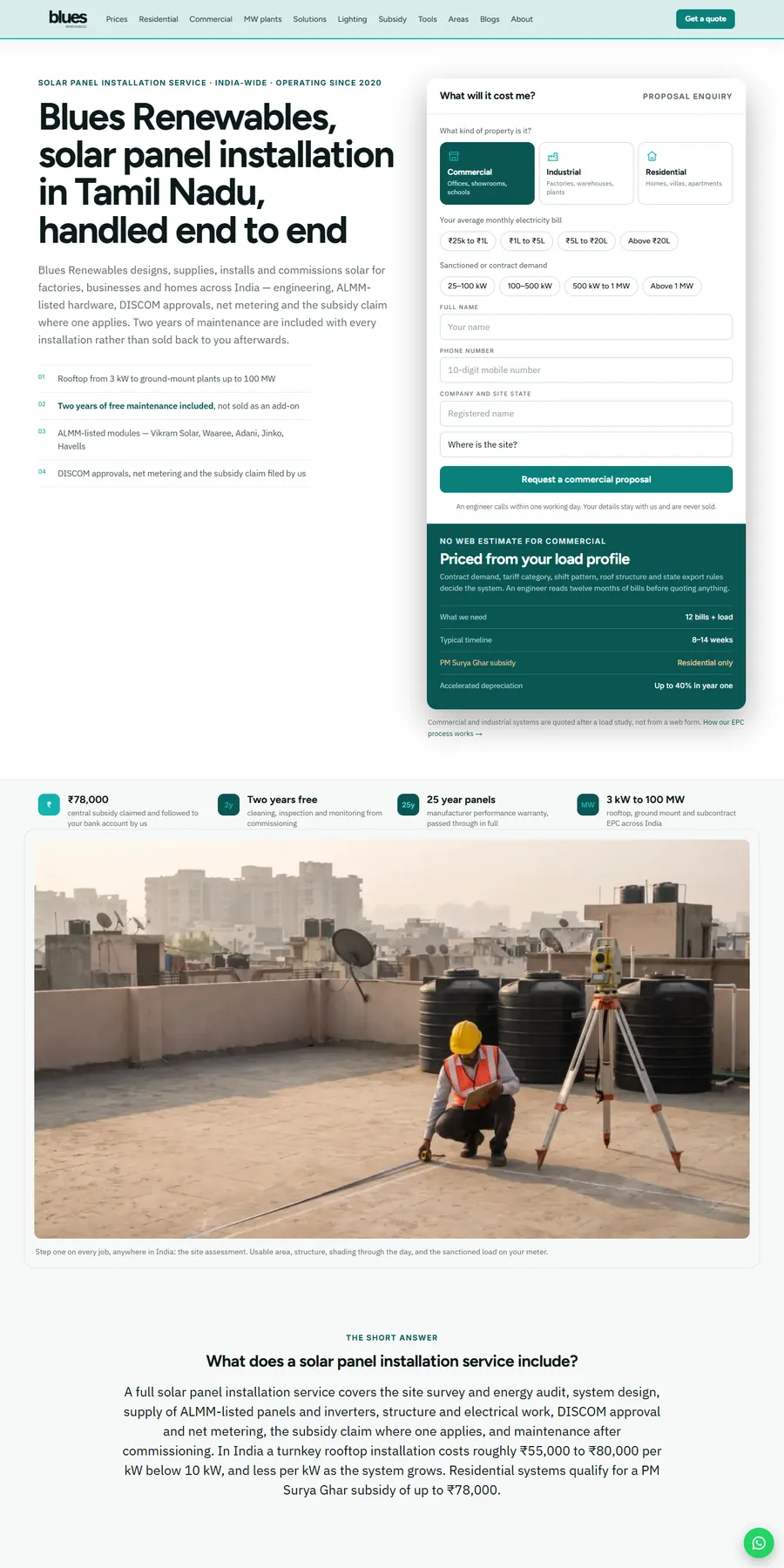
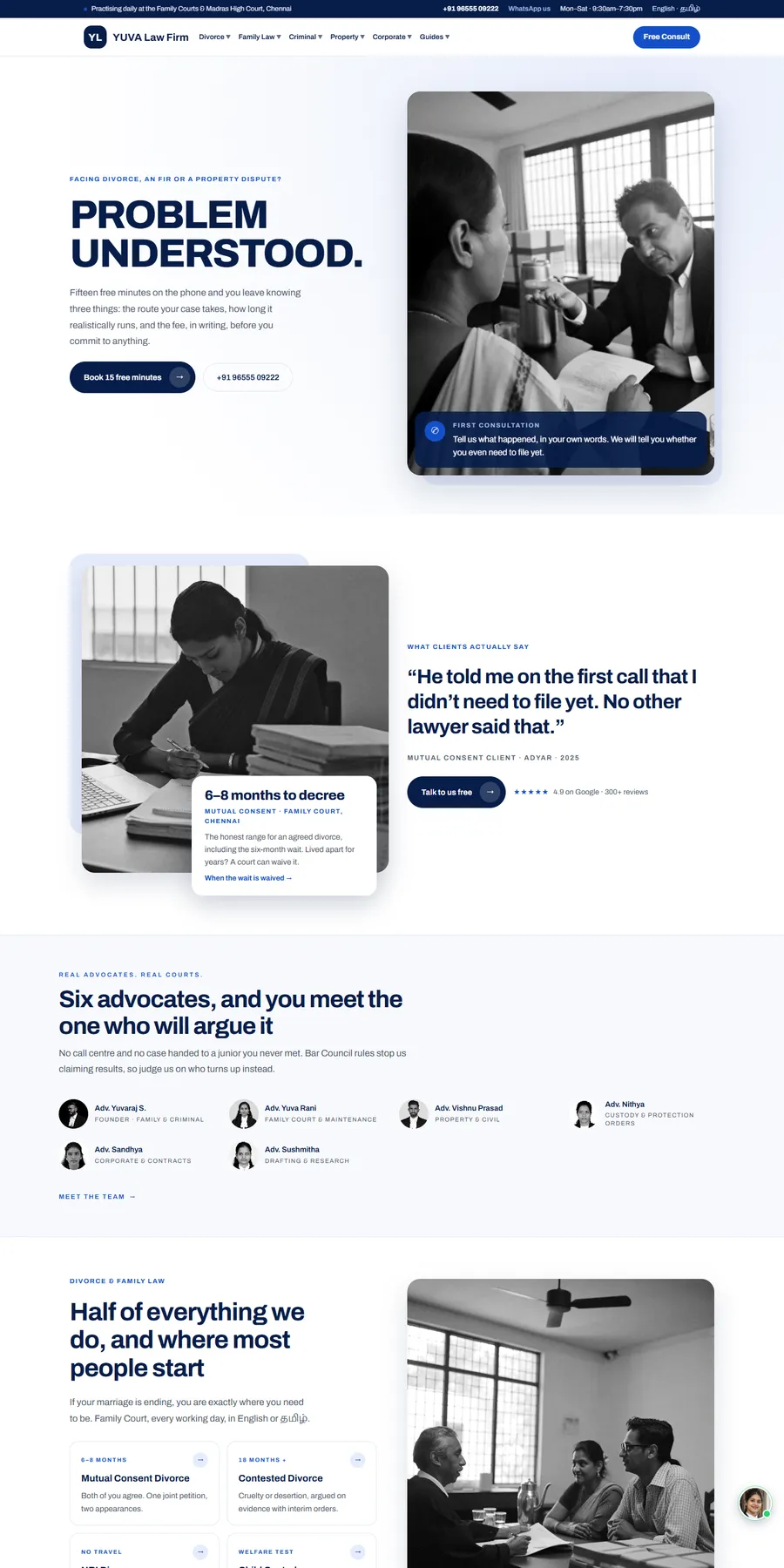
We have not built a website for a real estate agent, team or brokerage yet, and we will not pretend otherwise. The closest proof is Blues Renewables, a local rooftop solar installer: 129 local area guides (the same work as ZIP and neighborhood pages), calculators, and every form and call tracked as a lead event in GA4. It went from no tracked leads to 7 to 10 enquiries a week, and Google clicks rose from 14 to 560 a fortnight in two months. YUVA Law Firm, a family law practice built around free consultation requests and local search, shows how we handle a licensed professional whose clients book a consultation first. It is not a US firm, and we do not publish numbers for it.

More websites we have designed and built

Process

How your real estate website project runs

Typical timeline: 4 to 8 weeks for an agent or team site; 8 to 12 weeks for a brokerage with many office, agent and area pages. You see progress every week.

  1. Step 01 · Week 1

    Discovery and audit

    We audit your current site, competitors, and how you show up on Google and in AI answers, then agree on goals and a fixed quote.

  2. Step 02 · Weeks 2 to 3

    Strategy and design

    Sitemap, wireframes and full designs for your review. You approve everything before we build.

  3. Step 03 · Weeks 3 to 6

    Build and test

    Development, SEO setup, speed tuning, and testing across devices and browsers.

  4. Step 04 · Launch and beyond

    Launch and grow

    We launch, monitor, and improve based on real data. 30 days of free support included.

What shapes your quote

Scope, not hourly billing

Every project gets a fixed quote within 1 business day, agreed before work starts.

Get my fixed quote →
  • How many ZIP, neighborhood, area and property type pages you need
  • Which IDX provider serves your MLS and how deep the search and listing integration goes
  • CRM integration and lead routing rules for your team
  • Number of agents and offices, and whether a recruiting page is needed
  • Whether we write the area guides and buyer and seller content or work from yours
  • Moving off your current platform: redirects, keeping pages that rank and setting up tracking first

Real estate website questions, answered

Straight answers to what owners ask us, and what they ask Google and AI assistants. Ask us anything else.

How much does a real estate website cost?

We quote real estate website development as one fixed price, agreed before work starts, based on the number of pages, features, integrations and content. You get it within 1 business day of a free audit of your current site. There is no hourly billing and no per-lead fee. MLS and IDX provider fees are billed by those providers directly to you.

How long does it take to build a real estate website?

Most agent and team sites take 4 to 8 weeks. Brokerages with many office, agent and area pages take 8 to 12 weeks. IDX approval from your MLS can take time, so we start that paperwork in the first week. You get a dated week-by-week plan before we begin.

Do I need my own website if my brokerage gives me one?

The brokerage page is useful, but you cannot edit it and it stays when you leave. NAR says 87% of REALTORS are independent contractors running their own business. Your own site holds your area pages, reviews and lead history, links to your brokerage page and shows your firm name and license as the rules require.

Will the IDX listings be on my own domain?

Yes, where your MLS and IDX provider allow it. We choose a provider that serves your MLS and set up listing and search pages on your domain rather than in an iframe or on the vendor's subdomain, with your brokerage name visible and the attribution and update time your MLS requires.

Can my site rank against the big real estate portals?

Not for broad phrases like homes for sale in a large city at launch, and we will not promise it. We build pages for the searches an agent can win: ZIP codes, neighborhoods, price bands, property types and local questions. We do not guarantee rankings or lead numbers.

Will it connect to Follow Up Boss or my CRM?

Yes. Every form sends the lead to Follow Up Boss or the CRM you use with source, page and listing details, and teams can route leads by area, price range or round robin. We test each form with a real submission before launch.

What happens to my site if I change brokerages?

It comes with you. The domain, hosting, site files, analytics and CRM connections are in your name from day one. The firm name, license block and IDX settings are fields we update for the new brokerage under a care plan or as a fixed-price change quoted before work starts.

What license and fair housing information must my site show?

It depends on your state and your MLS. California requires your license number and responsible broker's name on your website, Texas requires a TREC Information About Brokerage Services link on the homepage, and REALTORS show the firm name and states of licensure. We build these in and flag each item for your broker to confirm.

Can I add neighborhood pages with school and crime information?

Yes, built carefully. We use the same factual template for every area, link to official school and crime data instead of rating them, and avoid words that describe who a neighborhood suits. NAR advises giving every client the same categories of information and staying objective.

Do I need a home valuation tool?

You need a valuation request, which is different from an instant estimate. Ours collects the address, timing and condition and leads to your CMA, which is how a seller lead becomes a listing appointment. If you also want an automated estimate shown, we add it from your IDX or data provider.

Can I update market reports, sold listings and blog posts myself?

Yes. The site runs on an editable CMS, and we train you or your assistant before launch. IDX listings update from your MLS on their own; market reports, sold listings, area guides and agent pages are yours to edit. If you would rather not, a care plan covers it.

We are moving off a subscription platform. Will we lose our rankings?

We map every URL that gets traffic, keep the ones that rank, redirect the rest and watch Search Console after launch. We also check that your name, phone and office still match your Google profile after the switch.

How does my real estate team show up in ChatGPT and Google AI answers?

AI assistants lean on your Google profile, your reviews, mentions on other sites and your own site. We use one name everywhere, add RealEstateAgent schema, write area facts and buyer and seller answers in plain text and link your review profiles. No one can guarantee an AI mention.

What makes you different from another real estate web design company?

We put the terms in writing first: a fixed quote in 1 business day, a dated plan, your ownership of everything and no lock-in. The build covers IDX on your domain, search entry pages, buyer and seller paths, CRM routing, disclosures per state and lead tracking by source.
Get your free real estate website proposal

Four quick questions. You'll get a fixed quote and a free audit of your current site within 1 business day.

  • ✓ No obligation, no sales pressure
  • ✓ Fixed price, never hourly
  • ✓ Your details stay private

Prefer email? info@billionwebstudio.com

Step 1 of 4~60 seconds
What do you need?