Skip to content
Booking projects for next month. Free website audit with every quote.Claim yours →

Professional servicesBooking projects for November

Law Firm Website Development Company for More Booked Consultations

A DUI arrest at 1 a.m., divorce papers served on a Friday, a family facing probate after a funeral: each starts with a search, usually when your office is closed. We build law firm websites that catch those inquiries after hours, say what you charge and how hiring works, keep claims inside your state bar's rules and send every lead into the intake software you already use.

  • Built for law firms
  • Fixed quote in 1 business day
  • You own everything
yourfirm.com/dui-defenseDUI defense lawyersin PhoenixFree consultationTap to callNew consult request: DUIFrom /dui-defense · 11:42 pmTracked as a leadSource: GoogleAI ASSISTANTDUI lawyer near me who answers at night?Your Firm: DUI defense in MaricopaCounty, phones answered 24/7.Source: your website
Illustration: a visit becomes a tracked lead

The short answer

What does a law firm website development company do?

A law firm website development company builds websites for personal injury, family law, criminal defense, estate planning and business law firms that turn searches like "car accident lawyer near me" or "how much does a divorce lawyer cost" into answered calls, booked consultations and screened case inquiries. The site has to reach someone in the worst week of their year, show which attorney will handle the matter and where that attorney is admitted, explain how fees work, carry the disclaimers your state bar requires and record which page and channel produced each signed client.

For a contingency fee injury practice that means one page per case type, a 24/7 call path and Spanish pages where your clients need them. For a family or criminal practice it means discreet consult booking, clear statements on whether the first meeting is free and payment plan details. For estate planning it means flat fee package pages and workshop sign-ups, and for business law a fast credibility site that referred clients check before they call.

Billion Web Studio is a law firm website development company that delivers this as one fixed-scope project: practice area, office and attorney bio pages, LegalService schema, intake forms built with Rule 1.18 in mind, booking and forms connected to Clio Grow, MyCase, Lawmatics or the CRM you use, and every call and form tracked in GA4. You own the site, the domain and every account from day one, with no 12-month platform contract and no lock-in.

The market

What the numbers say about law firms online

The ABA counts about 1.37 million active lawyers in the US (2025 Profile of the Legal Profession), and most law offices are small, so the person who would answer the phone is often the lawyer who is in court. A prospective client with a legal problem compares firms fast and judges them on how quickly someone responds. The numbers below show what happens to calls and emails at US firms, what people cannot find on firm websites and how much reviews weigh.

How they choose

How clients find and choose a law firm

People rarely shop for a lawyer until something happens: an arrest, a crash, divorce papers, a parent's death, a contract dispute. FindLaw found 56% act on their legal need within a week or sooner. Here is how a US client picks a law firm and what your site has to do at each step.

  1. 1

    The trigger: a legal problem with a deadline

    The search uses the client's words, not yours: "what happens after a DUI arrest", "do I need a lawyer after a car accident", "will or trust". Your site needs a page for each of those case types, written the way clients ask, with the phone number and a consult button visible on a phone without scrolling.

  2. 2

    The shortlist: Google, an AI answer, a friend's referral

    Some clients ask an AI assistant, some ask Google, and referred clients search your name before they call. The site, Google Business Profile and directory listings must agree on firm name, offices, phone and practice areas, so every source tells the same story.

  3. 3

    The check: reviews, the attorney, the fees

    Clients compare at least two firms before they reach out. The site has to show your review rating and recent reviews, a real bio for the attorney who would handle the matter with bar admissions and courts, and plain words on how you charge: contingency, flat fee, hourly or retainer, and whether the consult is free.

  4. 4

    The contact: call, form or booking at 11 p.m.

    Most firms miss the phone, so the site gives three paths that work after hours: tap to call to your answering service, a short form that starts a conflict check, and online booking into your consult calendar, with a note on what happens next and when.

  5. 5

    The consult and engagement

    A booked consult still has to show up and sign. Confirmation and reminder messages, a page on what to bring, directions or a video link, and an engagement path through your practice management software turn a website inquiry into a signed fee agreement.

The problem

Why most law firm websites lose new clients

What we find again and again when we audit sites in this trade. None of it is about how the site looks.

Leak 01

The phone rings during a hearing and nobody answers

A site whose only path is a phone number loses the arrest call at midnight and the injury call during a deposition, and Clio's shoppers found that is what happens at most firms. It needs a form, online booking and an after-hours route that reach a person, not a voicemail box that is full by Monday.

Leak 02

Fees and next steps are a mystery

A "Book your consult" button that never says whether the consult is free, what a contingency fee covers or who pays case costs sends a worried client to the firm that does say. Clio's shoppers rarely found either answer on a firm site.

Leak 03

Your site lives on someone else's platform

Owners in r/LawFirm describe 12-month marketing contracts, auto-renewals with 90 days' notice and proprietary systems where leaving means a rebuild. Some cannot get admin access to their own ad accounts or are unsure whether they own their practice area pages and blog posts. That is a site you pay for and cannot take with you.

Leak 04

Claims your bar would question

Case results with no date, context or disclaimer next to them. Three different years-of-experience figures on one site. "Best" and "specialist" in meta titles and ad text the attorney never read, which an ABA Law Practice Today article warns marketers often add. Rule 7.1 and your state's rules cover all of it, and the responsibility is yours.

Leak 05

A form that asks for too much, or lets in junk

Under ABA Formal Opinion 10-457, a site that invites details of a possible matter can create prospective client duties under Rule 1.18. Long forms with file uploads and no disclaimer by the submit button invite confidential facts before a conflict check. Meanwhile spam and fake submissions get counted as conversions, a problem one PI firm's marketer raised in r/PPC.

Leak 06

One page for every kind of case

A single "Personal Injury" page cannot rank for truck accidents, dog bites and wrongful death, and a single "Family Law" page cannot answer custody, support and protective order questions. Add menu headers that link nowhere, phone numbers set as images and no Spanish in a market that needs it, and the visitor leaves for the firm with the specific page.

Generic vs built for you

Why a generic website fails law firms

A template is built to fit every business, so it fits yours badly. Here is what changes when the site is planned around how clients actually buy.

Generic website compared with a website built for law firms
What you needGeneric template siteBuilt for law firms
After-hours inquiriesA phone number and a contact form that emails one inboxSticky call button to your answering service, a short form that routes to your intake CRM, and online consult booking, each with a "what happens next" note
Practice areasOne page per broad area with a paragraph eachA page per case type you want (DUI, drug charges, custody, wrongful death, revocable trusts), written to the questions clients ask, by office city
Fees and process"Call us to discuss fees"A fees and process page: contingency, flat fee or hourly, whether the consult is free, payment plans and the steps from first call to signed agreement, all in your approved wording
Bar advertising rulesA footer link called DisclaimerSlots for your state's label and results disclaimer next to the claims they cover, attorney admissions and certifications with the certifying body named, and no "best" or "specialist" in meta tags or alt text
Intake form designA long form with an upload button and no noticeContact details, case type, opposing party name for a conflict check and a short description, a no-relationship notice above the submit button, no attachments at first contact
Attorney biosA headshot and a paragraph of adjectivesBar admissions by state, courts, education, board certification with the body named, languages, publications and talks, with Person schema
Lead trackingA count of form fills, spam includedCalls, qualified forms and bookings tracked in GA4 by source, spam filtered out, and no case details ever sent to analytics or ad pixels
OwnershipA proprietary platform you rebuild when you leaveYour domain, hosting, code, content, Google Business Profile, GA4 and call tracking numbers in your name from day one

Free self-check · 2 minutes

What your current law firm website is missing

Tick everything your site does today. Each box you cannot tick is a place where a ready-to-buy visitor leaves.

What you need

What every law firm website needs

The features that turn a law firm website from a brochure into the best salesperson you have. We build all of them.

  1. Must-have · 01

    Full phone number in the header, tap to call on every page

    The number as text, not an image, on every page, with a sticky call button on mobile. It matches your Google Business Profile and schema, and after hours it rings your answering service, not a voicemail box that fills up.

  2. Must-have · 02

    A page for each case type you want more of

    Car, truck and motorcycle accidents and wrongful death for injury firms; divorce, custody, child support and protective orders for family firms; DUI, drug charges, domestic violence and expungement for criminal defense; wills, revocable trusts, probate and powers of attorney for estate planning; formation, contracts and disputes for business law.

  3. Must-have · 03

    Attorney bio pages that prove who will handle the case

    Bar admissions by state, federal courts, years in practice that match everywhere on the site, board certifications with the certifying body named as Rule 7.2(c) requires, languages and real photos. Florida requires a disclaimer if a person pictured is not a firm member.

  4. Must-have · 04

    A fees and process page

    How you charge for each practice area, whether the consult is free, payment plans, and flat fee packages with the services each includes (New York requires a written statement of services when a fixed fee is advertised). If you advertise "no fee unless we win", the page says plainly who pays case costs, in wording your lawyers approve. Then the steps from first call to signed engagement.

  5. Must-have · 05

    Consult booking online

    Pick the office or a video consult, then a time slot, from Clio Scheduler, Lawmatics, Calendly or your current calendar. The ABA 2024 TechReport found only 23% of solo firms and 18% of small firms let clients schedule online through their site.

  6. Must-have · 06

    An intake form built for conflicts and confidentiality

    Name, phone, email, ZIP, case type, opposing party name and a short description, with a clear notice that submitting does not create an attorney-client relationship. A two-step version captures contact details first, so a visitor who stops halfway is still a lead.

  7. Must-have · 07

    Disclaimer slots that match your state

    A home page label where your state requires one (New York requires "Attorney Advertising"), the exact prior results wording beside case results, testimonial disclaimers, and the name and office location the rules ask for. Your lawyers approve the wording; the CMS keeps it in place.

  8. Must-have · 08

    Case results and reviews shown the way your rules allow

    Results with context and the required disclaimer, or no results at all where your state restricts them. Your Google rating linked to the profile and recent reviews. BrightLocal found 74% of consumers only consider reviews from the last three months.

  9. Must-have · 09

    Office and city pages backed by real presence

    A page for each real office with address, map, hours, parking and the courts you appear in, plus areas served content only where you take those cases. Florida rules ask for the city, town or county of a bona fide office.

  10. Must-have · 10

    Spanish and other language pages where your clients need them

    Separate translated pages for your main case types, intake form and fees, with disclaimers in the same language. Florida requires its mandatory disclosures to appear in the language of the ad.

  11. Must-have · 11

    LegalService schema and fast mobile pages

    schema.org LegalService markup for each office, Person markup for each attorney, FAQ content visible on the page, and Core Web Vitals targets of LCP 2.5 seconds or less, INP 200 ms or less and CLS 0.1 or less.

  12. Must-have · 12

    A website archive routine

    New York requires firms to keep a copy of the website at launch, at major changes and at least every 90 days. We set up revision history and a dated archive so you can show what the site said on any date.

What we build

The law firm website we would build for you

Here is the sitemap we would start from for a small personal injury, family, criminal defense or estate planning firm with one or two offices. We cut or add pages to match the cases you want, the offices you actually run and the rules of the states where you are admitted.

yourcompany.comHome · every section links here

Practice areas (injury firm example)

  • Car accidents
  • Truck accidents
  • Motorcycle accidents
  • Slip and fall and premises liability
  • Dog bites
  • Wrongful death
  • Workers' compensation

Practice areas (family firm example)

  • Divorce, contested and uncontested
  • Child custody and parenting time
  • Child support
  • Alimony and spousal support
  • Prenuptial agreements
  • Protective orders
  • Modifications and enforcement

Practice areas (criminal defense example)

  • DUI and first-offense DUI
  • Drug charges
  • Domestic violence
  • Theft and shoplifting
  • Weapons charges
  • Juvenile cases
  • Expungement and record sealing
  • What happens after an arrest

Practice areas (estate planning example)

  • Wills
  • Revocable living trusts
  • Flat-fee planning packages, with what each includes
  • Probate and trust administration
  • Powers of attorney and medical directives
  • Medicaid planning
  • Free wills and trusts workshop registration

Attorneys, fees and intake

  • Attorney bio for each lawyer, with awards and publications
  • Case results with required disclaimers
  • Client reviews and testimonials
  • Fees and how we charge
  • What happens after you contact us
  • Book a consultation or free case evaluation
  • Spanish pages for main case types
  • Client portal link

Offices, resources and firm

  • Office page for each real location, with the courts you appear in
  • Areas served hub and city pages where you take cases
  • FAQ for each practice area
  • Attorney-reviewed guides and checklists
  • Video answers from your attorneys
  • About the firm
  • Careers for associates and paralegals
  • Disclaimer, privacy, accessibility and SMS terms

Calls, bookings, leads

How we turn visitors into new clients

Good website design for law firms is judged in consultations booked and cases signed: a visitor becomes an answered call, a screened inquiry or a booked consult, and you can see where each one came from. This is how we build that path and track every lead without exposing what clients tell you.

  • 01Sticky call button that reaches a personA call button stays on screen on every mobile page. During office hours it rings your front desk; after hours it rings your answering service or virtual receptionist. Each tap is a GA4 event tagged with the page, so you know whether the DUI page or the custody page rings the phone.
  • 02A short, two-step consult requestStep one: name, phone and email. Step two: case type, county, opposing party name and a short description, with your no-relationship notice above submit. Submissions go to Clio Grow, Lawmatics, MyCase or your shared intake inbox, with a thank-you page on your own domain.
  • 03Online booking for consultationsVisitors pick an office or a video consult, then a time, from Clio Scheduler, Lawmatics, Calendly or your current tool. Confirmation and reminder messages go out on their own, with directions or the video link, and the booking source passes into your CRM.
  • 04A "what happens next" block on every contact pathWho will call, how soon, whether the consult is free and what to have ready.
  • 05Chat or receptionist handoff, if it fits your practiceFor high-volume injury or criminal work, we wire the chat intake or live receptionist service you choose. For estate planning or business law, a booking link usually does more. We measure both, so you keep what signs cases.
  • 06Spam filtering and qualified lead countsValidation, server-side spam checks and hidden fields stop junk submissions, and only real inquiries count as conversions in GA4 and Google Ads. Form contents never go to analytics or ad pixels; we track that a form was sent, not what it said.
  • 07A monthly lead report you can readCalls, consult requests and bookings by source, practice area page and office, in plain numbers. Pair it with signed cases from your CRM and you can see which channel pays for itself.

AI search

Clients now ask ChatGPT, Google AI Mode and Perplexity which lawyer to call: 45% of consumers use AI tools for local recommendations (BrightLocal 2026), and Clio's 2025 report found 28% of people who asked AI a legal question were told to contact a lawyer. When Google shows an AI summary, clicks on regular results drop from 15% to 8% of visits (Pew, 2025). Assistants build their answer from your website, Google profile and reviews, so the site has to state plainly who your lawyers are, what cases you take, where and how you charge.

Questions your clients ask AI assistants

  • Who is a good DUI lawyer in Phoenix that offers a free consultation?
  • Which personal injury lawyers near me speak Spanish?
  • How much does a divorce lawyer cost in Dallas, and who offers payment plans?
  • Do I need a will or a living trust, and which estate planning attorneys near me charge a flat fee?
  • Which business lawyers in Denver work with startups?
  • Is this attorney licensed in Florida and board certified?
  • Attorney facts written as text

    Bar admissions, courts, years in practice, certifications with the certifying body named, languages, publications and talks on each bio page in plain text, with Person schema. An assistant cannot quote an admission that only appears in a badge image.

  • One page per case type and city

    A specific page for "first DUI arrest in Maricopa County" or "uncontested divorce in Travis County", with your real process and fee approach, gives an assistant a precise answer to cite. A general "Criminal Defense" page gives it nothing to quote.

  • Answers to the questions clients ask

    Do I have a case, what does it cost, how long will it take, who will handle it, what happens after I call. Each answered in the first lines of the page, in the client's words, and visible on the page rather than hidden in tabs.

  • One identity everywhere

    The same firm name, office addresses, phone numbers and practice areas on your site, Google Business Profile and legal directory profiles. Mismatched details give AI systems two versions of your firm to choose from.

  • Reviews that name case types and cities

    A review request sent to every client the same way, with no gating, so reviews describe real matters in real places. Assistants repeat what clients say about you.

  • AI referrals tracked

    We separate visits from ChatGPT, Perplexity and other assistants in GA4 and add an optional "How did you find us?" field with an AI option, so you can see whether AI answers send consults.

Compliance and trust

The rules a law firm website has to get right

A law firm website is attorney advertising, and your lawyers are responsible for it. State rules differ, and most follow the ABA Model Rules with local changes. We build the pages and forms so every required element has a place and is easy to keep current. We do not certify compliance; your firm approves every claim and checks its own state bar rules.

Misleading claims and past results (Rule 7.1)

ABA Model Rule 7.1 bars false or misleading communications. Its comment says truthful past results can mislead if they suggest the same outcome is likely for others, and unsupported comparisons with other lawyers can mislead too. We put results only where you approve them, with context and your disclaimer beside them, and keep "best" out of copy, meta tags, alt text and schema.

Specialist claims and responsible attorney (Rule 7.2)

Rule 7.2(c) bars stating or implying specialist certification unless it comes from an approved or ABA-accredited body that is clearly named. Rule 7.2(d) requires the name and contact information of at least one responsible lawyer or firm. North Carolina lets lawyers say "concentrates in" instead. Bio pages carry the certifying body's name; the footer carries the responsible lawyer.

State rules: New York, Florida and North Carolina as examples

New York requires "Attorney Advertising" on the home page, the exact prior results disclaimer and a saved copy of the site at least every 90 days. Florida's website checklist covers bona fide office locations, testimonial disclaimers and actors or non-members in photos. North Carolina bars testimonials with specific dollar amounts. We build CMS fields for each so the right wording stays on the right page.

Website inquiries and prospective clients (Rule 1.18)

ABA Formal Opinion 10-457 says a site that specifically invites details about a possible matter can create prospective client duties when the visitor submits them. Our forms ask only for what a conflict check needs, put a clear notice before submission, allow no attachments at first contact and label legal information pages as not legal advice.

Reviews, testimonials and texting

The FTC Consumer Reviews and Testimonials Rule, effective October 21, 2024, bans fake reviews, rewards for reviews that must say something positive, undisclosed reviews by staff or family, and suppressing negative reviews through threats or intimidation, or hiding them while presenting the rest as complete. If you text leads, the form carries a separate consent line, and the FCC's 2025 rule lets people revoke consent by any reasonable means, such as replying STOP. Your counsel decides the wording.

Accessibility and confidentiality

The Justice Department's 2022 guidance says the ADA covers the websites of businesses open to the public and points to WCAG. Injured, older and disabled clients rely on captions, labeled fields and keyboard access, so we target WCAG 2.2 AA and publish an accessibility statement. Inquiries travel over HTTPS to a firm-controlled CRM or inbox, never into analytics.

We build with tools and patterns that support these rules and document what we set up. For legal advice on your own obligations, talk to your attorney.

From the forums

What law firms ask about websites, answered

We read what law firm owners and solo attorneys ask each other on r/LawFirm, r/Lawyertalk, r/Legalmarketing, r/LawFirmMarketing and r/PPC. The same worries come up: quotes that are far apart, rented sites and long contracts, whether SEO pays, junk leads, and why ChatGPT names other firms. These are their questions, paraphrased, with our straight answers.

Where owners talkr/LawFirmr/Lawyertalkr/Legalmarketingr/LawFirmMarketingr/PPC

Asked on r/LawFirm

“I am a solo two years in, on a site I built myself. Why are the agency quotes for a professional site so far apart?”

Our answer: Quotes mix very different things: a template you fill in, a custom build with written practice pages, and a platform that bundles the site into a monthly marketing fee. Ask each law firm web design company what is included page by page, who writes and approves the content, who owns it, and what the contract term is. Insist on owning your content and accounts, and on knowing what happens after launch. We give one fixed quote within 1 business day, based on pages, features, integrations and content, with no hourly billing.

Asked on r/Lawyertalk

“I open my practice soon. Should I pay for a logo and website, or build it myself to save money?”

Our answer: Replies split: build it yourself on a builder and hire out the logo, or have one team do both so the brand matches. If you start on your own, buy the domain in your name, keep the number as text, add a short intake form and your state's disclaimers, and plan to rebuild when cases pick up. If you hire someone, insist that every account is yours.

Asked on r/LawFirm

“Which website builder should I use for a new criminal and family law practice? I hear some builders are weak for SEO.”

Our answer: The thread's answer was: if you only care about looks, a builder is fine; if you want to rank, pick a platform that gives you full control of pages, speed and schema. For a criminal and family practice, also check that you can keep a separate DUI, custody and protective order page, put your state's disclaimer beside each result, and send the consult form into Clio Grow or Lawmatics. We build on a CMS you can edit yourself, train you on it, and any other developer can take it over later.

Asked on r/LawFirm

“We are leaving a marketing platform. Do we own our blog posts and practice area pages, or do they?”

Our answer: It depends on your contract, so have a lawyer read the IP clause. Before you give notice, save every page and URL, export your content and check who holds the domain, Google Business Profile and ad accounts. Get those three moved into your name before the notice period starts.

Asked on r/LawFirm

“How do I get my domain back from a legal directory vendor that built our site?”

Our answer: Replies say ask to be made the registrant so you can get the transfer code, or repoint the DNS first. Copy the MX records before you change anything, or your firm email stops working on switch day. We handle that move as part of the build and keep the URLs that rank.

Asked on r/LawFirm

“Should our site show a phone number or only a form, so we can screen out cases we do not take?”

Our answer: The advice was to show the number but steer people to the form, which allows a conflict check and screening before anyone spends time on a call. We do both: a visible number for urgent matters and a short form with case type and opposing party fields, so your intake staff can sort before calling back.

Asked on r/LawFirm

“Should we post downloadable intake forms on the website?”

Our answer: Owners said no: people may think you took their case, and emailed Word or PDF files are a malware risk. Use a web form that routes to your intake CRM or shared inbox, with a notice that submitting does not create an attorney-client relationship.

Asked on r/PPC

“We spend heavily on Google Ads and get realistic-looking fake form submissions counted as conversions. What do we do?”

Our answer: Filter at the form with validation and server-side spam checks, and count only qualified inquiries as conversions, not raw form fills. Otherwise the ad system learns to find more junk. We set that up before launch.

Asked on r/LawFirm

“A new client told us ChatGPT listed newer firms and not ours, after 30 years in practice. Why?”

Our answer: AI answers lean on what is written about you online: specific practice and city pages, attorney bios, reviews and consistent listings. A referral reputation does not show up there on its own. We build the pages and schema assistants read; nobody can promise a mention.

Asked on r/LawFirm

“Is SEO worth paying for as a solo when referrals bring my best clients?”

Our answer: Owners' answer was that it depends on your practice area and market. It grows slowly, often over many months, and it does nothing if the site has no clear way to call or book. Start with what a website can do on its own: a complete Google Business Profile that matches the site, one page per case type you want and tracked calls and forms, so you can see whether search brings signed cases before you pay for more. Technical SEO, schema and speed come with every build we do. Ongoing content and links are a separate decision, and we do not guarantee rankings.

Questions are paraphrased from public threads. We never quote members by name.

Others vs us

Law firm website design options: Billion Web Studio vs a website builder template vs a typical legal marketing agency

The three ways law firms usually get a website, side by side.

Law firm website design options: Billion Web Studio vs a website builder template vs a typical legal marketing agency
Billion Web StudioWebsite builder templateTypical industry agency
Who owns the site, domain and contentYou do, from day one, in your own accountsYou own the content; the site lives on the builder's platformOften the agency, on a proprietary system you rebuild if you leave
Contract and pricingFixed quote in 1 business day, agreed before work starts, no lock-inMonthly subscription, you build and write it yourselfMonthly fee, often a 12-month term that auto-renews
After-hours intakeSticky call to your answering service, short form and online bookingA contact page and a phone numberUsually present, sometimes through their own call center or chat
Clio, MyCase or Lawmatics connectionForms and booking feed your CRM, thank-you pages on your domainEmbed code if the builder allows itSometimes, often their own intake system instead
Bar advertising rulesDisclaimer slots per state, certifying bodies named, no "best" in meta tagsUp to youCopy said to be reviewed; meta tags and ad text vary
Rule 1.18 form designConflict check fields, no-relationship notice, no attachmentsA generic formVaries by agency
Practice area and city pagesA page per case type you want, cities only where you take casesOne page per area you write and editOften many templated city pages
Lead trackingCalls, qualified forms and bookings by source in GA4, case details kept outBasic form countsTheir dashboard, which may stay with them if you leave
AI search structureAttorney facts as text, LegalService and Person schema, FAQ on the pageDepends on the templateVaries; often not part of the website scope

Why Billion Web Studio

What we do better, and why it matters to you

  • A fixed quote in 1 business day, with a free audit

    We review your current site, intake paths, disclaimers, profile match and tracking, then send a written scope and a fixed price based on pages, features, integrations and content. No hourly billing and no monthly platform fee.

  • You own everything from day one

    Code, design, content, domain, hosting, Google Business Profile, GA4, Search Console and call tracking numbers in your name. No 12-month term, no auto-renewal and no site that disappears if you stop paying.

  • Intake first, design second

    A lot of law firm web design starts from the hero photo of the courthouse steps. Ours starts from what happens when a client calls at 11 p.m.: answering service routing, a conflict-ready form, online booking and a clear fee and process page are in the plan from week one.

  • Built with your bar's rules in mind

    Disclaimer slots, certifying bodies named on bios, no unsupported claims in hidden places, and an archive routine where your state requires one. Your lawyers approve every word; we make the approved wording easy to keep in place.

  • A move off your old platform that keeps what ranks

    We save the old site, map every URL that earns traffic in Search Console, keep or redirect each one, move DNS with your email records intact and check that your firm details still match your Google profile.

  • A dated plan and a guarantee on it

    A week-by-week plan, weekly written updates and 30 days of free support after launch. If we slip a date because of us, the next month of support is free.

In writing, before we start

  • Fixed quote in 1 business day

    Scope, deliverables and price agreed in writing, with a free audit of your current site. No hourly billing.

  • Launch date in writing

    A dated week-by-week plan and a written update every week. If we slip because of us, the next month of support is free.

  • You own everything

    Code, design, content, domain and accounts are yours from day one. No 12-month contract, no rented site.

  • 30 days of support included

    We watch rankings, forms and call tracking after launch and fix anything that needs it.

Proof, not promises

Results from websites we have built

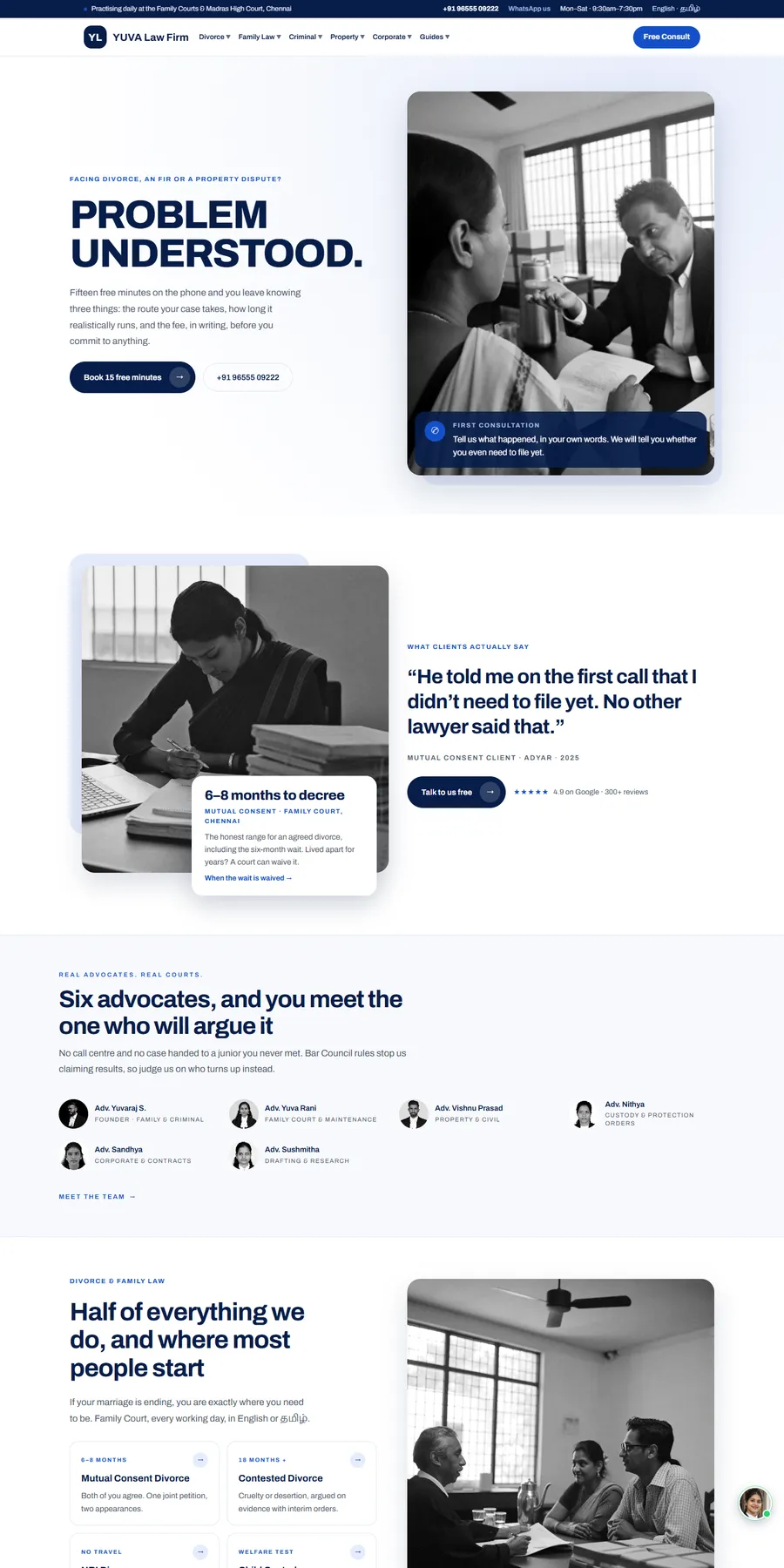
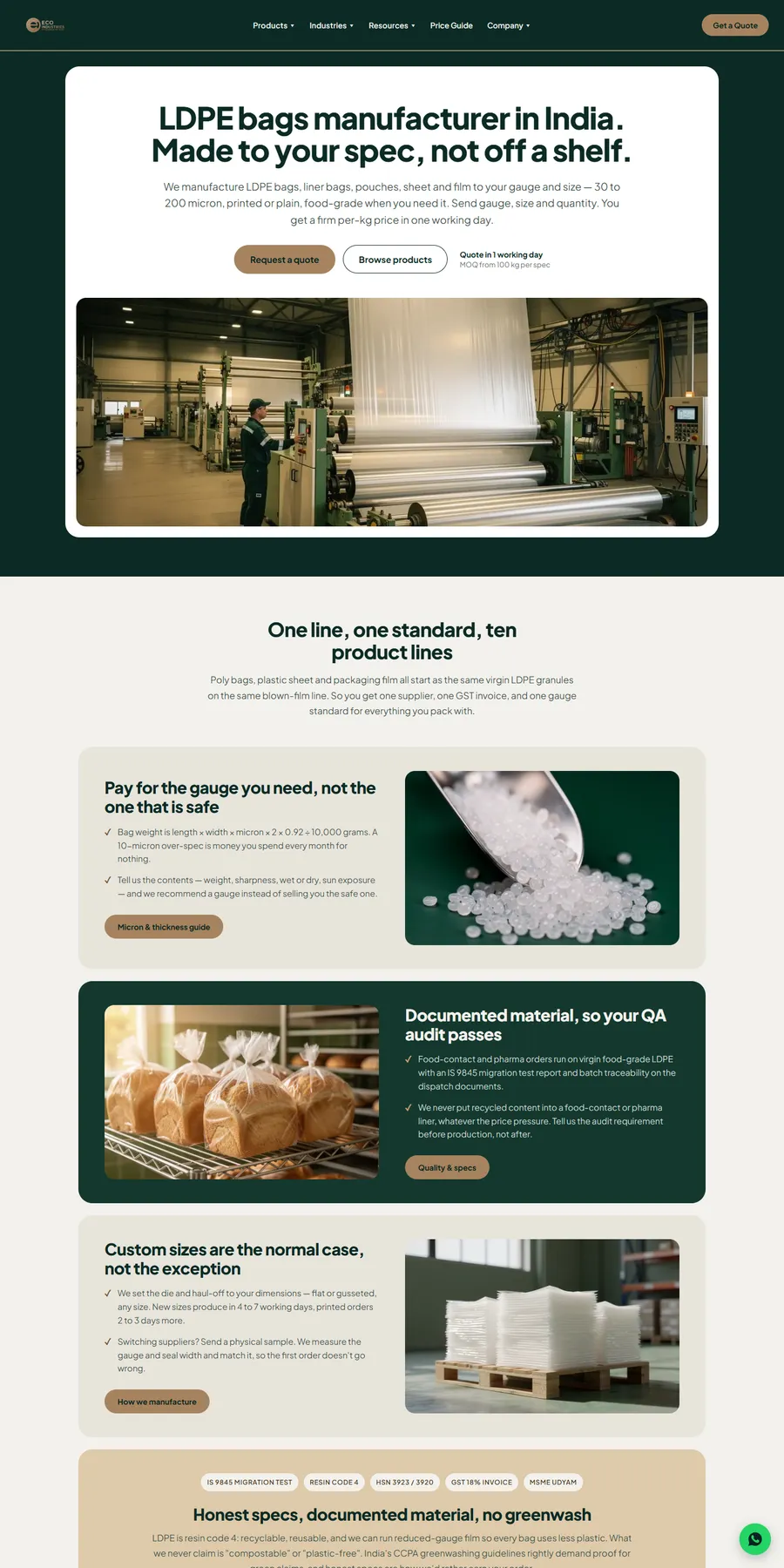
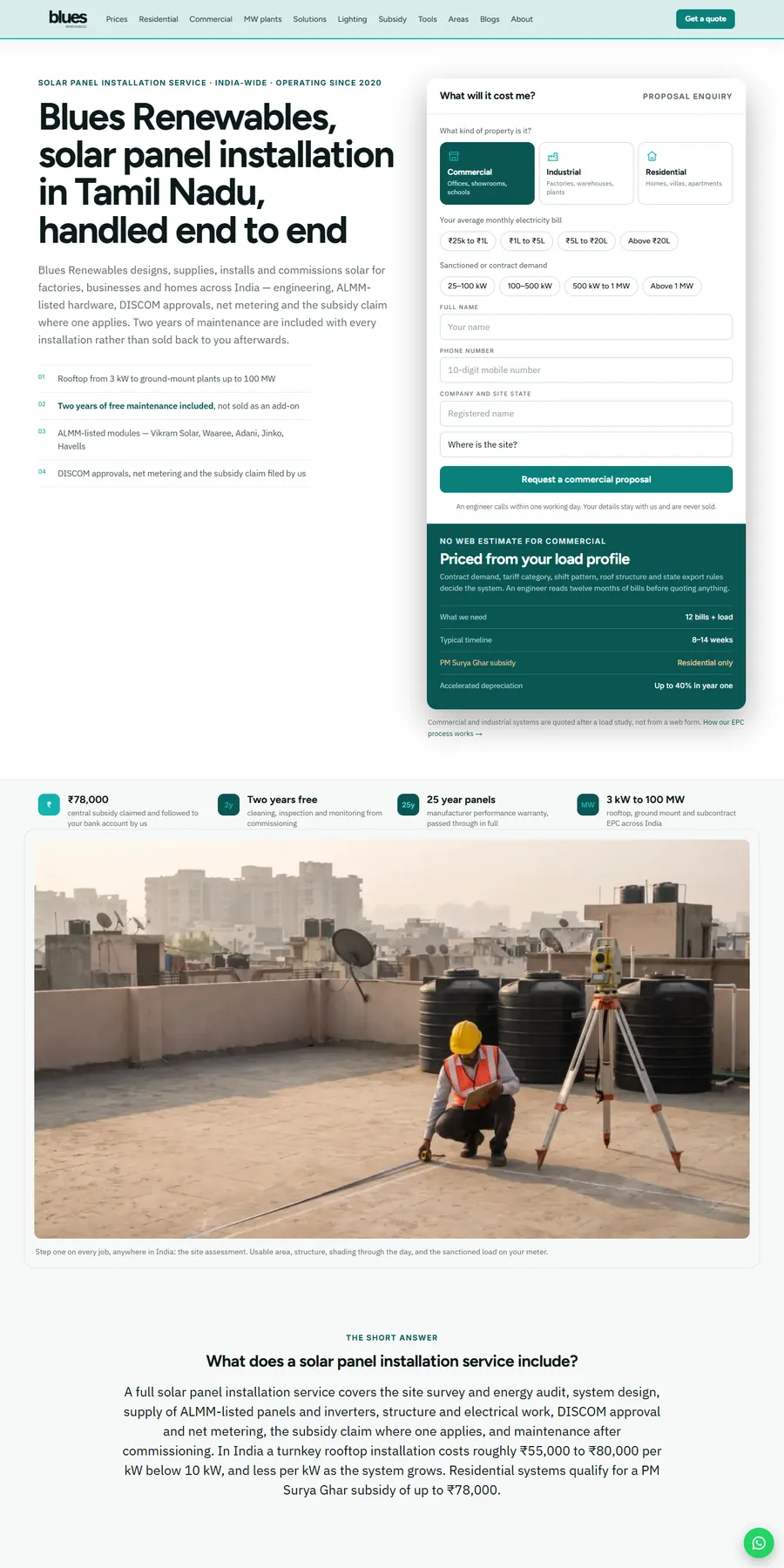
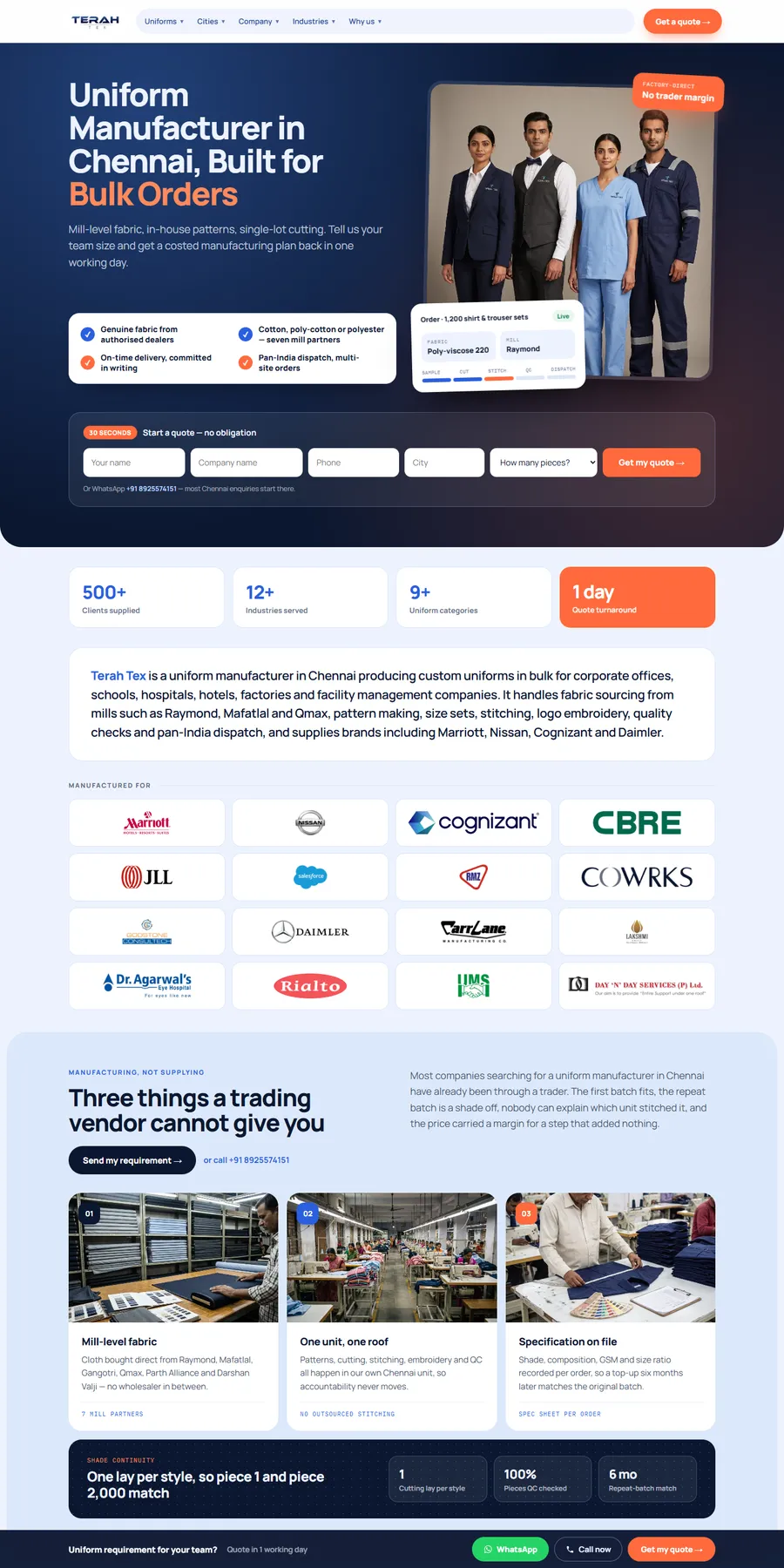
We have not built a website for a US law firm yet, and we will not pretend otherwise. We have built one law firm site: YUVA Law Firm, a family law practice outside the US, with family law practice pages, a local search structure and free consultation forms. It has no published results, so we show it as portfolio only. Our measured proof is from another trade: Blues Renewables, a rooftop solar installer, went from no tracked leads to 7 to 10 inquiries a week (quote forms, calls and WhatsApp), and Google clicks rose from 14 to 560 per two-week period within two months (Google Search Console), with every call and form tracked as a GA4 lead event. For a law firm, its 129 local area guides become a smaller set of office and city pages, its price pages become a fees and process page, and its tracked calls and forms become tracked consult requests by practice area. Terah Tex shows the two-step form we would use for consult requests: it went from no website inquiries to about 5 bulk-order leads a week. For firms leaving a rented platform, Eco Industries and Trucks India show the clean-up a move needs: 370 broken canonical references and 351 broken links found and fixed, so pages that already ranked kept working.

More websites we have designed and built

Process

How your law firm website project runs

Typical timeline: 4 to 8 weeks for most law firm sites; 8 to 12 weeks for multi-office firms with many practice area and city pages. You see progress every week.

  1. Step 01 · Week 1

    Discovery and audit

    We audit your current site, competitors, and how you show up on Google and in AI answers, then agree on goals and a fixed quote.

  2. Step 02 · Weeks 2 to 3

    Strategy and design

    Sitemap, wireframes and full designs for your review. You approve everything before we build.

  3. Step 03 · Weeks 3 to 6

    Build and test

    Development, SEO setup, speed tuning, and testing across devices and browsers.

  4. Step 04 · Launch and beyond

    Launch and grow

    We launch, monitor, and improve based on real data. 30 days of free support included.

What shapes your quote

Scope, not hourly billing

Every project gets a fixed quote within 1 business day, agreed before work starts.

Get my fixed quote →
  • How many practice areas, case type pages and office or city pages you need
  • Which intake CRM and scheduler we connect, and how your answering service fits in
  • How many states you are admitted in, and the disclaimer and archive needs of each
  • Whether we write the content for attorney review and organize attorney photos and videos
  • Spanish or other language pages
  • Moving off a proprietary platform: content export, redirects, DNS and email records

Law firm website questions, answered

Straight answers to what owners ask us, and what they ask Google and AI assistants. Ask us anything else.

How much does a law firm website cost?

We quote one fixed price, agreed before work starts, based on the number of pages, features, integrations and content. You get it within 1 business day of a free audit of your current site. There is no hourly billing, no monthly platform fee and no per-lead fee.

How long does it take to build a law firm website?

Most law firm sites take 4 to 8 weeks. Multi-office firms with many practice area and city pages take 8 to 12 weeks. You get a dated week-by-week plan before we start, including time for your attorneys to review and approve the copy.

Do I own the website, domain and content?

Yes, from day one. Code, design, content, domain, hosting, Google Business Profile, GA4, Search Console and call tracking numbers are in your name. There is no lock-in, so you can take the site to another developer at any time.

We are on a legal marketing platform's proprietary site. Can you move us without losing rankings?

Yes. We archive the old site, list every URL that earns traffic in Search Console, keep the titles and headings that work, redirect what changes, and copy your DNS and email records so nothing breaks on switch day. Check your contract's notice period and IP clause before you give notice.

Will the site connect to Clio, MyCase or Lawmatics?

Yes. Forms and booking feed the intake CRM you already use, by embed or API, with thank-you pages on your own domain so every conversion is tracked. We do not claim a partnership with any vendor; we connect to the tools you choose.

Do you know the bar advertising rules for my state?

We build places for the label, disclaimers, responsible attorney, bar admissions and certifying bodies your state requires, and keep unsupported claims out of meta tags, alt text and schema. Your lawyers approve every claim and confirm the rules with your state bar. We do not certify compliance.

Should a law firm website have live chat?

It depends on your practice and volume. One firm in r/LawFirm says chat never passed 30% of its intakes, while calls and forms did more. Every site gets a sticky call button, a short form and online booking; we add chat or a live receptionist handoff if it fits how you take cases.

Can we show case results and client testimonials?

Where your state allows them, yes, with context and the required disclaimer next to each one. New York requires the exact words "Prior results do not guarantee a similar outcome", and North Carolina bars testimonials with specific dollar amounts. For reviews, we set up one request flow for every client, with no screening of unhappy clients, because FTC guidance warns against asking only the clients you expect to be happy, and no reward tied to a positive review, which the FTC's 2024 review rule bans.

Will a new website get us more cases?

We do not guarantee rankings or case numbers, and anyone who does is guessing. What a new site changes is how many visitors call, book or send a usable inquiry, and whether you can see which source produced each one. On a rooftop solar installer's site (not a law firm), the same lead system took tracked inquiries from none to 7 to 10 a week.

Most of our clients come from referrals. Do we need a better website?

Referred clients still check you online before they call. One B2B health care law firm in r/LawFirm said under 3% of its clients came from the website, and for a firm like that the job is a fast credibility site: who the lawyers are, what they handle and how to book a call. We scope the build to that, not to a content program you do not need.

How does my firm show up in ChatGPT and Google AI answers?

AI assistants lean on your website, your Google profile and your reviews. We write attorney facts, case types, offices and fees as plain text, add LegalService and Person schema and make the site match your listings. No one can guarantee an AI mention, but a specific, consistent site gives assistants something accurate to cite.

Can you build Spanish pages for our firm?

Yes, as separate pages for your main case types, intake form and fees, with disclaimers in Spanish too. Florida requires its mandatory disclosures to appear in the language of the ad, and other states may have similar rules.

Can we use AI to write our practice area pages?

AI can help with first drafts, but the attorney's knowledge of local courts, procedure and fees is what makes a page useful and keeps it accurate. We write from interviews with your lawyers, and an attorney approves every page before it goes live.

What should I look for in a law firm web design company?

Ownership of every account in your name, a written scope and fixed price, a dated timeline, intake connected to your CRM, room for your state's disclaimers, lead tracking you can read without them, and no long auto-renewing contract. We put all of that in writing before work starts.
Get a free audit and a fixed quote for your firm's site

Four quick questions. You'll get a fixed quote and a free audit of your current site within 1 business day.

  • ✓ No obligation, no sales pressure
  • ✓ Fixed price, never hourly
  • ✓ Your details stay private

Prefer email? info@billionwebstudio.com

Step 1 of 4~60 seconds
What do you need?