Skip to content
Booking projects for next month. Free website audit with every quote.Claim yours →

Hospitality, auto and localBooking projects for November

Restaurant Website Development Company for More Direct Orders and Bookings

A guest deciding where to eat tonight wants the menu, today's hours and a Reserve or Order button within two taps. We build restaurant sites with real menus your staff can edit, ordering and reservations through the tools you already run, a private dining page that brings in qualified inquiries, and tracking that shows what each one produced.

  • Built for independent restaurants and small restaurant groups
  • Fixed quote in 1 business day
  • You own everything
yourbistro.com/private-diningPrivate dining forparties of 24Send an inquiryTap to callNew inquiry: rehearsal dinnerFrom /private-dining · 7:42 pmTracked as a leadSource: GoogleAI ASSISTANTWhere can 20 of us have a private dinnernearby?Your Restaurant: private room for 24, setmenus, inquire online.Source: your website
Illustration: a visit becomes a tracked lead

The short answer

What does a restaurant website development company do?

A restaurant website development company builds the website a restaurant runs on: menus guests can read on a phone, today's hours, a reservation path, a direct ordering path, and pages that bring in private dining, catering and gift card sales. For an independent restaurant or a small group, the site is also the official source that Google, Apple Maps, delivery apps and AI assistants should copy, so when a wrong closing time or a five-year-old menu shows up online, the fix starts with your own site.

In practice that means an HTML menu for each service (lunch, dinner, brunch, happy hour, drinks, catering) with prices, dietary and allergen notes and a last-updated date; a home page with Reserve, Order and Call at the top; a private dining page with room capacities, sample menus and an inquiry form that asks for date, headcount and budget; and, for groups, one page per location with its own hours, phone, menu and booking link.

Billion Web Studio is a restaurant website development company that delivers this as one fixed-scope project and connects the POS, ordering, reservation and gift card tools you already use, such as Toast, Square, OpenTable or Resy. Restaurant schema with your menu URL, accessibility built to WCAG 2.1 AA targets, and GA4 events for calls, reservation clicks, order clicks and private dining inquiries are part of every build. You own the site, the domain and every account from day one, with no buyout fee and no lock-in.

The market

What the numbers say about independent restaurants and small restaurant groups online

Most US restaurants are small businesses. The National Restaurant Association projects $1.55 trillion in industry sales for 2026, and the Bureau of Labor Statistics counts 727,892 private food service and drinking place establishments in the first quarter of 2026. Your guests choose between you and the place across the street on a phone, often while already hungry. The figures below show who runs these restaurants, how often guests order to go, how much reviews and your website weigh in the choice, and why accessibility has become a legal question for restaurant sites.

How they choose

How diners find and choose a restaurant

A restaurant visit starts with an occasion: a weeknight takeout order, a Saturday brunch, an anniversary, a rehearsal dinner for 30, an office lunch that needs catering by Thursday. The decision is made fast and on a phone, and much of it happens before the guest ever lands on your site. Here is how a US diner picks a restaurant and what your website has to do at each step.

  1. 1

    The occasion: hungry now, or planning ahead

    Searches are specific: "brunch with outdoor seating near me", "tacos open late", "private room for 20 downtown", "is it open on Thanksgiving". Your site needs pages and plain-text facts that answer those exact questions, not one home page with a slideshow.

  2. 2

    The shortlist: map pack, reviews and an AI answer

    In BrightLocal's 2026 survey, 71% of consumers used Google and 27% used Apple Maps to read reviews of local businesses, and 45% used ChatGPT or other AI tools for local recommendations. Your hours, menu link and booking link must match on every listing, and all of them should point back to one official website.

  3. 3

    The check: menu, prices, hours and policies

    The guest opens the menu next. If it is a PDF that will not load, or a delivery app login screen, many leave. A readable HTML menu with prices, dietary tags and a last-updated date, plus today's hours and the kitchen close time, answers the check in one screen.

  4. 4

    The action: reserve, order, call or inquire

    Reserve, Order and Call sit at the top of every page on mobile. Direct pickup orders go to your own ordering page, bookings go to your reservation tool, and private dining or catering requests go to one form with date, headcount and budget, tracked so you can see which path each guest took.

  5. 5

    The return: regulars, gift cards and the next event

    A good visit turns into a newsletter or SMS signup with proper consent, a gift card bought in December, a catering order for the office and next year's holiday party. Those pages earn the most when they are easy to find from every menu and confirmation page.

The problem

Why most restaurant websites lose reservations and orders

What we find again and again when we audit sites in this trade. None of it is about how the site looks.

Leak 01

The menu is a PDF, or it hides behind an ordering screen

A PSA thread on r/restaurant with 417 points asks owners to stop posting PDF menus: they load slowly on phones, search engines read dish names poorly and every price change means a new file. Diners on r/restaurantowners say they do not want to sign into a delivery app just to read a menu. Google says it may transcribe menu data from your website, so a scanned menu gives it little to work with.

Leak 02

Google shows the wrong hours, an old menu or someone else's site

Owners on r/restaurant describe Google showing them as open when they are closed, and staff facing guests who were misinformed. Another owner found three to five AI-generated sites for the restaurant with wrong hours and old menus, and others report copycat ordering sites ranking for their own name. Without one clear official site that every listing points to, search engines have to guess.

Leak 03

The delivery apps own your regulars

A taco shop owner on r/restaurant says app fees are high and the apps keep the customer data. The common advice from other owners: keep the apps for reach and delivery, but make direct pickup and repeat orders the easiest path on your own site. A site that buries its ordering link, or sends every Order button to an app, hands those regulars back.

Leak 04

Nobody can tell you what the site brings in, or what it costs you

Ask an owner how many reservations, pickup orders or private dining inquiries came from the website last month and the answer is often a guess. A developer on r/BarOwners told an owner planning a second location's site to find that out before spending more. Blind spots cost money too: one owner on r/restaurantowners found their reservation network charged a per-cover fee on bookings that started on Google, including searches for the restaurant's own name, and another warned the network can rank above the restaurant for its own name. Without call, booking, order and inquiry tracking, every decision about apps, ads or a redesign is made blind.

Leak 05

Private dining and catering inquiries die in five inboxes

A food business owner on r/smallbusiness lost a $3,000 corporate event because the inquiry sat unseen for four days, split across Instagram, Facebook, email and the website form. Private dining, rehearsal dinners, buyouts and office catering are your highest-ticket sales, and a contact page with one generic form does not tell the guest whether a room for 30 even exists.

Leak 06

You rent the site and cannot take it with you

An owner on r/restaurantowners learned that leaving a restaurant website platform after a year meant paying a buyout fee for their own site. Another on r/restaurant bought a restaurant and could not get the domain, because the old website vendor would not say who paid for or renewed it. If the domain, hosting and site files are not in your name, you are renting your front door.

Generic vs built for you

Why a generic website fails independent restaurants and small restaurant groups

A template is built to fit every business, so it fits yours badly. Here is what changes when the site is planned around how diners actually buy.

Generic website compared with a website built for independent restaurants and small restaurant groups
What you needGeneric template siteBuilt for independent restaurants and small restaurant groups
The menuA PDF upload or a link to the delivery appAn HTML menu per service with prices, dietary and allergen notes and a last-updated date, edited by your staff in the CMS, with a PDF only as an extra
Hours and holiday hoursHours typed into the footer and forgottenOne hours setting that shows today's hours, the kitchen close time and holiday closures on every page and in the schema, matched to your Google profile
Online orderingAn Order button that sends everyone to a delivery appAn Order page that puts direct pickup through your POS ordering first, keeps delivery app links for delivery, and tracks which path each guest took
ReservationsA booking widget pasted on the contact pageA reservations page with your party size limits, large-party, deposit, cancellation and walk-in policies, and every Reserve click recorded in GA4 with the page it came from
Private dining and events"Ask us about events" and a general contact formA page per room with seated and standing capacity, photos, sample menus, how minimums work, and an inquiry form asking date, headcount, budget and occasion
CateringA catering PDF emailed on requestCatering packages, lead time, delivery area and an order or inquiry form routed to the one inbox your catering manager checks
More than one locationOne address list on the contact pageA page per location with its own hours, phone, menu, booking link, parking notes and Google profile link, or a group site with linked brand sites, chosen on purpose
AccessibilityImage menus and an overlay widgetText menus, alt text on dish photos, contrast checks, keyboard-tested booking and ordering, labeled forms and an accessibility statement with a contact

Free self-check · 2 minutes

What your current restaurant website is missing

Tick everything your site does today. Each box you cannot tick is a place where a ready-to-buy visitor leaves.

What you need

What every restaurant website needs

The features that turn a restaurant website from a brochure into the best salesperson you have. We build all of them.

  1. Must-have · 01

    Reserve, Order and Call at the top of every page

    Three actions in a sticky bar on mobile, with the full phone number as text. Guests who want a table, a pickup order or a quick answer about a large party each get there in one tap.

  2. Must-have · 02

    HTML menus your staff can edit

    A separate page for lunch, dinner, brunch, happy hour, drinks and wine, kids, desserts and catering, with prices, dietary tags (vegan, gluten-free, halal where true) and allergen notes. A last-updated date shows guests and search engines the menu is current.

  3. Must-have · 03

    Hours that stay right everywhere

    Today's hours on the home page, the kitchen close time, a holiday-hours notice before Thanksgiving, Christmas Eve and New Year's Eve, and "until sold out" if that is how you run. The same hours go into your schema and Google profile.

  4. Must-have · 04

    An Order page with a clear direct path

    Direct pickup through Toast, Square, Clover or the ordering tool you use, a delivery radius, delivery app links kept for delivery, and any service charge shown wherever prices appear.

  5. Must-have · 05

    A reservations page with your policies

    The booking widget or handoff, how far ahead you take bookings, the largest party you seat online, deposit and cancellation rules for large parties and holidays, and your walk-in policy.

  6. Must-have · 06

    Private dining, events and catering pages that qualify the inquiry

    Each room with capacity, photos and sample menus, how food and beverage minimums work and buyout options, plus a catering menu with minimum order size, lead time, delivery area and setup options. One form asks date, headcount, budget and occasion, states a reply time and reaches your events or catering manager directly.

  7. Must-have · 07

    A page for every location

    For groups: address, map, parking and transit, hours, phone, menu link, booking link, the chef or general manager, and a link to that location's Google profile.

  8. Must-have · 08

    Gift cards, shipping and merchandise with clear terms

    Gift card purchase and balance lookup through your POS or gift card provider, with the terms on the page, plus nationwide shipping, sauces, rubs or merchandise where you sell them.

  9. Must-have · 09

    A story, press and hiring page that earn trust

    The chef or owners by name, the year you opened, where your meat, fish or produce comes from, press quotes with links, real reviews linked to the source, and a careers page with open roles and a short application form, so hiring does not run through the host stand.

  10. Must-have · 10

    An FAQ with the facts guests call about

    Parking, valet, dress code, kids, dogs on the patio, corkage or BYOB, wheelchair access to the building, large parties, allergies and deposits. Every answer you publish is one less call during service and one more fact an AI assistant can quote.

  11. Must-have · 11

    Restaurant schema and fast mobile pages

    schema.org Restaurant markup with servesCuisine, your menu URL, hours, address, phone and images, plus Core Web Vitals targets of LCP 2.5 seconds or less, INP 200 ms or less and CLS 0.1 or less.

  12. Must-have · 12

    An accessible build and an accessibility statement

    Text menus, alt text, color contrast, keyboard access, captions on video and labeled forms, built to WCAG 2.1 AA targets, with a statement page that gives guests a way to report a problem.

What we build

The restaurant website we would build for you

Good restaurant website design starts from the pages guests actually use. Here is the sitemap we would start from for an independent full-service restaurant with private dining and catering. We cut or add pages to match your concept, your locations and what you really sell.

yourcompany.comHome · every section links here

Menus

  • Dinner menu
  • Lunch menu
  • Brunch menu
  • Happy hour
  • Drinks and wine list
  • Desserts and kids menu
  • Seasonal or tasting menu
  • Allergy and dietary policy

Book and order

  • Reservations and policies
  • Order for pickup
  • Delivery options
  • Preorders for holidays and specials
  • Gift cards with balance lookup

Events and catering

  • Private dining overview
  • A page per private room
  • Private dining menus
  • Buyouts and large parties
  • Catering packages and ordering
  • Events calendar and ticketed dinners

Visit and locations

  • Hours and holiday hours
  • Location page for each restaurant
  • Parking, transit and directions
  • FAQ for guests
  • Accessibility statement

Story and trust

  • About, chef and owners
  • Sourcing and suppliers
  • Press and awards
  • Reviews with links to source
  • Careers

Shop

  • Nationwide shipping
  • Sauces, rubs and retail
  • Merchandise
  • Newsletter and SMS signup with consent

Calls, bookings, leads

How we turn visitors into reservations and orders

Website design for restaurants is judged at the table and the pass: a visitor becomes a booked table, a pickup order, a private dining inquiry, a catering order or a gift card sale, and you can see where each one came from. This is how we build those paths and track every one.

  • 01Reserve, Order and Call bar on mobileThree buttons stay at the bottom of the screen on every page. Each tap is a GA4 event tagged with the page, so you can see whether the brunch menu or the home page sends the most bookings.
  • 02Menu items linked into your orderingOn the HTML menu, each dish or section links to the matching item or category in your POS ordering page where your ordering tool supports it, so a guest reading the menu is one tap from a pickup order on your own channel.
  • 03Reservation clicks tracked by sourceWe hand off to OpenTable, Resy, Tock or your booking tool, passing campaign tags where the tool accepts them, and record each Reserve click in GA4 with the page it came from. That way you can compare bookings that started on your site with those that started elsewhere.
  • 04A private dining form that qualifies the eventRoom, date, headcount, budget, occasion and whether a set menu is wanted, with an automatic reply that confirms receipt and gives your events manager's name. Every submission is a tracked lead and lands in one shared inbox.
  • 05Catering orders with lead time built inA catering form or ordering link that only offers dates outside your lead time, asks for delivery address and setup needs, and goes to the person who prices catering. Office lunch orders stop waiting in the general inbox.
  • 06Gift card, shipping and signup trackingClicks into gift card purchase, nationwide shipping and newsletter or SMS signup are separate GA4 events, so December gift card demand and holiday preorders show up in the numbers.
  • 07A monthly report in plain numbersCalls, reservation clicks, direct order clicks, private dining and catering inquiries and gift card clicks, by page and source. You can see what the site produces before you spend on ads, apps or a second location's site.

AI search

Diners now ask ChatGPT, Google AI Mode and Perplexity where to eat. BrightLocal's 2026 survey found 45% of consumers use ChatGPT or other AI tools for local recommendations, up from 6% a year earlier, and an owner on r/restaurant described travelers who chose the restaurant because ChatGPT recommended it. Pew Research found that when Google showed an AI summary, people clicked a regular result on 8% of visits against 15% without one, so being the source the answer draws on matters. Assistants draw on your website, reviews and listings, so your site has to state the facts a diner asks about in plain text.

Questions your diners ask AI assistants

  • Best brunch with outdoor seating in Austin that takes reservations?
  • Which restaurants near me have a private room for 20 people?
  • Where can I get gluten-free pasta near me tonight?
  • Is there a dog-friendly patio restaurant open late downtown?
  • Which local restaurants cater office lunches for 30 people?
  • Is this restaurant open on Christmas Eve?
  • Facts written as text, not inside images

    Cuisine, dishes, dietary options, hours, holiday hours, patio, dog policy, parking, private room sizes, reservation policy and catering minimums as plain text. An assistant cannot quote a private room capacity that only appears on a photo of a flyer.

  • One official site every listing points to

    Your Google, Apple Maps, Yelp and Bing listings link to the same site for menus, ordering and booking, with the same hours and phone. Owners fighting copycat and AI-generated sites are told to do exactly this first.

  • The menu as data

    HTML menus with dish names, descriptions, prices and dietary tags, plus Restaurant schema with servesCuisine and your menu URL, so search engines and assistants read the same menu your guests see.

  • Answers to the questions guests ask

    A guest FAQ and private dining FAQ that answer "do you take walk-ins", "can you handle a sesame allergy", "is there a minimum for the private room" and "do you ship" in the first line of each answer.

  • Real photos with descriptive alt text

    Your room, patio, private dining spaces and dishes, named and described. Photos help guests decide, and the descriptions give search engines and assistants text they can read.

  • Reviews linked and answered

    Your Google rating linked from the site, and calm replies to reviews. BrightLocal found 89% of consumers expect owners to respond to reviews, and a reply is text that sits next to your name wherever reviews appear.

Compliance and trust

The rules a restaurant website has to get right

A restaurant site touches rules on accessibility, menus, fees, gift cards, reviews and texting. We build pages and forms that support these rules and check the details with you. We do not certify legal compliance or give legal advice; confirm state and local rules with your attorney and your local health department.

ADA website accessibility

Justice Department guidance lists food and drink establishments among businesses covered by ADA Title III and says the ADA applies to goods and services offered on the web, naming barriers such as poor contrast, missing alt text and inaccessible forms. Seyfarth Shaw counted 3,117 federal website accessibility suits in 2025. We build text menus, keyboard-tested booking and ordering, labeled forms and an accessibility statement to WCAG 2.1 AA targets; no widget or overlay makes a site compliant on its own.

Allergens and calorie labeling

The nine major food allergens are milk, eggs, fish, crustacean shellfish, tree nuts, peanuts, wheat, soybeans and sesame. Federal allergen labeling generally does not cover food served at restaurants, but some states and cities have their own rules. FDA calorie labeling applies to chains of 20 or more locations under one name and covers menus on the internet. We add allergen notes and an allergy policy, never an "allergen-free" promise the kitchen cannot keep.

Service charges and fees shown with prices

The FTC's junk fees rule covers live-event tickets and short-term lodging, but the FTC says other businesses may still not deceive consumers about fees. California exempts restaurant mandatory fees from its all-in price rule only if the fee is clearly and conspicuously displayed wherever prices are shown. If you add a service charge or surcharge, we show it on the online menu and ordering pages.

Gift card terms

Under federal rules (12 CFR 1005.20), store gift card funds generally cannot expire for at least five years, dormancy fees are limited, and fee and expiration terms must be disclosed before purchase. We put the terms on the gift card page and label promotional bonus cards clearly. State gift card laws can be stricter.

Honest reviews

The FTC rule on consumer reviews and testimonials bans fake reviews, including AI-generated ones, rewards tied to positive reviews, undisclosed staff reviews and suppressing negative reviews. No "free dessert for a five-star review" cards. We show real reviews with a link to the source.

Consent for marketing texts

Marketing texts sent with an autodialer need prior express written consent that says consent is not a condition of purchase (47 CFR 64.1200). Order, reservation and signup forms get a separate, unchecked opt-in for promotions; order-status texts stay with your ordering tool.

We build with tools and patterns that support these rules and document what we set up. For legal advice on your own obligations, talk to your attorney.

From the forums

What independent restaurants and small restaurant groups ask about websites, answered

We read what restaurant and bar owners ask each other on r/restaurantowners, r/restaurant, r/restaurateur, r/ToastPOS, r/BarOwners, r/smallbusiness, r/googlebusinessprofile and r/WebsiteSEO. The same worries come up: menus nobody can read on a phone, delivery app fees, sites and domains they cannot take with them, wrong hours on Google, copycat sites and event inquiries lost in the shuffle. These are their questions, paraphrased, with our straight answers.

Where owners talkr/restaurantownersr/restaurantr/restaurateurr/ToastPOSr/BarOwnersr/smallbusinessr/googlebusinessprofiler/WebsiteSEO

Asked on r/restaurantowners

“We are a new takeout-only shop on a POS. Should we use its website builder to keep one system, or a restaurant website platform with a branded app?”

Our answer: The POS builder keeps things simple but limits design and search control; a rented platform is fast but you pay monthly for a site you may not be able to move. A web designer in the thread built a custom site where each dish links straight into the POS ordering page, so the brand site and ordering work together. That is the setup we build: your own site and your existing POS ordering, with item links where your tool supports them, and no second system to pay for.

Asked on r/restaurantowners

“My website contract says I can take the site after a year only if I pay a buyout fee. Am I buying back my own website?”

Our answer: In effect, yes. Others in the thread describe similar terms and say to read the contract and keep the domain in your own name. With us, the code, design, content, domain and accounts are yours from day one. There is no buyout and no lock-in.

Asked on r/restaurant

“I bought a restaurant and the old website vendor will not tell me who pays for or controls the domain. What now?”

Our answer: Replies say to prove business ownership to the domain registrar directly, and to always hold the domain in your own account. When we move a site, we start by listing who holds the registrar, hosting, Google profile, analytics, ordering and reservation logins, and we move each into your name before launch.

Asked on r/smallbusiness

“My friend's restaurant paid a developer for a site that still does not work three months later. Is that normal?”

Our answer: No. Agency owners in the thread said a restaurant site should take one to two months and that you should get a written deadline before paying. We send a dated week-by-week plan before work starts, written updates every week, and a 4 to 8 week timeline for most restaurant sites. The domain, hosting and files are in your name from day one, so the work in progress is yours. If we slip a date because of us, the next month of support is free.

Asked on r/restaurant

“Most of our online orders come through the delivery apps, the fees are high and they keep the customer data. How do we get people to order direct?”

Our answer: Owners suggest pricing app menus higher to cover commissions and making direct ordering as easy as the app. On the website side, direct pickup goes first on the Order page, menu items link into your ordering where your tool allows it, and your Google profile's order link matches the site. Some app regulars will not switch, and that is fine.

Asked on r/restaurant

“Google keeps showing us as open when we are closed, and our edits do not stick. What can we do?”

Our answer: Others in the thread had the same trouble getting Google to accept hours edits. We cannot control Google's edits, but we make your website the clear, current record: today's hours, holiday closures and the kitchen close time on every page and in your schema, matched to the profile, so Google and guests see the same answer from your own site.

Asked on r/restaurantowners

“We finally launched a real website, and now there are several AI-generated sites for our restaurant with wrong hours and old menus. How do we fight them?”

Our answer: Replies say to claim your Google, Apple, Yelp and Bing listings and point all of them to your official site for home, menus and ordering. We add Restaurant schema with your menu URL and make sure every listing link matches. In California, a delivery platform must have an agreement with you before it arranges delivery of your orders, and must remove your name, logo and menu listing within three business days of your request.

Asked on r/restaurantowners

“Is our reservation network charging us for bookings from Google, even people who searched our own name?”

Our answer: That is what one owner discovered, and replies called it the charge they resent most. These are owner reports and billing differs by tool and plan, so check your own contract. We set up the Reserve button and tracking so you can see where each booking started, which makes that conversation with your reservation provider much easier.

Asked on r/smallbusiness

“Catering inquiries come in by Instagram, Facebook, email and the website form, and we lost a big corporate event because nobody saw it. How do we stop that?”

Our answer: Replies say to route every serious inquiry through one form or one inbox, reply to social messages with the form link asking date, headcount and location, and check it daily. We build that form on your catering and private dining pages, send every submission to one shared inbox with an automatic reply, and track each one as a lead.

Asked on r/restaurantowners

“I own several restaurants on separate websites. Should I combine them so guests can book a sister restaurant when one is full?”

Our answer: Replies describe the common setup: a group site with the story, hiring and links to each venue, plus each restaurant's own site or page with menus, photos and booking. We decide that structure with you based on how different the concepts are, and either way add cross-links so a full Saturday at one place can become a booking at another.

Questions are paraphrased from public threads. We never quote members by name.

Others vs us

Restaurant web design company options: Billion Web Studio vs a website builder template vs a typical restaurant marketing agency

The three ways independent restaurants and small restaurant groups usually get a website, side by side.

Restaurant web design company options: Billion Web Studio vs a website builder template vs a typical restaurant marketing agency
Billion Web StudioWebsite builder templateTypical industry agency
Who owns the site, domain and contentYou do, from day one, in your own accountsYou own the content; the site lives on the builder's platformOften the agency or its platform, sometimes with a buyout fee to leave
Contract and pricingFixed quote in 1 business day, agreed before work starts, no lock-inMonthly subscription, you build and update it yourselfMonthly fee or retainer, often on a 12-month contract
The menuHTML menus per service, staff-editable, with dietary notes and a last-updated dateOften a PDF upload or a menu block you retypeUsually an HTML menu inside their system
Direct orderingYour existing POS ordering linked from the menu, delivery apps kept for deliveryAn ordering add-on or an outside linkOften their own ordering product
ReservationsYour booking tool with policies on the page and source trackingEmbed code if the builder allows itUsually supported; tracking varies
Private dining and catering leadsRoom pages with capacities and a qualifying form routed to one inboxA contact formSometimes a form; routing varies
Multiple locationsA page per location or a group site with linked brand sites, chosen on purposeManual pages you copy and editLocation templates within their platform
AccessibilityBuilt to WCAG 2.1 AA targets, text menus, accessibility statementDepends on the template you pickVaries; sometimes an overlay widget
Tracking by sourceGA4 events for calls, bookings, orders, inquiries and gift cards, report in plain numbersBasic visit countsTheir dashboard, which may stay with them if you leave

Why Billion Web Studio

What we do better, and why it matters to you

  • A fixed quote in 1 business day, with a free audit

    We review your current restaurant site, menu pages, ordering and booking paths, Google profile match and tracking, then send a written scope and a fixed price based on pages, features, integrations and content. No hourly billing.

  • You own everything from day one

    Code, design, content, domain, hosting and analytics accounts in your name, and your ordering, reservation and gift card accounts stay yours. No buyout fee, no lock-in, no site that disappears if you stop paying.

  • We keep the tools you already run

    Toast, Square, Clover, OpenTable, Resy, Tock, your gift card provider and your delivery apps stay in place. We connect them to one site you control, so your staff have no new system to learn.

  • Built around how a restaurant actually sells

    Menus by service, holiday hours, direct pickup, reservation policies, private dining rooms, catering lead times, gift cards in December and location pages for groups are in the plan from the first week, not bolted on after launch.

  • Every booking, order click and inquiry traced to its source

    GA4 events and campaign tags show which pages and channels produce reservations, direct orders, private dining inquiries and gift card sales, so you can decide what to keep paying for.

  • A dated plan and a guarantee on it

    A week-by-week plan, weekly written updates and 30 days of free support after launch. We aim to launch before your busy season, not during it. If we slip a date because of us, the next month of support is free.

In writing, before we start

  • Fixed quote in 1 business day

    Scope, deliverables and price agreed in writing, with a free audit of your current site. No hourly billing.

  • Launch date in writing

    A dated week-by-week plan and a written update every week. If we slip because of us, the next month of support is free.

  • You own everything

    Code, design, content, domain and accounts are yours from day one. No 12-month contract, no rented site.

  • 30 days of support included

    We watch rankings, forms and call tracking after launch and fix anything that needs it.

Proof, not promises

Results from websites we have built

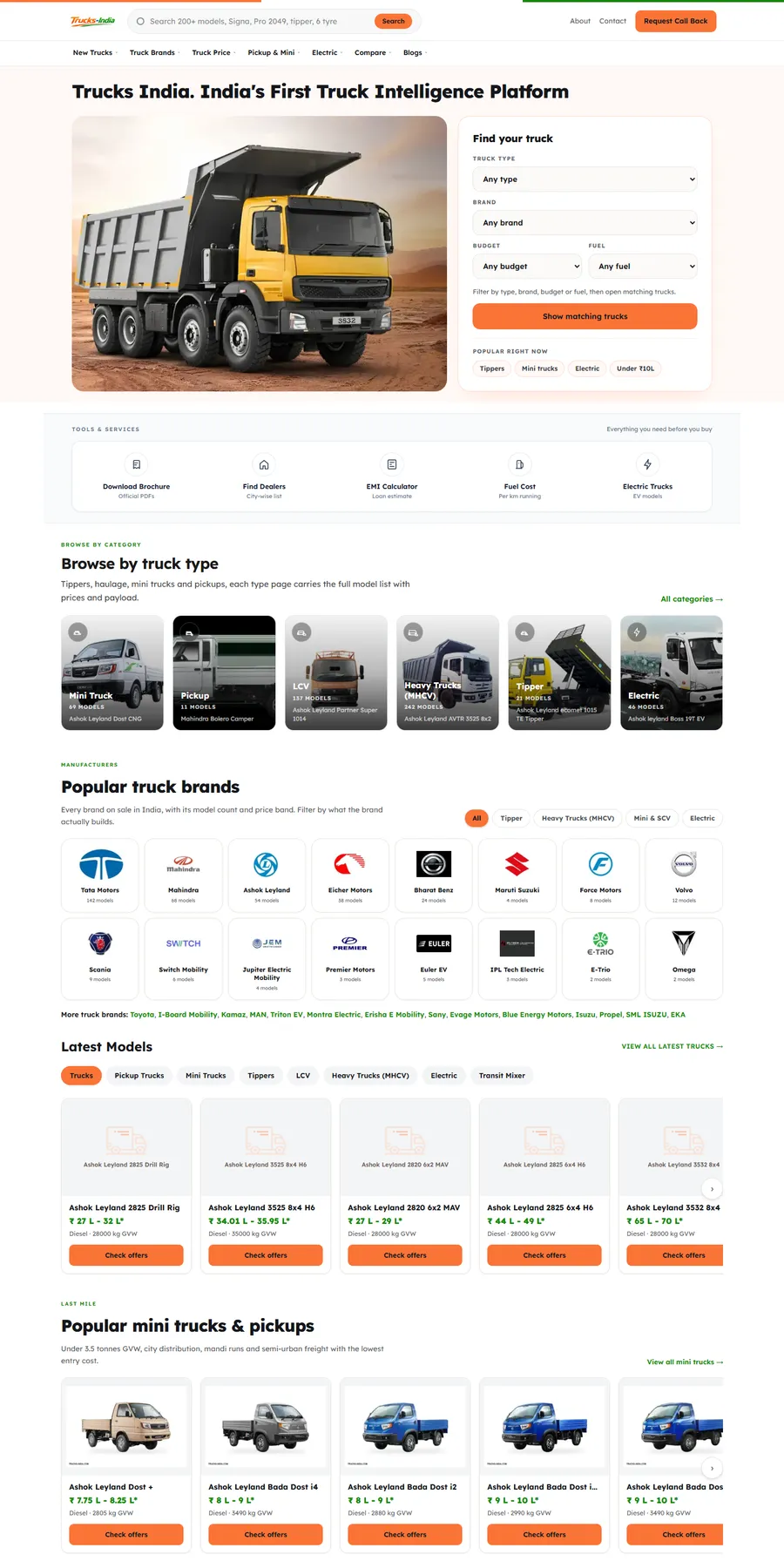
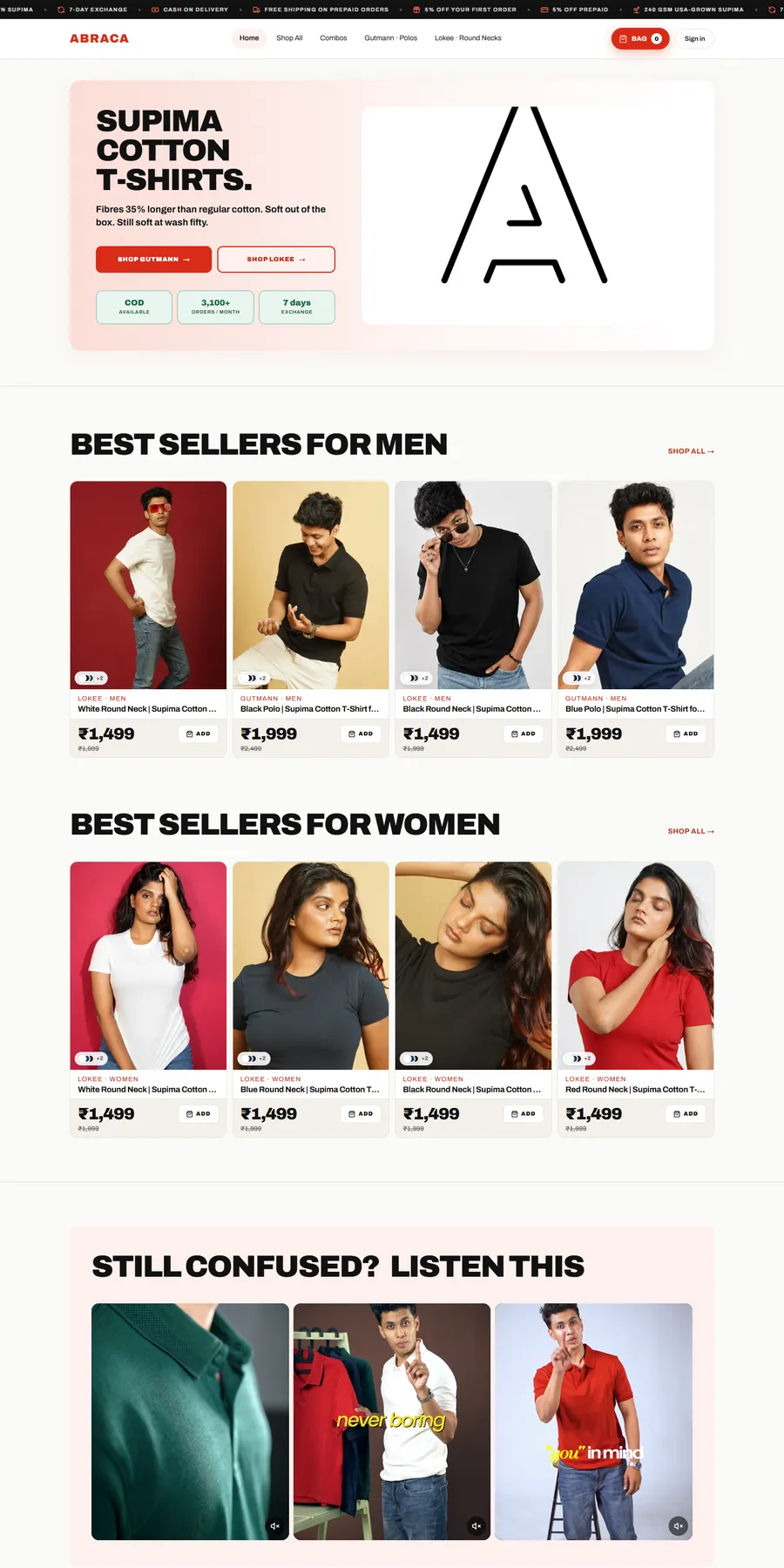
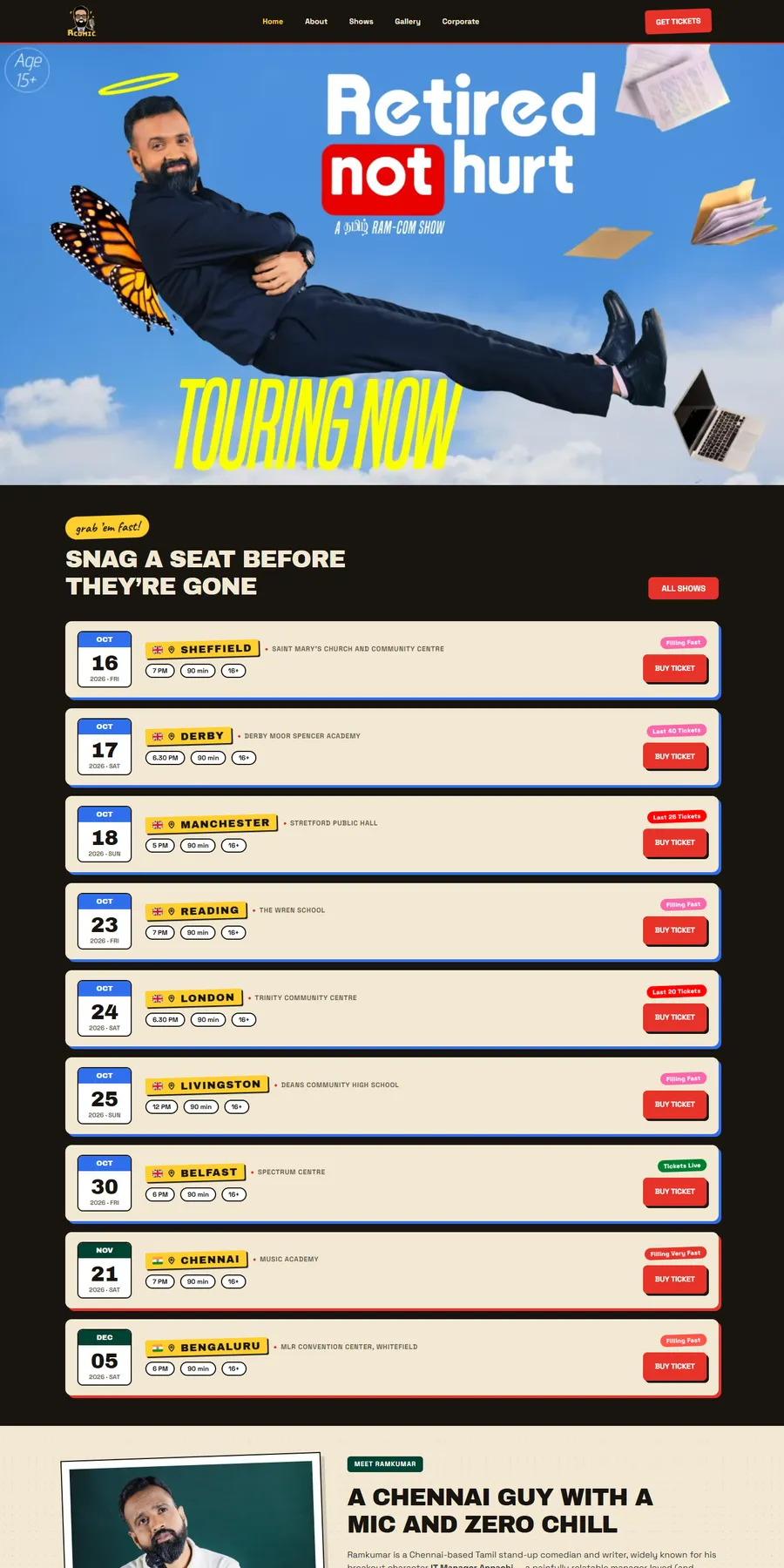
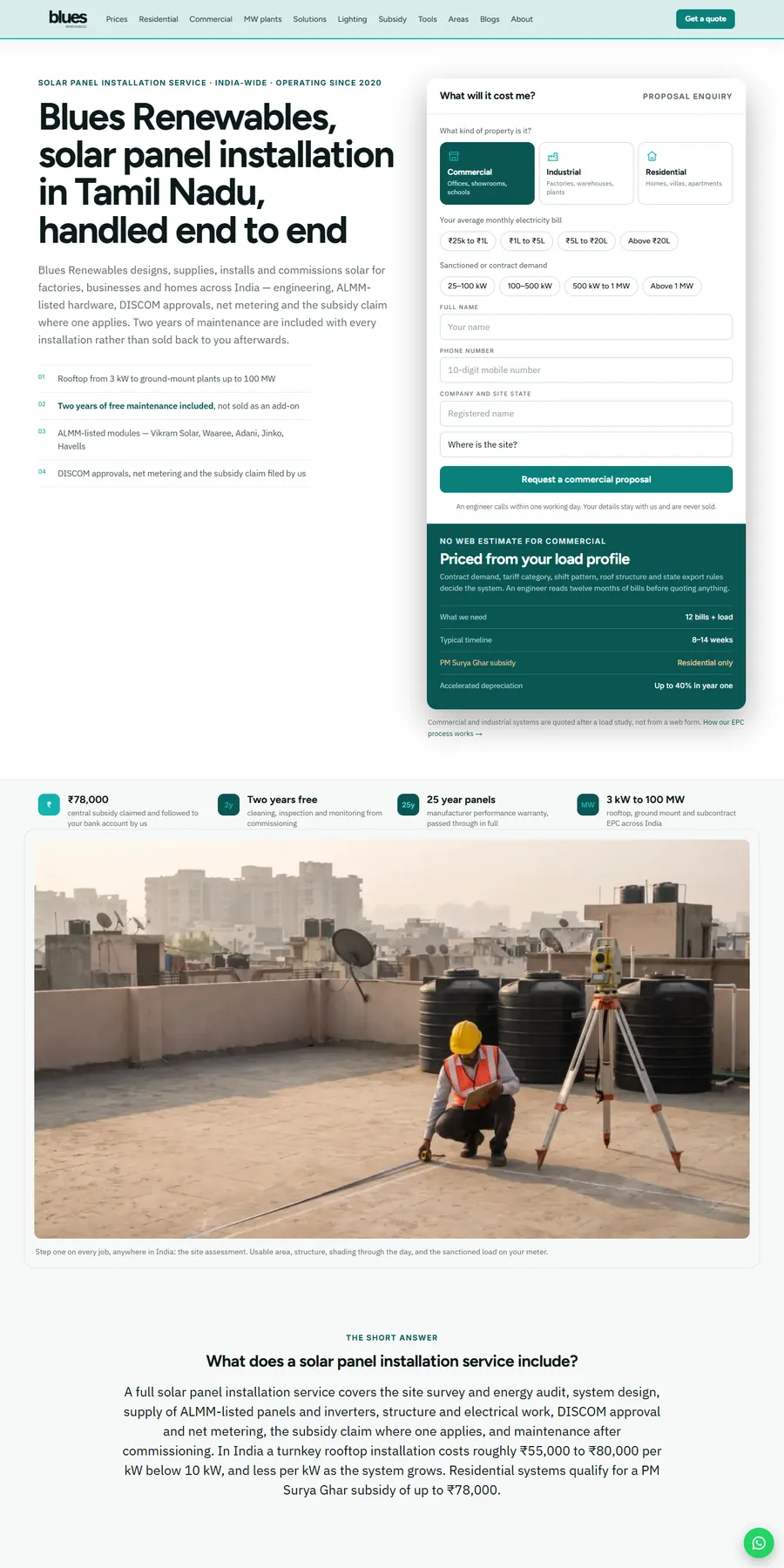
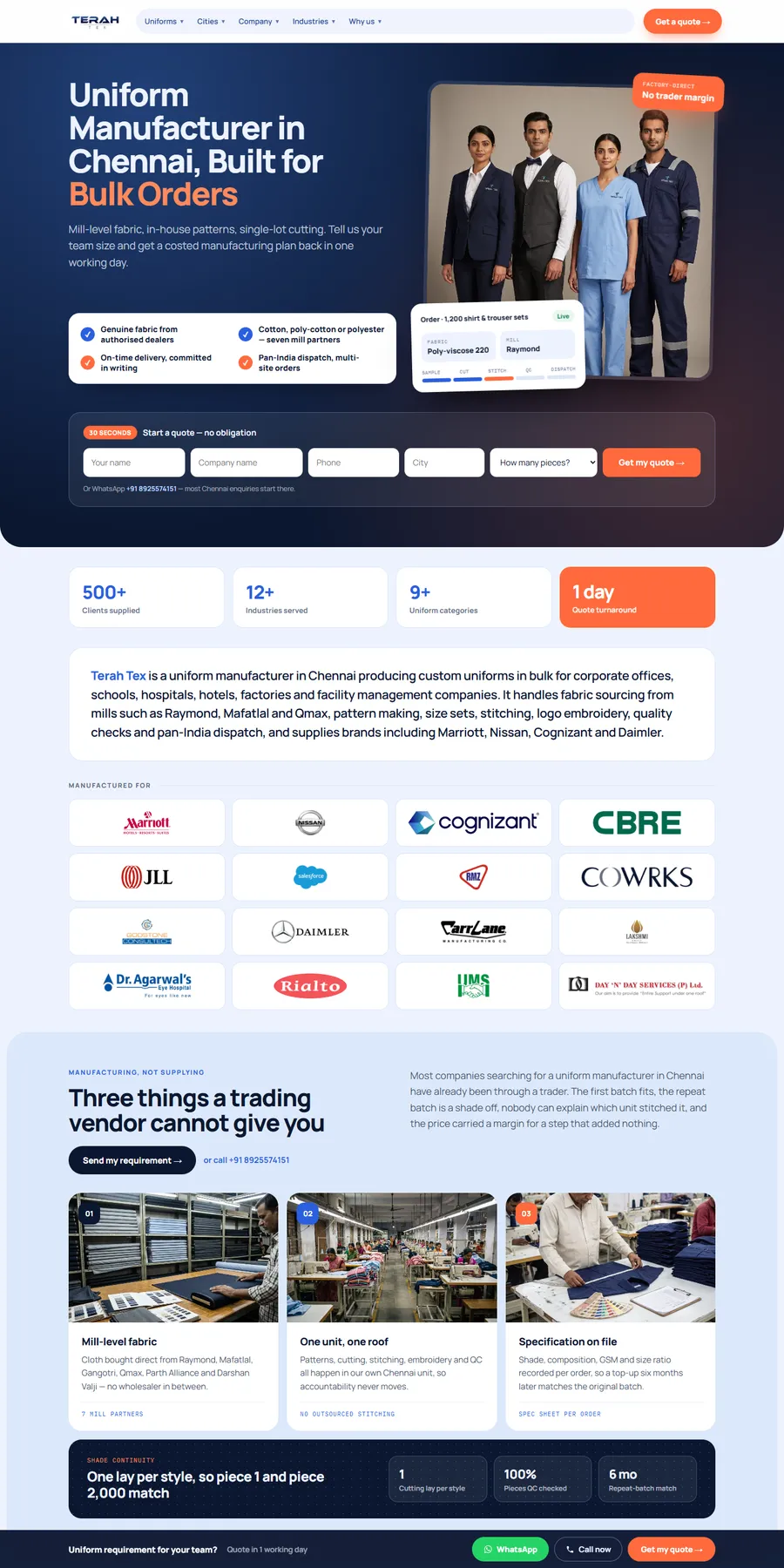
We have not built a restaurant website yet, and we will not pretend otherwise. Our closest proof is the local lead system behind Blues Renewables, a rooftop solar installer. It went from no tracked leads to 7 to 10 inquiries a week, and Google clicks went from 14 to 560 every two weeks within two months, with every call and form tracked in GA4. For a restaurant, the same system becomes HTML menus, location pages, and tracked Reserve, Order and Call buttons. Terah Tex shows the two-step quote form we would use for private dining and catering: it went from no website inquiries to about 5 bulk-order leads a week. In the portfolio, Trucks India, a catalog of 497 truck models and 1,299 variant pages, shows how we structure a group with many locations and menus. Abraca (an online store) maps to gift cards, merchandise and shipped food, and Rcomic (tour dates and bookings) maps to events and ticketed dinners.

More websites we have designed and built

Process

How your restaurant website project runs

Typical timeline: 4 to 8 weeks for most restaurant sites; 8 to 12 weeks for groups with many location pages. You see progress every week.

  1. Step 01 · Week 1

    Discovery and audit

    We audit your current site, competitors, and how you show up on Google and in AI answers, then agree on goals and a fixed quote.

  2. Step 02 · Weeks 2 to 3

    Strategy and design

    Sitemap, wireframes and full designs for your review. You approve everything before we build.

  3. Step 03 · Weeks 3 to 6

    Build and test

    Development, SEO setup, speed tuning, and testing across devices and browsers.

  4. Step 04 · Launch and beyond

    Launch and grow

    We launch, monitor, and improve based on real data. 30 days of free support included.

What shapes your quote

Scope, not hourly billing

Every project gets a fixed quote within 1 business day, agreed before work starts.

Get my fixed quote →
  • How many menus, locations and private dining rooms the site needs
  • Which POS ordering, reservation, gift card and ticketing tools we connect
  • Private dining, catering and preorder flows, and where inquiries are routed
  • Whether we write the menu descriptions and FAQ and organize food and room photography
  • Moving from a rented platform or POS builder: domain transfer, redirects and keeping pages that rank
  • Group structure: one site with location pages or a group site with separate brand sites

Restaurant website questions, answered

Straight answers to what owners ask us, and what they ask Google and AI assistants. Ask us anything else.

How much does a restaurant website cost?

We quote one fixed price, agreed before work starts, based on the number of pages, features, integrations and content. You get it within 1 business day of a free audit of your current site. There is no hourly billing, and you do not rent the site from us: hosting and the domain are billed to you directly by the providers, in your name. After 30 days of free support, a care plan is optional, not required.

How long does it take to build a restaurant website?

Most restaurant sites take 4 to 8 weeks. Groups with many location pages take 8 to 12 weeks. You get a dated week-by-week plan before we start, and we plan launch around your calendar, not in the middle of the holiday rush or a new opening.

Can I keep my current ordering, reservation and gift card tools?

Yes. We connect the tools you already use, such as Toast, Square, Clover, OpenTable, Resy or Tock and your gift card provider. Your accounts with those companies stay yours, and we do not add a new ordering system you have to pay for.

Should I use my POS's website builder or a custom site?

A POS builder is fine if you want one simple page tied to one vendor. A custom site gives you full control of design, menus, private dining and catering pages, search and tracking, and still links into your POS ordering. We will tell you honestly in the audit if the builder you have is enough.

Do I own the website, domain and content?

Yes, from day one. Code, design, content, domain, hosting and analytics accounts are in your name. There is no buyout fee and no lock-in, so you can take the site to another developer at any time.

We rent our site from a restaurant website platform. Can you move it?

Yes. We list what you own and what the platform holds, move the domain into your account, rebuild the pages, redirect old URLs, and reconnect ordering and reservations before launch. Read your contract first for notice periods or buyout terms; we can go through it with you.

Can my staff update the menu and hours themselves?

Yes. Menus, prices, dietary tags, specials, hours and holiday closures are edited in the CMS, and we train your team. The menu shows a last-updated date automatically, so guests know it is current.

Should our menu be a PDF?

Not as the main menu. PDFs load slowly on phones, are hard for screen readers and search engines to read, and every price change means a new file. We build HTML menus and offer a PDF only as a printable extra.

One website for all my locations, or one per restaurant?

If the locations share a name and menu, one site with a page per location usually works best. If they are different concepts, a group site that links to each restaurant's own site often fits better. We choose that structure with you in the audit, before design starts.

How do I get more private dining and catering inquiries?

Give each room its own page with capacity, photos, sample menus and how minimums work, add a catering page with packages and lead time, and use one form that asks date, headcount and budget. Then send every inquiry to one inbox and track it. Clear pages bring better-qualified inquiries.

Is my restaurant website ADA compliant?

We cannot certify that, and nobody can with a widget. We build to WCAG 2.1 AA targets: text menus, alt text, contrast, keyboard-tested booking and ordering, labeled forms and an accessibility statement. If you have received a demand letter, talk to an ADA defense attorney first.

How does my restaurant show up in ChatGPT and Google AI answers?

AI assistants draw on your website, reviews and listings. We write your cuisine, dishes, dietary options, hours, private rooms and policies as plain text, add Restaurant schema with your menu URL and make your listings match the site. No one can guarantee an AI mention, but a clear, consistent site gives assistants accurate facts to repeat.

Will a new website get me more reservations and orders?

We do not guarantee rankings or numbers. A new site changes how many visitors book, order or inquire once they arrive, and lets you see it. On a rooftop solar installer's site (not a restaurant), the same tracked system went from no tracked leads to 7 to 10 inquiries a week.

What makes you different from another restaurant web design company?

We put the terms in writing first: a fixed quote in 1 business day, a dated plan, your ownership of everything and no lock-in. The build covers HTML menus, direct ordering through your POS, reservation policies, private dining and catering funnels, location pages and tracking by source.
Get a free audit and a fixed quote for your restaurant site

Four quick questions. You'll get a fixed quote and a free audit of your current site within 1 business day.

  • ✓ No obligation, no sales pressure
  • ✓ Fixed price, never hourly
  • ✓ Your details stay private

Prefer email? info@billionwebstudio.com

Step 1 of 4~60 seconds
What do you need?