Skip to content
Booking projects for next month. Free website audit with every quote.Claim yours →

Hospitality, auto and localBooking projects for November

Golf Course Website Development Company for More Tee Times, Members and Outings

A golfer comparing three courses for Saturday wants the tee time, the rate with cart and a booking that does not need a new account. A company planning a 120-player outing wants packages and a date. We build golf course and country club sites that book tee times on your own site, sell memberships and outings with clear inquiries, and track every booking, call and event lead.

  • Built for golf courses and country clubs: daily-fee, semi-private, resort and private clubs
  • Fixed quote in 1 business day
  • You own everything
yourclub.com/tee-timesBook Saturday teetimes directBook a tee timeTap to callOuting inquiry: 120 playersFrom /outings · 10:21 amTracked as a leadSource: GoogleAI ASSISTANTPublic golf course near Scottsdale forwalkers?Your Course: walking welcome after 1 pm,book tee times online.Source: your website
Illustration: a visit becomes a tracked lead

The short answer

What does a golf course website development company do?

A golf course website development company builds the site a course or club sells tee times, memberships and events from: tee times bookable on your own domain from your tee sheet, a rates page with every mandatory fee in the price, a course tour, membership pages with a real inquiry path, and outing, tournament, wedding and banquet pages with request forms. Its job is to keep golfers booking with you directly and to turn the people who already know your course into members and event revenue.

For a daily-fee or semi-private course that means rates for weekday, weekend, twilight, senior, junior and walking play, booking and cancellation rules, course conditions as text, lessons, leagues and gift cards. For a private club it means membership categories and what they include, the club's story and amenities, events and dining, and a members' login to your club system. Golf courses are listed by name as public accommodations under the ADA, and private clubs come under it when they open to the public for events.

Billion Web Studio is a golf course website development company that delivers this as one fixed-scope project around the tee sheet and club software you already use, such as foreUP, Lightspeed Golf, Club Caddie, Teesnap, Clubessential, Jonas Club Software or Northstar. GolfCourse schema, tee time and inquiry tracking by source, call tracking and an editable CMS come with every build. You own the domain, design, content and analytics from day one.

The market

What the numbers say about golf courses and country clubs: daily-fee, semi-private, resort and private clubs online

More Americans play golf on a course than at any point in recent years, and rounds played set another record in 2025. Busy tee sheets hide a problem: golfers book through whatever is easiest, and every round sold through someone else's checkout is a golfer whose email and next visit you do not own. The figures below show the demand, the size of the market and how golfers now find local businesses.

How they choose

How golfers find and choose a golf course

A golf course sells to several buyers at once: the weekend foursome, the single who plays at odd hours, the family looking at a membership and the company planning an outing. Here is how each finds and books you, and where your website wins or loses them.

  1. 1

    The search: a course, a time, a price

    Golfers search for a course near them, a tee time this weekend or a course on a trip. They see your Google profile, tee time marketplaces and your own site side by side. The site that shows open times and the real rate wins the booking.

  2. 2

    The booking: fast, on your own site

    Golfers on r/golf and GolfWRX say they prefer booking on the course's own site, dislike booking fees and dislike creating an account just to see times. A Book button on every page, rates with cart and walking options and a short checkout keep the booking with you.

  3. 3

    The membership: research before a call

    A family or a regular weighs categories, what is included, playing privileges, dining and the feel of the club, often for weeks. Clear membership pages and an inquiry that books a tour with the membership director turn that research into a conversation.

  4. 4

    The outing or event: packages and a date

    Companies, charities and couples plan outings, tournaments, weddings and banquets months ahead. They need capacity, formats, packages, food and beverage options and open dates, then a request form that reaches the person who books events.

  5. 5

    The return: leagues, lessons and the next round

    An email list with consent, league and clinic pages, gift cards and an events calendar bring golfers back and turn regulars into members.

The problem

Why most golf course websites lose tee times and members

What we find again and again when we audit sites in this trade. None of it is about how the site looks.

Leak 01

Golfers think your website is the worst part of the visit

A thread on r/golf with hundreds of upvotes called golf course websites some of the worst experiences online: confusing layouts and broken tee time links. A web designer replied that clubs with full tee sheets see no reason to spend. A full tee sheet today does not protect next season's members or outings.

Leak 02

Tee times sold through someone else's checkout

Golfers on r/golf and GolfWRX say they would rather book on the course's own site, and many resent the booking fees third-party marketplaces add. When your own site makes booking harder than the marketplace, golfers book there and the relationship belongs to someone else.

Leak 03

Rates that do not match the checkout

A senior who walks on GolfWRX said he has yet to see an online booking that shows the walking senior rate. Rates pages that leave out cart fees, walking, twilight and resident rates send golfers to the phone or to another course.

Leak 04

Accounts and walls before a golfer sees a time

Golfers on r/golf call it heinous to create an account at every course just to look at tee times. A staff reply explained the reason: a card on file deters no-shows. Show open times first and ask for the account at checkout.

Leak 05

Outings and weddings sent to a general inbox

Outings, tournaments, weddings and banquets are some of a course's largest bookings, and many course sites send them to a general contact form. Without packages, capacity and a structured request, planners call the course that answered.

Leak 06

Membership pages that say nothing

Prospective members want categories, what each includes and how to arrange a visit. A page that says only 'contact us for membership information' loses the family comparing two clubs.

Our research

We checked 20 real golf course websites. Here is what we found.

On October 23, 2026 we opened the homepages of 20 golf courses and country clubs: daily-fee, semi-private, resort and private clubs that rank in Google Maps in 10 US metros, the way a customer would on a phone, and ran a mobile Lighthouse test on each. Every number below comes from that check.

  • 60/100

    median mobile Lighthouse performance score (90 or more is good)

  • 9 s

    median time to show the main content on a phone (target: 2.5 seconds or less)

  • 3.7 MB

    median homepage download on a phone, before anyone scrolls

  • 20 of 20 took longer than 2.5 seconds to show their main content in a mobile Lighthouse test

  • 8 of 20 show a tap-to-call link on the first phone screen

  • 17 of 20 show a clear call, book or quote button on the first screen

  • 6 of 20 have a contact or quote form on the homepage

  • 12 of 20 let visitors book or schedule online

  • 9 of 20 describe the business to Google with business schema markup

  • 17 of 20 have Google Analytics or Tag Manager installed

  • None of 20 use call tracking

  • 1 of 20 show a copyright year of 2024 or older (of the sites that show one)

  • 2 of 20 have images with no alt text

  • 8 of 20 link to a privacy policy

  • 5 of 20 offer live chat or texting

What this means for your golf course website

The three biggest gaps in the sample. Each is fixable, and each is a reason a customer picks the next result instead of you.

See how your site compares →
  1. 1

    20 of 20 took longer than 2.5 seconds to show their main content in a mobile Lighthouse test. Google counts 2.5 seconds or less as a good Largest Contentful Paint. Slow first screens lose visitors before they see your phone number.

  2. 2

    None of the 20 use call tracking. Calls are the main lead source in most local trades. Without call tracking you cannot see which marketing made the phone ring.

  3. 3

    Only 5 of 20 offer live chat or texting. Many customers would rather text than call, especially outside office hours.

How we checked: Google Maps results for “golf course” in Houston, Phoenix, Atlanta, Denver, Charlotte, Columbus, Tampa, Nashville, Kansas City, Sacramento; the two highest-ranked independent businesses per city (chains and directory listings left out). 20 homepages sampled, 20 loaded for our checker (the rest blocked automated visits), 20 scored by Lighthouse in mobile mode. Lighthouse is a lab test and varies run to run; it is not the same as Google's real-user Core Web Vitals. Businesses are not named. Checked October 23, 2026.

Generic vs built for you

Why a generic website fails golf courses and country clubs: daily-fee, semi-private, resort and private clubs

A template is built to fit every business, so it fits yours badly. Here is what changes when the site is planned around how golfers actually buy.

Generic website compared with a website built for golf courses and country clubs: daily-fee, semi-private, resort and private clubs
What you needGeneric template siteBuilt for golf courses and country clubs: daily-fee, semi-private, resort and private clubs
Tee timesA link to the tee sheet vendor's home screenA Book button on every page that opens your tee sheet on your domain, with open times visible before login where your tee sheet allows it
RatesA PDF rate card from last seasonCurrent rates by day and time, with cart, walking, twilight, senior, junior and resident rates and every mandatory fee included
Course tourA photo sliderHole-by-hole pages with yardages from each tee, par, handicap and a description, plus the scorecard as text
MembershipsContact us for membership informationCategories, what each includes, how to visit and a membership inquiry routed to the membership director
Outings and eventsA general contact formOuting, tournament, wedding and banquet pages with capacity and packages, and a two-step request routed to your events team
Course conditionsA post on social mediaCart rules, frost delays, aerification dates and closures as text on the site, updated by staff in a minute
TrackingPageviewsTee times by source where the tee sheet reports them, calls, membership and event inquiries tracked
OwnershipA site bundled with the tee sheet or club softwareYour domain, code, content and analytics, working with any tee sheet or club system you choose

Free self-check · 2 minutes

What your current golf course website is missing

Tick everything your site does today. Each box you cannot tick is a place where a ready-to-buy visitor leaves.

What you need

What every golf course website needs

The features that turn a golf course website from a brochure into the best salesperson you have. We build all of them.

  1. Must-have · 01

    Tee times on every page

    A Book a Tee Time button in the header that opens your tee sheet on your own domain or a subdomain, with times visible before the golfer is asked to log in where your system allows it.

  2. Must-have · 02

    A rates page golfers can trust

    Weekday, weekend, twilight, senior, junior, walking, resident and replay rates, whether cart is included, booking and cancellation rules, no-show policy and rain checks, all as text with mandatory fees included.

  3. Must-have · 03

    Hole-by-hole course tour

    Each hole with par, yardages from each set of tees, handicap, a description and a photo or flyover, plus slope and rating and the scorecard as text.

  4. Must-have · 04

    Membership pages

    Categories such as full golf, social, junior and corporate, what each includes, playing privileges, dining and amenities, how to arrange a visit and an inquiry form that asks for the category of interest first.

  5. Must-have · 05

    Outings and tournaments

    Formats, capacity, shotgun and tee time starts, packages, food and beverage, sponsorship signage, open dates and a two-step request routed to the person who sells events.

  6. Must-have · 06

    Weddings and banquets

    Spaces with capacity and floor plans, ceremony sites on the course, catering packages, photos and an inquiry path separate from golf.

  7. Must-have · 07

    Course conditions and notices

    Cart path only days, frost delays, aerification, closures and pace of play rules, updated by staff and shown on the home and tee time pages.

  8. Must-have · 08

    Lessons, clinics and leagues

    PGA professionals and coaches, lesson options, junior programs, clinics, men's, women's and couples' leagues, with booking or sign-up links.

  9. Must-have · 09

    Pro shop, gift cards and practice

    Gift cards with clear terms, pro shop highlights, range hours and ball prices, short game area and simulators if you have them.

  10. Must-have · 10

    Dining and the clubhouse

    Restaurant and bar hours and menus as text, banquet rooms and a link to reservations, so non-golfers find you too.

  11. Must-have · 11

    Reviews with their source

    Real review excerpts from Google and golf review sites with their source, and awards or rankings with issuer and year. BrightLocal found 97% of consumers read reviews for local businesses.

  12. Must-have · 12

    Fast pages on the first tee

    Core Web Vitals targets of LCP 2.5 seconds or less, INP 200 ms or less and CLS 0.1 or less, with hole photos sized for phones so the tee time button and rates load first.

What we build

The golf course website we would build for you

Here is the golf course website design we would start from, for a public or semi-private course, with the private club version noted. We cut or add pages to match your course, your membership model and your events business.

yourcompany.comHome · every section links here

Play

  • Tee times
  • Rates and policies
  • Course tour, hole by hole
  • Scorecard
  • Course conditions
  • Practice facility

Membership

  • Membership categories
  • What membership includes
  • Visit the club
  • Membership inquiry
  • Member login

Events

  • Golf outings
  • Tournaments
  • Weddings
  • Banquets and meetings
  • Event request

Programs

  • Lessons and instructors
  • Junior golf
  • Clinics
  • Leagues
  • Simulators

Clubhouse

  • Restaurant and bar
  • Pro shop
  • Gift cards
  • Stay and play

About

  • History and architect
  • Staff
  • Reviews and awards
  • Careers
  • Privacy policy
  • Accessibility statement

Calls, bookings, leads

How we turn visitors into tee times and members

Good golf course website design is judged in tee times booked direct, membership inquiries and event revenue, and in how many of them you can trace to a source. This is how we build each path and track every step.

  • 01Tee time handoff from every pageBook buttons that open your tee sheet with the course and date where it supports deep links, on your own domain or subdomain. We test the flow on phones before launch.
  • 02Tee time tracking by sourceGA4 cross-domain measurement into your tee sheet, so a booking keeps its original source, with booking events and revenue connected where the tee sheet sends them.
  • 03A two-step outing and event requestEvent type, date range, number of players or guests and format first, contact details second, routed to the events team. It is the same two-step pattern that took a manufacturer we built for from no website inquiries to about 5 bulk-order leads a week.
  • 04Membership inquiries that book a visitCategory of interest and household details first, then contact details and a preferred visit time, sent to the membership director and counted as its own conversion.
  • 05Tap to call the pro shopThe pro shop number as text in the header and a call button on mobile, each tap tracked. Call tracking for ads keeps your main number intact on the site and your Google profile.
  • 06Email capture with consentA newsletter sign-up for specials, leagues and events with clear consent text, and tee time reminder texts kept apart from promotional texts, which need their own opt-in.
  • 07A monthly report you can readTee times where the tee sheet reports them, calls, membership inquiries and event requests by source and page, in plain numbers.

AI search

Golfers now ask AI assistants where to play: a public course that allows walking, a course with a twilight rate near the hotel, a club that hosts 120-player outings. BrightLocal's 2026 survey found 45% of consumers use AI tools for local recommendations (all local businesses). An assistant can only repeat what it can read, so your rates, policies, course details and event capacity have to be on your own pages in plain text, match your Google Business Profile and stay open to search crawlers: OpenAI says sites that opt out of OAI-SearchBot are not shown in ChatGPT search answers.

Questions your golfers ask AI assistants

  • Public golf course near Scottsdale that allows walking?
  • Which courses near Myrtle Beach have twilight rates?
  • Golf course near Charlotte that can host a 120-player outing?
  • Semi-private club near Austin with a junior membership?
  • Is this course cart path only today?
  • Golf course near downtown Denver with a driving range and lessons?
  • Rates and policies as text

    Green fees, cart and walking rules, twilight times, dress code, booking window, cancellation and rain check policies on the page. An assistant cannot read a PDF rate card or a photo of a sign.

  • GolfCourse schema

    schema.org GolfCourse markup with address, geo, opening hours, amenityFeature and links to your profiles, so search engines and AI systems read the same facts golfers see.

  • Course and event facts in detail

    Yardages, par and slope and rating by tee, practice facilities, outing capacity and formats, and banquet room sizes, written so a question about any of them has an answer on your site.

  • One set of facts everywhere

    The same name, hours, rates, phone and photos on your site, your Google Business Profile and the tee time marketplaces you use, so assistants and golfers see one story.

  • AI search crawlers let in

    We check robots.txt and firewall settings so OAI-SearchBot and other search crawlers can read your public pages, while member areas and checkout stay out of the index.

  • Reviews, rankings and awards with sources

    Review excerpts with their source and date, rankings and awards with issuer and year. Specific, checkable proof is what an assistant can repeat about you.

Compliance and trust

The rules a golf course website has to get right

A golf course website sells tee times, memberships and events to the public and collects payment and contact details, and rules apply to each. We build pages and forms that support these rules. We do not certify legal compliance; please confirm the details with your attorney.

ADA: golf courses are named

Title III of the ADA lists golf courses by name as places of exercise or recreation open to the public. The 2010 ADA Standards include golf facility requirements, such as 48-inch accessible routes or golf car passages. The Justice Department applies the ADA to websites with WCAG as guidance, so we design to WCAG 2.2 AA targets, including the tee time booking flow we control.

Private clubs and public events

Private clubs that meet the exemption are outside Title III, but the ADA National Network notes they become subject to it when they open facilities to the public, for example for a public event or tournament, and that frequent public use can affect private status. Pages advertising public events should describe accessibility.

Membership terms and automatic renewal

Dues that renew automatically are recurring charges. The FTC's click-to-cancel rule was vacated in July 2025, but California's updated automatic renewal law took effect 1 July 2025 and Massachusetts rules on 2 September 2025. We show terms before any online signup and make cancellation instructions easy to find.

Prices that include mandatory fees

California's Honest Pricing Law has required most consumer prices to include all mandatory fees since 1 July 2024, and Massachusetts junk fee regulations have been enforced since 2 September 2025. If a cart fee is mandatory, it belongs in the posted rate.

Gift cards

Under federal rules (12 CFR 1005.20), gift card funds generally cannot expire within five years, dormancy fees are limited, and fee and expiration terms must be disclosed before purchase. We put the terms on the gift card page. State laws can be stricter.

Reviews, texts and email

The FTC reviews rule bans fake reviews and rewards tied to positive reviews. Tee time reminders are kept apart from promotional texts, which need prior express written consent under the TCPA. Emails follow CAN-SPAM, with opt-outs honored within 10 business days.

We build with tools and patterns that support these rules and document what we set up. For legal advice on your own obligations, talk to your attorney.

Asked online

What golf courses and country clubs: daily-fee, semi-private, resort and private clubs ask about websites, answered

We read what golf course operators, club staff and golfers say on r/golf, r/CountryClubStaff, the GolfWRX forums and in YouTube comments on tee time booking videos. The same issues keep coming up: course websites golfers find frustrating, booking fees, forced accounts, missing rates and club software choices. These are their questions, paraphrased, with factual answers that help whether or not you hire us.

Where owners talkr/golfr/CountryClubStaffGolfWRX forumsYouTube comments

From r/golf

“Golfers say golf course websites are some of the worst online. Does that matter if our tee sheet is already full?”

Our answer: In that r/golf thread a web designer said clubs with full tee sheets see no reason to spend. A full tee sheet does not show who books through someone else's checkout, which members you are not reaching or which outings went to the course down the road. Check three things: tee times bookable from every page on your own domain, current rates as text, and event and membership inquiries that reach a named person.

From r/golf

“We are thinking about taking tee times online. Do golfers book on apps, on the course website or by phone?”

Our answer: Golfers in the thread split three ways: some book on the course's own site, some browse marketplace apps for deals and then call, and some always call. Offer online booking on your own site with the same rates as the phone, keep the pro shop number visible, and track both, so you can see which channel each round came from.

From r/golf

“Why do golfers still call when they can see the tee time online?”

Our answer: Replies gave concrete reasons: the website would not let a single book, the system demanded prepayment, password resets, and times locked for 15 minutes while viewed. Each is a setting you control. Allow singles where your policy does, take a card to hold rather than charge where you can, and let golfers see times before they log in.

From r/golf

“Should we make golfers create an account before they can book a tee time?”

Our answer: Golfers in the thread hated creating an account at every course just to look. A staff reply gave the reason for it: a card on file deters no-shows. You can have both: show open times to everyone, then ask for the account and card only at checkout, and state your no-show policy on the rates page.

From GolfWRX forums

“What puts golfers off booking online?”

Our answer: A senior on GolfWRX listed convenience fees, no walking senior rate online and paying upfront for players who may cancel. Others said they book on the course's own site because the card is held, not charged, and the right rate applies. Publish every rate you sell, say whether a card is charged or held, and avoid fees your phone bookings do not carry.

From YouTube comments on a course's online tee time tutorial

“Do I have to pay an extra fee to book my tee time online?”

Our answer: This came from a viewer of a course's own booking tutorial. If your system adds a booking fee online, golfers will call or go elsewhere. Where you can, set online and phone prices the same, and in California and Massachusetts any mandatory fee must be in the advertised price. State the total on the rates page before checkout.

From YouTube comments on a tee time booking video

“Can two of us book all four spots in a tee time so we are not paired with strangers?”

Our answer: A golfer asked this under a video on booking tee times online. Courses answer it differently, and the question belongs on your site, not at the counter. Put your pairing and minimum player policy on the rates and tee time pages, and set your tee sheet to enforce the same rule online and by phone.

From r/golf

“Why do some courses push golfers to book direct instead of through a tee time marketplace?”

Our answer: Replies in the thread explained that some marketplace deals pay the course in traded tee times or fees rather than full green fees, and the golfer's email and history stay with the marketplace. Direct booking keeps the full rate and the relationship. Make your own site at least as easy as the marketplace before asking golfers to switch.

From r/CountryClubStaff

“Our club is moving to new club management software. Should we also use its website and app?”

Our answer: Club staff in the thread compared several systems and said all of them cost a lot and work if staff learn them. A vendor's member app and portal are usually the right place for member tee times and statements. Your public website can still be your own, linking to the member login, so a software change does not mean losing the site prospective members see.

From r/golf

“As a member, why do the same people always get the best tee times when booking opens?”

Our answer: A PGA instructor replying in the thread said staff at some clubs hand out times in advance. Whatever your club's rules are, publish them for members: when the booking window opens, how far ahead, limits per member and any lottery for peak times, and set the system to apply the same rules for everyone.

Questions are paraphrased from public posts and comments on Reddit, YouTube, forums and social media. We never quote anyone by name.

Others vs us

Golf course website design options: Billion Web Studio vs a site bundled with your tee sheet or a template vs a golf marketing agency

The three ways golf courses and country clubs: daily-fee, semi-private, resort and private clubs usually get a website, side by side.

Golf course website design options: Billion Web Studio vs a site bundled with your tee sheet or a template vs a golf marketing agency
Billion Web StudioWebsite builder templateTypical industry agency
Who owns the site, domain and contentYou do, from day one, in your own accountsOften the software vendor or the builder's platformOften the agency, on a rented site you lose if you leave
Contract and pricingFixed quote in 1 business day, agreed before work starts, no lock-inBundled with software or a monthly subscriptionMonthly retainer, often on a 12-month contract
Tee time bookingYour current tee sheet, on your domain, from every pageThe bundled tee sheet onlyVaries by agency
Changing tee sheet or club software laterSwap the connections and tracking; the site staysUsually means a new siteMay mean a new site
Rates, course tour and conditionsAll rates with fees, hole-by-hole pages and notices staff updateTemplate pagesUsually present; depth varies
Memberships and eventsCategory pages and two-step inquiries routed to the right personA contact formVaries
Tracking by sourceTee times, calls, membership and event inquiries, plain monthly reportVendor reportsTheir dashboard, which may stay with them if you leave
Search and AI-readable pagesRates and course facts as text, GolfCourse schema, crawlers checkedTemplate defaultsVaries

Why Billion Web Studio

What we do better, and why it matters to you

  • A fixed quote in 1 business day, with a free audit

    We review your current site, tee time flow, rates page, membership and event pages and tracking, then send a written scope and a fixed price based on pages, features, integrations and content. No hourly billing.

  • You own everything from day one

    Code, design, content, domain, hosting and analytics in your name. No lock-in, no buyout fee and no site that disappears if you change tee sheet or club software.

  • Built around your tee sheet and club system

    We do not sell tee sheet or club software. The site works with foreUP, Lightspeed Golf, Club Caddie, Teesnap, Clubessential, Jonas or whatever you run.

  • Built for every buyer you have

    Golfers, members, outing planners, couples and diners each get a clear path and their own tracked inquiry, instead of one contact form for everything.

  • Built to be found

    Technical SEO, GolfCourse schema, course and event facts written as text that Google and AI assistants can quote, and local pages for the golfers you want, in every build. If you want ongoing search work after launch, our sister agency Billion Game does SEO and AEO; you are never required to use it.

  • A dated plan and a guarantee on it

    A week-by-week plan timed to launch before your season and membership drive, weekly written updates and 30 days of free support after launch. If we slip a date because of us, the next month of support is free.

In writing, before we start

  • Fixed quote in 1 business day

    Scope, deliverables and price agreed in writing, with a free audit of your current site. No hourly billing.

  • Launch date in writing

    A dated week-by-week plan and a written update every week. If we slip because of us, the next month of support is free.

  • You own everything

    Code, design, content, domain and accounts are yours from day one. No 12-month contract, no rented site.

  • 30 days of support included

    We watch rankings, forms and call tracking after launch and fix anything that needs it.

Proof, not promises

Results from websites we have built

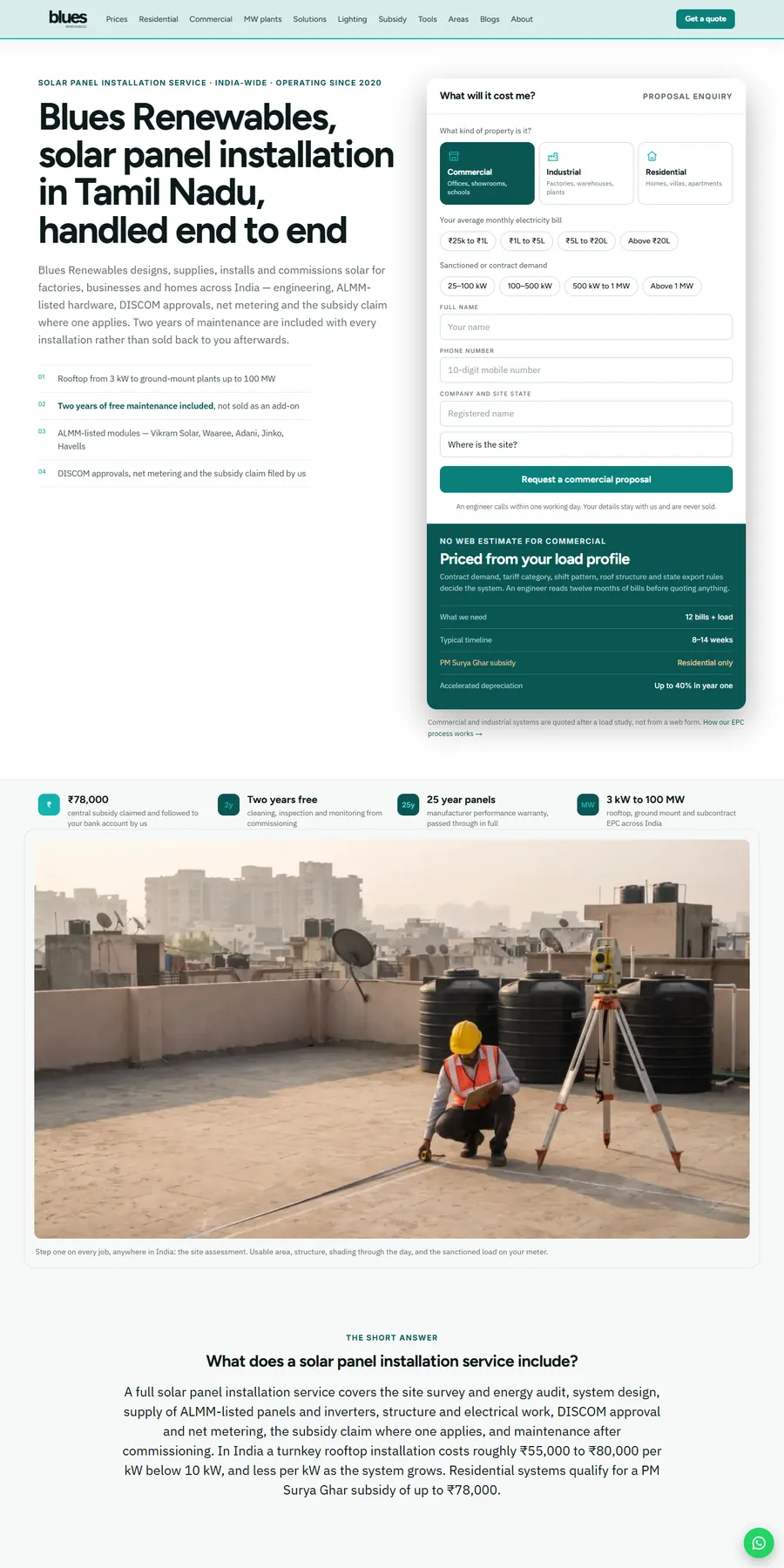
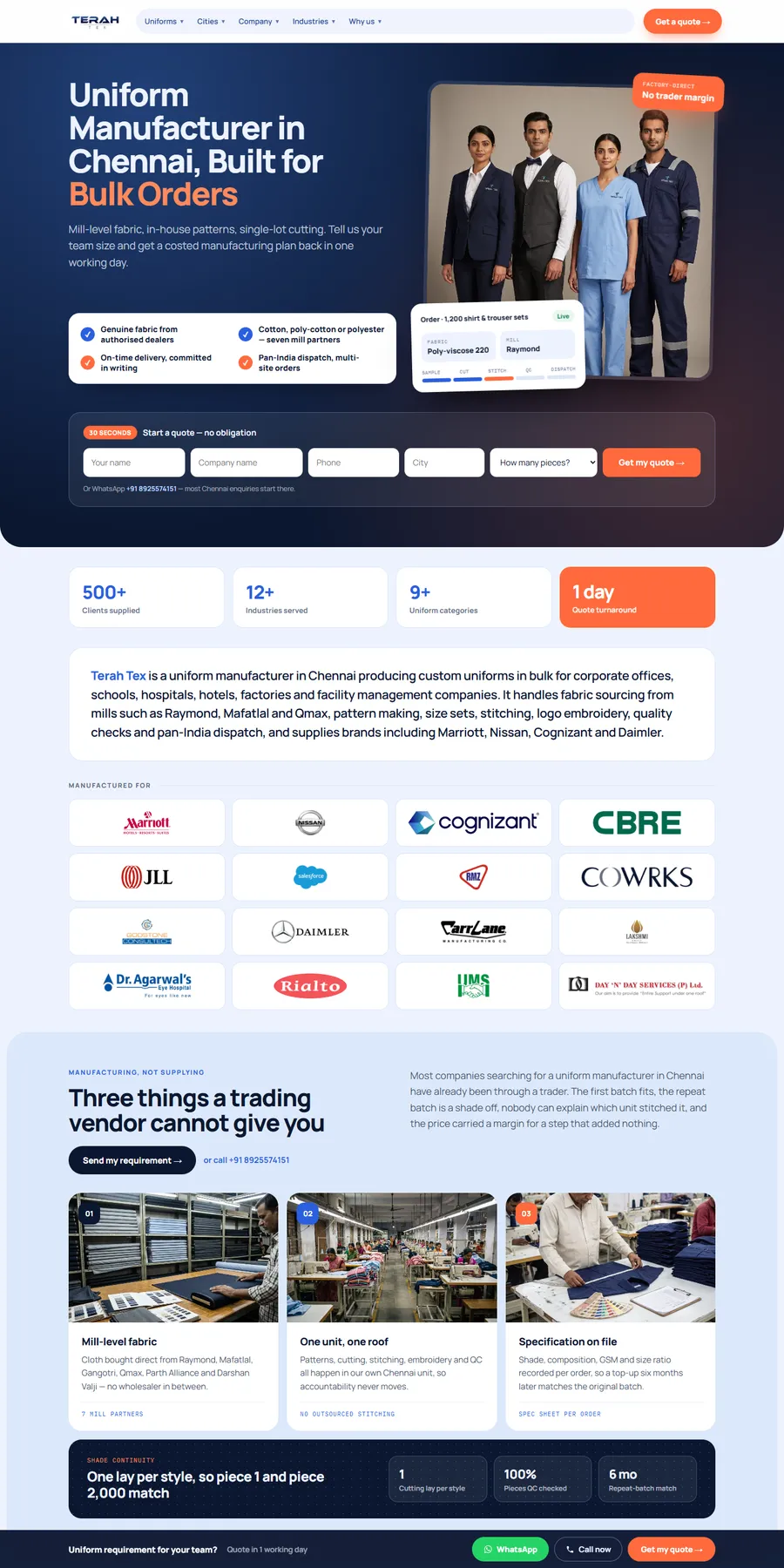
The proof is the lead system behind Blues Renewables, and it transfers to a golf course because golfers and event planners, like solar buyers, compare local options online before they book or call. Blues Renewables, a rooftop solar installer, went from no tracked leads to 7 to 10 inquiries a week, and its Google clicks rose from 14 to 560 a fortnight in two months, with price pages, 129 local area guides and every form and call tracked in GA4. For a course, those price pages become your rates page, and the same tracking follows golfers into your tee sheet. Terah Tex's two-step quote form took a manufacturer from no website inquiries to about 5 bulk-order leads a week; it is the pattern for outing, tournament and membership inquiries. Our rcomic site, a performer's site with dated shows and booking inquiries, shows an events calendar and inquiry flow, and Abraca, a direct-to-consumer store, shows the checkout flow behind gift cards and pro shop sales.

More websites we have designed and built

Process

How your golf course website project runs

Typical timeline: 4 to 8 weeks for most course and club sites; 8 to 12 weeks for resorts, multi-course operators or clubs with large member sections. You see progress every week.

  1. Step 01 · Week 1

    Discovery and audit

    We audit your current site, competitors, and how you show up on Google and in AI answers, then agree on goals and a fixed quote.

  2. Step 02 · Weeks 2 to 3

    Strategy and design

    Sitemap, wireframes and full designs for your review. You approve everything before we build.

  3. Step 03 · Weeks 3 to 6

    Build and test

    Development, SEO setup, speed tuning, and testing across devices and browsers.

  4. Step 04 · Launch and beyond

    Launch and grow

    We launch, monitor, and improve based on real data. 30 days of free support included.

What shapes your quote

Scope, not hourly billing

Every project gets a fixed quote within 1 business day, agreed before work starts.

Get my fixed quote →
  • How many courses, rate types, membership categories and event pages you need
  • Which tee sheet, club system and event tools we connect
  • Whether you want hole-by-hole pages with photos or flyovers
  • Whether we write the content and organize course, clubhouse and event photos
  • Moving from your current site: redirects, keeping pages that rank and setting up tracking first
  • Several courses under one operator, with one hub and a page set per course

Golf course website questions, answered

Straight answers to what owners ask us, and what they ask Google and AI assistants. Ask us anything else.

How much does a golf course website cost?

We quote one fixed price, agreed before work starts, based on the number of pages, features, integrations and content. You get it within 1 business day of a free audit of your current site. There is no hourly billing and no monthly subscription required to keep your site.

How long does it take to build a golf course website?

Most course and club sites take 4 to 8 weeks. Resorts, multi-course operators and clubs with large member sections take 8 to 12 weeks. You get a dated week-by-week plan, and we aim to launch before your season or membership drive.

Will the site work with our tee sheet or club software?

Yes. We build around the tee sheet or club system you already use, such as foreUP, Lightspeed Golf, Club Caddie, Teesnap, Clubessential, Jonas or Northstar, through its booking pages, embeds or member login. If you change vendors later, we change the connections, not the site.

Do I own the website, domain and content?

Yes, from day one. Code, design, content, domain, hosting and analytics are in your name. There is no lock-in and no buyout fee.

Will a new website bring more tee times, members and outings?

We do not guarantee rankings or booking numbers. What a new site changes is how many of the golfers and planners who already find you book with you: tee times on every page, real rates, membership details and event requests that reach the right person. On Blues Renewables, a rooftop solar installer's site, the same lead system took tracked inquiries from none to 7 to 10 a week.

Should we show membership prices on the website?

That is your call. Many clubs show categories and what each includes and share dues after a visit; others publish ranges. Either way, a page that explains categories, privileges and how to visit gives a prospective member something to act on, and the inquiry form routes them to your membership director.

What does the ADA mean for a golf course website?

Golf courses are named in the ADA as public accommodations, and the Justice Department applies the ADA to their websites, with WCAG as guidance. We design to WCAG 2.2 AA targets and describe accessible facilities, carts and routes honestly. Private clubs come under Title III when they open to the public for events. We do not certify compliance.

Can we sell gift cards and pro shop items online?

Yes. We connect gift cards and merchandise through your POS or a store platform, show gift card terms before purchase as federal rules require, and track sales by source.

How do I know which tee times came from the website?

We set up GA4 cross-domain measurement into your tee sheet, connect booking events where it supports them, and track calls, membership inquiries and event requests. You get a plain monthly report by source and page.

Can staff post course conditions and update rates themselves?

Yes. You get an editable CMS and training, with a simple notice field for cart path only days, frost delays and closures that shows on the home and tee time pages.

How does our course show up in ChatGPT and Google AI answers?

We write rates, policies, course details and event capacity as plain text, add GolfCourse schema, keep AI search crawlers unblocked and match the site to your Google profile. No one can guarantee an AI mention, but a specific, consistent site gives assistants something accurate to cite.

What results can you show for a golf course website?

Results from the same lead system. Blues Renewables, a rooftop solar installer, went from no tracked leads to 7 to 10 inquiries a week, and Google clicks rose from 14 to 560 a fortnight in two months, with price pages, area guides and every call and form tracked. Terah Tex's two-step form brings about 5 bulk-order leads a week and is the pattern for outing and membership inquiries.

What makes you different from other golf course web design companies?

We put the terms in writing first: a fixed quote in 1 business day, a dated plan, your ownership of everything and no lock-in. The build covers tee times on your own site, real rates, membership and event paths and tracking by source, around the software you choose.
Get your free golf course website proposal

Four quick questions. You'll get a fixed quote and a free audit of your current site within 1 business day.

  • ✓ No obligation, no sales pressure
  • ✓ Fixed price, never hourly
  • ✓ Your details stay private

Prefer email? info@billionwebstudio.com

Step 1 of 4~60 seconds
What do you need?