Skip to content
Booking projects for next month. Free website audit with every quote.Claim yours →

Health and wellnessBooking projects for November

Urgent Care Website Development Company for Independent Centers and Small Groups

A mom with a toddler's ear infection at 6 p.m. A new hire who needs a DOT physical by Friday. A traveler with a sprained ankle and no doctor in town. Each one picks an urgent care from a phone screen in under a minute, based on hours, wait, services, insurance and price. We build urgent care websites that answer those five questions for every location, put online check-in one tap away, and show you which page and source sent every visit.

  • Built for urgent care centers and walk-in clinics
  • Fixed quote in 1 business day
  • You own everything
yoururgentcare.com/check-inWalk in or saveyour spotSave my spotTap to callOnline check-in: sore throatFrom /locations/elm-st · 6:12 pmTracked as a leadSource: GoogleAI ASSISTANTUrgent care open now near me with x-ray?Your Urgent Care: open until 9 pm,on-site x-ray, online check-in.Source: your website
Illustration: a visit becomes a tracked lead

The short answer

What does an urgent care website development company do?

An urgent care website development company builds websites for urgent care centers and walk-in clinics that turn a search for "urgent care near me open now" into a checked-in patient. The site has to answer five questions in seconds, for the right location: are you open now, how long is the wait, do you treat this (stitches, x-rays, strep tests, kids), do you take my insurance, and what will it cost if I pay myself.

For an independent center or a small group that means one real page per location with live hours, holiday hours and online check-in, a services page that says yes or no for x-rays, labs, stitches, splinting and IV fluids and which ages you see, a self-pay price list with the good faith estimate notice, an insurance page that names plans, a plain "urgent care or ER" guide, and a separate section for employers: DOT physicals, drug screens, pre-employment physicals and workers' compensation care.

Billion Web Studio is an urgent care website development company that delivers this as one fixed-scope project: urgent care website design, location, service and occupational health pages, online check-in connected to the queue tool you use, MedicalClinic schema per location, call and check-in tracking in GA4 without health details, and a CMS your managers can update when hours change. You own the domain, code, content and every account from day one.

The market

What the numbers say about urgent care centers and walk-in clinics online

Urgent care has grown into everyday care, and most Americans now have more than one center within a short drive. That makes the choice fast and the competition close: the patient picks the center that answers hours, wait, services and cost first. These figures come from the Urgent Care Association's published industry data.

How they choose

How patients find and choose an urgent care center

An urgent care visit is decided in minutes, usually on a phone, often after work or on a weekend. Here is how a patient picks a center, and what your site has to do at each step.

  1. 1

    Something happens

    A fever that will not break, a cut that needs stitches, a twisted ankle, a UTI, or an employer who needs a drug screen today. The patient searches "urgent care near me open now", a symptom plus "urgent care", or asks an AI assistant where to go.

  2. 2

    Open now, and how long?

    They look at the map pack and tap two or three centers. Hours that match Google, holiday hours and a wait estimate or a save-your-spot button decide it. UCA data puts the average urgent care visit at 56 minutes against a 150-minute median emergency department wait, and the site should make that difference visible.

  3. 3

    Can you treat this, and what will it cost?

    Do you have x-ray on site, can you do stitches, do you see babies, do you take my plan, and what is the self-pay price for a basic visit or a strep test? A clear yes or no saves a call and a wasted trip.

  4. 4

    Check in or walk in

    They save a spot online, get a text when it is time, and arrive. The check-in flow must say it is not an appointment, collect only what is needed, and run on a tool that signs a BAA.

  5. 5

    After the visit

    Results, follow-up instructions, bill pay, a review request and, for employers, reports sent through the portal. A patient who had a good visit comes back with the next sick child, and an employer who got fast DOT physicals sends every new hire.

The problem

Why most urgent care websites lose new patients

What we find again and again when we audit sites in this trade. None of it is about how the site looks.

Leak 01

Hours and wait times patients cannot trust

The site says one set of hours, Google says another, and holiday closures are only on a door sign. Patients who drive to a closed or overloaded center leave a review and never come back.

Leak 02

Online check-in is hard to find or leaves your site

The save-your-spot button sits below the fold or opens a third-party page with another brand on it, and nothing tracks how many check-ins the site produced. Patients who cannot check in from the first screen go to the center that lets them.

Leak 03

No self-pay prices

Self-pay and high-deductible patients want a number before they come. A missing price list sends them to a competitor that publishes one, and a missing good faith estimate notice is a federal rule gap for self-pay patients.

Leak 04

"We treat many conditions" instead of yes or no

Patients and parents call to ask whether you do x-rays, stitches or IV fluids, whether you see infants, and whether you test for strep and flu. Every one of those calls is a question the site should have answered.

Leak 05

Employers cannot find your occupational health services

DOT physicals, drug and alcohol testing, pre-employment physicals and workers' comp care are steady weekday revenue, yet many sites list them in one bullet. Safety managers and HR teams need a separate section with services, turnaround, how to set up an account and the examiner's National Registry status.

Leak 06

Check-in data in the wrong places

Check-in and contact forms collect symptoms and dates of birth, send them to email, and ad pixels fire on the check-in page. Both can expose protected health information to vendors without a Business Associate Agreement.

Our research

We checked 17 real urgent care websites. Here is what we found.

On October 23, 2026 we opened the homepages of 17 urgent care centers and walk-in clinics that rank in Google Maps in 10 US metros, the way a customer would on a phone, and ran a mobile Lighthouse test on each. Every number below comes from that check.

  • 56/100

    median mobile Lighthouse performance score (90 or more is good)

  • 10.2 s

    median time to show the main content on a phone (target: 2.5 seconds or less)

  • 1.8 MB

    median homepage download on a phone, before anyone scrolls

  • 15 of 16 took longer than 2.5 seconds to show their main content in a mobile Lighthouse test

  • 10 of 17 show a tap-to-call link on the first phone screen

  • 13 of 17 show a clear call, book or quote button on the first screen

  • 8 of 17 have a contact or quote form on the homepage

  • 8 of 17 let visitors book or schedule online

  • 11 of 17 describe the business to Google with business schema markup

  • 8 of 17 have Google Analytics or Tag Manager installed

  • 1 of 17 use call tracking

  • 2 of 17 show a copyright year of 2024 or older (of the sites that show one)

  • 2 of 17 have images with no alt text

  • 14 of 17 link to a privacy policy

  • 5 of 17 offer live chat or texting

What this means for your urgent care website

The three biggest gaps in the sample. Each is fixable, and each is a reason a customer picks the next result instead of you.

See how your site compares →
  1. 1

    15 of 16 took longer than 2.5 seconds to show their main content in a mobile Lighthouse test. Google counts 2.5 seconds or less as a good Largest Contentful Paint. Slow first screens lose visitors before they see your phone number.

  2. 2

    Only 1 of 17 use call tracking. Calls are the main lead source in most local trades. Without call tracking you cannot see which marketing made the phone ring.

  3. 3

    Only 5 of 17 offer live chat or texting. Many customers would rather text than call, especially outside office hours.

How we checked: Google Maps results for “urgent care” in Houston, Phoenix, Atlanta, Denver, Charlotte, Columbus, Tampa, Nashville, Kansas City, Sacramento; the two highest-ranked independent businesses per city (chains and directory listings left out). 20 homepages sampled, 17 loaded for our checker (the rest blocked automated visits), 16 scored by Lighthouse in mobile mode. Lighthouse is a lab test and varies run to run; it is not the same as Google's real-user Core Web Vitals. Businesses are not named. Checked October 23, 2026.

Generic vs built for you

Why a generic website fails urgent care centers and walk-in clinics

A template is built to fit every business, so it fits yours badly. Here is what changes when the site is planned around how patients actually buy.

Generic website compared with a website built for urgent care centers and walk-in clinics
What you needGeneric template siteBuilt for urgent care centers and walk-in clinics
Hours and locationsOne contact page listing addresses and "open 7 days"A page per location with live hours, holiday hours, wait or check-in, services available at that site, parking and directions, matched to its Google profile
Check-inA "check in" link to a third-party page, untrackedSave-your-spot on the first screen of every location page, connected to your queue tool, worded as "not an appointment", tracked as a GA4 event by source
Services"We treat a wide range of illnesses and injuries"A yes or no list per location: x-ray, labs, stitches, splinting, IV fluids, rapid tests, ages seen, plus one page per common condition
Prices"Call for self-pay rates"A self-pay price list for common visits and tests, payment options, and the good faith estimate notice the No Surprises Act requires on your site
Urgent care or ERNothing, or a note in the footerA plain guide to what you treat, what needs the ER and when to call 911, so true emergencies go to the right place
Occupational healthA bullet that says "occupational medicine"An employer section: DOT physicals by examiners on the FMCSA National Registry, drug and alcohol testing, pre-employment physicals, workers' comp, account setup and an employer contact form
PrivacyForms that email symptoms and pixels on the check-in pageCheck-in and forms on providers that sign a BAA, no PHI in email, no ad pixels on check-in, form or portal pages
OwnershipA site rented from a platform, lost if you leaveYou own the domain, code, design, content and accounts from day one, with no lock-in

Free self-check · 2 minutes

What your current urgent care website is missing

Tick everything your site does today. Each box you cannot tick is a place where a ready-to-buy visitor leaves.

What you need

What every urgent care website needs

The features that turn an urgent care website from a brochure into the best salesperson you have. We build all of them.

  1. Must-have · 01

    Sticky Save my spot and Call bar on mobile

    Save my spot, Call and Directions stay on screen on every page, with the nearest location's phone as text. UCA data shows most visits are patients under 40, and they decide on the phone.

  2. Must-have · 02

    Location pages that answer "open now"

    One page per center with today's hours, holiday hours, wait or check-in, services at that site, insurance notes, parking, and photos of the real entrance so a first-time patient finds the door.

  3. Must-have · 03

    Online check-in worded with care

    Save-your-spot connected to your queue tool, text updates when it is time to come in, a clear line that this is not an appointment and that patients with severe symptoms should call 911.

  4. Must-have · 04

    Yes or no services list

    X-ray, labs, stitches, splinting, IV fluids, rapid strep, flu and COVID tests, STI testing, vaccines, physicals, and the ages you see, by location where they differ.

  5. Must-have · 05

    Self-pay prices and insurance

    Self-pay prices for common visits and tests if you publish them, plans accepted by name, Medicare and Medicaid yes or no, and the good faith estimate notice.

  6. Must-have · 06

    Urgent care or ER guide

    What urgent care treats, what needs an emergency department, and when to call 911, written with your medical director and linked from every location page.

  7. Must-have · 07

    Condition pages

    One page per common reason for a visit: sore throat, UTI, ear infection, sprains and fractures, cuts and stitches, rashes, flu and COVID, written answer first with what to expect and cost notes.

  8. Must-have · 08

    Pediatric urgent care page

    Ages you see, pediatric-trained staff if true, what to bring, and when a child should go to the ER instead.

  9. Must-have · 09

    Occupational health section for employers

    DOT physicals performed by examiners listed on the FMCSA National Registry, drug and alcohol testing, pre-employment and return-to-work physicals, workers' comp injury care, how to open an account, turnaround times and an employer contact form.

  10. Must-have · 10

    Telehealth page

    Which visits you handle by video, hours, the states you can see patients in, how to join and payer notes.

  11. Must-have · 11

    Results, billing and follow-up

    How results are delivered, portal sign-up, bill pay, records requests and who to call with questions after the visit.

  12. Must-have · 12

    Privacy and accessibility pages

    Current Notice of Privacy Practices posted prominently, a privacy policy that matches what the site tracks, and an accessibility statement for a WCAG 2.1 AA build.

What we build

The urgent care website we would build for you

Good urgent care website design starts with the sitemap. Here is the one we would start from for an independent group with three centers and an occupational health line. We adjust it to your locations, services and payer mix before we quote.

yourcompany.comHome · every section links here

Locations and check-in

  • Find a location
  • Page for each center with hours and check-in
  • Holiday hours
  • Save your spot
  • Telehealth visits

Services and conditions

  • What we treat
  • X-ray and labs
  • Stitches, splints and minor procedures
  • Rapid tests: strep, flu, COVID
  • Sore throat, UTI, ear infection pages
  • Sprains, fractures and cuts
  • Pediatric urgent care
  • Physicals and vaccines

Costs and coverage

  • Insurance we accept
  • Self-pay prices
  • Good faith estimates
  • Pay your bill

Urgent care or ER

  • When to choose urgent care
  • When to go to the ER or call 911
  • Urgent care or primary care

Employers and occupational health

  • Occupational health overview
  • DOT physicals
  • Drug and alcohol testing
  • Pre-employment and return-to-work physicals
  • Workers' comp injury care
  • Open an employer account

Patients and policies

  • Results and portal
  • Medical records
  • Reviews
  • Notice of Privacy Practices
  • Privacy policy and accessibility statement
  • Careers

Calls, bookings, leads

How we turn visitors into new patients

Good urgent care web design is judged by check-ins, calls, employer accounts and return visits, each traced to the page and source that sent them. This is how we set that up.

  • 01Save-your-spot tracked by location and sourceEvery online check-in is a GA4 event tagged with the location page, the source and the time of day, so you can see which centers, searches and hours bring visits.
  • 02Click-to-call with call tracking by locationDynamic tracking numbers show which source and location page made each call, with each center's main number unchanged in schema and directories. If calls are recorded or transcribed, we use a provider that signs a BAA.
  • 03Employer contact form and account requestsA short form for safety managers and HR teams: services needed, number of employees, locations, contact details. Each request is tracked separately from patient visits so you can see what your occupational health pages bring.
  • 04Condition pages that lead to check-inEach condition page answers the question, says whether you treat it, gives cost notes and offers Save my spot at the nearest location, so a search for "UTI urgent care" becomes a check-in.
  • 05Review requests after every visitA text or email review request sent the same way to every patient after the visit, with no filtering and no rewards, and reply templates that never confirm someone is a patient.
  • 06Every lead counted in GA4 without health detailsCheck-ins, calls, employer forms and telehealth starts are tracked as events, with Search Console showing the searches behind them, and no visit reasons sent to ad or analytics tags.
  • 07A weekly report by locationCheck-ins, calls and employer requests by location, source and hour in plain numbers, so you can staff evenings and weekends where demand really is.

AI search

"Urgent care open now near me" is one of the questions people now ask ChatGPT, Gemini and Google's AI Mode. BrightLocal found 45% of consumers used AI tools for local recommendations in 2026. The answers come from sites and profiles that state hours, services and prices plainly and match each other. We build for that without promising any placement.

Questions your patients ask AI assistants

  • Urgent care open now near me with x-ray
  • How much is an urgent care visit without insurance near me?
  • Urgent care near me that sees babies
  • Where can I get a DOT physical today near me?
  • Can urgent care do stitches, or do I need the ER?
  • Urgent care near me that takes Medicaid
  • A Google Business Profile per location that matches the site

    Primary category Urgent care center, accurate hours and holiday hours, the check-in link, services and attributes matched to that location's page. Each center gets its own profile and page.

  • Answer-first location and condition pages

    Each page opens with a direct answer: open until 9 p.m., x-ray on site, sees children 6 months and older, self-pay visit price, treats UTIs. That is the text AI answers and AI Overviews lift.

  • MedicalClinic schema per location

    Structured data with address, opening hours including special hours, phone, services available and FAQ content that is visible on the page.

  • One identity across Google, maps and directories

    The same center names, addresses, phones and hours on your site, Google, Apple Maps, Bing, insurer directories and any booking marketplace you use. AI tools can only repeat what they find.

  • Fresh reviews per location

    AI tools summarize recent reviews. A steady, rule-following review request after every visit keeps each location's summary current.

  • Plain prices and services

    Self-pay prices, tests offered and ages seen written as text, not inside images or PDFs, so an assistant asked "how much is urgent care without insurance" can quote your number instead of a national average.
Compliance and trust

The rules an urgent care website has to get right

An urgent care website touches HIPAA, federal price notices, accessibility rules, review and texting rules, and federal rules for DOT physicals. We build to these and flag anything that needs your counsel or medical director. We do not certify compliance; your HIPAA program stays yours.

HIPAA check-in, forms and call tracking

Online check-in, intake, chat, form storage and call recording tools receive patient information for you and need a Business Associate Agreement. We use providers that sign one, keep PHI out of email, and keep ad pixels off check-in, form and portal pages, which HHS tracking guidance still covers after the June 2024 AHA v. Becerra ruling.

Good faith estimate notice for self-pay patients

Under the No Surprises Act rules (45 CFR 149.610), providers must tell uninsured and self-pay patients that good faith estimates are available, with the notice prominently displayed and searchable on the website. We place it on the price, insurance and check-in pages.

Urgent care is not an emergency department

Under the No Surprises Act rules, an independent freestanding emergency department is a facility licensed separately from a hospital under state law that provides emergency services (45 CFR 149.30). Unless your state licenses you for that, the site should not present the center as emergency care, and it should tell patients when to go to the ER or call 911.

DOT physicals

Federal rules require commercial driver medical exams to be performed by a medical examiner listed on the FMCSA National Registry of Certified Medical Examiners (49 CFR 391.43). The DOT physicals page should name only examiners who are listed and current.

Notice of Privacy Practices and accessibility

Covered entities had to update their notices by 16 Feb 2026 for the substance use disorder record changes, and a website must post the notice prominently. Centers that receive Medicaid or other HHS funds are covered by the Section 504 rule's WCAG 2.1 AA standard, due 11 May 2027 with 15 or more employees and 10 May 2028 with fewer. We build to WCAG 2.1 AA and publish an accessibility statement.

Reviews and texting consent

The FTC rule on reviews and testimonials, in effect since 21 Oct 2024, bans fake and incentivized reviews and review suppression. "Your spot is ready" texts and marketing texts are treated differently under the TCPA: marketing texts need prior express written consent, so forms carry a separate, unchecked marketing box.

We build with tools and patterns that support these rules and document what we set up. For legal advice on your own obligations, talk to your attorney.

Asked online

What urgent care centers and walk-in clinics ask about websites, answered

We read what urgent care physicians and owners ask in the Student Doctor Network's family medicine and emergency medicine forums, on r/PrivatePracticeDocs and Local Search Forum, and in YouTube comments under urgent care business videos. The questions about winning patients come back to hours, services, reviews, Google profiles and patients who arrive expecting the wrong thing. These are their questions, paraphrased, with factual answers you can use whoever builds your site.

Where owners talkStudent Doctor Network, Family Medicine forumStudent Doctor Network, Emergency Medicine forumr/PrivatePracticeDocsLocal Search ForumYouTube comments on urgent care business videos

From Student Doctor Network, Family Medicine forum

“I am a primary care doctor thinking of opening an urgent care with a partner. What should we look at first?”

Our answer: Replies said location decides it: find an area short on primary care and urgent care, keep the setup lean, and remember reputation drives volume. Check the online side before you sign a lease. UCA data shows 89.4% of Americans already live within a 20-minute drive of an urgent care, so count centers on Google Maps near your site, read their hours and reviews, and plan to beat them on hours, check-in and clear answers.

From Student Doctor Network, Emergency Medicine forum

“We are building an urgent care. How many rooms, x-ray or CT, and what else matters?”

Our answer: Replies suggested six or more rooms with one procedure room, x-ray but usually no CT, and one blunt tip: open early and stay open late. Hours are the product, and UCA counted more than 5 million urgent care visits after 5 p.m. in early 2024. Publish exact hours and holiday hours on each location page, match them in Google, and say x-ray on site in text.

From Student Doctor Network, Emergency Medicine forum

“Patients keep arriving for an annual physical because they were told we do them, and our doctors are not trained for preventive care. What do we say?”

Our answer: Say it on the website first. List exactly which physicals you do (sports, school, camp, pre-employment, DOT exams by an examiner on the FMCSA National Registry) and say that annual preventive care and chronic disease management belong with a primary care doctor, with help finding one. Clear wording sends the right visits to you and the rest elsewhere, before anyone is upset at the front desk.

From Student Doctor Network, Family Medicine forum

“Most urgent cares now staff nurse practitioners and physician assistants. Should our site say who patients will see?”

Our answer: Yes. Give each clinician a page or a listing with their license type stated plainly (MD, DO, PA-C or NP), name the medical director and their board certification, and avoid calling every clinician a doctor. Replies noted that state rules on NP independence differ, so describe supervision only as your state and contracts set it. Clear titles prevent surprises at the visit and complaints afterward.

From r/PrivatePracticeDocs

“Someone who never became a patient left several angry reviews across our locations after a dispute at the front desk. What can we do?”

Our answer: Flag each review in Google Business Profile if it breaks Google's policies, for example fake engagement or harassment; Google does not remove reviews for being negative. Reply once, briefly, without confirming whether the person was a patient. The durable fix is volume: send a review request after every visit at every location, the same way to everyone, so one dispute cannot set your rating.

From Local Search Forum

“Our first-year clinic's Google Business Profile was suspended for deceptive content. How long does reinstatement take?”

Our answer: In that thread, first appeals took about 7 to 10 business days, and the owner suspected adding many categories at once triggered it. Prevent it: use the business name exactly as on your signage, choose Urgent care center as the primary category and only a few accurate secondary ones, and keep the address, phone and hours on your site identical to the profile. Keep photos of signage and your lease ready for an appeal.

From YouTube comments on a video about urgent care growth

“Do urgent cares see children, or only kids above a certain age?”

Our answer: It varies by center, which is why parents ask. Children 10 and under make up 14.3% of urgent care visits in UCA's data, so state the youngest age you see on every location page and in your Google profile, and say when a child should go to the ER instead. A clear yes or no saves a call and a wasted drive.

From YouTube comments on an urgent care profitability video

“After an urgent care visit, do I need a referral to see a specialist or not?”

Our answer: It depends on the patient's plan: many HMO plans require a referral and many PPO plans do not. Your site should have an after-your-visit page that explains how results and records reach the patient's primary care doctor, when you can refer, and that patients should check their plan's rules. If you have partner specialists, list them with how to book.

From YouTube comments on an urgent care start-up costs video

“How does a new clinic get credentialed with insurers?”

Our answer: Credentialing is separate for each payer and can take months, often through CAQH and sometimes a credentialing service. For the website, the rule is simple: list a plan on your insurance page and Google profile only once the contract is active, show self-pay prices meanwhile, and post the No Surprises Act good faith estimate notice that self-pay patients must be given.

Questions are paraphrased from public posts and comments on Reddit, YouTube, forums and social media. We never quote anyone by name.

Others vs us

Urgent care website design options: Billion Web Studio vs a website builder template vs a typical healthcare marketing platform

The three ways urgent care centers and walk-in clinics usually get a website, side by side.

Urgent care website design options: Billion Web Studio vs a website builder template vs a typical healthcare marketing platform
Billion Web StudioWebsite builder templateTypical industry agency
Who owns the site, content and domainYou, from day one, including code and accountsYou own the account, but the site only runs on that builderOften the vendor's platform; the site and sometimes the domain stay with them
ContractFixed-scope project, no lock-in, optional care plan after 30 days of free supportMonthly subscriptionOften a 12-month platform or marketing agreement that renews
Price clarityFixed quote within 1 business day, no hourly billingPlan price, plus your time to build itBundles and per-location fees, terms often shared only on a sales call
Location pages and check-inA real page per center with hours, services and Save my spot on the first screenOne contact pageLocation pages from a template, check-in often on another domain
Self-pay prices and good faith estimate noticePrice list in text and the notice on price, insurance and check-in pagesWhatever you addOften "call for pricing"
Occupational healthSeparate employer section with DOT, drug testing, workers' comp and a tracked employer formNot built for itUsually one page
HIPAA-ready check-in and trackingBAA-signing tools, no PHI in email, no pixels on check-in or form pagesStandard forms that email submissions"HIPAA-compliant" often claimed without explaining the BAA or pixel setup
Lead trackingCheck-ins, calls and employer requests as GA4 events by location and sourceBasic visitor statsVendor dashboard you may lose if you leave
Timeline and accountabilityDated week-by-week plan, weekly written updates; if we slip a date because of us, next month of support is freeDepends on your free timeA launch window, but no week-by-week plan and no remedy if it slips

Why Billion Web Studio

What we do better, and why it matters to you

  • Built around the five questions

    Open now, how long, do you treat this, do you take my plan, what will it cost. We plan every location and service page around those questions so patients can decide without calling.

  • You own everything

    Domain, code, design, content, Google Business Profiles, analytics and ad accounts are yours from day one. No platform fee and no contract keeps you with us.

  • Fixed quote in 1 business day

    A free audit of your current site and a written scope with a fixed quote, agreed before work starts, based on pages, locations, features, integrations and content. No hourly billing.

  • Dated plan, weekly updates, a real guarantee

    A week-by-week plan with dates and a written update every week. If we slip a date because of us, your next month of support is free.

  • Patient and employer sides, both tracked

    Walk-in patients and occupational health accounts are different buyers. We build both paths and track them separately, so you can see what each brings.

  • Search and AI visibility from day one

    Technical SEO, MedicalClinic schema per location, Core Web Vitals targets and answer-first pages are part of the build. Our sister company, Billion Game, is an SEO and AEO agency that works on search every day.

In writing, before we start

  • Fixed quote in 1 business day

    Scope, deliverables and price agreed in writing, with a free audit of your current site. No hourly billing.

  • Launch date in writing

    A dated week-by-week plan and a written update every week. If we slip because of us, the next month of support is free.

  • You own everything

    Code, design, content, domain and accounts are yours from day one. No 12-month contract, no rented site.

  • 30 days of support included

    We watch rankings, forms and call tracking after launch and fix anything that needs it.

Proof, not promises

Results from websites we have built

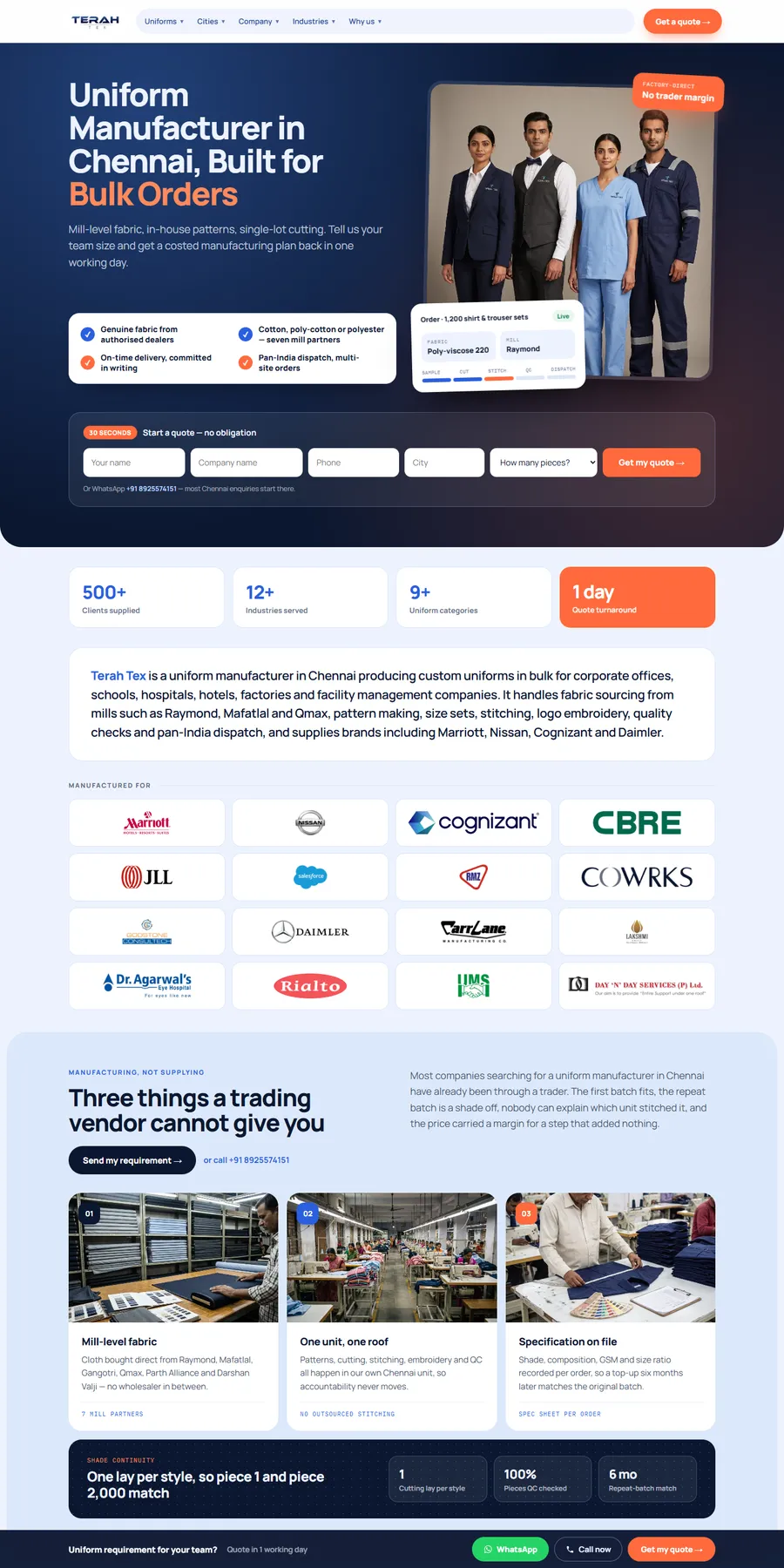
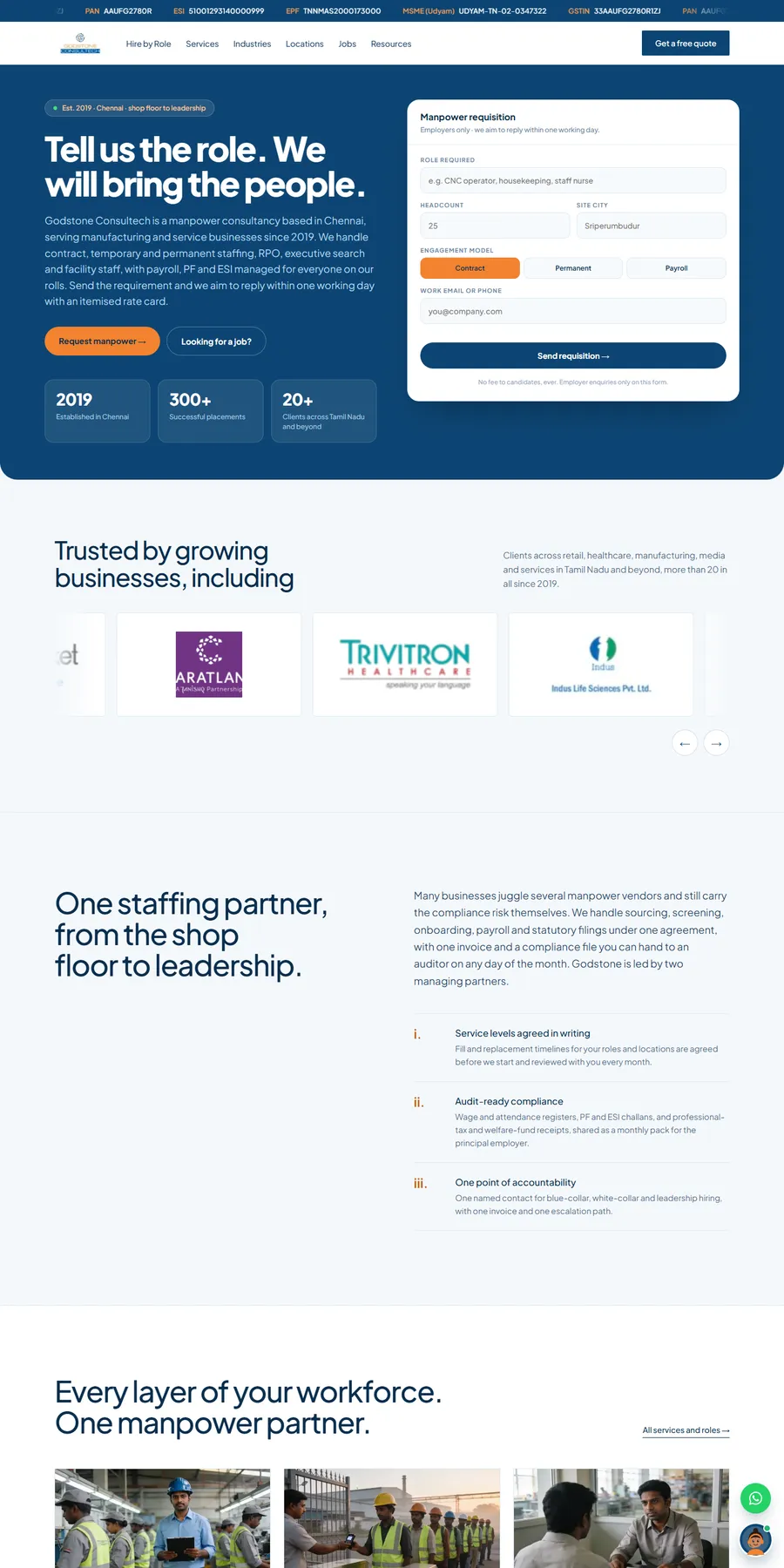
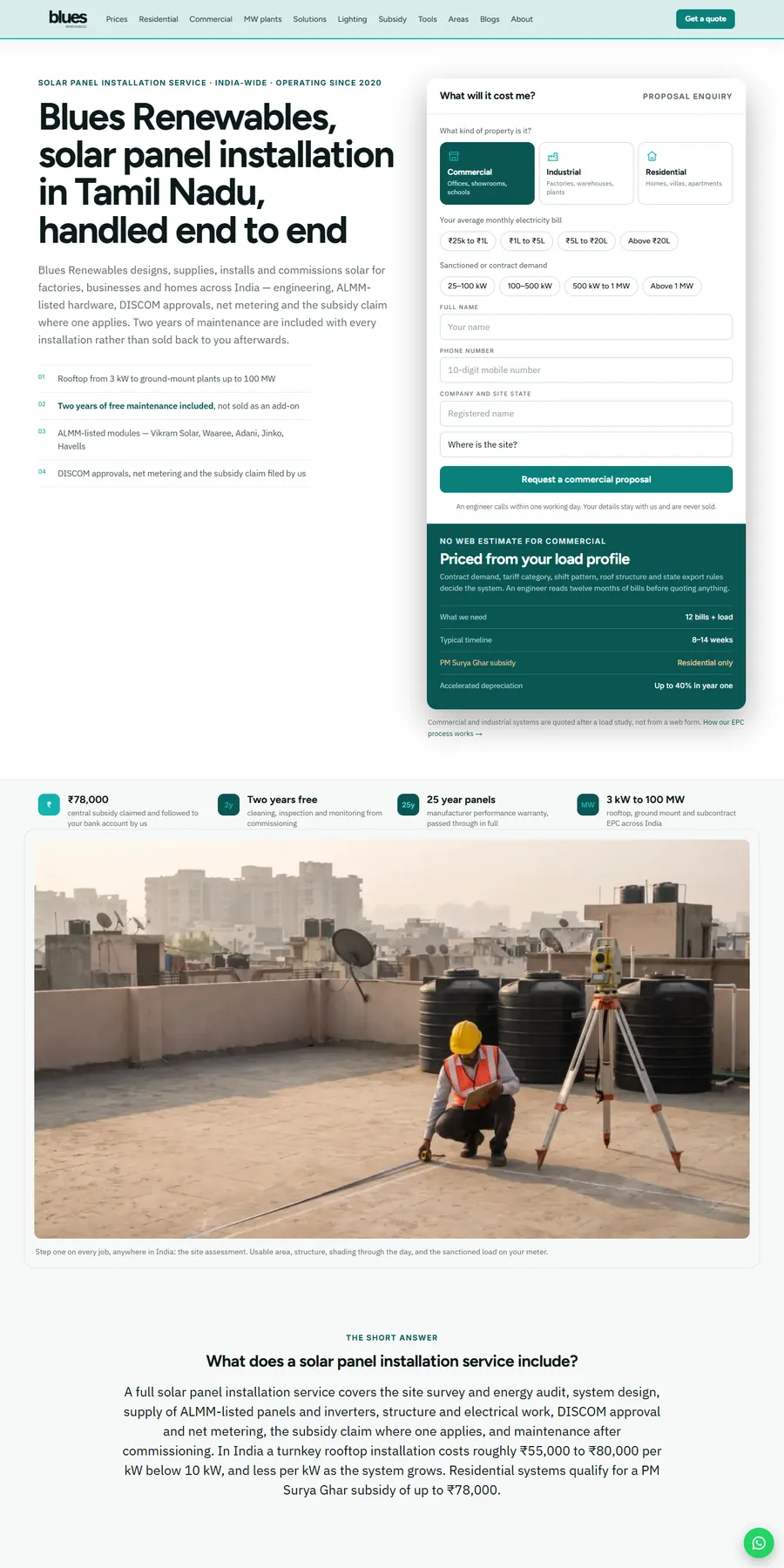
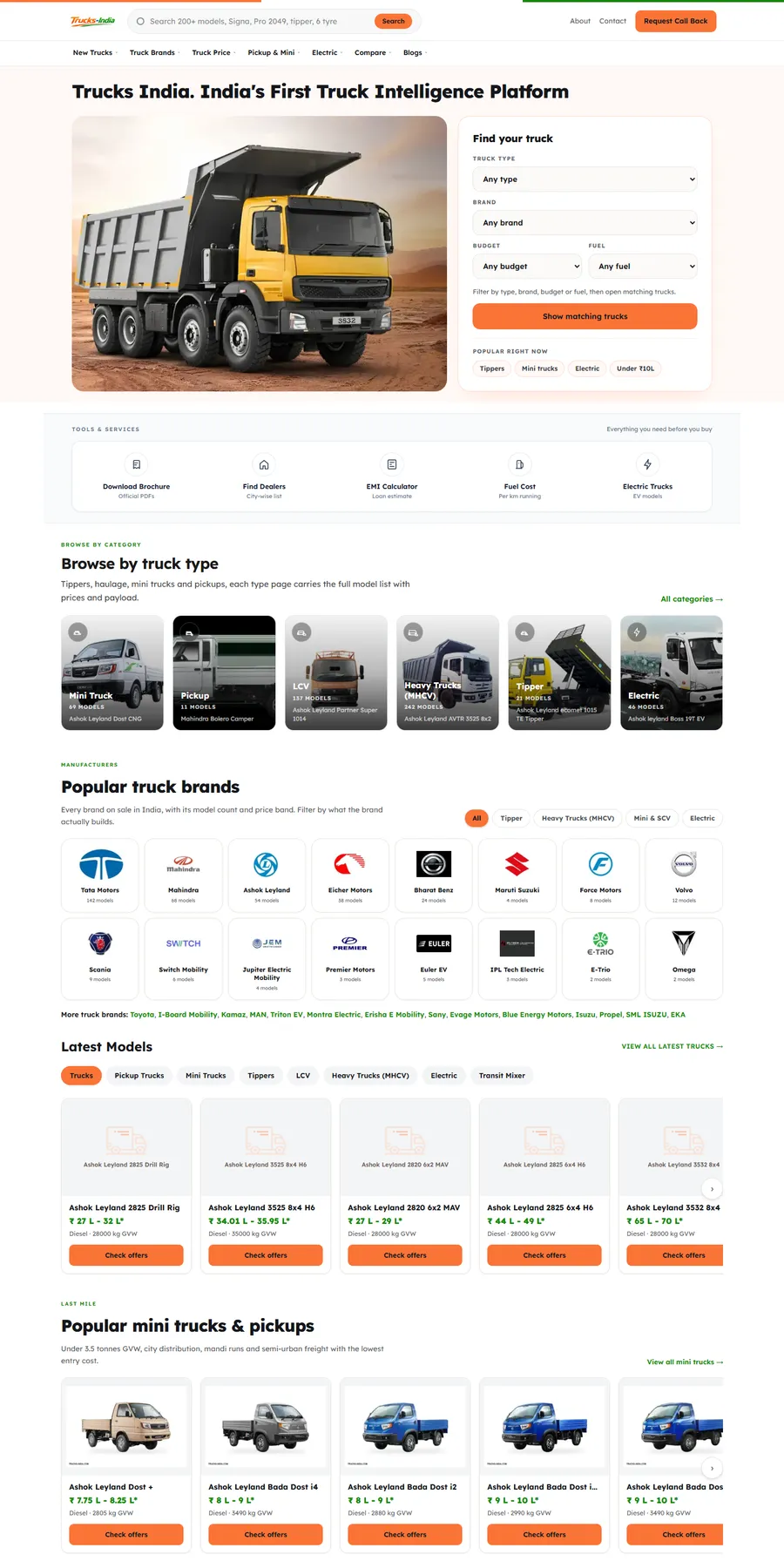
Urgent care is won in local search, and our local lead system is built to produce and track exactly those visits. For Blues Renewables, a local rooftop solar installer, service pages, price pages, 129 local area guides, click-to-call and every call and form tracked as a lead event in GA4 took the business from no tracked leads to 7 to 10 enquiries a week, with Google clicks rising from 14 to 560 a fortnight in two months. For an urgent care group, those become location, service and self-pay price pages with every check-in and call traced to its source. Your DOT physical pages speak to trucking companies, and Trucks India, a commercial vehicle research platform we built for that audience, grew weekly Google clicks from 12 to 292 in five weeks. Terah Tex shows the B2B quote form we adapt for employer account requests; it went from no website enquiries to about 5 bulk-order leads a week. Godstone Consultech, a staffing company site in our portfolio, speaks to the HR buyers who order pre-employment physicals and drug screens.

More websites we have designed and built

Process

How your urgent care website project runs

Typical timeline: 4 to 8 weeks for one to three locations; 8 to 12 weeks for larger groups with many location and service pages. You see progress every week.

  1. Step 01 · Week 1

    Discovery and audit

    We audit your current site, competitors, and how you show up on Google and in AI answers, then agree on goals and a fixed quote.

  2. Step 02 · Weeks 2 to 3

    Strategy and design

    Sitemap, wireframes and full designs for your review. You approve everything before we build.

  3. Step 03 · Weeks 3 to 6

    Build and test

    Development, SEO setup, speed tuning, and testing across devices and browsers.

  4. Step 04 · Launch and beyond

    Launch and grow

    We launch, monitor, and improve based on real data. 30 days of free support included.

What shapes your quote

Scope, not hourly billing

Every project gets a fixed quote within 1 business day, agreed before work starts.

Get my fixed quote →
  • Number of locations, each with its own hours, services, check-in and Google profile
  • Service, condition and self-pay price pages, and whether we write the content
  • Online check-in and EMR integrations
  • Occupational health section and employer account flow
  • Pediatric urgent care, telehealth and Spanish or other language pages
  • Migration from a rented platform with URL redirects

Urgent care website questions, answered

Straight answers to what owners ask us, and what they ask Google and AI assistants. Ask us anything else.

How much does an urgent care website cost?

We give a fixed quote within 1 business day, agreed before work starts, based on the number of locations, pages, features, integrations and content, such as online check-in and an occupational health section. There is no hourly billing.

How long does an urgent care website take?

One to three locations usually take 4 to 8 weeks; larger groups with many location and service pages take 8 to 12 weeks. You get a dated week-by-week plan and a written update every week.

Can we keep our current online check-in tool?

Yes. We connect the save-your-spot or queue tool you already use, place it on the first screen of every location page, and track each check-in by location and source. We confirm what your tool allows on the audit call.

Should we show wait times on the website?

Only if your system can show them accurately. A live estimate or a save-your-spot button helps patients choose, but a wrong wait time damages trust fast. Where a live feed is not possible, we show today's hours and check-in instead.

Should we publish self-pay prices?

Many centers do, because self-pay and high-deductible patients compare before they drive. Whatever you decide, the No Surprises Act rules require a good faith estimate notice for uninsured and self-pay patients on your website, and we place it on the right pages.

We run occupational medicine too. Should it be a separate website?

Usually it works best as a separate section of the same site, with its own pages, employer form and tracking, so it gains from the main site's authority. A separate site can make sense if the occupational health brand is different. We go through the trade-offs on the audit call.

Are your check-in and contact forms HIPAA compliant?

We use check-in, intake and form providers that sign a Business Associate Agreement, keep health details out of email and keep ad pixels off check-in and form pages. Your HIPAA program remains yours; we do not certify it.

We have several locations. One site or one per location?

One site with a real page for each location: its hours, services, check-in, photos and reviews, each matched to its own Google profile. Condition pages are written once and link to every location.

Do urgent care websites need to be ADA accessible?

DOJ says businesses open to the public should make their online services accessible, and centers that receive Medicaid or other HHS funds face Section 504 deadlines of 11 May 2027 or 10 May 2028 depending on staff size. We build to WCAG 2.1 AA and publish an accessibility statement.

Will our centers show up in ChatGPT and Google AI Overviews?

No one can guarantee placement. What helps is answer-first location and condition pages, prices and services written as text, MedicalClinic schema, matching hours across Google and directories, and recent reviews for each location. We build all of that in.

Can our managers update hours and holiday closures?

Yes. You get an editable CMS and training, so a manager can change hours, holiday closures and services for a location in minutes, and we show them how to update the matching Google profile.

What makes you different from other urgent care web design companies?

We build a site you own outright, with a real page per location, check-in on the first screen, self-pay prices and the good faith estimate notice, an employer section for occupational health and every check-in, call and employer request tracked by source. A fixed quote in 1 business day, a dated plan and no lock-in. The same tracked lead system took Blues Renewables, a local service business, from no tracked leads to 7 to 10 enquiries a week.

Get your free urgent care website audit and fixed quote

Four quick questions. You'll get a fixed quote and a free audit of your current site within 1 business day.

  • ✓ No obligation, no sales pressure
  • ✓ Fixed price, never hourly
  • ✓ Your details stay private

Prefer email? info@billionwebstudio.com

Step 1 of 4~60 seconds
What do you need?