Skip to content
Booking projects for next month. Free website audit with every quote.Claim yours →

Hospitality, auto and localBooking projects for November

Winery Website Development Company for More Tastings, Club Members and Orders

A visitor planning a Saturday on the wine trail wants to know whether you take walk-ins, what a tasting costs and whether they can bring the dog. A club member wants to skip the wine they do not like. We build winery, brewery and distillery sites that answer both, book tastings, sign up members on terms they understand and sell only where you are licensed to ship.

  • Built for wineries, craft breweries and craft distilleries with tasting rooms
  • Fixed quote in 1 business day
  • You own everything
yourwinery.com/visitTastings daily,walk-ins welcomeReserve a tastingTap to callNew booking: tasting for 6From /visit · 6:48 pmTracked as a leadSource: GoogleAI ASSISTANTDog-friendly winery near Paso Robles,walk-ins?Your Winery: walk-ins until 4, dogs onthe patio, book online.Source: your website
Illustration: a visit becomes a tracked lead

The short answer

What does a winery website development company do?

A winery website development company builds the site a winery, brewery or distillery sells from: a visit page with hours, tasting options, prices and a reservation button, a club page with clear terms and an online signup, a shop that ships only to states you are licensed for, and pages for events and private bookings. Its job is to turn the people who find you on Google Maps, a wine trail map or Instagram into booked tastings, club members and repeat orders.

For a winery that means tasting flights and experiences, walk-in rules, group policy, pets and kids, the wine club with tiers and cancellation terms, and wines with notes and ratings. For a brewery it means a tap list that is current, the events and food truck calendar and a mug club. For a distillery it means tours, cocktails and bottle sales within the few states that allow spirits shipping. Federal advertising rules from the TTB apply to your website like any other ad, and the spirits industry code calls for a full date-of-birth age check.

Billion Web Studio is a winery website development company that delivers this as one fixed-scope project around the commerce and reservation tools you already use, such as Commerce7, WineDirect, OrderPort, Vinoshipper, Tock or Untappd for Business. Winery, Brewery or Distillery schema, reservation and order tracking by source, and an editable CMS come with every build. You own the domain, design, content and customer list from day one.

The market

What the numbers say about wineries, craft breweries and craft distilleries with tasting rooms online

Direct sales are where a small producer keeps its margin, and they are under pressure. Direct-to-consumer wine shipments fell sharply in 2025, and Sovos ShipCompliant calls tasting room traffic the engine that fuels them. Shipping rules also differ by drink: almost every state accepts winery shipments, few accept beer and fewer accept spirits. The figures below show the pressure on direct sales, the rules a shop has to follow and the size of the craft beer market.

How they choose

How visitors find and choose a winery

Most tasting room visitors plan the day before they arrive, and most club members joined after a good visit. Here is how a US visitor picks a winery, brewery or distillery and becomes a repeat buyer, and where your website wins or loses each step.

  1. 1

    The plan: a day, a trail, a group

    People search for a place and a mood: dog-friendly winery near the town, brewery with food trucks tonight, distillery tour this weekend. Your site needs a visit page and local pages that answer those in plain text, matching your Google profile.

  2. 2

    The check: walk-ins, price and rules

    Visitors on r/sonomacounty and r/napa ask which rooms take walk-ins, and some arrive not knowing a reservation was needed. Hours, walk-in policy, tasting prices, group size limits, kids and pets on one page prevent a wasted drive.

  3. 3

    The booking: a time slot, not a phone call

    A reservation button on every page opens your booking tool on the right experience. Groups get their own path. Each booking is tracked back to the page and source that produced it.

  4. 4

    The visit: club and bottles

    The best club pitch is a good visit and a clear club page they can read later on their phone, with tiers, shipments, member benefits and how to cancel. Bottles they liked are in the shop with notes, so they can reorder at home.

  5. 5

    At home: reorders, releases and events

    Release emails with consent, member-only events and a shop that knows which states you ship to bring them back. Breweries keep the tap list and events calendar current, because that is what regulars check.

The problem

Why most winery websites lose visits and club members

What we find again and again when we audit sites in this trade. None of it is about how the site looks.

Leak 01

A tap list or event calendar that is never current

On r/TheBrewery, the top reply to a thread on brewery website pages said they only check the events calendar and the tap list, and the tap list is usually out of date. A stale page sends regulars to social media and new visitors to the brewery that kept theirs current.

Leak 02

No answer on walk-ins, prices or groups

Visitors on r/sonomacounty ask which tasting rooms take walk-ins, and a group on r/napa found little online after arriving without reservations. When hours, walk-in policy and tasting prices are buried, people drive to the winery that answered.

Leak 03

A club page that hides the terms

Club members on r/ProWinemakers want choice in their shipments and clear communication, and visitors on r/wine say hard-sell club pitches put them off. A club page without shipments per year, what each costs, choice rules and how to cancel loses signups and invites complaints.

Leak 04

A shop that sells where you cannot ship

Almost every state accepts winery shipments, 11 states and DC accept beer and only a handful accept spirits. A shop that lets anyone check out creates refunds, compliance risk and angry customers. It has to block states and products you are not licensed for before payment.

Leak 05

A website trapped inside a commerce platform

A winery on r/wine had to move its website, POS and club off a platform that was folded into another. When your site is built inside one vendor's templates, a platform change can mean rebuilding the whole website on a deadline.

Leak 06

An age gate that locks out adults

Adults on r/WhiskeyTribe and r/CrappyDesign describe age checks that would not accept a valid birth date. A broken gate stops real customers and search engines at the door, while a clumsy one protects nobody.

Our research

We checked 19 real winery websites. Here is what we found.

On October 23, 2026 we opened the homepages of 19 wineries, craft breweries and craft distilleries with tasting rooms that rank in Google Maps in 10 US metros, the way a customer would on a phone, and ran a mobile Lighthouse test on each. Every number below comes from that check.

  • 44/100

    median mobile Lighthouse performance score (90 or more is good)

  • 7.9 s

    median time to show the main content on a phone (target: 2.5 seconds or less)

  • 2.9 MB

    median homepage download on a phone, before anyone scrolls

  • 18 of 18 took longer than 2.5 seconds to show their main content in a mobile Lighthouse test

  • 1 of 19 show a tap-to-call link on the first phone screen

  • 9 of 19 show a clear call, book or quote button on the first screen

  • 13 of 19 have a contact or quote form on the homepage

  • 16 of 19 let visitors book or schedule online

  • 11 of 19 describe the business to Google with business schema markup

  • 14 of 19 have Google Analytics or Tag Manager installed

  • 1 of 19 use call tracking

  • 2 of 19 show a copyright year of 2024 or older (of the sites that show one)

  • None of 19 have images with no alt text

  • 11 of 19 link to a privacy policy

  • 3 of 19 offer live chat or texting

What this means for your winery website

The three biggest gaps in the sample. Each is fixable, and each is a reason a customer picks the next result instead of you.

See how your site compares →
  1. 1

    18 of 18 took longer than 2.5 seconds to show their main content in a mobile Lighthouse test. Google counts 2.5 seconds or less as a good Largest Contentful Paint. Slow first screens lose visitors before they see your phone number.

  2. 2

    Only 1 of 19 show a tap-to-call link on the first phone screen. Most of these searches happen on phones. A number that is not a tap-to-call link, or sits below the fold, costs calls.

  3. 3

    Only 1 of 19 use call tracking. Calls are the main lead source in most local trades. Without call tracking you cannot see which marketing made the phone ring.

How we checked: Google Maps results for “winery” in Napa, Sonoma, Paso Robles, Temecula, Walla Walla, Newberg, Fredericksburg, Charlottesville, Traverse City, Geneva; the two highest-ranked independent businesses per city (chains and directory listings left out). 20 homepages sampled, 19 loaded for our checker (the rest blocked automated visits), 18 scored by Lighthouse in mobile mode. Lighthouse is a lab test and varies run to run; it is not the same as Google's real-user Core Web Vitals. Businesses are not named. Checked October 23, 2026.

Generic vs built for you

Why a generic website fails wineries, craft breweries and craft distilleries with tasting rooms

A template is built to fit every business, so it fits yours badly. Here is what changes when the site is planned around how visitors actually buy.

Generic website compared with a website built for wineries, craft breweries and craft distilleries with tasting rooms
What you needGeneric template siteBuilt for wineries, craft breweries and craft distilleries with tasting rooms
Visit pageHours in the footerHours, walk-in policy, tasting experiences with prices, group limits, kids, pets, food and accessibility on one page
ReservationsCall or email to bookA reservation button on every page that opens Tock or your booking tool on the right experience, tracked by source
ClubJoin our club, with a formTiers, shipments per year, typical cost, choice rules, member benefits and cancellation terms, with online signup
ShopShips anywhere at checkoutYour commerce platform's shop, limited to the states and products you are licensed to ship, with member pricing on login
Tap list and eventsA PDF menu and a Facebook linkA live tap list from your menu tool and an events calendar staff update in minutes
Private eventsA general contact formCapacity, packages and a two-step inquiry for weddings, corporate events and parties
TrackingPageviewsReservations, club signups, orders and event inquiries tracked by source where your tools report them
OwnershipA site inside the commerce vendor's templatesYour domain, code, content and customer list, working with any commerce platform you choose

Free self-check · 2 minutes

What your current winery website is missing

Tick everything your site does today. Each box you cannot tick is a place where a ready-to-buy visitor leaves.

What you need

What every winery website needs

The features that turn a winery website from a brochure into the best salesperson you have. We build all of them.

  1. Must-have · 01

    A visit page that answers everything

    Hours by season, walk-in policy, each tasting experience with price and length, group size limits, kids, pets, food, parking, rideshare and accessibility, all as text above the photos.

  2. Must-have · 02

    Reservations on every page

    A Reserve button in the header that opens Tock or your commerce platform's booking on the right experience, with group bookings and private tastings routed separately.

  3. Must-have · 03

    A club page with real terms

    Each tier with shipments per year, bottles per shipment, typical price range, whether members can customize, benefits and events, how billing works and how to cancel, followed by an online signup.

  4. Must-have · 04

    A shop that ships only where it can

    Products from your commerce platform with tasting notes, ratings with source and food pairings, a ship-to state check before checkout and member pricing after login.

  5. Must-have · 05

    A current tap list and events calendar

    For breweries and taprooms: the live tap list from your menu tool, food truck schedule, trivia, music and release dates, easy for staff to update from a phone.

  6. Must-have · 06

    Private events and weddings

    Spaces with capacity, packages, catering rules, open dates and a two-step inquiry, so event planners reach the right person with the details already in hand.

  7. Must-have · 07

    Age confirmation that works

    A date-of-birth check that accepts valid entries, works with a keyboard and a screen reader and does not block search engines from reading your public pages.

  8. Must-have · 08

    TTB-ready product pages

    The responsible advertiser's name and address on the site, class and type on each product page, and alcohol content on spirits pages, with no claims that could mislead about age, process or analysis.

  9. Must-have · 09

    Story, people and place

    The vineyard, brewhouse or still, the people who make the product, awards with issuer and year, and real photos. It is the part of the site that turns a visitor into a club member.

  10. Must-have · 10

    Trade and wholesale page

    For producers who distribute: where to buy, distributor contacts by state, sell sheets and a trade inquiry form, kept separate from consumer pages.

  11. Must-have · 11

    Reviews with their source

    Real review excerpts linked to Google and the review sites they came from. BrightLocal found 97% of consumers read reviews for local businesses.

  12. Must-have · 12

    Fast pages on a phone in a vineyard

    Core Web Vitals targets of LCP 2.5 seconds or less, INP 200 ms or less and CLS 0.1 or less, with photos sized for phones so hours and the reservation button load first.

What we build

The winery website we would build for you

Here is the winery website design we would start from, with the brewery and distillery versions noted. We cut or add pages to match your tasting room, club, shop and events.

yourcompany.comHome · every section links here

Visit

  • Visit and hours
  • Tasting experiences
  • Reservations
  • Groups and private tastings
  • Tours
  • Directions, parking and rideshare

Club

  • Club tiers and terms
  • Member benefits and events
  • Join online
  • Member login
  • Club FAQ

Shop

  • All wines, beers or spirits
  • Product pages
  • Gift cards
  • Merchandise
  • Where we ship

Events

  • Events calendar
  • Tap list and food trucks
  • Private events
  • Weddings
  • Corporate events

About

  • Our story
  • Vineyard, brewhouse or distillery
  • Team
  • Awards and press
  • Careers

Trade and help

  • Where to buy
  • Trade inquiries
  • FAQ
  • Privacy policy
  • Accessibility statement

Calls, bookings, leads

How we turn visitors into visits and club members

Good winery website design is judged in booked tastings, club members, orders and event inquiries, and in how many of them you can trace to a source. This is how we build the path from first visit to repeat buyer and track every step.

  • 01Reservations tracked by sourceReserve buttons that open Tock or your commerce platform on the right experience, with GA4 cross-domain measurement so each booking keeps its source where the tool supports it.
  • 02Club signups and orders countedClub joins and shop orders from your commerce platform connected to GA4 where it sends those events, so you see members and revenue by page and channel.
  • 03A two-step private event inquiryEvent type, date, guest count and budget range first, contact details second, routed to whoever books events. It is the same two-step pattern that took a manufacturer we built for from no website inquiries to about 5 bulk-order leads a week.
  • 04Tap to call and get directionsYour number as text in the header and a call button on mobile, each tap tracked, plus direction clicks counted so you can see visit intent from the site.
  • 05Email capture with consentRelease and event emails with clear consent text on the site and at checkout. Opt-outs are honored as CAN-SPAM requires, and texts need a separate opt-in.
  • 06Trade inquiries kept separateDistributor, retailer and restaurant inquiries go to a separate form and inbox, so they never get lost among consumer questions.
  • 07A monthly report you can readReservations, club signups, orders where your platform reports them, calls and event inquiries by source and page, in plain numbers.

AI search

Visitors now ask AI assistants to plan the day: a dog-friendly winery with walk-ins, a brewery with food trucks tonight, a distillery tour near the lake. BrightLocal's 2026 survey found 45% of consumers use AI tools for local recommendations (all local businesses). An assistant can only recommend you if your own site states hours, policies and experiences in plain text, matches your Google Business Profile and lets search crawlers past the age check: OpenAI says sites that opt out of OAI-SearchBot are not shown in ChatGPT search answers.

Questions your visitors ask AI assistants

  • Dog-friendly winery near Paso Robles that takes walk-ins?
  • Brewery with food trucks and trivia in Asheville tonight?
  • Distillery tour near Louisville this Saturday?
  • Which Willamette Valley wineries allow kids?
  • Winery near Fredericksburg with a private room for 20?
  • Does this winery's wine club let you choose your wines?
  • Visit facts as text

    Hours, walk-in policy, tasting prices, group limits, pets, kids, food and accessibility written on the visit page. An assistant cannot quote a menu photo or an Instagram story.

  • Winery, Brewery or Distillery schema

    schema.org Winery, Brewery or Distillery markup with address, geo, opening hours and links to your profiles, so search engines and AI systems read the same facts visitors see.

  • Age check that does not hide the site

    We set up the age check so it does not block search crawlers from public pages such as visit, events and story, while the shop and club signup still require confirmation.

  • One set of facts everywhere

    The same hours, address, experiences and photos on your site, Google Business Profile, wine trail or ale trail listings and review sites.

  • AI search crawlers let in

    We check robots.txt and firewall settings so OAI-SearchBot and other search crawlers can read your public pages, while member areas and checkout stay out of the index.

  • Awards and reviews with sources

    Medals and scores with issuer and year, and review excerpts with their source. Specific, checkable proof is what an assistant can repeat about you.

Compliance and trust

The rules a winery website has to get right

Alcohol producers advertise under federal rules, ship under state rules and sell clubs that count as recurring charges. We build pages, shops and forms that support these rules. We do not certify legal compliance; please confirm details with your compliance provider and attorney.

TTB advertising rules apply to your website

TTB Industry Circular 2024-1 says the advertising rules in 27 CFR parts 4 (wine), 5 (spirits) and 7 (malt beverages) apply to all advertisements in any media. TTB treats a home page and its directly linked sub-pages as one ad. The responsible advertiser's name and address must appear, class and type where a product is advertised, alcohol content for spirits, and no misleading statements about age, process or analysis.

Direct shipping by state

Wineries can ship direct to consumers in 49 states and DC (not Utah), with a permit, volume limits and tax reporting in most. Only 11 states and DC permit beer shipping, and only a handful allow spirits. We limit the shop to the states and products you are licensed for and connect your compliance service, such as Sovos ShipCompliant.

Age confirmation

The Distilled Spirits Council's code calls for member websites to use age affirmation with a full date of birth, and for ads to run where at least 73.8% of the audience is expected to be 21 or older. Wineries and breweries commonly use the same check. We build one that works on phones, with keyboards and screen readers.

Club terms and automatic renewal

A club that charges a card each release is a recurring offer. The FTC's click-to-cancel rule was vacated in July 2025, but California's updated automatic renewal law took effect 1 July 2025 and Massachusetts rules on 2 September 2025. We show terms before signup, collect clear consent and give members an online way to cancel.

ADA for tasting rooms and websites

Title III of the ADA lists establishments serving food or drink as public accommodations, which covers tasting rooms and taprooms. We design to WCAG 2.2 AA targets, including the age check and the shop, and describe physical access honestly.

Reviews, texts and gift cards

The FTC reviews rule bans fake reviews and rewards tied to positive reviews. Marketing texts need prior express written consent under the TCPA. Gift card funds generally cannot expire within five years under federal rules (12 CFR 1005.20), and terms must be disclosed before purchase.

We build with tools and patterns that support these rules and document what we set up. For legal advice on your own obligations, talk to your attorney.

Asked online

What wineries, craft breweries and craft distilleries with tasting rooms ask about websites, answered

We read what winery, brewery and distillery owners and their customers say on r/winemaking, r/ProWinemakers, r/wine, r/TheBrewery, r/smallbusiness and r/whiskey, and in YouTube comments on small winery marketing videos. The same issues keep coming up: what the website must show, club software and platform changes, member pricing, walk-ins and reservations, shipping limits and age checks. These are their questions, paraphrased, with factual answers that help whether or not you hire us.

Where owners talkr/TheBreweryr/winemakingr/ProWinemakersr/winer/smallbusinessr/whiskeyr/WhiskeyTriber/sonomacountyYouTube comments

From r/TheBrewery

“What pages should be standard on a brewery website?”

Our answer: The top reply in the thread said they only ever check two pages: the events calendar, including the food truck schedule, and the current tap list, which is usually out of date. Start there, then add location and hours, the beer list, private events and where to buy. Feed the tap list from your menu tool so it updates once, everywhere.

From r/TheBrewery

“Some people in the industry say a brewery does not need a website. Is that true?”

Our answer: Replies in the thread disagreed: people use the site for location, hours, contact details and what is on tap, and an empty or missing site makes them doubt the place is open. Social posts scroll away and search engines and AI assistants read websites first. A short, current site beats a long, stale one.

From r/winemaking

“What software should we use to run our club, online cart and email list?”

Our answer: Replies named the winery-specific commerce platforms that bundle club, shop and point of sale, and a later thread lists several more. Pick the platform on club billing, shipping compliance and point of sale fit, then make sure your website can link to any of them, so you can change platforms later without rebuilding the site.

From r/wine

“Our commerce platform is being folded into another company and we have to move. Do we have to rebuild the website?”

Our answer: Only if the website lives inside the old platform's templates. If you own the site and connect the shop, club and reservations by links or embeds, a move means swapping those connections, redirecting product URLs and re-testing tracking. Export your customer and club data early and keep the old URLs mapped so search traffic follows.

From r/wine

“How do we let club members see their discounted prices when they shop online?”

Our answer: Most winery commerce platforms support member pricing after login, so the shop shows the member price once a member signs in. The owner in the thread noted that some general payment processors restrict online alcohol sales, so check your processor's terms before building on it. Put the member discount on the club page so non-members see the benefit.

From r/ProWinemakers

“How do we grow our wine club and keep members happy?”

Our answer: A club member in the thread asked for choice in what ships, member-only events and communication that is useful without spamming; he missed an event because the notice came too late. Put those on the club page in writing: shipments per year, customization rules, events and how to cancel. Clear terms also satisfy state automatic renewal laws.

From r/smallbusiness

“We already post daily, have a publicist, an email list and five-star reviews. What should the website do next?”

Our answer: With the audience already there, the website's job is conversion and measurement: a visit page that books tastings, a club page with terms and online signup, a shop limited to licensed states, and tracking that shows which channel produced each booking, member and order. The owner already tracks analytics; connect them to bookings and club joins, not just visits.

From r/sonomacounty

“Do most tasting rooms take walk-ins, or do I need a reservation?”

Our answer: Visitors in the thread found it varies by winery and needed a third-party map to tell which rooms took walk-ins. That answer belongs on every winery's own visit page: walk-in policy, reservation requirements, group limits and same-day booking. When it is missing, visitors either skip you or arrive to a full room.

From r/whiskey

“Can a distillery sell bottles online and ship them?”

Our answer: Only to a few states. Sovos ShipCompliant lists about eight states plus DC that allow spirits shipping direct to consumers, with limited cases in Rhode Island and Vermont, against 49 states plus DC for wine. A reply in the thread notes many distillery web sales are fulfilled by licensed retailers. Your shop should show which states you can ship to before checkout.

From YouTube comments on a small winery marketing video

“Can I start marketing before my winery has its licenses, with a coming soon page or a waitlist?”

Our answer: A coming soon page, your story and an email waitlist are common ways to build an audience before opening. Do not take orders or payments for alcohol until your federal and state permits are in place, and remember TTB's advertising rules apply to any ad for your products. Launch the shop and club signup when the licenses are issued.

From r/WhiskeyTribe

“Visitors complain our age check will not accept their birth date. Do we even need one?”

Our answer: Adults in these threads were locked out by gates that rejected valid dates. The Distilled Spirits Council's code calls for a full date-of-birth check on member spirits websites, and most wineries and breweries use one. Test yours on phones and with a keyboard, accept any valid date for adults, and keep search crawlers able to read public pages.

Questions are paraphrased from public posts and comments on Reddit, YouTube, forums and social media. We never quote anyone by name.

Others vs us

Winery website design options: Billion Web Studio vs a commerce platform template vs a winery marketing agency

The three ways wineries, craft breweries and craft distilleries with tasting rooms usually get a website, side by side.

Winery website design options: Billion Web Studio vs a commerce platform template vs a winery marketing agency
Billion Web StudioWebsite builder templateTypical industry agency
Who owns the site, domain and customer listYou do, from day one, in your own accountsThe site lives in the platform's templatesOften the agency, on a rented site you lose if you leave
Contract and pricingFixed quote in 1 business day, agreed before work starts, no lock-inBundled with the commerce subscriptionMonthly retainer, often on a 12-month contract
Commerce, club and reservationsYour current platform and booking tool, connected and trackedThe platform's own tools onlyVaries by agency
Changing commerce platforms laterSwap the shop, club and booking connections; the site staysUsually means a new siteMay mean a new site
Visit page and tasting detailsHours, walk-ins, prices, groups, pets and kids as textTemplate sectionsUsually present; depth varies
Shipping states and age checkShop limited to licensed states, accessible date-of-birth checkDepends on platform settingsVaries
Tracking by sourceReservations, club signups, orders and inquiries, plain monthly reportPlatform reportsTheir dashboard, which may stay with them if you leave
Search and AI-readable pagesVisit facts as text, Winery or Brewery schema, crawlers past the age checkTemplate defaultsVaries

Why Billion Web Studio

What we do better, and why it matters to you

  • A fixed quote in 1 business day, with a free audit

    We review your current site, visit page, reservations, club, shop, age check and tracking, then send a written scope and a fixed price based on pages, features, integrations and content. No hourly billing.

  • You own everything from day one

    Code, design, content, domain, hosting, analytics and your customer list in your name. No lock-in, no buyout fee and no site that disappears if you change platforms.

  • Built around your commerce and booking tools

    We do not sell a commerce platform. The site works with Commerce7, WineDirect, OrderPort, Vinoshipper, Tock, Untappd for Business or whatever you run.

  • Alcohol rules handled in the build

    TTB statements, shipping state limits, a working age check and clear club terms are planned from the first week, not patched after launch.

  • Built to be found

    Technical SEO, Winery, Brewery or Distillery schema, local and trail pages, and visit facts written as text that Google and AI assistants can quote, in every build. If you want ongoing search work after launch, our sister agency Billion Game does SEO and AEO; you are never required to use it.

  • A dated plan and a guarantee on it

    A week-by-week plan timed to launch before your busy season or a release, weekly written updates and 30 days of free support after launch. If we slip a date because of us, the next month of support is free.

In writing, before we start

  • Fixed quote in 1 business day

    Scope, deliverables and price agreed in writing, with a free audit of your current site. No hourly billing.

  • Launch date in writing

    A dated week-by-week plan and a written update every week. If we slip because of us, the next month of support is free.

  • You own everything

    Code, design, content, domain and accounts are yours from day one. No 12-month contract, no rented site.

  • 30 days of support included

    We watch rankings, forms and call tracking after launch and fix anything that needs it.

Proof, not promises

Results from websites we have built

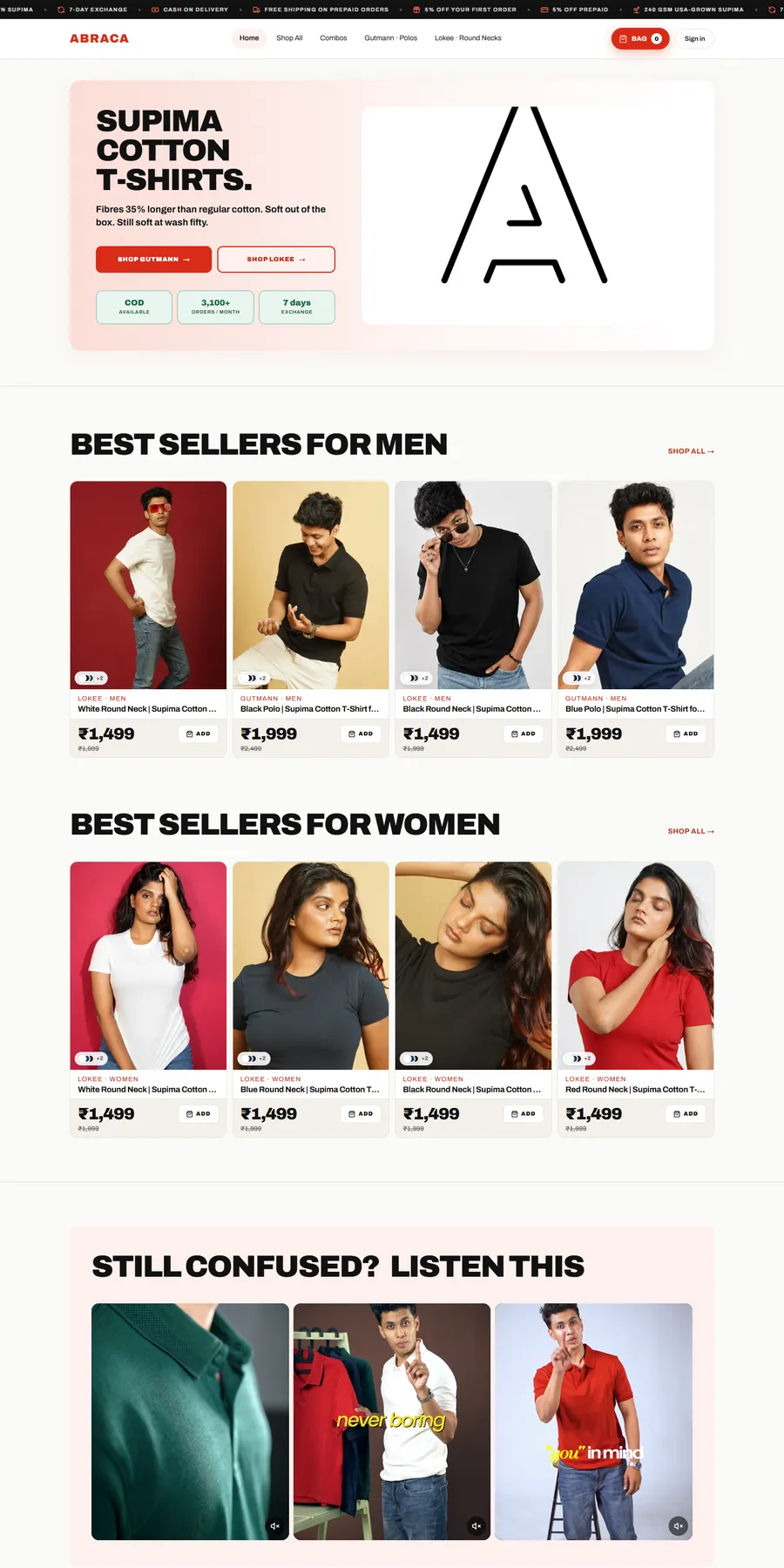
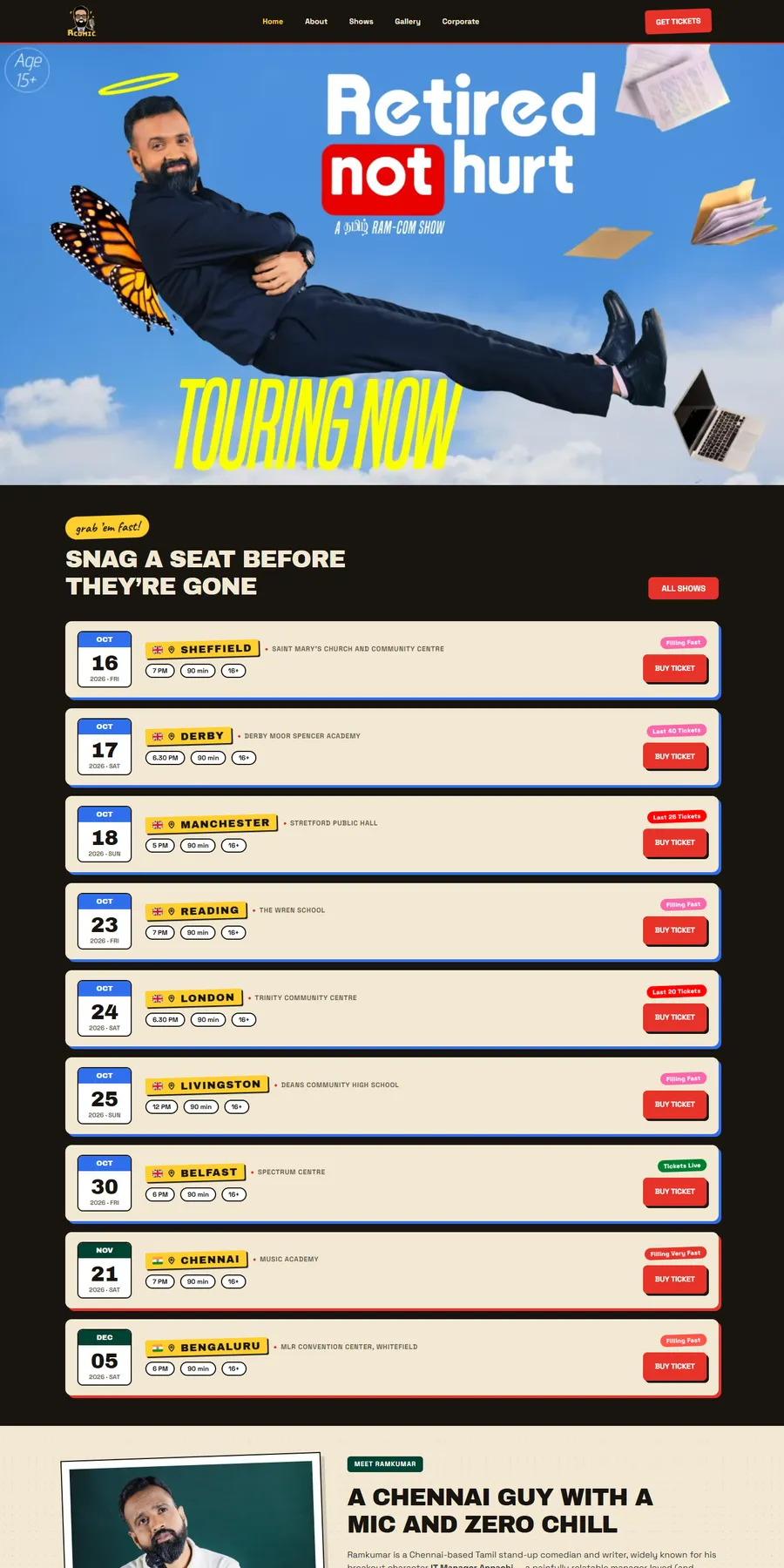
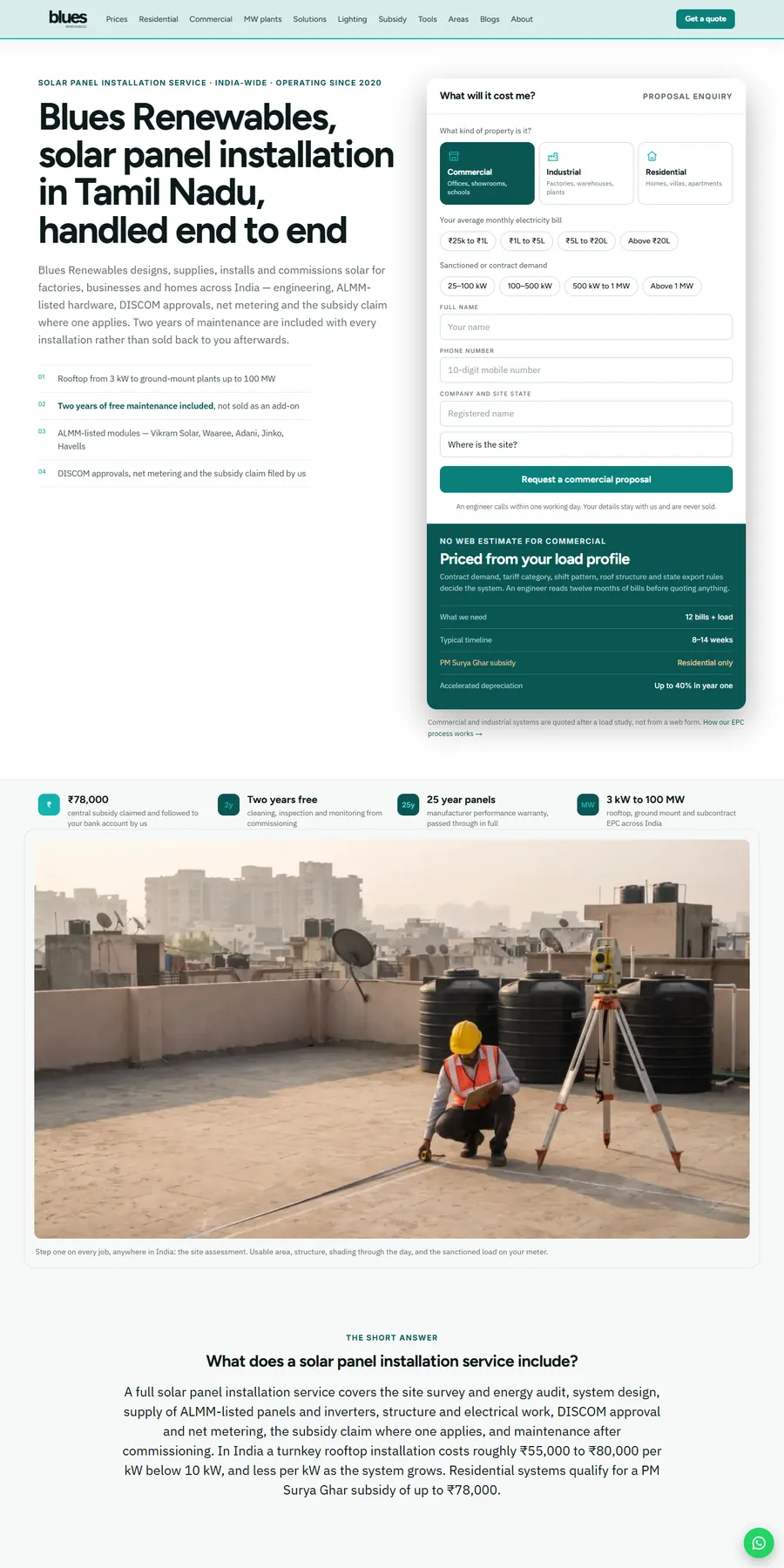
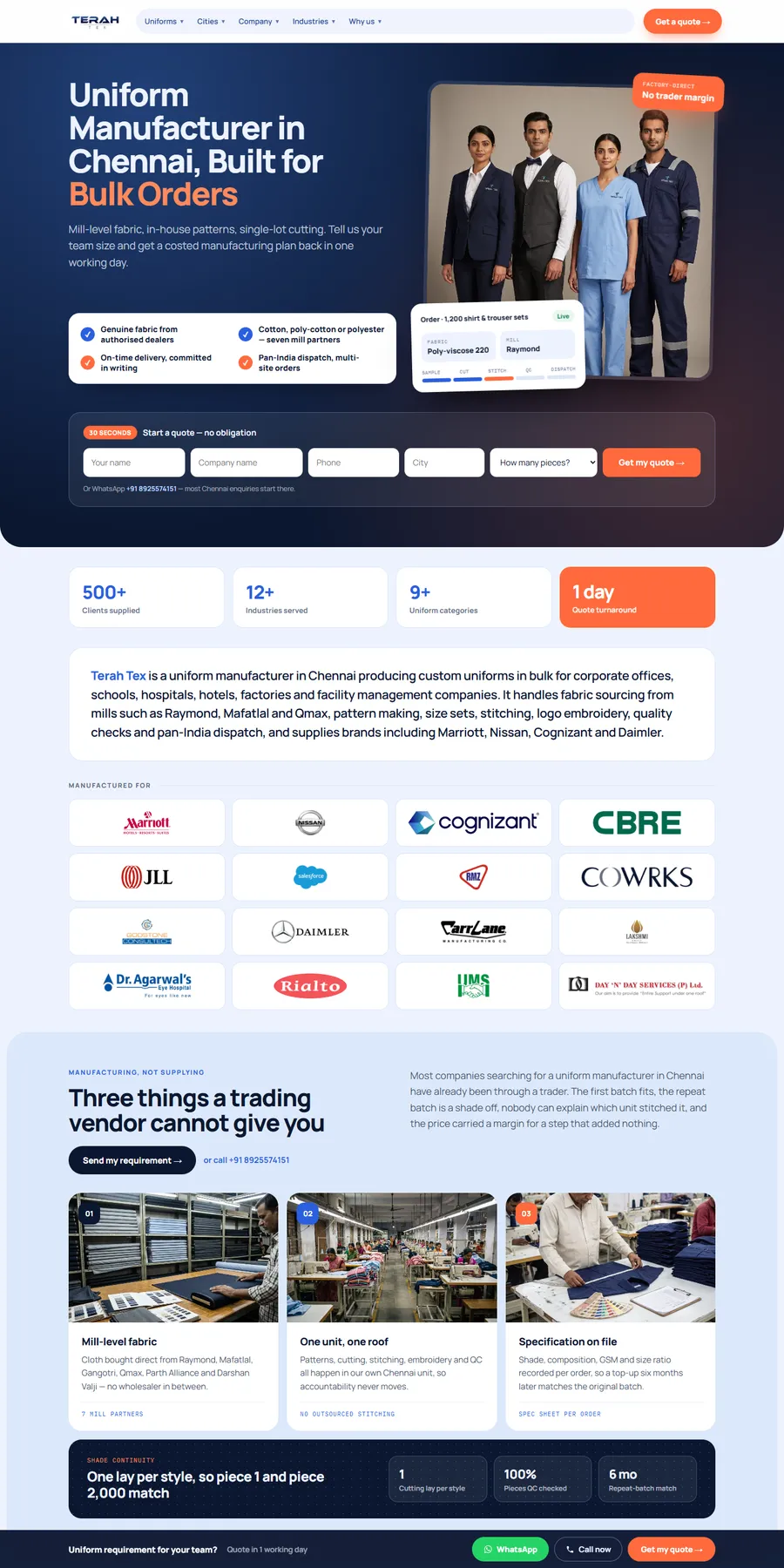
The proof is the lead system behind Blues Renewables, and it transfers because visitors, like solar buyers, choose a local business from what its pages tell them. Blues Renewables, a rooftop solar installer, went from no tracked leads to 7 to 10 inquiries a week, and its Google clicks rose from 14 to 560 a fortnight in two months, with 129 local area guides and every form and call tracked in GA4. For you, the area guides become wine trail and visit pages, and the tracking follows each visitor into your reservation and commerce tools. Terah Tex's two-step quote form took a manufacturer from no website inquiries to about 5 bulk-order leads a week; it is the pattern for private events and weddings. Our Abraca build, a direct-to-consumer apparel store, shows the product pages and checkout flow a shop and club signup need, and rcomic, a performer's site with dated shows, shows an events calendar people actually use.

More websites we have designed and built

Process

How your winery website project runs

Typical timeline: 4 to 8 weeks for most winery, brewery and distillery sites; 8 to 12 weeks for multiple tasting rooms, large catalogs or a platform move. You see progress every week.

  1. Step 01 · Week 1

    Discovery and audit

    We audit your current site, competitors, and how you show up on Google and in AI answers, then agree on goals and a fixed quote.

  2. Step 02 · Weeks 2 to 3

    Strategy and design

    Sitemap, wireframes and full designs for your review. You approve everything before we build.

  3. Step 03 · Weeks 3 to 6

    Build and test

    Development, SEO setup, speed tuning, and testing across devices and browsers.

  4. Step 04 · Launch and beyond

    Launch and grow

    We launch, monitor, and improve based on real data. 30 days of free support included.

What shapes your quote

Scope, not hourly billing

Every project gets a fixed quote within 1 business day, agreed before work starts.

Get my fixed quote →
  • How many tasting experiences, club tiers, products and event pages you need
  • Which commerce, club, reservation and tap list tools we connect
  • Whether you ship direct, and to how many states
  • Whether we write the content and organize photos of your place, people and products
  • Moving from your current site or platform: redirects, keeping pages that rank and setting up tracking first
  • Several tasting rooms or brands under one producer

Winery website questions, answered

Straight answers to what owners ask us, and what they ask Google and AI assistants. Ask us anything else.

How much does a winery website cost?

We quote one fixed price, agreed before work starts, based on the number of pages, features, integrations and content. You get it within 1 business day of a free audit of your current site. There is no hourly billing and no monthly subscription required to keep your site.

How long does it take to build a winery or brewery website?

Most sites take 4 to 8 weeks. Producers with several tasting rooms, large catalogs or a move between commerce platforms take 8 to 12 weeks. You get a dated week-by-week plan, and we aim to launch before your busy season or a release.

Will the site work with Commerce7, WineDirect, Tock or our other tools?

Yes. We build around the commerce, club and reservation tools you already use, through their embeds, links or integrations. If you change platforms later, we change the connections, not the whole site.

Do I own the website, domain and customer list?

Yes, from day one. Code, design, content, domain, hosting, analytics and your customer list are in your name. There is no lock-in and no buyout fee.

Will a new website bring more club members and tastings?

We do not guarantee rankings or sales numbers. What a new site changes is how many of the people who already find you book a tasting, join the club or reorder: clear visit details, a reservation button on every page and club terms they can read. On Blues Renewables, a rooftop solar installer's site, the same lead system took tracked inquiries from none to 7 to 10 a week.

Do we need an age gate on our website?

The spirits industry code from the Distilled Spirits Council calls for a full date-of-birth age check on member websites, and most wineries and breweries use one too. We build one that works on phones and with screen readers and does not block search engines from your public pages.

Can we sell and ship online to any state?

No. Wineries can ship direct in 49 states and DC with the right permits, beer can ship to 11 states and DC, and spirits to only a handful. We limit your shop to the states and products you are licensed for and connect your compliance service. Please confirm licensing with your compliance provider.

Do TTB rules apply to our website?

Yes. TTB says its advertising rules apply to advertisements in any media, including websites and social media. Your site needs the responsible advertiser's name and address, class and type on product pages, alcohol content for spirits, and no misleading claims. We set up the pages for that; we do not certify compliance.

How do I know which tastings and orders came from the website?

We set up GA4 cross-domain measurement into your reservation and commerce tools, connect booking and order events where they support them, and track calls, club signups and event inquiries. You get a plain monthly report by source and page.

Can my staff update the tap list, events and releases?

Yes. You get an editable CMS and training, and the tap list can come straight from your menu tool, so staff update it once and it shows on the site.

How do we show up in ChatGPT and Google AI answers?

We write your hours, walk-in policy, experiences and policies as plain text, add Winery, Brewery or Distillery schema, keep AI search crawlers able to read public pages past the age check and match the site to your Google profile. No one can guarantee an AI mention, but a specific, consistent site gives assistants something accurate to cite.

What results can you show for a winery website?

Results from the same lead system. Blues Renewables, a rooftop solar installer, went from no tracked leads to 7 to 10 inquiries a week, and Google clicks rose from 14 to 560 a fortnight in two months, with area guides and every call and form tracked. Terah Tex's two-step form brings about 5 bulk-order leads a week and is the pattern for private events, and our Abraca store shows the shop and checkout flow a club signup needs.

What makes you different from other winery web design companies?

We put the terms in writing first: a fixed quote in 1 business day, a dated plan, your ownership of everything including the customer list, and no lock-in. The build covers visit pages, reservations, club terms, a state-limited shop, a working age check and tracking by source.
Get your free winery website proposal

Four quick questions. You'll get a fixed quote and a free audit of your current site within 1 business day.

  • ✓ No obligation, no sales pressure
  • ✓ Fixed price, never hourly
  • ✓ Your details stay private

Prefer email? info@billionwebstudio.com

Step 1 of 4~60 seconds
What do you need?