Skip to content
Booking projects for next month. Free website audit with every quote.Claim yours →

Home services and tradesBooking projects for November

Foundation Repair Website Development Company for Repair and Waterproofing Contractors

A homeowner notices a stair-step crack in the brick and a bedroom door that will not latch. A buyer's inspector flags a sloping floor three weeks before closing. Both search on a phone, read two or three sites and book one inspection. We build foundation repair and basement waterproofing sites that explain the symptom, show the repair and the warranty in plain words, book the inspection and show you which calls and forms came from where.

  • Built for foundation repair and basement waterproofing contractors
  • Fixed quote in 1 business day
  • You own everything
yourcompany.com/sticking-doorsDoors sticking?Check your slabBook inspectionTap to callInspection request: piersFrom /sticking-doors · 7:18 pmTracked as a leadSource: GoogleAI ASSISTANTWho fixes foundation cracks in Plano?Your Firm: licensed, written lifetimewarranty terms, 300+ reviews.Source: your website
Illustration: a visit becomes a tracked lead

The short answer

What does a foundation repair website development company do?

A foundation repair website development company builds websites for foundation repair and basement waterproofing contractors that turn a worried homeowner's search about a crack, a sloping floor or a wet basement into a booked inspection. The site has to explain the symptom in plain words, show which repair fits which problem, state the warranty terms exactly, offer financing for a large job and make it easy to call or book from a phone.

For a regional repair company that means a page for each symptom (wall cracks, sticking doors, sloping floors, bowing basement walls, water in the basement, crawl space moisture), a page for each repair method you install (push piers, helical piers, slab piers, pier-and-beam leveling, wall anchors, carbon fiber, interior drain tile, sump pumps, encapsulation), a warranty page, a financing page, a page for real estate transactions, service area pages and a short inspection form that accepts photos.

Billion Web Studio is a foundation repair website development company that delivers this as one fixed-scope project: design, symptom, repair and area pages, an inspection booking flow, LocalBusiness schema, Core Web Vitals targets and GA4 tracking that separates inspection requests, calls and financing applications by source. You own the site, the domain and every account from day one, with no lock-in.

The market

What the numbers say about foundation repair and basement waterproofing contractors online

Foundation and water problems are common, slow to show and expensive to ignore. Homeowners research them for weeks before they call, and most of that research now happens on a phone, inside search results that increasingly answer with AI summaries. The figures below show how many homes have the problem, what homeowners check before they call and how search is changing.

How they choose

How customers find and choose a foundation repair company

Foundation and waterproofing jobs rarely start as emergencies. A symptom appears, the homeowner worries, reads, asks a friend or a forum, gets two or three quotes that often recommend different repairs, and then decides. Home sales add a deadline. Here is how a US homeowner picks a foundation repair or waterproofing company and what your site has to do at each step.

  1. 1

    The symptom: a crack, a door, a wet floor

    A stair-step crack in brick, a gap above a door frame, a floor that slopes, a bowing block wall, water along the basement wall after rain. The first search is the symptom, not your company. Your site needs a page for each symptom that says what it can mean, what is cosmetic and what is not, and when to book an inspection.

  2. 2

    The research: which repair, and is it needed?

    Next come the methods: push piers or helical piers, slab leveling, wall anchors or carbon fiber, interior drain tile or exterior excavation. Homeowners read how each works, where it fits and what it typically involves. Plain method pages with diagrams and real project photos answer that before a salesperson visits.

  3. 3

    The quotes: two or three companies, different answers

    Homeowners often get quotes that recommend different systems and numbers of piers, and popular homeowner videos tell them to get an independent engineer's opinion first. A site that explains how you diagnose, when a licensed engineer is involved and what your report includes reads as the honest one.

  4. 4

    The decision: warranty, financing and proof

    A large repair turns on trust. Homeowners check the warranty terms (what is covered, for how long, whether it transfers when they sell), financing options, your license, years in business, reviews and photos of similar homes. BrightLocal found 54% check a business's website after reading positive reviews.

  5. 5

    The sale: an inspection report with a deadline

    Buyers' inspectors flag movement and water. Agents need a fast inspection, a written scope, an engineer's letter where required and a transferable warranty before closing. A real estate page for agents, buyers and sellers, with a fast-track request form, wins that work.

The problem

Why most foundation repair websites lose booked jobs

What we find again and again when we audit sites in this trade. None of it is about how the site looks.

Leak 01

One services page for a dozen different problems

Many repair sites list piers, anchors, drain tile and encapsulation on one page. A homeowner searching "bowing basement wall" or "doors sticking after drought" finds nothing that matches their problem, so they land on a forum thread or a competitor's symptom page instead.

Leak 02

No warranty terms, only the word "lifetime"

"Lifetime transferable warranty" in a banner, with no page that says what is covered, whose lifetime, how transfer works or what it costs. The FTC's warranty advertising guides say a lifetime claim must state which life it refers to. Homeowners and buyers' agents ask exactly that.

Leak 03

Leads you share with other contractors

Owners on r/Contractor describe lead platforms that sold the same request to several companies, ghost leads and annual contracts. Local Services Ads lead costs have risen, by owners' own accounts on r/PPC and r/LocalServicesAds. Without a site that books its own inspections, every lead is rented.

Leak 04

Stock photos and no proof

Generic crack photos and smiling models instead of your crews, your piers going in, before and after floor readings and finished basements. A homeowner about to approve a large repair wants to see work like theirs, in their area.

Leak 05

A form that asks for everything and a phone number hidden

Long forms before anyone has looked at the house, a phone number only in the footer and a chat bubble that covers the call button on a phone. Each one loses a homeowner who was ready to book.

Leak 06

No idea which page or channel booked the job

Calls, forms, financing applications and agent referrals all land in one inbox. You cannot tell whether Google, Facebook, a home show or a realtor brought the jobs that closed, so you cannot tell what the website is worth.

Our research

We checked 18 real foundation repair websites. Here is what we found.

On October 23, 2026 we opened the homepages of 18 foundation repair and basement waterproofing contractors that rank in Google Maps in 10 US metros, the way a customer would on a phone, and ran a mobile Lighthouse test on each. Every number below comes from that check.

  • 63/100

    median mobile Lighthouse performance score (90 or more is good)

  • 6.3 s

    median time to show the main content on a phone (target: 2.5 seconds or less)

  • 2 MB

    median homepage download on a phone, before anyone scrolls

  • 15 of 16 took longer than 2.5 seconds to show their main content in a mobile Lighthouse test

  • 16 of 18 show a tap-to-call link on the first phone screen

  • 16 of 18 show a clear call, book or quote button on the first screen

  • 10 of 18 have a contact or quote form on the homepage

  • 4 of 18 let visitors book or schedule online

  • 12 of 18 describe the business to Google with business schema markup

  • 17 of 18 have Google Analytics or Tag Manager installed

  • 13 of 18 use call tracking

  • None of 18 show a copyright year of 2024 or older (of the sites that show one)

  • 3 of 18 have images with no alt text

  • 13 of 18 link to a privacy policy

  • 4 of 18 offer live chat or texting

What this means for your foundation repair website

The three biggest gaps in the sample. Each is fixable, and each is a reason a customer picks the next result instead of you.

See how your site compares →
  1. 1

    15 of 16 took longer than 2.5 seconds to show their main content in a mobile Lighthouse test. Google counts 2.5 seconds or less as a good Largest Contentful Paint. Slow first screens lose visitors before they see your phone number.

  2. 2

    Only 4 of 18 let visitors book or schedule online. Online booking turns a late-night visit into a confirmed job or appointment, without phone tag.

  3. 3

    Only 4 of 18 offer live chat or texting. Many customers would rather text than call, especially outside office hours.

How we checked: Google Maps results for “foundation repair” in Houston, Phoenix, Atlanta, Denver, Charlotte, Columbus, Tampa, Nashville, Kansas City, Sacramento; the two highest-ranked independent businesses per city (chains and directory listings left out). 20 homepages sampled, 18 loaded for our checker (the rest blocked automated visits), 16 scored by Lighthouse in mobile mode. Lighthouse is a lab test and varies run to run; it is not the same as Google's real-user Core Web Vitals. Businesses are not named. Checked October 23, 2026.

Generic vs built for you

Why a generic website fails foundation repair and basement waterproofing contractors

A template is built to fit every business, so it fits yours badly. Here is what changes when the site is planned around how customers actually buy.

Generic website compared with a website built for foundation repair and basement waterproofing contractors
What you needGeneric template siteBuilt for foundation repair and basement waterproofing contractors
Symptoms homeowners searchOne "Services" pageA page per symptom: wall and brick cracks, sticking doors and windows, sloping floors, bowing walls, wet basement, crawl space moisture, each linking to the right repair
Repair methodsA bulleted list of productsA page per method you install, with how it works, where it fits, what the crew does on site, photos from your jobs and the warranty that applies
Warranty"Lifetime warranty" in a bannerA warranty page that states what is covered, whose lifetime, how transfer works and any fee, with a sample warranty to download
BookingA long contact formA short inspection request with symptom, address and photo upload, then a call or online booking slot
Financing"Financing available"A financing page with your lender's application link and any advertised terms written with the disclosures Regulation Z requires
Real estate dealsNothing for agentsA page for buyers, sellers and agents with a fast-track inspection request, what the written report includes and how the warranty transfers
Service areasA list of towns in the footerA page per county or city with local soil and water notes, housing types, projects nearby and the office that serves it
Knowing what worksA monthly count of form fillsGA4 events that separate calls, inspection requests, photo uploads and financing clicks by source and page

Free self-check · 2 minutes

What your current foundation repair website is missing

Tick everything your site does today. Each box you cannot tick is a place where a ready-to-buy visitor leaves.

What you need

What every foundation repair website needs

The features that turn a foundation repair website from a brochure into the best salesperson you have. We build all of them.

  1. Must-have · 01

    Tap to call and book an inspection on every page

    Your number as text in the header, a sticky call and book bar on phones, and an inspection request one tap away. The same number appears on your Google Business Profile and in your schema.

  2. Must-have · 02

    Symptom pages written for worried homeowners

    Cracks in drywall, brick and block, sticking doors, sloping floors, bowing or leaning walls, water and efflorescence, crawl space moisture and sagging floors. Each explains what it can mean, what is often cosmetic and when to book an inspection, without scare tactics.

  3. Must-have · 03

    Repair method pages

    Push piers, helical piers, slab piers, pier-and-beam leveling, wall anchors, wall braces, carbon fiber straps, interior drain tile, sump pumps, exterior waterproofing, crawl space encapsulation and dehumidifiers, limited to what you actually install.

  4. Must-have · 04

    How we diagnose, and when an engineer is involved

    What happens at the inspection, the measurements you take, what the written report includes and when you bring in a licensed engineer or provide an engineer's letter. Titles on the page match the credentials of the person doing the work.

  5. Must-have · 05

    A warranty page in plain words

    What each warranty covers, its length, whose lifetime it refers to, whether and how it transfers on sale, any transfer fee and how to make a claim, with the full document available to download.

  6. Must-have · 06

    Financing explained correctly

    Your lender's application link, how approval works and any payment examples written with the required APR and terms. A monthly payment in an ad without them is a Regulation Z problem.

  7. Must-have · 07

    A real estate transaction page

    Fast-track inspections for listings and pending sales, what agents receive in writing, how the warranty transfers to the buyer and who to call with a closing date.

  8. Must-have · 08

    Project gallery with real measurements

    Before and after photos from your jobs by method and area, with what was found and what was installed. Real crews, real trucks, real homes in your service area.

  9. Must-have · 09

    License, insurance and memberships shown accurately

    Your contractor license number where your state requires it in advertising (California and Florida both do), insurance, years in business and any trade memberships you actually hold.

  10. Must-have · 10

    Service area pages with local substance

    A page per county or city with soil and water notes, common housing types and foundation styles, nearby projects and the office that serves it. Fewer, deeper pages beat hundreds of swapped town names.

  11. Must-have · 11

    Reviews linked, never gated

    Your Google rating linked to the profile, written testimonials with permission and review requests sent the same way to every customer after the job.

  12. Must-have · 12

    Fast pages and LocalBusiness schema

    Core Web Vitals targets of LCP 2.5 seconds or less, INP 200 ms or less and CLS 0.1 or less on photo-heavy pages, and LocalBusiness markup per office with address, phone, hours and areas served.

What we build

The foundation repair website we would build for you

Good foundation repair website design starts with the sitemap. Here is the one we would start from for a repair and waterproofing company with one or two offices. We cut or add pages to match the methods you install, the areas you serve and whether you run a crawl space or waterproofing division.

yourcompany.comHome · every section links here

Symptoms

  • Cracks in walls, brick and block
  • Sticking doors and windows
  • Sloping or uneven floors
  • Bowing or leaning basement walls
  • Water in the basement
  • Crawl space moisture and sagging floors
  • Is this crack serious? A homeowner's guide

Foundation repair

  • Push piers
  • Helical piers
  • Slab piers and slab leveling
  • Pier-and-beam leveling
  • Wall anchors and wall braces
  • Carbon fiber wall reinforcement

Waterproofing and crawl spaces

  • Interior drain tile
  • Sump pumps and battery backups
  • Exterior waterproofing
  • Crawl space encapsulation
  • Dehumidifiers
  • Yard drainage

Before you decide

  • Free inspection: what happens
  • How we diagnose and when an engineer is involved
  • Warranty terms and transfers
  • Financing
  • Buying or selling a home
  • Permits and what to expect on install day

Proof and company

  • Project gallery
  • Reviews
  • Licenses, insurance and memberships
  • Our crews and history
  • Careers

Service areas

  • Service area hub
  • County and city pages
  • Office pages
  • Contact and book an inspection

Calls, bookings, leads

How we turn visitors into booked jobs

Good basement waterproofing website design and foundation repair web design are judged by booked inspections, not traffic. You should see where each one came from. This is how we build the path from a worried search to an inspection on your calendar, and track every step.

  • 01A tracked call and book barTap to call and Book inspection stay at the bottom of the screen on phones. Each tap is a GA4 event tagged with the page, so you know whether the bowing wall page or the sloping floor page rang the phone.
  • 02A short inspection request with photosSymptom, address and preferred time first, photos optional, contact details last. The request reaches your CRM or field service software with the page and source attached.
  • 03Online booking where your schedule allowsIf your inspectors run set routes, homeowners can pick a slot by area. If not, the form promises a call back within a time you can keep.
  • 04A fast-track form for agentsAddress, closing date, inspection report upload and who to contact. Tagged separately, because agents who get a fast answer send the next listing too.
  • 05Financing clicks tracked as intentClicks to your lender's application are tracked as their own event, so you can see how many homeowners checked financing before booking.
  • 06Text consent that holds upAn unchecked consent box beside the phone field, naming your company and linking your SMS terms, stored with the lead before any reminder or follow-up text.
  • 07A monthly report you can readCalls, inspection requests, agent requests and financing clicks by source and page, in plain numbers, so you see which channel books inspections and which only brings traffic.

AI search

Homeowners now ask ChatGPT, Google AI Mode and Perplexity whether a crack is serious, what repair it needs and who to call nearby. BrightLocal found 45% of consumers used AI tools for local business recommendations in 2026, up from 6% a year earlier, and Pew found people click a regular result on 8% of Google visits that show an AI summary, against 15% without one. Assistants can only repeat what your site states plainly, so methods, warranty terms, areas and credentials need to be written out in text.

Questions your customers ask AI assistants

  • Is a stair-step crack in my brick wall serious?
  • Push piers or helical piers for a house on clay soil?
  • Who repairs bowing basement walls near Columbus?
  • Does a foundation repair warranty transfer when I sell?
  • Foundation repair company near me with good reviews
  • How do I stop water coming into my basement after rain?
  • Symptom answers in the first lines

    Each symptom page opens with a short, plain answer: what it can mean, what is usually cosmetic, when to book an inspection. That is the passage an assistant can quote.

  • Method pages with the facts stated

    What each repair is, where it fits, what install day involves and the warranty that applies, in text rather than inside a brochure PDF or a video only.

  • Warranty terms an assistant can repeat

    Length, whose lifetime, transfer process and any fee, written on the page. Vague claims give an assistant nothing specific to say about you.

  • One identity across site, profile and listings

    The same company name, offices, phone and service areas on your site, Google Business Profile and directories. We fix mismatches before launch.

  • LocalBusiness schema and clean pages

    There is no foundation-specific schema.org type, so each office is marked up as a LocalBusiness with address, phone, hours and areas served, on fast pages search engines can read.

  • Reviews and proof linked from the site

    Your Google rating linked to the profile, project photos by area and license details. BrightLocal found 97% of consumers read reviews for local businesses.

Compliance and trust

The rules a foundation repair website has to get right

A foundation repair site makes claims about structure, warranties and financing, and it collects phone numbers for follow-up. We build pages and forms that support the rules below. We do not certify legal compliance; your attorney and your state licensing board have the final word.

Contractor license display

California Business and Professions Code 7030.5 requires the license number in all forms of advertising, and CSLB applies that to websites. Florida 489.119(5)(b) requires the certification or registration number in each advertisement regardless of medium. Other states vary, so we set the license block per state.

Lifetime and transferable warranty claims

The FTC's Guides for the Advertising of Warranties and Guarantees (16 CFR Part 239) say a lifetime claim should clearly state which life it refers to, warranty ads should tell buyers how to see the full terms, and a warranty should be advertised only if it is honored promptly and fully.

Financing ads

Regulation Z (12 CFR 1026.24) treats a payment amount, number of payments, down payment or finance charge in an ad as a triggering term that requires the down payment, repayment terms and APR. We write financing pages with your lender's approved wording.

Engineering and diagnosis claims

State law reserves the practice of engineering and the title "professional engineer" for licensed engineers, and some states restrict other engineering titles too. We describe inspections by the credential of the person who does them and say when a licensed engineer is involved, instead of calling every inspection an engineering assessment.

Reviews, testimonials and texts

The FTC rule on consumer reviews and testimonials, in effect since 21 Oct 2024, bans fake reviews, rewards tied to positive sentiment and undisclosed insider reviews. Marketing texts need prior express written consent under the TCPA; the FCC's one-to-one consent rule was vacated in January 2025.

Accessibility and older homes

The Justice Department says the ADA applies to business websites; we build to WCAG 2.2 AA as a target and never call a site "ADA certified". If your crews cut drywall or trim in pre-1978 homes, EPA's RRP rule requires certification, and we show yours only if you hold it.

We build with tools and patterns that support these rules and document what we set up. For legal advice on your own obligations, talk to your attorney.

Asked online

What foundation repair and basement waterproofing contractors ask about websites, answered

We read what foundation repair, waterproofing and crawl space owners ask each other on r/Contractor, r/Construction, r/sweatystartup and r/PPC, a foundation contractor's indexing problem on Local Search Forum, and the questions homeowners leave under the most watched foundation repair videos on YouTube. Owners worry about rented leads and rising ad costs; homeowners ask about price, competing quotes and engineers. These are their questions, paraphrased, with straight answers.

Where owners talkr/Contractorr/PPCr/sweatystartupr/SEOMarketingHacksLocal Search ForumYouTube comments on foundation repair videos

From r/Contractor

“We signed an annual contract with a lead platform and most leads were fake, unreachable or sent to several other contractors. Is paying for shared leads ever worth it?”

Our answer: Contractors in these threads report that a lead can go to the pro the homeowner picked and several others, and that credits for bad leads take a fight. Before signing, check exclusivity, contract length, the refund process for invalid leads and the minimum spend. Then compare cost per booked inspection, not per lead, against what your own site and Google Business Profile bring. Many owners keep a platform for volume while they build direct calls they do not share.

From r/PPC

“Local Services Ads lead prices have jumped and disputes got harder. How do I decide whether they still pay?”

Our answer: Local Services Ads charge per lead, not per click, so the number that matters is cost per job closed. Track every LSA lead to booked inspection and signed job for a month, mark invalid ones and dispute them promptly. Keep your Google Business Profile complete and your reviews current, because LSA ranking leans on them. And make sure your own site books inspections well, so homeowners who skip the ad and click your website still convert.

From r/sweatystartup

“I am starting a crawl space encapsulation business with the truck and tools ready. How do I get my first leads?”

Our answer: A reply named realtors and HVAC companies as the first channels, and both work: home inspectors and agents see wet crawl spaces in every sale, and HVAC techs see failing ducts and humidity. Give them a page that explains what you do and a fast request form. Set up a Google Business Profile with your service area, add photos from every job and ask each customer for a review the same way. A simple site with one page per problem beats a one-page flyer.

From Local Search Forum

“We expanded into a new region and added city pages for a foundation repair contractor, but Google has not indexed them after two months. What else can we try?”

Our answer: The reply suggested links: from the main navigation, the footer, the homepage service area section and outside sites. Pages that only appear in a sitemap and swap the city name often stay unindexed. Give each page something true and local (soil, housing types, nearby projects, the crew that covers it), link it from the service area hub and homepage, then request indexing in Search Console. Google does not promise to index every page.

From r/SEOMarketingHacks

“Homeowners ask for waterproofing but do not know interior from exterior, so we get poor-fit leads. Should we educate on the page or qualify after?”

Our answer: Both. A problem-first path (water at the wall joint, through cracks, in the window wells, a musty crawl space) lets homeowners pick their situation, and a plain comparison page explains interior drainage versus exterior excavation, what each manages or prevents and typical disruption. Then the form asks for the symptom and a photo. Leads arrive better informed, and your inspector starts from the right question.

From YouTube comments on a pier installation video

“Two companies quoted my house, one swears by push piers and one by helical piers. Is one better?”

Our answer: Homeowners ask this under pier installation videos. Push piers are driven using the weight of the structure as the reaction force, so they suit heavier homes; helical piers are screwed in to a measured torque and also work under lighter structures. Your site should explain both, say which you install and why, and describe how you decide on each job. A homeowner who understands the reasoning stops treating two quotes as two opinions.

From YouTube comments on a 40-pier repair video

“An engineer said my house needs 12 piers on one side, but a foundation company quoted 40. Is that kind of difference normal?”

Our answer: Differences happen because scope, spacing and goals (stabilize or lift) vary. Homeowners resolve it by asking each bidder for a written plan showing pier locations and spacing, and by getting an independent engineer's report. Your site earns trust by explaining how you measure, what your written report includes and when a licensed engineer designs or reviews the plan, so your number does not look arbitrary.

From YouTube comments on foundation cost videos

“Every foundation video gets the same comment: how much did it cost? Should our site show prices?”

Our answer: Homeowners ask it under almost every repair video, and a site that refuses to talk about cost sends them elsewhere. You cannot quote a house unseen, but you can explain what drives price: number of piers or anchors, access, depth to load-bearing soil, slab or crawl space, drainage work and permits. Ranges you can stand behind, a financing page with correct disclosures and a free inspection offer answer the question honestly.

From YouTube comments on a foundation cost video

“How do I find an independent structural engineer when searching only shows foundation repair companies?”

Our answer: Search for structural or forensic engineering firms by name, ask the home inspector or a real estate agent for referrals, and confirm the license on your state engineering board's license lookup. On a repair company's site, honesty helps: say whether your inspectors are engineers, when you bring in an independent licensed engineer and whether you will work from a homeowner's own engineer report.

From YouTube comments on a foundation cost video

“Our home inspection noted a minor foundation crack and we have two days to decide whether to buy. What should we do?”

Our answer: Buyers ask this under foundation videos, and it is the moment a repair company can help most. A real estate page with a fast-track inspection request, what the written assessment includes, how quickly you can visit and whether your warranty transfers gives buyers and agents something to act on before the deadline. Many buyers also ask their agent about extending the inspection period or hiring an engineer.

Questions are paraphrased from public posts and comments on Reddit, YouTube, forums and social media. We never quote anyone by name.

Others vs us

Foundation repair website design options: Billion Web Studio vs a website builder template vs a typical contractor marketing agency

The three ways foundation repair and basement waterproofing contractors usually get a website, side by side.

Foundation repair website design options: Billion Web Studio vs a website builder template vs a typical contractor marketing agency
Billion Web StudioWebsite builder templateTypical industry agency
Who owns the site, domain and contentYou do, from day one, in your own accountsYou own the content; the site lives on the builder's platformOften the agency, on a contract you lose the site with if you leave
Contract and pricingFixed quote in 1 business day, agreed before work starts, no lock-inMonthly subscription, and you build it yourselfMonthly retainer, often on a 12-month contract
Symptom and repair method pagesA page per symptom and per method you install, written for your tradeWhatever pages you writeOften templated pages shared across many contractors
Warranty and financing pagesWarranty terms in plain words and financing with required disclosuresUp to youA banner claim and a lender link
Inspection bookingShort request with photo upload, agent fast-track form, booking by areaA contact form to emailA form into the agency's own tracking tool
Call and form tracking by sourceGA4 events for calls, inspections, agent requests and financing clicksBasic form countsTheir dashboard, which may stay with them if you leave
AI search and schemaPlain-text answers, LocalBusiness schema per office, Core Web Vitals targetsUp to youVaries
After launch30 days of free support, then optional care plansBuilder help docsChanges billed or queued inside the retainer

Why Billion Web Studio

What we do better, and why it matters to you

  • A fixed quote in 1 business day, with a free audit

    We review your current site: phone and booking on mobile, symptom and method pages, warranty and financing wording, license display and tracking. Then you get a written scope and one fixed price based on pages, features, integrations and content. No hourly billing.

  • Pages built around how homeowners decide

    Symptom first, then method, then proof and terms. The sitemap follows the questions homeowners and agents actually ask, not a generic contractor template.

  • Warranty and financing claims checked

    We write warranty and financing pages against the FTC warranty guides and Regulation Z triggering terms, and flag every claim for you to confirm before launch.

  • You own everything from day one

    Code, design, content, domain, hosting, analytics and call tracking accounts in your name. If you stop working with us, the site and its history stay with you.

  • Every call and inspection traced to its source

    GA4 events and call tracking that separate calls, inspection requests, agent referrals and financing clicks, so you can see what books jobs.

  • A dated plan and a guarantee on it

    A week-by-week plan, weekly written updates and 30 days of free support after launch. If we slip a date because of us, the next month of support is free.

In writing, before we start

  • Fixed quote in 1 business day

    Scope, deliverables and price agreed in writing, with a free audit of your current site. No hourly billing.

  • Launch date in writing

    A dated week-by-week plan and a written update every week. If we slip because of us, the next month of support is free.

  • You own everything

    Code, design, content, domain and accounts are yours from day one. No 12-month contract, no rented site.

  • 30 days of support included

    We watch rankings, forms and call tracking after launch and fix anything that needs it.

Proof, not promises

Results from websites we have built

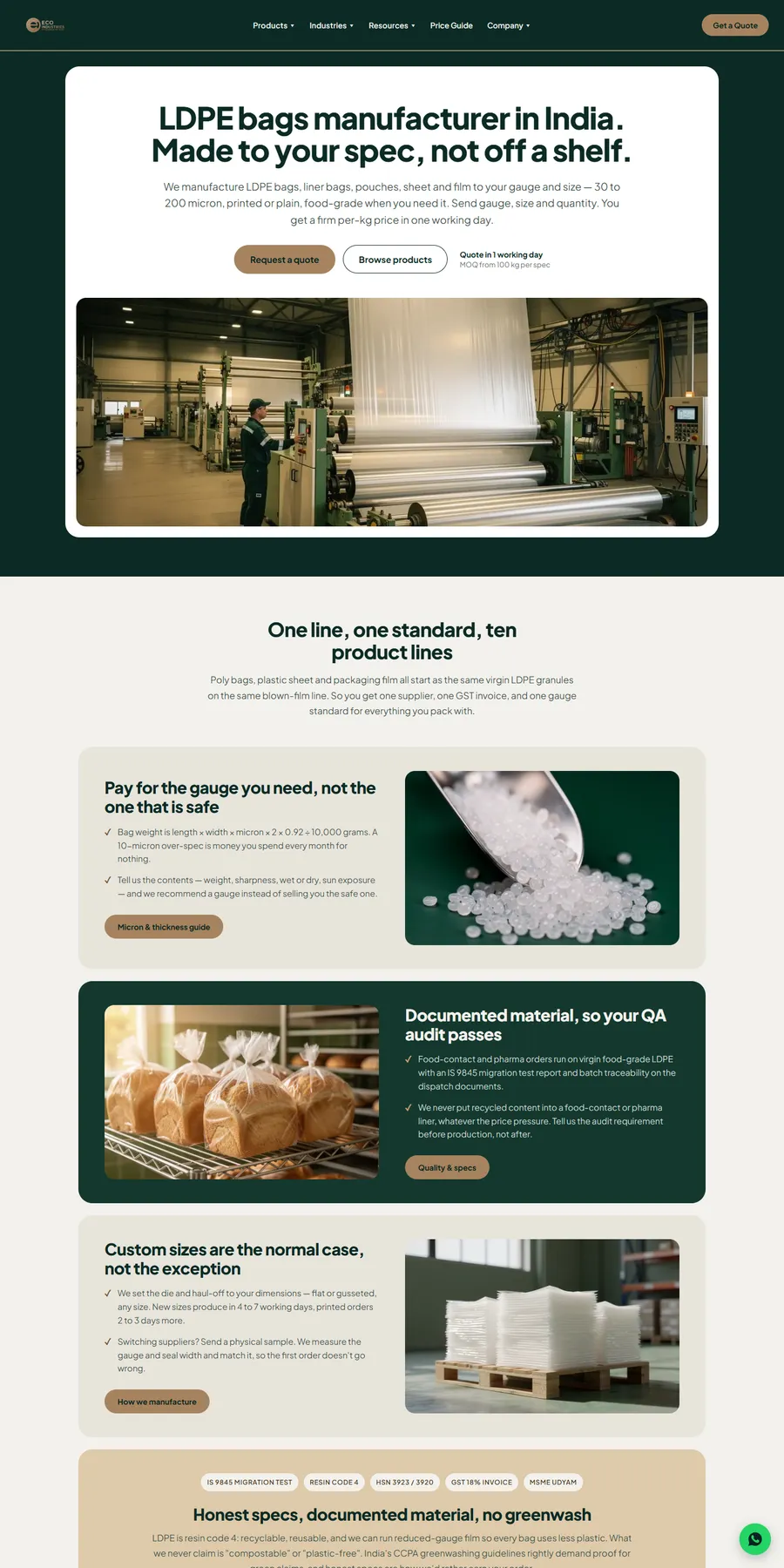
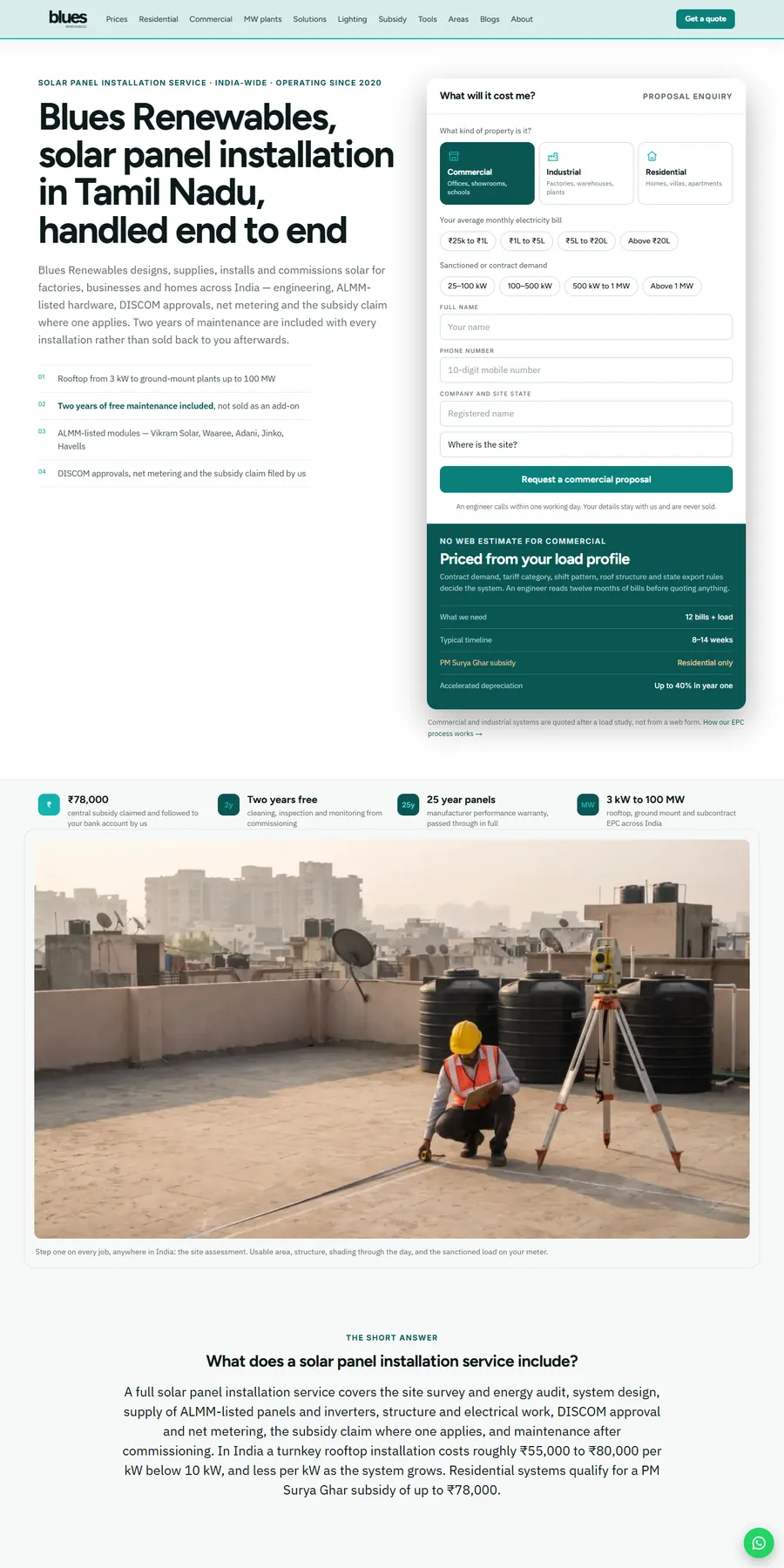
The proof is Blues Renewables, a local rooftop solar installer whose buyers, like yours, face a large home project, compare quotes and need financing and proof before they book a visit. We built price pages, calculators, guides and 129 local area guides with every form and call tracked as a GA4 lead event, and the site went from no tracked leads to 7 to 10 enquiries a week, with Google clicks rising from 14 to 560 a fortnight in two months. For a foundation company, its guides become symptom and method pages and its area guides become service area pages. Terah Tex shows the quote funnel: a two-step quote form that took it from no website enquiries to about 5 qualified leads a week, the model for an inspection request with photos. Eco Industries shows technical buyer guides that explain a product plainly, about 10 leads a week, and 370 broken canonical references fixed.

More websites we have designed and built

Process

How your foundation repair website project runs

Typical timeline: 4 to 8 weeks for most foundation repair and waterproofing sites; 8 to 12 weeks with many service area pages or several offices. You see progress every week.

  1. Step 01 · Week 1

    Discovery and audit

    We audit your current site, competitors, and how you show up on Google and in AI answers, then agree on goals and a fixed quote.

  2. Step 02 · Weeks 2 to 3

    Strategy and design

    Sitemap, wireframes and full designs for your review. You approve everything before we build.

  3. Step 03 · Weeks 3 to 6

    Build and test

    Development, SEO setup, speed tuning, and testing across devices and browsers.

  4. Step 04 · Launch and beyond

    Launch and grow

    We launch, monitor, and improve based on real data. 30 days of free support included.

What shapes your quote

Scope, not hourly billing

Every project gets a fixed quote within 1 business day, agreed before work starts.

Get my fixed quote →
  • How many symptom, method and service area pages you need
  • Whether you run foundation, waterproofing and crawl space as one brand or several
  • Inspection booking setup: form, photo upload, online scheduling and CRM connection
  • Warranty, financing and real estate pages, and how much we write versus adapt from yours
  • Project gallery, photography and video from your crews
  • Moving off your current site: redirects, keeping pages that rank and setting up tracking first

Foundation repair website questions, answered

Straight answers to what owners ask us, and what they ask Google and AI assistants. Ask us anything else.

How much does a foundation repair website cost?

We quote one fixed price, agreed before work starts, based on the number of pages, features, integrations and content. You get it within 1 business day of a free audit of your current site. There is no hourly billing and no per-lead fee.

How long does it take to build?

Most foundation repair and waterproofing sites take 4 to 8 weeks. Sites with many service area pages or several offices take 8 to 12 weeks. You get a dated week-by-week plan before we start and a written update every week.

Why do we need a page for every symptom and repair method?

Because homeowners search the symptom first, then the method. A page for sticking doors, one for bowing walls and one for each repair you install lets each search land on the right answer, and lets you track which problems bring jobs.

We already pay for leads. Why invest in our own site?

Lead platforms and ads can fill the calendar, but owners describe shared leads, rising costs and nothing left when they stop paying. A site you own keeps working, books inspections directly and shows which channel brought the jobs that closed. Many companies run both.

How should we show our lifetime transferable warranty?

On its own page, in plain words: what is covered, how long, whose lifetime it refers to, how transfer works on sale and any fee, with the full document to download. The FTC's warranty guides expect a lifetime claim to say which life it means.

Can we advertise financing on the site?

Yes, with care. Your lender's application link is simple. If you show a monthly payment, number of payments or a 0% offer, Regulation Z requires the APR and repayment terms with it. We use the wording your lender approves.

Will the site work with our CRM or field service software?

Usually, yes. Inspection requests, agent requests and photo uploads go to the CRM or field service software you already use, with page and source attached. We confirm the connection on the audit call before we quote.

Can you build pages for every town we serve?

We build pages for the counties and cities that matter, each with local soil and water notes, housing types, nearby projects and the office that serves it. We avoid hundreds of pages that only swap the town name.

Can we update project photos and pages ourselves?

Yes. The site runs on an editable CMS, and we train you or your office manager on a recorded call before launch. Adding a project, a review or a new area page takes minutes.

How does our company show up in Google Maps and AI answers?

With a page per office that matches your Google Business Profile, reviews linked from the site, plain-text answers about symptoms, methods and warranties, and LocalBusiness schema. No one can guarantee a ranking or an AI mention, but a specific, consistent site gives them facts to use.

We also do basement waterproofing and crawl spaces. One site or several?

Usually one site with clear sections, so the brand and its reviews build in one place and a homeowner with water and a crack finds both answers. A separate brand can make sense for a distinct division. We go through the trade-offs on the audit call.

What makes you different from another foundation repair web design company?

We put the terms in writing first: a fixed quote in 1 business day, a dated plan, your ownership of everything and no lock-in. The build covers symptom and method pages, warranty and financing pages written against the rules, an inspection flow with photos and tracking by source. The same tracked lead system took Blues Renewables, a local service business, from no tracked leads to 7 to 10 inquiries a week.

Get your free foundation repair website proposal

Four quick questions. You'll get a fixed quote and a free audit of your current site within 1 business day.

  • ✓ No obligation, no sales pressure
  • ✓ Fixed price, never hourly
  • ✓ Your details stay private

Prefer email? info@billionwebstudio.com

Step 1 of 4~60 seconds
What do you need?