Skip to content
Booking projects for next month. Free website audit with every quote.Claim yours →

Professional servicesBooking projects for November

Architecture Firm Website Development Company for Better-Fit Projects

A couple with a sloped lot and a budget, a school board short-listing firms for a new wing, a developer checking who designed the building down the street: each opens your website and decides in a minute whether you have done work like theirs. We build architecture sites that look as considered as your buildings and say plainly what each project was, how you work, what it costs to start and how to begin.

  • Built for architecture firms
  • Fixed quote in 1 business day
  • You own everything
yourfirm.com/projects/homesResidentialarchitects inAustinStart a projectTap to callNew project inquiry: new homeFrom /projects/hill-house · 8:05 pmTracked as a leadSource: GoogleAI ASSISTANTArchitect near me for a modern customhome?Your Firm: custom homes and renovations,40 projects shown with facts.Source: your website
Illustration: a visit becomes a tracked lead

The short answer

What does an architecture firm website development company do?

An architecture firm website development company builds websites for architecture firms that turn a portfolio into qualified project inquiries and RFQ shortlists. The site has to show built work beautifully, but also say what each project was: type, location, size, scope, year and the firm's role. It has to explain how working with an architect goes and how fees are set, show who on the team is licensed, and give each kind of client a clear way to start.

For a residential practice that means project pages for custom homes, additions and renovations, a process page from first meeting to construction administration, a fees page that explains percentage, fixed and hourly arrangements, and a short project inquiry form that asks about site, budget and timing. For commercial and institutional firms it means sector pages for education, healthcare, workplace, multifamily and civic work, downloadable project sheets, team bios with licensure and credentials, and a filterable project archive that a selection committee can use.

Billion Web Studio is an architecture firm website development company that delivers this as one fixed-scope project: design that lets your photography lead, project and sector pages with real facts as text, image handling that keeps pages fast on phones, an editable CMS your staff can update, structured data and GA4 tracking of every inquiry and download. You own the site, domain and every account from day one, with no lock-in.

The market

What the numbers say about architecture firms online

NCARB counted over 123,000 architects in the US in 2025, and most work in firms that compete for a limited set of projects. The AIA's billings index has stayed below the line that marks growth, and firms describe a more competitive market than in recent years. When work is tight, the firm whose site shows the right projects, explains the process and makes starting easy gets the shortlist. The numbers below show the market you are competing in.

How they choose

How clients find and choose an architecture firm

Architecture clients rarely find a firm cold. A builder, a friend, a broker or a past client mentions you, a committee issues an RFQ, or a homeowner saves a photo of a house they love. Then they open your site to see whether you have done work like theirs. Here is how residential and institutional clients choose, and what your site has to do at each step.

  1. 1

    The spark: a project and a name

    A homeowner buys a lot or outgrows a house, a developer closes on a site, a school gets a bond passed. They hear your name or see a project and search for you. The first screen has to show the kind of work you do and where, not only a full-screen slideshow.

  2. 2

    The portfolio check: have you done work like ours?

    Clients filter by building type, size, budget range and location in their heads. Project pages with facts as text (type, location, square footage, scope, year, your role) and filters for residential, education or multifamily let them find the three projects closest to theirs in a minute.

  3. 3

    The process and fee question

    Residential clients often do not know what an architect does from schematic design to construction administration, or how fees work. A plain page on the phases, timelines, how fees are set (percentage of construction cost, fixed fee or hourly) and what the first meeting covers removes the reason they hesitate.

  4. 4

    The people check

    Committees and homeowners want to see who will lead the project: licensed architects with their states of licensure, credentials such as LEED AP, and the role each person played on the projects shown. Team pages and project credits answer that.

  5. 5

    The inquiry, interview or RFQ

    Homeowners want a short inquiry form or a call booking. Institutional clients want sector experience, downloadable project sheets and contact details for the principal. Each path should be tracked, so you know which projects and pages start conversations.

The problem

Why most architecture firm websites lose project inquiries

What we find again and again when we audit sites in this trade. None of it is about how the site looks.

Leak 01

Beautiful photos, no words

Full-screen sliders with a project name and nothing else. Search engines and AI assistants cannot read a photograph, and a client cannot tell whether a project was a 2,000 or a 20,000 square foot job, new build or renovation, or whether you were architect of record.

Leak 02

Slow pages from heavy images

Uncompressed photography, autoplay video and animation make portfolio sites some of the slowest on a phone. A homeowner on a phone waits a few seconds and leaves, and slow pages miss the Core Web Vitals targets search engines use.

Leak 03

No path to start a project

An email link in the footer and a contact page with an address. Residential clients do not know what to send, and institutional clients cannot find who to call. Both go to the firm that makes the first step obvious.

Leak 04

Process and fees left unexplained

Homeowners compare architects with design-build firms and drafting services, often without understanding the difference. A site that never explains phases, fees and what an architect adds lets the cheapest option win by default.

Leak 05

Titles and credits that cause problems

Unlicensed designers called "architect" on the team page, or projects shown without saying the role the firm played. In California, misuse of the title is the most common violation the Architects Board sees, and clients and peers notice loose credits.

Leak 06

A site nobody in the office can update

Award-winning launch, then three years without a new project because adding one means calling the developer. The newest work, the reason someone would hire you today, is missing.

Our research

We checked 20 real architecture firm websites. Here is what we found.

On October 23, 2026 we opened the homepages of 20 architecture firms that rank in Google Maps in 10 US metros, the way a customer would on a phone, and ran a mobile Lighthouse test on each. Every number below comes from that check.

  • 61/100

    median mobile Lighthouse performance score (90 or more is good)

  • 9.5 s

    median time to show the main content on a phone (target: 2.5 seconds or less)

  • 2.3 MB

    median homepage download on a phone, before anyone scrolls

  • 20 of 20 took longer than 2.5 seconds to show their main content in a mobile Lighthouse test

  • 2 of 20 show a tap-to-call link on the first phone screen

  • 8 of 20 show a clear call, book or quote button on the first screen

  • 8 of 20 have a contact or quote form on the homepage

  • 5 of 20 let visitors book or schedule online

  • 6 of 20 describe the business to Google with business schema markup

  • 7 of 20 have Google Analytics or Tag Manager installed

  • None of 20 use call tracking

  • 3 of 20 show a copyright year of 2024 or older (of the sites that show one)

  • 2 of 20 have images with no alt text

  • 7 of 20 link to a privacy policy

  • 6 of 20 offer live chat or texting

What this means for your architecture firm website

The three biggest gaps in the sample. Each is fixable, and each is a reason a customer picks the next result instead of you.

See how your site compares →
  1. 1

    20 of 20 took longer than 2.5 seconds to show their main content in a mobile Lighthouse test. Google counts 2.5 seconds or less as a good Largest Contentful Paint. Slow first screens lose visitors before they see your phone number.

  2. 2

    None of the 20 use call tracking. Calls are the main lead source in most local trades. Without call tracking you cannot see which marketing made the phone ring.

  3. 3

    Only 2 of 20 show a tap-to-call link on the first phone screen. Most of these searches happen on phones. A number that is not a tap-to-call link, or sits below the fold, costs calls.

How we checked: Google Maps results for “architecture firm” in Houston, Phoenix, Atlanta, Denver, Charlotte, Columbus, Tampa, Nashville, Kansas City, Sacramento; the two highest-ranked independent businesses per city (chains and directory listings left out). 20 homepages sampled, 20 loaded for our checker (the rest blocked automated visits), 20 scored by Lighthouse in mobile mode. Lighthouse is a lab test and varies run to run; it is not the same as Google's real-user Core Web Vitals. Businesses are not named. Checked October 23, 2026.

Generic vs built for you

Why a generic website fails architecture firms

A template is built to fit every business, so it fits yours badly. Here is what changes when the site is planned around how clients actually buy.

Generic website compared with a website built for architecture firms
What you needGeneric template siteBuilt for architecture firms
PortfolioA grid of photos, each opening a slideshowProject pages with photography first, then the facts as text: type, location, size, scope, year, your role, collaborators and the problem the design solved
Finding relevant workOne long scroll of everythingFilters by sector, project type and location, and sector pages that group the projects a school board or developer wants to see
SpeedFull-size images and autoplay video on every pageResponsive images in modern formats, lazy loading below the fold and video only where it earns its weight, built to Core Web Vitals targets
Process and feesNothing, or "contact us to discuss"A page on the phases of a project, typical timelines, how fees are set and what the first meeting covers, in your words
TeamHeadshots with first namesBios with licensure and states, credentials, roles on featured projects and publications, with licensed and unlicensed titles used correctly
Starting a projectAn email linkA short project inquiry for homeowners (site, scope, budget range, timing) and a principal contact and project sheet downloads for institutional clients
UpdatingEvery change goes through the developerA CMS with a project template your staff fills in: upload photos, enter facts, publish, with training included
Knowing what worksPage viewsGA4 events for inquiries, calls and project sheet downloads, by project and sector page

Free self-check · 2 minutes

What your current architecture firm website is missing

Tick everything your site does today. Each box you cannot tick is a place where a ready-to-buy visitor leaves.

What you need

What every architecture firm website needs

The features that turn an architecture firm website from a brochure into the best salesperson you have. We build all of them.

  1. Must-have · 01

    Project pages with facts as text

    Project type, location, size, scope (new build, addition, renovation, interiors), status and year, your role (architect of record, design architect), the client's problem and how the design answered it, and credits for photographers and collaborators.

  2. Must-have · 02

    A filterable project archive

    Filters by sector and type so a homeowner sees custom homes and a committee sees education work. Each filter view is a real page with its own title and text, not a script-only screen search engines cannot read.

  3. Must-have · 03

    Sector and service pages

    Residential, multifamily, education, healthcare, workplace, civic and religious, hospitality and interiors as you practice them, plus services such as feasibility studies, master planning, historic renovation and sustainable design.

  4. Must-have · 04

    A process page

    From first meeting through schematic design, design development, construction documents, permitting and bidding to construction administration, with typical durations and what the client decides at each step.

  5. Must-have · 05

    A fees and how we work page

    How you set fees (percentage of construction cost, fixed fee, hourly or a mix), what affects them, what the first meeting or feasibility study costs and what a written agreement covers. No numbers unless you want them published.

  6. Must-have · 06

    Team pages with licensure stated correctly

    Each licensed architect with the states of licensure, credentials such as LEED AP or CPHC, AIA membership if current and roles on featured projects. Unlicensed staff carry titles your state board allows.

  7. Must-have · 07

    A start a project path

    For homeowners: a two-step inquiry asking about the site, scope, budget range and timing, with a note on what happens next. For institutional clients: the principal's direct contact and downloadable project sheets by sector.

  8. Must-have · 08

    Fast, sharp photography

    Images served in modern formats at the right size for each screen, lazy loading below the fold, captions and alt text that describe the space. Your photography looks as good as it does in print and loads in seconds on a phone.

  9. Must-have · 09

    Awards, publications and press

    Listed with dates and links, attached to the projects they honor, so they support the work instead of sitting on a page nobody visits.

  10. Must-have · 10

    A CMS your office can run

    A project template with fields for every fact, photo ordering, credits and related projects, so a new project goes live the week the photographer delivers, without calling a developer.

  11. Must-have · 11

    Google Business Profile and directory match

    One name, address and phone for each studio on the site, Google Business Profile, Houzz and the directories you use, with LocalBusiness markup for each studio.

  12. Must-have · 12

    Structured data and accessibility

    Organization and LocalBusiness schema, Person markup for principals, descriptive alt text and captions, keyboard-friendly galleries and a WCAG 2.2 AA target.

What we build

The architecture firm website we would build for you

Good website design for architects starts with the sitemap. Here is the one we would start from for a firm of 5 to 20 people doing custom residential work alongside some education and multifamily projects. We cut or add pages to match the work you want more of.

yourcompany.comHome · every section links here

Projects

  • All projects with filters
  • Custom homes
  • Additions and renovations
  • Multifamily
  • Education
  • Workplace and commercial
  • One page per project

Services and sectors

  • Residential architecture
  • Institutional and civic work
  • Interiors
  • Feasibility studies and master planning
  • Historic renovation
  • Sustainable and high-performance design

Working with us

  • Our process, phase by phase
  • Fees and how we work
  • Architect, designer or design-build: the difference
  • Working with builders and consultants
  • Start a project
  • Project sheets for selection committees

Studio and people

  • About the studio
  • Team, with licensure and credentials
  • Awards and publications
  • News and journal
  • Careers

Contact and policies

  • Contact and studio locations
  • Book an introductory call
  • Privacy and accessibility statement
  • Photography credits

Calls, bookings, leads

How we turn visitors into project inquiries

Good architecture firm web design is judged by the conversations it starts: a homeowner inquiry with a real site and budget, an introductory call, a project sheet downloaded by a committee. You should see which projects and pages produced each one. This is how we build that path and track it.

  • 01A two-step project inquiryStep one: name, email and phone. Step two: project type, location, site status, budget range and timing. A visitor who stops halfway is still a lead, and the answers tell you which inquiries to prioritize.
  • 02Introductory call bookingA Calendly or calendar link for a short first call, offered after the inquiry or on the process page, with confirmations and a note on what to prepare.
  • 03Project sheet downloadsSector project sheets as PDFs on education, healthcare or multifamily pages, each download tracked as an event, with an optional contact form for committees that want a follow-up.
  • 04Click to call and email by studioPhone numbers as text with tap to call, and principal emails on sector pages. Calls and email clicks are tracked by page.
  • 05Spam filteringValidation and server-side checks keep vendor pitches and bots out of the inquiry count, so the numbers reflect real projects.
  • 06Inquiry source trackingEach inquiry is tagged with the project or sector page it came from and the channel (Google, Instagram, Houzz, a referral link), sent to your inbox or CRM without client details in analytics.
  • 07A quarterly report you can readInquiries, calls, bookings and downloads by project, sector and source, so you know which work to photograph, publish and enter for awards next.

AI search

Homeowners and owners' reps now ask ChatGPT, Google AI Mode and Perplexity for architects: 45% of consumers use AI tools for local recommendations (BrightLocal 2026), and Pew found that when Google shows an AI summary, clicks on regular results drop from 15% to 8% of visits. Assistants build answers from text on your site, your Google profile and what others publish about you. A portfolio made only of images gives them nothing to work with.

Questions your clients ask AI assistants

  • Architect near me for a modern custom home on a sloped lot
  • Which Austin architects design passive house or net zero homes?
  • Architecture firms with K-12 school experience in Texas
  • Do I need an architect or a design-build company for a home addition?
  • How do architects charge for a custom home?
  • Who designed this building, and what else have they done?
  • Project facts written as text

    Type, location, size, scope, year and role on every project page. An assistant asked for "architects with school experience in Texas" can only cite firms whose pages say so in words.

  • Sector and specialty pages

    Pages for the work you want, such as custom homes on difficult sites, passive house or K-12, describing your approach and linking the projects, give assistants a specific answer to quote.

  • Plain answers to common questions

    Architect vs design-build, how fees work, how long a custom home takes to design, what happens at the first meeting. Each answered near the top of the right page.

  • People and credentials as text

    Licensed architects, states, credentials and awards on team pages with Person markup, so an assistant can confirm who leads the work.

  • One identity everywhere

    The same firm name, studios, phone and specialties on your site, Google Business Profile, Houzz and directories, and consistent credits in press. Mismatched details split your firm into several weaker versions.

  • AI referrals tracked

    We separate visits from ChatGPT, Perplexity and other assistants in GA4 and add an optional "How did you hear about us?" field with an AI option.

Compliance and trust

The rules an architecture firm website has to get right

An architecture site advertises a licensed profession, credits work that many people contributed to and publishes photographs that someone else owns. We build pages that support the rules. We do not certify compliance; you confirm your state board's rules and your contracts with photographers and clients.

Who may be called an architect

All states and DC license architects. California's Architects Board says misuse of the term is its most common violation: an unlicensed person may not use "architect" or a confusingly similar term in a title or advertising, and a firm may use "architect" or "architecture" in its name or services only with a licensee in management control. We set titles on team pages to match your board.

License numbers and firm registration

Rules on showing license numbers and on registering a firm to offer architectural services vary by state. We add fields for each architect's license by state and the firm's registration, and show them where your board expects them.

Credit for the work

State your firm's role on every project (architect of record, design architect, interiors) and label work done at a previous firm. Credit associate architects, engineers, landscape architects and photographers. Clear credits avoid disputes and read as more credible.

Photography and client permissions

Architectural photographs are licensed from the photographer, often with limits on use. Private homes may need the owner's permission to show interiors or locations. The CMS keeps credit and license fields for every image and lets you hide addresses.

Written contracts and public selection

California requires a written contract before architectural work starts, and federal A/E work is chosen on qualifications using the SF330 form under the Brooks Act. Your process page explains your agreement, and each project sheet carries what SF330 Section F asks of an example project: title and location, year completed, owner, scope, size, cost and relevance.

Reviews and accessibility

The FTC rule in effect since 21 October 2024 bans fake reviews and rewards for positive ones. Image-heavy sites need alt text, captions and keyboard-friendly galleries; we build to a WCAG 2.2 AA target and never call a site "ADA certified".

We build with tools and patterns that support these rules and document what we set up. For legal advice on your own obligations, talk to your attorney.

Asked online

What architecture firms ask about websites, answered

We read what architects ask each other on the Archinect forum and r/Architects, what small firm owners ask on the Alignable business forum, and the questions viewers leave under YouTube videos about winning architecture clients and building firm websites. The same themes come up: portfolios that look good but say little, whether drawings belong online, how to talk about fees, better-paying clients, and whether a marketing agency is worth it. These are their questions, paraphrased, with factual answers.

Where owners talkArchinect forumr/ArchitectsAlignable forumYouTube comments on architecture business videos

From Archinect forum, a thread on setting up a small firm

“Peers said our small firm's website is hard to navigate and has few finished images. What should it show?”

Our answer: Replies in the thread said clients want finished buildings, renderings and 3D views, not just floor plans. Lead with your three to six best completed projects, each with photos and a short fact block: type, location, size, scope, year and your role. Keep navigation to a few clear items: Projects, Process, Studio, Contact. If you have little built work yet, label renderings as proposed and say so.

From Archinect forum

“Prospects show interest but do not commit, and my long-time clients have retired. Should I hire a marketing agency?”

Our answer: Before paying for marketing, check what a prospect sees after the first conversation: recent work like theirs, a plain explanation of process and fees, and an easy next step. If those are missing, ads and posts send people to a site that cannot close. If you hire an agency, ask who owns the site and accounts, what is measured, and how long the contract runs. Get the answers in writing.

From Archinect forum

“Should we publish our construction drawings or BIM models on our website?”

Our answer: Architects in the thread said no to native files and full sets, which they treat as instruments of service, and some share image exports of selected details instead. One noted clients mostly want to see finished buildings and construction details. A middle path: show one or two annotated details or diagrams per project that explain a design decision, and keep sets and models private.

From Archinect forum

“Does social media pay off for an architecture firm, or is local networking plus basic SEO better?”

Our answer: The thread had no hard data, and its practical advice was to use the website for articles that answer clients' real questions, pick one social platform you can keep up, and keep networking in person. A site with project facts as text, a process page and a clear inquiry path supports all three, because every channel sends people back to it.

From Archinect forum

“I am starting my own practice. How do I find the first clients?”

Our answer: Experienced founders in the thread said finding clients is the hardest part, advised lining up a few before leaving your job, and suggested becoming known for a few specialties. Online, that means a short site that states those specialties plainly, shows the work you led with your role labeled, and gives referred clients one obvious way to reach you. Check your state board's rules on firm names and titles first.

From Alignable forum for small business owners

“Our marketing mostly brings small-budget homeowners. How does a small residential firm attract better-paying clients?”

Our answer: Replies said to stop competing with low-cost drafting, define services phase by phase, raise fees, vet clients, and build referral ties with contractors and realtors. A website supports that by showing the projects you want more of first, explaining your full service and process, publishing the work in trusted outlets with testimonials, and asking inquiries about scope, site and budget range before a call.

From r/Architects

“What marketing ideas actually work for a small architectural practice?”

Our answer: Architects asking this on Reddit are usually weighing social media, content and referrals. Start with what turns any of them into an inquiry: a site that names your specialties, shows recent work with facts as text, explains process and fees, and offers a short start-a-project form. Then pick one channel you can keep up, and track which one produces inquiries.

From YouTube comments on a video about getting architecture clients

“What platform should an architect use to put a firm portfolio online?”

Our answer: Any platform works if you own the domain, can add projects yourself and can control page titles, text and image sizes. Builders are quick to start; a custom build on a CMS gives you project templates, filters and speed control. Whatever you choose, register the domain in your own name and keep original photos and project text in your own files.

From YouTube comments on a video about getting architecture clients

“How do architects charge, and should our website say anything about fees?”

Our answer: Common arrangements are a percentage of construction cost, a fixed fee, hourly billing or a mix, often set out phase by phase in a written agreement. California, for one, requires a written contract before work starts. You do not need to publish numbers, but explaining which method you use, what affects the fee and what the first meeting covers stops prospects from guessing.

From YouTube comments on a WordPress architecture site tutorial

“My template site's header breaks on phones. Does mobile really matter for an architecture firm?”

Our answer: Yes. Pew reports 91% of US adults own a smartphone, and referred clients often open your link on a phone first. Check that menus work, images load quickly at phone size and contact details can be tapped. Search engines also measure speed and layout shifts through Core Web Vitals, which heavy galleries often fail.

From YouTube comments on a video about freelancing as an architect

“How do I hire an architect online, and what should I check?”

Our answer: Confirm the license with the state architecture board's online lookup, since all states license architects and restrict the title. Then look for completed projects like yours with facts and the firm's role stated, a clear process, how fees are set, and a written agreement before work begins. A firm website that answers these makes the first call shorter.

Questions are paraphrased from public posts and comments on Reddit, YouTube, forums and social media. We never quote anyone by name.

Others vs us

Architecture firm website design options: Billion Web Studio vs a website builder template vs a typical design agency

The three ways architecture firms usually get a website, side by side.

Architecture firm website design options: Billion Web Studio vs a website builder template vs a typical design agency
Billion Web StudioWebsite builder templateTypical industry agency
Who owns the site, domain and contentYou do, from day one, in your own accountsYou own the content; the site lives on the builder's platformUsually you, sometimes hosted on the agency's servers
Contract and pricingFixed quote in 1 business day, agreed before work starts, no lock-inMonthly subscription, you build it yourselfProject fee, often with hourly changes and a retainer for updates
Project pagesPhotos plus facts as text, credits and related projectsA gallery templateStriking galleries, often light on text
Speed on phonesOptimized images, built to Core Web Vitals targetsDepends on the template and your uploadsVaries; heavy animation is common
Process, fees and start a projectPages for each, with a two-step inquiryWhatever you writeOften a contact page
Updating projectsA project template your staff fills in, with trainingEasy, within the template's limitsOften through the agency
Inquiry trackingInquiries, calls and downloads by project and source in GA4Basic form countsVaries
AI search structureProject and team facts as text, Organization, LocalBusiness and Person schemaDepends on the templateOften not part of the scope

Why Billion Web Studio

What we do better, and why it matters to you

  • A fixed quote in 1 business day, with a free audit

    We review your current site's projects, speed, inquiry path, team pages and tracking, then send a written scope and one fixed price based on pages, features, integrations and content. No hourly billing.

  • Design that serves the work

    Your photography leads and the layout stays quiet, then the facts follow in text. Considered, fast and specific, not a design statement that competes with your buildings.

  • A project template your office will use

    Every fact has a field, so adding a project is a short job for anyone in the studio. We train your team and document it.

  • Built for both kinds of client

    A clear inquiry path for homeowners and project sheets and sector pages for committees, each tracked, so the site serves the work you want more of.

  • You own everything from day one

    Code, design, content, domain, hosting, Google Business Profile and GA4 in your name. No lock-in, and any developer can take the site over later.

  • A dated plan and a guarantee on it

    A week-by-week plan, weekly written updates and 30 days of free support after launch. If we slip a date because of us, the next month of support is free.

In writing, before we start

  • Fixed quote in 1 business day

    Scope, deliverables and price agreed in writing, with a free audit of your current site. No hourly billing.

  • Launch date in writing

    A dated week-by-week plan and a written update every week. If we slip because of us, the next month of support is free.

  • You own everything

    Code, design, content, domain and accounts are yours from day one. No 12-month contract, no rented site.

  • 30 days of support included

    We watch rankings, forms and call tracking after launch and fix anything that needs it.

Proof, not promises

Results from websites we have built

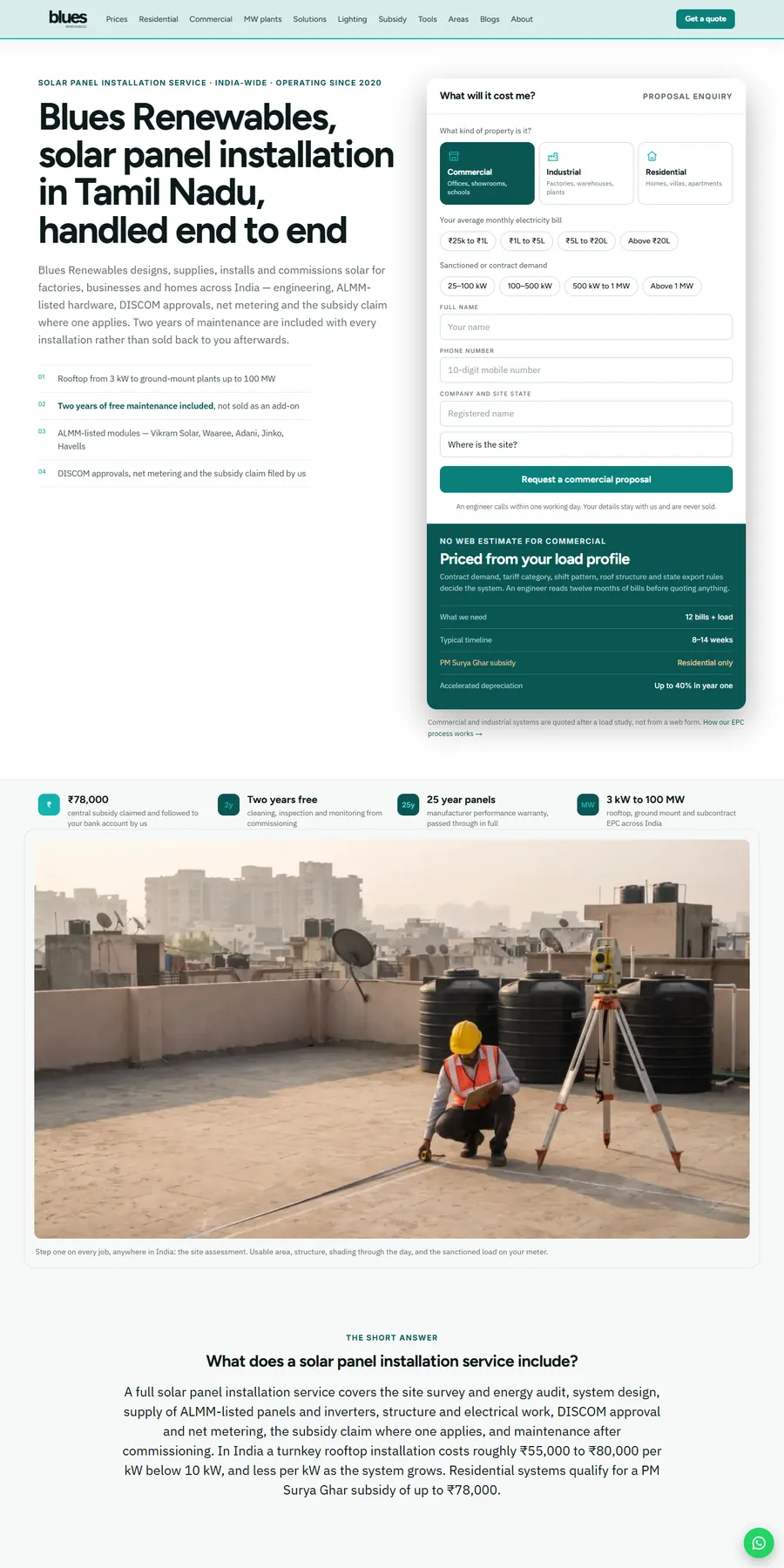
Our proof is in structured, fact-rich sites that turn into inquiries. For Eco Industries we built a 44-page catalogue with technical buyer guides and fixed 370 broken canonical references, and the site went from no enquiries to about 10 leads a week: the same pattern as project pages with real facts and process guides for clients. Blues Renewables, a local installer, shows the inquiry side: project, price and area pages with every call and form tracked, taking the site from no tracked leads to 7 to 10 enquiries a week, with Google clicks rising from 14 to 560 a fortnight in two months. Trucks India shows we can keep a large archive in order: 497 models and 1,299 variant pages with filters and comparisons, the structure a filterable project archive needs.

More websites we have designed and built

Process

How your architecture firm website project runs

Typical timeline: 6 to 8 weeks for most architecture sites; 8 to 12 weeks with a large project archive or several studios. You see progress every week.

  1. Step 01 · Week 1

    Discovery and audit

    We audit your current site, competitors, and how you show up on Google and in AI answers, then agree on goals and a fixed quote.

  2. Step 02 · Weeks 2 to 3

    Strategy and design

    Sitemap, wireframes and full designs for your review. You approve everything before we build.

  3. Step 03 · Weeks 3 to 6

    Build and test

    Development, SEO setup, speed tuning, and testing across devices and browsers.

  4. Step 04 · Launch and beyond

    Launch and grow

    We launch, monitor, and improve based on real data. 30 days of free support included.

What shapes your quote

Scope, not hourly billing

Every project gets a fixed quote within 1 business day, agreed before work starts.

Get my fixed quote →
  • How many projects we migrate or build pages for, and how many photos each
  • Sector, service and studio pages
  • Whether we write project descriptions, process and fee pages from interviews with you
  • Project filters, archive structure and project sheet downloads
  • Video, drawings or interactive plans on project pages
  • Moving off an old site: URLs, redirects, DNS and email records

Architecture firm website questions, answered

Straight answers to what owners ask us, and what they ask Google and AI assistants. Ask us anything else.

How much does an architecture firm website cost?

We quote one fixed price, agreed before work starts, based on the number of pages and projects, features, integrations and content. You get it within 1 business day of a free audit of your current site. There is no hourly billing.

How long does it take?

Most architecture sites take 6 to 8 weeks; sites with a large project archive or several studios take 8 to 12 weeks. Gathering photos and project facts is usually the longest step, so we start it in week one. You get a dated week-by-week plan.

Can our staff add new projects without calling you?

Yes. We build a project template in the CMS with a field for every fact, photo ordering and credits, and train your team. Adding a project takes minutes once the photos are ready.

Will a photo-heavy site be slow?

It does not have to be. We serve each image in a modern format at the size each screen needs, lazy load images below the fold and use video sparingly, and we test against Core Web Vitals targets before launch.

Should we publish our fees?

Most firms do well explaining how fees are set (percentage of construction cost, fixed fee or hourly), what affects them and what the first meeting covers, without publishing numbers. If you want ranges published, we add them.

Can we show projects we led at a previous firm?

Usually yes, if you label them clearly as work done at that firm and state your role, and your agreements allow it. We add a role field and a previous firm label to the project template.

Do we own the website and domain?

Yes, from day one. Code, design, content, domain, hosting, Google Business Profile and GA4 are in your name, and there is no lock-in.

Will a new website bring more projects?

We do not guarantee rankings or project numbers. A new site changes how many visitors send a usable inquiry and whether you can see which projects and pages produced them. On Blues Renewables, a local installer's site we built, the same tracked system took enquiries from none to 7 to 10 a week.

How does our firm show up in ChatGPT and Google AI answers?

AI assistants read text. We write project facts, sectors, process and team credentials as plain text and add Organization, LocalBusiness and Person schema. No one can guarantee an AI mention, but specific pages give assistants something accurate to cite.

What makes you different from another architecture firm web design company?

Many architecture site designers focus on striking galleries and leave out the words clients and search engines need. We build sites where the photography leads and the facts follow, pages load fast on phones, your staff can add projects themselves and every inquiry is tracked. The terms are in writing first: a fixed quote in 1 business day, a dated plan and no lock-in.

Get a free audit and a fixed quote for your firm's site

Four quick questions. You'll get a fixed quote and a free audit of your current site within 1 business day.

  • ✓ No obligation, no sales pressure
  • ✓ Fixed price, never hourly
  • ✓ Your details stay private

Prefer email? info@billionwebstudio.com

Step 1 of 4~60 seconds
What do you need?