Skip to content
Booking projects for next month. Free website audit with every quote.Claim yours →

Health and wellnessBooking projects for November

Audiology Website Development Company for More Booked Hearing Tests

A daughter books her father's first hearing test after he misses half of Sunday dinner. A retiree compares your prices with the warehouse club and an over-the-counter pair. A tinnitus patient reads at 1 a.m. We build audiology websites that answer each of them on the right page, show your credentials, trial terms and prices plainly, and turn the visit into a booked appointment you can trace to its source.

  • Built for audiology practices and hearing aid centers
  • Fixed quote in 1 business day
  • You own everything
yourclinic.com/hearing-testHearing tests inSarasotaBook hearing testTap to callNew booking: hearing testFrom /hearing-test · 7:41 pmTracked as a leadSource: GoogleAI ASSISTANTAudiologist near me with a 30-day trial?Your Clinic: Au.D. audiologists, 45-daytrial, prices posted online.Source: your website
Illustration: a visit becomes a tracked lead

The short answer

What does an audiology website development company do?

An audiology website development company builds websites for audiologists and hearing aid centers that turn people who have put off hearing help for years into booked hearing evaluations, and give existing patients a fast way to book repairs, cleanings and adjustments. The site has to win against the warehouse club, over-the-counter hearing aids sold online, benefit networks and manufacturer-owned chains, so it must show what a professional fitting adds and what it costs.

For an independent practice that means a book-a-hearing-test path on every page, pages for hearing evaluations, hearing aids by style and technology level, tinnitus, earwax removal, custom earmolds and hearing protection, pediatric and balance testing where you offer them, a plain page on OTC hearing aids and how you help people who bought them, your trial period and refund terms in text, a Medicare and insurance page, real audiologist bios with credentials, and a page for each location.

Billion Web Studio is an audiology website development company that delivers this as one fixed-scope project: design, service and location pages, booking tied to your scheduling system where it allows, HIPAA-ready forms through vendors that sign a BAA, schema markup, and GA4 tracking that separates new hearing tests from existing patient service calls. You own the site, domain and content from day one, with no manufacturer co-op strings and no lock-in.

The market

What the numbers say about audiology practices and hearing aid centers online

Most people who need hearing help still do not have it, and the people who do act take years to get there. They now have more places to buy than ever: your clinic, a warehouse club, an OTC pair online or a benefit network's list. These figures show the size of that gap, how slowly patients move and where they look before they call.

How they choose

How patients find and choose an audiology practice

A hearing patient rarely acts on the first sign. Someone at home notices first, the patient waits, and when they do search they compare prices, technology and trust across very different sellers. Here is how a US patient picks a hearing clinic and what your site has to do at each step.

  1. 1

    The nudge: someone else notices first

    A spouse is tired of the TV volume, or a daughter sees her father miss a conversation. Often she is the one who searches and books. Your site needs pages written for family members too: signs of hearing loss, how to bring it up, what a first visit is like and how long it takes.

  2. 2

    The wait: years, not weeks

    MarkeTrak 2025 puts the gap between noticing and buying at about 4 years, and only 22% of people with hearing difficulty got a hearing aid recommendation from a doctor. Free guides, an online hearing check and a newsletter keep you in front of people who are not ready yet, without pressure.

  3. 3

    The comparison: price, OTC and the warehouse club

    Patients ask in forums why clinics will not quote a price, and whether an OTC pair or a big-box fitting will do. A site that states price ranges by technology level, what is included, what the trial period is and when an OTC device is a reasonable choice earns the call that a "call for pricing" page loses.

  4. 4

    The trust check: who will fit me

    Patients look at the audiologist's credentials, real photos, Google reviews and whether the practice is independent or tied to one brand. A Reddit thread from October 2025 shows a first-time buyer trusting an ENT office more than a private clinic, even though the clinic answered the phone and could see her the next day. Your bios, reviews and independence have to do that work on the page.

  5. 5

    The booking and the long relationship

    Booking has to work on a phone for someone in their seventies, or for the daughter booking for him. After the fitting come follow-ups, cleanings, repairs, batteries and a new device every few years. Online booking for service visits, a repair drop-off page and reminders bring that patient back for the next set.

The problem

Why most audiology websites lose new patients

What we find again and again when we audit sites in this trade. None of it is about how the site looks.

Leak 01

Your site sells a manufacturer, not your practice

Co-op and manufacturer-supplied sites lead with one brand's devices and stock photos. An owner on r/audiology warned years ago that manufacturer marketing partnerships build their brand, not yours, and leave you looking like "just another hearing aid shop". A patient comparing three clinics sees no reason to pick you.

Leak 02

"Call for pricing" sends shoppers elsewhere

Patients on r/HearingAids describe calling clinics with an exact model and hearing "it depends". Meanwhile the warehouse club and OTC sellers publish prices. Your site does not have to list every model, but with no price ranges, no explanation of bundled or itemized fees and no trial terms, the shopper books where the numbers are visible.

Leak 03

OTC hearing aids are ignored or attacked

Since October 2022 adults with perceived mild to moderate loss can buy hearing aids without a prescription. Many clinic sites say nothing about OTC devices, or only warn against them. People who bought one, or are about to, have no reason to visit, though they will need testing, fitting help and service that you can sell.

Leak 04

New patients and service calls share one phone line

A first hearing test is worth far more than a cleaning appointment, yet both arrive as the same call and the same contact form. Without separate tracking you cannot tell whether Google, a seminar, a physician referral or a benefit network brought the new patients.

Leak 05

Tinnitus, earwax and pediatric work is invisible

Many sites list services as one bullet list. Tinnitus evaluation, cerumen removal, custom musician and swim plugs, auditory processing testing, balance testing and cochlear implant referrals each have their own searches and their own patients, and a bullet point does not rank or convert for any of them.

Leak 06

Hard to read for the people who need it most

Small gray text, carousels, video with no captions and tiny buttons make a hearing clinic site hard for older visitors to use. Captions matter more here than almost anywhere: your visitors are people who struggle to hear audio.

Our research

We checked 13 real audiology websites. Here is what we found.

On October 23, 2026 we opened the homepages of 13 audiology practices and hearing aid centers that rank in Google Maps in 10 US metros, the way a customer would on a phone, and ran a mobile Lighthouse test on each. Every number below comes from that check.

  • 58/100

    median mobile Lighthouse performance score (90 or more is good)

  • 5.3 s

    median time to show the main content on a phone (target: 2.5 seconds or less)

  • 1.8 MB

    median homepage download on a phone, before anyone scrolls

  • 9 of 10 took longer than 2.5 seconds to show their main content in a mobile Lighthouse test

  • 7 of 13 show a tap-to-call link on the first phone screen

  • 13 of 13 show a clear call, book or quote button on the first screen

  • 4 of 13 have a contact or quote form on the homepage

  • 3 of 13 let visitors book or schedule online

  • 8 of 13 describe the business to Google with business schema markup

  • 5 of 13 have Google Analytics or Tag Manager installed

  • 4 of 13 use call tracking

  • None of 13 show a copyright year of 2024 or older (of the sites that show one)

  • 2 of 13 have images with no alt text

  • 9 of 13 link to a privacy policy

  • 3 of 13 offer live chat or texting

What this means for your audiology website

The three biggest gaps in the sample. Each is fixable, and each is a reason a customer picks the next result instead of you.

See how your site compares →
  1. 1

    9 of 10 took longer than 2.5 seconds to show their main content in a mobile Lighthouse test. Google counts 2.5 seconds or less as a good Largest Contentful Paint. Slow first screens lose visitors before they see your phone number.

  2. 2

    Only 3 of 13 let visitors book or schedule online. Online booking turns a late-night visit into a confirmed job or appointment, without phone tag.

  3. 3

    Only 3 of 13 offer live chat or texting. Many customers would rather text than call, especially outside office hours.

How we checked: Google Maps results for “audiologist” in Houston, Phoenix, Atlanta, Denver, Charlotte, Columbus, Tampa, Nashville, Kansas City, Sacramento; the two highest-ranked independent businesses per city (chains and directory listings left out). 20 homepages sampled, 13 loaded for our checker (the rest blocked automated visits), 10 scored by Lighthouse in mobile mode. Lighthouse is a lab test and varies run to run; it is not the same as Google's real-user Core Web Vitals. Businesses are not named. Checked October 23, 2026.

Generic vs built for you

Why a generic website fails audiology practices and hearing aid centers

A template is built to fit every business, so it fits yours badly. Here is what changes when the site is planned around how patients actually buy.

Generic website compared with a website built for audiology practices and hearing aid centers
What you needGeneric template siteBuilt for audiology practices and hearing aid centers
Booking a first visitA contact form that says someone will call backA two-step book-a-hearing-test form, or booking into your scheduler where it allows, with the first visit explained: how long it takes, who should come along and what it costs
Prices"Call for pricing" or nothing at allPrice ranges by technology level, what each package includes, itemized service fees if you unbundle, and financing options, written as text you approve
OTC hearing aidsSilence, or a warning pageA plain page on who OTC devices suit, what a hearing test tells you first, and the fitting, programming and service visits you offer people who buy their own
Trial and returns"Risk-free trial" with no detailsYour trial length, what is refundable, any non-refundable fee and how returns work, matching your state's rules and your purchase agreement
Medicare and insuranceA row of insurance logosA page that explains what Original Medicare covers, how Medicare Advantage hearing benefits and benefit networks work at your clinic, and the plans you accept, kept current
CliniciansStock photos and "our experienced team"Real photos and bios with each person's credential stated correctly: Au.D., CCC-A, board certification or licensed hearing instrument specialist
AccessibilitySmall text, autoplay video, no captionsLarge type, strong contrast, big tap targets and captions on every video, built to a WCAG 2.1 AA target
Knowing what worksA monthly count of form fillsGA4 events that separate new hearing tests, hearing aid consults, service bookings and calls, by source and page, with no health details sent to ad platforms

Free self-check · 2 minutes

What your current audiology website is missing

Tick everything your site does today. Each box you cannot tick is a place where a ready-to-buy visitor leaves.

What you need

What every audiology website needs

The features that turn an audiology website from a brochure into the best salesperson you have. We build all of them.

  1. Must-have · 01

    Book a hearing test from every page

    A button and a tap-to-call number in the header and a sticky bar on phones. The booking form asks for the minimum, offers "booking for a family member", and confirms by email or text with clear consent.

  2. Must-have · 02

    A first visit page

    What happens at a comprehensive hearing evaluation, how long it takes, why bringing a family member helps, what it costs or what insurance usually covers, and what happens if hearing aids are recommended.

  3. Must-have · 03

    Hearing aid pages by style and technology level

    Receiver-in-canal, behind-the-ear, custom in-ear and rechargeable options explained, technology levels compared in a table, and the brands you fit listed without making the site one brand's showroom.

  4. Must-have · 04

    Prices, packages and the trial period

    Price ranges or starting prices by technology level, what a bundled package includes, itemized fees if you unbundle, financing, and your trial and return terms in text, approved by you and matching your state's rules.

  5. Must-have · 05

    An OTC hearing aid page

    Who OTC devices are for under the FDA rule, why a hearing test first is worth it, and the fitting help, programming, cleaning and repair visits you offer people who bought their own. This page turns a threat into a service line.

  6. Must-have · 06

    Tinnitus, earwax and specialty pages

    A page each for tinnitus evaluation and management, earwax removal, custom earmolds, musician and swim plugs, hearing protection, pediatric testing, auditory processing, balance testing and cochlear implant evaluations, but only for services you actually offer.

  7. Must-have · 07

    Medicare, insurance and benefits

    What Original Medicare covers and does not, how Medicare Advantage hearing benefits and benefit networks work with you, VA and employer plans, and the referral answer for Medicare patients who want a hearing test without a doctor's order.

  8. Must-have · 08

    Audiologist bios and independence

    Each clinician with a real photo, credential, license type and the work they focus on, plus a plain statement of whether you are independent and which brands you fit.

  9. Must-have · 09

    Service and repair for existing patients

    Book a clean and check, a repair drop-off page, battery and accessory pickup, remote adjustment if you offer it, and a page for people new to the area who bought their hearing aids elsewhere, with any fee for adopting them stated.

  10. Must-have · 10

    A page per location

    Address, parking, accessible entrance, hours, phone, the clinicians who work there and its Google rating, matching your Google Business Profile.

  11. Must-have · 11

    Written for older readers and families

    Large type, short pages, strong contrast, captions on every video, no autoplay sound and forms that work with screen magnifiers, built to a WCAG 2.1 AA target.

  12. Must-have · 12

    Answers, schema and speed

    An FAQ that answers price, trial, OTC, Medicare and first visit questions in plain words, MedicalClinic and Person schema for clinics and clinicians, and fast pages that meet Core Web Vitals targets.

What we build

The audiology website we would build for you

Good website design for audiologists starts with the sitemap. Here is the one we would start from for an independent practice with two or three locations. We cut or add pages to match the services you offer, the payers you take and whether you sell accessories online.

yourcompany.comHome · every section links here

Start here

  • Book a hearing test
  • Your first visit
  • Signs of hearing loss
  • Helping a parent or partner get tested
  • Online hearing check
  • New patient forms

Hearing tests and care

  • Comprehensive hearing evaluation
  • Tinnitus evaluation and management
  • Earwax removal
  • Pediatric hearing testing
  • Auditory processing evaluation
  • Balance and dizziness testing
  • Cochlear implant evaluation and referral
  • Hearing protection, musician and swim plugs

Hearing aids

  • Hearing aid styles
  • Technology levels compared
  • Rechargeable and Bluetooth hearing aids
  • Brands we fit
  • OTC hearing aids: help and fitting
  • Prices, packages and financing
  • Trial period and returns
  • Accessories and batteries

Existing patients

  • Book a clean and check
  • Hearing aid repairs
  • Remote adjustments
  • Bought your hearing aids elsewhere?
  • Care and cleaning guides

Insurance and benefits

  • Medicare and hearing care
  • Medicare Advantage and benefit plans we accept
  • VA and employer plans
  • Do I need a referral?

About and locations

  • Our audiologists and specialists
  • Why an independent practice
  • Page for each location
  • Reviews
  • Physician referral information
  • Community talks and events
  • Careers, privacy policy and accessibility statement

Calls, bookings, leads

How we turn visitors into new patients

Good audiology website design is judged by what happens next: a hearing test booked, a hearing aid consult held, a service visit kept, a family member convinced. You should see where each one came from. This is how we build that path and track it without pushing anyone.

  • 01A two-step hearing test formStep one asks what is going on: trouble in noise, ringing, a family member's concern, a broken hearing aid. Step two asks for contact details and a preferred time. Shorter first steps get finished on phones.
  • 02Booking for a family memberA clear option to book for a parent or partner, with a short guide on how to raise the subject. The person who searches is often not the person who will be tested.
  • 03An online hearing check with no email wallA short screener that gives a result first and offers to book a full evaluation after. Contact details are optional, and results are never sent to ad platforms.
  • 04Tracked calls, split by new and existing patientsTap-to-call is a GA4 event tagged with the page. Call tracking through a vendor that signs a BAA can separate the new patient line from the service line, so you see which pages ring the phone.
  • 05Seminars, talks and physician referralsEvent pages with simple sign-ups for community hearing talks, and a referral page where local doctors can send a patient and see what you do for them.
  • 06Service bookings that bring patients backOnline booking for cleanings, repairs and adjustments, with reminders by consent. Patients you see twice a year are the ones who buy their next set from you.
  • 07A monthly report in plain numbersNew hearing tests, hearing aid consults, service bookings, calls and screener completions by source and page. You see which channel brings buyers and which only brings traffic.

AI search

Patients and their families now ask ChatGPT, Google AI Mode and Perplexity which audiologist to see, what hearing aids cost and whether an OTC pair will do. BrightLocal's 2026 survey found 45% of consumers use AI tools for local recommendations, up from 6% the year before. Assistants answer from your website, your Google profile and your reviews, so the site has to state plainly what you do, where, at what price and with what credentials.

Questions your patients ask AI assistants

  • Independent audiologist near me who fits more than one brand
  • How much do hearing aids cost at a local audiologist vs OTC?
  • Audiologist in Sarasota that takes my Medicare Advantage plan
  • Where can I get my OTC hearing aids adjusted?
  • Tinnitus specialist near me
  • Who can clean my hearing aids this week?
  • Prices and trial terms as text

    Price ranges by technology level, what is included and your trial terms, written on the page. An assistant cannot quote a number that only exists on the phone, so it falls back to national averages and warehouse club prices.

  • Direct answers to the questions patients ask

    Do I need a referral, does Medicare pay, should I try OTC first, how long is a first visit, do you service hearing aids bought elsewhere. Each answered in the first lines of the right page.

  • Credentials an assistant can repeat

    Each clinician's name, credential, license type and focus on their own page, so an answer can say who will test and fit the patient.

  • One identity across site, profile and listings

    The same practice name, addresses, phone and hours on your site, Google Business Profile, benefit network listings and directories, with a page per location. We fix mismatches before launch.

  • Schema for clinics and clinicians

    MedicalClinic markup for each location with address, hours and phone, Person markup for clinicians, and FAQ markup only where the answers are visible on the page.

  • Reviews linked and quoted with permission

    Your Google rating linked from every location page, and written testimonials only with signed patient authorization. BrightLocal found 68% of consumers now require four stars or more.

Compliance and trust

The rules an audiology website has to get right

A hearing clinic site touches FDA device rules, state hearing aid laws, Medicare, HIPAA and the FTC. We build pages and forms that support these rules. We do not certify compliance; you confirm the wording with your licensing board, billing lead and counsel.

The FDA OTC hearing aid rule

Since 17 Oct 2022, adults 18 and older with perceived mild to moderate hearing loss can buy OTC hearing aids without an exam, prescription or fitting. Devices for severe loss or for people under 18 remain prescription devices. Your pages should describe each category accurately and never call a sound amplifier or earbud a hearing aid.

State trial, return and dispensing rules

Many states set trial or rescission rights for hearing aid buyers. Florida Statute 484.0512 requires written notice of a 30-day trial period and money-back guarantee on prescription hearing aids; Oregon lets buyers cancel within 30 days of fitting, with a capped amount the provider may keep. Your site's trial wording should match your state's rule and your purchase agreement.

Medicare wording

Original Medicare covers diagnostic hearing and balance exams but not hearing aids or exams for fitting them. Since 1 Jan 2023, audiologists can see Medicare patients for certain non-acute hearing assessments without a physician order once every 12 months (modifier AB). Medicare Advantage benefits vary by plan, so we write plan pages you can keep current.

HIPAA forms, booking and tracking

Booking, intake, screener results, chat and recorded call tracking go through vendors that sign a Business Associate Agreement. HHS guidance on online tracking was partly vacated in AHA v. Becerra (June 2024), but identifiable health information on booking and logged-in pages is still covered, so we keep ad pixels off those pages.

Reviews, testimonials and texts

The FTC Consumer Reviews and Testimonials Rule, in effect since 21 Oct 2024, bans fake reviews, buying positive ones and hiding negative ones. We use testimonials only with written authorization and give you review replies that do not confirm someone is a patient. Marketing texts get separate written consent and STOP wording under the TCPA.

Accessibility and credentials

Practices that receive HHS funds such as Medicaid must meet WCAG 2.1 AA under the Section 504 rule, now due 11 May 2027 with 15 or more employees and 10 May 2028 with fewer. We build every site to that target with captions on video. Each clinician's license type and credential is shown as your state board allows.

We build with tools and patterns that support these rules and document what we set up. For legal advice on your own obligations, talk to your attorney.

Asked online

What audiology practices and hearing aid centers ask about websites, answered

We read what audiologists and hearing instrument specialists ask each other on r/audiology and the HearingTracker forum, what patients ask on r/HearingAids, what viewers ask under hearing care videos on YouTube and what clinic owners ask marketers on r/DigitalMarketing. The same themes repeat: OTC devices, price questions on the phone, manufacturer marketing that builds someone else's brand and not knowing which ads work. These are their questions, paraphrased, with straight answers.

Where owners talkr/audiologyr/HearingAidsHearingTracker forumYouTube comments on hearing care videosr/DigitalMarketing

From r/audiology

“OTC hearing aids are legal now. What should a private practice do about them?”

Our answer: Since 17 Oct 2022 adults with perceived mild to moderate loss can buy hearing aids without a prescription, and the top reply in that thread was calm: OTC buyers still need adjustments, wax removal, cleaning and repairs. Practical steps: publish a plain OTC page that says who the devices suit, offer a hearing test before purchase, and list a paid service menu for people who bought their own, with prices.

From r/audiology

“Manufacturers keep telling us social media is the way to go, but we have seen no return. What actually brings patients?”

Our answer: Owners in that thread named newspaper, direct mail, calling patients not seen in two years and visiting local primary care doctors. Each channel ends with someone checking your website before they call, so give each campaign its own landing page and phone number, and count booked hearing tests, not likes. After three months you will know which channel to keep.

From r/audiology

“Should we use the marketing package our hearing aid manufacturer offers?”

Our answer: An experienced owner on r/audiology warned that manufacturer partnerships build their brand, not yours, and can leave you looking like just another hearing aid shop. You can still fit their devices and use co-op funds. Keep three things in your own name: the domain, the website and the Google Business Profile, and list the brands you fit rather than leading with one.

From r/HearingAids

“Patients call with an exact model and want a price. Why won't clinics just answer?”

Our answer: Patients on r/HearingAids describe hearing "it depends" even after naming a model. The honest reason is that the total depends on the test and what service is included. You can still publish useful numbers: a range for each technology level, what a package includes, per-visit fees if you unbundle, and the trial terms. A shopper who sees ranges is more likely to book the test.

From HearingTracker forum

“Our state now makes insurers cover hearing aids and the contracts want an unbundled price. How should we present bundled and unbundled pricing?”

Our answer: A New Hampshire owner raised this on the HearingTracker forum. ASHA and the American Academy of Audiology both describe itemizing as separating the device from the professional services, and the Academy's guide says both models should reach the same total for the same care. On the website, show the device range, each service fee and what a bundle includes, so patients and insurers compare like with like.

From r/audiology

“How do we answer patients who say they can buy the same hearing aids cheaper online?”

Our answer: Replies on r/audiology were to state your prices plainly and focus on patients who value care. On a web page that means listing what your fee buys: the diagnostic test, real-ear measurement to verify the fitting, follow-up visits, cleanings, repairs and a trial period with stated refund terms. A comparison table of what is included beats an argument on the phone.

From r/HearingAids

“As a first-time buyer, should I trust an audiologist in an ENT office more than an independent clinic?”

Our answer: In that October 2025 thread the patient could get a next-day appointment at the independent clinic but trusted it less. An independent practice closes that gap with facts on its site: each clinician's credential and license type, a plain statement of which brands it fits and whether it is independent, published trial terms and recent Google reviews linked to the profile.

From r/HearingAids

“How should I pick an audiologist, and what should I watch out for?”

Our answer: Advice in that r/HearingAids thread: see more than one clinic, insist on a trial of at least 30 days, and walk away if asked to pay in full during a "free trial". Many states set trial rights by law; Florida requires written notice of a 30-day trial and money-back guarantee on prescription hearing aids. A clinic site should state its trial length, payment timing and return terms.

From YouTube comments on a video about hearing aid clinic income

“When a clinic tries to justify high hearing aid prices, it loses me. Why are they so expensive?”

Our answer: That was the most liked comment under a video about what hearing aid clinics earn. Defending the price rarely works; itemizing it does. Show what the patient pays for: testing, fitting and verification, a set number of follow-ups, cleanings, repairs and a trial. Patients who still want a lower price can see an entry-level or unbundled option on the same page.

From YouTube comments on a hearing aid marketing video

“Your marketing should say what makes you different from other clinics. Do you do anything they don't?”

Our answer: A viewer who planned to book after watching a hearing aid marketing video asked exactly this. Most clinic sites cannot answer it. Write down what is specific: tests you run that others skip, length of the first appointment, trial terms, remote adjustments, pediatric or tinnitus services, years in the town. Put those facts on the homepage, not "compassionate care".

From r/DigitalMarketing

“Our revenue jumped one month and new patient revenue fell after we hired a marketing company. How do we find out why?”

Our answer: The owner of a three-location hearing aid business could not tell what caused either change. Fix measurement first: GA4 events for booked hearing tests and calls, separated from service bookings, call tracking by campaign through a vendor that signs a BAA, and the ad account in your own name. Then compare cost per new hearing test by campaign each month.

Questions are paraphrased from public posts and comments on Reddit, YouTube, forums and social media. We never quote anyone by name.

Others vs us

Audiology website design options: Billion Web Studio vs a website builder template vs a typical hearing care marketing agency

The three ways audiology practices and hearing aid centers usually get a website, side by side.

Audiology website design options: Billion Web Studio vs a website builder template vs a typical hearing care marketing agency
Billion Web StudioWebsite builder templateTypical industry agency
Who owns the site, domain and contentYou do, from day one, in your own accountsYou own the content; the site lives on the builder's platformOften the agency or a manufacturer program; leaving can mean rebuilding
How it is paid forA fixed build price quoted in 1 business day, no hourly billingMonthly subscription, and you build it yourselfA monthly retainer, often on a 12-month contract, sometimes part-funded by a manufacturer
Whose brand leadsYour practice, with the brands you fit listedWhatever you writeOften a featured manufacturer's devices and photos
Prices, trial terms and OTCPrice ranges, package contents, trial terms and an OTC help page in textUp to youUsually "call for pricing" and little on OTC
Booking and formsTwo-step hearing test form or scheduler booking, HIPAA-ready vendors with a BAAGeneric contact formBooking widgets and lead forms, BAA status varies
TrackingGA4 events that separate new hearing tests, consults and service calls by sourceBasic form countsAgency dashboards that may stay with them if you leave
Accessibility for older patientsWCAG 2.1 AA target, captions on all videoDepends on the templateVaries
AI search and schemaPlain-text answers, MedicalClinic and Person schema, Core Web Vitals targetsUp to youShared templates across many clinics
ContractNo lock-in; 30 days of free support, then optional care plansMonthly, cancel any timeOften 12 months

Why Billion Web Studio

What we do better, and why it matters to you

  • A fixed quote in 1 business day, with a free audit

    We review your current audiology web design: booking path, price and trial pages, OTC content, credentials, accessibility and tracking. Then you get a written scope and one fixed price based on pages, features, integrations and content. No hourly billing.

  • Your practice first, not a manufacturer

    We build around your name, your clinicians and your way of fitting, with the brands you carry listed fairly. Code, design, content, domain and accounts are yours from day one.

  • Pages for the patients you are missing

    Family members booking for a parent, OTC buyers who need help, tinnitus patients and people who bought hearing aids elsewhere each get a page and a path to book.

  • Health data handled with care

    HIPAA-ready vendors that sign a BAA, ad pixels kept off booking pages, and conversion events with no health details. We flag anything that needs your compliance lead.

  • Every booking and call traced to its source

    GA4 and call tracking that separate new hearing tests from service visits, so you can see what your ads, seminars and referrals actually produce.

  • A dated plan and a guarantee on it

    A week-by-week plan, weekly written updates and 30 days of free support after launch. If we slip a date because of us, the next month of support is free.

In writing, before we start

  • Fixed quote in 1 business day

    Scope, deliverables and price agreed in writing, with a free audit of your current site. No hourly billing.

  • Launch date in writing

    A dated week-by-week plan and a written update every week. If we slip because of us, the next month of support is free.

  • You own everything

    Code, design, content, domain and accounts are yours from day one. No 12-month contract, no rented site.

  • 30 days of support included

    We watch rankings, forms and call tracking after launch and fix anything that needs it.

Proof, not promises

Results from websites we have built

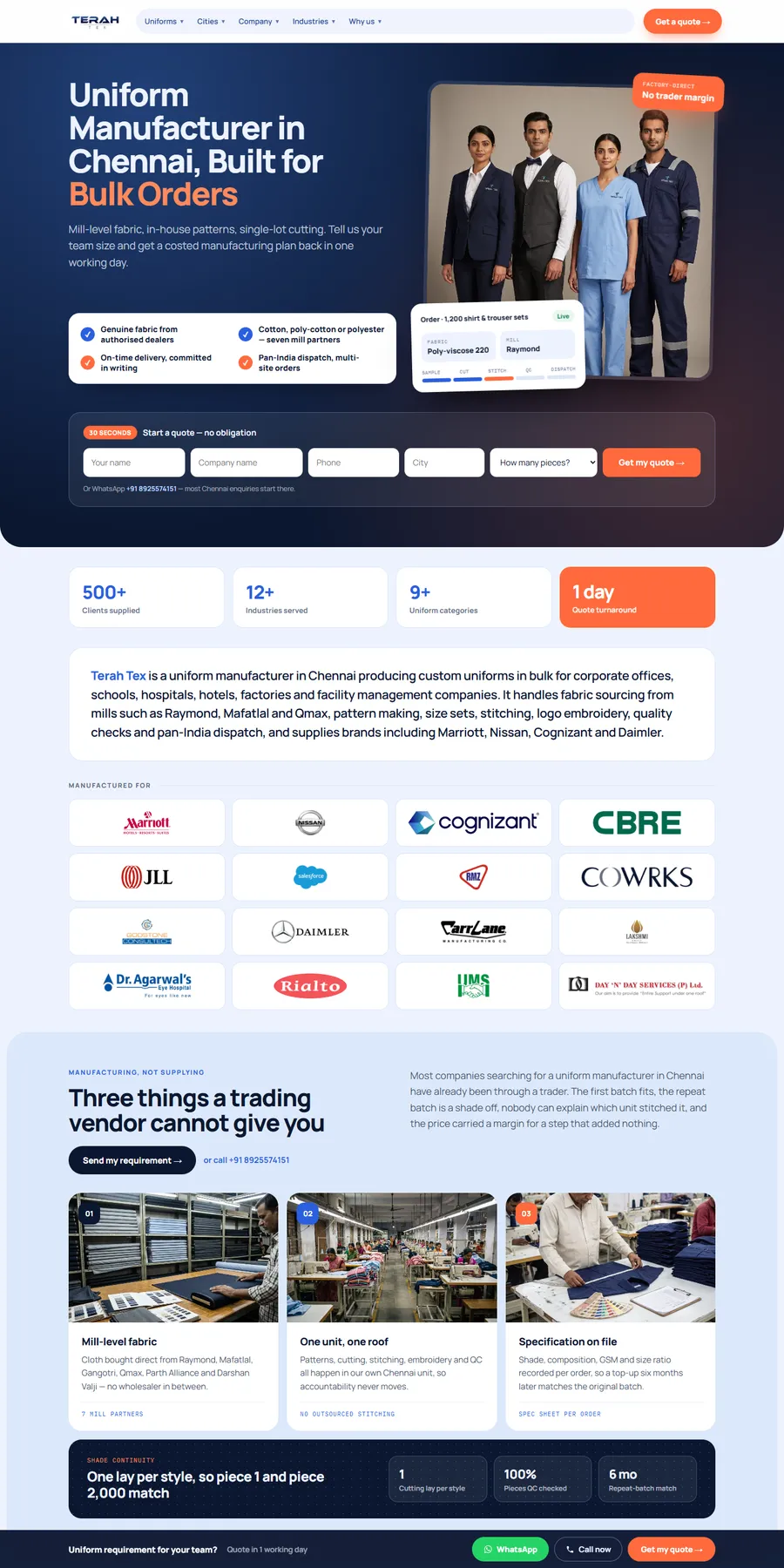
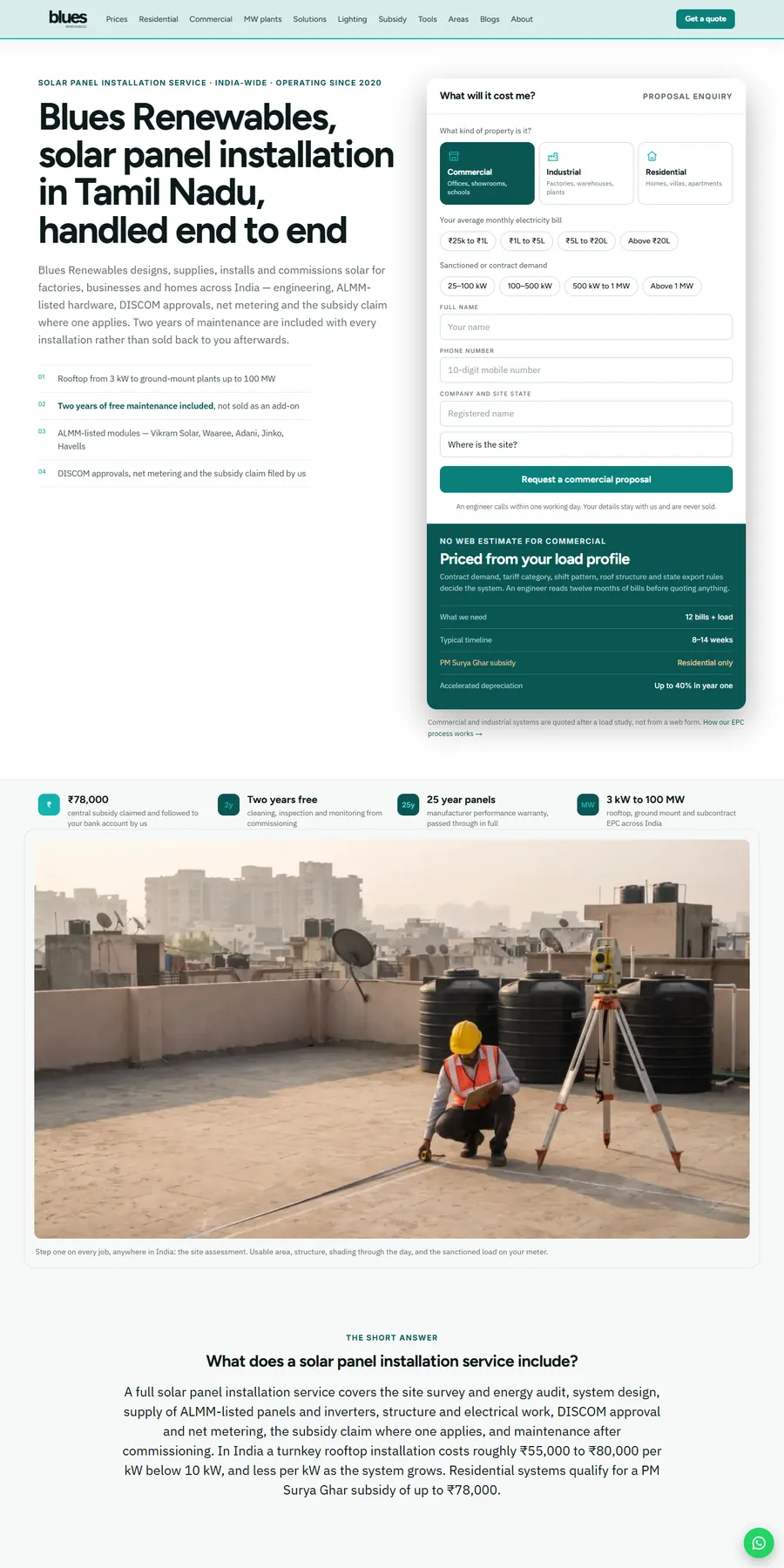
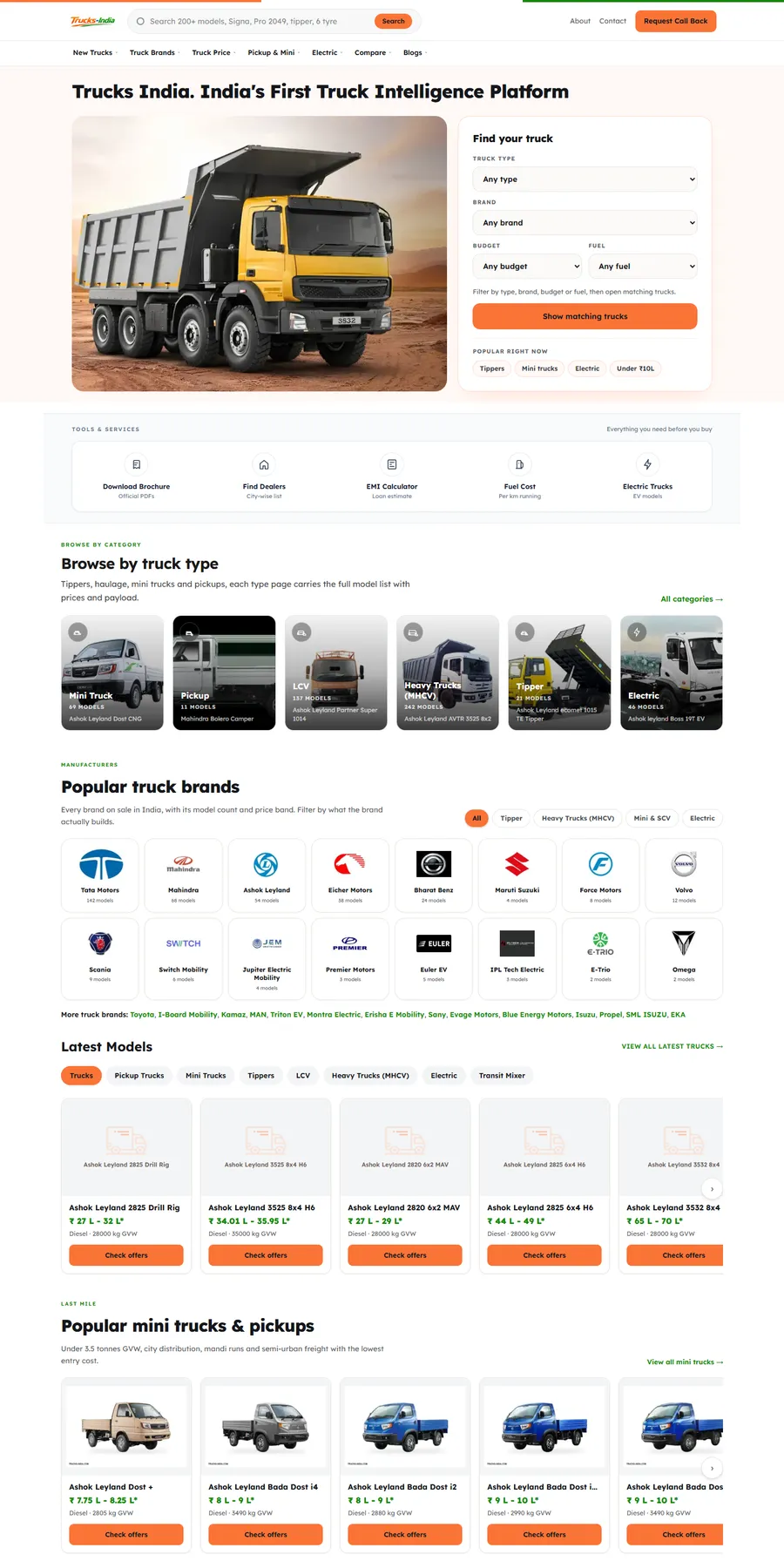
An audiology practice grows on local patients who compare prices and options for a long time before they call, and that is the buyer our lead system was built for. Blues Renewables, a local rooftop solar installer, got service pages, price pages, calculators, 129 local area guides and every call and form tracked as a GA4 lead event, and went from no tracked leads to 7 to 10 enquiries a week, with Google clicks rising from 14 to 560 a fortnight in two months. For a hearing clinic its price pages become technology level and package pages, its calculators become an online hearing check, and its tracking separates new hearing tests from service calls. Trucks India shows we can build clear comparison pages across a large catalogue: 497 truck models, 1,299 variant pages and side-by-side comparisons, the model for comparing hearing aid styles and technology levels. Terah Tex's two-step quote form, which took it from no website enquiries to about 5 bulk-order leads a week, is the pattern for a two-step hearing test booking form.

More websites we have designed and built

Process

How your audiology website project runs

Typical timeline: 4 to 8 weeks for most audiology sites; 8 to 12 weeks for groups with several locations or a large hearing aid and accessory catalogue. You see progress every week.

  1. Step 01 · Week 1

    Discovery and audit

    We audit your current site, competitors, and how you show up on Google and in AI answers, then agree on goals and a fixed quote.

  2. Step 02 · Weeks 2 to 3

    Strategy and design

    Sitemap, wireframes and full designs for your review. You approve everything before we build.

  3. Step 03 · Weeks 3 to 6

    Build and test

    Development, SEO setup, speed tuning, and testing across devices and browsers.

  4. Step 04 · Launch and beyond

    Launch and grow

    We launch, monitor, and improve based on real data. 30 days of free support included.

What shapes your quote

Scope, not hourly billing

Every project gets a fixed quote within 1 business day, agreed before work starts.

Get my fixed quote →
  • How many service, hearing aid and location pages you need
  • Booking: a form we build or a connection to your scheduling system, if it allows one
  • Price, package and trial pages, and whether you itemize services
  • An online hearing check, accessory store or repair drop-off flow
  • Whether we write the content and organize photos and video of your clinicians and offices
  • Several locations, Spanish-language pages or physician referral portals

Audiology website questions, answered

Straight answers to what owners ask us, and what they ask Google and AI assistants. Ask us anything else.

How much does an audiology website cost?

We quote one fixed price, agreed before work starts, based on the number of pages, features, integrations and content. You get it within 1 business day of a free audit of your current site. There is no hourly billing.

Should our website show hearing aid prices?

We recommend at least price ranges by technology level, what a package includes and your trial terms. Patients on r/HearingAids say clinics that will not quote lose them to sellers who do. You decide what to publish and approve every number.

How should our site handle OTC hearing aids?

Explain who they suit under the FDA rule, why a hearing test first is worth it, and the fitting, programming and service visits you offer people who buy their own. That page brings in patients who would otherwise never call.

Can patients book a hearing test online?

Yes. We either build a short booking request form or connect to your scheduling system where it supports online booking, through vendors that sign a Business Associate Agreement. We confirm what your system allows before we promise it.

Do Medicare patients need a doctor's referral to see us?

For certain non-acute hearing assessments, no: since 2023 Medicare lets audiologists see patients without a physician order once every 12 months, billed with modifier AB. Original Medicare still does not cover hearing aids. We write the page with your billing lead so it matches how you work.

We get most patients from physician referrals. Why invest in the website?

Referred patients still look you up before they book, and MarkeTrak 2025 found only 22% of people with hearing difficulty got a hearing aid recommendation from a doctor. The rest find you by searching, often through a family member. A physician referral page also makes it easier for doctors to send patients.

Can we keep using our manufacturer's marketing program?

Yes, if it suits you. We build a site you own under your name, list the brands you fit, and can host co-op campaign pages on it. Your domain, content and tracking stay yours whichever program you use.

Is our audiology website HIPAA compliant?

No website is HIPAA compliant on its own. We build forms, booking and call tracking with vendors that sign a BAA, keep ad pixels off booking pages and send conversion events with no health details. Your HIPAA program stays yours.

Do we need ADA or WCAG accessibility?

The Justice Department says the ADA applies to the goods and services businesses offer on the web, and practices that receive HHS funds such as Medicaid have Section 504 deadlines in May 2027 or May 2028 for WCAG 2.1 AA. We build every site to that target, with captions on all video, which your patients need anyway.

How do we show up in Google Maps and AI answers?

A page per location that matches your Google Business Profile, reviews linked from the site, plain-text answers about prices, OTC, Medicare and trials, clinician bios with credentials and MedicalClinic schema. Nobody can guarantee a ranking or an AI mention, but a specific, consistent site gives them accurate facts to use.

How long does an audiology website take, and who owns it?

Most take 4 to 8 weeks; groups with several locations or a large catalogue take 8 to 12 weeks. You get a dated week-by-week plan and a written update every week. You own the code, design, content, domain and every account from day one, with no lock-in.

What makes you different from another audiology web design company?

Many audiology web design companies sell a shared template on a monthly contract, often built around a featured manufacturer. We build a site you own outright, under your name, with prices, trial terms and OTC help written plainly, HIPAA-ready forms and tracking that separates new hearing tests from service calls. The terms are in writing first: a fixed quote in 1 business day, a dated plan and no lock-in. The same tracked lead system took Blues Renewables, a local service business, from no tracked leads to 7 to 10 inquiries a week.
Get your free audiology website proposal

Four quick questions. You'll get a fixed quote and a free audit of your current site within 1 business day.

  • ✓ No obligation, no sales pressure
  • ✓ Fixed price, never hourly
  • ✓ Your details stay private

Prefer email? info@billionwebstudio.com

Step 1 of 4~60 seconds
What do you need?