Skip to content
Booking projects for next month. Free website audit with every quote.Claim yours →

Transport and logisticsBooking projects for November

Aviation Website Development Company for Flight Schools, FBOs, Repair Stations and Charter

A future student compares three flight schools on total cost and aircraft before booking a discovery flight. A pilot planning a fuel stop checks your prices and fees from the cockpit. An owner with an annual coming up wants to know if your shop is rated for their airplane. We build aviation sites that answer those questions in plain text, state FAA certificates exactly, and turn visits into bookings, handling requests and quote requests you can track.

  • Built for flight schools, FBOs, repair stations and charter operators
  • Fixed quote in 1 business day
  • You own everything
yourschool.com/private-pilotPrivate pilottraining, Part 141Book intro flightTap to callDiscovery flight: Sat 9 a.m.Career changer · from /costTracked as a leadSource: GoogleAI ASSISTANTWhich Part 141 flight schools are nearDallas?Your Company: Part 141 private to CFI, 12aircraft, Addison airport.Source: your website
Illustration: a visit becomes a tracked lead

The short answer

What does an aviation website development company do?

An aviation website development company builds websites for flight schools, FBOs, aircraft maintenance shops and repair stations, and charter operators. Each sells something different to a different buyer, but all of them are judged on facts before anyone calls: what the training really costs, what fuel costs today, which aircraft the shop is rated for, who actually operates the charter flight. The site has to state those facts plainly and state FAA certificates exactly.

For a flight school that means program pages that separate Part 141 and Part 61 courses, a total cost page with its assumptions, fleet and instructor pages, discovery flight booking and an international student page. For an FBO, fuel prices with the date, fees, services, hours and a handling request. For a repair station, certificate number, ratings and capabilities by make and model, an AOG line and a quote request with tail number. For a charter operator, fleet pages, safety credentials and a trip quote, with the operator or broker statement the rules require.

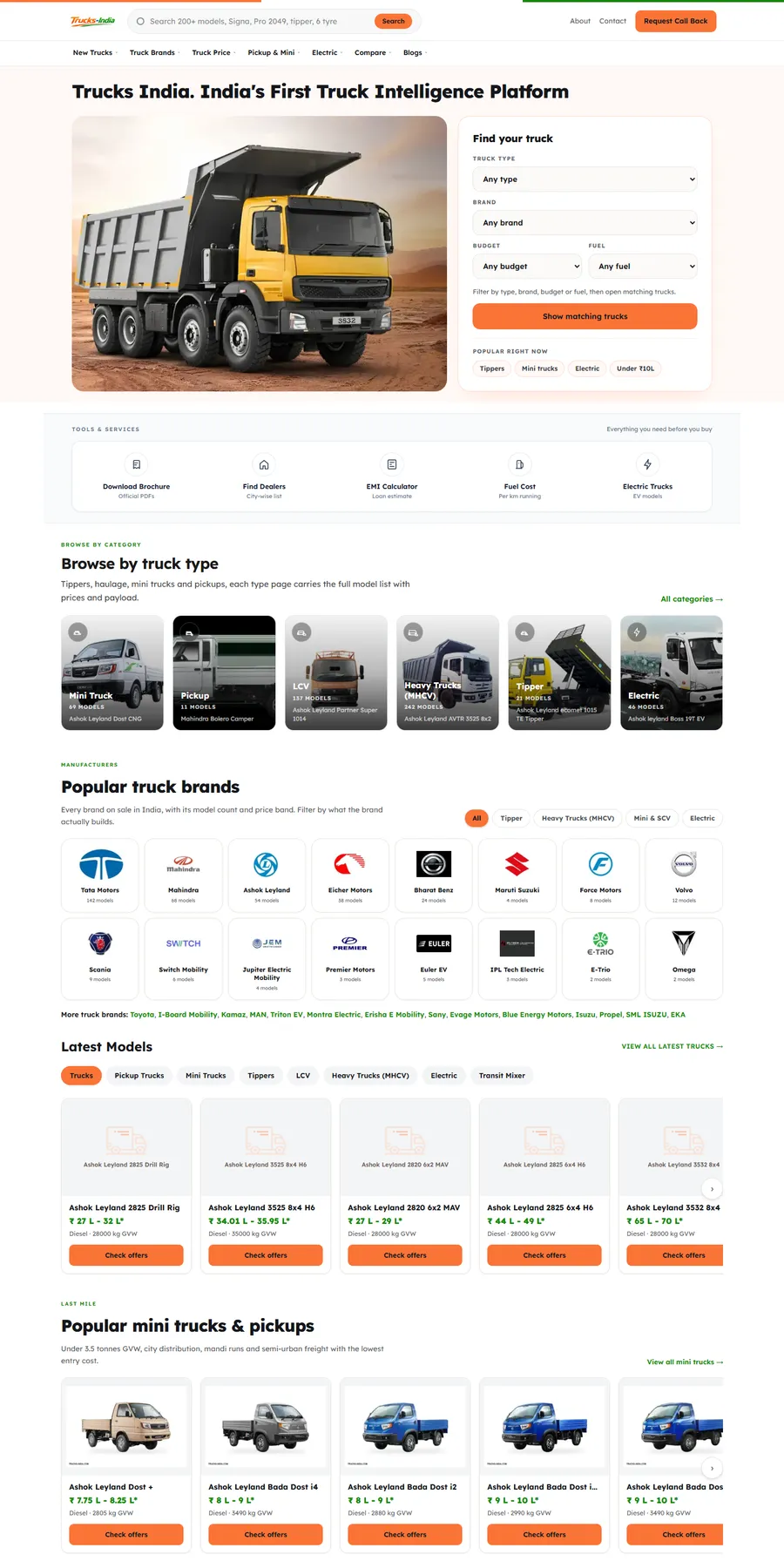
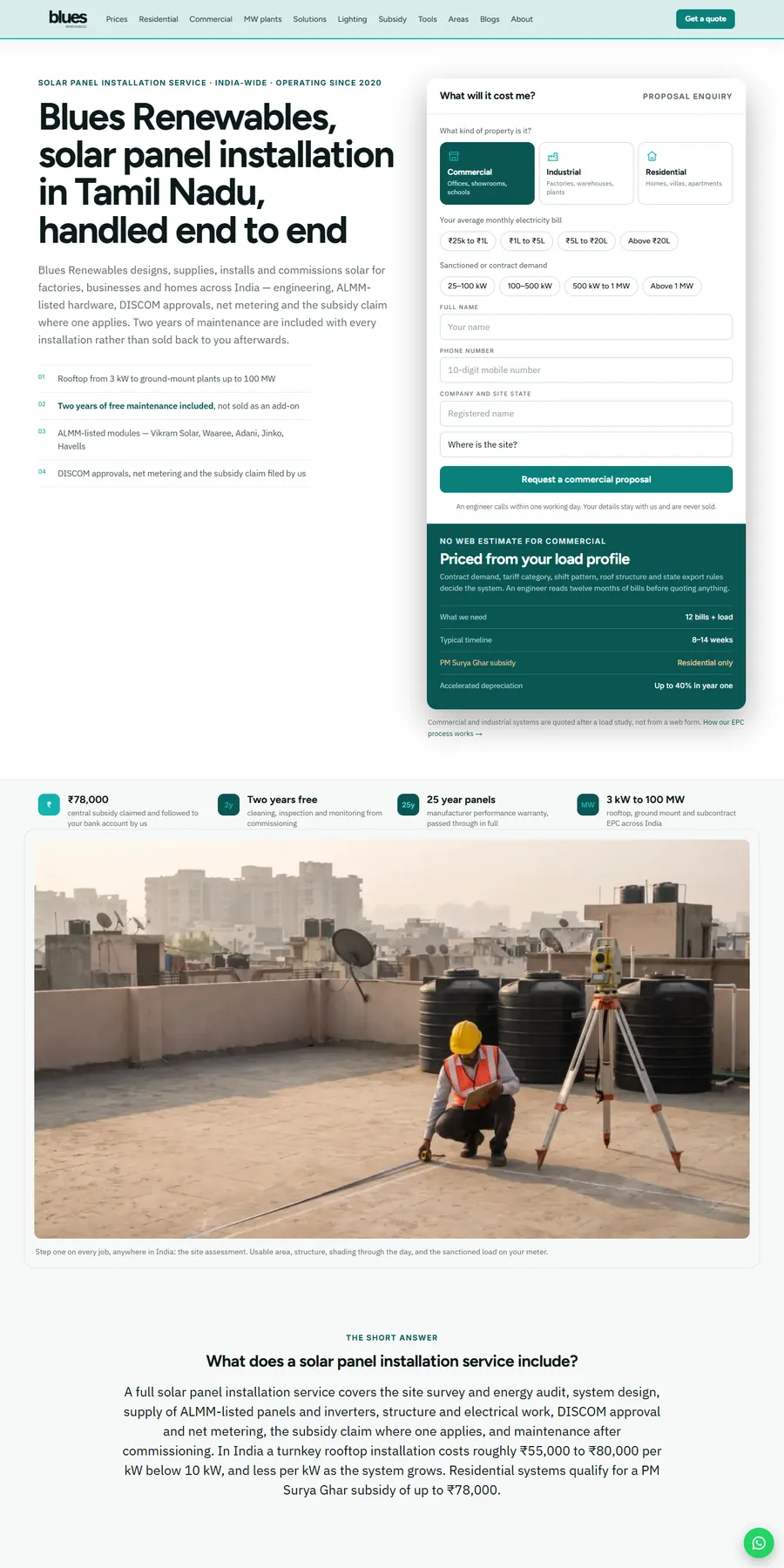
Billion Web Studio is an aviation website development company that delivers this as one fixed-scope project: the pages for your type of business, booking, handling and quote flows, Organization and LocalBusiness schema, and every booking, request and call tracked in GA4. We built Trucks India's 1,299 variant pages and price and cost tools, and a lead system that took a local installer from no tracked leads to 7 to 10 enquiries a week. You own the site, domain and accounts from day one, with no lock-in.

The market

What the numbers say about flight schools, FBOs, repair stations and charter operators online

More people are learning to fly, airlines and maintenance shops need more pilots and technicians, and every one of those people researches online before they commit money or a career. The figures below come from the FAA and Boeing.

How they choose

How students and clients find and choose an aviation business

Aviation buyers are careful because the stakes are high: a training budget that is a major family decision, an airplane that cannot fly until a squawk is fixed, a passenger trip that has to be legal and safe. Here is how a future student picks a flight school, the most common path we build for, and how the same steps apply to FBOs, repair stations and charter.

  1. 1

    The question: can I do this, and what will it cost?

    A career changer or a parent searches "how much does it cost to become a pilot", "Part 141 vs Part 61" and "flight school near me". The school with a clear cost page, with its assumptions, gets the click and the trust. The same moment for a pilot is "fuel prices at KADS", and for an owner "annual inspection Cirrus SR22 near me".

  2. 2

    The comparison: three schools, three tabs

    Students compare programs, aircraft and avionics, instructor availability, scheduling, airport and weather, and total cost. On pilot forums, people compare rental and instructor rates across regions and ask how to check a school's claims. Fleet, instructor and program pages with real numbers make you the easy choice.

  3. 3

    The test: a discovery flight

    The first purchase is a discovery flight. Online booking with available times, a price and what to expect, plus a follow-up path into enrollment, turns the comparison into a customer. For a repair station the equivalent is a quote request with tail number and squawks; for charter, a trip quote.

  4. 4

    The paperwork: enrollment, TSA and financing

    Students need enrollment steps, medical certificate guidance, TSA requirements for non-US students and proof of citizenship for US students, and financing or benefits information. Clear pages save your front desk hours of the same phone calls.

  5. 5

    The long relationship

    A student who finishes a private certificate can stay for instrument, commercial and CFI. A pilot who liked your FBO plans the next stop there. An owner who got the airplane back on time brings it back for the next annual. Program ladders, fuel programs and service reminders keep them.

The problem

Why most aviation websites lose student and charter inquiries

What we find again and again when we audit sites in this trade. None of it is about how the site looks.

Leak 01

Prices that hide the real cost

A flight school that advertises the FAA minimum hours and an aircraft rate, without instructor time, ground school, exams, materials or the hours students actually need. Students discover the gap, talk about it in forums, and stop trusting the school. A cost page with assumptions wins more trust than a low headline number.

Leak 02

Certificate claims that are wrong or vague

"FAA approved" on a school with no Part 141 certificate, Part 141 claims on courses that are actually Part 61, or a repair station listing work it is not rated for. FAA rules require a Part 141 school to clearly separate approved and non-approved courses in its advertising, and a repair station may only work on articles it is rated for.

Leak 03

Fuel prices and fees from last year

An FBO page with a fuel price from months ago, no ramp or handling fees and no after-hours number. Pilots plan around fees and hours, and a stale page sends them to the next field.

Leak 04

Charter sites that blur operator and broker

A broker site that looks like it operates its own fleet, or an operator advertising under a name not in its operations specifications. DOT and FAA rules cover both, and passengers and corporate travel managers increasingly ask who actually operates the flight.

Leak 05

No way to book, only a phone number

Students who want to book a discovery flight at 10 p.m., owners who want a quote for an annual and pilots who want to request fuel and a hangar all hit a contact form or a phone number that rings in a busy shop.

Leak 06

Hiring instructors and technicians with a one-line careers page

CFIs and A&P mechanics are in demand, and Boeing projects 674,000 new pilots and 728,000 technicians needed worldwide by 2045. A careers page with no roles, pay ranges, schedules or aircraft list loses them to the school or shop that shows its work.

Our research

We checked 19 real aviation websites. Here is what we found.

On October 23, 2026 we opened the homepages of 19 flight schools, FBOs, repair stations and charter operators that rank in Google Maps in 10 US metros, the way a customer would on a phone, and ran a mobile Lighthouse test on each. Every number below comes from that check.

  • 65/100

    median mobile Lighthouse performance score (90 or more is good)

  • 8.8 s

    median time to show the main content on a phone (target: 2.5 seconds or less)

  • 1.9 MB

    median homepage download on a phone, before anyone scrolls

  • 17 of 18 took longer than 2.5 seconds to show their main content in a mobile Lighthouse test

  • 4 of 19 show a tap-to-call link on the first phone screen

  • 12 of 19 show a clear call, book or quote button on the first screen

  • 8 of 19 have a contact or quote form on the homepage

  • 4 of 19 let visitors book or schedule online

  • 4 of 19 describe the business to Google with business schema markup

  • 7 of 19 have Google Analytics or Tag Manager installed

  • None of 19 use call tracking

  • 10 of 19 show a copyright year of 2024 or older (of the sites that show one)

  • 5 of 19 have images with no alt text

  • 8 of 19 link to a privacy policy

  • 5 of 19 offer live chat or texting

What this means for your aviation website

The three biggest gaps in the sample. Each is fixable, and each is a reason a customer picks the next result instead of you.

See how your site compares →
  1. 1

    None of the 19 use call tracking. Calls are the main lead source in most local trades. Without call tracking you cannot see which marketing made the phone ring.

  2. 2

    17 of 18 took longer than 2.5 seconds to show their main content in a mobile Lighthouse test. Google counts 2.5 seconds or less as a good Largest Contentful Paint. Slow first screens lose visitors before they see your phone number.

  3. 3

    Only 4 of 19 show a tap-to-call link on the first phone screen. Most of these searches happen on phones. A number that is not a tap-to-call link, or sits below the fold, costs calls.

How we checked: Google Maps results for “flight school” in Houston, Phoenix, Atlanta, Denver, Charlotte, Columbus, Tampa, Nashville, Kansas City, Sacramento; the two highest-ranked independent businesses per city (chains and directory listings left out). 20 homepages sampled, 19 loaded for our checker (the rest blocked automated visits), 18 scored by Lighthouse in mobile mode. Lighthouse is a lab test and varies run to run; it is not the same as Google's real-user Core Web Vitals. Businesses are not named. Checked October 23, 2026.

Generic vs built for you

Why a generic website fails flight schools, FBOs, repair stations and charter operators

A template is built to fit every business, so it fits yours badly. Here is what changes when the site is planned around how students and clients actually buy.

Generic website compared with a website built for flight schools, FBOs, repair stations and charter operators
What you needGeneric template siteBuilt for flight schools, FBOs, repair stations and charter operators
Training programsA list of certificates offeredA page per program with Part 141 or Part 61 stated clearly, syllabus outline, typical timeline, aircraft and a cost estimate with its assumptions
CostAn hourly aircraft rateA total cost page and calculator covering aircraft, instructor, ground school, exams and materials, with the hours it assumes
Booking"Call to schedule"Online discovery flight booking with times and price, and links into your scheduling platform for enrolled students
FBO informationA services list and a phone numberFuel prices with the date, fees, hours, after-hours call-out, amenities and a handling and hangar request form
Maintenance capabilities"We work on all makes and models"Certificate number, ratings and capabilities by make and model, inspections offered, AOG line and a quote form with tail number and squawks
CharterStock jet photos and "request a quote"Fleet pages with real aircraft, operator certificate stated exactly or a clear broker statement, and a trip quote form
Hiring"Send your resume"CFI, mechanic, line service and pilot roles with schedules, pay ranges where you choose and a mobile apply form
Tracking and ownershipForm emails to one inbox, site rented on a platformBookings, requests and calls as separate GA4 events, with site, domain and analytics in your name

Free self-check · 2 minutes

What your current aviation website is missing

Tick everything your site does today. Each box you cannot tick is a place where a ready-to-buy visitor leaves.

What you need

What every aviation website needs

The features that turn an aviation website from a brochure into the best salesperson you have. We build all of them.

  1. Must-have · 01

    One line that says what you do and where

    "Part 141 flight school at Addison Airport (KADS), private through CFI, 12 aircraft" or "Part 145 repair station for Cirrus and Beechcraft piston aircraft at KCNW." The airport identifier helps pilots and search engines alike.

  2. Must-have · 02

    Flight school program pages

    Private, instrument, commercial, CFI, multi-engine and accelerated programs, each stating whether it is approved under Part 141 or taught under Part 61, with syllabus outline, typical timeline, aircraft used and a cost estimate.

  3. Must-have · 03

    A total cost page with its assumptions

    Aircraft and instructor rates, the hours most students actually need rather than the FAA minimum alone, ground school, exams and checkride fees, materials and medical, as a page and a simple calculator. Trust comes from showing the assumptions.

  4. Must-have · 04

    Fleet and instructor pages

    Each aircraft with type, avionics, equipment and photos; each instructor with certificates, experience and availability where you choose. Students choose airplanes and people, not logos.

  5. Must-have · 05

    Discovery flight and enrollment paths

    Online discovery flight booking with price and what to expect, then enrollment steps, medical certificate guidance, financing or benefits information where approved, and an international student page covering TSA requirements and SEVP status if you hold it.

  6. Must-have · 06

    FBO pages pilots plan with

    Fuel types and prices with the date updated, ramp, handling and overnight fees, hours and after-hours call-out, services and amenities, hangar availability, crew car and a handling request form with tail number and arrival time.

  7. Must-have · 07

    Repair station capability pages

    Certificate number, ratings and a capability list by make and model that matches your operations specifications, inspections and avionics installs offered, typical turnaround, an AOG number and a quote form with tail number, squawk list and photos.

  8. Must-have · 08

    Charter fleet and quote pages

    Real aircraft with seats, range and amenities, your operator certificate and safety audits stated exactly, a trip quote form with route, dates and passengers, and empty legs if you publish them. Brokers state clearly that they are brokers.

  9. Must-have · 09

    Airport and location details

    Airport identifier, address, hours, runways and frequencies where useful, directions to your ramp or hangar, and a Google Business Profile for each location that matches the site.

  10. Must-have · 10

    Careers for CFIs, technicians and line staff

    Open roles with schedules, pay ranges where you choose, aircraft types, training and a mobile apply form. Flight schools can show the instructor pathway for their own students.

  11. Must-have · 11

    Reviews and student outcomes stated honestly

    Real reviews with permission, checkride pass information only if you track it, and airline pathway or partnership claims only as the agreements say. Overstated outcomes are the fastest way to lose student trust.

  12. Must-have · 12

    Schema, speed and a clean move

    Organization and LocalBusiness schema matching the visible text, Core Web Vitals targets of LCP 2.5 seconds or less, INP 200 ms or less and CLS 0.1 or less, and a 301 redirect map that keeps every URL that already earns traffic.

What we build

The aviation website we would build for you

Here is the sitemap we start from for a flight school, with the sections an FBO, repair station or charter operator gets instead. Good aviation website design starts from this list of pages for your type of business, not from a template built for another one.

yourcompany.comHome · every section links here

Flight school

  • Programs: private, instrument, commercial, CFI, multi-engine
  • Part 141 and Part 61 explained
  • Total cost and calculator
  • Fleet
  • Instructors
  • Book a discovery flight
  • Enrollment, medical and financing
  • International students

FBO

  • Fuel prices and programs
  • Fees and hours
  • Services and amenities
  • Hangar and tie-down
  • Handling request
  • Airport information

Maintenance and repair station

  • Certificate, ratings and capability list
  • Inspections: annual, 100-hour, phase
  • Avionics and installs
  • Makes and models we service
  • AOG support
  • Request a quote

Charter

  • Fleet
  • Safety and certificates
  • Request a trip quote
  • Empty legs
  • How charter works and pricing factors

Company

  • About and history
  • Locations and airports
  • Reviews
  • News and events
  • Careers
  • Contact

Calls, bookings, leads

How we turn visitors into student and charter inquiries

Good aviation website design is judged in bookings and requests: discovery flights, enrollments, handling and hangar requests, maintenance quotes and trip quotes. This is how we build each path and track it.

  • 01Discovery flight bookingOnline booking with available times, price and what to expect, a confirmation with directions to the ramp, and a follow-up sequence into enrollment. Each booking is a GA4 event by page and source.
  • 02A cost calculator that starts the conversationA training cost calculator with editable assumptions and an optional "email me this estimate" step that creates a lead. Blues Renewables' solar and ROI calculators were part of the system that took the installer from no tracked leads to 7 to 10 enquiries a week.
  • 03Maintenance quote requests with the details a shop needsTail number, make and model, inspection due date, squawk list and photos, routed to the service manager, with an AOG phone line tracked separately.
  • 04FBO handling and hangar requestsTail number, arrival and departure times, fuel request, services needed and hangar or overnight needs, routed to the front desk with an instant confirmation.
  • 05Charter trip quotesRoute, dates, passengers and luggage in a short form, routed to the charter desk and your CRM, with a response time stated on the page.
  • 06Calls tracked by purposeSeparate tracked numbers for enrollment, maintenance and AOG, front desk and charter, so you can see which pages and searches make the phone ring.
  • 07A monthly report in plain numbersBookings, quote and handling requests, applications and calls by source and page. Every form and call is tracked as a lead event, the same setup we built on the Blues Renewables site.

AI search

Future students, pilots and aircraft owners now ask AI assistants which flight schools are near them, what training really costs, which FBO has the cheapest Jet A on a route, or which shop is rated for their airplane. Google says its AI Overviews and AI Mode need nothing extra beyond being indexed and eligible for a snippet, with important content in text. For an aviation business, that means programs, prices, capabilities and certificates written where machines can read them.

Questions your students and clients ask AI assistants

  • Which Part 141 flight schools are near Dallas, and what do they cost?
  • How much does it cost to get a private pilot license in Florida?
  • Which FBOs at Scottsdale have 100LL self-serve?
  • Which shops near Atlanta do annual inspections on a Cirrus SR22?
  • Is this charter company the operator or a broker?
  • What is the difference between Part 61 and Part 141 training?
  • Programs, prices and assumptions in text

    Program details, rates, typical hours and total cost assumptions as text and tables. An assistant cannot repeat a price that only exists in an image or a PDF brochure.

  • One page per program, service and location

    AI answers are built from pages that match a specific question. An instrument rating page at a named airport can be cited for that question; a single training page usually cannot.

  • Certificates stated the same way everywhere

    Part 141 certificate, repair station certificate number and ratings, Part 135 operator status or broker status, written consistently so an assistant can match you to the right question.

  • Answers to the questions people ask

    Part 61 vs Part 141, how long training takes, medical certificates, TSA steps for international students, fuel and fee policies, turnaround times, each answered in the first lines of the page.

  • Organization and LocalBusiness schema

    Structured data for the company and each location that matches the visible page and Google Business Profile, so search engines and AI systems read the same facts a visitor sees.

  • One identity everywhere

    The same name, airport, phone and hours on your site, Google Business Profile, airport directories and fuel price listings. Conflicting details give assistants conflicting facts to repeat.

Compliance and trust

The rules an aviation website has to get right

Aviation websites make claims the FAA, DOT and TSA regulate: school certification, operator authority, repair station ratings and who may train. We build pages that state these facts accurately and are easy to update. We do not certify compliance; your chief instructor, director of maintenance, director of operations or counsel confirms every claim.

Part 141 advertising limits

14 CFR 141.23 says a pilot school may not make false or misleading statements about its certification and ratings, may not advertise that it is certificated unless it clearly differentiates between courses approved under Part 141 and those that are not, and must remove certification claims if the certificate expires or is surrendered, suspended or revoked. Program pages state Part 141 or Part 61 on each course.

TSA flight training security and international students

Under 49 CFR 1552, a non-US flight training candidate must complete a TSA security threat assessment and receive a Determination of Eligibility before training starts, and providers must check government-issued proof of citizenship for US students. ICE says only SEVP-certified schools can enroll F or M students, and SEVP requires flight schools to hold Part 141 or Part 142 certification. We write these pages from your current procedures.

Charter: operators and brokers

14 CFR 119.5(k) bars advertising or offering an operation the FAA has not authorized, and 119.9 limits a certificate holder to business names in its operations specifications. Under 14 CFR 295.23, air charter brokers' advertisements, including web pages, must clearly and conspicuously state that they are brokers, not direct air carriers in operational control, and that a properly licensed direct air carrier will provide the flight.

Repair station ratings and capability lists

14 CFR 145.201 lets a repair station maintain or alter only articles for which it is rated and within its operations specifications, and 145.5 requires the certificate and operations specifications to be available for inspection by the public. Capability pages match your ratings and capability list, and your director of maintenance approves them.

Reviews, outcomes and testimonials

The FTC rule on consumer reviews and testimonials (16 CFR 465), in force since October 2024, bans fake or misrepresented reviews and testimonials. Student stories, pass rates and airline pathway claims appear only as your records and agreements support them.

Accessibility

The Justice Department says the ADA applies to the web content of businesses open to the public, which includes flight schools, FBOs and charter booking. We build to WCAG 2.2 AA as standard practice: labeled booking forms, keyboard navigation, color contrast, captions and alt text. We do not label any site "ADA compliant".

We build with tools and patterns that support these rules and document what we set up. For legal advice on your own obligations, talk to your attorney.

Asked online

What flight schools, FBOs, repair stations and charter operators ask about websites, answered

We read what student pilots, parents, instructors and pilots ask on the Pilots of America forums and in YouTube comments under videos about choosing a flight school, Part 61 versus Part 141, and FBOs. The same questions come up: what training really costs, how to tell a credible school from a risky one, how to compare programs, and what an FBO offers. These are their questions, paraphrased, with factual answers.

Where owners talkPilots of America forumsYouTube comments on flight school videosYouTube comments on FBO videos

From YouTube comments on a video about choosing a flight school

“How do I know which flight schools are credible? I am afraid of getting scammed.”

Our answer: Visit, take a discovery flight and ask direct questions: is the school certificated under Part 141 (a certificated school must display its certificate where the public can see it), how many aircraft and instructors are available per student, how scheduling works, and how payments and refunds work. Be careful about prepaying large blocks. A school that publishes its fleet, rates and policies has less to hide.

From YouTube comments on a video about questions to ask a flight school

“If a school advertises a checkride pass rate, how can I verify it?”

Our answer: Ask for the period, the number of students tested and whether it counts first attempts only. Part 141 has a built-in floor: to be issued a pilot school certificate, a school must show a first-attempt pass rate of 80% or higher on knowledge and practical tests over the prior 24 months (14 CFR 141.5). A school confident in its numbers will explain how it counts them.

From YouTube comments on a Part 61 vs Part 141 video

“A school is steering me to its Part 141 program and says Part 61 would cost more. How do I compare?”

Our answer: Compare the estimate, not the label. The regulatory minimum for a private pilot certificate is 40 hours of flight time under Part 61 (14 CFR 61.109) and 35 hours of flight training in an approved Part 141 course, and many students fly more than the minimum. Ask each program for the hours its recent students actually needed and the total cost, in writing.

From YouTube comments on a Part 61 vs Part 141 video

“Can I train under Part 61 at a school that also runs Part 141 courses?”

Our answer: Often, yes. Many certificated schools run both, and the rules require them to keep the two apart in their advertising: 14 CFR 141.23 says a school may not advertise that it is certificated unless it clearly differentiates between courses approved under Part 141 and those that are not. Ask which program each course on the price list belongs to.

From YouTube comments on a video about choosing a flight school

“Why did my discovery flight cost about twice what other schools near me charge?”

Our answer: Price depends on the aircraft, minutes in the air, how much ground briefing is included and whether a logbook entry and debrief are part of it. A school's booking page should state those details: aircraft type, flight time, total time and what is included. When they are missing, discovery flight prices are hard to compare, and students assume the worst.

From YouTube comments on a video about choosing a flight school

“This video uses a lot of jargon. What is an FBO, and what is a discovery flight?”

Our answer: An FBO, or fixed-base operator, is the business at an airport that sells fuel and provides services such as aircraft parking, hangars and a lounge to pilots and passengers. A discovery flight is a short introductory flight in which a prospective student flies with an instructor. Websites written for beginners should define terms like these where they first appear.

From YouTube comments on a video about starting a flight school

“Is a private pilot certificate over or under a given budget for 40 hours of flying? That cost needs to be shown up front.”

Our answer: Forty hours is the Part 61 minimum, not a typical total, so a price built on 40 hours alone sets the wrong expectation. A useful cost page lists aircraft and instructor rates, ground school, knowledge test and checkride fees, materials and a realistic range of hours based on the school's own recent students, with the math visible so families can check it.

From YouTube comments on a video about how top FBOs stand out

“What is the biggest aircraft that can land at this FBO's airport? The video left out the runway details.”

Our answer: Pilots and flight departments plan around runway length and width, weight-bearing limits, ramp space, fuel types and handling for large aircraft. An FBO page should state these, or link to the airport's published data, and give a contact for arranging larger aircraft in advance. When the basics are missing, a dispatcher picks another airport.

From YouTube comments on a video about opening a new FBO

“I watched a whole video about opening an FBO and still do not know what one offers. Do they have places to stay overnight?”

Our answer: Services vary widely by FBO: fuel, ramp and hangar space, line service and a lounge are common, while crew rest areas, catering, rental cars and hotel arrangements depend on the operator. That variation is exactly why an FBO website should list services, hours, fees and amenities plainly, so passengers and crews know what to expect before they land.

From Pilots of America forums

“What do people pay per hour for aircraft rental and instruction where you fly?”

Our answer: Replies showed wide differences by region, aircraft and avionics, plus member versus non-member rates and wet versus dry pricing. That is why a school's rate page should state the aircraft, its avionics, whether fuel is included, member pricing and any membership fee, and the instructor rate, so a student can compare like with like.

From Pilots of America forums

“My son's Part 141 school may lose its certificate and the checkride wait is months long. Should he switch to Part 61?”

Our answer: Replies said fit matters more than the label, logged flight time carries over, a new school will usually fly a few review hours, and he should collect logbook sign-offs, transcripts and the training course outline. For schools, the lesson is to publish current scheduling and checkride wait times, and 14 CFR 141.23 requires removing certification claims if the certificate lapses.

From Pilots of America forums

“Is paying a monthly membership to a network that sends students to instructors worth it?”

Our answer: Members reported mixed results: one saw it as paying for advertising with no proof of returns, another got three full-time students in a few months by being proactive. Before paying for leads, compare the cost per student with what your own website and Google Business Profile produce, and record where every student actually came from.

Questions are paraphrased from public posts and comments on Reddit, YouTube, forums and social media. We never quote anyone by name.

Others vs us

Aviation website design options: Billion Web Studio vs a website builder template vs a typical aviation marketing agency

The three ways flight schools, FBOs, repair stations and charter operators usually get a website, side by side.

Aviation website design options: Billion Web Studio vs a website builder template vs a typical aviation marketing agency
Billion Web StudioWebsite builder templateTypical industry agency
Who owns the site, domain and contentYou do, from day one, in your own accountsYou own the content; the site lives on the builder's platformOften the agency, on a contract
Contract and pricingFixed quote in 1 business day, agreed before work starts, no lock-inMonthly subscription, you build it yourselfMonthly retainer, often on a 12-month or longer contract
Timeline and plan4 to 8 weeks for most sites, 8 to 12 for several locations or large fleets, a dated week-by-week plan, and the next month of support free if we slip a dateAs fast as you can write and build it yourselfVaries; ask for a dated plan in writing
Pages for your type of businessProgram and cost pages, FBO fuel and fees, repair station capabilities or charter fleet, as you needA general business layoutOften one template reused across aviation clients
FAA, DOT and TSA wordingPart 141 vs 61, ratings, operator or broker status stated exactly, flagged for your reviewUp to youVaries by agency
Booking and quote pathsDiscovery flight booking, handling requests, maintenance and trip quotes, each routedA contact form or a booking widgetVaries
Cost calculator and price pagesTraining cost calculator with editable assumptions; fuel prices with update datesNot includedSometimes; ask who updates prices
TrackingBookings, requests and calls by purpose and source in GA4Basic form countsTheir dashboard, which may stay with them if you leave

Why Billion Web Studio

What we do better, and why it matters to you

  • Built for your type of aviation business

    Most aviation web design reuses one layout for schools, FBOs and shops. Ours starts from what your buyer checks: total cost for students, fuel and fees for pilots, ratings and turnaround for owners, operator status for charter passengers.

  • A fixed quote in 1 business day, with a free audit

    We review your current site, certificate wording, booking and quote paths, Google Business Profile and tracking, then send a written scope and a fixed price based on pages, features, integrations and content. No hourly billing.

  • Spec-heavy pages and cost tools are our routine

    Trucks India runs 497 vehicle models and 1,299 variant pages with comparison, price, EMI and running cost tools. Fleet pages, program comparisons and a training cost calculator are the same kind of build.

  • A lead system with measured results

    Blues Renewables went from no tracked leads to 7 to 10 enquiries a week with price pages, calculators, local pages and every form and call tracked. The same system turns visitors into discovery flights and quote requests.

  • You own everything from day one

    Code, design, content, domain, hosting and analytics accounts in your name, with an editable CMS and training so your desk can update fuel prices, fleet and schedules. No lock-in.

  • A dated plan and a guarantee on it

    A week-by-week plan, weekly written updates and 30 days of free support after launch. If we slip a date because of us, the next month of support is free.

In writing, before we start

  • Fixed quote in 1 business day

    Scope, deliverables and price agreed in writing, with a free audit of your current site. No hourly billing.

  • Launch date in writing

    A dated week-by-week plan and a written update every week. If we slip because of us, the next month of support is free.

  • You own everything

    Code, design, content, domain and accounts are yours from day one. No 12-month contract, no rented site.

  • 30 days of support included

    We watch rankings, forms and call tracking after launch and fix anything that needs it.

Proof, not promises

Results from websites we have built

Our proof is measured work on spec-heavy transport pages and on a local lead system. Trucks India, a commercial vehicle research platform, grew weekly Google clicks from 12 to 292 in five weeks and impressions from 321 to 49,755, with 497 truck models, 1,299 variant pages, comparisons and on-road price, EMI, load planner and running cost tools: the same structure as fleet pages, program comparisons and a training cost calculator. Blues Renewables, a rooftop solar installer, went from no tracked leads to 7 to 10 enquiries a week, with Google clicks rising from 14 to 560 a fortnight in two months, on price pages, calculators, 129 local area guides and every form and call tracked as a lead event. For a flight school, FBO, repair station or charter operator, that becomes cost and program pages, location pages and bookings and quote requests you can count.

More websites we have designed and built

Process

How your aviation website project runs

Typical timeline: 4 to 8 weeks for most flight school, FBO, repair station and charter sites; 8 to 12 weeks for several locations, large fleets or many program and capability pages. You see progress every week.

  1. Step 01 · Week 1

    Discovery and audit

    We audit your current site, competitors, and how you show up on Google and in AI answers, then agree on goals and a fixed quote.

  2. Step 02 · Weeks 2 to 3

    Strategy and design

    Sitemap, wireframes and full designs for your review. You approve everything before we build.

  3. Step 03 · Weeks 3 to 6

    Build and test

    Development, SEO setup, speed tuning, and testing across devices and browsers.

  4. Step 04 · Launch and beyond

    Launch and grow

    We launch, monitor, and improve based on real data. 30 days of free support included.

What shapes your quote

Scope, not hourly billing

Every project gets a fixed quote within 1 business day, agreed before work starts.

Get my fixed quote →
  • Which type of aviation business, or several, the site covers
  • Number of programs, aircraft, capabilities and locations
  • Booking, scheduling and payment integrations
  • Whether we write program, cost and capability content from interviews with your team
  • Cost calculator and fuel price update setup
  • Moving from your current site: redirects, keeping pages that rank and setting up tracking first

Aviation website questions, answered

Straight answers to what owners ask us, and what they ask Google and AI assistants. Ask us anything else.

How much does an aviation website cost?

We quote one fixed price, agreed before work starts, based on the number of pages, features, integrations and content. You get it within 1 business day of a free audit of your current site. There is no hourly billing.

How long does it take to build a flight school or FBO website?

Most take 4 to 8 weeks. Several locations, large fleets or many program and capability pages take 8 to 12 weeks. You get a dated week-by-week plan before we start.

Should a flight school publish its prices?

Yes, with the assumptions behind them. Students compare total cost, so a cost page that includes aircraft, instructor, ground school, exams and the hours students typically need earns more trust than an hourly rate alone.

How should we show Part 141 and Part 61 on the site?

On every program page, state which courses are approved under Part 141 and which are taught under Part 61. 14 CFR 141.23 requires a certificated school's advertising to clearly differentiate them, and students choose differently depending on the answer.

Can students book a discovery flight online?

Yes. Online booking with available times, price and what to expect, a confirmation with directions, and a follow-up into enrollment. Enrolled students keep using your scheduling platform, linked from the site.

Can our FBO update fuel prices without a developer?

Yes. Fuel prices, fees and hours are simple fields in the CMS, and the page shows the date they were last updated so pilots can trust them.

What should a repair station show on its website?

Certificate number, ratings and capabilities by make and model that match your operations specifications, inspections and avionics work offered, typical turnaround, an AOG number and a quote form with tail number and squawks.

We broker charter flights. What must our site say?

Under 14 CFR 295.23, your web pages must clearly and conspicuously state that you are an air charter broker, not a direct air carrier in operational control, and that a properly licensed direct air carrier will provide the flight. Your counsel confirms the wording.

Can you build an international student page?

Yes. It covers TSA's Flight Training Security Program steps, visa options and SEVP status if your school holds it, written from your current procedures and checked by your staff.

How do we show up in Google and in ChatGPT when students and pilots search?

Google says its AI features need nothing extra beyond being indexed and eligible for a snippet, with important content in text. We write programs, prices, capabilities and certificates as text, add pages per program and location, and add Organization and LocalBusiness schema. No one can guarantee an AI mention.

Will a new website bring us more students or customers?

We do not guarantee rankings or bookings. A new site changes how easily people can compare you, book or request a quote, and whether you can see where each booking came from. On Blues Renewables, the same lead system went from no tracked leads to 7 to 10 enquiries a week.

What should we ask an aviation web design company before hiring one?

Ask how they handle Part 141, repair station and charter wording, who writes the program and capability pages, how bookings and quotes are routed and tracked, who owns the domain, hosting and analytics, and whether the price is fixed.
Get your free aviation website proposal

Four quick questions. You'll get a fixed quote and a free audit of your current site within 1 business day.

  • ✓ No obligation, no sales pressure
  • ✓ Fixed price, never hourly
  • ✓ Your details stay private

Prefer email? info@billionwebstudio.com

Step 1 of 4~60 seconds
What do you need?