Skip to content
Booking projects for next month. Free website audit with every quote.Claim yours →

Hospitality, auto and localBooking projects for November

Collision Repair Website Development Company for More Estimates and Repair Orders

After a crash, drivers open their insurer's app, hear a list of network shops and often do not know they can choose their own. We build auto body sites that explain the right to choose, take photo estimates and claim details, show the OEM certifications and calibration work you really do, keep the customer updated and show which page brought each repair order.

  • Built for auto body and collision repair shops
  • Fixed quote in 1 business day
  • You own everything
yourbodyshop.com/photo-estima…Collision repair,ColumbusPhoto estimateTap to callNew estimate: rear bumper4 photos + claim number · 6:18 pmTracked as a leadSource: GoogleAI ASSISTANTCan I choose my own body shop for aclaim?Your Shop: works with all insurers,OEM-certified, lifetime warranty.Source: your website
Illustration: a visit becomes a tracked lead

The short answer

What does a collision repair website development company do?

A collision repair website development company builds websites for auto body shops that turn searches like "body shop near me", "[make] certified collision repair" or "hail damage repair [town]" into photo estimates, booked in-person estimates, tow requests and calls. The site has to explain how insurance claims work with you, tell drivers they can choose their own shop, show the certifications and calibration work you really do, state your warranty in writing, and record which page produced each repair order.

For an independent shop or a small group that means a photo estimate form that takes images, the claim number and the insurer, an insurance claims page, pages for collision repair, paintless dent repair, hail, frame and structural, aluminum, paint, glass and ADAS calibration, OEM certification pages for the makes you are certified on, a rental car and towing page, a repair status page, a lifetime warranty page that says whose lifetime, and a page for each location.

Billion Web Studio is a collision repair website development company that delivers this as one fixed-scope project: design, service and certification pages, AutoBodyShop schema, call and estimate tracking in GA4, and estimate requests routed to the people who write your estimates in CCC ONE, Mitchell or your current system. You own the site, the domain and every account from day one, so changing vendors never takes your website with it.

The market

What the numbers say about auto body and collision repair shops online

Collision repair is a local, referral-heavy trade where insurers sit between the shop and the driver. Repairs are getting more technical, total losses are rising and most shops are small, so the website has to earn the driver's choice before the insurer's list does. These figures show what your customers face.

How they choose

How drivers find and choose a collision repair shop

Nobody plans a body shop visit. A crash, a deer, a hailstorm or a parking lot scrape starts it, and the driver is stressed, often without a car, and dealing with an insurer for the first time in years. Here is how a US driver picks a collision shop and what your site has to do at each step.

  1. 1

    The crash and the claim

    The driver files a claim in the insurer's app or on the phone and may be offered network shops. Many do not know they can choose. A page that explains the right to choose, in your state's terms, is the first thing your site must say.

  2. 2

    The search: near me, my make, my damage

    "Body shop near me", "Honda certified collision repair", "paintless dent repair", "hail damage repair [town]". Service, certification and location pages that match those searches put you on the shortlist.

  3. 3

    The trust check: reviews, certifications, warranty

    Drivers read reviews about the repair and the insurance process, look for certification on their make, ask about calibrations on modern safety systems and want a warranty in writing. CCC found 28.3% of repairable estimates now include calibrations.

  4. 4

    The estimate: photos, an appointment or a tow

    A photo estimate form with the claim number and insurer, a booked in-person estimate, or a tow request for a car that cannot be driven. Calls still come, so the number dials from every screen and every path is tracked.

  5. 5

    The repair, the updates and the pickup

    Supplements, parts delays, calibrations and the rental car. Status updates by text, a clear pickup and warranty explanation, then a review request. A smooth claim earns referrals and the next accident in the family.

The problem

Why most collision repair websites lose repair estimates

What we find again and again when we audit sites in this trade. None of it is about how the site looks.

Leak 01

Drivers do not know they can choose you

Insurer apps and claim lines suggest network shops, and a stressed driver often goes along. If your site does not explain the right to choose and how a claim works with you, you never get the chance to quote.

Leak 02

No way to start an estimate after hours

Crashes happen in the evening and on weekends. A site with only a phone number, or a contact form that cannot take photos, sends the driver to the shop whose form can.

Leak 03

Certification logos with no detail

A row of OEM logos in the footer tells a driver nothing about which makes you are certified on, at which location, or what that means for their repair. Out-of-date logos are worse.

Leak 04

"Lifetime warranty" with no terms

Most shops offer one; few say for whose lifetime, what is covered and how to claim. The FTC's warranty advertising guides say a lifetime claim must disclose whose or what life it refers to.

Leak 05

Calibration and modern repair work goes unmentioned

Drivers of newer cars worry about cameras, radar and sensors after a repair. Shops that do ADAS calibrations and follow OEM procedures often never say so on their site.

Leak 06

No idea which page or referral source brought the job

DRP referrals, dealer and tow referrals, ads and organic search all bring work. Without tracking on estimates and calls, you cannot tell which ones to invest in.

Our research

We checked 18 real collision repair websites. Here is what we found.

On October 23, 2026 we opened the homepages of 18 auto body and collision repair shops that rank in Google Maps in 10 US metros, the way a customer would on a phone, and ran a mobile Lighthouse test on each. Every number below comes from that check.

  • 64/100

    median mobile Lighthouse performance score (90 or more is good)

  • 9.4 s

    median time to show the main content on a phone (target: 2.5 seconds or less)

  • 1.6 MB

    median homepage download on a phone, before anyone scrolls

  • 14 of 16 took longer than 2.5 seconds to show their main content in a mobile Lighthouse test

  • 11 of 18 show a tap-to-call link on the first phone screen

  • 13 of 18 show a clear call, book or quote button on the first screen

  • 5 of 18 have a contact or quote form on the homepage

  • 7 of 18 let visitors book or schedule online

  • 7 of 18 describe the business to Google with business schema markup

  • 9 of 18 have Google Analytics or Tag Manager installed

  • None of 18 use call tracking

  • 3 of 18 show a copyright year of 2024 or older (of the sites that show one)

  • 7 of 18 have images with no alt text

  • 10 of 18 link to a privacy policy

  • 4 of 18 offer live chat or texting

What this means for your collision repair website

The three biggest gaps in the sample. Each is fixable, and each is a reason a customer picks the next result instead of you.

See how your site compares →
  1. 1

    None of the 18 use call tracking. Calls are the main lead source in most local trades. Without call tracking you cannot see which marketing made the phone ring.

  2. 2

    14 of 16 took longer than 2.5 seconds to show their main content in a mobile Lighthouse test. Google counts 2.5 seconds or less as a good Largest Contentful Paint. Slow first screens lose visitors before they see your phone number.

  3. 3

    Only 4 of 18 offer live chat or texting. Many customers would rather text than call, especially outside office hours.

How we checked: Google Maps results for “collision repair shop” in Houston, Phoenix, Atlanta, Denver, Charlotte, Columbus, Tampa, Nashville, Kansas City, Sacramento; the two highest-ranked independent businesses per city (chains and directory listings left out). 20 homepages sampled, 18 loaded for our checker (the rest blocked automated visits), 16 scored by Lighthouse in mobile mode. Lighthouse is a lab test and varies run to run; it is not the same as Google's real-user Core Web Vitals. Businesses are not named. Checked October 23, 2026.

Generic vs built for you

Why a generic website fails auto body and collision repair shops

A template is built to fit every business, so it fits yours badly. Here is what changes when the site is planned around how drivers actually buy.

Generic website compared with a website built for auto body and collision repair shops
What you needGeneric template siteBuilt for auto body and collision repair shops
Estimates"Call for a free estimate"A two-step photo estimate form: damage photos, vehicle, insurer and claim number first, contact details second, routed to your estimator
Insurance"We work with all insurance companies"An insurance claims page: your right to choose a shop, what happens step by step, deductibles, supplements, rental cars and who talks to the adjuster
CertificationsA row of OEM logosA page per OEM certification you hold, for the location that holds it, with what it requires and which repairs it covers
CalibrationsNot mentionedAn ADAS calibration page: which systems you calibrate in house, when calibration is needed and how you document it
Warranty"Lifetime warranty" badgeA warranty page that says whose lifetime, what is covered, what is not and how to make a claim
Repair updatesCustomers call to ask where their car isA repair status page that links to your shop system's text updates, plus clear pickup steps
Several shopsOne contact page listing every addressA page per shop with hours, certifications held there, photos and AutoBodyShop schema
OwnershipSite and domain on a vendor or franchise accountCode, content, domain, GA4 and Search Console in your name from day one

Free self-check · 2 minutes

What your current collision repair website is missing

Tick everything your site does today. Each box you cannot tick is a place where a ready-to-buy visitor leaves.

What you need

What every collision repair website needs

The features that turn a collision repair website from a brochure into the best salesperson you have. We build all of them.

  1. Must-have · 01

    A photo estimate form that works on a phone

    Upload four to eight photos, add the vehicle, insurer, claim number and whether the car is drivable, then contact details. The estimator gets everything in one message, and the page says a photo estimate is preliminary until the car is inspected.

  2. Must-have · 02

    An insurance claims page that explains the right to choose

    How a claim works at your shop, that state law protects the driver's choice of shop, what a deductible and a supplement are, how rental cars and towing are arranged and who deals with the adjuster.

  3. Must-have · 03

    One page per service

    Collision repair, paintless dent repair, hail damage, frame and structural repair, aluminum repair, paint and refinish, bumper repair, auto glass and ADAS calibration, each with what you do, how long it usually takes and what to expect.

  4. Must-have · 04

    OEM certification pages

    A page for each manufacturer certification you hold, naming the location, what the program requires (training, equipment, OEM repair procedures) and which repairs it matters for. Only current certifications.

  5. Must-have · 05

    Training credentials stated accurately

    I-CAR Gold Class only while your shop holds it (every required role at ProLevel 2 or higher, plus annual training), ASE certifications your techs hold, and paint system certifications.

  6. Must-have · 06

    ADAS calibration explained

    Which systems you calibrate in house or sublet, when a repair or windshield replacement needs calibration, and how you document it for the customer and the insurer.

  7. Must-have · 07

    A written warranty page

    Lifetime for as long as you own the vehicle (or your actual terms), what is covered, exclusions such as wear and new damage, and how to make a claim.

  8. Must-have · 08

    Towing, rental and drop-off

    How to get a car towed to you, rental car partners and how direct billing works with insurers, after-hours key drop and what to bring.

  9. Must-have · 09

    Repair status and pickup

    A page that explains how you send updates by text or email from your shop system, what supplements and parts delays mean, and what happens at pickup, including the final inspection and calibration report.

  10. Must-have · 10

    Reviews that name the repair and the claim

    Recent reviews shown as text with a link to the source, especially ones that describe the insurance process, and one review request sent to every customer after pickup.

  11. Must-have · 11

    Location pages for every shop

    Address, hours, phone, certifications held at that location, real photos of the booth and frame machine, directions and the towns you serve.

  12. Must-have · 12

    AutoBodyShop schema and fast mobile pages

    schema.org AutoBodyShop markup per location with address, phone, hours and services, plus Core Web Vitals targets of LCP 2.5 seconds or less, INP 200 ms or less and CLS 0.1 or less for drivers searching from the roadside.

What we build

The collision repair website we would build for you

Here is the sitemap our collision repair website design starts from. We cut or add pages to match your certifications, the work you want more of and the number of shops you run.

yourcompany.comHome · every section links here

Get started

  • Photo estimate
  • Book an in-person estimate
  • Request a tow
  • After-hours drop-off
  • Repair status and pickup

Insurance

  • How insurance claims work with us
  • Your right to choose a body shop
  • Deductibles and supplements explained
  • Rental cars
  • Total loss: what happens next

Services

  • Collision repair
  • Paintless dent repair
  • Hail damage repair
  • Frame and structural repair
  • Aluminum repair
  • Paint and refinish
  • Auto glass
  • ADAS calibration

Certifications and quality

  • OEM certification page for each make you hold
  • I-CAR and ASE training
  • OEM repair procedures and parts
  • Lifetime warranty

Shops and company

  • A page for each location
  • About the owner and team
  • Reviews
  • Fleet and dealer accounts
  • Careers for techs and estimators
  • Contact
  • Legal footer: registration number where your state requires it, privacy notice, accessibility statement

Calls, bookings, leads

How we turn visitors into repair estimates

Good collision repair website design is measured in repair orders: a driver becomes a photo estimate, a booked estimate, a tow request or a call your estimator answers, and you can see where each one came from. This is how we build that path and track every lead.

  • 01A two-step photo estimateStep one: damage photos, year, make and model, drivable or not, insurer and claim number. Step two: name, phone and best time. Each submission is a GA4 conversion with the page and source, and lands in the estimator's inbox or your shop system.
  • 02Book an in-person estimateA short booking for a time slot, with the vehicle and damage noted, so the estimator is free when the driver arrives.
  • 03Tow requests that go to the right phoneA tow request with the car's location, routed to whoever dispatches your tow partner, tracked as its own conversion.
  • 04Wording that matches your state's estimate rulesThe thank-you page and confirmation say a photo estimate is preliminary, that a written estimate follows inspection and that no work starts without authorization. In California that matches the Write It Right guide's estimate and authorization rules.
  • 05Tap to call and call trackingA call button on every mobile screen. Dynamic number insertion swaps the shown number for ad visitors only, so your main number stays in the footer, schema and Google profile.
  • 06Texts that follow the rulesRepair status updates go out as service messages from your shop system. Promotions go only to customers who ticked a separate, unticked consent box, as the TCPA requires for marketing texts.
  • 07A monthly report in plain numbersPhoto estimates, booked estimates, tow requests and calls by page and source, so you can compare your own site with referral programs, in accounts you own.

AI search

Drivers ask AI assistants what to do after a crash: can I choose my own shop, does my car need calibration, which shop near me is certified for my make. BrightLocal's 2026 survey found 45% of consumers use AI tools for local recommendations. Assistants answer from your Google profile, reviews and pages, so the site has to say plainly what you repair, which certifications you hold and how claims work. Nobody can guarantee a mention, but specific pages give AI tools your facts.

Questions your drivers ask AI assistants

  • Do I have to use the body shop my insurance recommends?
  • Which body shops near me are certified for Subaru repairs?
  • Does my car need ADAS calibration after a bumper replacement?
  • Where can I get paintless dent repair for hail damage near me?
  • What does a lifetime warranty from a body shop cover?
  • Can I get a collision estimate from photos?
  • Facts written as text, not images

    Services, certifications by location, warranty terms, insurers you work with and hours as plain text. An assistant cannot read a certification that only appears as a logo image.

  • An insurance claims page that answers the big question

    "Can I choose my own shop" is one of the most asked collision questions. A careful page on your state's rules, with the limits stated, is what assistants pull.

  • Certification pages per make

    A page for each OEM certification you hold lets an assistant name you for "certified collision repair for my make near me".

  • One identity everywhere

    The same shop name, address, phone and hours on your site, Google Business Profile and directories, per location.

  • AutoBodyShop schema per location

    schema.org AutoBodyShop markup with address, phone, opening hours, area served and services, matching what the visitor sees.

  • Crawler access checked

    We check robots rules, firewall and bot settings so reputable search and AI crawlers can reach your service and certification pages, and confirm in server logs after launch.

Compliance and trust

The rules a collision repair website has to get right

A body shop site makes claims about insurance, estimates, certifications and warranties, and state insurance and repair laws, the FTC and the FCC all have rules about them. Rules differ by state. We build the pages, fields and wording so you can meet them; we do not certify compliance, and you confirm the details with your state agency or counsel.

The driver's right to choose a shop

Many states protect it. California Insurance Code 758.5 says no insurer may require repair at a specific shop and may suggest one only when the claimant asks or has been told in writing of the right to choose. Texas Insurance Code 1952.301 bars insurers from limiting a policyholder's choice of repair facility. We write the claims page to your state's law.

Estimates and authorization

California's Write It Right guide (updated January 2026) covers auto body and collision estimates: itemized like any estimate, an insurer's estimate may be attached and referenced, and authorization recorded before work begins. Our photo estimate pages say an online estimate is preliminary and that you will ask before any work starts.

California ARD number on the website

California's Bureau of Automotive Repair requires every online ad to include the registered business name, ARD registration number and phone, and the website to show them for each registered location in an easy-to-find place such as the footer. We build that into the footer and every location page.

Warranties and certifications stated accurately

Under the FTC's warranty advertising guides, a lifetime warranty must say whose or what life it refers to (16 CFR 239.4). I-CAR Gold Class and OEM certifications appear only while current and only for the location that holds them.

Honest review requests

The FTC Consumer Reviews and Testimonials Rule bans fake or bought reviews, rewards conditioned on positive reviews and undisclosed reviews from staff. One review request goes to every customer, with no reward tied to the rating.

Texting consent and accessibility

Marketing texts need prior express written consent under the TCPA, so forms carry a separate, unticked box. The Justice Department says the ADA applies to business websites; we build to WCAG 2.1 AA targets, including accessible photo upload, and do not promise lawsuit protection.

We build with tools and patterns that support these rules and document what we set up. For legal advice on your own obligations, talk to your attorney.

Asked online

What auto body and collision repair shops ask about websites, answered

We read what body shop owners ask on r/Autobody, r/AutoShopOwners, r/smallbusiness and Facebook groups for shop owners, what drivers ask on Quora and in local Facebook groups, and what viewers ask under YouTube videos on running a collision shop and getting estimates. The same worries come up: marketing vendors you cannot judge, slow months, insurer programs and the right to choose, estimates that change and payment terms. These are their questions, paraphrased, with factual answers.

Where owners talkr/Autobodyr/AutoShopOwnersr/smallbusinessFacebook groups for body shop owners and local communitiesQuoraYouTube comments on body shop business videosYouTube comments on collision estimate videos

From r/Autobody

“What actually works for marketing a body shop?”

Our answer: The top reply, from a marketing company that works with body shops, named Google visibility, reviews and a solid website as the big levers. In practice that means a complete Google Business Profile per location, a steady flow of recent reviews that mention the repair and the claim, and a site with a photo estimate form, an insurance claims page and pages for the work you want more of.

From r/smallbusiness

“My uncle's auto body shop downtown is slowing down. How can it get more work?”

Our answer: Start with what a driver sees after a crash: does the shop appear in the map results near the address, are reviews recent, and can someone start an estimate from a phone at night? Then look at referral sources you can grow, such as dealers without body shops, tow operators and fleets, and give each a page and a tracked form.

From r/AutoShopOwners

“Our family body shop has used several automotive marketing companies with poor results, and they also serve shops near us. Should we bring the website and ads in-house?”

Our answer: Replies warned that one hire rarely does a website, ads and SEO well, and said to first ask any vendor for the last 60 to 90 days of spend, leads, real repair opportunities, booked jobs and revenue. You can only get those numbers if the analytics, call tracking and ad accounts are in your name, so start there whoever does the work.

From Facebook group for body shop owners

“Body shop owners in Texas: we have been in business six years and work has been extremely slow since November. Anyone else?”

Our answer: Slow periods show which channels you depend on. CCC's 2026 Crash Course reported total losses at a record 23.1% of claims and described drivers moving to higher deductibles and scaled-back coverage, so fewer small jobs reach shops. Customer-pay work, hail and paintless dent repair, fleets and dealer referrals can fill gaps, and each needs its own page and a way to ask for an estimate.

From Facebook community group

“Is there a body shop that can give me an estimate if I send pictures?”

Our answer: Many drivers now expect it. A photo estimate form that asks for four to eight photos, the vehicle, whether it drives and the insurer and claim number gets a preliminary number started the same day. Say plainly that hidden damage is found at teardown, so the written estimate follows an inspection.

From YouTube comments on a video about starting a body shop

“How do you land DRPs when the big multi-shop operators already have them?”

Our answer: Insurers choose network shops on their own criteria and you cannot buy your way in through a website. What a site can do is win the work outside the programs: explain how claims work with you, tell drivers they can choose their shop (California Insurance Code 758.5 and Texas Insurance Code 1952.301 protect that), and show certifications and reviews that make the choice easy.

From YouTube comments on a collision estimate video

“Can a body shop total a car even if the insurance adjuster says it can be repaired?”

Our answer: The insurer makes the total loss decision, using its valuation of the car and, in many states, a threshold set by law. A shop's teardown often finds hidden damage, and the supplement can push the repair cost past that line. CCC reports total losses reached a record 23.1% of claims in its 2026 Crash Course, so a page explaining what happens next is worth having.

From YouTube comments on a collision estimate video

“Have your repairs ever cost more than the estimate?”

Our answer: Often, because a first estimate covers visible damage and a teardown finds more. Insurers handle that through supplements. Say so on your site: explain that photo and first estimates are preliminary, how supplements work with the insurer, and that you will contact the customer before extra work. California's Write It Right guide requires documented authorization for added work.

From YouTube comments on a video about picking a body shop

“A body shop finished the bodywork and now wants half the money before painting. Is that normal?”

Our answer: Payment terms vary by shop, which is the problem when they are not written down. A clear payment page settles it before the job: when deposits apply, how insurance payments and deductibles are handled, and when the balance is due. In California, the written estimate and the customer's authorization come before any work, and changes need new authorization.

From YouTube comments on a collision estimate video

“Why are estimates from different body shops so inconsistent, and why do some not show pre and post repair scans?”

Our answer: Shops differ on parts (OEM or aftermarket), repair versus replace, labor times and whether they follow OEM repair procedures, including scans and calibrations. CCC found 28.3% of repairable estimates now include calibrations. A page that explains your scan and calibration policy, and shows that you document it, answers this before the driver compares quotes.

From Quora

“Is there any benefit to choosing my own body shop instead of the one my insurer suggests?”

Our answer: Drivers can choose their shop, and some state laws say so outright: California Insurance Code 758.5 bars insurers from requiring a specific shop, and Texas Insurance Code 1952.301 bars limiting a policyholder's choice. A shop's site should explain the trade-offs honestly, such as who guarantees the repair, how the insurer appraises the damage and how payment and rental are handled.

From Quora

“What happens when you take your car to a body shop other than the one your insurer recommends?”

Our answer: In general the policy still covers the repair. The insurer may send an appraiser or review the shop's estimate, and differences are settled through supplements. Your claims page should walk through those steps, say who talks to the adjuster and explain any limits your state allows, so a driver is not scared off by the word recommended.

Questions are paraphrased from public posts and comments on Reddit, YouTube, forums and social media. We never quote anyone by name.

Others vs us

Collision repair website design options: Billion Web Studio vs a website builder template vs a typical automotive marketing agency

The three ways auto body and collision repair shops usually get a website, side by side.

Collision repair website design options: Billion Web Studio vs a website builder template vs a typical automotive marketing agency
Billion Web StudioWebsite builder templateTypical industry agency
Who owns the site, domain and accountsYou do, from day one, in your own accountsYou own the content; the site lives on the builder's platformOften the agency, on a site you rent monthly
Contract and pricingFixed quote in 1 business day, agreed before work starts, no lock-inMonthly subscription, you build it yourselfSetup fee plus monthly fees, sometimes on a contract
Photo estimatesTwo-step form with photos, insurer and claim number, routed to your estimatorA contact form, often without uploadsSometimes a generic estimate widget
Insurance and right to chooseA claims page written to your state's lawWhatever you writeA line about working with all insurers
Certifications and calibrationsPages per OEM certification and ADAS work, current and per locationLogosLogos in the footer
AI search readinessFacts as text, AutoBodyShop schema, crawler access checkedUp to youRarely addressed
Estimate and call tracking by sourceGA4 events and call tracking in your accounts, report in plain numbersBasic form countsThe agency's dashboard, which may stay with them if you leave

Why Billion Web Studio

What we do better, and why it matters to you

  • A fixed quote in 1 business day, with a free audit

    We review your current shop site, estimate path, insurance and certification pages, profile match and tracking, then send a written scope and a fixed price based on pages, features, integrations and content. No hourly billing.

  • You own everything from day one

    Code, design, content, photos, domain, hosting, analytics and call tracking in your name. Changing vendors or programs does not take your website with it.

  • Built around how a collision shop gets work

    Photo estimates, an insurance claims page, certification and calibration pages, towing and rental, repair status and per-location structure are in the plan from week one.

  • Claims stated carefully

    Right-to-choose wording for your state, estimate and authorization language, California ARD numbers, warranty terms that say whose lifetime and only current certifications, confirmed with you.

  • Vehicle data pages we have built before

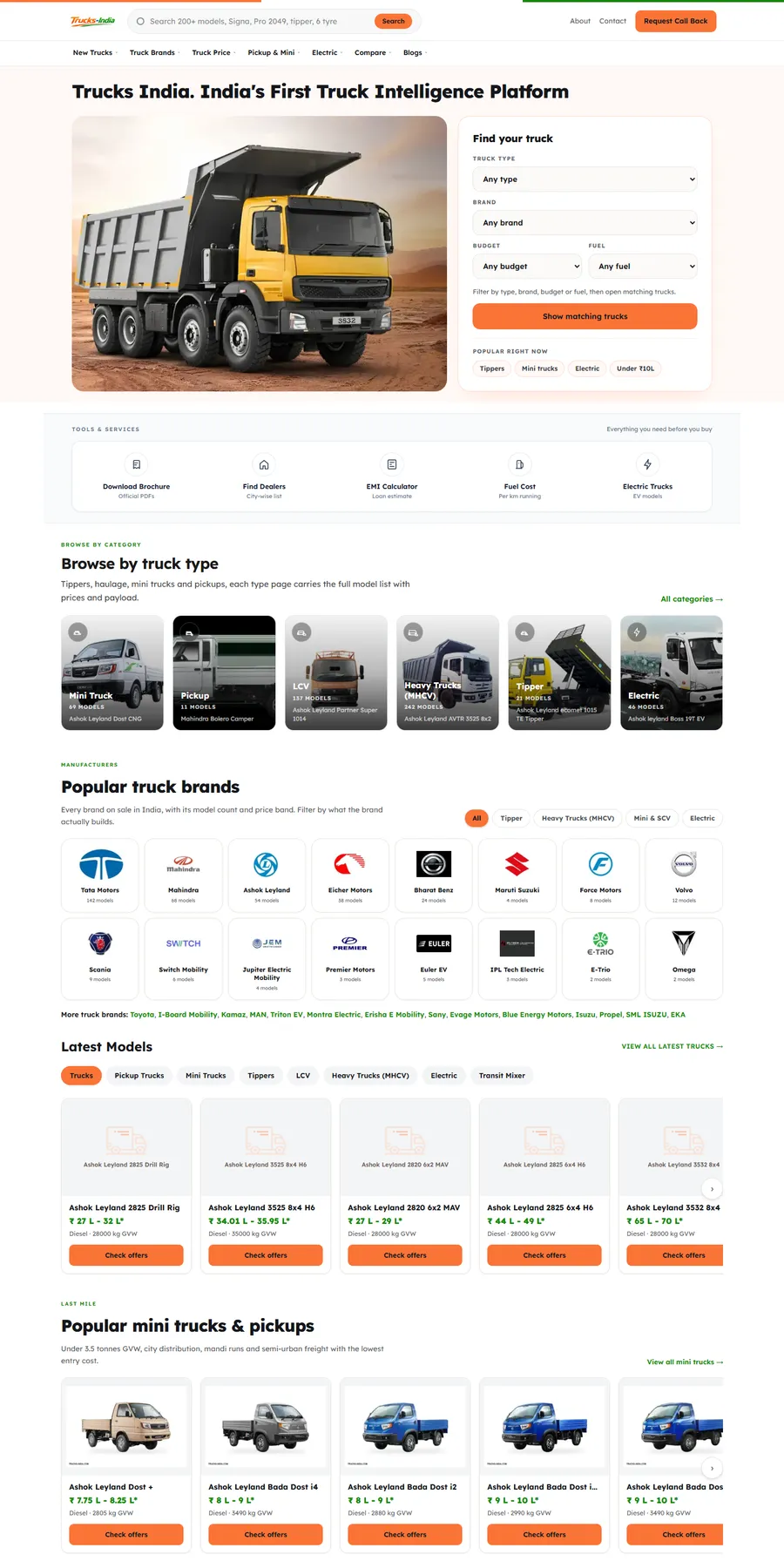
    We built Trucks India's 497 model and 1,299 variant pages. The same structured approach gives you clean pages per make and certification.

  • A dated plan and a guarantee on it

    A week-by-week plan, weekly written updates and 30 days of free support after launch. If we slip a date because of us, the next month of support is free.

In writing, before we start

  • Fixed quote in 1 business day

    Scope, deliverables and price agreed in writing, with a free audit of your current site. No hourly billing.

  • Launch date in writing

    A dated week-by-week plan and a written update every week. If we slip because of us, the next month of support is free.

  • You own everything

    Code, design, content, domain and accounts are yours from day one. No 12-month contract, no rented site.

  • 30 days of support included

    We watch rankings, forms and call tracking after launch and fix anything that needs it.

Proof, not promises

Results from websites we have built

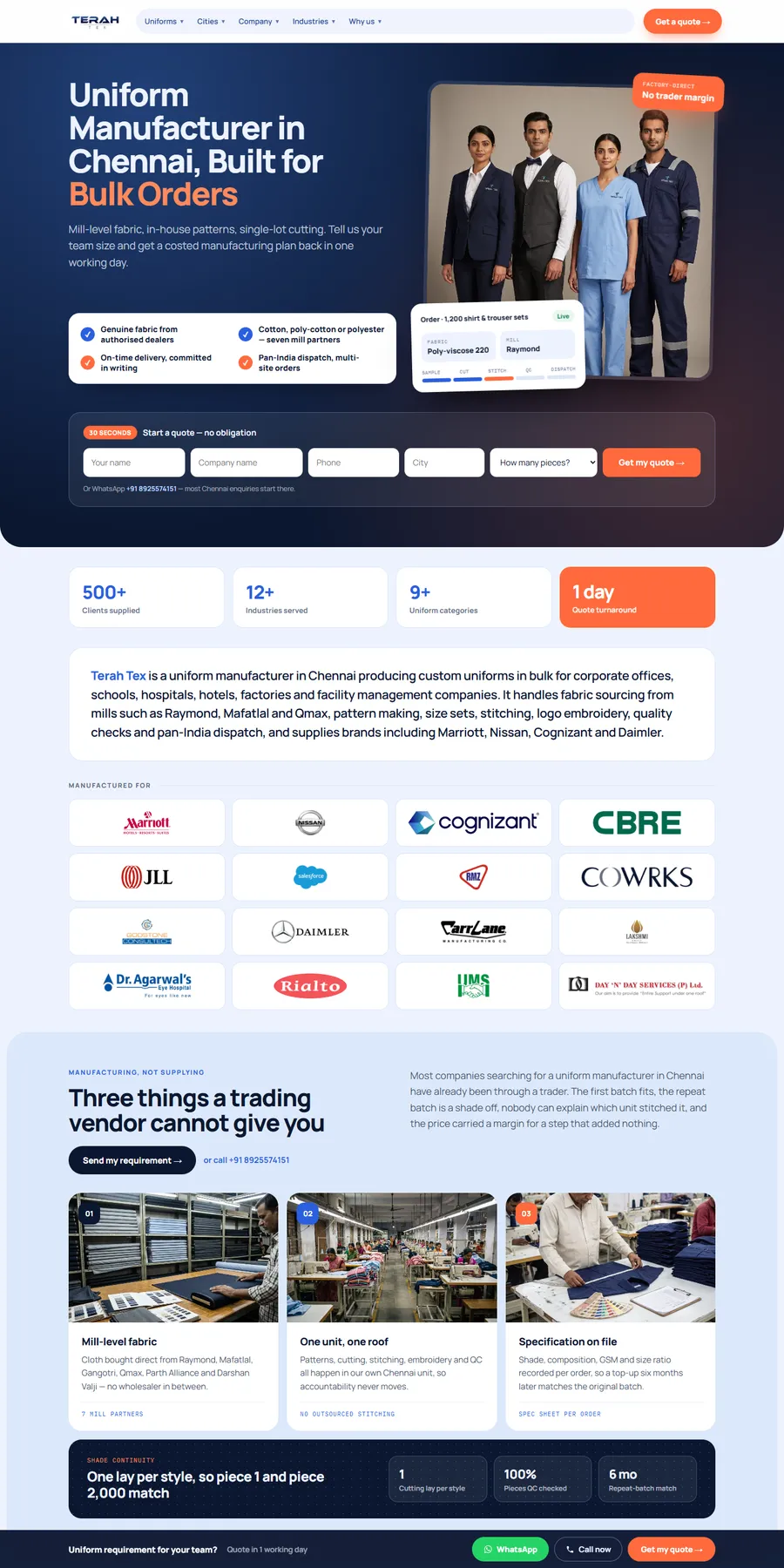
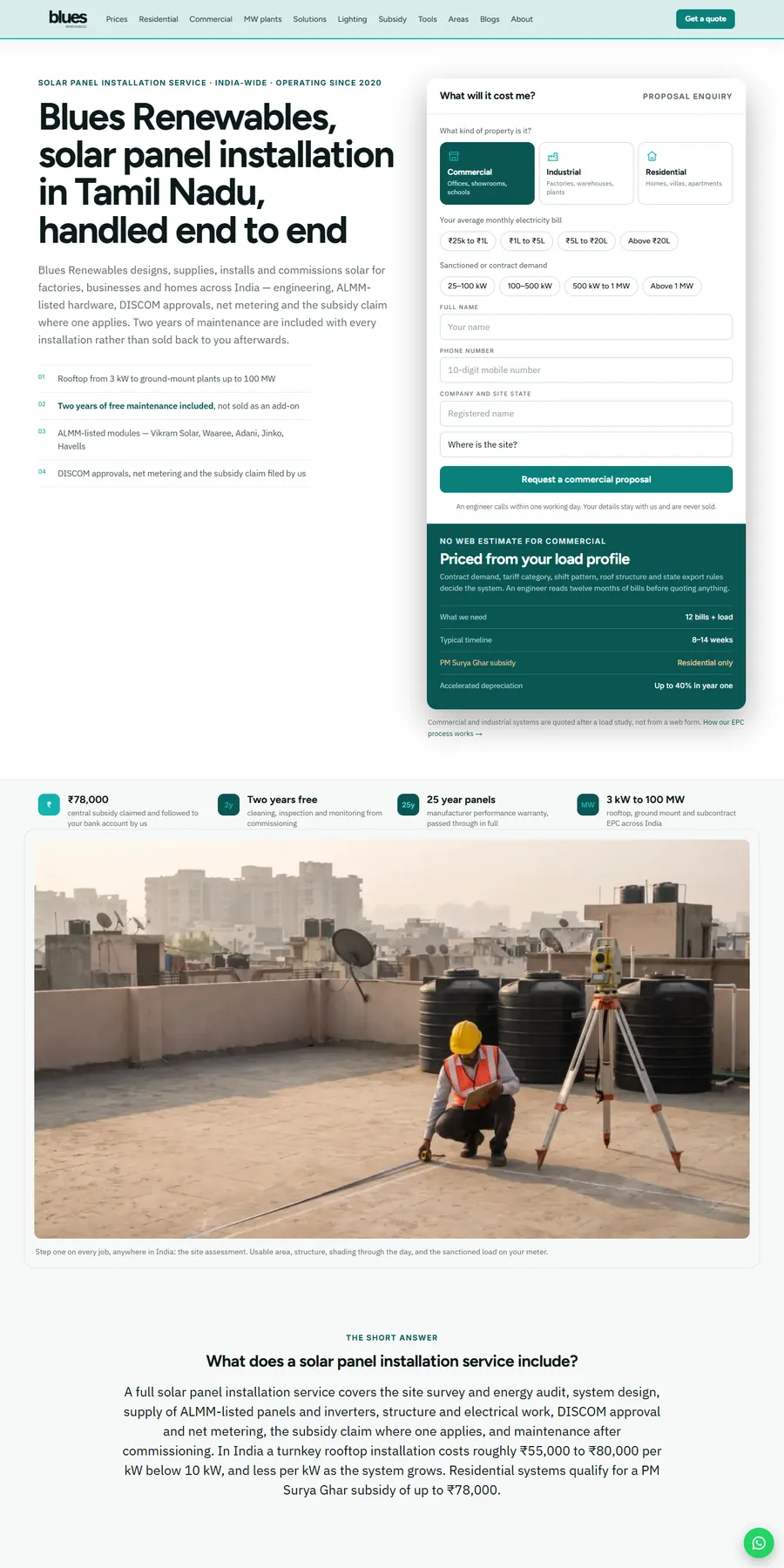
Blues Renewables, a local service business (a rooftop solar installer), runs on the lead system a body shop needs, because drivers, like solar buyers, compare local options and call the one whose pages answer their questions. Its site went from no tracked leads to 7 to 10 enquiries a week from quote forms, calls and WhatsApp, and Google clicks rose from 14 to 560 a fortnight in two months, with every form and call tracked in GA4. Its area guides map to your location pages. Trucks India (497 truck models, 1,299 variant pages, weekly clicks 12 to 292 in five weeks) shows vehicle pages built from structured data, the pattern for certification pages by make. Terah Tex's two-step quote form, at about 5 bulk-order leads a week, is the pattern for the two-step photo estimate.

More websites we have designed and built

Process

How your collision repair website project runs

Typical timeline: 4 to 8 weeks for most body shop sites; 8 to 12 weeks for multi-shop groups or many certification and service area pages. You see progress every week.

  1. Step 01 · Week 1

    Discovery and audit

    We audit your current site, competitors, and how you show up on Google and in AI answers, then agree on goals and a fixed quote.

  2. Step 02 · Weeks 2 to 3

    Strategy and design

    Sitemap, wireframes and full designs for your review. You approve everything before we build.

  3. Step 03 · Weeks 3 to 6

    Build and test

    Development, SEO setup, speed tuning, and testing across devices and browsers.

  4. Step 04 · Launch and beyond

    Launch and grow

    We launch, monitor, and improve based on real data. 30 days of free support included.

What shapes your quote

Scope, not hourly billing

Every project gets a fixed quote within 1 business day, agreed before work starts.

Get my fixed quote →
  • How many service, certification and location pages you need
  • The photo estimate, tow request and booking flows, and where they route
  • Insurance, warranty and calibration pages, and whether we write them with you
  • Whether we organize photos of your shop, booth and team instead of stock images
  • Moving from an agency or franchise site: domain, redirects and tracking
  • Several shops, or collision plus mechanical or glass work under one brand

Collision repair website questions, answered

Straight answers to what owners ask us, and what they ask Google and AI assistants. Ask us anything else.

How much does a collision repair website cost?

We quote one fixed price, agreed before work starts, based on the number of pages, features, integrations and content. You get it within 1 business day of a free audit of your current site. There is no hourly billing, and hosting sits in your own account.

How long does it take to build a body shop website?

Most collision shop sites take 4 to 8 weeks. Multi-shop groups or sites with many certification and service area pages take 8 to 12 weeks. You get a dated week-by-week plan before we start.

Can customers send photos for an estimate?

Yes. A two-step form takes damage photos, the vehicle, insurer and claim number, then contact details, and goes to your estimator's inbox or shop system. The page says a photo estimate is preliminary until the car is inspected.

Should my site talk about the right to choose a shop?

Yes, carefully. Many states protect it, for example California Insurance Code 758.5 and Texas Insurance Code 1952.301. We write a claims page to your state's law, without legal advice, and you approve the wording.

We are on several DRPs. Does a website still matter?

Yes. DRP referrals can change, and many drivers search and read reviews before accepting a suggested shop. Your own site brings customer-pay work and non-DRP claims and shows which sources bring repair orders.

How should we show OEM certifications?

A page per certification you hold, naming the location, what it requires and which repairs it covers, kept current. Expired logos come off the day the certification lapses.

Do I own the website, domain and content?

Yes, from day one. Code, design, content, domain, hosting and analytics accounts are in your name. There is no lock-in, so you can take the site to another developer at any time.

Will a new website bring more repair orders?

We do not guarantee rankings or lead numbers. A new site changes how many visitors start an estimate or call: photo estimates, a clear claims page, certification pages, fast mobile pages and tracking. On a rooftop solar installer's site (not a body shop), the same approach took tracked enquiries from none to 7 to 10 a week.

I have several shops. One website or several?

One website, with a page and an AutoBodyShop schema entity for each location, its own hours, phone and certifications, and an estimate form that starts with the location. Each shop keeps its own Google Business Profile.

How does my shop show up in ChatGPT and Google AI answers?

AI assistants lean on your Google profile, reviews and site. We write services, certifications, warranty and claims answers as plain text, add AutoBodyShop schema per location and check crawler access. No one can guarantee an AI mention.

What makes you different from another collision repair web design company?

We put the terms in writing first: a fixed quote in 1 business day, a dated plan, your ownership of everything and no lock-in. The build covers photo estimates, an insurance claims page, certification and calibration pages, careful warranty wording and tracking by source.
Get your free collision repair website proposal

Four quick questions. You'll get a fixed quote and a free audit of your current site within 1 business day.

  • ✓ No obligation, no sales pressure
  • ✓ Fixed price, never hourly
  • ✓ Your details stay private

Prefer email? info@billionwebstudio.com

Step 1 of 4~60 seconds
What do you need?