Skip to content
Booking projects for next month. Free website audit with every quote.Claim yours →

Construction and manufacturingBooking projects for November

Oil and Gas Website Development Company for Oilfield Service Firms and Suppliers

A company man gets your name from another crew, a supply chain analyst checks your safety numbers before you can be added to the vendor list, and a driver with a CDL decides whether to apply. All three open your website first. We build oilfield service and supply sites with service and basin pages, safety and prequalification facts stated exactly, a 24/7 dispatch line and RFQ forms, and a careers section that keeps your crews full.

  • Built for oil and gas service companies and suppliers
  • Fixed quote in 1 business day
  • You own everything
yourservices.com/permianWorkover rigs,Permian Basin, 24/7Call dispatchTap to callCall-out: workover, Reeves Co.Company man · from /permianTracked as a leadSource: GoogleAI ASSISTANTWho runs workover rigs in Reeves County,Texas?Your Company: 6 workover rigs, Pecosyard, 24/7 dispatch, ISNetworld.Source: your website
Illustration: a visit becomes a tracked lead

The short answer

What does an oil and gas website development company do?

An oil and gas website development company builds websites for oilfield service companies and suppliers that win work through relationships, MSAs and vendor prequalification. The site rarely starts the relationship. It decides whether the relationship turns into a call-out or an RFQ: a company man, an engineer or a supply chain analyst checks what you run, where your yards are, your safety numbers and your certifications before you get the call.

For a service company that means a page per service line with equipment specifications, a page per basin with yard addresses and coverage, a 24/7 dispatch number on every screen, a safety page with TRIR and EMR by year, prequalification networks and insurance summary, certifications such as API Q1 or ISO 9001 stated exactly, case histories by basin, and a careers section for CDL drivers, operators and field hands. For a supplier it adds a catalog with sizes, grades and pressure classes and an RFQ path.

Billion Web Studio is an oil and gas website development company that delivers this as one fixed-scope project: service, basin, safety, equipment and careers pages, dispatch calls and RFQs routed to the right yard and tracked in GA4, Organization schema, and a CMS your office can update. The B2B catalog and quote system behind it took two manufacturers we built for from no inquiries to about 10 and about 5 leads a week. You own the site, domain and accounts from day one, with no lock-in.

The market

What the numbers say about oil and gas service companies and suppliers online

US production is at record levels, prices rose sharply in 2026, and the service side of the industry employs far more people than the producers it serves. That means busy crews, tight hiring and operators who can afford to be choosy about vendors. The figures below come from the EIA, the Bureau of Labor Statistics and Forrester.

How they choose

How operators find and choose an oil and gas service company

Oilfield work is won in the field and confirmed in the office. A name gets passed along on location, then supply chain, safety and engineering check the vendor before anyone signs an MSA or makes the call-out. Here is how an operator picks a service company, and what your site has to do at each step.

  1. 1

    The need: a job on a well, a lease or a line

    A workover, a fishing job, a frac that needs water and sand hauled, a line that needs hydrotesting, a tank battery that needs fabrication. The company man calls the vendors he knows. When they are booked, or a new operator moves into the basin, the search starts: "hot shot trucking Midland", "wireline services Williston", "NDT inspection Eagle Ford".

  2. 2

    The name check: is this outfit real and close?

    The field looks you up on a phone: what you run, which basins and yards, and a number that answers at 2 a.m. A page per service and per basin with yard addresses and a 24/7 dispatch number passes that check in seconds.

  3. 3

    The vendor check: safety, insurance and prequalification

    Before you can be called out, supply chain and safety want TRIR and EMR by year, insurance limits, drug and alcohol program, the prequalification networks you subscribe to and your certifications. A safety and prequalification page that matches your paperwork shortens that review.

  4. 4

    The MSA, the bid or the first call-out

    Procurement sends an MSA or a bid package, or the field gives you a trial job. Your quote form, equipment spec sheets and case histories by basin back up the people inside the operator who want to use you.

  5. 5

    Staying on the list, and staffing the work

    Operators review vendors after jobs and when budgets change. A current site, recent case histories, safety numbers updated every year and a careers section that keeps trucks and rigs crewed are what keep you on the approved vendor list.

The problem

Why most oil and gas websites lose RFQs and bid invites

What we find again and again when we audit sites in this trade. None of it is about how the site looks.

Leak 01

A dispatch number nobody can find

The 24/7 number sits in a footer or behind a contact page, or rings an office line that closes at five. A company man with a rig waiting calls the next outfit whose number is on the first screen.

Leak 02

Offshore stock photos on a land service company

Drilling platforms at sunset and generic hard hats tell an operator nothing about your rigs, trucks, tools or yards. Real equipment photos with unit numbers, yard photos and crews in proper PPE are what a vendor reviewer believes.

Leak 03

No basins, no yards, no coverage

A site that says "serving the oil and gas industry" without naming the Permian, the Eagle Ford, the Bakken or the Haynesville, or the towns your yards are in, cannot be found by the people who need a crew in that county this week.

Leak 04

Safety claims with no numbers

"Safety is our top priority" with no TRIR, DART or EMR, no year and no source. Supply chain teams compare vendors on those numbers, so the outfit that publishes them, with the year, looks more ready to work.

Leak 05

Certification badges that do not hold up

An API logo with no license number, "API certified" for a service the Monogram does not cover, or an ISO badge with no registrar or scope. API's licensing rules say the Monogram cannot appear on websites without a statement of the license scope, and quality reviewers check.

Leak 06

Careers that lose drivers and hands

Field crews are the constraint in a busy basin. A careers page with "send your resume" and no roles, pay ranges, schedules, CDL requirements or yard locations sends drivers to the outfit down the road that made it easy to apply from a phone.

Our research

We checked 18 real oil and gas websites. Here is what we found.

On October 23, 2026 we opened the homepages of 18 oil and gas service companies and suppliers that rank in Google Maps in 10 US metros, the way a customer would on a phone, and ran a mobile Lighthouse test on each. Every number below comes from that check.

  • 68/100

    median mobile Lighthouse performance score (90 or more is good)

  • 7.5 s

    median time to show the main content on a phone (target: 2.5 seconds or less)

  • 2.1 MB

    median homepage download on a phone, before anyone scrolls

  • 17 of 18 took longer than 2.5 seconds to show their main content in a mobile Lighthouse test

  • 1 of 18 show a tap-to-call link on the first phone screen

  • 5 of 18 show a clear call, book or quote button on the first screen

  • 4 of 18 have a contact or quote form on the homepage

  • 3 of 18 let visitors book or schedule online

  • 5 of 18 describe the business to Google with business schema markup

  • 8 of 18 have Google Analytics or Tag Manager installed

  • None of 18 use call tracking

  • 5 of 18 show a copyright year of 2024 or older (of the sites that show one)

  • 4 of 18 have images with no alt text

  • 8 of 18 link to a privacy policy

  • 7 of 18 offer live chat or texting

What this means for your oil and gas website

The three biggest gaps in the sample. Each is fixable, and each is a reason a customer picks the next result instead of you.

See how your site compares →
  1. 1

    None of the 18 use call tracking. Calls are the main lead source in most local trades. Without call tracking you cannot see which marketing made the phone ring.

  2. 2

    17 of 18 took longer than 2.5 seconds to show their main content in a mobile Lighthouse test. Google counts 2.5 seconds or less as a good Largest Contentful Paint. Slow first screens lose visitors before they see your phone number.

  3. 3

    Only 1 of 18 show a tap-to-call link on the first phone screen. Most of these searches happen on phones. A number that is not a tap-to-call link, or sits below the fold, costs calls.

How we checked: Google Maps results for “oilfield services company” in Houston, Midland, Odessa, Oklahoma City, Tulsa, Bakersfield, Denver, Williston, Lafayette, Pittsburgh; the two highest-ranked independent businesses per city (chains and directory listings left out). 20 homepages sampled, 18 loaded for our checker (the rest blocked automated visits), 18 scored by Lighthouse in mobile mode. Lighthouse is a lab test and varies run to run; it is not the same as Google's real-user Core Web Vitals. Businesses are not named. Checked October 23, 2026.

Generic vs built for you

Why a generic website fails oil and gas service companies and suppliers

A template is built to fit every business, so it fits yours badly. Here is what changes when the site is planned around how operators actually buy.

Generic website compared with a website built for oil and gas service companies and suppliers
What you needGeneric template siteBuilt for oil and gas service companies and suppliers
ServicesOne services page listing everythingA page per service line with equipment, specifications, crew size, typical jobs and a call or RFQ button
Coverage"Serving the oil and gas industry"A page per basin with yard addresses, counties covered, response times you can commit to and a map
DispatchOne office number in the footerA tap-to-call 24/7 dispatch number in the header of every page, routed and tracked by yard
Safety"Safety is our top priority"TRIR, DART and EMR by year with their source, safety programs, training and real jobsite photos
PrequalificationNothing, or a row of network logosCurrent prequalification networks, insurance summary, drug and alcohol program and a vendor packet download
CertificationsLogos copied from standards bodiesAPI Monogram license numbers and specifications, API Q1 or Q2, ISO 9001 or ISO 45001 with registrar and scope
Equipment and productsA photo galleryEquipment lists and rental tool pages with spec sheets, or a supply catalog with sizes, grades and pressure classes
Hiring"We're hiring" with an email addressRoles by yard and basin, schedules, pay ranges where you choose, CDL and certification requirements and a mobile apply form

Free self-check · 2 minutes

What your current oil and gas website is missing

Tick everything your site does today. Each box you cannot tick is a place where a ready-to-buy visitor leaves.

What you need

What every oil and gas website needs

The features that turn an oil and gas website from a brochure into the best salesperson you have. We build all of them.

  1. Must-have · 01

    One line that says what you run and where

    "Workover and swab rigs, plug and abandonment and hot shot hauling across the Delaware and Midland basins, yards in Pecos and Odessa, dispatch 24/7." A company man should know in five seconds whether to call.

  2. Must-have · 02

    A tap-to-call dispatch number on every page

    In the header, on every page, on phones, and answered around the clock if you work around the clock. Calls are tracked by yard and page so you can see which basins and services ring.

  3. Must-have · 03

    A page per service line

    Workover, wireline, coiled tubing, flowback, water transfer, hot shot, rental tools, inspection, fabrication or pipeline services, as you run them. Each page lists equipment, specifications such as pressure ratings and pump rates, crew sizes, typical jobs and a call or RFQ button.

  4. Must-have · 04

    A page per basin and yard

    Permian, Eagle Ford, Bakken, Haynesville, Marcellus and Utica, DJ, Anadarko or the Gulf Coast, as you work them. Each with yard address, counties covered, local contacts and photos, backed by a Google Business Profile for each staffed yard.

  5. Must-have · 05

    A safety page vendor reviewers trust

    TRIR, DART and EMR for the last three years, each with its year and source, your safety programs, training and certifications, stop-work authority and real photos of crews on location. Your safety manager owns the numbers.

  6. Must-have · 06

    Prequalification and insurance facts

    The prequalification networks you currently subscribe to, an insurance summary, your drug and alcohol program and a downloadable vendor packet with W-9 and capability statement, so supply chain can start the paperwork without a call.

  7. Must-have · 07

    Certifications stated exactly

    API Monogram license numbers with the specification and facility they cover, API Q1 or Q2 registration, ISO 9001 or ISO 45001 with registrar and scope, and links to verify them. No badges without the facts behind them.

  8. Must-have · 08

    Equipment lists and spec sheets

    Rigs, trucks, pumps, tools and inspection equipment with make, model, capacity and ratings, and spec sheets as downloads beside the text. Engineers check fit here before they call.

  9. Must-have · 09

    Case histories by basin

    Short write-ups of real jobs: basin, well type, problem, what you ran and the result, written without operator names unless the operator agrees. These are the pages that win over the engineer and the pages AI assistants quote.

  10. Must-have · 10

    A supply catalog for suppliers

    For PVF and oilfield supply: product pages with sizes, grades, pressure classes and standards, line card, mill test report requests, yard and branch stock, and an RFQ that takes a material list.

  11. Must-have · 11

    A careers section that keeps crews full

    Roles by yard and basin, rotation or schedule, pay ranges where you choose to share them, CDL and certification requirements, equipment photos and a short apply form that works on a phone. BLS counts 208,400 people in support activities for oil and gas operations, and you compete with every other outfit for them.

  12. Must-have · 12

    Schema, speed and a clean move

    Organization and LocalBusiness schema for each yard matching the visible text, Core Web Vitals targets of LCP 2.5 seconds or less, INP 200 ms or less and CLS 0.1 or less on phones with weak signal, and a 301 redirect map that keeps URLs that already earn traffic.
What we build

The oil and gas website we would build for you

Here is the sitemap we start from for an oilfield service company with several yards. Good oil and gas website design starts from this list of pages, not from a homepage layout. A supplier gets a larger catalog section; a single-yard outfit gets a shorter version.

yourcompany.comHome · every section links here

Services

  • Workover and well servicing
  • Wireline and coiled tubing
  • Flowback and well testing
  • Water transfer and hauling
  • Hot shot and heavy haul
  • Rental tools
  • Inspection and NDT
  • Request a quote

Basins and yards

  • Permian: Delaware and Midland
  • Eagle Ford
  • Bakken
  • Haynesville
  • Yard pages with addresses and contacts
  • 24/7 dispatch

Equipment and products

  • Equipment list with specifications
  • Rental tool catalog
  • Spec sheets library
  • Supply catalog (for suppliers)
  • Line card

Safety and qualifications

  • Safety performance: TRIR, DART and EMR by year
  • Safety programs and training
  • Prequalification networks and insurance
  • Certifications and API licenses
  • Vendor packet download

Work and proof

  • Case histories by basin
  • Operators and partners (with permission)
  • Photo and video gallery

Company and careers

  • About, ownership and history
  • Leadership
  • Careers by yard
  • CDL driver jobs
  • Field operator and hand jobs
  • Contact by yard

Calls, bookings, leads

How we turn visitors into RFQs and bid invites

Good website design for oil and gas companies is judged in call-outs, RFQs, vendor packet downloads and applications from drivers and hands. This is how we build each path and track it.

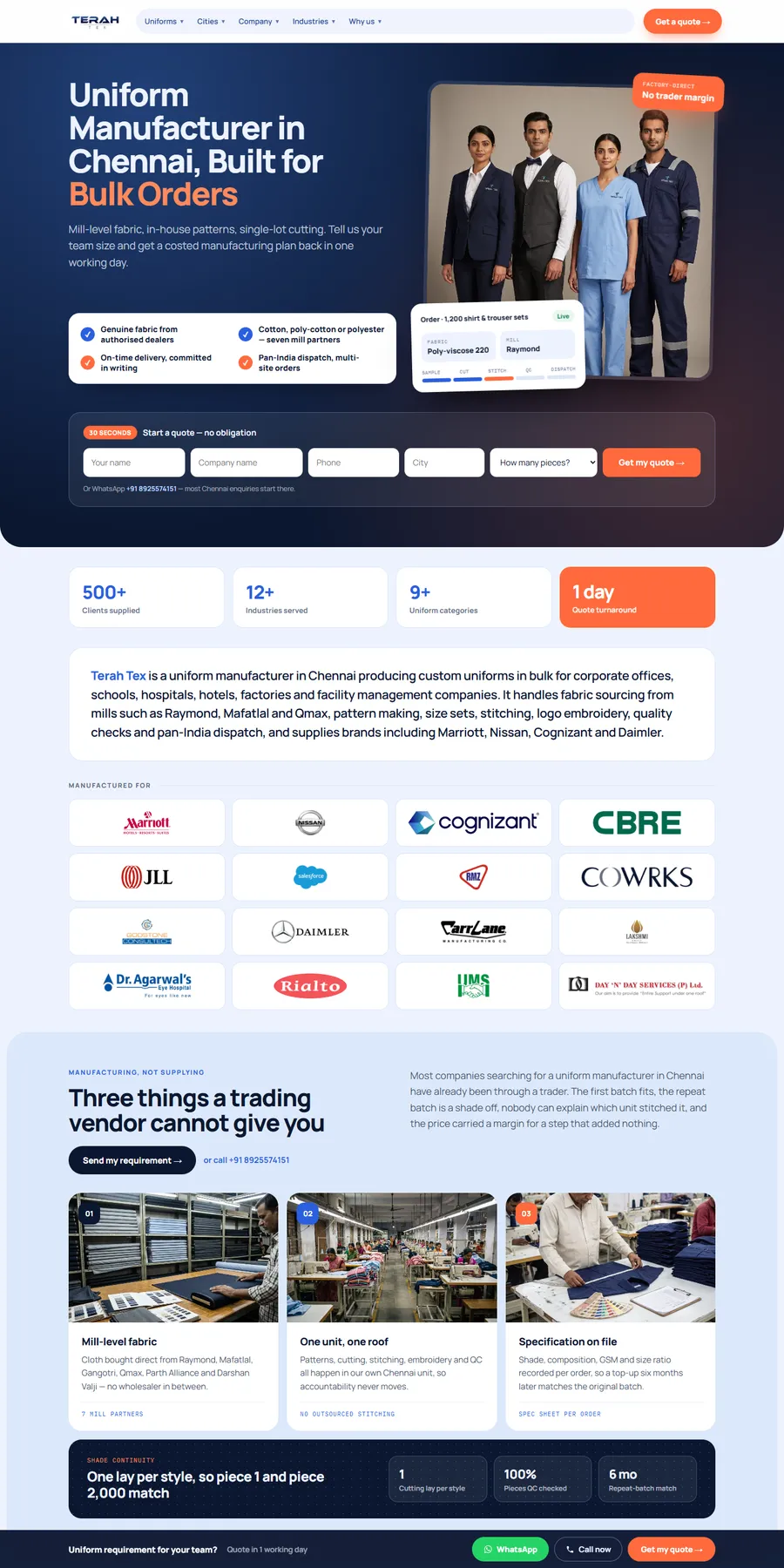
  • 01Dispatch calls tracked by yardA tracked 24/7 number per yard or basin, shown on the matching pages, so you can see which services and basins ring and what time the calls come in. The same call and form tracking records every enquiry on the Blues Renewables site we built.
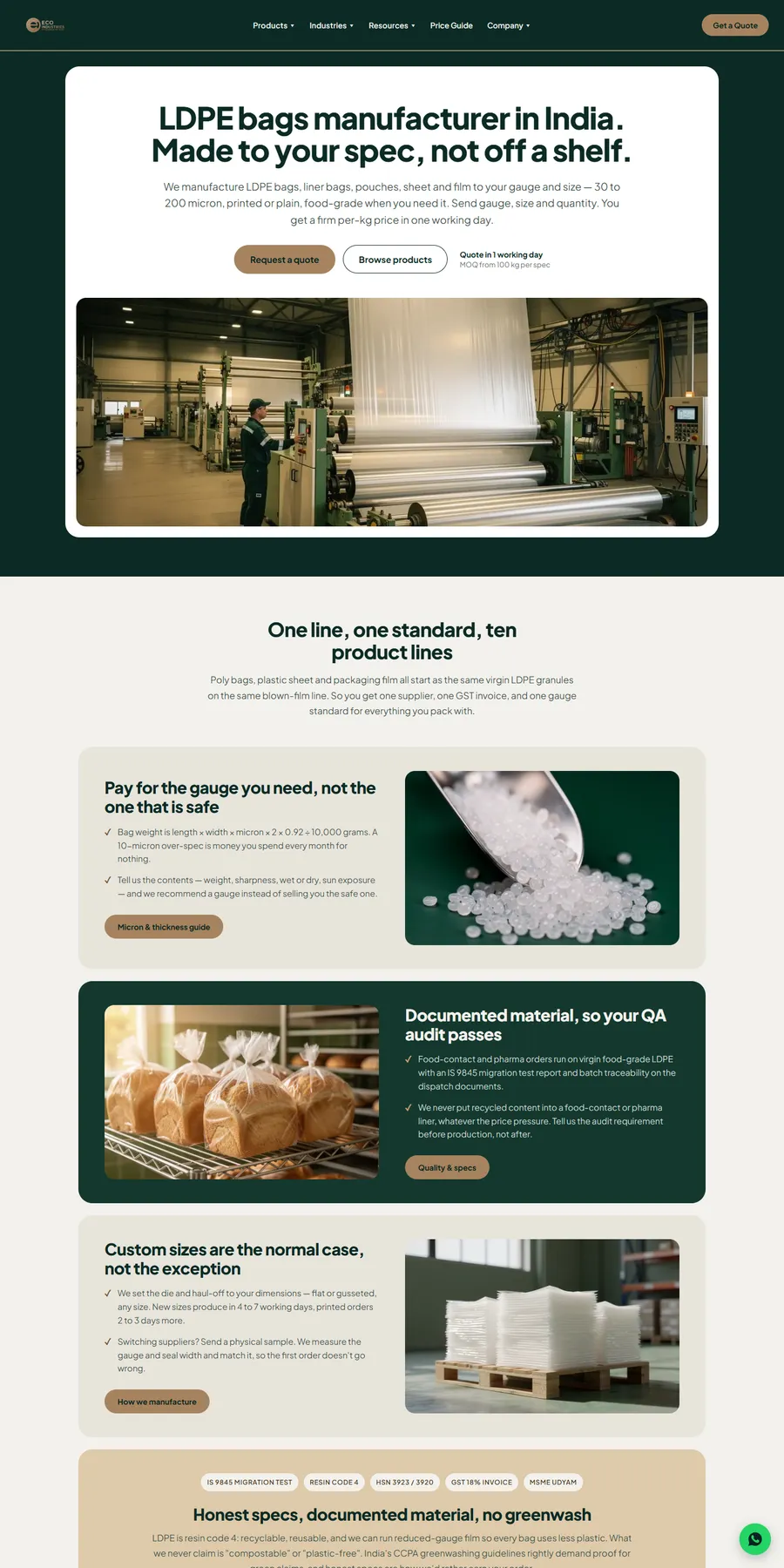
  • 02A two-step RFQStep one asks service, location (basin and county) and contact; step two takes well details, scope, timing and file upload for programs or material lists. We used a two-step quote form for Terah Tex, a bulk uniform manufacturer that went from no website inquiries to about 5 bulk-order leads a week.
  • 03Routing to the right yard and your CRMRequests route by service line and basin to the yard manager or salesperson who covers it and land in HubSpot or Salesforce with page and source attached. We send test requests end to end before and after launch.
  • 04Vendor packet downloads, trackedThe vendor packet (W-9, insurance summary, safety statistics, certifications, capability statement) as a tracked download, so you know which operators' supply chain teams are reviewing you.
  • 05Applications kept apart from salesJob applications from drivers, operators and hands go to HR or the yard manager through their own form or your applicant tracking system, never into the sales inbox, and are tracked by yard and source.
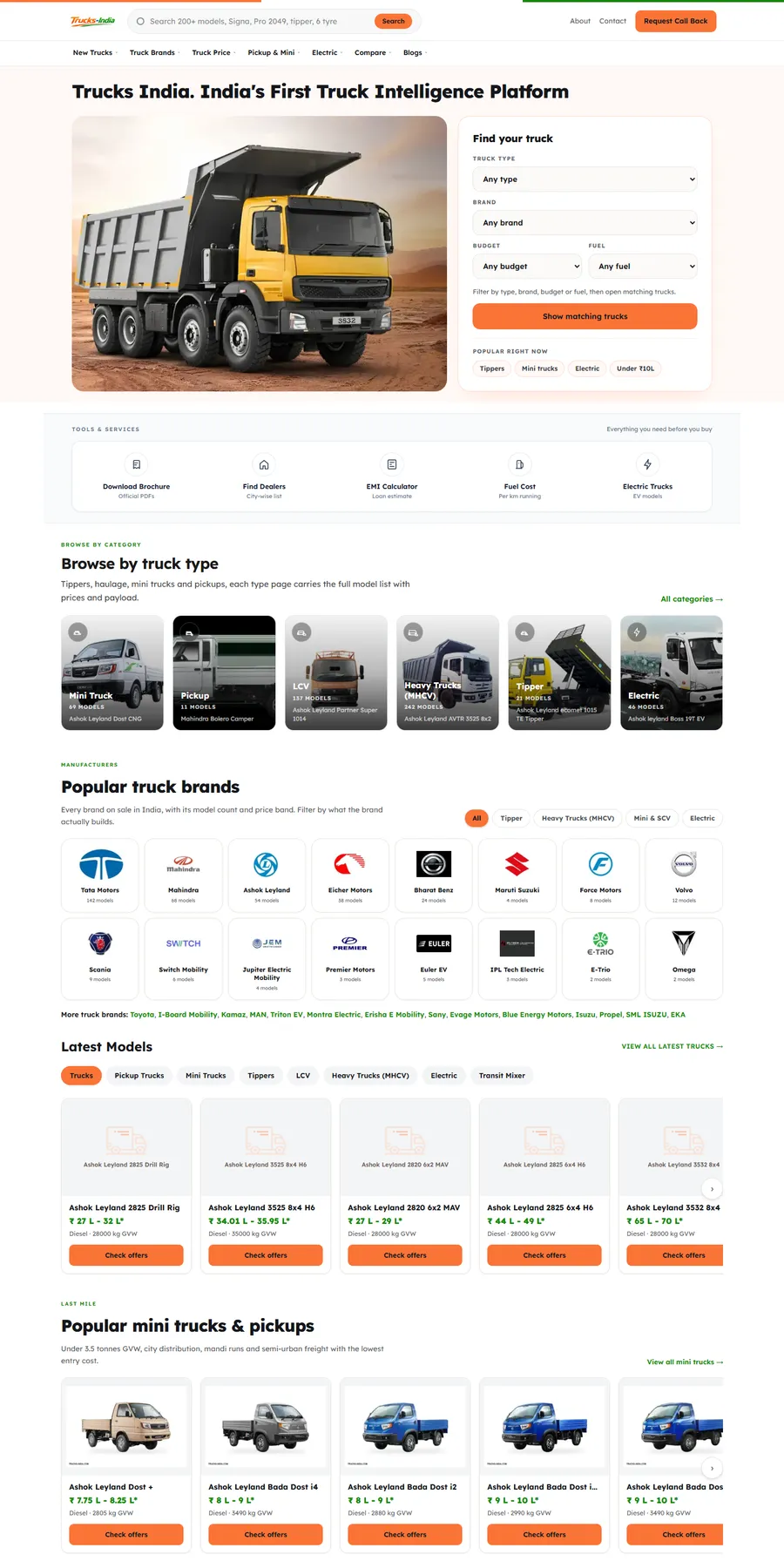
  • 06Basin and service landing pagesPages built for the basins and services you want to grow, each with its own number and RFQ link. Eco Industries' industry and delivery pages did this job for a B2B catalog that went from no enquiries to about 10 leads a week.
  • 07A monthly report in plain numbersCalls, RFQs, vendor packet downloads and applications by yard, basin and source, in a report your operations manager can read in two minutes.

AI search

Engineers, supply chain staff and new operators in a basin now ask AI assistants who provides a service in a county, which vendors hold an API license, or what a service involves. Forrester's 2026 study found 94% of business buyers use AI during their buying process. Google says its AI Overviews and AI Mode need nothing extra beyond being indexed and eligible for a snippet, with important content in text. For a service company, that means services, basins, equipment and qualifications written where machines can read them.

Questions your operators ask AI assistants

  • Who runs workover rigs in Reeves County, Texas?
  • Which hot shot companies in Midland run 40-foot gooseneck trailers?
  • Which oilfield inspection companies near Williston do phased array UT?
  • Who has an API 6A license for wellhead equipment repair in Oklahoma?
  • What does a flowback company do after a frac?
  • Which PVF suppliers stock sour service valves in the Permian?
  • Services, basins and yards in text

    Service lines, counties, towns and yard addresses written on the page. An assistant cannot name you for Reeves County if the county never appears on your site.

  • Equipment and specs as text and tables

    Rig classes, pressure ratings, pump rates, trailer types and tool sizes in HTML. An assistant cannot quote a rating that only exists in a photo or a PDF.

  • Qualifications an assistant can verify

    API license numbers with specifications, ISO certifications with registrars, and safety numbers with years, written the same way on every page.

  • Answers to the questions buyers ask

    What a service involves, typical timelines, what you need from the operator, how call-outs and standby work, each answered in the first lines of the page.

  • Organization and LocalBusiness schema per yard

    Structured data for the company and each staffed yard that matches the visible page and each Google Business Profile, so search engines and AI systems read the same facts the field sees.

  • One identity everywhere

    The same company name, yard addresses and phone numbers on your site, each Google Business Profile, prequalification profiles, LinkedIn and industry directories.

Compliance and trust

The rules an oil and gas website has to get right

An oilfield service or supply website makes claims that operators' safety, quality and supply chain teams check: safety statistics, licenses, certifications and product origin. We build pages that state these facts accurately and are easy to update. We do not certify compliance; your safety, quality and legal leads confirm every figure and claim.

Safety statistics calculated and dated

TRIR follows the BLS incidence rate formula: recordable injuries and illnesses times 200,000, divided by employee hours worked, where 200,000 equals 100 employees working 40 hours a week for 50 weeks. EMR compares your workers' compensation claims with similar firms, with 1.0 as average, over a three-year window set by NCCI or your state's rating bureau. We show each number with its year and source, as your safety manager provides it.

API Monogram and API Q1 claims

API's Monogram licensing requirements say a licensee may not use the Monogram on websites or in advertising without an express statement of the scope of its authorization, such as the license number and product, and may not imply that API approves or endorses its products. API publishes licensees on its Composite List. We show license numbers, specifications and facilities exactly as licensed and link to the listing.

ISO and other certifications

ISO says it does not certify companies; certification comes from a registrar. We name the standard with its year, such as ISO 9001:2015 or ISO 45001:2018, the registrar, the scope and the certificate number, and remove a badge the day a certificate lapses.

Made in USA and product origin

The FTC says an unqualified Made in USA claim means all or virtually all of the product is made in the US, and its standard covers internet marketing, where flags can imply origin. Fabricated or supplied products show origin claims only where your documents support them, with qualified claims where they do not.

Operator names, photos and testimonials

Confidentiality and publicity clauses in an MSA can restrict using an operator's name or logo, and location photos can show other companies' equipment. The FTC rule on consumer reviews and testimonials (16 CFR 465), in force since October 2024, bans fake or misrepresented testimonials. We use operator names, logos and quotes only with written permission, and case histories without names otherwise.

Accessibility

The Justice Department says the ADA applies to the web content of businesses open to the public. Job applicants are part of your public, so we build to WCAG 2.2 AA as standard practice: labeled forms, keyboard navigation, color contrast and alt text. We do not label any site "ADA compliant".

We build with tools and patterns that support these rules and document what we set up. For legal advice on your own obligations, talk to your attorney.

Asked online

What oil and gas service companies and suppliers ask about websites, answered

We read what oilfield hot shot owners, small service contractors and safety coordinators ask in YouTube comments under videos about hot shot work, oilfield contracts and ISNetworld, and in owner-operator threads on Reddit. The same questions come up: how to get direct work instead of load boards, what operators require before the first call-out, how prequalification and safety rates work, and whether a small outfit needs a website at all. These are their questions, paraphrased, with factual answers.

Where owners talkr/HotShotTruckingr/OwnerOperatorsYouTube comments on oilfield hot shot and ISNetworld videos

From r/HotShotTrucking

“We just got our own authority. Do hot shot carriers really need a website?”

Our answer: Replies said not if you only run load boards, because brokers book on carrier packet data, though a domain email helps. Oilfield work changes that: the service companies and operators you want to haul for directly will look you up. A short site with your equipment, yards, coverage area, USDOT and MC numbers, insurance and a dispatch number that answers is enough to start.

From r/OwnerOperators

“Does a trucking company website actually bring in money?”

Our answer: A reply from someone who had worked on the shipper side said they would not use a carrier without a basic web page and email on its own domain, and as a broker still treated it as a red flag. The site rarely sells the load by itself; it passes the check. Keep it current and use the same company name and numbers as your FMCSA record.

From YouTube comments on a video about finding hot shot loads

“How do you get direct oilfield customers instead of relying on load boards or social media?”

Our answer: Direct oilfield work usually starts with relationships: hauling well for a service company and getting asked back, or calling on yard managers, company men and supply stores in your area. A website supports that outreach by showing the equipment you run, the basins and towns you cover, your authority numbers and insurance, and a phone line that answers. Track calls from the site to see which outreach works.

From YouTube comments on a Texas oilfield hot shot video

“How exactly do you get contracts with oil companies?”

Our answer: Operators and large service companies usually require a master service agreement, insurance at their limits, a drug and alcohol program, a written safety program and often a prequalification subscription such as ISNetworld or Avetta before the first call-out. Ask each target company's supply chain or vendor team for its requirements, then keep the same documents ready as a vendor packet you can send or download from your site.

From YouTube comments on a video explaining ISNetworld

“My company is just me. If I work under a company that uses ISNetworld, do I need my own subscription?”

Our answer: That is the hiring client's decision. Companies that use ISNetworld decide which contractors, and sometimes which subcontractors, must subscribe and meet their requirements. Ask the client's contractor management contact in writing whether a one-person subcontractor working under another vendor needs its own account. Either way, keep insurance certificates, your safety program and training records current and ready to send.

From YouTube comments on a video explaining ISNetworld

“Why do safety rate calculations divide by 2,000 hours?”

Our answer: 2,000 hours is one full-time worker's year: 40 hours a week for 50 weeks. The Bureau of Labor Statistics incidence rate formula multiplies recordable injuries and illnesses by 200,000, the hours 100 full-time workers put in over a year, then divides by the hours your people actually worked. That puts a five-person crew and a large contractor on the same scale, which is why operators compare TRIR.

From YouTube comments on a video about ISNetworld grading

“We are a new LLC with no work history. How do we get through prequalification grading?”

Our answer: Prequalification networks grade contractors against each hiring client's own criteria, so ask the client what it expects from a new company with no injury history. From day one you can show a written safety program, training records and insurance certificates, then add OSHA logs and rates once you have hours to calculate them from. Do not publish safety statistics you cannot back up.

From YouTube comments on a video about finding hot shot loads

“I run under another hot shot company and want my own authority, but brokers want a year of history. What do I do?”

Our answer: Many brokers set a minimum authority age as a risk rule, but direct customers such as oilfield service companies and supply yards set their own vendor terms. While your authority ages, build those direct relationships with a simple site listing your equipment, coverage area, insurance and authority numbers and a dispatch number, plus a short list of local companies you call on each week.

Questions are paraphrased from public posts and comments on Reddit, YouTube, forums and social media. We never quote anyone by name.

Others vs us

Oil and gas website design options: Billion Web Studio vs a website builder template vs a typical energy marketing agency

The three ways oil and gas service companies and suppliers usually get a website, side by side.

Oil and gas website design options: Billion Web Studio vs a website builder template vs a typical energy marketing agency
Billion Web StudioWebsite builder templateTypical industry agency
Who owns the site, domain and contentYou do, from day one, in your own accountsYou own the content; the site lives on the builder's platformOften the agency, on a contract
Contract and pricingFixed quote in 1 business day, agreed before work starts, no lock-inMonthly subscription, you build it yourselfMonthly retainer, often on a 12-month or longer contract
Timeline and plan4 to 8 weeks for most sites, 8 to 12 for large catalogs or many yards, a dated week-by-week plan, and the next month of support free if we slip a dateAs fast as you can write and build it yourselfVaries; ask for a dated plan in writing
Services, basins and yardsA page per service line and per basin, with yard addresses and dispatch numbersWhatever pages you writeOften generic energy pages
Safety and qualificationsTRIR, DART and EMR by year, API and ISO claims with license numbers, current prequal networksUp to youOften logos and "safety first" copy
Dispatch and RFQsTap-to-call 24/7 number on every page, two-step RFQ, routing by yardA contact form and a phone numberVaries
CareersRoles by yard, CDL and certification requirements, mobile applyA text pageVaries
TrackingCalls, RFQs, vendor packet downloads and applications by yard and sourceBasic form countsTheir dashboard, which may stay with them if you leave

Why Billion Web Studio

What we do better, and why it matters to you

  • Built for the field and the supply chain office

    Most oil and gas web design starts from drone footage and a slogan. Ours starts from how vendors are called out and approved: services, basins, yards, dispatch, safety numbers and certifications are in the plan from week one.

  • A fixed quote in 1 business day, with a free audit

    We review your current site, dispatch and quote paths, safety and certification claims, careers and tracking, then send a written scope and a fixed price based on pages, features, integrations and content. No hourly billing.

  • A B2B quote system with measured results

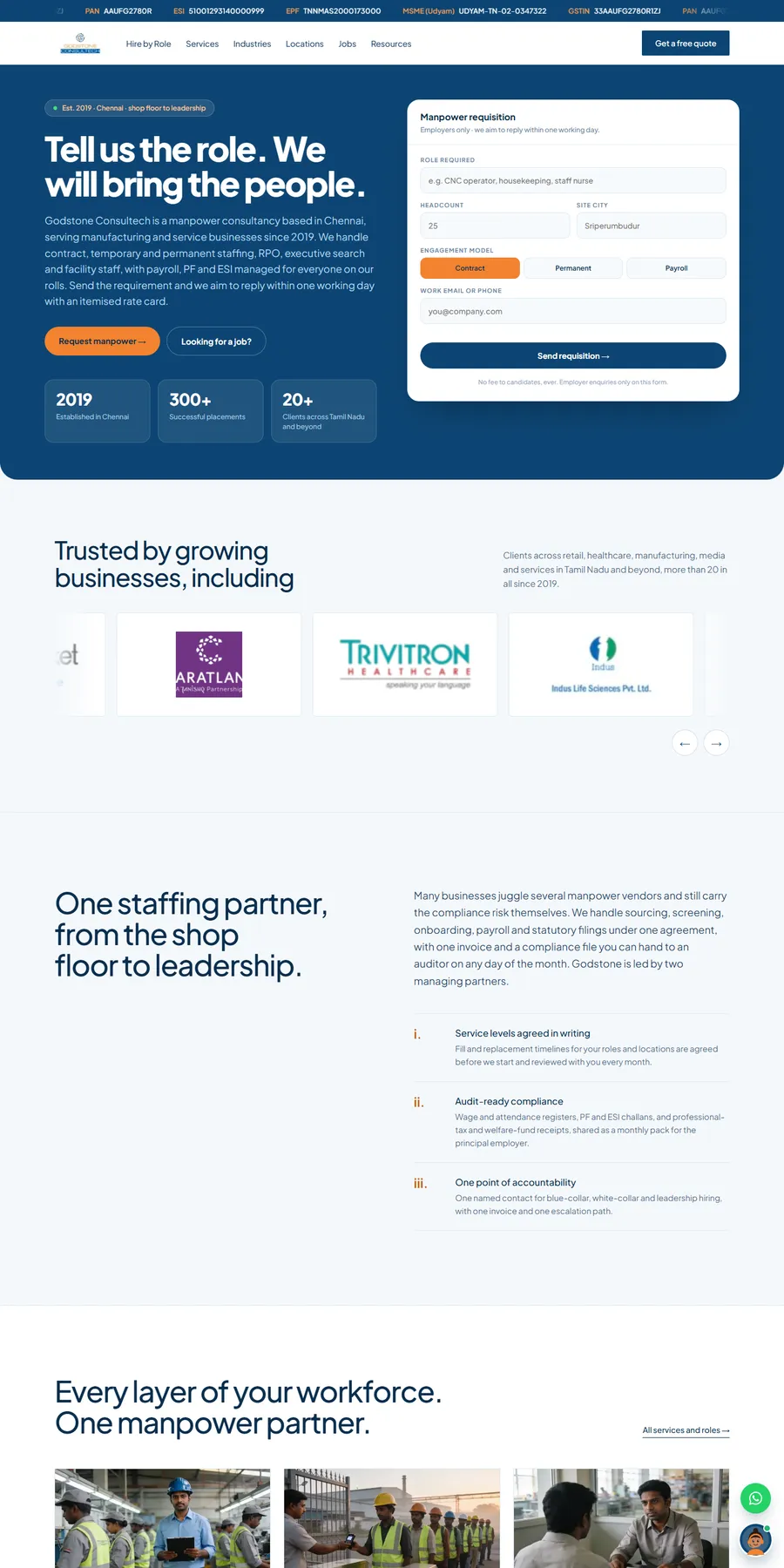
    The catalog, industry pages and two-step quote form we built for Eco Industries and Terah Tex took both manufacturers from no inquiries to steady weekly leads. For a service company the catalog becomes service, equipment and basin pages, and the quote form becomes an RFQ beside the dispatch line.

  • Every call and form counted

    Dispatch calls, RFQs, vendor packet downloads and applications are tracked separately by yard and source, so you can see what the site does for operations, sales and hiring.

  • You own everything from day one

    Code, design, content, domain, hosting and analytics accounts in your name, with an editable CMS and training so the office can update safety numbers, jobs and yard details. No lock-in.

  • A dated plan and a guarantee on it

    A week-by-week plan, weekly written updates and 30 days of free support after launch. If we slip a date because of us, the next month of support is free.

In writing, before we start

  • Fixed quote in 1 business day

    Scope, deliverables and price agreed in writing, with a free audit of your current site. No hourly billing.

  • Launch date in writing

    A dated week-by-week plan and a written update every week. If we slip because of us, the next month of support is free.

  • You own everything

    Code, design, content, domain and accounts are yours from day one. No 12-month contract, no rented site.

  • 30 days of support included

    We watch rankings, forms and call tracking after launch and fix anything that needs it.

Proof, not promises

Results from websites we have built

Our proof is measured B2B work where buyers check specifications and credentials before they ask for a quote, the same way an operator vets a vendor. Eco Industries, an LDPE packaging manufacturer, went from no enquiries to about 10 leads a week after we built a 44-page catalog, industry and delivery pages and technical buyer guides, and fixed 370 broken canonical references left by the old site. Terah Tex, a bulk uniform manufacturer, went from no website enquiries to about 5 bulk-order leads a week with 16 category pages, category and city pages across six metros and a two-step quote form. For an oilfield service company, the catalog becomes service and equipment pages with spec sheets, the city pages become basin and yard pages, and the quote form becomes an RFQ beside a tracked 24/7 dispatch line.

More websites we have designed and built

Process

How your oil and gas website project runs

Typical timeline: 4 to 8 weeks for most service company sites; 8 to 12 weeks for large equipment or product catalogs, many basins and yards, or several divisions. You see progress every week.

  1. Step 01 · Week 1

    Discovery and audit

    We audit your current site, competitors, and how you show up on Google and in AI answers, then agree on goals and a fixed quote.

  2. Step 02 · Weeks 2 to 3

    Strategy and design

    Sitemap, wireframes and full designs for your review. You approve everything before we build.

  3. Step 03 · Weeks 3 to 6

    Build and test

    Development, SEO setup, speed tuning, and testing across devices and browsers.

  4. Step 04 · Launch and beyond

    Launch and grow

    We launch, monitor, and improve based on real data. 30 days of free support included.

What shapes your quote

Scope, not hourly billing

Every project gets a fixed quote within 1 business day, agreed before work starts.

Get my fixed quote →
  • How many service, basin, yard and equipment pages you need
  • Whether we write the service and case history content from interviews with your operations team
  • RFQ flow, routing by yard and CRM connection
  • Supply catalog size and where the product data lives
  • Careers integration and the number of yards hiring
  • Moving from your current site: redirects, keeping pages that rank and setting up tracking first

Oil and gas website questions, answered

Straight answers to what owners ask us, and what they ask Google and AI assistants. Ask us anything else.

How much does an oil and gas website cost?

We quote one fixed price, agreed before work starts, based on the number of pages, features, integrations and content. You get it within 1 business day of a free audit of your current site. There is no hourly billing.

How long does it take to build an oilfield service company website?

Most take 4 to 8 weeks. Large equipment or product catalogs, many basins and yards or several divisions take 8 to 12 weeks. You get a dated week-by-week plan before we start.

Do we need a website if our work comes from relationships and MSAs?

Yes. Company men, engineers and supply chain teams look you up after a referral and before an MSA or a call-out. The site does not replace the relationship; it confirms it, and it also recruits the crews you need to do the work.

Should we publish our TRIR and EMR?

If the numbers are good, they help, because vendor reviewers compare them. Show each with its year and source, keep three years, and make sure they match your prequalification paperwork. Your safety manager provides and approves the figures.

How should we show API and ISO certifications?

API Monogram license numbers with the specification and facility, API Q1 or Q2 registration, and ISO standards with year, registrar and scope. API's rules require a statement of the license scope wherever the Monogram appears on a website.

Can we name the operators we work for?

Only with permission. Check your MSA first, because confidentiality and publicity clauses can restrict using an operator's name or logo. Case histories by basin, well type and result work without names and still show an engineer what you can do.

Can the website help us hire drivers and field hands?

Yes. Roles by yard, schedules, pay ranges where you choose, CDL and certification requirements, equipment photos and a short mobile apply form help. Applications go to HR or the yard manager, not the sales inbox.

We are a supplier. Can the site handle a product catalog and RFQs?

Yes. Product pages with sizes, grades, pressure classes and standards, a line card, mill test report requests and an RFQ that takes a material list, routed to the right branch or yard.

Will a new website get us more work?

We do not guarantee rankings or call-outs. A new site changes how you look when someone checks you, how easily the field can reach dispatch and whether you can see where calls and RFQs come from. For two B2B manufacturers we built for, the sites went from no inquiries to about 10 and about 5 leads a week.

How do we show up in Google and in ChatGPT when operators search for a service?

Google says its AI features need nothing extra beyond being indexed and eligible for a snippet, with important content in text. We write services, basins, counties, equipment and qualifications as text, add a page per basin and yard, and add Organization and LocalBusiness schema. No one can guarantee an AI mention.

Who updates the site when safety numbers, jobs or yards change?

Your office team, through an editable CMS with training. Safety statistics, job posts and yard details are set up as simple fields, so updates take minutes. After 30 days of free support you can choose an optional care plan or run it yourselves.

Get your free oil and gas website proposal

Four quick questions. You'll get a fixed quote and a free audit of your current site within 1 business day.

  • ✓ No obligation, no sales pressure
  • ✓ Fixed price, never hourly
  • ✓ Your details stay private

Prefer email? info@billionwebstudio.com

Step 1 of 4~60 seconds
What do you need?