Skip to content
Booking projects for next month. Free website audit with every quote.Claim yours →

Health and wellnessBooking projects for November

Pharmacy Website Development Company for Independent and Compounding Pharmacies

A patient fed up with a chain's two-day gaps searches for an independent pharmacy that delivers. A nurse practitioner looks for a compounder who answers the phone. Both judge you on your website before they call. We build pharmacy websites that make the transfer easy, connect refill requests to the pharmacy system you already run, give prescribers their own door and show which calls, transfers and orders came from where.

  • Built for independent and compounding pharmacies
  • Fixed quote in 1 business day
  • You own everything
yourpharmacy.com/transferTransfer yourprescriptions to usStart a transferTap to callNew transfer: 3 prescriptionsFrom /transfer · 6:52 pmTracked as a leadSource: GoogleAI ASSISTANTIndependent pharmacy near me thatdelivers?Your Pharmacy: free local delivery,compounding lab, open Saturday.Source: your website
Illustration: a visit becomes a tracked lead

The short answer

What does a pharmacy website development company do?

A pharmacy website development company builds websites for independent community pharmacies and compounding pharmacies that win transfers from chain pharmacies, keep refills flowing and bring in prescribers. The site has to work for three visitors: a current patient who wants a refill in two taps, a new patient deciding whether switching is worth the trouble, and a prescriber or clinic deciding whether to send you scripts.

For an independent pharmacy that means a refill button in the header linked to the refill portal or app your pharmacy software provides, a transfer form where you do the work of calling the old pharmacy, one page per service (immunizations, medication synchronization, compliance packaging, delivery, long-term care, medical equipment, compounding), insurance and Medicare plans you accept, your notice of privacy practices posted where HIPAA expects it, and a prescriber section with how to send prescriptions, order forms and a direct line. For compounders it adds patient and prescriber pages written within FDA and state rules, with your accreditations shown only where you hold them.

Billion Web Studio is a pharmacy website development company that delivers this as one fixed-scope project: pharmacy website design, service, location and prescriber pages, refill and transfer connections, forms on providers that sign a BAA, LocalBusiness and Pharmacy schema, and GA4 tracking that separates refills, transfers, calls and prescriber inquiries. You own the site, domain and content from day one, with no platform contract tying the site to your software or wholesaler.

The market

What the numbers say about independent and compounding pharmacies online

Independents still make up more than a third of US retail pharmacies, but the ground under them keeps moving: chain stores close, mail order grows and patients ask AI assistants where to fill a prescription. These figures show what an independent pharmacy's website is competing for.

How they choose

How patients find and choose a pharmacy

Most new patients come to an independent pharmacy in one of three ways: they leave a chain after a bad experience or a store closure, a prescriber sends them, or they need a service the chain does not offer, such as delivery, compliance packaging or a compounded medication. Here is the path, and what your site has to do at each step.

  1. 1

    The trigger: a gap, a closure or a long line

    Patients in city forums describe the moment: a daily medication delayed two or three days, a chain store closing, a drive-thru line that never moves. They search "independent pharmacy near me" or ask an AI assistant. Your site has to answer on the first screen: who you are, where, hours, whether you deliver and how to transfer.

  2. 2

    The check: insurance, stock and people

    Next they check whether you take their plan, including their Medicare Part D plan, whether you can get a hard-to-find drug, and who the pharmacist is. A plain insurance page, a short note on how you handle backorders and real photos of your pharmacists answer this before they call.

  3. 3

    The switch: transfer, not paperwork

    The patient fills in a short transfer form with their old pharmacy and their medications, and you make the call. The site explains how long it takes and when the first fill will be ready, and the form goes through a provider that signs a BAA, not plain email.

  4. 4

    The routine: refills, sync and delivery

    Once they are yours, the website becomes the refill button. It sends them to the refill portal or app your pharmacy system provides, explains medication synchronization so every refill is ready on one day, and shows delivery days and areas. Fewer calls about refills means more time at the counter.

  5. 5

    The prescriber: the second front door

    Owners say physician relationships move script volume more than ads do. A prescriber page tells a clinic how to send scripts, what you compound or stock, how fast you turn orders around, and who to call. For compounders, it is the most important page on the site.

The problem

Why most pharmacy websites lose new patients

What we find again and again when we audit sites in this trade. None of it is about how the site looks.

Leak 01

Your site came with your software or your wholesaler

Many independents run a template site bundled with their pharmacy software, a wholesaler program or a pharmacy marketing platform. It handles refills, but the design looks like every other store on the same program, the content is generic health news, and the site may not come with you if you change vendors. An owner on r/IndependentPharmacy could not even find the price without a sales call.

Leak 02

No reason to switch from the chain

The homepage says "your hometown pharmacy" and lists hours. It does not say what a patient gains by switching: delivery, a pharmacist who answers the phone, hard-to-find drugs in stock, refills synced to one day, or a transfer you handle for them. Patients leaving a chain need that list.

Leak 03

Services hidden on one page

Immunizations, medication therapy management, blood pressure checks, compliance packaging, long-term care, medical equipment and compounding sit in one bulleted list. Nobody searching "shingles vaccine near me" or "blister packs pharmacy" lands on it, and AI assistants cannot tell what you actually do.

Leak 04

Prescribers have nowhere to go

Owners say prescriber relationships move script volume, yet most pharmacy sites have no prescriber page at all. A clinic looking for a compounder, a hospice nurse looking for delivery or a new practice looking for a local pharmacy to recommend finds only a patient homepage and a fax number.

Leak 05

Patient data in the wrong places

A generic contact form that emails medication names to a shared inbox, a refill page with the Meta Pixel on it, a privacy notice nobody can find. Pharmacies are HIPAA covered entities, and the website is where that shows first.

Leak 06

Compounding pages that promise too much

Some compounding sites call a compounded GLP-1 "the same as" a branded drug or imply FDA approval. FDA lists "same as" claims as a red flag, compounded drugs are not FDA approved, and the semaglutide and tirzepatide shortages are over. Pages like that put the pharmacy, not the agency, at risk.

Our research

We checked 19 real pharmacy websites. Here is what we found.

On October 23, 2026 we opened the homepages of 19 independent and compounding pharmacies that rank in Google Maps in 10 US metros, the way a customer would on a phone, and ran a mobile Lighthouse test on each. Every number below comes from that check.

  • 62/100

    median mobile Lighthouse performance score (90 or more is good)

  • 6 s

    median time to show the main content on a phone (target: 2.5 seconds or less)

  • 1.4 MB

    median homepage download on a phone, before anyone scrolls

  • 18 of 19 took longer than 2.5 seconds to show their main content in a mobile Lighthouse test

  • 8 of 19 show a tap-to-call link on the first phone screen

  • 14 of 19 show a clear call, book or quote button on the first screen

  • 5 of 19 have a contact or quote form on the homepage

  • 5 of 19 let visitors book or schedule online

  • 8 of 19 describe the business to Google with business schema markup

  • 13 of 19 have Google Analytics or Tag Manager installed

  • 3 of 19 use call tracking

  • 3 of 19 show a copyright year of 2024 or older (of the sites that show one)

  • 1 of 19 have images with no alt text

  • 14 of 19 link to a privacy policy

  • 5 of 19 offer live chat or texting

What this means for your pharmacy website

The three biggest gaps in the sample. Each is fixable, and each is a reason a customer picks the next result instead of you.

See how your site compares →
  1. 1

    18 of 19 took longer than 2.5 seconds to show their main content in a mobile Lighthouse test. Google counts 2.5 seconds or less as a good Largest Contentful Paint. Slow first screens lose visitors before they see your phone number.

  2. 2

    Only 3 of 19 use call tracking. Calls are the main lead source in most local trades. Without call tracking you cannot see which marketing made the phone ring.

  3. 3

    Only 5 of 19 have a contact or quote form on the homepage. Some customers will not call. A short form on the homepage catches them at any hour.

How we checked: Google Maps results for “independent pharmacy” in Houston, Phoenix, Atlanta, Denver, Charlotte, Columbus, Tampa, Nashville, Kansas City, Sacramento; the two highest-ranked independent businesses per city (chains and directory listings left out). 20 homepages sampled, 19 loaded for our checker (the rest blocked automated visits), 19 scored by Lighthouse in mobile mode. Lighthouse is a lab test and varies run to run; it is not the same as Google's real-user Core Web Vitals. Businesses are not named. Checked October 23, 2026.

Generic vs built for you

Why a generic website fails independent and compounding pharmacies

A template is built to fit every business, so it fits yours badly. Here is what changes when the site is planned around how patients actually buy.

Generic website compared with a website built for independent and compounding pharmacies
What you needGeneric template siteBuilt for independent and compounding pharmacies
RefillsA refill form that emails the store, or a link buried in the menuA refill button in the header of every page, linked to the refill portal or app your pharmacy software provides, with each request tracked as a conversion
New patients"Transfer your prescription" with a phone numberA transfer page that explains what happens, a short form on a BAA-covered provider, the time to first fill and the insurance and Medicare plans you accept
ServicesOne Services page with a bulleted listA page per service: immunizations, med sync, compliance packaging, delivery, long-term care, medical equipment, test and treat where your state allows it, and compounding
PrescribersA fax number in the footerA prescriber section with how to send scripts, what you compound or stock, turnaround times, order forms, a portal link if you have one and a named contact
PrivacyNo privacy notice and ad pixels on every pageYour notice of privacy practices posted and linked from every page, no ad pixels on refill, transfer or intake pages, and form vendors that sign a BAA
Compounding claims"Same as" language and copied manufacturer copyPages that describe compounding as a prescriber-directed option, state that compounded drugs are not FDA approved, and show PCAB accreditation or USP chapter compliance only where you hold it
Front-end shopA catalogue of thousands of products nobody buys onlineA short shop of the OTC, wellness, gift and medical supply lines you actually stock, with local pickup and delivery, or a simple product showcase if you do not ship
Knowing what worksA monthly count of website visitsGA4 events that separate refills, transfers, calls, vaccine bookings and prescriber inquiries, by source and page

Free self-check · 2 minutes

What your current pharmacy website is missing

Tick everything your site does today. Each box you cannot tick is a place where a ready-to-buy visitor leaves.

What you need

What every pharmacy website needs

The features that turn a pharmacy website from a brochure into the best salesperson you have. We build all of them.

  1. Must-have · 01

    Refill and transfer in the header

    Two buttons on every page: refill (to your software's portal or app) and transfer. On a phone they sit in a sticky bar with tap-to-call, so a patient never hunts for them.

  2. Must-have · 02

    A clear reason to switch

    A short list near the top of the homepage that says what you do that the chain does not: delivery days, pharmacist on the phone, refills synced to one day, compliance packaging, hard-to-find drugs, drive-thru, Saturday hours. Only what is true for your store.

  3. Must-have · 03

    One page per service

    Immunizations with the vaccines and ages your state lets pharmacists give, medication therapy management, blood pressure and A1c checks, med sync, blister and compliance packaging, delivery and mail, long-term care and assisted living, durable medical equipment, travel health, and test and treat where state law allows.

  4. Must-have · 04

    Insurance and Medicare plans accepted

    A plain page listing the commercial, Medicaid and Medicare Part D plans you take, with a line on preferred networks and a phone number to check. It answers the question every switching patient asks first.

  5. Must-have · 05

    A prescriber section

    How to send prescriptions (e-prescribe, fax, phone), what you compound or stock, turnaround times, delivery to clinics, order forms, your prescriber portal if you run one, and a named contact. For compounders it is built as its own small site within the site.

  6. Must-have · 06

    Compounding pages written within the rules

    Patient pages on dosage forms, flavoring, allergen-free and discontinued medications, hormone therapy and veterinary compounding where you offer them. Every page says compounded drugs are not FDA approved, never calls one the same as a branded drug, and shows PCAB accreditation and USP 795, 797 or 800 compliance only if you hold it.

  7. Must-have · 07

    Pharmacist and staff pages

    Real photos and short bios of your pharmacists, the pharmacist-in-charge named, years in the community and languages spoken. Patients choosing an independent are choosing people.

  8. Must-have · 08

    HIPAA notice and secure forms

    Your notice of privacy practices posted prominently and linked from every page, refill, transfer and vaccine forms on vendors that sign a BAA, ad pixels kept off those pages, and medication names kept out of email notifications.

  9. Must-have · 09

    Location pages that match Google

    For each store: address, hours, drive-thru hours, holiday hours, phone, fax, services at that store, delivery area and a map, with the name, address and phone identical to the Google Business Profile.

  10. Must-have · 10

    A shop that fits a pharmacy

    OTC, vitamins, CBD where legal, gifts, medical supplies and compression wear, with local pickup and delivery. Prescription drugs are never sold through a cart; controlled substances online only after a legal review under the Ryan Haight Act.

  11. Must-have · 11

    Health guides that answer real questions

    Short pages on questions your counter hears every day: which vaccines you need at 50 or 65, how med sync works, what to do with expired medications, what a transfer costs (nothing). Written in plain language and reviewed by your pharmacist.

  12. Must-have · 12

    Fast, accessible pages for older patients

    Large type, strong contrast, big tap targets, labeled forms and keyboard navigation, built to WCAG 2.1 AA. Fast pages that meet Core Web Vitals targets on older phones, with no pop-ups between a patient and the refill button.

What we build

The pharmacy website we would build for you

Good website design for pharmacies starts with the sitemap. Here is the one we would start from for an independent pharmacy with one or two stores and a compounding lab. We cut or add pages to match the services you offer and whether you serve long-term care, clinics or veterinarians.

yourcompany.comHome · every section links here

Patients

  • Refill a prescription
  • Transfer your prescriptions
  • New patients: how switching works
  • Insurance and Medicare plans accepted
  • Delivery and mail service
  • Medication synchronization
  • Compliance and blister packaging

Services

  • Immunizations and vaccine scheduling
  • Medication therapy management
  • Blood pressure and health screenings
  • Test and treat (where allowed)
  • Long-term care and assisted living
  • Durable medical equipment and supplies
  • Travel health

Compounding

  • What compounding is and is not
  • Dosage forms and flavoring
  • Hormone therapy (if offered)
  • Dermatology and pain compounding
  • Pediatric and veterinary compounding
  • Our lab, accreditations and quality testing

Prescribers

  • How to send prescriptions
  • Compounding for your practice
  • Order forms and prescriber portal
  • Clinic and hospice delivery
  • Contact our pharmacists

Shop and guides

  • Shop OTC, wellness and gifts
  • Medical supplies and compression
  • Health guides and vaccine schedules
  • Medication disposal
  • Seasonal flu and COVID clinics

About and legal

  • Our pharmacists and history
  • Store locations and hours
  • Careers for pharmacists and technicians
  • Notice of privacy practices
  • Website privacy policy and accessibility statement
  • Messaging terms

Calls, bookings, leads

How we turn visitors into new patients

Good pharmacy web design is judged by transfers, refills, vaccine bookings and prescriber calls, not visits. You should see each one and where it came from. This is how we build and track that path without putting patient data at risk.

  • 01Transfer form as the main new-patient actionName, date of birth, old pharmacy and medications, on a form provider that signs a BAA. The thank-you page says when you will call and when the first fill is ready. Each transfer is a GA4 conversion with no health details in the event.
  • 02Refill requests counted, not just clickedWhere your software's refill portal allows it, we track the refill request as a conversion; where it does not, we track the click and tell you the limit before you sign.
  • 03Calls tracked by pageTap-to-call on every page and call tracking that keeps your main number on Google, so you can see whether the delivery page, the compounding page or a vaccine page made the phone ring.
  • 04Vaccine and service bookingFlu, COVID, shingles and travel vaccine appointments booked online through the scheduler you use, with reminders and walk-in hours shown for patients who will not book.
  • 05Prescriber inquiries routed to a personA prescriber contact form and order request that go to the pharmacist who handles clinics, logged so you can see which practices asked and when you answered.
  • 06Texts with the right consentRefill-ready and pickup texts kept separate from promotional texts, with a separate unchecked consent box for marketing messages and your messaging terms linked.
  • 07A monthly report you can readTransfers, refill requests, calls, vaccine bookings, shop orders and prescriber inquiries by source and page, in plain numbers, so you know what each channel is worth.

AI search

Patients now ask ChatGPT, Google AI Mode and Perplexity which pharmacy near them delivers, takes their plan or compounds a medication. BrightLocal's 2026 survey found 45% of US consumers used AI tools for local recommendations, up from 6% a year earlier, and Pew found that when Google shows an AI summary, people click a regular result on 8% of visits against 15% without one. Assistants can only repeat what your site, your Google profile and your listings say plainly.

Questions your patients ask AI assistants

  • Independent pharmacy near me that delivers
  • Which pharmacy near me takes my Medicare Part D plan?
  • Compounding pharmacy near me for a flavored pet medication
  • Where can I get a shingles vaccine without an appointment?
  • How do I transfer my prescriptions from a chain to a local pharmacy?
  • Pharmacy that does blister packs for my mom's medications
  • Services written as plain facts

    Delivery days and area, vaccines offered and ages, compounding dosage forms, compliance packaging, long-term care. Each on its own page, stated in the first lines, so an assistant can quote it.

  • Insurance and plans as text

    The plans you accept listed on a page, not in a PDF or an image, with a date. Assistants answer "takes my plan" questions from text they can read.

  • One identity everywhere

    The same store name, address, phone, hours and services on your site, Google Business Profile, Apple Maps and the NCPA pharmacy locator. We fix mismatches before launch.

  • Pharmacy and LocalBusiness schema

    Each store marked up as a Pharmacy with address, phone, hours and area served, pharmacists as Person entities, and FAQ markup only where the answers are visible on the page.

  • Careful compounding facts

    Pages that explain what compounding is and is not, without "same as" claims, make your site a safer source for an assistant to cite than a telehealth ad.

  • Recent reviews on the page

    Your Google rating and recent reviews linked from the site, asked of every patient the same way, never with a reward. BrightLocal found 74% of consumers only consider reviews from the last three months.

Compliance and trust

The rules a pharmacy website has to get right

A pharmacy website touches health privacy, drug advertising, online sales and accessibility rules. We build pages and forms that support these rules with you and your counsel. We do not certify compliance, and state pharmacy board rules vary, so your board and counsel have the final word.

HIPAA notice, forms and tracking

A covered entity that keeps a website about its services must post its notice of privacy practices prominently on the site (45 CFR 164.520). HHS guidance on online tracking was partly vacated in AHA v. Becerra (June 2024) for public pages, but tracking vendors that receive patient information from refill, transfer or intake pages are still treated as business associates. We use BAA-covered form vendors and keep ad pixels off those pages.

Selling online and the Ryan Haight Act

A pharmacy that dispenses controlled substances by means of the internet must meet 21 U.S.C. 831, including a homepage statement and disclosures such as the pharmacist-in-charge and the states where it is licensed. We do not build controlled-substance ordering without your counsel's sign-off, and prescription drugs never go in a shopping cart.

Advertising and accreditation

Google lets online pharmacies advertise only if they are accredited by LegitScript or NABP and certified by Google. NABP's Digital Pharmacy Accreditation requires a .pharmacy domain and a site offering at least one interactive service such as refill requests. If you plan to advertise or ship, we plan the domain and pages for that review.

Compounding claims

Pharmacists may advertise compounding services, but a compounded drug cannot be promoted as safe and effective for a condition FDA has not approved it for. Compounded drugs are not FDA approved, FDA lists "same as" claims as a red flag, and the semaglutide and tirzepatide shortages ended in 2024 and 2025. Copy is reviewed by your pharmacist-in-charge before launch.

Reviews and texts

The FTC Consumer Reviews and Testimonials Rule, in effect since 21 Oct 2024, bans fake reviews, undisclosed staff reviews and rewards tied to positive reviews. Marketing texts need prior express written consent under the TCPA, separate from refill-ready messages, and a STOP reply ends them.

Accessibility

The Justice Department says the ADA applies to businesses' websites. Pharmacies that receive HHS federal financial assistance also face the HHS Section 504 rule, whose WCAG 2.1 AA web deadline moved to 11 May 2027 for recipients with 15 or more employees and 10 May 2028 for smaller ones. We build to WCAG 2.1 AA and never call a site "ADA certified".

We build with tools and patterns that support these rules and document what we set up. For legal advice on your own obligations, talk to your attorney.

Asked online

What independent and compounding pharmacies ask about websites, answered

We read what pharmacy owners, startup owners and pharmacists ask on r/IndependentPharmacy, r/pharmacy and r/AskMarketing, what patients ask when they look for an independent in their city, and the questions owners leave in YouTube comments under pharmacy business videos. The same themes come up: vendor sites with hidden pricing, how to grow from zero, chains outspending you on ads, where to start, and compounding questions that need a lawyer. These are their questions, paraphrased, with our straight answers.

Where owners talkr/IndependentPharmacyr/pharmacyr/AskMarketingr/Businessideasr/Atlanta (patients)YouTube comments on pharmacy owner videos

From r/IndependentPharmacy

“Most independents seem to use a pharmacy website vendor with online refills, but nobody publishes prices. Is it worth it, and what is it like for staff and patients?”

Our answer: The refill tool usually comes from your pharmacy software, not the website, which is why a reply in the thread asked which software the store runs. A bundled site is convenient. What you give up is a design of your own, pages for the services that set you apart and a site that stays yours if you change vendors. We connect your existing refill portal to a site you own and quote a fixed price within 1 business day, in writing.

From r/IndependentPharmacy

“We just finished our first week: about 50 patients, mostly friends and family, a handful of scripts a day. We boost Instagram posts and are reaching out to doctors. How did you grow from zero?”

Our answer: Two doors matter early: patients leaving chains and prescribers who need a local pharmacy they trust. The website supports both: a transfer page that makes switching easy, service pages that show what the chains do not do, and a prescriber page you can send after every clinic visit. Social posts bring awareness; those pages turn it into transfers you can count.

From r/pharmacy

“I just opened an independent pharmacy. What actually makes people switch?”

Our answer: Replies were blunt: you have to match the chains on convenience and price, or beat them clearly on service. Your website is where that service becomes visible: delivery days, a pharmacist who answers the phone, refills synced to one day, compliance packaging, a transfer you handle for them. Write the list, keep it true and put it on the homepage.

From r/AskMarketing

“How do we market an independent pharmacy to raise prescription count?”

Our answer: The most practical answer in the thread was physician relationships and local trust, with a log of every prescriber visited. Search ads for "pharmacy near me" can help, but only if they land on a transfer or service page, not the homepage. We build those landing pages and track transfers and calls, so you can see which channel is paying for itself.

From r/pharmacy

“What should a compounding pharmacy spend on marketing? The chains near us always show up first because they run ads.”

Our answer: There is no fixed percentage that fits every store. Start with what a new patient or a new prescriber is worth to you, then spend where you can measure the result. For a compounder, the cheapest wins are usually prescriber pages and service pages that rank for what the chains do not offer, such as flavoring, dye-free or discontinued medications. Chains outspend you on ads; they rarely out-explain you on compounding.

From r/pharmacy

“Patients keep getting GLP-1s from online clinics and med spas. As a non-compounding independent, should we partner with a compounder and promote it?”

Our answer: The reply in the thread was to talk to a lawyer first, and we agree. The shortages that allowed wide compounding of semaglutide and tirzepatide ended in 2024 and 2025, compounded drugs are not FDA approved and FDA flags "same as" claims. If counsel approves a program, we write the page to those limits; we do not write the promotion first.

From r/Businessideas

“We are opening a compounding pharmacy and need a website. Is a cheap one fine to start?”

Our answer: One owner replied that they went cheap and are still fixing it. A compounding site has to speak to prescribers, explain dosage forms and quality testing, and stay inside FDA and state rules, which a template rarely does. Start with fewer pages done properly: prescribers, a few patient topics, your lab and quality, contact. We can grow it later without a rebuild.

From r/Atlanta (patients)

“Which independent pharmacy near me can text me when my prescription is ready?”

Our answer: This is a patient question, and it shows what patients compare. If your software sends ready-for-pickup texts, say so on the site, explain how to sign up and keep those messages separate from promotions. Patients choosing an independent want the personal service and the conveniences they had at the chain.

From YouTube comments on a video for independent pharmacy owners

“For a small pharmacy, is it smarter to start with OTC wellness products or with patient referrals?”

Our answer: NCPA's 2026 Digest reports that more than 96% of independent pharmacy sales come from the prescription department, so new prescriptions from patient transfers and prescriber referrals carry the business. Front-end wellness is a smaller add-on that works best when it serves patients you already have. On the website, build the transfer and prescriber pages first, then a short shop of the lines you actually stock.

From YouTube comments on a video for independent pharmacy owners

“Is it better for a small pharmacy to wait for the rules to settle, or start building a wellness business now?”

Our answer: Build the parts that do not depend on rule changes. NCPA reports that in 2025, 91% of independents gave flu shots, 81% offered medication therapy management and 62% offered blood pressure monitoring; pages for services you already provide can bring patients today. Add new categories, such as peptides or compounded weight loss, only after your counsel and pharmacist-in-charge confirm what current FDA and state rules allow.

From YouTube comments on a compounding pharmacy business video

“Which online sites should a compounding pharmacy use to tell customers about the business?”

Our answer: Start with your own website, the one channel you control: prescriber pages, patient pages and your lab and quality details. Then a complete Google Business Profile with photos of the lab, NCPA's pharmacy locator, Apple Maps and Yelp, with the same name, address and hours everywhere. If you plan to advertise an online pharmacy service on Google, it requires LegitScript or NABP accreditation first.

Questions are paraphrased from public posts and comments on Reddit, YouTube, forums and social media. We never quote anyone by name.

Others vs us

Pharmacy website design options: Billion Web Studio vs a website builder template vs a typical pharmacy marketing platform

The three ways independent and compounding pharmacies usually get a website, side by side.

Pharmacy website design options: Billion Web Studio vs a website builder template vs a typical pharmacy marketing platform
Billion Web StudioWebsite builder templateTypical industry agency
Who owns the site and domainYou do, from day one, in your own accountsYou own the content; the site lives on the builder's platformOften tied to a software, wholesaler or platform contract
RefillsYour software's refill portal or app connected from every page, requests tracked where it allowsA contact form or a plain linkUsually built in for stores on the same software
Design and contentBuilt around your store, pharmacists, services and communityA general small business templateShared themes and syndicated health news across many stores
Services and prescriber pagesA page per service and a prescriber section with order forms and a contactWhatever you writeStandard service list; prescriber pages vary
HIPAA notice and formsNotice posted, BAA-covered forms, no ad pixels on patient formsNot consideredOften covered for refills; check pixels and form vendors
Compounding copyReviewed by your pharmacist-in-charge, no "same as" or approval claimsUp to youVaries; some templates reuse marketing claims
TrackingGA4 events for transfers, refills, calls, vaccine bookings and prescriber inquiriesBasic visit countsPlatform reports that may stay with the vendor
Pricing modelA fixed quote within 1 business day, no hourly billingMonthly subscriptionMonthly fee, often bundled with software or marketing services
ContractNo lock-in; 30 days of free support, then optional care plansMonthly, cancel any timeOften 12 months or tied to the software agreement

Why Billion Web Studio

What we do better, and why it matters to you

  • A fixed quote in 1 business day, with a free audit

    We review your current pharmacy website design: refill and transfer paths, service pages, prescriber pages, HIPAA notice, pixels and tracking. Then we send a written scope and one fixed price based on pages, features, integrations and content. No hourly billing.

  • Keep your refill tool, own your site

    We connect the refill portal or app your pharmacy software provides instead of replacing it, and confirm what it allows before we quote. Code, design, content, domain and accounts are yours from day one.

  • Both front doors built

    Patient pages that win transfers from chains and a prescriber section that wins clinics. Most pharmacy sites build only the first.

  • Health privacy handled with care

    BAA-covered form vendors, your notice of privacy practices posted, no ad pixels on patient forms and no medication names in email alerts. We do not certify compliance and we say so plainly.

  • Every transfer and refill traced to its source

    GA4 events and call tracking that separate transfers, refills, calls, vaccine bookings and prescriber inquiries, so you can see what each channel is worth.

  • A dated plan and a guarantee on it

    A week-by-week plan, weekly written updates and 30 days of free support after launch. If we slip a date because of us, the next month of support is free.

In writing, before we start

  • Fixed quote in 1 business day

    Scope, deliverables and price agreed in writing, with a free audit of your current site. No hourly billing.

  • Launch date in writing

    A dated week-by-week plan and a written update every week. If we slip because of us, the next month of support is free.

  • You own everything

    Code, design, content, domain and accounts are yours from day one. No 12-month contract, no rented site.

  • 30 days of support included

    We watch rankings, forms and call tracking after launch and fix anything that needs it.

Proof, not promises

Results from websites we have built

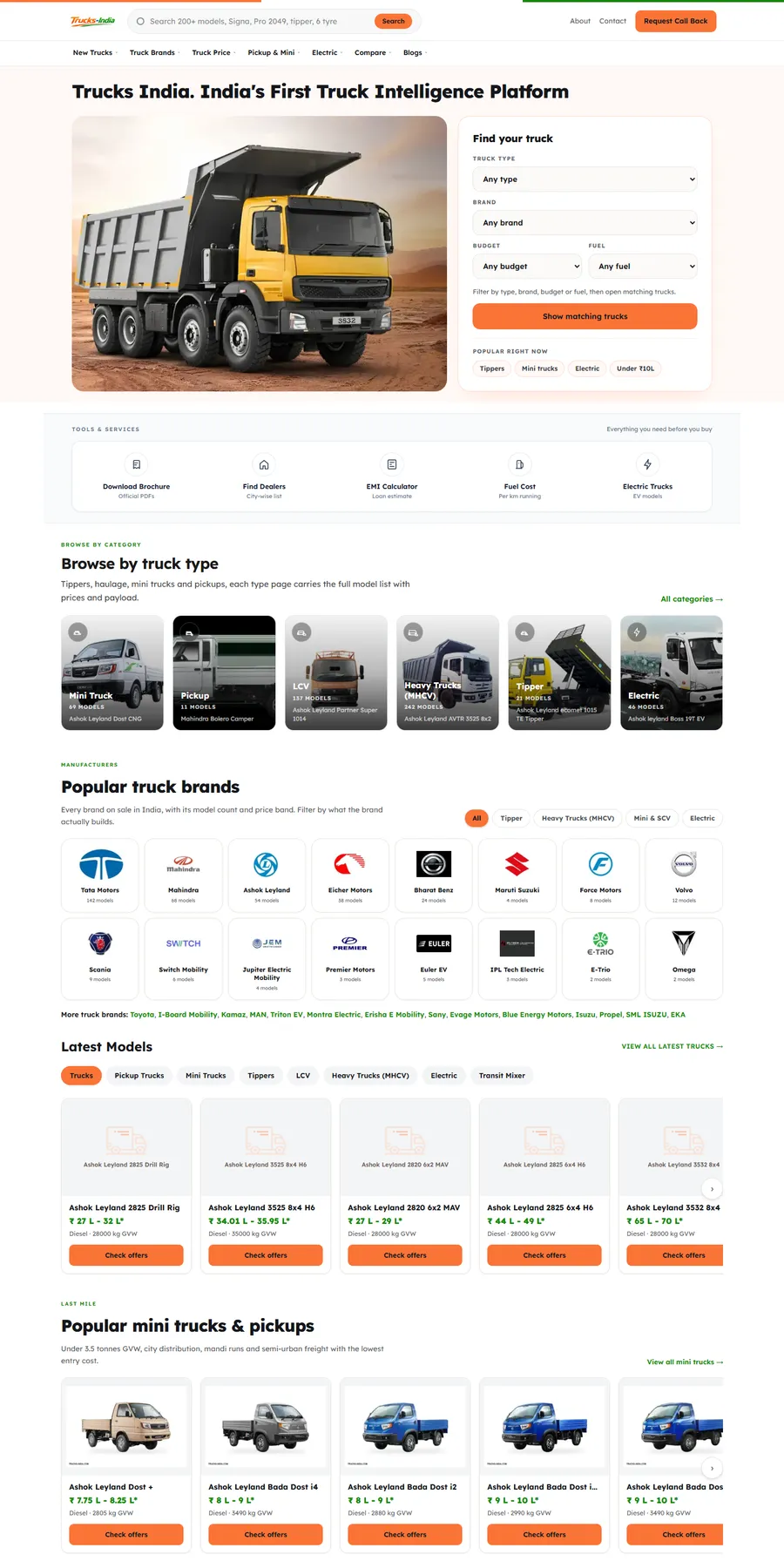
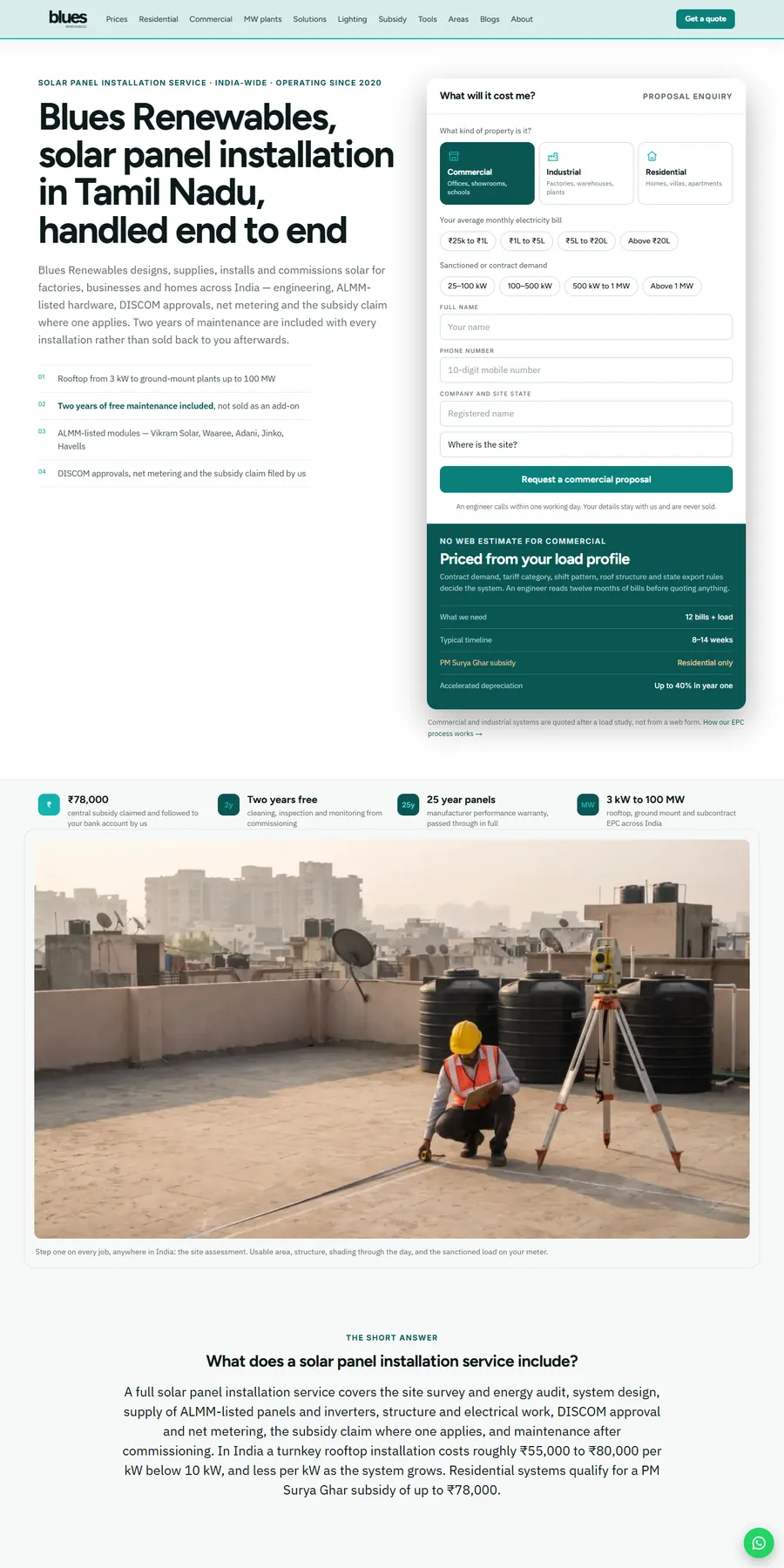
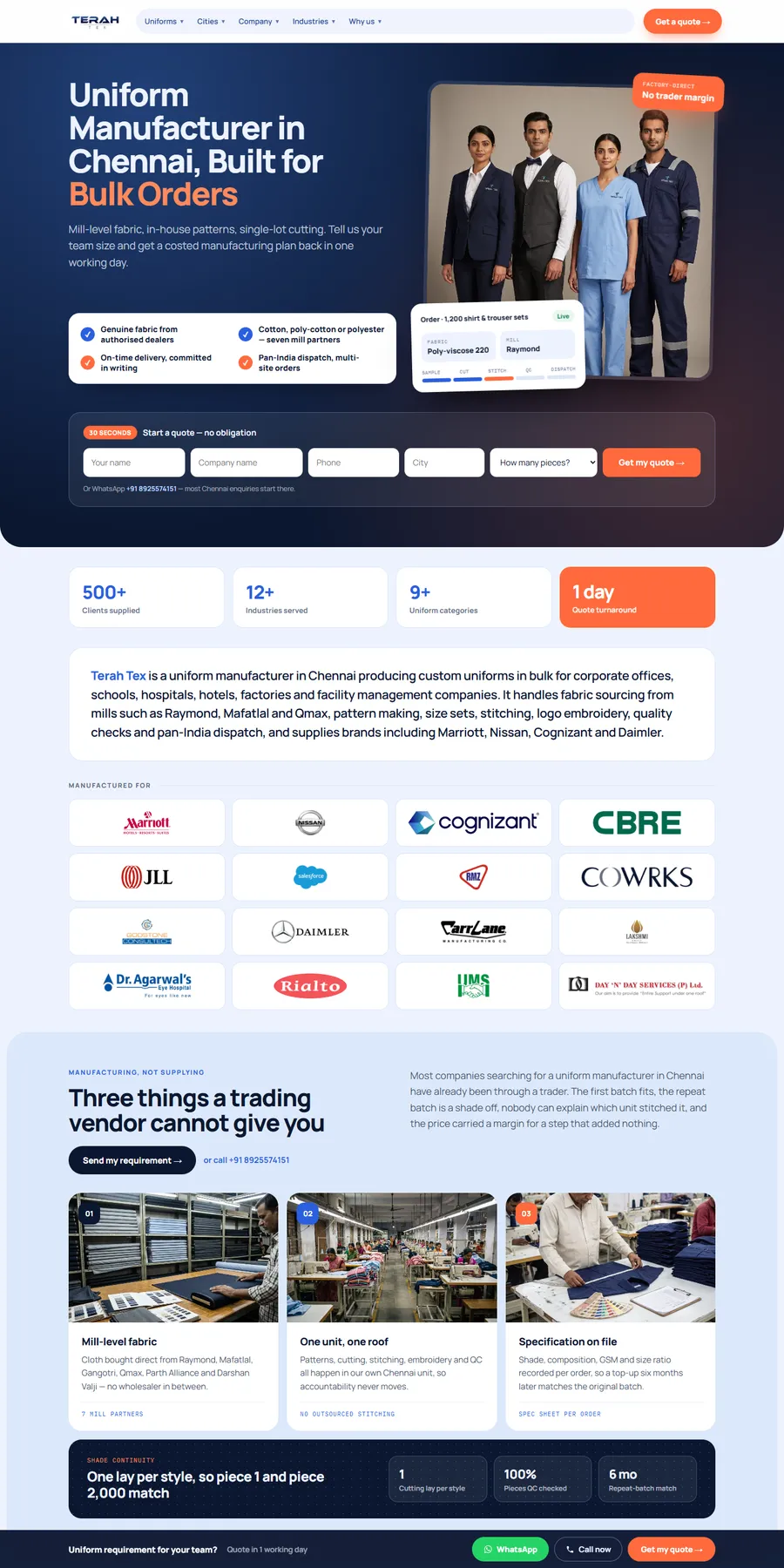
Our proof is Blues Renewables, a local service business running the same lead system a pharmacy needs: a page per service and area, click-to-call, and every call and form tracked as a lead event in GA4. It went from no tracked leads to 7 to 10 inquiries a week, and Google clicks rose from 14 to 560 a fortnight in two months. For a pharmacy, its service pages become pages for immunizations, delivery, compliance packaging and compounding, and its tracked forms become transfer and prescriber inquiries. Terah Tex shows the two-step quote form, from no website inquiries to about 5 leads a week, that we adapt into a prescriber order request. Trucks India shows we can keep a large, structured catalogue in order: 497 truck models and 1,299 variant pages with 351 broken links fixed, which matters for a pharmacy with a big OTC or medical supply range. Abraca in our portfolio is the direct-to-consumer store we would draw on for a pharmacy shop.

More websites we have designed and built

Process

How your pharmacy website project runs

Typical timeline: 4 to 8 weeks for most pharmacy websites; 8 to 12 weeks for several stores, a compounding prescriber section or a large online shop. You see progress every week.

  1. Step 01 · Week 1

    Discovery and audit

    We audit your current site, competitors, and how you show up on Google and in AI answers, then agree on goals and a fixed quote.

  2. Step 02 · Weeks 2 to 3

    Strategy and design

    Sitemap, wireframes and full designs for your review. You approve everything before we build.

  3. Step 03 · Weeks 3 to 6

    Build and test

    Development, SEO setup, speed tuning, and testing across devices and browsers.

  4. Step 04 · Launch and beyond

    Launch and grow

    We launch, monitor, and improve based on real data. 30 days of free support included.

What shapes your quote

Scope, not hourly billing

Every project gets a fixed quote within 1 business day, agreed before work starts.

Get my fixed quote →
  • How many service, location and compounding pages you need
  • Which pharmacy software runs your refills and how deeply its portal can be connected and tracked
  • A prescriber section with order forms or a portal
  • An online shop for OTC, wellness and medical supplies, and whether you ship or offer local pickup
  • Whether we write the content and organize photos of your pharmacists and lab
  • Several stores, a long-term care side or pages in Spanish or another community language

Pharmacy website questions, answered

Straight answers to what owners ask us, and what they ask Google and AI assistants. Ask us anything else.

How much does a pharmacy website cost?

We quote one fixed price, agreed before work starts, based on the number of pages, features, integrations and content, including your refill connection, prescriber section and any shop. You get it within 1 business day with a free audit of your current site. There is no hourly billing.

Can we keep the refill app or portal from our pharmacy software?

Yes, and usually we should. The refill tool belongs to your pharmacy system. We link or embed it from every page, track requests where it allows, and confirm what it supports on the audit call before we quote.

We already have a free or bundled website from our software or wholesaler. Why change?

A bundled site handles refills and costs little. What you give up is a design of your own, pages for the services that set you apart, a prescriber section, tracking you control and a site that stays yours if the contract ends. If those matter less to you, keep it.

Does a pharmacy website need to be HIPAA compliant?

Pharmacies are HIPAA covered entities, so the site needs your notice of privacy practices posted, forms on vendors that sign a BAA and no ad pixels on refill, transfer or intake pages. We build it that way; we do not certify compliance, and your counsel confirms the details.

Can patients transfer prescriptions through the website?

Yes. A short transfer form collects the patient's details, old pharmacy and medications on a BAA-covered provider, and your team makes the call. The page tells patients how long it takes, and each transfer is tracked as a conversion without health details.

Can we sell products online?

Yes, for OTC, vitamins, gifts and medical supplies, with local pickup, delivery or shipping. Prescription drugs never go in a cart, and dispensing controlled substances over the internet falls under the Ryan Haight Act, so we only build that after your counsel signs off.

Do we need a .pharmacy domain?

Only if you want NABP Digital Pharmacy Accreditation or plan to advertise an online pharmacy on Google, which requires LegitScript or NABP accreditation. Most local pharmacies keep their current domain. We plan for it if you decide to ship or advertise.

Can you build compounding pages for patients and prescribers?

Yes. Patient pages explain dosage forms, flavoring and allergen-free options; prescriber pages cover how to order, turnaround and contact. Every page states that compounded drugs are not FDA approved and avoids "same as" claims, and your pharmacist-in-charge approves the copy.

Can we promote compounded semaglutide or tirzepatide?

Ask counsel first. The shortages that allowed wide compounding ended in 2024 and 2025, and FDA flags claims that a compounded drug is the same as an approved one. If counsel approves a program, we write the page to those limits.

How do we get more prescribers to send us scripts?

With a prescriber section that answers what a clinic needs to know: how to send prescriptions, what you compound or stock, turnaround, delivery to clinics and a named contact. Send the link after every visit. We track prescriber inquiries separately so you can see what works.

Will the website help us show up on Google Maps and in AI answers?

A page per service and store, hours and plans as text, a Google Business Profile that matches the site, recent reviews and Pharmacy schema give Google and AI assistants accurate facts to use. No one can guarantee rankings or an AI mention.

How long does a pharmacy website take, and who owns it?

Most take 4 to 8 weeks; several stores, a compounding prescriber section or a large shop take 8 to 12 weeks. You get a dated week-by-week plan and a written update every week. You own the code, design, content, domain and every account from day one, with no lock-in.

What makes you different from another pharmacy web design company?

Many pharmacy web design companies sell a theme on their own platform or build pharma ecommerce for manufacturers. We build for independent and compounding pharmacies: your refill tool connected, a page per service, a prescriber section, your HIPAA notice and patient forms handled carefully, and every transfer tracked. The terms are written first: a fixed quote in 1 business day, a dated plan and no lock-in.
Get your free pharmacy website proposal

Four quick questions. You'll get a fixed quote and a free audit of your current site within 1 business day.

  • ✓ No obligation, no sales pressure
  • ✓ Fixed price, never hourly
  • ✓ Your details stay private

Prefer email? info@billionwebstudio.com

Step 1 of 4~60 seconds
What do you need?