Skip to content
Booking projects for next month. Free website audit with every quote.Claim yours →

Hospitality, auto and localBooking projects for November

RV Dealer Website Development Company for More Unit Inquiries and Service Bookings

RV, boat and powersports buyers research for months on marketplaces, owner forums and YouTube walkthroughs, then pick the dealer whose site shows the exact unit, the full specs, an honest out-the-door price and a service department they can trust. We build dealer sites on your DMS inventory feed with a page for every unit, floorplan and model pages, tow and payment tools with the right disclosures, trade-in and service paths, and tracking by unit and source.

  • Built for rV, boat and powersports dealers
  • Fixed quote in 1 business day
  • You own everything
yourdealer.com/travel-trailersHalf-ton towabletrailers in stockCheck availabilityTap to callNew lead: 2026 travel trailerTrade-in + financing · 9:05 pmTracked as a leadSource: GoogleAI ASSISTANTWhich RV dealers near me list the fullprice?Your Dealership: out-the-door pricing anda service bay on site.Source: your website
Illustration: a visit becomes a tracked lead

The short answer

What does a rv dealer website development company do?

An RV dealer website development company builds websites for RV, boat and powersports dealers that turn marketplace browsers and local searches into availability checks, walkthrough appointments, trade-in appraisals, credit applications and service bookings. The site has to load every unit from your DMS with real photos and full specs, state the price and the fees honestly, help the buyer match a trailer to a tow vehicle or a boat to a lake, and record which unit and which channel produced each lead.

For a dealer with 50 to 500 units that means fast inventory search and a page per stock number, floorplan, model and category pages (half-ton towable trailers, pontoons under 22 feet, side-by-sides), a tow and weight guide, a payment calculator with the disclosures Regulation Z requires, trade-in and consignment pages, a service department with online booking, parts requests, storage and winterization if you offer them, and a page for each store and lake or campground area you serve.

Billion Web Studio is an RV dealer website development company that delivers this as one fixed-scope project: design, inventory templates built on your Lightspeed, IDS Astra or other DMS feed, AutoDealer and Product schema, call and form tracking in GA4, and a migration plan that keeps the URLs that rank. You own the site, the domain and every account from day one, with no monthly platform lock-in.

The market

What the numbers say about rV, boat and powersports dealers online

Recreational vehicle and boat sales are big-ticket, seasonal and sensitive to interest rates, and 2026 has been a slower year. When fewer units move, the dealer whose site turns a marketplace browser into a walkthrough appointment wins the sale. Most of these dealers are small businesses where the owner still watches every lead.

How they choose

How buyers find and choose a RV dealer

An RV, boat or side-by-side is a lifestyle purchase researched for months. The buyer watches walkthrough videos, reads owner forums, compares floorplans and weights, and checks two or three dealers before driving a few hours to the one they trust. Here is that path and what your site has to do at each step.

  1. 1

    The dream and the constraint

    A retirement plan, a growing family, a lake cabin or a new truck. The searches are specific: "bunkhouse travel trailer under 6,000 lbs", "tritoon for sale near me", "used side by side [town]". Floorplan, model and category pages that match those searches bring the buyer to you.

  2. 2

    The research: specs, weights and real owners

    Buyers compare dry weight, hitch weight and cargo capacity against their tow vehicle, sleeping capacity and slide-outs, or hull, length and engine hours. Unit pages need the full spec sheet as text, real photos of the unit on your lot and a walkthrough video if you shoot one.

  3. 3

    The dealer check: price, fees and service

    Buyers ask whether the listed price includes freight, prep and doc fees, what their trade is worth and how the service department treats owners after the sale. Reviews about your service bay matter as much as reviews about sales.

  4. 4

    The contact: is it still here, and what is out the door

    Every unit page offers check availability, book a walkthrough, value my trade and apply for financing, each tracked with the stock number. Calls still come, so the number dials from every screen.

  5. 5

    Delivery, service and the next unit

    The walkthrough, the first trip, warranty work, winterization, storage and parts. A service booking page, a parts request and seasonal reminders keep owners coming back and trading up with you.

The problem

Why most rv dealer websites lose qualified buyers

What we find again and again when we audit sites in this trade. None of it is about how the site looks.

Leak 01

Unit pages with stock photos and half the specs

A buyer matching a trailer to a half-ton truck needs dry weight, hitch weight and cargo capacity. Pages that show brochure photos and a model name, but not the unit's real specs and photos, send that buyer back to the marketplace listing.

Leak 02

A price that grows at the desk

Freight, prep and doc fees added after the advertised price are a complaint buyers raise again and again about RV and powersports dealers. FTC staff's September 2026 pricing guidance for car dealers restates the FTC Act principle that the advertised price should be the price any consumer can pay, with mandatory dealer fees included.

Leak 03

Sold units that stay listed

A buyer who drives three hours for a fifth wheel that sold last week does not come back. Without a written sold-unit rule on your DMS feed, listings lag the lot.

Leak 04

A template site shared with hundreds of dealers

Dealer website platforms use the same templates and OEM copy across many stores. Your model pages read like everyone else's, so search engines and buyers have no reason to pick yours.

Leak 05

Service is hidden behind a phone number

Owners want to book warranty work, winterization or a new battery without calling during your busiest season. A service page with online booking and a parts request keeps your bays full and your phones free.

Leak 06

No idea which listing sold the unit

Marketplace fees, OEM leads, social ads and your own site all claim the sale. Without call tracking and a source and stock number on every form, you cannot tell where next month's budget should go.

Generic vs built for you

Why a generic website fails rV, boat and powersports dealers

A template is built to fit every business, so it fits yours badly. Here is what changes when the site is planned around how buyers actually buy.

Generic website compared with a website built for RV, boat and powersports dealers
What you needGeneric template siteBuilt for rV, boat and powersports dealers
InventoryUnits typed in by hand, or a third-party widget inside an iframeSearch results and a page per stock number built on your DMS feed, with photos, specs and price updating on every feed
SpecsModel name, year and a brochure photoFull specs as text: length, dry and hitch weight, cargo capacity, sleeps, slides, tanks, or hull, engine and hours, with real photos of the unit
Price displayMSRP crossed out, "plus freight and prep" in the fine printThe price including mandatory dealer fees as the main number, government fees noted as extra, wording set with your counsel
Tow and fitNothingA tow guide and filters by weight, so a buyer can find trailers their truck can pull
Payments"From $299/mo" badges with no termsPayments shown only with down payment, term and APR beside them, as Regulation Z requires
Service and partsA phone numberOnline service booking, a parts request with part number or photo, and storage and winterization pages
Sold unitsWhatever the feed doesA written rule: a sold banner with similar units, or a redirect to the model page
OwnershipSite, domain and Search Console on the platform's accountCode, content, domain, GA4 and Search Console in your name from day one

Free self-check · 2 minutes

What your current rv dealer website is missing

Tick everything your site does today. Each box you cannot tick is a place where a ready-to-buy visitor leaves.

What you need

What every rv dealer website needs

The features that turn a rv dealer website from a brochure into the best salesperson you have. We build all of them.

  1. Must-have · 01

    A fast page for every stock number

    30 or more photos of the exact unit, walkthrough video if you have one, stock number and VIN or HIN, full specs as text, condition and hours or miles for used units, warranty status and which store it sits at.

  2. Must-have · 02

    Inventory from your DMS, with a sold-unit rule

    We build on the feed your Lightspeed, IDS Astra or other DMS already exports, so new arrivals, price changes and photos update on the next feed, and sold units follow a rule we agree in writing.

  3. Must-have · 03

    An honest price on every unit

    The price that includes your mandatory freight, prep and doc fees as the main number, with government fees noted as extra and optional add-ons shown as optional.

  4. Must-have · 04

    Floorplan, model and category pages

    Bunkhouse trailers, half-ton towable trailers, Class C motorhomes, pontoons, bass boats, side-by-sides: what to know about each, which brands and floorplans you carry, and a live filtered inventory block below.

  5. Must-have · 05

    A tow and weight guide

    How to match a trailer to a tow vehicle, what dry weight, hitch weight and cargo capacity mean, and inventory filters by weight. It is the page buyers and AI tools use to answer "what can my truck tow".

  6. Must-have · 06

    Four tracked paths on every unit

    Check availability, book a walkthrough, value my trade and apply for financing, each its own conversion tagged with the stock number and the source, plus tap to call and text.

  7. Must-have · 07

    Financing with the right disclosures

    Your lenders' secure credit application embedded over HTTPS, a payment calculator that shows down payment, term and APR beside every payment, and a plain page on how long-term RV and boat loans work.

  8. Must-have · 08

    Trade-in and consignment pages

    A short appraisal form with photos and VIN or HIN, a clear note that the online number is an estimate until inspection, and a consignment page if you sell units for owners.

  9. Must-have · 09

    Service, parts and storage

    Online service booking for warranty work, maintenance, winterization and de-winterization, a parts request with part number or photo, and storage, rentals or mobile service pages if you offer them.

  10. Must-have · 10

    Store pages and reviews that match Google

    A page for each store with sales, service and parts hours, directions, photos and that store's inventory, with name, phone and hours identical to its Google Business Profile, and recent reviews of sales and service shown as text.

  11. Must-have · 11

    Show, event and seasonal pages

    RV and boat show specials with dates and terms, open house events and seasonal service reminders, published as pages that can rank and be shared.

  12. Must-have · 12

    Schema and fast mobile pages

    AutoDealer or Store markup per location and Product markup per unit with a price that matches the page, plus Core Web Vitals targets of LCP 2.5 seconds or less, INP 200 ms or less and CLS 0.1 or less on photo-heavy unit pages.

What we build

The rv dealer website we would build for you

Here is the sitemap our RV dealer website design starts from, and it works the same way for boat and powersports dealers. We cut or add pages to match your lines, your stores and the service you offer.

yourcompany.comHome · every section links here

Inventory

  • Inventory search with filters, including weight and length
  • Unit detail page for every stock number
  • New and used inventory
  • Just arrived and on order
  • Sold units with similar units
  • Specials and show pricing with terms

Shop by type

  • Travel trailers, fifth wheels and toy haulers
  • Motorhomes: Class A, B and C
  • Pontoons, fishing and ski boats
  • Motorcycles, ATVs and side-by-sides
  • Floorplan and model pages for your top lines
  • Half-ton towable trailers

Buying help

  • Tow and weight guide
  • Financing and secure credit application
  • Payment calculator with disclosures
  • Value your trade
  • Consignment
  • Pricing policy: what is included in our prices

Service and parts

  • Book service
  • Warranty work
  • Winterization and de-winterization
  • Parts request
  • Storage
  • Rentals, if offered

Stores and company

  • A page for each store
  • Brands we carry
  • Reviews
  • Events and shows
  • Careers for techs and sales staff
  • Legal footer: dealer license number where your state requires it, privacy notice, accessibility statement

Calls, bookings, leads

How we turn visitors into qualified buyers

Good RV dealer website design is judged in appointments and applications: a browser becomes a walkthrough, a trade appraisal, a credit application, a service booking or a call, and you can see which unit and which source produced it. This is how we build that path and track every lead.

  • 01Every lead tagged with the unit and the channelAvailability, walkthrough, trade and credit app each fire their own GA4 conversion carrying the stock number and source (marketplace click, OEM site, social, organic), so your report shows which units and listings pulled buyers in.
  • 02Walkthrough appointments, not just inquiriesBook a walkthrough on a specific unit with a date and time, so the unit is pulled up, clean and ready when a family drives in on Saturday.
  • 03A two-step trade-in appraisalYear, make, model, VIN or HIN, condition and photos first; contact details second. The page says the number is an estimate until inspection.
  • 04Tap to call and text, with call trackingDynamic number insertion swaps the shown number for ad and marketplace visitors only. Your main number stays in the schema, footer and Google profile.
  • 05Service bookings tracked separatelyService, warranty and parts requests are their own conversions, so you can see what the site does for the service department as well as sales.
  • 06Leads delivered into your CRMLeads go out in ADF/XML or through your CRM's API, so they land in the same queue as marketplace and OEM leads with the source attached.
  • 07A monthly report in plain numbersWalkthroughs, trade appraisals, credit apps, service bookings and calls by unit, page and source, in accounts you own.

AI search

RV and boat buyers ask AI tools for help with the technical questions: what can my truck tow, which pontoon fits a family of six, where can I see a toy hauler near me. BrightLocal's 2026 survey found 45% of consumers use AI tools for local recommendations. When an assistant cannot read your specs and price, it quotes a marketplace listing of your own unit instead. Nobody can guarantee a mention, but a site machines can read gives AI tools your facts.

Questions your buyers ask AI assistants

  • What travel trailers can a half-ton truck safely tow?
  • Which RV dealers near me have bunkhouse trailers in stock?
  • Where can I buy a tritoon near Lake of the Ozarks?
  • Which dealers near me service and winterize RVs?
  • Is a 20-year RV loan a good idea?
  • Which powersports dealers near me list out-the-door prices?
  • Specs and price in plain HTML

    Every unit on its own crawlable URL with year, make, model, floorplan, length, weights, price and stock number as text on the page, not only inside scripts, images or a brochure PDF.

  • A tow guide in your words

    A clear page on tow ratings, hitch weight and payload is the answer an assistant looks for, and it links to the units that fit.

  • Product and dealer schema that matches the page

    Structured data helps machines read your units and your stores. The price in the schema matches the price the buyer sees.

  • Your policies in plain sentences

    What your price includes, how trade-ins work, service turnaround and storage terms, written on the pricing policy page and FAQ so an assistant can quote them.

  • Crawler access checked

    We review robots rules, firewall and bot protection so reputable search and AI crawlers can reach your unit pages, and check server logs on real unit URLs after launch.

  • Search Console in your account

    We set up Search Console in your name and report the question-form searches you already appear for, so you can see the AI-style queries reaching you.

Compliance and trust

The rules a rv dealer website has to get right

A dealer website is advertising: the price on every unit, payment figures, credit applications, lead replies and reviews. Rules differ by state and by vehicle type. We build templates and forms that support these rules; we do not certify compliance or give legal advice, and your counsel or state dealer association confirms the wording.

The advertised price and dealer fees

The FTC Act bans deceptive pricing for every advertiser. FTC staff's September 2026 Pricing Transparency FAQs, written for the automobile industry, say the advertised price should be the price any consumer can walk in and pay, with mandatory dealer fees included and only government charges left out. They speak of cars, not RVs or boats, but the principle is the one regulators apply. Some states already write it into dealer rules: Texas requires destination and dealer preparation charges in a motor vehicle dealer's featured sales price (43 TAC 215.250). Our templates put the price including freight, prep and doc fees first.

Payment and financing ads

Under Regulation Z (12 CFR 1026.24), a payment amount, down payment, number of payments or finance charge in an ad requires the down payment, repayment terms and APR, and rates must be stated as an APR. We place these beside the payment, not only in the footer.

Credit applications and customer data

Credit applications carry Social Security numbers and income. Non-bank businesses that arrange consumer financing can fall under the FTC Safeguards Rule, which requires notice to the FTC within 30 days when unencrypted data of 500 or more consumers is taken. We embed your lender's secure application and keep that data off the website.

Dealer licensing

Many states license RV and powersports dealers, and some license boat dealers. Florida, for example, requires a license for anyone in the business of selling recreational vehicles and presumes anyone who sells one or more in 12 months is a dealer (Fla. Stat. 320.771). We show your license number where your state requires it.

Reviews and texting consent

The FTC's Consumer Reviews and Testimonials Rule bans fake reviews and rewards tied to positive ones, so one review link goes to every buyer and service customer. The TCPA requires prior express written consent for marketing texts, so forms carry a separate, unticked consent box.

Accessibility

The Justice Department says the ADA applies to business websites. We build to WCAG 2.1 AA targets, including alt text on unit photos and keyboard-usable filters, without overlay widgets, and never promise lawsuit protection.

We build with tools and patterns that support these rules and document what we set up. For legal advice on your own obligations, talk to your attorney.

Asked online

What rV, boat and powersports dealers ask about websites, answered

We read what buyers and dealers say on r/boating, r/motorcycles, r/ATV, the iRV2 and Jayco Owners forums, Facebook RV groups and Quora, and what viewers ask under YouTube videos on buying from RV dealers. One theme dominates: price. Buyers are tired of "contact dealer for price", freight and prep fees added at the desk and options with no price list. Service after the sale and deposits come next. These are their questions, paraphrased, with factual answers a dealer site can act on.

Where owners talkr/boatingr/motorcyclesr/ATViRV2 ForumsJayco Owners ForumFacebook RV groupsQuoraYouTube comments on RV buying videos

From r/boating

“Why are boat dealers so cagey about pricing? Why not list prices on the website instead of "contact dealer for price"?”

Our answer: A missing price makes many buyers assume the worst and move on to a listing that shows one. If manufacturer agreements limit how you advertise some models, show what you can: a price on in-stock units, a starting price with the options included, and a fast price-request form that promises a written out-the-door number. Silence costs more leads than a price.

From r/motorcycles

“Are high freight, prep and dealer fees on a new motorcycle the new normal?”

Our answer: Buyers on r/motorcycles report freight, setup and dealer fees added on top of MSRP, and they compare totals between dealers. Texas dealer advertising rules (43 TAC 215.250) require destination and dealer preparation charges in the featured sales price. Showing the out-the-door logic on each unit page, with only taxes and government fees left out, answers the question before the buyer leaves.

From r/ATV

“What are typical dealer fees on a brand new ATV? I want to be prepared before I go in.”

Our answer: Fees vary by dealer and state, which is why buyers ask strangers. A pricing policy page that names each charge you add (freight, setup or PDI, documentation), what it covers and whether it is already in the listed price lets the buyer arrive prepared, and it filters out shoppers who would walk at the desk anyway.

From r/boating

“My dealer keeps dodging when I ask for the factory option list with prices. Is that normal?”

Our answer: Buyers who have to ask four or five times stop trusting the deal. Build sheets solve it: a page per model with standard equipment, each factory option and its price, and a configure-and-request button that sends the build to sales. For units on the lot, list every installed option and dealer add-on with its price on the unit page.

From iRV2 Forums

“An article says an RV advertised at one price must sell for that price plus government fees only. Is that true?”

Our answer: For cars, FTC staff's September 2026 pricing FAQs say the advertised price should be the price any consumer can pay, with mandatory dealer fees included and only government charges left out. The FAQs do not name RVs, but the FTC Act applies to every advertiser, and Texas already requires destination and prep charges in a motor vehicle dealer's featured price. Building fees into the listed price is the safe course.

From iRV2 Forums

“The dealer wants a large PDI fee on a used motorhome. Is that normal?”

Our answer: Owners on iRV2 say prep, freight and documentation charges are common and often negotiable, and that a fee on a used unit needs explaining. A page that says what your pre-delivery inspection covers (systems checked, seals, tires, batteries, a walkthrough) and whether it is in the price turns a fee argument into a reason to buy from you.

From Jayco Owners Forum

“Our dealer's prep cost seems excessive. What should we ask for?”

Our answer: The advice on that forum was to make the dealer list exactly what the prep includes, in writing. Dealers can do that before anyone asks: publish a PDI checklist, say how long the walkthrough takes and what is tested, and show the charge or state that it is included. Written detail is what separates a service from a fee.

From Facebook RV group

“A small dealer quoted a large pre-delivery fee on a small trailer, and I am bringing my own certified inspector anyway. Is the fee normal?”

Our answer: Third-party inspections are common with RV buyers, and buyers question paying for prep twice. Say on your site whether outside inspectors are welcome, how to schedule one before delivery, what your own PDI covers and how inspection findings get fixed before the unit leaves. Clear rules here prevent the argument at delivery.

From Quora

“What is the business model for RV dealerships when so many units seem to sit on the lot for years?”

Our answer: Dealers finance most new inventory with floor plan lines and pay interest while units sit, then earn on the sale, financing and protection products, service, parts and trade-ins. That is why aged units cost real money and why a site that brings serious shoppers to specific units, and books service between sales, matters to the whole store, not just sales.

From YouTube comments on an RV buying video

“How does service work if I live hundreds of miles from the dealer where I bought? I have heard dealers only work on what they sold.”

Our answer: Policies differ, so buyers ask. Put yours on the service page: whether you service units bought elsewhere, how warranty work is handled for out-of-area owners, typical wait times in season and how to book. Buyers who can see a clear service promise are more willing to drive to you for the purchase.

From YouTube comments on an RV buying video

“Why put down a deposit if the unit might sell before my inspection? It seems like a way for the dealer to keep money.”

Our answer: A deposit policy nobody explains looks like a trap. State on the site when a deposit is required, how long it holds the unit, what happens if an inspection finds problems or financing falls through, and whether it is refundable. Clear terms in writing make buyers more willing to commit to a unit online.

Questions are paraphrased from public posts and comments on Reddit, YouTube, forums and social media. We never quote anyone by name.

Others vs us

RV dealer website design options: Billion Web Studio vs a website builder template vs a monthly dealer website platform

The three ways rV, boat and powersports dealers usually get a website, side by side.

RV dealer website design options: Billion Web Studio vs a website builder template vs a monthly dealer website platform
Billion Web StudioWebsite builder templateTypical industry agency
Who owns the site, domain and accountsYou do, from day one, in your own accountsYou own the content; the site lives on the builder's platformThe platform, on a site you rent; leave the vendor and you leave the site
Contract and pricingFixed quote in 1 business day, agreed before work starts, no lock-inMonthly subscription, you build it yourselfMonthly fee, often on a 12-month or longer contract
Inventory from your DMSBuilt on your DMS feed with a written sold-unit ruleUsually none; units entered by handBuilt in, tied to their stack
Specs and price displayFull specs as text, price including mandatory dealer fees firstWhatever you typeShared templates; often MSRP with fees in fine print
Model, floorplan and tow pages that rankUnique pages with real content above live inventoryNot built for inventoryOEM copy shared with many dealers
Service and partsOnline booking, parts requests, storage and winterization pagesA contact formOften a basic form
AI search readinessSpecs and price in plain HTML, crawler access checked, schemaUp to youRarely addressed
Lead tracking by unit and sourceGA4 events with stock number, call tracking, CRM delivery, in your accountsBasic form countsThe platform's dashboard, which may stay with them if you leave

Why Billion Web Studio

What we do better, and why it matters to you

  • A fixed quote in 1 business day, with a free audit

    We review your current site: price display, specs, sold-unit handling, credit app, service booking, unit page speed and tracking. Then we confirm what your DMS exports and send a written scope and a fixed price based on pages, features, integrations and content. No hourly billing.

  • You own everything from day one

    Code, design, content, photos, domain, hosting, GA4, Search Console and call tracking in your name. No platform holding your site, and no lock-in.

  • Built around how an RV, boat or powersports store runs

    Unit pages with full specs, tow guides, honest pricing, four tracked paths per unit, trade-ins, consignment, service, parts and storage are in the plan from the first week.

  • Vehicle data pages we have built before

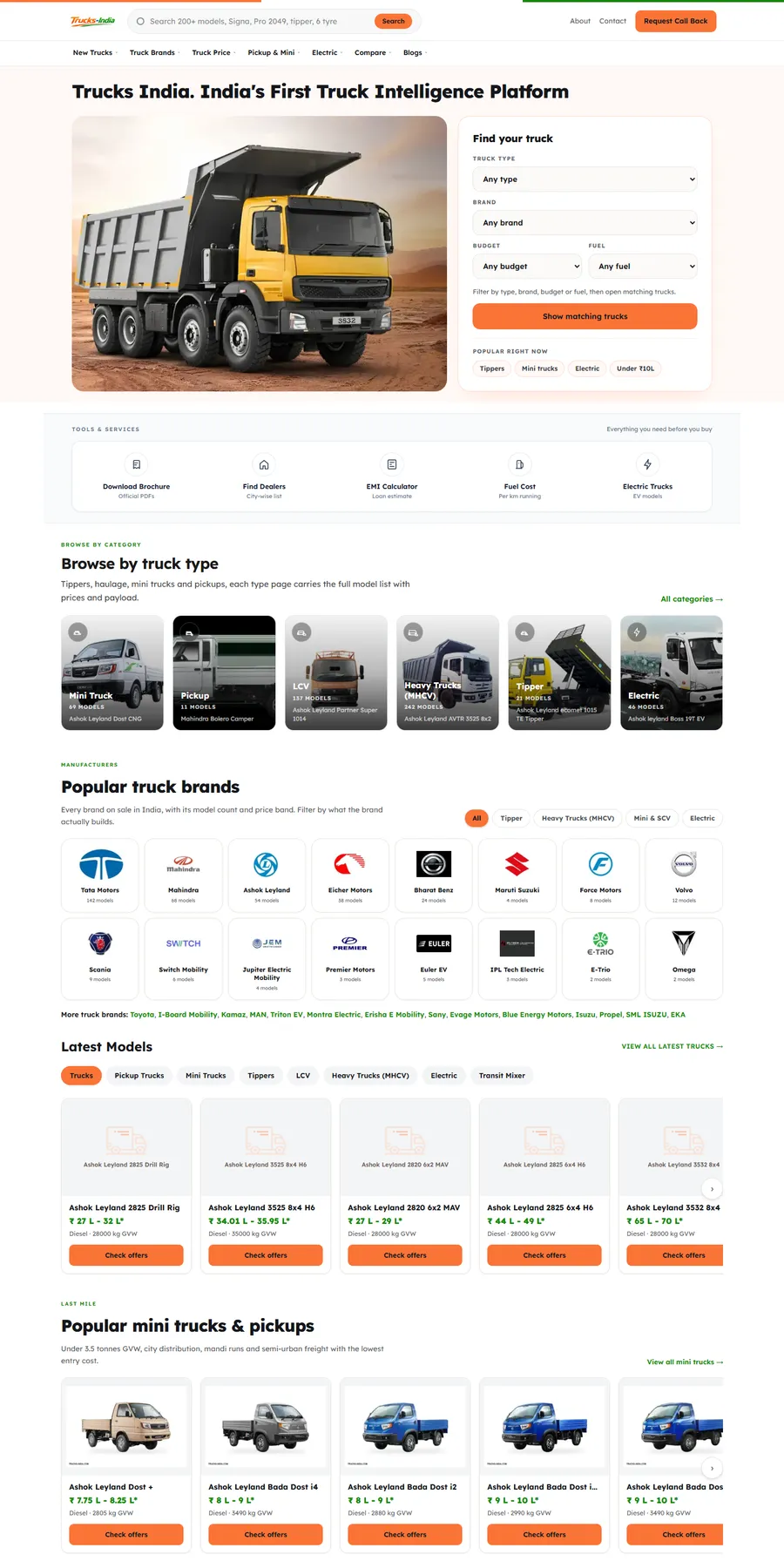
    We built Trucks India's 497 model and 1,299 variant pages with comparison, price and payment tools. The same approach turns your DMS feed into unit, floorplan and model pages.

  • A switch that keeps your rankings

    We crawl the old site, map every URL to a redirect, keep unit URL patterns where possible, plan the credit app move with your lender and watch Search Console for errors after launch.

  • A dated plan and a guarantee on it

    A week-by-week plan, weekly written updates and 30 days of free support after launch. If we slip a date because of us, the next month of support is free.

In writing, before we start

  • Fixed quote in 1 business day

    Scope, deliverables and price agreed in writing, with a free audit of your current site. No hourly billing.

  • Launch date in writing

    A dated week-by-week plan and a written update every week. If we slip because of us, the next month of support is free.

  • You own everything

    Code, design, content, domain and accounts are yours from day one. No 12-month contract, no rented site.

  • 30 days of support included

    We watch rankings, forms and call tracking after launch and fix anything that needs it.

Proof, not promises

Results from websites we have built

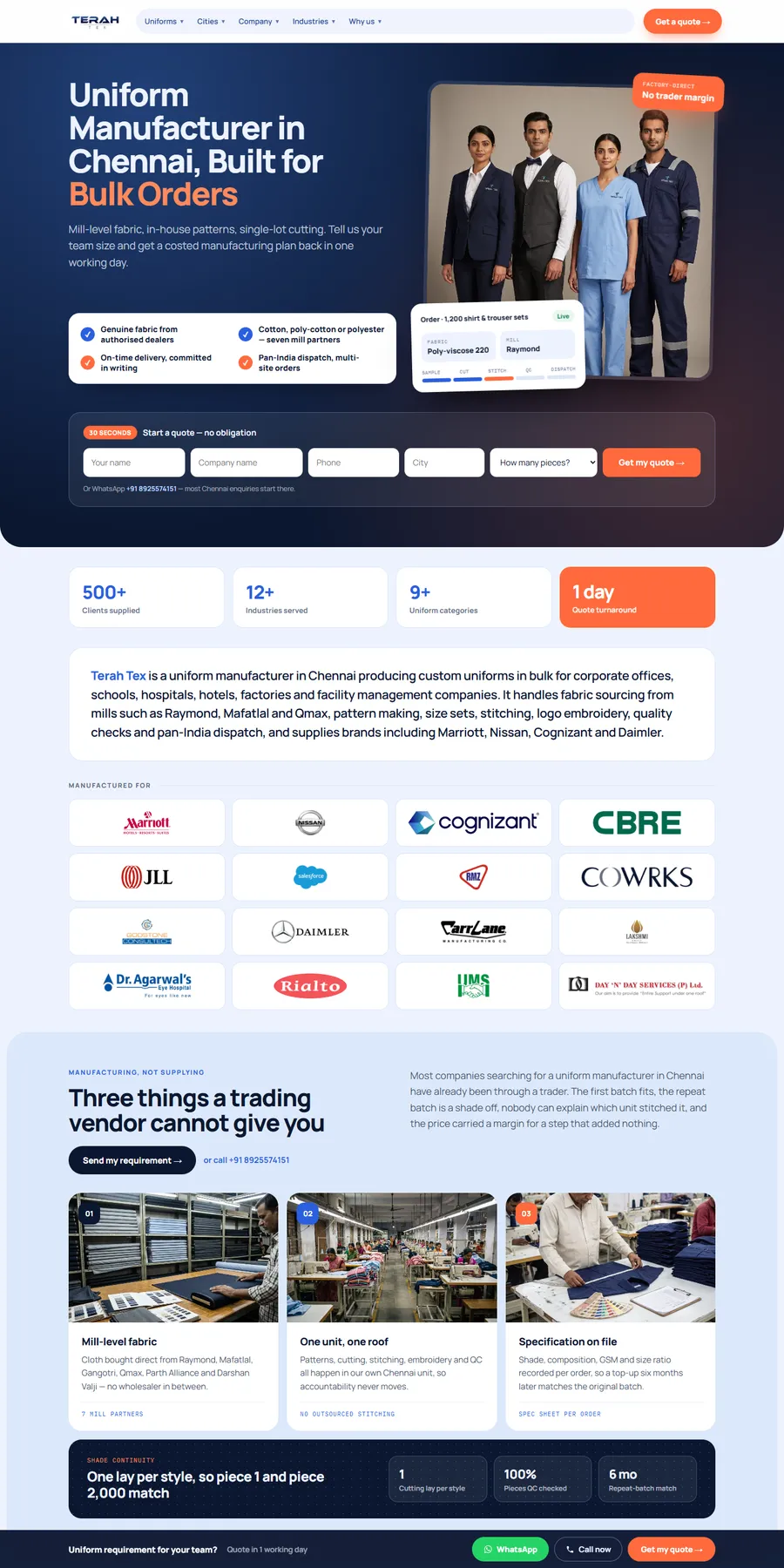
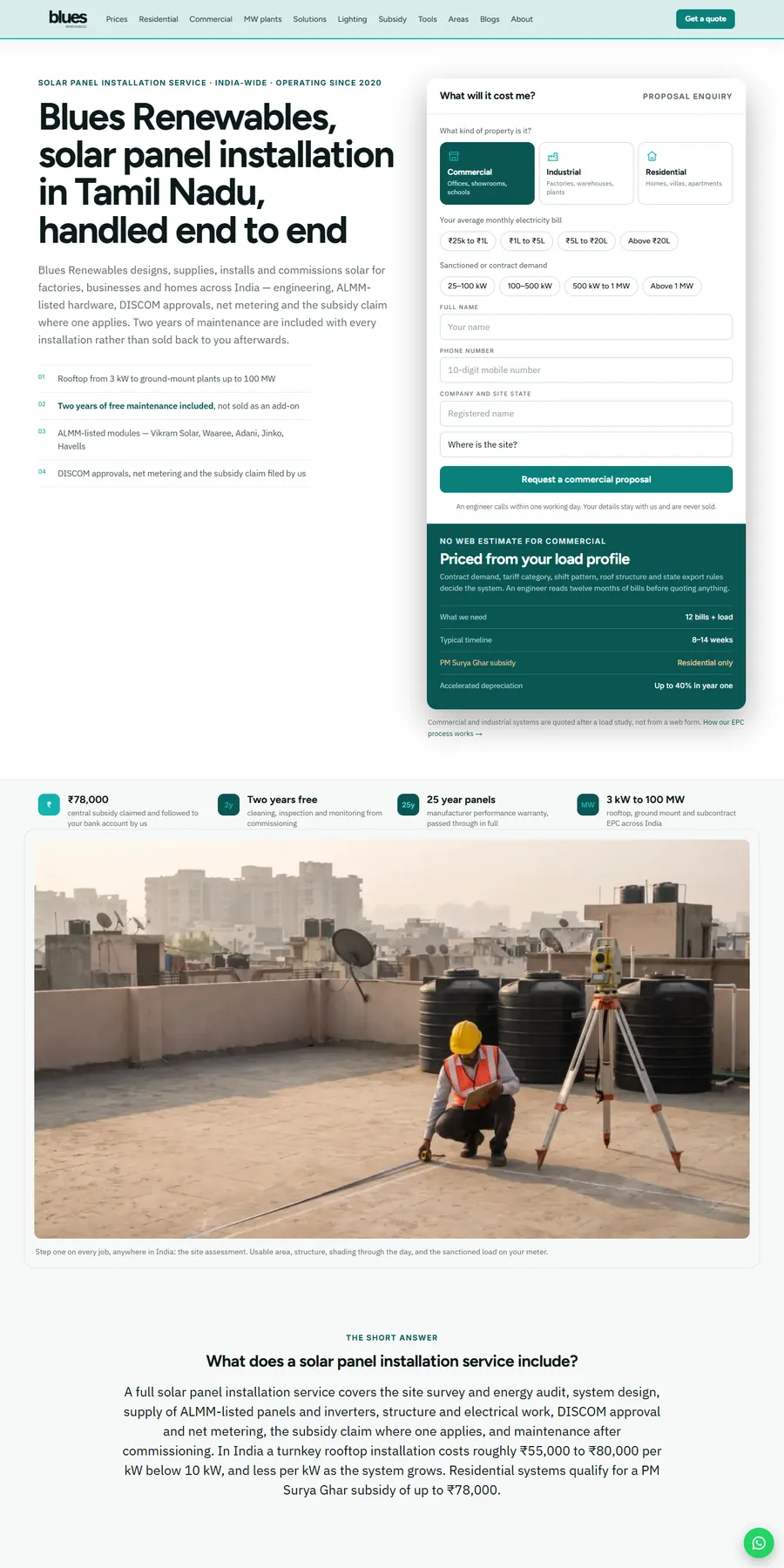
Two builds show the parts a dealer site runs on: vehicle pages built from data, and a local lead system with every call and form tracked. Trucks India, a commercial vehicle research platform (it does not sell vehicles): 497 truck models and 1,299 variant pages with comparisons, on-road price, EMI (monthly payment), load planner and running cost tools. Weekly Google clicks went from 12 to 292 in five weeks and impressions from 321 to 49,755. For you, those templates become unit pages, floorplan and model pages, a tow and weight guide and a payment calculator with US disclosures. Blues Renewables, a rooftop solar installer: from no tracked leads to 7 to 10 enquiries a week, with every form and call tracked in GA4. Its local area guides become your store and lake or campground area pages.

More websites we have designed and built

Process

How your rv dealer website project runs

Typical timeline: 4 to 8 weeks for a single store with a simple inventory feed; 8 to 12 weeks for multi-store dealers, several OEM lines or large model and floorplan page sets. You see progress every week.

  1. Step 01 · Week 1

    Discovery and audit

    We audit your current site, competitors, and how you show up on Google and in AI answers, then agree on goals and a fixed quote.

  2. Step 02 · Weeks 2 to 3

    Strategy and design

    Sitemap, wireframes and full designs for your review. You approve everything before we build.

  3. Step 03 · Weeks 3 to 6

    Build and test

    Development, SEO setup, speed tuning, and testing across devices and browsers.

  4. Step 04 · Launch and beyond

    Launch and grow

    We launch, monitor, and improve based on real data. 30 days of free support included.

What shapes your quote

Scope, not hourly billing

Every project gets a fixed quote within 1 business day, agreed before work starts.

Get my fixed quote →
  • Which DMS we connect, and whether it exports by FTP or API
  • How many floorplan, model, category and area pages you want written
  • Credit app, trade-in, consignment, tow guide and payment calculator flows
  • Number of stores, and whether you run service, parts, storage or rentals
  • Moving from your current platform: redirects, unit URL patterns, credit app and tracking
  • Whether we write the content and plan photo standards for your units

Rv dealer website questions, answered

Straight answers to what owners ask us, and what they ask Google and AI assistants. Ask us anything else.

How much does an RV dealer website cost?

We quote one fixed price, agreed before work starts, based on the number of pages, features, integrations such as your DMS feed and credit app, and content. You get it within 1 business day of a free audit of your current site. There is no hourly billing and no monthly platform fee for the build.

How long does RV dealer website development take?

A single store with a simple inventory feed usually takes 4 to 8 weeks. Multi-store dealers, several OEM lines or large sets of floorplan and model pages take 8 to 12 weeks. You get a dated week-by-week plan before we start.

Do you build sites for boat and powersports dealers too?

Yes. The structure is the same: a page per unit from your DMS feed, model and category pages, financing, trade-ins, service and parts. Specs change (hull, engine hours, displacement) and so do the guides, but the lead paths and tracking work the same way.

Do you connect to my DMS, and how fast do sold units update?

We build on the feed your Lightspeed, IDS Astra or other DMS exports, by FTP or API, so sold units and price changes show as fast as the feed sends them. We agree the feed schedule and a sold-unit rule in writing. If your DMS cannot export a feed, we tell you during the free audit.

Should my site show the full price with freight and prep?

We recommend it, and our templates make the price including mandatory dealer fees the main number, with government fees noted as extra. FTC staff guidance for car dealers says the advertised price should be what any buyer can pay. You approve the wording with your counsel.

Can you add a payment calculator?

Yes, with the down payment, term and APR shown next to any payment it produces, and a note that taxes and fees may not be included. Regulation Z treats a payment amount in an ad as a trigger for those disclosures.

Can owners book service and order parts on the site?

Yes. We add online service booking through your scheduler or a request form, a parts request with part number or photo, and pages for warranty work, winterization and storage if you offer them.

What happens to my SEO if I leave my current website platform?

We crawl the old site, map every URL, including unit and search result patterns, to 301 redirects, move content you want to keep, resubmit sitemaps in your Search Console and watch errors after launch. Get your domain and Search Console into your own name first if they are not already.

Do I own the website, domain and photos?

Yes, from day one. Code, design, content, photos, domain, hosting, GA4 and Search Console accounts are in your name. There is no lock-in, so you can take the site to another developer at any time.

Will a new website sell more units?

We do not guarantee rankings or sales. A new site changes how many browsers become appointments: full specs, honest prices, four tracked paths per unit and fast pages. Trucks India's vehicle pages, a research platform rather than a dealer, grew weekly Google clicks from 12 to 292 in five weeks.

How do my units show up in ChatGPT and Google AI answers?

Nobody can guarantee placement. We make your units readable by machines: specs, price and stock number in plain HTML, crawler access checked, schema that matches the page, and your tow guide and policies written as text.

What makes you different from a dealer website platform?

We put the terms in writing first: a fixed quote in 1 business day, a dated plan, your ownership of everything and no lock-in. A platform site usually stays with the vendor if you leave. Ours covers your DMS feed, full specs, honest pricing, tow and model pages, service and tracking by unit and source in your own accounts.
Get your free RV dealer website proposal

Four quick questions. You'll get a fixed quote and a free audit of your current site within 1 business day.

  • ✓ No obligation, no sales pressure
  • ✓ Fixed price, never hourly
  • ✓ Your details stay private

Prefer email? info@billionwebstudio.com

Step 1 of 4~60 seconds
What do you need?